CD Reviews | CTD (Briefly Noted) | JFL (Dip Your Ears) | DVD Reviews
Showing posts with label Bohuslav Martinů. Show all posts

5.1.19

A Survey of Martinů Symphony Cycles


An Index of ionarts Discographies


Martinů, A Love Affair

When getting a little better acquainted with Bohuslav Martinů, most people will start with the symphonies. They are his most prominent works and, apart maybe from the Second Violin Concerto and the neo-classical La revue de cuisine, the least seldom performed. Like so much music, they have an easier time communicating during a live event, but with a bit of concentration and a nice Scotch or other imbibement of choice at hand, they will yield their beauty, excitement, and vigor on record. As a group of symphonies, they are among the best the 20th century can offer; think Nielsen, Prokofiev, Honegger; even Shostakovich. (If you are missing Sibelius in this list, that's because I consider him a step above, still… perhaps the finest symphonist of the 20th century and in any case an unfair comparison to just about any other symphonist either side of him.)

The symphonies are also a good entry point, because they are all late works, which is, as Robert R. Reilly notes in Surprised by Beauty, “Martinů’s last magical period”. This way one avoids the heterogeneous previous styles for the introduction and, Reilly continues, “once captivated, [you can] work back through his earlier periods, which each contain masterpieces.” That is certainly true for the jaunty and lighthearted, piano-assisted de-facto Scherzo (“poco allegro”) of the Second Symphony. This is a most easily appreciable corker, even as some of the jolly ease seeps out a little before the finale (itself bright and merry) enters to carry this short crowd pleaser to its rambunctious end. The Third Symphony also has all the makings of an audience pleaser – if only an audience showed up when Martinů, too obscure for average concert-goers, is on the bill. The highlight-filled first movement – full of swinging rhythmic complexity – ends with a terrific bang. There’s a strong, timpani-motored lyrical surge in the middle movement, and the colorfully wily finale rouses even the drowsiest patrons. And, as if it needed another selling point, it’s no longer than a late Haydn Symphony! The touches of Janáček (i.e. Cunning Little Vixen) in the opening of the Fifth Symphony or the resolving chords of the Sixth that communicate the sun rising and spreading its fingers benevolently above all and sundry are musical equivalents of a wide smile.

American Symphonies

Martinů – a functional Asperger sufferer – was 51 when he wrote his first symphony in 1942 and around that time told his biographer “From now on, I’m going all in for fantasy.” To make the point unmistakable, he subtitled his Fourth Piano Concerto Incantations and his Sixth Symphony Fantaisies Symphoniques. The symphonic flowering of his last decade-and-a-half produced such masterpieces as the six symphonies, The Parables, Toccata e due Canzone, Les Fresques de Piero Della Francesca, and Estampes, all of which qualify as orchestral fantasias.” (Reilly, Surprised by Beauty) They are American Symphonies in the sense that they were all written in the US and – except for the Fifth – premiered by the Boston, Cleveland, and Philadelphia orchestras. For more on Martinů, see the chapter in Surprised by Beauty. See also the SBB Recommended Recordings section and this SBB CD review of Martinů’s Bouquet of Flowers.

Considering that all six symphonies amount to only about three hours of music (thereby fitting easily on three CDs), and that they are such major works, it might seem surprising that there are only seven complete cycles to-date (and none on the 'major' labels) – whereas there are already 12 (and more under way) of Vaughan Williams’ cycle of Nine or 21 of Shostakovich’s cycle of 15. As such, this discography took considerably less time to research and put together. Nevertheless, it's not likely to be mistake free. Hence my plea to generously inclined readers with more information and knowledge on the subject than I have to lend a helping hand correcting my mistakes or filling data-lacunae or broken links or oversights.

Almost-Cycles

There are several “Almost-Cycles” of Martinů’s symphonies; collections of most but not all the symphonies by one conductor. Since there are only seven complete cycles, it made sense to gather and introduce some of these, too. They all seem to have had at least vague intentions of becoming a cycle but for one reason or

31.12.18

Best Recordings of 2018


Time for a review of classical CDs that were outstanding in 2018 again! This lists the new releases with the best re-issues following below.

Preamble


It’s fair to say to say that such "Best-Of" lists are inherently daft if one clings too literally to the idea of "Best." Still, I have been making "Best of the Year" lists for classical music since 2004 (when working at Tower Records gave me a splendid oversight—occasionally insight—of the new releases and of the re-releases that hit the classical music market. Since then, I’ve kept tabs on the market as much as possible. Here are the links to the past iterations on ionarts and Forbes.com:

2004 | 2005 | 2006 | 2007 | 2008 | 2008—"Almost" | 2009 | 2009—"Almost" | 2010 | 2010—"Almost" | 2011 | 2011—"Almost" | 2012 | 2013 | 2014 | 2015 | 2016 | 2017

Making these lists is a subjective affair, aided only by massive exposure and hopefully good ears and discriminating, if personal taste. But then "10 CDs that, all caveats duly noted, I consider to have been outstanding this year" does not make for a sexy headline. You get the point. The built-in hyperbole of the phrase is a tool to understand what this is about, not symbolic of illusions of grandeur on my part. As has been my tradition, there are two lists: One for new releases and one for re-issues.  And because there is a natural delay between the issuing date of a recording and my getting to listen to it, the cut-off date for inclusion in this list is roughly around September 2017. (In a way that’s good, because going back a little further softens the recency-bias that these lists can otherwise suffer from.) And here, without further ado, are "The 10 Best Classical Recordings Of 2018".


# 10 - New Release


L.v.Beethoven, Symphony No.3 (+ R.Strauss, Horn Concerto), Manfred Honeck, Pittsburgh Symphony, Reference Recordings FR-728SACD


available at Amazon
L.v.Beethoven, Symphony No.3
(+ R.Strauss, Horn Concerto),
Manfred Honeck, Pittsburgh Symphony,
Reference Recordings

Manfred Honeck just about has a subscription to these lists: After Shostakovich in 2017, Richard Strauss in 2016, Johann Strauss in 2014 and his Bruckner Fourth getting an honorable mention in 2015, it’s no surprised that he shows up again this year. This time with Beethoven, continuing his series of riveting, superbly played, and grandly recorded symphonies. We have had many great Beethoven cycles turn up over the last years (Järvi, Vänskä, Dausgaard), always showing that new things can be said just when we thought that there couldn’t possibly be anything new left to squeeze out of old Ludwig Van. But the combination of modern pluck and luscious brawn that makes the Honeck-Pittsburgh combo unique successfully pushes on all our sensualities’ buttons at once. Point-in-case this Eroica, which knocks you over and lifts you back up. Honeck is no literalist and he knows where effect merits a gentle adjustment to the score, yet the aesthetic is one that still fully appeals in a time dominated by historically informed performances.

# 9 - New Release


R.Schumann, "Frage" – select Lieder, Christian Gerhaher & Gerold Huber, Sony 19075889192


available at Amazon
R.Schumann, "Frage" – select Lieder, Christian Gerhaher & Gerold Huber,
Sony

Like Honeck, the Christian Gerhaher/Gerold Huber combination, too, is a regular in these lists. That’s not – or so I’d like to think – because I am unduly partial towards them, but simply because they are the best Lied-Duo there is and very likely (pointless though such an argument would be) also ever was. After last year’s Die Schöne Müllerin, GerhaherHuber-one word™ have undertaken a recording of the complete songs of Schumann. I didn’t have Gerhaher down for an intégrale of any composer’s, given his highly discriminating pick-and-choose approach to anything he will perform, but yes: if there’s any composer he should want to sing all the output of, it would have to be Robert Schumann. "Frage" – "Question" is the apt title of the first volume, since Gerhaher would be the type to question, probe everything. The recital, full of lesser known, miniature song cycles – Six Songs op.107, 12 Kerner Poems op.35 (highlight among highlights), Four Late Songs op.142 et al. – is—as expected and hoped—all that one could wish from GerhaherHuber. Supremely touching, chilling, text-hugging Lied of unparalleled quality. (A more detailed review here on ClassicsToday.)

# 8 - New Release


J.S.Bach, Cantatas BWV 56, 95, 161, Rudolf Lutz, soloists, Bach Stiftung Orchestra & Chorus, Bach Stiftung B667


available at Amazon
J.S.Bach, Cantatas BWV 56, 95, 161, Rudolf Lutz, soloists, Bach Stiftung Orchestra & Chorus,
Bach Stiftung

When the Bach Cantata cycle of the St. Gallen Bach Stiftung got underway, I experienced patronizing thoughts: What can this outfit, of whom no one outside northern Switzerland had ever heard, could possibly bring to the table that the greats of Bach performance of the last decades haven’t already done and much better? I’ve since repented and recanted. Rudolf Lutz and his Bach Stiftung chorus and orchestra not only offer extraordinary execution that, on average, begins to surpass the Gardiner cycle, but his cantatas also have a communal feel to them, something engaging, something that makes you feel as though you are almost a part of it, not just an outside observer. Volume 22 in this survey – with the three masterpiece cantatas BWV 56 "Ich will den Kreuzstab gerne tragen", BWV 95 "Christus, der ist mein leben" and BWV 161 "Komm, du süße Todesstunde" – is a supreme example of all these qualities. (Forbes CD of the Week review here)

# 7 - New Release


Kenneth Fuchs, Piano Concerto, Saxophone Concerto, E-Guitar Concerto, Poems of Life, JoAnn Faletta, London Symphony Orchestra, Jeffrey Biegel (piano), T.McAllister (sax), D.J.Spar (guitar) et al., Naxos 8.559824


available at Amazon
Kenneth Fuchs, Concertos & Songs, JoAnn Faletta, London Symphony Orchestra, Jeffrey Biegel (piano), T.McAllister (sax), D.J.Spar (guitar) et al.,
Naxos

The chapter on Kenneth Fuchs is one of the additions to the Second Edition of Surprised by Beauty that didn’t stick in my memory at first. I want to listen to every CD recommendation that Robert Reilly makes in that book, and I’ve been reasonably successful at it, too, but sometimes life gets in the way. A disc, a thought, a composer gets put on the back burner and simmers along at the mind’s edge, sometimes for years. Fortunately I’ve been awoken from my bubbling slumber by the most recent disc with the music of Kenneth Fuchs’. Surprised by beauty, indeed!

The lede is the Piano Concerto (Jeffrey Biegel on the ivories), which covers several pleasant universes of sound in its three movements: From Ravel via "Lady Macbeth trombone" glissandi to Coplandesque moments and well beyond, it never quite lets you drift and always makes your ears perk. Glacier, the serenata-like Concerto for Electric guitar (D.J.Sparr) and Orchestra, is every bit as interesting as the Piano concerto – with moments that remind, successively, of John Scofield and Terje Rypdal. This is in turn followed by the easy listening (in the best sense) Concerto for Alto saxophone (Timothy McAllister) and Orchestra with a hint, almost inevitably, of Gershwin. The orchestral songs Poems of Life for countertenor (Aryeh Nussbaum Cohen) and orchestra take a little longer to get used to in the surrounding context of the concertos, but eventually they, too, fit into the mold of harmonious tanginess that Fuchs casts for his works.

The performances easily do enough to reveal the music’s beauty and clever fun. Conductor JoAnn Faletta navigates the hired London Symphony Orchestra through the music without accidents. We don’t have Manfred Honeck, Teodor Currentzis and Kyrill Petrenko standing in line to make Kenneth Fuchs recordings any time soon (not that we should want to rule it out), so we’ll take what we get and am grateful it’s as good as it is. 


# 6 - New Release


R.Schumann & J.Widmann, "Es war einmal…" – Märchenerzählungen op.132, Fantasy Pieces for Clarinet and Piano op.73, Märchenbilder for piano and viola op.113 & "Once Upon A Time… Five Pieces in Fairy Tale Mood for clarinet, viola and piano, Dénes Várjon (piano), Tabea Zimmermann (viola), Jörg Widmann (clarinet), Myros Classics MYR020


available at Amazon
R.Schumann & J.Widmann, "Es war einmal…", Dénes Várjon (piano), Tabea Zimmermann (viola), Jörg Widmann (clarinet),
Myros

This disc, its concept-album title and cover, makes you think it is something other than it is. Or at least something other than it also is. If you are a Jörg Widmann fan (not inconceivable, granted), you will find the composer’s recording of his mouthfully-titled Once Upon a Time… Five Pieces in Fairy Tale Fashion for Clarinet, Viola and Piano on there. Apart from the famously clarinet playing composer, Dénes Varjon is on piano, Tabea Zimmermann on viola. The Widmann riffs heavily off the Schumann, takes musical phrases, folds them over, starts anew… he’s making a croissant of the music, with hard edges and glassy flakes. It can be jarring, it can be strangely beautiful, and it’s without question to be categorized as "good Widmann", which still means you have to be into it, but at least then it’s very good indeed. (Whereas bad Widmann – especially large format works like Arche and Babylon – is totally unredeemable.)

If you are an inveterate Schumann lover, however, (or well on your way thereto), this is actually the continuation of the thrilling Schumann Violin Sonata recording of Varjon’s with Carolin Widmann that appeared on ECM and should have been high in my Best of 2009. The deliciously near-late Schumann, a dream of hazy, woven textures, was written between 1849 and 1851 and is here performed with sensitivity, intimacy (especially thanks to Várjon and Zimmermann), and expressive richness that gives the lightly forlorn music a haptic, certainly sensual quality: A winner of a disc, either – depending on your musical leanings – with a caveat or a bonus. 


# 5 - New Release


P.I.Tchaikovsky, Symphony No.6 ("Pathétique"), MusicAeterna, Teodor Currentzis, Sony 88985404352


available at Amazon
P.I.Tchaikovsky, Symphony No.6 ("Pathétique"), MusicAeterna, Teodor Currentzis,
Sony

My first exposure to current faux-goth / conductor-hotshot Teodor Currentzis came at the hands of the Vienna Symphony’s performance of Mieczysław Weinberg’s opera The Passenger where I was involuntarily impressed by that young, hitherto unknown, unkempt young man on the podium. (Best of 2011) Then came a couple of concerts with the Munich Philharmonic in 2012 and 2013.

The impression he left was certainly visceral: "All smiles, with long bobbed hair, and India-rubber limbs, Currentzis looks like a master of ceremonies at MIT’s Harry Potter convention. An enthusiastic image, and a slightly ridiculous one." But it was also musically positive: "Under his hands, the side-by-side of Prokofiev’s children-like naïveté [in the Seventh Symphony], his veteran assuredness and deft rhythmic handling sounded perfectly organic. And the orchestra went along well enough, especially considering this was the first night of the run. As a little treat, Currentzis played the symphony with both alternate endings: the quiet original first, and then, after a little pause, the few bars of upbeat compromise that Prokofiev grudgingly added." (ionarts: The Currentzis Dances) Since then, I’ve seen and heard him blow the roof off the Vienna Konzerthaus… a conductor that has fully grown into the hype around him – and capable of achieving novel, intriguing, insightful results with guest orchestras just the same, not just his own band where he has unrivaled, dictatorial-in-the-service-of-music conditions that no other place could offer him. He’s controversial – but the real deal.

Point in case his Tchaikovsky Sixth Symphony released late last year. (You could almost equally insert his new Mahler Sixth in this spot; it might well hop onto next year’s list.) This is a recording at once stunningly superficial and stunningly absorbing. The attention to detail, the obsession, the fine-tuning – even the overproducing – are all audible… but unlike many a micro-managing conductor, the whole does not descend into technically impressive boredom. It remains visceral, exciting. Currentzis’ Pathetique is the exact opposite of the liquid, golden honey that flows from the baton of Semyon Bychkov and his Czech Philharmonic in the same work (released around the same time – and superb in its own way!) This is a self-propelling nano-technology-beast, shimmering—ever-moving—in the sun in ever-changing colors. A thrill not to be missed, unless one is positively cemented into a purist/traditionalist position.


# 4 - New Release


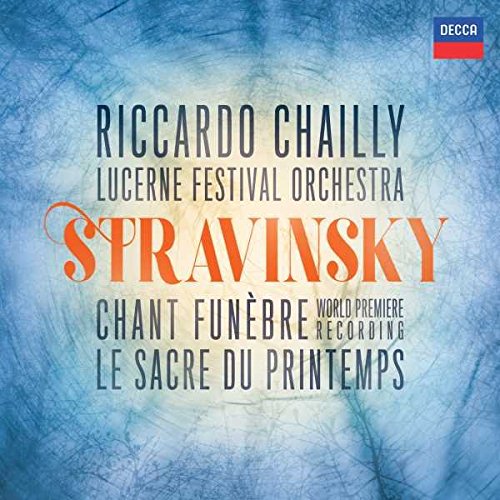
I.Stravinsky, Chant funèbre, Le Faune et al Bergère, The Rite of Spring, Scherzo fantastique, Feu d’artifice, Riccardo Chailly, Lucerne Festival Orchestra, Decca 483 2563


available at Amazon
I.Stravinsky, Chant funèbre, Le Sacre et al., Riccardo Chailly, Lucerne Festival Orchestra,
Decca

Happily, Riccardo Chailly is interested in repertoire just off the beaten path in a way that many mainstream conductors can’t be bothered with… and instead of tacking a Firebird or some such warhorse onto his lusciously magnificent recording of the Rite of the Spring, he added the orchestral works Scherzo fantastique op.3, Feu d’artifice op.4, the Chant funebre op.5 (a world premiere recording), and the orchestral song Le Faune et al Bergère op.2 to the mix. That novel Chant funebre – composed to memorialize Rimsky-Korsakov – starts out of a hovering, dark mist… much like something that Wagner might have composed. A flame licks through the brooding brass. Probably some Niebelungs just died. The ten-minute work eventually turns to a more lyrical, even Tchaikovsky-esque vein. Despite (or not?) more Wagner quotations to greet us in the subsequent works, this is really Stravinsky at his most French phase; much of the music resembles – vaguely in a literal sense; more strongly in mood – that of Paul Dukas or even Albert Roussel. The gorgeous, pastoral central section of the Scherzo fantastique, op.3, is of poetic and elegiac grace that any composer interested in sheer beauty would be proud to have penned. (Complete CD of the Week review on Forbes.com)

# 3 - New Release


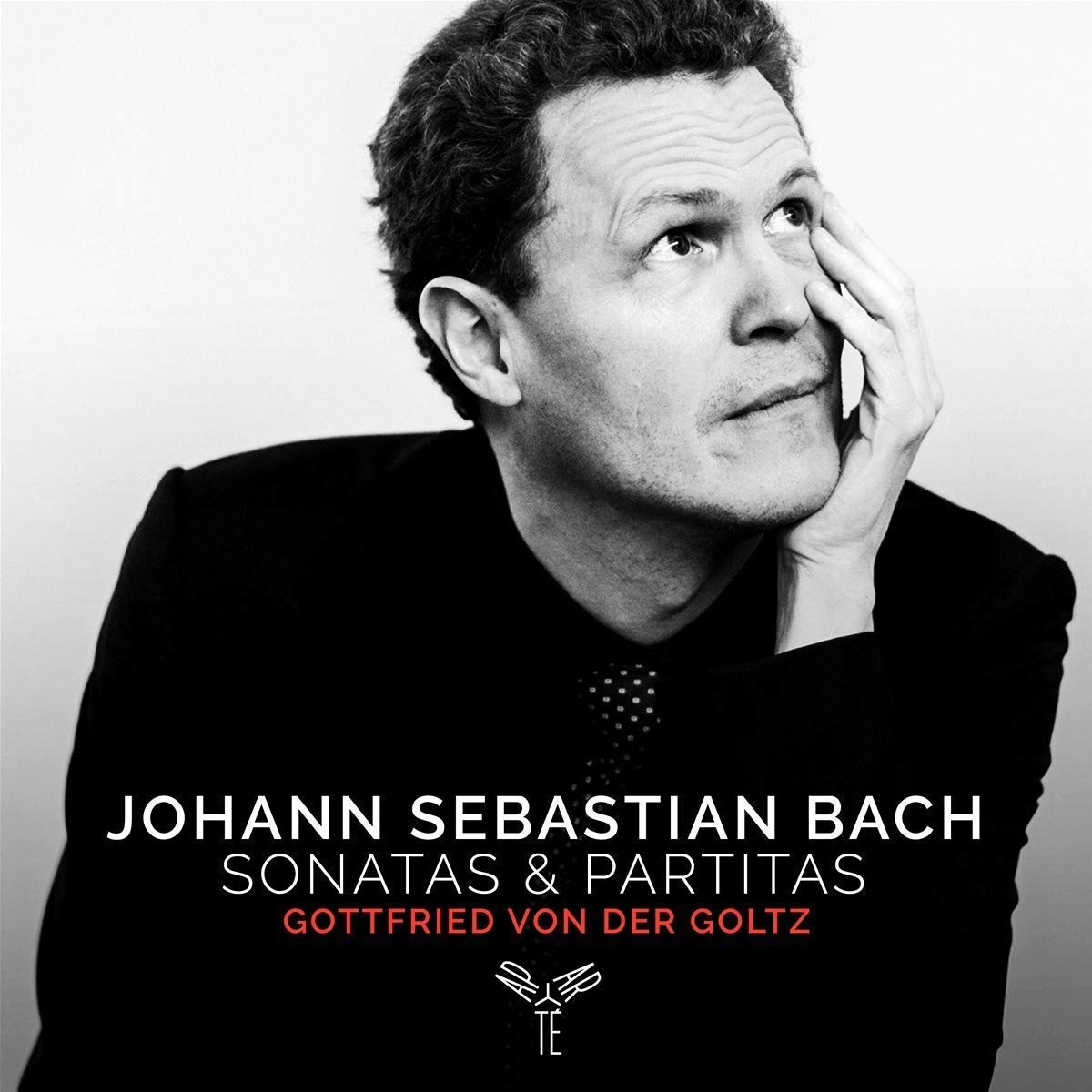
J.S.Bach, Sonatas and Partitas for Solo Violin, Gottfried von der Goltz, Aparté AP176


available at Amazon
J.S.Bach, Sonatas and Partitas for Solo Violin, Gottfried von der Goltz,
Aparté

Gottfried von der Goltz is best known as one of the leaders of the Freiburg Baroque Orchestra. That’s all well and good, but here he is, sans orchestra, in the Bach Sonatas and Partitas. Do we really need concertmasters entertaining notions of soloist careers? Yikes. That’s an old attitude, actually, from when those two jobs really were very different and the skillset not overlapping all that much. Even good concert masters, harnessed into a solo rôle for reasons of morale or economy, could sound like floundering amateurs. But there's a new generation, with all the skills for soloist positions but opting for the orchestral rôle anyway, and they certainly have what it takes. The Berlin Philharmonic’s Daishin Kashimoto comes to mind… and it turns out to be no different with von der Goltz, either. His recording, far from being a superfluous stuffer of the catalogue, is full of elegance and lightness, effortless perfection and joy.  My review on ClassicsToday will be up eventually, but until then take my word for it: Amid the glut of Sonata and Partita recordings, this one is special!

# 2 - New Release


B.Martinů, Bouquet of Flowers (+ Jan Novák, Philharmonic Dances), Tomáš Netopil, Prague RSO, Supraphon SU 4220


available at Amazon
B.Martinů, Bouquet of Flowers (+ Jan Novák, Philharmonic Dances), Tomáš Netopil, Prague RSO,
Supraphon

Bohuslav Martinů’s relatively obscure Bouquet of Flowers with its full-on Bohemian neo-classicism evokes hints of Orff’s Carmina Burana or might make one perceive touches of Janáček (perhaps from the Glagolitic Mass) or even Dvořák’s The Spectre’s Bride. But none of those hints come through with any strength; Martinů retains his own voice, even as he was able to change musico-linguistic tack even more often than he had to switch languages, what with having lived for extended periods of his life in Czecheslovakia, France, the US, and Switzerland.

A collection of seven vignettes and an overture, Bouquet of Flowers is a highly effective drama (or series of mini-dramas) written for orchestra, soloists, and choruses and intended for radio broadcast. It is constantly enchanting and entrancing music, even if the words of Karel Jaromír Erben’s poems – the famous collection "A Bouquet of Folk Legends" – remain foreign to your ear. The singers and the orchestra – the Prague Radio Symphony Orchestra under the youngish Tomáš Netopil – indulge in this music with something that sounds like total conviction. This is the ‘lesser’ among the established orchestras in Prague – and you’d never guess it.
(Full review on SurprisedByBeauty.org)


# 1 - New Release


F.Martin, Die Weise von Liebe und Tod des Cornets Christoph Rilke, Fabio Luisi, Philharmonia Zurich, Okka von der Damerau, Philharmonia PHR 0108


available at Amazon
F.Martin, Die Weise von Liebe und Tod, Fabio Luisi, Philharmonia Zurich, Okka von der Damerau,
PHR

Rainer Maria Rilke’s youthful poem-cum-epic "Die Weise von Liebe und Tod des Cornets Christoph Rilke" about a soldier who, reminiscing heavily, is moved to the front in Hungary in 1663, being promoted to flag bearer and then misses the battle after a love-filled night with a countess (so far it’s pure Flashman!) only to find heroic death wildly storming into the enemy (decidedly not Flashman), was a favorite read of German soldiers in the World Wars. There’s also something to the subject that brings out the best in early 20th century composers: it was set to music (among yet others) by Danish Paul von Klenau, Austrian-Czech Viktor Ullmann, and Swiss Frank Martin… and each came up with one of their masterpieces.

Frank Martin’s entrancing tone poem for contralto and orchestra was written while the war raged outside Switzerland – and perhaps therefore has a decidedly unheroic, melancholy touch to it. There’s a bittersweet beauty to the music, a bit like the sour and bitter but satisfying lingering of pure chocolate. Fabio Luisi, who seems never to have been more at home in a post than at the Zurich Opera and with its Philharmonia Zurich, provides the keenly felt, sensitive musical painting for the backdrop upon which Okka von der Damerau gives one of the most striking vocal performances I have heard on disc in a long time. With calm radiance she makes you take every step with the protagonist. The result is, in a word, ravishing.


18.12.18

Surprised by Beauty: Bohuslav Martinů – Recommended Recordings


One by one, I am updating (cleaning, linking, adding) the Recommended Recordings sections from Surprised By Beauty as they appear on the SBB-Website. Here's the latest section given this treatment:

Bohuslav Martinů – Recommended Recordings


Recordings of Martinů have exploded over the last 15, 20 years, leaving the intrepid Martinů-explorer with an embarrassment of riches to choose from.

The Symphonies

A magician is needed to conjure the magic in Martinů’s music. Martinů is such an idiosyncratic composer that the right performance is vital to bringing out its special character. Czech conductor Karel Ančerl made Martinů’s music not only tremendously exciting but almost dangerous.

His interpretations with the Czech Philharmonic reveal the sense of menace in this music (as in the crepuscular murmurings at the beginning of the Sixth Symphony). Despite its age, Ančerl’s 1956 recording of the Sixth Symphony (Supraphon), is indispensable. Once you hear it, you will understand how other performances fall short. Currently the Sixth is conveniently coupled with the Fifth and Memorial to Lidice on Supraphon’s “Ančerl Gold Edition”. Ančerl’s interpretations of The Parables and Les Fresques de Piero della Francesca are just about as incomparable and occasionally available on Supraphon. Broadcast tapes of Symphonies nos. 1, 3, and 5, again with the Czech Philharmonic, have once appeared on the Multisonic label and can occasionally be found second-hand. Their sound is dim, but Ančerl’s fire burns through... (continue)


25.7.18

On ClassicsToday: A Martinů Double Sister Act

A Martinů Double Sister Act

Review by: Jens F. Laurson

MARTINU_Double-Concertos_Kodama-Foster_Pentatone_jens-f-laurson_classical-critic
Bohuslav Martinů, the cosmopolitan-by-fate who grew up with a bird’s eye view of the world, up in a church tower, is an endlessly fascinating composer who, at his best, surprises with magnificent beauty embedded in ample skill and great depth.... continue reading


Martinů, Double Piano Concerto, mvt. 1, excerpt

21.11.15

Second Opinion: Bělohlávek Brings Martinů

available at Amazon
Martinů, Symphonies, BBC Symphony Orchestra, J. Bělohlávek
(Onyx, 2011)

available at Amazon
Mozart, "Prague" Symphony, Prague Philharmonia, J. Bělohlávek
(Supraphon, 2003)
For a National Symphony Orchestra program concluding with Beethoven's evergreen "Emperor" concerto, the Kennedy Center Concert Hall was surprisingly undersold on Friday night. Your reviewer was the only soul in Row T on the left side of the auditorium, and mine was not the only such row. The Beethoven was also the debut of Igor Levit, a pianist still in his 20s who has garnered unreserved praise from Alex Ross among others. Levit had to cancel his Washington recital debut this past May, an event that might have brought more attention: even so, it was somewhat surprising to see such a low turnout, especially with Mozart's always popular "Prague" symphony as a concert opener. Surely, the unfamiliar name of Bohuslav Martinů, whose sixth symphony the NSO played for the first time, could not have turned people off?

Martinů is an Ionarts favorite, an undervalued composer whose music we wish we heard far more often in performance. Günther Herbig was the last conductor we heard lead the sixth symphony, with the Baltimore Symphony Orchestra in 2007. Bělohlávek, though, is a Martinů specialist, and he expertly guided the NSO musicians through the piece: the growls and murmurs and endless color variations the composer creates with the large orchestra, but with the focus on long-lined melodies that soar atop the chaos of fantasy. If Martinů indeed had in mind a reference to Berlioz -- he reportedly thought of subtitling the work "Nouvelle symphonie fantastique" before settling on "Fantaisies symphoniques" -- then the idée fixe was likely the obsessively stated half-step motif that runs through the work, opposed to a more tender second theme in the first movement, ornamented with a lovely violin solo from concertmaster Nurit Bar-Josef. Other obsessions, perhaps, are expressed in the buzzing second movement, tinged with more biting dissonant edges, repeated chords and notes, and almost Shostakovich-like turns toward militarism. The idea of a series of symphonic fantasies, as the subtitle puts it, is expressed in an endless range of exotic colors, ending in a third movement that opens with and returns to an intense funeral march or a sort of elegy. The piece fascinates, and this performance was gripping.


Other Reviews:

Robert R. Reilly, Jiří Bělohlávek and the NSO (Ionarts, November 20)

Anne Midgette, Czech guest conductor leads pianist Igor Levit in strong debut at NSO (Washington Post, November 20)

David Rohde, The National Symphony Orchestra with Guest Conductor Jiri Belohlavek and Pianist Igor Levit (D.C. Metro Theater Arts, November 20)
Bělohlávek seemed to have chosen Mozart's "Prague" symphony by way of contrast, reducing the NSO strings to a size similar to that of the Prague Philharmonia, the chamber orchestra he founded in the 1990s. While the NSO did not always seem to be right in synch with Bělohlávek's gestures, leading to some sloppy articulations in the violins, the result was a rarefied sound, controlled and soft. Articulations were often clean and detached, giving a graceful lilt, and he brought out as many inner contrapuntal details as he could, even at loud dynamics. The musicians also seemed to struggle with Bělohlávek's subdivided tempo in the second movement, which he kept trying to keep from bogging down too much in rubato, but the delicacy of the performance, with filigree clarity, was a pleasure to hear. The third movement, taken on the breakneck side of Presto, was equally graceful, especially the percolating woodwind sections.

Little about Levit's performance in the Beethoven seemed to justify the raptures he has received from other critics. There were certainly no technical complaints, as he opened the piece with those swirling cadenzas, and the third movement was assured and clean, although something about his playing was perhaps too well-behaved. He took some of the softer moments with a music-box, tinkling approach, savoring the first hints of the finale's main theme as he transitioned into the third movement, for example. At the same time, many of those moments felt etiolated more than anything else, the attempt to make them special falling flat. Levit is a musician to keep an ear on, to be sure, but this was not his finest hour.

This concert repeats this evening.

20.11.15

Jiří Bělohlávek and the NSO

Many thanks to Robert R. Reilly for this review from the Kennedy Center.

available at Amazon
Martinů, Symphonies, BBC Symphony Orchestra, J. Bělohlávek
(Onyx, 2011)
I came for the Bohuslav Martinů, heard it, and was conquered. I apologize for the campy gloss on Julius Caesar’s famous "Veni, vidi, vici," but I needed to say something special about what turns out to be the National Symphony Orchestra's debut of Martinů’s Sixth Symphony, Fantaisies symphoniques. I like to think that Washington, D.C., is not a provincial place, but then how is it that the NSO had not played this 1955 composition until the evening of November 19, 2015, at the Kennedy Center Concert Hall? No matter, it was worth the 60-year wait, because this is a brilliantly fantastical piece of music.

World War II drove Martinů from Europe to America, where he undertook, after the age of 50, the composition of his six symphonies. He largely shed the Baroque forms and sewing machine music that he had indulged in earlier, and let his inspiration find its own unique shape from the Moravian melodies he used and the extraordinary kaleidoscopic colors he drew from the orchestra. In the mid-1940s, Martinů told his biographer, “From now on, I’m going in for fantasy.” And he did. It is quite difficult to describe exactly how Martinů’s best music from this period, like the Sixth, works. Not even he knew. Concerning the Fantaisies Symphoniques, he said: “Something holds it together, I don’t know what, but it has a single line and I have expressed something in it -- the future will show.”

Like his countrymen Leos Janáček’s, Martinů’s music seems to function by building up large mosaics of fragmentary, repetitive motifs. Short motivic phrases are relentlessly repeated out of sheer excitement or to create tension. Martinů uses accelerating rhythms and rising volume of sound to propel his abbreviated motifs in a scalar ascent, at the top of which a melody erupts and sweeps all before it. Out of the swirling strings and gurgling winds, a broader theme invariably arises. These melodic moments provide both relief from the tense buildups and exhilaration at their resolution. One perceptive critic noted that “no matter how rhythmic Martinů tries to be, lyricism keeps breaking through.”

Making up for lost time, the NSO engaged Czech conductor Jiří Bělohlávek, an acclaimed specialist in Martinů’s music (Complete Symphonies, BBC Symphony Orchestra -- Onyx 4061), to bring us the Sixth. This symphony must snap, crackle, and soar to work. It did under Bělohlávek’s direction. Martinů created what sounds at times like the musical equivalent of a beehive -- the music swarms and buzzes with great excitement, and then gets whacked, usually by the timpani. These alarming moments were perfectly captured, but so was the singing lyricism. Because this music is so inimitably idiosyncratic, I was delighted to hear how well the NSO was able to play it in its first time out. It admirably met the challenge, and I’m sure will only improve in the next two performances. All sections of the orchestra did well in this kaleidoscopic music, with special moments for the first violin and principal clarinet. I also have to say the timpanists did an excellent job in contributing to Martinů’s shimmering sound.


Other Reviews:

Anne Midgette, Czech guest conductor leads pianist Igor Levit in strong debut at NSO (Washington Post, November 20)

David Rohde, The National Symphony Orchestra with Guest Conductor Jiri Belohlavek and Pianist Igor Levit (D.C. Metro Theater Arts, November 20)
Suitably enough for a conductor born in Prague, Bělohlávek began the evening with Mozart’s “Prague” Symphony No. 38. Bělohlávek took a relaxed approach to the music. On an interpretive scale going from the jittery, driven approach of Charles Mackerras to the mellow operatic approach of Josef Krips, Bělohlávek clearly favored the latter. Some might have found it a bit lacking in spirit, but it did give the opportunity to savor the inner voices.

After intermission, pianist Igor Levit joined the NSO to play Beethoven’s Fifth Piano Concerto. I cannot say I was thrilled with this programming. Couldn’t we have heard more Prague music, for instance, one of Martinů’s sadly neglected piano concertos? I admit that only the greatest playing could’ve captured my attention for another Fifth. There is nothing wrong with what I heard, except for the soloist and orchestra occasionally being out of sync with each other, but I was not mesmerized until halfway through the second movement, and then suitably energized. However, the combination of power and poetry that characterizes the very greatest performances of this great music was not quite there, notwithstanding the standing ovation.

In any case, go for the Martinů. By itself, it’s very much worth it, and it might be another 60 years before you get another chance.

This program repeats tonight and tomorrow.

26.10.15

Pavel Haas Quartet @ LoC


available at Amazon
Smetana, String Quartets, Pavel Haas Quartet
(Supraphon, 2015)
Charles T. Downey, Engaging new voice with Kennedy Center Chamber Players (Washington Post, October 20)
The members of the Pavel Haas Quartet have said in interviews that they do not think being Czech helps them play the music of Czech composers. Nevertheless, that is where this excellent string quartet has had its greatest triumphs on disc, for the Supraphon label. At a Friday night concert, the Library of Congress, not surprisingly, featured them in quartets by Bohuslav Martinu and Antonin Dvorak. Since the group had to cancel its last U.S. tour, in 2013, this was its first local appearance since 2008.

Since that concert, also at the Library of Congress, the group has gone through a couple of changes for second violin... [Continue reading]
Pavel Haas Quartet
Library of Congress

SEE ALSO:
Jeremy Eichler, Pavel Haas Quartet makes local debut (Boston Globe, October 24)

Stefanie Lubkowski, Martinů’s music provides the highlight with Pavel Haas Quartet (Boston Classical Review, October 23)

Chloe Cutts, We do not believe in a Czech tradition of playing, says the Pavel Haas Quartet (The Strad, September 28)

18.1.15

Best Recordings of 2007 / These Are a Few of My Favorite Things: II - Concerto


For 2007 I wrote something similar to the "Best Recordings" list for WETA's long-defunct blog, naming it: "These Are a Few of My Favorite Things", which ended up being divided into eleven parts:

I - Crossover


This is the second part, restored to ionarts:

25.6.14

Ionarts-at-Large: Rott World Premiere, Widmann & Martinů with the ORF RSO


There was some great programming going on, on part of the ORF Radio Symphony Orchestra with Cornelius Meister, last Thursday at the Wiener Konzerthaus. One way you could tell: The place was half empty. Why bother indeed: Only a world premiere by the enigmatic proto-Mahlerian Hans Rott, the Austrian premiere of Jörg Widman’s Violin Concerto with Christian Tetzlaff, and a rarely heard great symphony—Martinů’s Third—to cap it off. If this kind of concert can’t be communicated in such a way to draw a good crowd, there are perhaps dark times ahead for classical music, or classical music marketing… or most likely both. But let’s enjoy it while it lasts, on the willing taxpayer’s expense:

Hans Rott’s Hamlet Overture aims grandly at Shakespeare and succeeds on its own terms—something that Rott himself may not have believed, because he gave up composition after finishing the full sketch and a few pages of orchestration. We can hear for ourselves now, because the 18-year old composer’s work has had its (apparently often cryptic) instructions for instrumentation in the unfinished score turned into a performing version by Johannes Volker Schmidt, which helped it to its world premiere now, 130 years after Hans Rott’s death.

Belated World Premiere


available at Amazon
H.Rott, Symphony in E, Orchestral Suite,
P.Järvi / Frankfurt RSO
RCA

Although it’s a much simpler work than the vast Symphony that helped Rott to late and belated fame, it’s a charmer. It opens with a brass chorale over timpani—half Bruckner, half Gabrieli—before the sumptuous strings set in that took the work much closer to the romantic realm that one would expect. Still, the neo-baroque elements persist faintly, and they were especially well played by the brass before later flubs slight marred the picture towards the: this-is-the-piece-we-couldn’t-spend-much-time-in-rehearsal-on status… But all the same it was a committed and sympathetic performance, better than that of the considerably more challenging and ambitious Rott Symphony by the same forces at the 2011 Salzburg Festival in any case. As is usual—because we cannot grant Rott his own voice on grounds of our own unfamiliarity with his limited canon of works (much less mature ones), the need to compare his music to others prevails: Wagner here, Liszt there, and Herzogenberg, perhaps. Issue on CD much hoped for… especially since the ORF recorded and broadcast the performance, anyway.

Onward from highlight to highlight: Jörg Widman’s Violin Concerto is a

4.6.14

Boston Ballet @ KC


(L to R) Lasha Khozashvili and Lia Cirio in D.M.J. 1953-1977, Boston Ballet (photo © Rosalie O’Connor)

This year is the 50th anniversary of the Boston Ballet, a milestone the group is celebrating with a brief run of performances at the Kennedy Center Opera House. Seen last night, the selection made by artistic director Mikko Nissinen highlights his organization's strengths in the contemporary, while the central panel of the triptych -- the Rubies portion of George Balanchine's Jewels sandwiched between two recent works by Czech choreographers -- had a musty quality.

This Rubies was a mild-mannered, sort of happy-go-lucky version by comparison to the recent performance by New York City Ballet, which is the source, so to speak. It was fun and jazzy, of course, but Whitney Jensen in the dynamo solo role was less buoyant, and her scene with the four men, who position her like a marionette had little menace or sizzle to it. This put the focus more on the couple of Jeffrey Cirio and Misa Kuranaga, whose pas de deux in the central movement was lovely. The Kennedy Center Opera House Orchestra sounded like they were much more familiar with the music, Stravinsky's Capriccio for Piano and Orchestra, although the piano soloist from the Boston Ballet, Freda Locker, was less sure.


Other Articles:

Sarah Kaufman, Boston Ballet performs ‘Bella Figura’ at the Kennedy Center (Washington Post, June 4)

---, The Czech National Theatre Ballet at the Harman Center (Washington Post, April 27, 2009)

Rebecca Ritzel, Kennedy Center performances cap 50th season for Boston, Pennsylvania ballets (Washington Post, May 31)

Jeffrey Gantz, Boston Ballet glitters in ‘Jewels’ (Boston Globe, May 23)

---, Boston Ballet puts its versatility on display in new production (Boston Globe, May 10)
D.M.J. 1953–1977, by Czech choreographer Petr Zuska, was more alluring, a work whose title refers to the names of the three Czech composers whose music is heard in it, just premiered by the Boston Ballet last month, but seen in Washington in 2009 from the Czech National Theater Ballet. (The years 1953-1977 in the title were glimpsed by Zuska on a woman's tombstone in Montreal.) It tells the story of a man's regret over the death of a beloved woman, as he seems to sleep fitfully, tormented by bad memories, between scenes. The Largo from Dvořák’s “New World” Symphony, with its haunting English horn solo, was the backdrop for scenes of mournful reminiscence, as six couples acted out the joys and sorrows of conjugal life, after the man deposits a rose on what looks like a grave. Martinů’s third symphony, also the Largo movement but more jagged and driving, was paired with scenes of greater violence and tension, with the outstanding male lead, Lasha Khozashvili, shirtless and menacing. For the final scene, to the last movement ("The Barn Owl Has Not Flown Away!") of the first book of Janáček’s piano collection On the Overgrown Path, the corps gathered around the tomb, and hearing the hoot of the barn owl in the score, gradually departed. The lamented woman, danced with muscular agitation by Lia Cirio, writhed about in anguish on a tomb-like bed.

The triptych concluded with the most disturbing of the three pieces, Bella Figura, by another Czech choreographer, Jiří Kylián. It uses a mishmash of unrelated music -- Lukas Foss, Pergolesi (movements of the Stabat Mater, the Adagio from Alessandro Marcello's D minor oboe concerto, a Vivaldi mandolin concerto -- and the corresponding vignettes, some compelling and others merely odd, were just as much of a mishmash. Kylián, like Zuska, uses a lot of mime, a sense of having crossed a line reinforced by the choreographer's embrace of silence for long stretches at the beginning and end. To make matters worse, the music was played from recordings, with a canned, obtrusive sound and leaving the orchestra pit darkened, only adding to the sense of something unfolding in the machine-cut way that it must. The movements of identically costumed men and women, bare-chested and with red, flower-like skirts, added a Polynesian flair and there were some interesting visual effects, as when one of the women was enveloped by a black curtain, but not enough to sustain interest.

This performance repeats tonight and tomorrow night (June 4 and 5), in the Kennedy Center Opera House.

7.4.14

Mahan Esfahani


Charles T. Downey, Harpsichordist Mahan Esfahani’s alternately rousing, bland birthday tribute to C.P.E. Bach (Washington Post, April 7, 2014)

available at Amazon
C. P. E. Bach, Württemberg Sonatas, M. Esfahani
(Hyperion, 2014)
Mahan Esfahani came home Friday night, in a sense, to play a recital at the Library of Congress. The American harpsichordist, who grew up in Potomac, Md., offered a tribute to C.P.E. Bach, the son of J.S. Bach who was born 300 years ago last month. The program included only two sonatas by the birthday boy, paired with music by other members of his famous family and some unexpected choices, including a piece by Domenico Cimarosa as an encore.

Whenever the music offered fast-moving scales and figuration, as in J.S. Bach’s “Chromatic Fantasy and Fugue,” Esfahani ran with it, his agile fingers making remarkably clean and accurate contact with every key. By the last piece, C.P.E. Bach’s A minor “Württemberg” sonata (Wq. 49/1), though, both his hands and my ears had tired of dazzling runs. [Continue reading]
Mahan Esfahani, harpsichord
Music of C. P. E. Bach, others
Library of Congress

SEE ALSO:
Lloyd Grove, Reliable Source (Washington Post, February 23, 2000)

Mahan Esfahani, Leave us alone (The Iranian, October 11, 2003)


17.9.11

Czeching In

Style masthead

See my review of the latest concert from the Mutual Inspirations Festival in today's Washington Post:

Charles T. Downey, Czech Embassy celebrates 170th anniversary of Dvořák’s birth
Washington Post, September 17, 2011

available at Amazon
Dvořák, Moravian Duets, op. 32, Prague Chamber Choir
Czech composer Antonín Dvořák famously spent several years in the United States during the 1890s. The Embassy of the Czech Republic celebrates the connection — and what would be the composer’s 170th birthday — with a Mutual Inspirations Festival. The festival continued Thursday with a performance by members of Washington Musica Viva.

The Dvořák on the program was the “Moravian Duets,” op. 32. In these charming, simple pieces, Dvořák used the words of folk songs, mostly substituting his melodies and harmonies for the original music. They were instantly popular, and they have the same spring-meadow freshness today. Soprano Elizabeth Kluegel and mezzo-soprano Karyn Friedman had an admirable blend of vocal tone color, important because the parts are often joined in pleasing harmonies. [Continue reading]
SEE ALSO:
Anne Midgette, Dvořák’s music to be celebrated in two-month festival (Washington Post, September 2)

18.5.10

Emerson Quartet's Bohemian Rhapsody

This review is an Ionarts exclusive.

available at Amazon
Janáček, String Quartets / Martinů, Three Madrigals for Violin and Viola, Emerson Quartet

(released on May 19, 2009)
Deutsche Grammophon 477 8093 | 55'10"

available at Amazon
Dvořák, String Quartets / Quintet, Emerson Quartet

(released on April 13, 2010)
Deutsche Grammophon 477 8765 | 55'10"
The Emerson Quartet closed out its Smithsonian Residents Associates series, at the National Museum of Natural History, with a concert on Saturday evening. The program drew its focus from the quartet's recent recordings, music by Czech composers, which has been much at the center of their concert programming, too. The first half was taken entirely from the Emerson's Janáček and Martinů CD from last year, beginning with Martinů's Three Madrigals for Violin and Viola ("Duo No. 1," H. 313). The quartet's sound has always been more sinewy, even metallic, than glowing, and some stridency and imprecise intonation crept into the playing of violinist Philip Setzer, who took the upper part. This was especially true in the outer fast movements, like the first-movement moto perpetuo, in which a few pauses in each part were seemingly inserted only to accommodate page turns. The dreamy second movement was mysterious in its folk-steeped inflections: fiddle effects, chromatically odd scales, cimbalom-like pizzicati. The recording, also with the group's superb violist Lawrence Dutton, is more even across the three movements, with fewer clashes in the fast movements but less mystery in the second movement.

Janáček was represented by his second string quartet, known as "Intimate Letters," for its mode of passionate epistolary confession. The subtitle refers to the billets doux that the elder composer wrote to the much younger Kamila Stösslová: because of his invigorating love for this inspirational muse, we have many of the composer's late masterpieces. Intonation issues continued for Setzer on first violin (especially hair-raising on the first movement's final fortissimo chord, for example) and the rest of the quartet in the Janáček. The eerie sul ponticello solos and the forlorn viola solo were highlights of the first movement, with the second movement marked by a plangent tone, even biting and acerbic. Again, it was the slow passages, with their ethereal effects, that were most pleasing, like the passionate but elegiac serenade of the third movement, here wistful and here anguished. The strident Emerson sound, born of an apparent willingness to push the tone near ugliness for dramatic effect, served the ecstatic conclusion of the fourth movement well. These problems are less pronounced in the recording, which is hardly surprising.


Other Reviews:

Allan Kozinn, Stirring the Sweetly Melodic Into the Darkly Intense (New York Times, May 17)

Steve Smith, In Dvorak’s Folk Works, Elegance, Too (New York Times, May 10)

John Terauds, Emerson String Quartet makes Dvorák sing (Toronto Star, May 5)

Edward Reichel, Emerson Quartet breathes some life into Dvorak (Deseret News, April 28)
For the second half the quartet turned to its latest release, a set of Dvořák quartets (and one quintet) called Old World-New World, to round out the Czech holy trinity. Dvořák was also featured in the quartet's performance of Cypresses last season, and while one hears one of the composer's quartets every once in a while, there are many delightful discoveries to be made. Paul Neubauer joined the quartet as second violist for the third quintet (E♭ major, op. 97), as he did on the recording: he actually is the first to play, as if to announce his presence. Eugene Drucker was primarius for the quintet and played with a lovely tone in the second movement especially, but in many ways the two violas lead the piece, as in Dutton's first viola solo in the second movement and with both instruments coloring the third-movement Larghetto variations in a gloomy penumbra. The ensemble sound was full-throated and well balanced. The fourth movement's chipper dotted-rhythm motif is an unshakable ear worm, replayed in my head for hours afterward, alternating with some more folk fiddle-inspired sounds.

The Emerson Quartet's series at the National Museum of Natural History will continue next season, with five concerts from September 26, 2010, to May 8, 2011. More Dvořák will be on offer, this time paired with Mozart, and Haydn, Berg, Schubert, Webern, Debussy, Bartók, Mendelssohn, Jalbert, and Beethoven will be represented. One of the concerts will feature only cellist David Finckel in recital (January 15, 2011).

15.3.10

American Chamber Players: "Paris in the 20s"

This review is an Ionarts exclusive.

available at Amazon
E. Hemingway, A Moveable Feast
Friday night, with visions of salons and the culturally haute part of that golden age, Dumbarton Concerts and the American Chamber Players presented a multifaceted concert called “Paris in the 20s.” An appealing premise, the program included excerpts from Ernest Hemingway’s A Moveable Feast, narrated by radio personality Martin Goldsmith, and recreations of choreography by Isadora Duncan. The opening work, a delightfully simple trio for flute, cello, and piano by Gabriel Pierné, exemplified the carefree air of the time and place. Unfortunately, the musicians began on unstable footing and never quite recovered. In fact, throughout the evening, and despite the ACP’s tight ensemble playing, cellist Alberto Parrini’s intonation was consistently off. Parrini was so off, in fact, that it seemed just plain odd given the caliber of musicianship and begged the question whether there were outside contributing factors. However, pianist Anna Stoytcheva and flutist Sara Stern played beautifully, and the communication among all three was exceptional.

Albert Roussel’s trio for flute, viola, and cello (op. 40) presented a light musical sentiment similar to the Pierné, and it was not until the meaty Martinů and the closing Fauré that the musicians really began to dig in. In the Martinů duo, violinist Joanna Maurer and cellist Parrini created some wonderfully lush sonorous effects, and in Fauré’s Piano Quartet No. 2 (op. 45), the musicians were finally in their true element. The second half began with Carlos Rodriguez at the piano and “Duncan dancer,” Ingrid Zimmer, dancing to several of Chopin’s preludes in what was the true highlight of the evening. The choreography was Isadora Duncan’s own, passed down through generations of students and recreated beautifully by Zimmer. Evoking the beginnings of modern dance, Zimmer effectively whisked the audience to the setting of the program.

While the program on a whole clearly had much meticulous thought and care put into it, the musical programming was still not quite right. Fauré was clearly of an earlier period, and the two opening works by Pierné and Roussel were so similar in style that the concert began slowly and left one begging for another view of Paris. Each segment was fine enough on its own, but all together, with the quite long Hemingway extracts, and compounded by cellist Parrini’s technical issues, “Paris in the 20s” felt burdened: not quite how one imagines the decade in that wild cultural hub.

One concert remains this season at Dumbarton Concerts, an appearance by the Miró String Quartet (April 10, 8 pm), including string quartets by Mendelssohn and the extraordinary young Washington-area composer Tudor Dominik Maican.

20.11.09

Sonia Wieder-Atherton Sings of the East

available at Amazon
Chants d'Est, Sinfonia Varsovia, S. Wieder-Atherton

(released on April 28, 2009)
Naïve V 5178 | 61'37"
Cellist Sonia Wieder-Atherton has made a niche for herself by avoiding the well-trodden paths of celebrity cellists, although her credentials -- Russian conservatory studies, lessons with Mstislav Rostropovich, a Mention at the Third Rostropovich Competition in 1986 (the year that Gary Hoffman won the Grand Prize and Jean-Guihen Queyras won the Prix Jeanne Marx) -- could have set her on that trajectory. A perusal of her concert schedule shows that she plays a lot of interesting chamber music, programs a lot of contemporary music on her solo concerts, and plays the occasional concerto, mostly ones written in the 20th century, with orchestras here and there. A few years ago we wrote about one of her collaborations with filmmaker Chantal Akerman, providing music that went with a screening of Akerman's film D'Est, and one of the cellist's abiding interests has been in music of Russia and central Europe, especially with Jewish roots.

Wieder-Atherton has been performing music from her new CD of Slavic music, Chants d'Est, in Europe, but with an ensemble other than the Sinfonia Varsova heard on the disc. In a One on One interview for Playbill Arts, Wieder-Atherton said that she conceived the program as "a journey of 24 hours," beginning with an arrangement of the Nunc dimittis from Rachmaninov's Vespers (so, a journey that begins in the darkness of late evening, I guess). The regions and peoples visited in this nocturnal peregrination include Hungary (Dohnányi's Ruralia Hungarica), Russia and Ukraine (Tcherepnin's Tatar Dance and Prokofiev's devastating The Field of the Dead from Alexander Nevsky), and Czechoslovakia (Franck Krawczyk's adaptations of Janáček's Moravian Folksongs and Martinů's Variations on a Slovak Folksong). The predominating mood is somber, imbued with a depressive gloom, culminating in the contemplation of total separation from life, in a moving, tender adaptation of Mahler's song Ich bin der Welt abhanden gekommen. It is a gorgeous CD for quiet listening, with smooth, emotionally expansive playing from the Sinfonia Varsovia, conducted in some tracks by Christophe Mangou.

Sonia Wieder-Atherton and the Niguna Ensemble will perform selections from this disc on their program at Le Poisson Rouge in New York this Monday (November 23, 7:30 pm).