CD Reviews | CTD (Briefly Noted) | JFL (Dip Your Ears) | DVD Reviews
Showing posts with label Pyotr Tchaikovsky. Show all posts

23.1.26

Critic’s Notebook: Klaus Mäkelä, Lisa Batiashvili, and the Oslo Philharmonic in Vienna


Also reviewed for Die Presse: Denkwürdiger Brutalismus im Konzerthaus

available at Amazon
P. Tchaikovsky + Sibelius
Violin Concerto(s)
Lisa Batiashvili
D.Barenboim, StaKap Berlin
(DG, 2016)


US | UK | DE

available at Amazon
D. Shostakovich
Symphony No.8
M.Jansons, Pittsburg SO
(EMI/Warner, 2001)


US | UK | DE

Memorable Brutalism at the Konzerthaus


Klaus Mäkelä and the Oslo Philharmonic thrill with Shostakovich and Batiashvili


You can tell already when you enter the foyer of the Konzerthaus that something special is afoot. The atmosphere is different, busier of course – and scents of different, rarer women’s perfumes are in the air. This was noticeable, again, on Thursday evening. The mere presence of the Oslo Philharmonic would not, in itself, have caused this. Star violinist Lisa Batiashvili playing the Tchaikovsky concerto might not have either; Vienna, after all, is spoiled as far as that sort of thing is concerned. And that Shostakovich’s – admittedly imposing – Eighth Symphony should generate such anticipatory excitement may, for as much as I love the composer, also be doubted. No: the magic ingredient in this musical potion was Klaus Mäkelä, whose much-praised skills Viennese audiences are fortunate enough to inspect – and, where appropriate, enjoy – with gratifying regularity. (Again in March at the Konzerthaus, with the Orchestre de Paris.)

It was Batiashvili’s artistry, however, that first took centre stage. She played Tchaikovsky’s evergreen concerto with rock-solid assurance, without contrived wildness or treacle. And yet nothing sounds generic in her hands: the concerto doesn’t simper; it is – as a former Presse critic once famously observed – being tugged, tussled, bruised. Batiashvili brings bite to the music – and a throaty tone that recalls, if you remember, Gianna Nannini. And still, for all her volcanic playing, it is beauty of sound that prevails. Some in the audiences [cough-cough] may have wondered whether, instead of Tchaikovsky, some other concerto might not once in a while be an option – Martinů’s Second, or Othmar Schoeck’s, for instance – but judging by the rapturous applause... not many. The encore (with orchestra), “Et Sæterbesøg” (“A Visit to the Mountain Pasture”) – by the “Norwegian Paganini” Ole Bull – at least pointed in that direction.

Not every classical music lover will be immediately enamoured of Shostakovich’s Eighth Symphony. Written in 1943, it is a bloody dark work, even by DSCH’s standards. It lacks the earworms of the Fifth and Seventh, and the long first (of five) movement can, admittedly, get a bit long in the tooth. Even Prokofiev complained that he had to struggle to stay awake. All the more impressive, then, was the way the Oslo musicians under Mäkelä built – and sustained! – tension. The vehement, gripping opening with its sonorous low strings, above all, did not suffer from false restraint. Yes, it is wise to leave oneself room for the many climaxes. But what good is that if half the audience falls asleep in the meantime? The Konzerthaus' Great Hall, meanwhile, proved ideal for this music. It seemed to positively relish in the hellishly magnificent apocalypse of the third movement, beneath those massive tuttis. That, combined with superbly sounding strings (the violas – deliciously hollow and pallid in the third movement – primi inter pares), made for a truly memorable evening.

(This was the first of two concerts, with the second one (January 23rd)) combining Sibelius' Lemminkäinen Suite with DSCH-6.)

Photo by John-Halvdan Olsen-Halvorsen, courtesy Konzerthaus.


14.10.25

Stuttgart Ballet's "Onegin" comes to the Kennedy Center

Friedemann Vogel (Onegin) and Elisa Badenes (Tatiana) in John Cranko's Onegin, Stuttgart Ballet
Photo: Studio LLC

The Stuttgart Ballet returned to the United States for the first time in over thirty years last week. The company performed a choreography rarely seen here, John Cranko's Onegin, created for and premiered by Stuttgart Ballet in 1965. Cranko created this ballet about a decade after he had choreogrphed dances in a production of the Tchaikovsky opera on the same subject, but he did so without using any of Tchaikovsky's music from the opera. Instead Kurt-Heinz Stolze selected (and mostly arranged) other music by Tchaikovsky in a more or less convincing sequence, turning to selections from his piano music and excerpts from other operas. The Kennedy Center Opera House Orchestra, conducted by Wolfgang Heinz, played the score with panache, including especially beautiful viola and harp solos.

The cast seen Wednesday evening in the Kennedy Center Opera House offered much beautiful dancing. The opening scene evoked the atmosphere at the Larin country estate, with the light-hearted Olga of American dancer Mackenzie Brown (who grew up in Stafford, Virginia, and joined Stuttgart Ballet in 2020) dancing with eight women, while the more pensive Tatiana of Elisa Badenes preferred to read her book alone. The Brazilian dancer Gabriel Figueredo, who joined the company in 2019, made a noble, tragic figure as Lensky, balanced and perfectly upright in his turns. Veteran dancer Friedemann Vogel made an elegant and disdainful Onegin, completely believable as he scorned Tatiana's love, even rolling his eyes at her choice of book and then dancing by himself, and too proud to step back from shooting his friend Lensky in the duel concluding Act II.

Cranko wisely chose to rethink the Letter Scene, where Tatiana writes her ill-fated message expressing her love to Onegin. The scene has some of the most emblematic music in Tchaikovsky's opera, which focusing on the letter would point up by its absence. Instead Tatiana danced in front of a mirror, seeing another dancer as her reflection and then Onegin behind that, who then stepped through the mirror to dance with her. Another pleasing innovation was Cranko's adaptation of Onegin's Sermon, which in Pushkin's original he preaches to Tatiana when he returns her letter. Rather than acting out those pompous words, Onegin ripped the letter to pieces, a gesture that Tatiana repeated at the end of Act III, when she sends Onegin away with her own sermon as the tables are turned.

Cranko included elements of folk, modern, ballroom, and acrobatic dance in his wide-ranging choreography. Esteemed dance critic Alastair Macaulay did not soft-pedal his low regard for this Onegin when he reviewed a performance of it by American Ballet Theater in 2017 (with no less than Diana Vishneva as Tatiana). He described Onegin as "a ballet that debases the powerful subtleties of its Pushkin story to the level of cheap romance and bashes at its collage of Tchaikovsky music with sensationalist dance effects and coarse rhythms." Some of these more athletic moves, including Onegin hurling Tatiana around violently (pictured), did seem overdone and sensational. Still, the ballet's more poetic moments more than made up for these few tawdry excesses. Although ticket sales reportedly tanked as regular patrons boycotted the Kennedy Center after the takeover by President Trump earlier this year, the opening night audience seemed fairly full, at least in the orchestra section.

The next ballet company to visit the Kennedy Center will be the Cincinnati Ballet, presenting its Nutcracker November 26 to 30. kennedy-center.org

28.6.25

Critic’s Notebook: Yannick Nézet-Séguin and the Orchestre Métropolitain visit Vienna


available at Amazon
C.Saint-Saëns,
Piano Concertos 1 & 2
Alexandre Kantorow,
J.J.Kantorow, Tapiola Sinfonietta
BIS SACD


available at Amazon
C.Saint-Saëns,
Piano Concertos 3-5
Alexandre Kantorow,
J.J.Kantorow, Tapiola Sinfonietta
BIS SACD


Montreal’s Orchestre Métropolitain on European Tour, showing off its symbiosis with Yannick Nézet-Séguin


As the second orchestra in Montreal, the Orchestre Métropolitain hasn’t got it easy. Few North American cities have two prominent orchestras; fewer still have two fine concert orchestras. But the music director who started his grand career with this band has remained loyal to his first love – and now they get to punch above their weight and fill (with a little help from the presenters) large halls on their European tour, hitting Brussels, Paris, Vienna, Hamburg, and Baden-Baden. To put this into European terms: It’s as if Christian Thielemann had always also remained at the helm of the Nuremberg State Philharmonic and now took them on a grand pan-Asian Richard Strauss Tour.

It’s heartening, really, and it makes you want to root for that 25-year collaboration that resulted, some six years ago, in a lifetime contract for Yannick Nézet-Séguin. And with that quantum of kindness in your heart, you might find that the buttery phrasing and the lavish touch in Maurice Ravel’s La valse do have a certain appeal, making the music (including much of the rest) sound a bit like those orchestras you seem to remember from old black and white movies. Nothing is overly subtle with Nézet-Séguin – even, paradoxically, the many finer points he has the orchestra perform aren’t. And therein lies much of what makes performances with the compact, energetic little man – 70% torso and 90% charisma – so consistently compelling in concert. So if you can live with music-as-entertainment, heart-on-sleeve emoting, and signaling emotional turns like a semaphore on amphetamines, what’s not to love?!

Of course, you could always revert to sneering quietly: “That’s not how it’s supposed to go.” And even though it might be tough to coherently argue what “supposed to” means, in this context, you wouldn’t be entirely wrong. Certainly not when it comes to the Tchaikovsky Pathétique, which was programmed for the second half. Firstly, there’s something old-school brazen and populist to that sort of programming. Perhaps that makes it cool again; in any case, it’s certainly effective. A Charles Ives Symphony might have looked smarter on paper – but it wouldn’t have gotten as many asses into the seats of the Wiener Konzerthaus on Wednesday night, nor out of them, again, when it came to jubilation. Taking the symphony by its nickname, YNS conducted it as his red-soled, Swarovski-encrusted buckled loafers might have suggested he would: To the hilt. Slow was very slow, fast was very fast. Empathic and emphatic, the opening was Tristanesque to the hesitant max and the opening of the third movement filled with a nice, nervous energy (if a bit unclean). Along with the rest, it was a perfect cliché of the composer, for better or worse – much depending on how the listener responds to Tchaikovsky in the first place. The critic-colleague for Die Presse on duty that night had his grimmest face on, as he read along in the score, but he was betrayed by vigorously tapping his feet along to the rambunctious music. Incidentally, his review pulled most punches, focusing on the highlight.

That had occurred in the first half. It wasn’t, unsurprisingly, Barbara Assiginaak’s 2021 orchestral work, a percussion-heavy, endearing-sounding, whispering, hissing, howling work of nature-sounds in the broadest sense, filled with tonal connective tissue and prominent woodwinds. It comes with all the charming, ecologically correct and naïve messaging that you would expect from a piece titled Eko-Bmijwang – As Long in Time As the River Flows… and it amounts to something of a land acknowledgment manifest in music: A pleasant gesture and harmless.

It was, however, the Saint-Saëns Piano Concerto No.2, performed by the rising star pianist Alexandre Kantorow (most recently heard at the Konzerthaus in Chopin’s F minor concerto). The big, bold cadenza works its way from Bach to Mozart (when the Orchestra enters) to full-blown French romanticism. Saint-Saëns runs in Kantorow’s family (his father Jean-Jacques has recorded pretty much all Saint-Saëns there is for orchestra, as a conductor and as a violinist, plus chamber music, and later re-recorded the piano concertos with his son) and he knows how to navigate the part with panache, staying clear of the pitfalls that would have the work sound frivolous and frilly. You’ll still have forgotten everything about it a day later, but while it lasts, it’s a marvelous piece and great fun and the pleasantly unfussy way of Alexandre Kantorow’s with it, romantic but never emoting, had a lot to do with that. That the orchestra was in support-mode didn’t hurt, either.


6.6.24

City Ballet marks diamond jubilee with resplendent "Jewels"

Sara Mearns in "Diamonds," from Balanchine's Jewels, New York City Ballet. Photo: Erin Baiano

New York City Ballet celebrated its 75th anniversary by opening the season last fall with its blockbuster staging of George Balanchine's Jewels. A full-length abstract ballet, composed of three rather different acts, it is often described as having no plot. Watching this choreography in the Kennedy Center Opera House Tuesday night, for the first time in a decade, brought home the purely visual stories the work presents, matched ideally with the pulse of the music.

"Emeralds," Balanchine's opening tribute to French Romanticism, remains a graceful but melancholy affair. Set to Gabriel Fauré's incidental music for Pelléas et Mélisande and Shylock, the sense of profound tragedy pervaded the act, made more rueful by the lack of understanding of this unnamed pain from all those who see it. Indiana Woodward and Tyler Angle seemed graceful and settled in to the lead pairing in this part of Jewels, which they performed for the first time last fall. The delicate flute solo movement of the Pelléas music felt especially poignant, and the sadness of the group of men at the tableau's end, gazing up through the murky light to something unseen, felt funereal.

Balanchine's tribute to American dynamism in "Rubies" came across with delightful humor. Megan Fairchild and Anthony Huxley led the light-footed corps through the unorthodox steps and movements, timed with verve to Stravinsky's Capriccio for Piano and Orchestra, energized by the lively piano playing of Stephen Gosling. The red-costumed dancers flirted with all sorts of Americana: they were cowboys, they were flappers, they were the chorus line of the Rockettes. In the most openly sexual moment of the whole ballet, the tall, elegant Mira Nadon was moved about by four male dancers, positioning her like a doll.

After tragedy and mirth came a sense of Russian classicism that stopped time, in the concluding "Diamonds." Sara Mearns, one of the company's most celebrated dancers, brought a reserved nobility to the role that Balanchine created for his muse, Suzanne Farrell. Her partner, Chun Wai Chan, became City Ballet's first Chinese principal dancer two years ago, and he provided all of the athletic power of their scenes, lifting Mearns with effortless strength and leaping with remarkable balance and agility. Andrew Litton paced the movements (all but one) from Tchaikovsky's dance-infused Third Symphony ideally with the Kennedy Center Opera House Orchestra, bringing to an end a grand tribute to Balanchine and the company he helped create.

Jewels runs through June 9. kennedy-center.org

24.2.24

ABT returns to the Kennedy Center with "Swan Lake"

Daniel Camargo and Isabella Boylston in Swan Lake with American Ballet Theatre. Photo: Rosalie O’Connor

American Ballet Theatre brought its gorgeous version of Swan Lake back to the Kennedy Center Opera House this week. Last presented here in 2017, when it also sold out, Kevin McKenzie's choreography has not not been substantially altered in the Susan Jaffe. The only thing that stood out was in the introductory scene, which took place behind a scrim, when the evil antagonist, von Rothbart, seduced Odile. This bit of filling in the back story, during the otherwise unrelated orchestral introduction, is on its own merits a bad idea. Having the villain emerge from the cave, where he has taken the young woman, pretend wrestling with a stuffed swan added an unneeded note of absurdity.

Fortunately, most of the other elements of the ballet were in good hands. Isabella Boylston, a principal dancer since 2014, brought experience and subtlety to the leading role. Her Odette, the fragile white swan, was strikingly less human, more wild animal than woman in many ways. The swoops of her head in the tragic pas de deux of Act II, with gorgeous violin and cello solos from the Kennedy Center Opera House Orchestra, seemed a little stiff and unnatural. She was much more striking in Act III, flashy and seductive as Odile, the supposed daughter of von Rothbart who tricks Prince Siegfried into betraying Odette. Her sequence of thirty-some fouetté turns was impressively virtuosic.

The triumph of the evening went to Daniel Camargo, the Brazilian dancer who joined ABT as a guest artist in the 2021-2022 season. (Alexei Ratmansky had worked with Camargo at Dutch National Ballet, a connection that led him to approach Camargo about coming to New York when ABT had some injuries to deal with.) Named a principal dancer in the summer of 2022, he was something to behold as Prince Siegfried: an athletic presence with amazing vertical lift in his leaps, and a steady, upright axis in spins. This role is in many ways the dramatic focus of this ballet, and Camargo's emotional range was worthy of the spotlight.

The ABT corps continues to impress with the improved unity of its movements, particularly the women as the flock of swans, crisply coordinated and elegant in style. The men, featured in the divertissements, were uniformly strong as well, with an energetic turn by young dancers Jake Roxander and Takumi Miyaki in the Neapolitan dance of Act III. McKenzie's decision to split the character of von Rothbart into two personas remains as ill advised as before, with the monster version, rather cartoonish and silly, undermining the character's menace. Jose Sebastian's sebaceous performance as the human von Rothbart was way over the top: he seduced every woman on the stage, even Siegfried's mother along with all four princesses, and then leapt playfully onto Siegfried's throne. One may or may not need comic diversion in a ballet like Swan Lake, but there it was.

Swan Lake runs through February 25. kennedy-center.org

3.11.23

A Survey of Tchaikovsky Symphony Cycles


► An Index of ionarts Discographies


Continuing my discographies, this is a survey of - hopefully - every extant recorded cycle of the Tchaikovsky Symphonies. For now, I have listed them alphabetically by conductor. This is not as interesting as listing them chronologically, but it gives a quicker overview of conductors having done multiple cycles. (If anyone knows how to construct a working html/css table that I can sort by either year or name, do let me know! I'm still failing with that for my LvB Symphony Survey.) I do not, by and large, include incomplete cycles (which is to say, not all Symphonies 1-6)... but then I make a lot of exceptions, anyway. "+M" indicates the presence of the Manfred Symphony.

I'll happily grant that Tchaikovsky is not my favorite composer and that I never went through a near-obsessive phase with his symphonies as I did with Mahler, Bruckner, DSCH, Sibelius, or even Martinů. But it's still great music and I do find myself viscerally reacting to performances. It's just that I then either find them great (rarely) or outrigh boring.

I am sitting on the data for several new discographic entries under work. Ring cycles, Mahler, Nielsen, Mendelssohn, and Beethoven symphony cycles, Mozart Piano Concerto and String Quartet-cycles, among others. They take an awful lot of time to research, however, and even more time to put into html-presentable shape. And even then they are rarely complete or mistake-free. Neither will this one be, and every such post is also a plea to generously inclined readers with more information and knowledge of the subject than I have to lend a helping hand correcting my mistakes or filling data-lacunae.

I am explicitly grateful for any such pointers, hinters, and corrections and apologize for any bloomers. (Preferably on Twitter, where I'll read the comment much sooner than here, but either works!) Unlike some earlier discographies, this one does intend to be comprehensive. So I am especially grateful when I have sets that I have missed (such that only ever appeared on LP, for example) pointed out to me. I have not listened to them all, but favorites are indicated with the "ionarts choice" graphic. Ditto recommended cycles by ClassicsToday/David Hurwitz. Links to reputable reviews are included where I thought of it and could find any. With hundreds of links in this document, there are, despite my best efforts, bound to be some that are broken or misplaced; I am glad about every correction that comes my way re. those, too.

Enjoy and leave a comment in some form!


Edits Nov.6.2023: The Survey wasn't five hours hold that I had already been kindly reminded of two oversights (thanks, Decca & Danny!) Zdeněk Mácal's cycle on EXTON with the Czech Phil vand Alexander Sladkovsky's 2019 cycle w/the Tartastan NSO have been added.


(Survey begins after the break, if you didn't land on this page directly)

4.10.23

Briefly Noted: Tchaikovsky and Rachmaninoff Romances

available at Amazon
Rachmaninoff / Tchaikovsky, Romances, Piotr Beczała, Helmut Deutsch

(released on August 25, 2023)
PentaTone PTC 5186 866 | 81'01"
Tchaikovsky and Rachmaninoff are not composers likely to come up glowing in my estimation. The exceptions to this rule include their songs. The temporal limits of the text to be set helped both composers avoid their usual sin of going on far too long, especially in symphonies and concertos. The late, beloved baritone Dmitri Hvorostovsky owned this repertoire, but in his wake, the Polish tenor Piotr Beczała has made a strong case in this new release for a different voice type to swoon and complain of the hardships of Russian life.

Rachmaninoff's overwrought style so suited the poems he chose, such as the tender "Lilacs" and the world-weary "They answered." Beczała draws out the marrow of this sweet suffering, as in the aching rubato of "How Fair This Spot," in which he applies a dulcet, sighing head voice to the high note at the end. That is a standout in this selection of 31 romances by these two giant figures of Russian Romanticism, a series of charming miniatures, only one lasting longer than four minutes.

The nostalgic tone of many of these pieces seems apt for autumn listening. Beczała wields heroic power as well, deployed at climactic moments in Rachmaninoff's "In the silence of the secret night" and in "Do not sing, my beauty," a poem set by countless composers, of which Rachmaninoff's is the most moving. Pianist Helmut Deutsch supports his singer in every way, moving out of his way when necessary and infusing the introductions and postludes with their own poignancy, including in the most demanding accompaniment, that of "Spring Waters."

The Tchaikovsky songs account for more than half of the disc, in spite of standing out less. Most are piecemeal selections from several different sets, with the exception of the six romances of Op. 73, which Beczała and Deutsch recorded in its entirety. In these melancholy songs, Tchaikovsky turned to the poetry of Daniil Rathaus, a 20-something student who sent the composer these poems as an unsolicited submission. These songs certainly touch on the "Ambiguous Speech and Eloquent Silence" that scholar Philip Ross Bullock has noted in his assessment of the "queerness" of Tchaikovsky's songs. This mini-song cycle, the last work Tchaikovsky completed before his death in 1893, also features musical reminiscences of his "Pathétique" symphony.


Follow me on Threads (@ionarts_dc)
for more classical music and opera news

26.8.23

Dip Your Ears: No. 269 (Gergiev’s London Tchaikovsky)


available at Amazon
Pyotr Tchaikovsky
Symphonies 1, 2, 3
London Symphony Orchestra
Valery Gergiev
(LSO Live SACD 0710)

The Crude and the Dainty


In anticipation of the upcoming #TchaikovskySymphonyCycleSurvey™, here comes a review that had been lying in the drawer for a while. Back when I initially drafted it, Gergiev was as reflexively venerated as he is reflexively reviled now. I never quite felt comfortable with either (simplistic) position. While the latter is a matter of politics, conviction, and righteousness, the former was (and still ought to be) one of aesthetics, however subjective. On those counts, Gergiev was always perplexing, veering between the routine and hackneyed and the furiously inspired. This release catches him, as Tchaikovsky generally did, on the good side, if not quite his peak.

When this LSO Live release of Tchaikovsky’s first three Symphonies came out, Gergiev had released the last three symphonies with the Vienna Philharmonic on Philips but not yet with his St. Petersburg orchestra on the (then) LSO Live's sister-label of the Mariinsky Orchestra. (Effectively forming a 21st century Gergiev Tchaikovsky-cycle.) To my ears, they nicely dovetailed with Daniele Gatti’s exhilarating recording of Symphonies Four to Six with the Royal Philharmonic (Harmonia Mundi, and incidentally another conductor who has felt the brunt of moral outrage, since). That made for one of the most satisfying 21st century Tchaikovsky Symphony cycles to be an all-London affair. Not surprising, actually: Good Tchaikovsky just seems to ooze out of that town: Markevtich (LSO) provided the best cycle in the 20th century, and Jurowski (LPO) has since provided its successor. (Alas, both are currently out of print.)

But back to the recording at hand: Despite the catchy nicknames “Winter Daydreams”, “Little Russian”, and “Polish”, these inventive, vigorous symphonies haven’t caught on like their three imposingly-saccharine successors. This set won’t challenge the Pathetique-dominance, but it should make new converts out of those who have hitherto skipped these gems of sheer beauty. Happily, instead of wading through sentimentalism, Gergiev puts on his riding boots—mud-crusted in the Third—which balances the energetically crude with the extant daintiness. The live recordings, two from the Barbican, one from Zurich’s Tonhalle, could be crisper but they still pack a real sonic punch if listened to at high volume.

8/8


13.2.22

Washington Ballet takes flight in long-delayed return to Kennedy Center

Washington Ballet corps in “Swan Lake,” at the Kennedy Center through Sunday. (xmb Photography)


Sometimes this season it feels like the last two years didn't happen or were some sort of bad dream. This was the feeling last night watching Julie Kent and Victor Barbee's long-awaited Swan Lake finally make it to the Kennedy Center. It was as if we were back in 2020, a few years into the Kent era at Washington Ballet. Somehow, the company's new production of Swan Lake, a marquee event for any dance company, was not canceled by the coronavirus pandemic. Watching this group continue to move in an encouraging direction made one realize again how culturally deprived we have been during the lockdowns.

Ballet is back, or almost. This run is taking place in the Eisenhower Theater rather than the Opera House (occupied instead by something Broadway). Things felt a little cramped: the scenery (designed by Peter Cazalet and on loan from Ballet West) crowded the dancers at times on the smaller stage. The limited number of strings, with the Washington Ballet Orchestra packed into the venue's smaller pit, limited some of the musical climaxes of Tchaikovsky's often wondrous score. The important thing was that the company made its return accompanied by live music, with Charles Barker, principal conductor of American Ballet Theater, again invited to take the podium. With some shortcomings in the collective string sound, the instrumental contributions were excellent, including the violin solos of concertmaster Sally McLain, the bright trumpet of Chris Gekker, brilliant flute and oboe of Sara Stern and Ron Erler, and the magical harp of Nadia Pessoa.


Other Reviews:

Sarah L. Kaufman, Washington Ballet’s ‘Swan Lake’ is finally at the Kennedy Center, intimate and also more ambitious than ever (Washington Post, February 10)

Lisa Traiger, Washington Ballet shows a so-so ‘Swan Lake’ at Kennedy Center (D.C. Metro Theater Arts, February 11)

Kent and Barbee built their production on the choreography by Marius Petipa and Lev Ivanov, made for the 1895 revision of the ballet. It has more in common with Kevin McKenzie's version, last seen from American Ballet Theater in 2017 (see video), than the reconfigured version created by Konstantin Sergeyev, last seen with the Mariinsky Ballet in 2014. Spoiler Alert: At the end, Odette leaps from a cliff into the lake rather than live with Prince Siegfried's betrayal. Siegfried joins her in death, leaping as well, and their union destroys the power of the demonic von Rothbart over the flock of women he has turned into swans.

Some things were different. Kent and Barbee did not distract from the orchestral prelude to the first act with any added action, allowing the music to set the stage by itself, leaving the first appearance of the villain, von Rothbart, to the lake scene in Act II. In the original libretto, he appeared in the form of an owl, recalled in some ways by the movements and costume worn by Daniel Roberge, although his wings were more like those of a butterfly or moth. Child dancers featured prominently in the first act as girls and boys from the village celebrating Prince Siegfried's birthday, a charming way to showcase the company's training program. Their choreography, prominently featuring a roundel dance about a May pole, created an idyllic backdrop to the prince's life.

The dancing was all extraordinary. The leads of Eun Won Lee and Gian Carlo Perez are the same as in the company's Romeo and Juliet from 2018, and they have become a beautiful pairing together. Lee seemed both proud and fragile in the Act II pas de deux, and Perez's lifts and leaps showed exceptional strength. Lee seemed less a natural fit as the evil twin, Odile, in the third act, but there was no lack of technique to be sure, not least in that demanding sequence of 32 fouetté turns. The Friday night audience ended up with a bit of luxury casting, as Masanori Takiguchi, who is dancing the role of Siegfried in the alternate cast, took over the role of Benno from Lope Lim. (The reason for Lim being indisposed was not given.) The substitution gave an extra spark to the Pas de Trois in Act I, with Ayano Kimura and the spirited, girlish Ashley Murphy-Wilson.

The corps de ballet danced with near-flawless precision, to beautiful and sometimes comic effect. When the men first encountered the swan-women in the second act, an attempt to touch one of them provoked a unison snapping down of their raised arms. The four cygnets, arm in arm in that famous scene in Act II, moved with crisp unity, and the big swans (Adelaide Clauss and Brittany Stone) presided with elegance over the corps in Act IV. For once the divertissment of national dances did not drag down Act III, with fine contributions from both the men and women of the company, in particular the Czardas, led by Kateryna Derechnya and Tamás Krisza. The richly colored costumes in this scene (also designed by Peter Cazalet and on loan from Ballet West) sparkled under vivid lighting by Brad Fields.

Swan Lake runs through February 13 in the Kennedy Center Eisenhower Theater. kennedy-center.org

22.11.19

Leise Rieselt der Kunstschnee: Latest @ Wiener Zeitung


Wiener Zeitung

"Eugen Onegin": Leise rieselt der Kunstschnee

Tschaikowskis Klassiker ist an die Staatsoper zurückgekehrt.

Wasserstandsmeldung von der 51. Aufführung des derzeitigen "Eugen Onegin" an der Staatsoper. Im inzwischen zehnten Jahr hat man sich an die "hässlichen Bilder von Falk Richter" (Daniel Wagner) gewöhnt: Pittoresk und leise dauer-rieselt der zentnerweise angekarrte, Jahreszeiten-ignorierende Kunstschnee. Kaltblau-hübsch schimmern die Eisgebilde à la Eispalast in "James Bond - Stirb an einem anderen Tag". Und alle Mannen und Damen im (recht ordentlichen) Chor frieren einfach ein, wenn dem Regisseur nichts Besseres einfällt. Das ist praktisch, aber ein wenig einfallslos, um nicht zu sagen faul. Die unmotivierten Salti und das gekünstelte Party-Gehabe der Ballett-Statisterie ebenso, dito das Klischee Russland ist gleich Winter....
Von Katrin Hofmanns Bühne dominiert, wirkt diese sparsame Regie unterkühlt; sie trägt die Oper nicht. Es fehlt an Einsichten in die Familien- und Gesellschaftsdynamik... [weiterlesen]

29.6.19

Briefly Noted: Sacred Tchaikovsky from Latvia

available at Amazon
Tchaikovsky, Liturgy of St. John Chrysostom (concert version) / Nine Sacred Pieces, G. Dziļums, K. Rūtentāls, Latvian Radio Choir, S. Kļava

(released on June 14, 2019)
Ondine ODE1336-2 | 77'07"
The appearance of the Latvian Radio Choir at the Library of Congress last fall was one of the highlights of the year in music. Their new disc, recorded earlier this year in the resonant acoustic of Riga's St. John's Church, adds another facet to my appreciation of Tchaikovsky as a composer. While never a fan of much of his symphonic music and overblown concertos, I have often admired him as a composer of ballet music, songs, and operas. Add to that admiration a new-found high regard for Tchaikovsky as composer of sacred music.

Sigvards Kļava conducts the shortened version of the Liturgy of St. John Chrysostom, made for concert performance with only some of the prayers for the celebrant and deacon, sung beautifully here by tenor Kārlis Rūtentāls and bass Gundars Dziļums, respectively. It is remarkable that this piece sounds so little like what most listeners likely expect from Tchaikovsky, reflecting the composer's belief that music for the Russian Orthodox service should reflect a more austere idiom.

There is greater musical interest frankly in the motets grouped together in the collection Nine Sacred Pieces. The affecting setting of Da ispravitsya (Hear my prayer) is particularly gorgeous, especially the sections for three angelic women's voices, here sung by sopranos Agnese Urka and Agate Burkina, plus alto Dace Strautmane.

5.6.19

Dip Your Ears, No. 239 / Ionarts CD of the Month (Pathétique Heroin)

available at Amazon
P.I.Tchaikovsky,
Symphony No.6 - Pathétique
MusicAeterna
Sony

So over-the-top, so permanently electric, so much current running through it… so doubling down on anything Tchaikovsky may have even just insinuated… so extreme in going to the full logical extent (and perhaps further—who knows, who cares) on color, effect, emotion, that Tchaikovsky’s lumbering-romantic grand Pathétique arises anew and horrifically awesome.

In this world of extremes, though, sweetness doesn’t translate into the saccharine: it translates into heroin. “Currentzis’ expressive intensity borders on the extreme” says David Hurwitz on ClassicsToday and thereby engages in an exercise of understatement. Sighing, heaving, crying; fits of anger, pouting, bristling, foaming, snarling (so hard that you fear the brass instruments may fall apart at the seams): There isn’t a gerund you can throw at this performance that it won’t swallow hole and make its own.

In the Adagio, MusicAeterna—Currentzis’ orchestra of willing Nibelung slaves—go from a scowling crocodile with halitosis to the beauty of a Bach chorale in under 2 seconds. And instead of being interminably long, this Pathétique is over before you know it. The sound is resonant and rich—tubby even—and yet overtly detailed: A telltale sign of microphone-pointing in the best tradition of Soviet symphonic recordings. Not the latest in high-fidelity but helping Currentzis to make his musical points.

This release makes it three borderline-great Pathétiques just in the last few years – and each very different from each other. There’s this OTT approach, then the broad, richly rewarding caramel-cream and custard approach of Bychkov’s with the Czech Philharmonic (Decca) that bathes you in sound (much like his Manfred Symphony; see “Forbes Best Recordings of 2017”), and the excellence-without-exaggeration of Manfred Honeck’s with his Pittsburgh band (Reference Recordings).

Is it superficial? Sure it is. But isn’t Tchaikovsky also? (Maybe not to you, in which case you have my apologies.) Be that as it may, superficiality and glamour and glitz can be Damian Hurst-esque… appallingly empty, The-Emperor-Has-No-Taste-in-Arts-style. Or it can be wildly fun and a manifesto for living in the moment. Currentzis’s Tchaikovsky is the latter. Out for effect instead of nuance; Jackson Pollock over careful coloring and shading of a well-behaved musical topography? Yes and yes again and who cares. This is weird, Wagnerian, wonderful. One of the necessary Tchaikovsky Sixths to have heard, if you are at all into classical music!


31.12.18

Best Recordings of 2018


Time for a review of classical CDs that were outstanding in 2018 again! This lists the new releases with the best re-issues following below.

Preamble


It’s fair to say to say that such "Best-Of" lists are inherently daft if one clings too literally to the idea of "Best." Still, I have been making "Best of the Year" lists for classical music since 2004 (when working at Tower Records gave me a splendid oversight—occasionally insight—of the new releases and of the re-releases that hit the classical music market. Since then, I’ve kept tabs on the market as much as possible. Here are the links to the past iterations on ionarts and Forbes.com:

2004 | 2005 | 2006 | 2007 | 2008 | 2008—"Almost" | 2009 | 2009—"Almost" | 2010 | 2010—"Almost" | 2011 | 2011—"Almost" | 2012 | 2013 | 2014 | 2015 | 2016 | 2017

Making these lists is a subjective affair, aided only by massive exposure and hopefully good ears and discriminating, if personal taste. But then "10 CDs that, all caveats duly noted, I consider to have been outstanding this year" does not make for a sexy headline. You get the point. The built-in hyperbole of the phrase is a tool to understand what this is about, not symbolic of illusions of grandeur on my part. As has been my tradition, there are two lists: One for new releases and one for re-issues.  And because there is a natural delay between the issuing date of a recording and my getting to listen to it, the cut-off date for inclusion in this list is roughly around September 2017. (In a way that’s good, because going back a little further softens the recency-bias that these lists can otherwise suffer from.) And here, without further ado, are "The 10 Best Classical Recordings Of 2018".


# 10 - New Release


L.v.Beethoven, Symphony No.3 (+ R.Strauss, Horn Concerto), Manfred Honeck, Pittsburgh Symphony, Reference Recordings FR-728SACD


available at Amazon
L.v.Beethoven, Symphony No.3
(+ R.Strauss, Horn Concerto),
Manfred Honeck, Pittsburgh Symphony,
Reference Recordings

Manfred Honeck just about has a subscription to these lists: After Shostakovich in 2017, Richard Strauss in 2016, Johann Strauss in 2014 and his Bruckner Fourth getting an honorable mention in 2015, it’s no surprised that he shows up again this year. This time with Beethoven, continuing his series of riveting, superbly played, and grandly recorded symphonies. We have had many great Beethoven cycles turn up over the last years (Järvi, Vänskä, Dausgaard), always showing that new things can be said just when we thought that there couldn’t possibly be anything new left to squeeze out of old Ludwig Van. But the combination of modern pluck and luscious brawn that makes the Honeck-Pittsburgh combo unique successfully pushes on all our sensualities’ buttons at once. Point-in-case this Eroica, which knocks you over and lifts you back up. Honeck is no literalist and he knows where effect merits a gentle adjustment to the score, yet the aesthetic is one that still fully appeals in a time dominated by historically informed performances.

# 9 - New Release


R.Schumann, "Frage" – select Lieder, Christian Gerhaher & Gerold Huber, Sony 19075889192


available at Amazon
R.Schumann, "Frage" – select Lieder, Christian Gerhaher & Gerold Huber,
Sony

Like Honeck, the Christian Gerhaher/Gerold Huber combination, too, is a regular in these lists. That’s not – or so I’d like to think – because I am unduly partial towards them, but simply because they are the best Lied-Duo there is and very likely (pointless though such an argument would be) also ever was. After last year’s Die Schöne Müllerin, GerhaherHuber-one word™ have undertaken a recording of the complete songs of Schumann. I didn’t have Gerhaher down for an intégrale of any composer’s, given his highly discriminating pick-and-choose approach to anything he will perform, but yes: if there’s any composer he should want to sing all the output of, it would have to be Robert Schumann. "Frage" – "Question" is the apt title of the first volume, since Gerhaher would be the type to question, probe everything. The recital, full of lesser known, miniature song cycles – Six Songs op.107, 12 Kerner Poems op.35 (highlight among highlights), Four Late Songs op.142 et al. – is—as expected and hoped—all that one could wish from GerhaherHuber. Supremely touching, chilling, text-hugging Lied of unparalleled quality. (A more detailed review here on ClassicsToday.)

# 8 - New Release


J.S.Bach, Cantatas BWV 56, 95, 161, Rudolf Lutz, soloists, Bach Stiftung Orchestra & Chorus, Bach Stiftung B667


available at Amazon
J.S.Bach, Cantatas BWV 56, 95, 161, Rudolf Lutz, soloists, Bach Stiftung Orchestra & Chorus,
Bach Stiftung

When the Bach Cantata cycle of the St. Gallen Bach Stiftung got underway, I experienced patronizing thoughts: What can this outfit, of whom no one outside northern Switzerland had ever heard, could possibly bring to the table that the greats of Bach performance of the last decades haven’t already done and much better? I’ve since repented and recanted. Rudolf Lutz and his Bach Stiftung chorus and orchestra not only offer extraordinary execution that, on average, begins to surpass the Gardiner cycle, but his cantatas also have a communal feel to them, something engaging, something that makes you feel as though you are almost a part of it, not just an outside observer. Volume 22 in this survey – with the three masterpiece cantatas BWV 56 "Ich will den Kreuzstab gerne tragen", BWV 95 "Christus, der ist mein leben" and BWV 161 "Komm, du süße Todesstunde" – is a supreme example of all these qualities. (Forbes CD of the Week review here)

# 7 - New Release


Kenneth Fuchs, Piano Concerto, Saxophone Concerto, E-Guitar Concerto, Poems of Life, JoAnn Faletta, London Symphony Orchestra, Jeffrey Biegel (piano), T.McAllister (sax), D.J.Spar (guitar) et al., Naxos 8.559824


available at Amazon
Kenneth Fuchs, Concertos & Songs, JoAnn Faletta, London Symphony Orchestra, Jeffrey Biegel (piano), T.McAllister (sax), D.J.Spar (guitar) et al.,
Naxos

The chapter on Kenneth Fuchs is one of the additions to the Second Edition of Surprised by Beauty that didn’t stick in my memory at first. I want to listen to every CD recommendation that Robert Reilly makes in that book, and I’ve been reasonably successful at it, too, but sometimes life gets in the way. A disc, a thought, a composer gets put on the back burner and simmers along at the mind’s edge, sometimes for years. Fortunately I’ve been awoken from my bubbling slumber by the most recent disc with the music of Kenneth Fuchs’. Surprised by beauty, indeed!

The lede is the Piano Concerto (Jeffrey Biegel on the ivories), which covers several pleasant universes of sound in its three movements: From Ravel via "Lady Macbeth trombone" glissandi to Coplandesque moments and well beyond, it never quite lets you drift and always makes your ears perk. Glacier, the serenata-like Concerto for Electric guitar (D.J.Sparr) and Orchestra, is every bit as interesting as the Piano concerto – with moments that remind, successively, of John Scofield and Terje Rypdal. This is in turn followed by the easy listening (in the best sense) Concerto for Alto saxophone (Timothy McAllister) and Orchestra with a hint, almost inevitably, of Gershwin. The orchestral songs Poems of Life for countertenor (Aryeh Nussbaum Cohen) and orchestra take a little longer to get used to in the surrounding context of the concertos, but eventually they, too, fit into the mold of harmonious tanginess that Fuchs casts for his works.

The performances easily do enough to reveal the music’s beauty and clever fun. Conductor JoAnn Faletta navigates the hired London Symphony Orchestra through the music without accidents. We don’t have Manfred Honeck, Teodor Currentzis and Kyrill Petrenko standing in line to make Kenneth Fuchs recordings any time soon (not that we should want to rule it out), so we’ll take what we get and am grateful it’s as good as it is. 


# 6 - New Release


R.Schumann & J.Widmann, "Es war einmal…" – Märchenerzählungen op.132, Fantasy Pieces for Clarinet and Piano op.73, Märchenbilder for piano and viola op.113 & "Once Upon A Time… Five Pieces in Fairy Tale Mood for clarinet, viola and piano, Dénes Várjon (piano), Tabea Zimmermann (viola), Jörg Widmann (clarinet), Myros Classics MYR020


available at Amazon
R.Schumann & J.Widmann, "Es war einmal…", Dénes Várjon (piano), Tabea Zimmermann (viola), Jörg Widmann (clarinet),
Myros

This disc, its concept-album title and cover, makes you think it is something other than it is. Or at least something other than it also is. If you are a Jörg Widmann fan (not inconceivable, granted), you will find the composer’s recording of his mouthfully-titled Once Upon a Time… Five Pieces in Fairy Tale Fashion for Clarinet, Viola and Piano on there. Apart from the famously clarinet playing composer, Dénes Varjon is on piano, Tabea Zimmermann on viola. The Widmann riffs heavily off the Schumann, takes musical phrases, folds them over, starts anew… he’s making a croissant of the music, with hard edges and glassy flakes. It can be jarring, it can be strangely beautiful, and it’s without question to be categorized as "good Widmann", which still means you have to be into it, but at least then it’s very good indeed. (Whereas bad Widmann – especially large format works like Arche and Babylon – is totally unredeemable.)

If you are an inveterate Schumann lover, however, (or well on your way thereto), this is actually the continuation of the thrilling Schumann Violin Sonata recording of Varjon’s with Carolin Widmann that appeared on ECM and should have been high in my Best of 2009. The deliciously near-late Schumann, a dream of hazy, woven textures, was written between 1849 and 1851 and is here performed with sensitivity, intimacy (especially thanks to Várjon and Zimmermann), and expressive richness that gives the lightly forlorn music a haptic, certainly sensual quality: A winner of a disc, either – depending on your musical leanings – with a caveat or a bonus. 


# 5 - New Release


P.I.Tchaikovsky, Symphony No.6 ("Pathétique"), MusicAeterna, Teodor Currentzis, Sony 88985404352


available at Amazon
P.I.Tchaikovsky, Symphony No.6 ("Pathétique"), MusicAeterna, Teodor Currentzis,
Sony

My first exposure to current faux-goth / conductor-hotshot Teodor Currentzis came at the hands of the Vienna Symphony’s performance of Mieczysław Weinberg’s opera The Passenger where I was involuntarily impressed by that young, hitherto unknown, unkempt young man on the podium. (Best of 2011) Then came a couple of concerts with the Munich Philharmonic in 2012 and 2013.

The impression he left was certainly visceral: "All smiles, with long bobbed hair, and India-rubber limbs, Currentzis looks like a master of ceremonies at MIT’s Harry Potter convention. An enthusiastic image, and a slightly ridiculous one." But it was also musically positive: "Under his hands, the side-by-side of Prokofiev’s children-like naïveté [in the Seventh Symphony], his veteran assuredness and deft rhythmic handling sounded perfectly organic. And the orchestra went along well enough, especially considering this was the first night of the run. As a little treat, Currentzis played the symphony with both alternate endings: the quiet original first, and then, after a little pause, the few bars of upbeat compromise that Prokofiev grudgingly added." (ionarts: The Currentzis Dances) Since then, I’ve seen and heard him blow the roof off the Vienna Konzerthaus… a conductor that has fully grown into the hype around him – and capable of achieving novel, intriguing, insightful results with guest orchestras just the same, not just his own band where he has unrivaled, dictatorial-in-the-service-of-music conditions that no other place could offer him. He’s controversial – but the real deal.

Point in case his Tchaikovsky Sixth Symphony released late last year. (You could almost equally insert his new Mahler Sixth in this spot; it might well hop onto next year’s list.) This is a recording at once stunningly superficial and stunningly absorbing. The attention to detail, the obsession, the fine-tuning – even the overproducing – are all audible… but unlike many a micro-managing conductor, the whole does not descend into technically impressive boredom. It remains visceral, exciting. Currentzis’ Pathetique is the exact opposite of the liquid, golden honey that flows from the baton of Semyon Bychkov and his Czech Philharmonic in the same work (released around the same time – and superb in its own way!) This is a self-propelling nano-technology-beast, shimmering—ever-moving—in the sun in ever-changing colors. A thrill not to be missed, unless one is positively cemented into a purist/traditionalist position.


# 4 - New Release


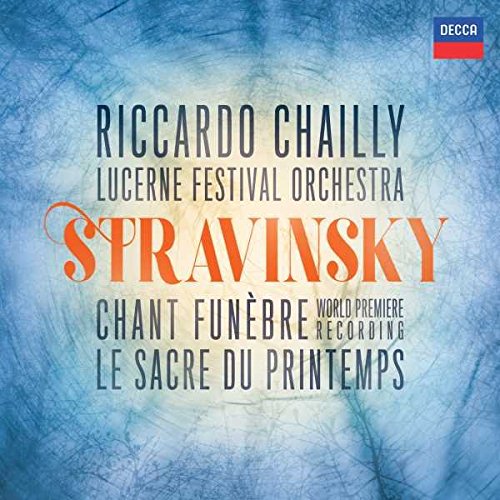
I.Stravinsky, Chant funèbre, Le Faune et al Bergère, The Rite of Spring, Scherzo fantastique, Feu d’artifice, Riccardo Chailly, Lucerne Festival Orchestra, Decca 483 2563


available at Amazon
I.Stravinsky, Chant funèbre, Le Sacre et al., Riccardo Chailly, Lucerne Festival Orchestra,
Decca

Happily, Riccardo Chailly is interested in repertoire just off the beaten path in a way that many mainstream conductors can’t be bothered with… and instead of tacking a Firebird or some such warhorse onto his lusciously magnificent recording of the Rite of the Spring, he added the orchestral works Scherzo fantastique op.3, Feu d’artifice op.4, the Chant funebre op.5 (a world premiere recording), and the orchestral song Le Faune et al Bergère op.2 to the mix. That novel Chant funebre – composed to memorialize Rimsky-Korsakov – starts out of a hovering, dark mist… much like something that Wagner might have composed. A flame licks through the brooding brass. Probably some Niebelungs just died. The ten-minute work eventually turns to a more lyrical, even Tchaikovsky-esque vein. Despite (or not?) more Wagner quotations to greet us in the subsequent works, this is really Stravinsky at his most French phase; much of the music resembles – vaguely in a literal sense; more strongly in mood – that of Paul Dukas or even Albert Roussel. The gorgeous, pastoral central section of the Scherzo fantastique, op.3, is of poetic and elegiac grace that any composer interested in sheer beauty would be proud to have penned. (Complete CD of the Week review on Forbes.com)

# 3 - New Release


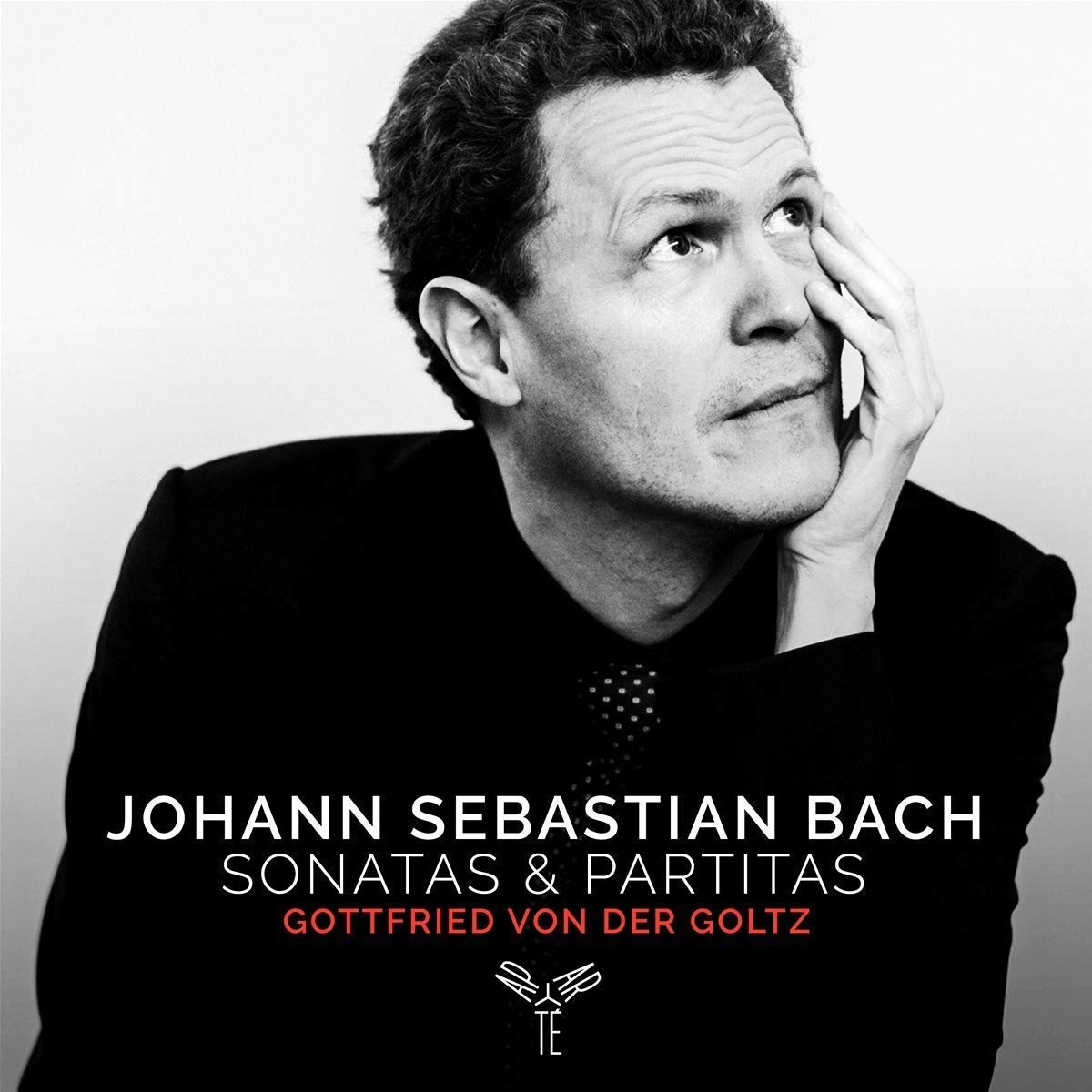
J.S.Bach, Sonatas and Partitas for Solo Violin, Gottfried von der Goltz, Aparté AP176


available at Amazon
J.S.Bach, Sonatas and Partitas for Solo Violin, Gottfried von der Goltz,
Aparté

Gottfried von der Goltz is best known as one of the leaders of the Freiburg Baroque Orchestra. That’s all well and good, but here he is, sans orchestra, in the Bach Sonatas and Partitas. Do we really need concertmasters entertaining notions of soloist careers? Yikes. That’s an old attitude, actually, from when those two jobs really were very different and the skillset not overlapping all that much. Even good concert masters, harnessed into a solo rôle for reasons of morale or economy, could sound like floundering amateurs. But there's a new generation, with all the skills for soloist positions but opting for the orchestral rôle anyway, and they certainly have what it takes. The Berlin Philharmonic’s Daishin Kashimoto comes to mind… and it turns out to be no different with von der Goltz, either. His recording, far from being a superfluous stuffer of the catalogue, is full of elegance and lightness, effortless perfection and joy.  My review on ClassicsToday will be up eventually, but until then take my word for it: Amid the glut of Sonata and Partita recordings, this one is special!

# 2 - New Release


B.Martinů, Bouquet of Flowers (+ Jan Novák, Philharmonic Dances), Tomáš Netopil, Prague RSO, Supraphon SU 4220


available at Amazon
B.Martinů, Bouquet of Flowers (+ Jan Novák, Philharmonic Dances), Tomáš Netopil, Prague RSO,
Supraphon

Bohuslav Martinů’s relatively obscure Bouquet of Flowers with its full-on Bohemian neo-classicism evokes hints of Orff’s Carmina Burana or might make one perceive touches of Janáček (perhaps from the Glagolitic Mass) or even Dvořák’s The Spectre’s Bride. But none of those hints come through with any strength; Martinů retains his own voice, even as he was able to change musico-linguistic tack even more often than he had to switch languages, what with having lived for extended periods of his life in Czecheslovakia, France, the US, and Switzerland.

A collection of seven vignettes and an overture, Bouquet of Flowers is a highly effective drama (or series of mini-dramas) written for orchestra, soloists, and choruses and intended for radio broadcast. It is constantly enchanting and entrancing music, even if the words of Karel Jaromír Erben’s poems – the famous collection "A Bouquet of Folk Legends" – remain foreign to your ear. The singers and the orchestra – the Prague Radio Symphony Orchestra under the youngish Tomáš Netopil – indulge in this music with something that sounds like total conviction. This is the ‘lesser’ among the established orchestras in Prague – and you’d never guess it.
(Full review on SurprisedByBeauty.org)


# 1 - New Release


F.Martin, Die Weise von Liebe und Tod des Cornets Christoph Rilke, Fabio Luisi, Philharmonia Zurich, Okka von der Damerau, Philharmonia PHR 0108


available at Amazon
F.Martin, Die Weise von Liebe und Tod, Fabio Luisi, Philharmonia Zurich, Okka von der Damerau,
PHR

Rainer Maria Rilke’s youthful poem-cum-epic "Die Weise von Liebe und Tod des Cornets Christoph Rilke" about a soldier who, reminiscing heavily, is moved to the front in Hungary in 1663, being promoted to flag bearer and then misses the battle after a love-filled night with a countess (so far it’s pure Flashman!) only to find heroic death wildly storming into the enemy (decidedly not Flashman), was a favorite read of German soldiers in the World Wars. There’s also something to the subject that brings out the best in early 20th century composers: it was set to music (among yet others) by Danish Paul von Klenau, Austrian-Czech Viktor Ullmann, and Swiss Frank Martin… and each came up with one of their masterpieces.

Frank Martin’s entrancing tone poem for contralto and orchestra was written while the war raged outside Switzerland – and perhaps therefore has a decidedly unheroic, melancholy touch to it. There’s a bittersweet beauty to the music, a bit like the sour and bitter but satisfying lingering of pure chocolate. Fabio Luisi, who seems never to have been more at home in a post than at the Zurich Opera and with its Philharmonia Zurich, provides the keenly felt, sensitive musical painting for the backdrop upon which Okka von der Damerau gives one of the most striking vocal performances I have heard on disc in a long time. With calm radiance she makes you take every step with the protagonist. The result is, in a word, ravishing.