CD Reviews | CTD (Briefly Noted) | JFL (Dip Your Ears) | DVD Reviews
Showing posts with label Paul Hindemith. Show all posts

4.4.19

New York City Ballet enters the next phase


Gonzalo Garcia and Sterling Hyltin in Jerome Robbins, Opus 19/The Dreamer. Photo: Paul Kolnik

New York City Ballet returned to the Kennedy Center Opera House Tuesday night, as it has done regularly since 1974. Everyone involved with the company seemed a little nervous, starting with a slightly awkward pre-curtain announcement from newly appointed artistic director Jonathan Stafford and associate artistic director Wendy Whelan. They took the reins after longtime ballet master Peter Martins retired from the company in 2018, following allegations he had abused dancers both physically and sexually. Martins denied the charges, and an internal investigation by the company did not corroborate them.

The selection of ballets seemed tailor-made for touring, mostly abstract and without any set pieces. Opus 19/The Dreamer, choreographed by Jerome Robbins, was a highlight because of the graceful, searching movements of Gonzalo Garcia in the title role. In the only white costume, he was seemingly all muscle as he sought among the other dancers dressed in shadowy blue-purple (costumes by Ben Benson). Set to the gorgeous music of Prokofiev, the ethereal Violin Concerto No. 1, the shimmering violin solo (played ably by Kurt Nikkanen) mirrored Garcia's dream-like motions, in fascinating color pairings with harp, piccolo, and other instruments. Principal dancer Sterling Hyltin, taking the lead role often danced in the past by none other than Wendy Whelan, was elusive and pretty.


Other Reviews:

Sarah L. Kaufman, It’s hit or miss for New York City Ballet in first Kennedy Center program under new directors (Washington Post, April 3, 2019)

Alastair Macaulay, The Unstuffy Gala: City Ballet Delivers Youth and Style (New York Times, September 29, 2017)
It made a bracing pairing with George Balanchine's Kammermusik No. 2, with a more abrasive score by Paul Hindemith and somewhat similar costumes in light blue or gray-black, also by Ben Benson. Abi Stafford and the tall, striking Teresa Reichlen excelled as the tandem pairing that shadowed the contrapuntal part of the piano solo from the virtuosic Stephen Gosling, often with hand following hand just as ballerina followed ballerina gesture for gesture. A small group of male dancers, often with interlocked arms, formed complicated shapes echoing the dissonant musical clusters.

For an appetizer, NYCB brought Composer's Holiday, a commission from the young choreographer Gianna Reisen. The three sections showed a pleasing balance and variety, in a poised, short ballet that moved from intriguing vignette to intriguing vignette. It opened with dancers on one side pointing to a woman lifted in the air, for example, and the first scene closed with a woman hurled into the air just as the lights went dark. The choice of Lukas Foss's Three American Pieces for Violin and Piano (played capably by Arturo Delmoni and Susan Walters) was also savvy, music that is just as enigmatic as the movements Reisen chose.

Two dancers took falls in the evening, unusual for this company, and only one that looked painful. That was in the otherwise triumphant final work, Balanchine's Symphony in C. It showcased the NYCB corps of women, all in sparkly white costumes, in the active first movement of Bizet's Symphony in C, an early work in Mozartean style. The second movement, with its plangent oboe theme, inspired in Balanchine, that most musical of choreographers, a scene of heart-breaking tenderness, spotlighting in this case the graceful dancing of Sara Mearns and Jared Angle. Through a sleight of hand, Balanchine does not make clear until late in the work just how many dancers are involved. In the fast changes of the finale's episodes, the numbers on stage grow and grow to a delightful climax.

This program by the New York City Ballet repeats only on April 7, with a different program scheduled for April 4 to 6.

10.6.17

New York City Ballet, Part 2


Lydia Wellington and Andrew Scordato in The Four Temperaments, New York City Ballet (photo by Paul Kolnik)

The second program of the New York City Ballet's visit to the Kennedy Center Opera House was not as marvelous as the first. The formula was the same as the first program: classic Balanchine paired with new works by the company's best young choreographers.

The Balanchine was a choreography long on my wish list, The Four Temperaments, the best known of the ballet scores composed by Paul Hindemith. The composer is not one most people think of as a dance composer, but his music worked exceptionally well in this collaboration with Balanchine from 1946. The music is in the form of a theme and variations, perhaps the musical structure best suited to ballet dancing because it provides variety in discrete sections. Balanchine created dances, mostly pairings and small groups costumed in domino-like black and white on a bare stage, that went with each of the temperaments in the score.

In the theme, Lydia Wellington and Andrew Scordato set the tone in a stiff and formal way, a vocabulary of movements that seemed mostly geometric but coordinated with and inspired by the music in the most natural way. The second pairing (Lauren King and Devin Alberda) entered with the piano solo, played expressively by Stephen Gosling in the pit, with King's foot kicks accenting flourishes from the keyboard. The third pair of the theme section (Ashley Laracey and Aaron Sanz) entered in a more deliberate set of movements that went with a fine violin solo section, one of the highlights of the choreography, with gorgeous form from Laracey, ending on her being carried off with her legs at a right angle.

Gonzalo Garcia flung himself around in the Melancholic variation, followed by two women who flitted around him in agitation. When joined by four more dancers, the moves became slower and heavier, with repeated gestures weighing down the movement in the style of the music. The Sanguinic variation was marked by enthusiastic high kicks in the entrance of Sara Mearns and Jared Angle. When four women joined Mearns in an active, decisive dance, the black one-piece costumes made them look almost like a synchronized swim team. Solo dancer Ask La Cour was measured and balanced in the Phlegmatic variation, each advance forward matched by a solemn retreat, later shadowed by four women in one of the other highlights of the ballet. Teresa Reichlen, her tall and lithe form all points and edges, led the Choleric section through Balanchine's calculated addition of dancers to involve the whole cast in a climactic final scene.


Other Reviews:

Sarah L. Kaufman, From New York City Ballet: Big music, big dancing (mostly) (Washington Post, June 9)

Alastair Macaulay, Sign of the Times: City Ballet’s Ashly Isaacs Laces Up Her Sneakers (New York Times, May 10)

---, New York City Ballet Opens a Spring Gala, and Some Umbrellas (New York Times, May 5)

---, New York City Ballet’s Very 21st-Century Steps (New York Times, January 27)
The two more recent works on either side of The Four Temperaments could not really measure up to it. Christopher Wheeldon's story-length ballets have not been among my favorites, but in shorter formats he can be intriguing. Sadly his new work American Rhapsody never really seems to connect to its music, Gershwin's Rhapsody in Blue, played with gusto by the NYCB Orchestra and pianist Elaine Chelton. Here was the first set backdrop of the entire run, a starburst on a midnight-blue backdrop encircling the dancers (design by Leslie Sardinias). The costumes, also purple-blue with red and white highlights, recalled the vivacious era of the 1920s when the music was composed. The movements never seemed to have come from the music, indeed had little in common with it, and the central duo dance (Lauren Lovette and Unity Phelan) came not as a result of dramatic growth or with any sense of who the pairing was or why we should care about them.

Justin Peck's The Times Are Racing, premiered this past January, is a mixture of ballet and many other dance forms, including tap, breakdancing, hip-hop, Broadway, and tap. A mass of dancers, dressed in tennis shoes, T-shirts (some marked with the word "DEFY"), jeans, and other street clothes (costumes by Humberto Leon) pulsated to the recorded electronic music of Dan Deacon (the last four tracks from his album America), played through the theater's speakers at ear-piercing volume. The choreography is a tour de force of frenetic action and irrepressible energy, never seeming to slacken its pace for over twenty minutes, and it captures the seething rage, mostly about political realities in the United States, of the music.

The performance also offered another chance to see the choreographer in action as a dancer, because he stepped in to replace Ashly Isaacs in the second pairing of this ballet. Peck's dances with Taylor Stanley were a highlight, but in the closing sections of the ballet Peck's choreography began to repeat itself a lot, as if filling out the time of the final track. It is a brash, bracing work that captures the bristling anger and frustration of the country at this moment, but it felt uneven.

This program repeats this afternoon in the Kennedy Center Opera House.

6.2.16

CD Review: Eschenbach's Hindemith


available at Amazon
Hindemith, Symphonie 'Mathis der Maler' / Symphonie in Es, NDR Sinfonieorchester, C. Eschenbach

(released on October 9, 2015)
ODE 1275-2 | 67'32"
Charles T. Downey, Hindemith, Symphonies, NDR Symphony Orchestra
Washington Post, February 5
When Christoph Eschenbach began his tenure with the National Symphony Orchestra in 2010, he arrived with a recording contract with the Finnish recording label Ondine. He has recorded only one disc with the NSO to date, in 2011 — the orchestra’s first recording since 2001 — which inauspiciously paired some slightly sloppy Gershwin and Bernstein with the premiere of the instantly forgettable “Remembering JFK” by Peter Lieberson.

Eschenbach may not have released any more recordings with the NSO since then, but he has done so with two of his former bands: the Schleswig-Holstein Musik Festival Orchestra and the NDR Symphony Orchestra in Hamburg. With the latter orchestra, he made two Hindemith discs, both recorded live around the 50th anniversary of Hindemith’s death in 2013, slightly after which the NSO programmed the composer’s “When Lilacs Last in the Dooryard Bloom’d"... [Continue reading]
Hindemith, Symphonie 'Mathis der Maler' / Symphonie in Es
NDR Sinfonieorchester, Christoph Eschenbach

13.10.15

Jeremy Denk and the Rag

available at Amazon
Ligeti, Piano Études, J. Denk
(2012)

available at Amazon
Ives, Piano Sonatas, J. Denk
(2010)
Jeremy Denk is a thinking person's pianist, at his best putting together quirky playlists or drawing out bizarre sides of pieces you thought you knew. He is a musician of equal parts wit and enthusiasm, and this is probably why reading his thoughts about music is just as good as hearing him play it, if not better. In his last few appearances in the area, solo recitals in 2012 and 2013 and with the National Symphony Orchestra, he has disappointed a bit in the hearing. I suspect that for listeners who focus, even unintentionally, on his manner at the keyboard -- his gyrations and especially his tendency to turn towards the audience so that his face communicates an expression mid-phrase -- the humor and analysis of the music come through visually. Having spent most of his latest recital, presented by Washington Performing Arts at the Kennedy Center Terrace Theater on Sunday afternoon, looking at the floor instead of at him, I received only the sounds he made, including the loud slams of his percussive left foot.

The results were least pleasing in the opening Bach, my favorite of the English Suites (G minor, BWV 808), where Denk emphasized speed over detail in the fast prelude, courante, and gigue, so that trills were often smudged and runs elided. Abundant use of the sustaining pedal obscured the allemande and sarabande, both quite unctuous, while the gavottes had a music-boxy fairy dust quality, sometimes so light in the keys that tone barely registered. Although Denk did not make the connection in his brief remarks mid-recital, all but the prelude in the suite are dance pieces, making what could have been a natural segue to the "iPod shuffle" set examining the influence of American ragtime that concluded the second half. (I had to miss Denk's jazz-classical "playoff" with Jason Moran on Friday night, because of a medical emergency: thanks to Robert Battey for pinch-hitting for me at the last minute for the Washington Post.)

Curiously, Denk took the same over-delicate approach to Scott Joplin's Sunflower Slow Drag, co-written with Scott Hayden, echoed in the later work that was the closest to it, William Bolcom's Graceful Ghost Rag, played even more sotto voce. This was not at all the sound of the rag imitated by Stravinsky in his Piano Rag Music, a jagged jangle of clashes and metric complexity, nor the "Ragtime" movement in Hindemith's 1922 Suite, which was on the vicious side. Both pieces date from before their composers immigrated to the United States, and both came to a more nuanced understanding of jazz after living here. William Byrd's ninth pavan (The Passinge Mesures), from My Ladye Nevelles Booke, and Conlon Nancarrow's first Canon for Ursula had only a tangential relationship to ragtime music, in that they had different kinds of rhythmic complexity. Denk likewise seemed to include Constant Donald Lambert's stride piano send-up of the Pilgrim's Chorus from Wagner's Tannhäuser mostly for laughs.


Other Reviews:

Simon Chin, Denk shows range in ‘iPod shuffle’ (Washington Post, October 13)

Robert Battey, Two musicians in their prime, sharing music from their genres (Washington Post, October 10)
With Haydn's C Major Fantasia (Hob. XVII:4), Denk was back to his fast and furious Bach mode, with many of the details glossed over at an ultra-fast tempo. (It is marked Presto, to be fair.) This piece comes to a complete stop on a low octave a couple of times, with a fermata meant to be held for a long time followed by a move up a half-step, and Denk played with those moments quite gleefully. The frenetic and excessive side of Denk's musical personality was suited to the final work, Schumann's Carnaval, with its mood changes from madcap to distracted to delicate and back again. One had the sense of a somewhat unbalanced person flitting manically from one thought to another, which is at least part of what Schumann wanted to get across.

The only disappointment was that Denk did not play something for the "Sphinxes" movement. It is not really a movement, just the work's three letter-based themes (referring to Schumann and the birthplace of his one-time fiancée, Ernestine von Fricken) written in long notes, but I had hoped that Denk might do something unexpected with them. Instead, as with so many performances, the puzzles of the sphinx were left unposed, probably what Schumann intended, but not what one expects from someone like Denk.

Washington Performing Arts's Hayes Piano Series continues this Saturday, with a recital by pianist Herbert Schuch (October 17, 2 pm).

20.8.14

Hindemith's Ballet Music

Of all the things one might associate with the name of Paul Hindemith (1895-1963), ballet is likely not the first thing that leaps to mind. Only one of his ballets remains somewhat well known, The Four Temperaments, commissioned by George Balanchine and premiered by New York City Ballet in 1946, and it remains in the repertory of NYCB and of Sarasota Ballet, among others. Before that work, Hindemith composed music for a couple of experimental ballets in Germany, beginning with the odd yet wonderful Triadisches Ballett (Stuttgart, 1922), a ground-breaking abstract ballet, set in visual and musical sets of three (thus, triadic ballet). As seen in the film made a few years after the premiere, the dancers performed in bulky, geometric costumes, designed by Oskar Schlemmer of the Bauhaus, that made them look like marionettes against brightly colored backdrops. The following year Hindemith composed a daring score for Der Dämon (Darmstadt, 1923), set to a disturbing scenario by Max Krell about a sadomasochistic demon that subjugates two sisters.

available at Amazon
Hindemith, Nobilissima Visione (complete ballet), Seattle Symphony, G. Schwarz

(released on July 8, 2014)
Naxos 8.572763 | 58'24"
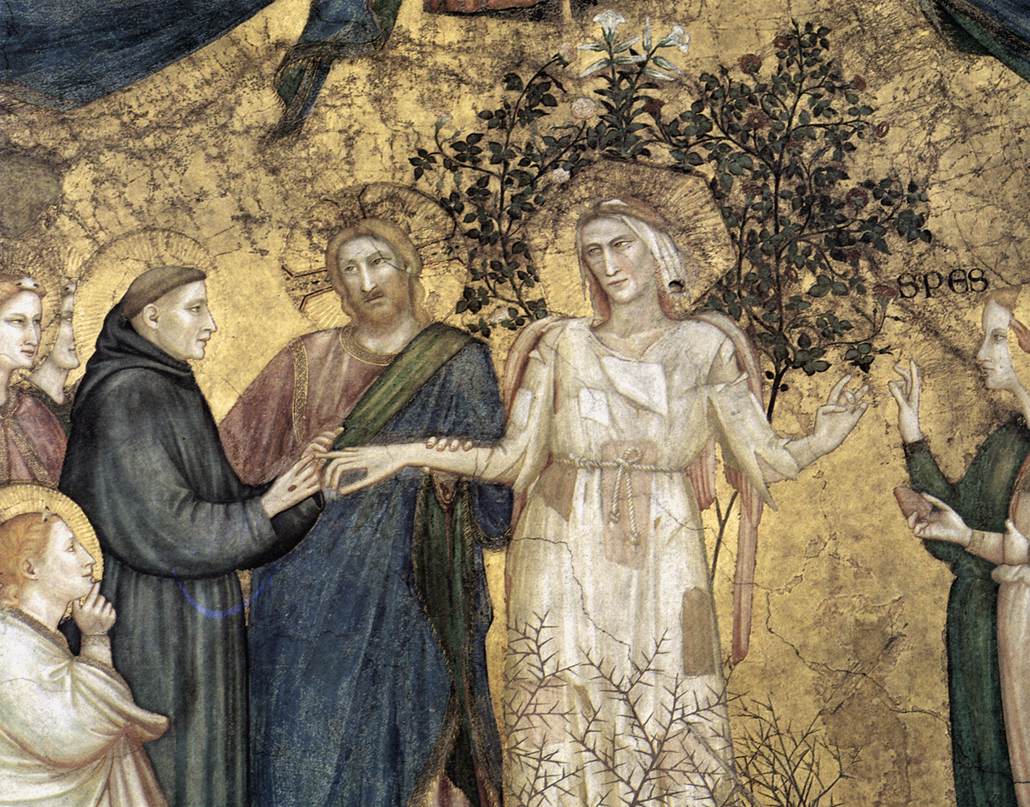
Around the same time as Hindemith finished his opera Mathis der Maler, he received a commission for a ballet from Léonide Massine, which eventually became Nobilissima Visione (London, 1938; with one subsequent performance at the Metropolitan Opera). Like Mathis, the ballet was inspired by art, in this case Giotto's frescoes on the life of St. Francis of Assisi in the Bardi Chapel, in the church of Santa Croce in Florence, which Hindemith visited in 1937. He suggested the life of St. Francis to Massine, who was hesitant but eventually accepted; though Massine ended up dancing the role of Francis, he ultimately decided that the score was not really a ballet. Hindemith made a three-movement suite of music excerpted from the ballet, which has had great success on concert programs, but this new disc by the Seattle Symphony and conductor Gerard Schwarz is the first recording of the complete ballet score.

The ballet sets many of the famous episodes from the life of the Poverello of Assisi, beginning with the saint's love of troubadour songs, for which Hindemith incorporates the 13th-century song Ce fut en mai (It was in May), weaving into later parts of the score. Working as a cloth seller for his father, he gives everything he has to a beggar in Assisi, and then pursues a career in the military. He has a vision of three women, representing Humility, Chastity, and Poverty, which causes his change of heart so that he loses all interest in his friends' feasting. He meditates on the message he receives from the icon crucifix in the church of San Damiano, in which Christ told Francis to rebuild his church, and convinces a wolf to stop attacking people in the town of Gubbio, here charming it by pretending to play a violin using two sticks. He celebrates his mystical marriage to Lady Poverty, and the work ends with a movement evoking the composition of the Canticle of the Animals, set as a passacaglia on a six-measure ground bass. Schwarz and his musicians turn in a fine reading of this fascinating score, paired with the Five Pieces for String Orchestra (op. 44/4), although it would be even better to see Massine's choreography with it.


available at Amazon
Hindemith, Hérodiade (complete ballet), Inscape, R. Scerbo

[digital only]
(released on June 24, 2014)
Dorian SL-D-97202 | 20'36"
After Hindemith emigrated to the United States, Elizabeth Sprague Coolidge commissioned another ballet score from Hindemith, which became Hérodiade, premiered at the Library of Congress in 1944, with Martha Graham dancing the title role. (Get just a taste of Graham's performance as the mother of Salome in the video embedded below.) The score is closely based on Stéphane Mallarmé's dialogue poem, consisting largely of a conversation between Hérodiade and a nurse. Mallarmé labored on the poem for over thirty years but would never complete it. He was still working on the poem when Oscar Wilde published his play Salomé, an act widely criticized as a betrayal of Mallarmé, whose poem he knew. Hindemith scored the ballet for piano, string quintet, and wind quintet, using an unusual system of musical declamation for the instruments, in a way, to "speak" the words. Although the lines of the Mallarmé poem are spoken on top of the music in some performances, Inscape's version leaves the words out altogether, although they remain embedded in Hindemith's music and can still, in a sense, be "heard." While not perhaps a standout, this is a worthy follow-up to Inscape's debut CD last year.

31.1.14

Second Opinion: NSO's Night of Stars, Gala in January

available at Amazon
Hindemith, Violinkonzert / Symphonic Metamorphosis / Konzertmusik, Midori, NDR Symphony Orchestra, C. Eschenbach
(Ondine, 2013)

available at Amazon
Mendelssohn, Violin Concerto, J. Bell, Camerata Salzburg, R. Norrington
(Sony, 2002)
What was Christoph Eschenbach thinking, programming Mendelssohn's E minor violin concerto for the second time in less than a year? Likely he was thinking of how that work, with none less than Joshua Bell as the soloist, would help fill the house for what he had planned on the second half. That was the National Symphony Orchestra's first-ever performance of Paul Hindemith's brooding, elegiac oratorio, When Lilacs Last in the Door-Yard Bloom'd, a work that the composer, part of the "brain drain" that fled Nazi Germany for American shores, thought of as a sort of "American Requiem." As heard last night in the Kennedy Center Concert Hall, the pairing was a success, hopefully bringing an under-appreciated choral work to many more ears.

Joshua Bell has performed this chestnut of a concerto enough times in his career that he is entitled to have some fun with it. In fact, Bell could probably attempt playing the piece with a large stalk of celery instead of his bow, with no effect on the box office. So it was good to hear this often staid performer shake things up, with a mercurial sense of tempo in the first movement, a more urgent Andante in the second, and a madcap springiness in the third. The technique was self-assured, the dangerous sugar content limited to some pure, floating sounds on the E string, and the audience never allowed to sit comfortably ensconced in its expectations for how Joshua Bell would play this most familiar concerto. His model in this somewhat unpredictable style of performance, we could surmise, is the example of the virtuosos of the late 19th and early 20th centuries, those violinist-composers Bell once told me that he most admired as the exemplar for his own plans, so far unrealized, to compose his own music. We had a taste of what we might expect of Bell the composer, since in these performances he is playing his own cadenzas, most notably in the daring, wide-ranging one he added to the first movement. (These cadenzas go back at least as far as Bell's recording of the Mendelssohn a decade ago.) The audience's attempts to coax an encore from Bell, with sustained ovations, ultimately did not prevail.


Other Reviews:

Anne Midgette, NSO review: Fresh off his Grammy, Eschenbach commands a worthy night (Washington Post, January 31)

Philip Kennicott, Joshua Bell and Hindemith at the NSO (PhilipKennicott.com, January 31)

Gero Schliess, Eschenbach after the Grammys: 'The real winner is Hindemith' (Deutsche Welle, January 29)

Marita Berg, Enfant terrible, minstrel: Paul Hindemith 50 years after his death (Deutsche Welle, December 28)

Tim Smith, Christoph Eschenbach to lead NSO in rare performance of Hindemith requiem (Baltimore Sun, January 27)
Among all the grand choral statements of the 20th century that the city's many local choruses could program, When Lilacs Last in the Door-Yard Bloom'd is one of the ones heard least often. (The last time for me was at Washington National Cathedral in 2009.) It is a sprawling, long-winded kind of piece that sets an enormous number of wandering lines by Walt Whitman, poetry commemorating Whitman's service as a nurse in the Civil War and chosen by Hindemith to mark the death of President Franklin Delano Roosevelt. Although Hindemith began the work in response to a specific death, he later gave it the subtitle "Requiem for Those We Love," adding a sense of mourning for all the victims of the Second World War. The quotation of a hymn, which Hindemith knew to have been derived from a Jewish melody, directs that sense of mourning more precisely to those who had died in the Holocaust. (For more background on the piece, see the excellent program note by Thomas May.)

A Hindemith anniversary (he died on December 28, 1963) has just passed without much notice, but Eschenbach's championship of the composer's music was marked with a Grammy award this year, in the category of Best Classical Compendium. (How a single disc of one composer's works counts as a "compendium" is another matter, but it is what it is.) He led an authoritative reading of Lilacs, drawing out plenty of booming sound from the orchestra and from the generally well-prepared Choral Arts Society of Washington, at their best in the implacable third movement ("March") and the large-proportioned seventh movement. This performance reunited mezzo-soprano Michelle DeYoung and baritone Matthias Goerne, heard together two years ago with the NSO in Bartók's Duke Bluebeard's Castle. Goerne, who was so on his game earlier in the week, was at his best in unaccompanied or softly orchestrated passages in the Hindemith, having to bellow a bit when the orchestra was at full bore. By contrast, DeYoung just owned the stage in her sweet Arioso movements, often beautifully shadowed by English horn solos, with a native pronunciation of English that revealed the shortcomings in Goerne's diction. From the ninth movement ("Death Carol") to the somber conclusion, especially, this was a tense and mournful experience, well worth hearing.

This concert repeats tonight and Saturday evening (January 31 and February 1, 8 pm).

At the NSO: Lilacs and Bell


Many thanks to Robert R. Reilly for this review from just around the corner.


I believe the National Symphony Orchestra and Christoph Eschenbach deserve full houses. Encouragingly, that’s what they got on Thursday evening. With a program of Paul Hindemith’s When Lilacs Last in the Dooryard Bloom'd: A Requiem for those we love (never performed before by the NSO) and Felix Mendelssohn’s Violin Concerto, I suspect on this occasion the reason for the full house was rather the popularity of Mendelssohn’s work and the star power of soloist

20.1.14

Ionarts-at-Large: A Buchbinder & Gatti Burleske


The lure of Hindemith, lo and behold, nearly filled out the 2500 seat Philharmonic Hall of the Gasteig on January 9, where Daniele Gatti conducted the vagabond Bavarian Radio Symphony Orchestra (lobbying hard and busily for a deserved concert hall of their own) in the Konzertmusik op.50, sandwiching Richard Strauss’ Piano Concerto and the Mathis der Maler Symphony. Finally a Wagnerian chocolate on the

8.6.13

Ballet Across America 2: 'Les Patineurs'

The second part of the Kennedy Center's Ballet Across America festival (see Part 1) had the choreography that really caught my eye, Frederick Ashton's classic Les Patineurs. Overall it was likely the high point of the week because of the combination of Ashton's skating ballet, made for Sadler's Wells in 1937, with a Philip Glass choreography, Wunderland, and more Balanchine, The Four Temperaments. The impetus for Les Patineurs was some of the music from Giacomo Meyerbeer's Le Prophète, an 1849 grand opera which had featured an ice-skating interlude leading into Act III. Sadly, Ashton did not follow that ballet's example of having the corps dance on roller skates, which had become a fad in Paris that year, but Les Patineurs, in this revival presented by Sarasota Ballet, is an unabashedly sentimental, even corny choreography that cannot but bring a smile to your face.

The idea is ingeniously simple: a frozen lake surrounded by snow-touched trees, some white gates and colorful lamps, and a corps and soloists in pairs or alone all mimicking skating on the blue floor (sets and costumes were loaned by the Birmingham Royal Ballet). At one point snow falls, at others sudden stops in the music are accompanied by pratfalls of the skaters. The dancing was all quite fine, led by the Blue Boy of Logan Learned, an energetic role that included some athletic acrobatics, and the elegant White Couple of Danielle Brown and Ricardo Graziano. Two pairs of women, one costumed in blue and the other in red, provide occasional comic relief, all to Meyerbeer's music, much of which borders on pedestrian but with the dancing is magnified in interest, played well by the Kennedy Center Opera House Orchestra under the baton of Ormsby Wilkins.


Other Reviews:

Sarah Kaufman, Kennedy Center’s Ballet Across America: ‘Les Patineurs’ and ‘Wunderland’ (Washington Post, June 8)

Carrie Seidman, Sarasota Ballet does a 'capital' job in D.C. (Sarasota Herald-Tribune, June 8)
Septime Webre and the Washington Ballet brought Edwaard Liang's choreography Wunderland, premiered in 2009. Here the music -- excerpts from Philip Glass's second, third, and fifth string quartets -- was played by a selection of the Opera House Orchestra players, plus talented pianist Lisa Emenheiser, a performance that unfortunately had to be amplified (noisy page turns and all). Liang's work was much busier than Les Patineurs, and the repeated gestures of Glass's music were matched with geometric movements, often striking but just as often seeming to fill time. The orchestra returned for the Pennsylvania Ballet's revival of George Balanchine's The Four Temperaments, with an evocative score by Paul Hindemith, conducted by Beatrice Jona Affron. A rather serious work, with dances that illustrate the medieval concept of the bodily humors, it would have benefited from being placed first on the program, while Les Patineurs would be enchanting at any point in the evening.

This program is repeated twice on Saturday (June 8, 1:30 and 7:30 pm) in the Kennedy Center Opera House. The Ballet Across America festival continues through June 9.

30.12.12

Best Recordings of 2012 (#5)


Time for a review of classical CDs that were outstanding in 2012. My lists for the previous years: 2011, (2011 – “Almost”), 2010, (2010 – “Almost”), 2009, (2009 – “Almost”), 2008, (2008 - "Almost") 2007, 2006, 2005, 2004.

# 5 - New Release


Max Richter / Antonio Vivaldi, Recomposed - The Four Seasons, D.Hope, André de Ridder, Konzerthaus CO, DG 1748602

available at Amazon
M.Richter, Recomposed / Four Seasons
D.Hope / A.de Ridder / Konzerthaus CO
DG

When an original is involved, a famous one at that, improving on it is impossible by by definition. But a pale pastiche or cheap imitation certainly isn’t desirable, either… so why bother at all? No one needs a mock-original or likeness of the Four Seasons. Something new must be created off the old substance if working with Vivaldi’s evergreen at all—and that is exactly what Max Richter’s re-composition manages.

Richter is a British genre-defying composer fond of electronic elements who has composed ballets for the Royal Opera House alongside collections of ringtones. His Vivaldi-goes-clubbing approach works most extraordinarily so in “Spring” and “Summer” where Richter opens whole new avenues and sightlines of beauty, calm and distant and dotted with moments of wicked otherness. Richter didn’t just re-mix extant recordings into pseudo-hip newishness, as DG’s “Re-Composed” series has done before (Carl Craig & Moritz von Oswald’s Ravel/Musorgsky, Matthew Herbert’s “Mahler Symphony X”, Jimi Tenor, and Matthias Arfmann). Instead he created the piece from scratch, stripped Vivaldi bare, re-forged it, and recorded it with Daniel Hope. Not surprisingly, Richter is least interesting where he skirmishes closest to the original, but those instances are rare and the rewards elsewhere outweigh them greatly.


# 5 – Reissue


P.Hindemith, Eight Sonatas, Das Marienleben, Glenn Gould & others, Sony 541357

14.9.11

From the 2011 ARD Competition, Day 11

September 9th, Organ Finals, Part II

Playing on the grand 1985 Klais Organ of the Philharmonic Hall of the Gasteig, the four young organists Lukas Stollhof, Michael Schöch, Johannes Lang, and Anna-Victoria Baltrusch came together for the second part of the organ finale for four performances of the Hindemith Concerto for Organ and Chamber Orchestra, op.46 no.2 (1927), a.k.a. Kammermusik 7, not to be mistaken for his Concerto for Organ from 1962, as I found out when I looked at the score and the notes didn’t match what was being played by the Bavarian Radio Symphony Orchestra under Sebastian Tewinkel. They were an integral part of making the four performance continuously diverting, which is—not to take too much of a dig at Hindemith—a great compliment.

available at Amazon
P.Hindemith, Kammermusik,
Chailly / RCO
Decca


[FYI: Chailly is set to record a new set of Kammermusik with the Leipzig Gewandhaus Orchestra.]
The first candidate of a day, especially when it involves a work one doesn’t know well and perhaps an instrument with which one isn’t on very intimate terms, serves largely to get to know both. That role fell to Lukas Stollhof, the oldest and most experienced of the candidates. He worked his way through a lively and pleasant first movement, with liberal—frankly distracting—use of the swell for dynamic variation. The second movement sounded like organ and orchestra mutually accompanying each other and with neither taking up the case of the music. At its best, it’s truly a chamber work for winds and organ, with the flute and oboe duetting with the organ, after which the rest of the winds and eventually the horns enter.

Michael Schöch put the performance into perspective. One of the students of Munich organ professor and member of the ARD competition’s jury, Edgar Krapp, he gave more of a pulse to the first movement, more rigor, and more horizontal pull which resulted in, ironically, a great flow. He dealt with dynamic issues through nicely subtle registration that eschewed abrupt blocks of sound… and his third movement showed first signs of humor, not pretentiousness as it had with the first candidate. The painfully obvious better registration might be considered a by-product home field advantage, though a (slightly sleazy) article in the local paper insinuated foul play by Krapp—who knows all three organs on which the candidates performed very well and whose students were very successfully in making the initial cut—and his fellow jury member from Munich, custodian of the Gasteig organ, Friedemann Winklhofer. Local storm in a teacup, for the most part.

Johannes Lang and Anna-Victoria Baltrusch are not students (former or current) of Krapp, nor overly familiar with the Gasteig’s (or Music Academy’s) organ, and their registrations were considerably better, too. The former still worked the first movement mainly through the swell, which I find off-putting, but the second movement was indeed “Very slow and very calm”, beautifully, subtly registered, with a nice give-and-take—albeit not quite as seamless and grayer, more homogenous than Schöch’s. The last movement, suggested ♪ = up to 184, was taken slower, with wit penetrating even into the registration. Mlle. Baltrusch substituted daring for wit, and threw herself at the first and third movement with buoyancy, meticulous registration work, and a stern, grand, brilliant ring to it, especially in the finale where the winds and brass of the chamber-sized Bavarian Radio Symphony Orchestra under Sebastian Tewinkel must have felt the challenge. Her second movement—this the exception—was flexible, gentle, and slightly boring. The audience reacted with astonishment that their favorite, audience prize winner Lang, did not even receive a third prize which went to Stollhof. Second went to Mlle. Baltrusch, and the first—this one hardly controversial—to Schöch.

23.1.11

Ionarts-at-Large: Maria João Pires and Markus Stenz in Beethoven

To speak of any Beethoven Piano Concerto as “the weakest” is quite outrageous, really, given how phenomenally excellent they all are. But if one had to find a relative weak spot in the lineup of the five mature works, the finger would have to be pointed at the earliest of them*, Concerto number two, opus 19†. It is fitting perhaps, that this concerto would be played by the most alluring of the pianists to perform in the Bavarian Radio Symphony Orchestra’s Beethoven concerto cycle: Maria João Pires. (An easier statement now, after Murray Perahia had to cancel and Paul Lewis was not on top of his game.) On this occasion, it was Markus Stenz, the chief conductor of Cologne’s Gürzenich Orchestra, who led the BRSO on the 13th and 14th of January.

available at AmazonF.Schubert, Works for 2 and 4 Hands,
Pires & Castro
DG
available at AmazonP.Hindemith, Mathis der Maler Symphony et al.,
J. Belohlávek / Czech PO
Chandos
With Mme. Pires, the impression of her performance extends well beyond the notes you hear. Even the way she approaches the piano—calm and with ever step as if buffered by clouds, the way she quietly sits down in front of the piano, all seems to foretell the grace of her playing and her unfussy determination. She achieves sweetness not by adding treacle but through intensely subtle naturalness. If nothing in her playing calls attention to itself outright, it is still easy to zoom in on her left hand’s mezzo-piano staccato notes: as vibrant in attack as possible, and yet perfectly gentle in volume. In that genial first movement only the labored cadenza didn’t seem to fit. The solo parts in the second movement rang out like little bells, and the respective last notes’ reverberations (the pedal held all through to her next entry) melted in with the orchestral sound to form a wondrous one. The frivolously coy opening of the third movement sounded as happy as a boy on Christmas looks, with his first electric train set before him. (Or whatever gets that gleam into the eyes of the young, these days.)

After the break it was a bit of anniversary-Mahler: Stenz, who is recording a complete Mahler cycle of his own (on Oehms), threw in “Blumine”‡, then followed Hindemith’s Mathis der Mahler Symphony. The symphonic depiction of Matthias Grunewald’s Isenheim Altarpiece has three movements: The Angels’ Concert, The Entombment of Jesus, and The Temptation of St. Anthony. Tuneful vigor and directness make it one of Hindemith’s most popular pieces and it manages wonderfully to be modern and old fashioned at once. The performance could have been more engaged and engaging, but it was well cared for and detail-rich and it allowed the robustly entertaining nature to come out plenty well. If short of electrifying, this nicely capped a long musical evening that had started with Schreker’s “Prelude to a Drama”.

From the bubbling strings and the rising viola melody, the bell and the horn calls, that 20-minute work (based on the overture of his opera “Die Gezeichneten”) begins like an impressionist romantic dream only to make its way swiftly to a first climax. Thereon from it heads, by way of one ecstatic peak after another, to a hyperactive burst of chromatic beauty and then a quiet, very long exhalation. Even if this was ‘just’ the overture to the concert, it was worth alone attending the concert.


* The statement is made a little easier seeing how the master suggested so much himself. Of course it’s a neat thing, if you are really smart, to show how it isn’t Beethoven’s weakest concerto at all. After all, going against conventional wisdom is always the sign of the truly probing mind and towering intellect. In doing so, one can ever subtly show one’s superiority over those who cannot see beyond what everyone else is looking at. The snag in this case: Negating this particular bit of conventional wisdom would mean that another of Beethoven’s five concertos is the weakest. And I’d want to see anyone actually point that finger.

† The First Piano Concerto was composed in 1797, the core of the Second a decade earlier. The latter entered the canon only upon its second publication, now with a whole new finale, in 1801. By that time the First had already been published as “No.1, op.15”.

‡ A confirmation as to whether that was a hint about which version of the First Symphony Stenz might record for Oehms could not be had… though a Hamburg/Weimar version of “Der Titan” would be great to have from a first rate orchestra… whereas a ‘regular’ First with Blumine thrown in or tacked on would be old news.

9.12.10

Parker Quartet at JCCGW

Style masthead

Read my review published at the Washington Post Web site:

Charles T. Downey, In performance: Parker Quartet
Washington Post, December 8, 2010

available at Amazon
Ligeti, String Quartets 1/2
Parker Quartet
On Sunday evening at Rockville’s Jewish Community Center of Greater Washington, the Parker Quartet polished its growing reputation for chiseled technique in modern repertoire. Formed in 2002, this young foursome has already enjoyed a decorated career, most recently receiving the Cleveland Quartet Award from Chamber Music America.

Dissonant contemporary music prompted the group’s best playing, in keeping with their well-received recording of the Ligeti string quartets, released by Naxos last year. (Ligeti was the best part of their October concert at the Freer, as was a Kurtág quartet on their 2008 concert at the Library of Congress.) This time it was Hindemith’s fourth string quartet, in which the musicians soared on the fugal theme of the first movement and snarled over the hammered rhythms of the second. Each player had a suave solo turn in the muted serenade of the third movement, with only the wild keening of the fourth sending the ensemble’s wheels somewhat off the track. Haydn’s “Rider” Quartet (op. 74/3) glowed with golden warmth in the placid second movement’s hymn-like chords, while the galloping motifs of the first pulsed with vitality. [Continue reading]
Parker Quartet, with Kim Kashkashian (viola)
JCCGW (Rockville, Md.)

1.4.09

Reviewed, Not Necessarily Recommended: Various Viola Concertos

available at Amazon
Telemann, Hoffmeister, J.C.Bach, Hindemith, Viola Concertos,
Hartmut Rohde / Lithuanian CO Vilnius / Georg Mais
ARTE NOVA 675020

Although some of the most famous composers played—and for all we know also liked—the viola, the concerto literature for the alto sibling of the violin is minute… and half of that slight. The lack of outstanding works might be the most enduring and cruel of viola jokes. One of the few exceptions I know is Schnittke’s Concerto for Viola which can be a terrific work that has also been treated kindly by the record industry. The concertos present on this re-release from Arte Nova, though, make my point—albeit very pleasantly, rather than dispel it.

Georg Philipp Telemann’s Concerto in G is tellingly the most substantial work present. It’s gorgeous and very simple. Baroque easy listening, if you will, and perfect for commercial radio stations during drive time. The Johann Christian Bach concerto in C-Minor is already a reconstruction originally by Henri Gustave Casadesus perhaps best known for faking Mozart’s “Adelaide Violin Concerto”. In fact, this, too, is probably a forgery and a Casadesus original. The orchestration is enriched by Franz Beyer and the result a deft, old fashioned (yet idiosyncratic) classical-period concerto. Saying that it enriches the viola concerto catalog might be going too far, but it certainly expands it.

Franz Anton Hoffmeister’s concert is, together with Stamitz’s, the mother of modestly inspired viola concertos and the bane of every competition-playing violist (and more so even the jury members’). Franz Beyer tried to help the concerto by orchestrating it a little more imaginatively than the surviving orchestral parts indicate. That’s welcome indeed, although not sufficient to turn it into a great concerto, of course. What remains is enhanced loveliness.

It’s difficult to speak of the Hindemith’ s Funeral Music “filling out” a disc that’s only 55 minutes long, but it concludes this slightly random program. By far the shortest and by far the most substantial work on this disc, it receives the most sympathetic performance. Still, that doesn’t keep me from preferring Kim Kashkashian/Dennis Russel Davies (ECM). In Telemann (which Arte Nova has now three different recordings of), my standard remains Reinhard Goebel and Musica Antiqua Cologne (Archiv).

For those curious about the repertoire, this might still be an attractive purchase at Arte Nova’s super-budget price. But neither Hartmut Rohde (curiously credited as a violinist in the sloppy liner notes) nor the Lithuanian Chamber Orchestra Vilnius of 1996 (the recording date) offer additional arguments for a purchase. During the 2008 ARD Competition, where I heard nearly three dozen young violists (including five Hoffmeister performances), I’ve encountered several players whose tone and alacrity I’d much rather have enjoyed than Rohde’s unquestionable but stodgy competence. More a lukewarm shrug than a recommendation, then.