CD Reviews | CTD (Briefly Noted) | JFL (Dip Your Ears) | DVD Reviews
Showing posts sorted by relevance for query carolyn sampson. Sort by date Show all posts

17.2.17

CD Reviews: Carolyn Sampson


Charles T. Downey, Recording reviews: A limpid soprano’s chance to soar
Washington Post, February 3

available at Amazon
A Verlaine Songbook, C. Sampson, J. Middleton

(released on November 18, 2016)
BIS-2233 | 80'
Carolyn Sampson is known for her radiant performances of baroque music, having recorded widely with the world’s leading early-music ensembles. The British soprano’s voice combines limpid clarity with laser-focused precision, but with any possible harsh edges softened in a smooth finish. It is also beautifully suited to the corrupt delicacies of late Romantic French mélodie, as demonstrated in Sampson’s recent song recital recording on the BIS label, with the accomplished pianist Joseph Middleton.

All of the songs here are settings of poetry by Paul Verlaine. Some of the early works were inspired by Verlaine’s love for Mathilde Mauté, the young girl with the “Carolingian name,” as he put it in his collection “La Bonne Chanson,” set as a cycle by Gabriel Fauré. Verlaine married Mathilde, but not long after she had borne him a son, he ran off with a young poet named Arthur Rimbaud. Their scandalous love affair provided much of the material for his collection “Romances sans paroles,” including the poems set by Debussy in a set called “Ariettes oubliées.” After time in prison, Verlaine ran off again with Lucien Létinois, a 17-year-old student at the Jesuit school where Verlaine taught.

Multiple composers have composed songs on the same Verlaine poems, which makes for interesting comparison of musical settings. Sampson pairs Debussy's “Fêtes galantes” with songs on poems from the same collection by Poldowski, the nom de plume of Belgian-born pianist Régine Wieniawski. Individual songs by other composers, including Ravel, Saint-Saëns, Charles Bordes and Reynaldo Hahn, round out a most attractive program. Songs such as Déodat de Séverac's “Le ciel est, par-dessus le toit” and Josef Szulc's “Clair de Lune” are major discoveries.

Throughout, Sampson produces an elegant ribbon of sound, couched in refined French pronunciation, that can hang in the air — for instance, a long, exquisitely soft high G at the end of Chausson's “Apaisement.” The only minor setback is that when pushed to louder dynamics, Sampson’s voice loses some of its satiny quality, turning strident, but this is rare in the songs here.

***
available at Amazon
Mozart, Great Mass in C Minor / Exsultate jubilate, Carolyn Sampson, Olivia Vermeulen, Makoto Sakurada, Christian Imler, Bach Collegium Japan, Masaaki Suzuki

(released on December 9, 2016)
BIS-2171 | 65'52"
When Masaaki Suzuki reached the end of his epic traversal of Bach’s sacred cantatas with Bach Collegium Japan, he turned to Mozart. The Japanese conductor's authoritative recording of Mozart's Requiem was one of my favorite discs of 2015, and opened up a new line of specialization for his ensemble beyond the music of its namesake. Shortly after its release, Suzuki conducted another Mozart Mass, the “Great” C minor, with the Baltimore Symphony Orchestra in an astounding performance. Now, his recording of this work, with Bach Collegium Japan, is out on the BIS label.

It was hoped that Suzuki’s Requiem was the start of a recorded reexamination of Mozart’s music for the Catholic church. Mozart left the “Great” C minor Mass, like his Requiem, unfinished; he began it in Vienna as a complete setting of the Latin Ordinary but performed only parts of it on a honeymoon visit to Salzburg, Austria, with his wife, Constanze, in 1783. Suzuki has used the musicologist Franz Beyer’s careful reconstruction of the score, and the relevant historical details are laid out in a superlative booklet essay by Christoph Wolff.

Suzuki takes the opening “Kyrie” at a most satisfying, slow, grand tempo, like a dignified, crisply organized funeral march. The “Qui tollis” section of the “Gloria” has an equally cathedral-filling sound from both chorus and orchestra.

Mezzo-soprano Olivia Vermeulen, tenor Makoto Sakurada and bass Christian Imler ably take their parts in the quartet of vocal soloists. The star of this score, though, is the first soprano, a part written for and premiered by Mozart’s wife. It seems tailor-made for Carolyn Sampson. In the extended showpiece “Et incarnatus est” in the “Credo,” she interweaves her immaculate soprano with the intricate woodwind lines, sweet and tender.

Rounding out the recording is Mozart’s famous cantata “Exsultate, jubilate,” from a decade earlier, although here Sampson’s fast runs are not quite pristine. As a lagniappe, Suzuki has added Mozart’s slightly revised version of the first movement — more a curiosity than an absolute necessity.

17.12.20

Best Recordings of 2020


After a hiatus last year, it is time for a list of classical CDs that were outstanding this year. This is the ionarts list of the Best Classical Recordings of the Year:

Preamble


I’ve been doing some form of “Best of the Year” list since 2004. 2019 was the first time I slipped. Here’s my attempt at redemption. Granted, my overview of new releases is no longer quite what it was in the days I worked at Tower Records. But the idea of a “Best of the Year” list, if one clings too literally to the idea of “Best” is daft even under the most ideal of situations. It’s of course just short for: “These are a few of the things that I liked” and used, as I’ve been fond of writing in past iterations of this list, because “10 CDs that, all caveats duly noted, I consider to have been outstanding this year” just doesn’t roll off the tongue as easily. Because I skipped 2019, I will include some releases from that year on this list. If you are looking for past lists, here they are:

2004 | 2005 | 2006 | 2007 | 2008 | 2008—"Almost" | 2009 | 2009—"Almost" | 2010 | 2010—"Almost" | 2011 | 2011—"Almost" | 2012 | 2013 | 2014 | 2015 | 2016 | 2017 | 2018

Pick # 10


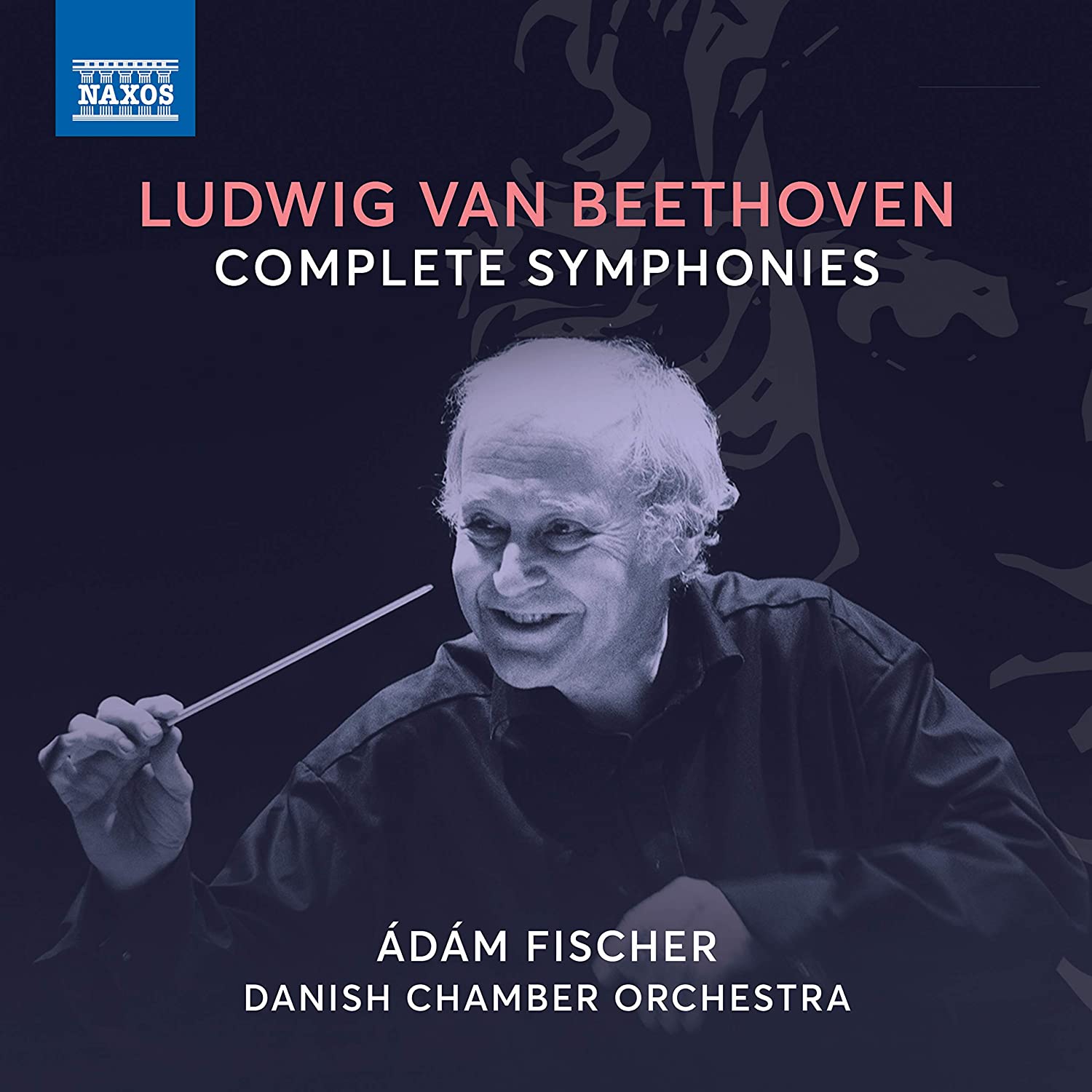
L.v.Beethoven, Symphonies 1-9, Adam Fischer, Danish Chamber Orchestra, Naxos 8.505251


available at Amazon
L.v.Beethoven, The Symphonies
Adam Fischer, Danish Chamber Orchestra,
Naxos

I wanted these to be on the aborted 2019 list and they definitively belong on it. Yes, we have way too much Beethoven – and 2020 was one of the worst offenders, with it being the 'Beethoven Year' and every artist with ten fingers or access to a baton bringing out a cycle of the sonatas or the symphonies. In the concert halls, at least, Corona saved us from a Beethoven overkill that would have ruined our appreciation of the composers for decades. But just before all that happened, Adam Fischer and his now privately funded Danish Chamber Orchestra come out with something that stands out from the 178+ other cycles we can choose from. These are unpretentious, lively, quick-witted yet totally sober readings that manage to be free of any exaggeration and superbly exciting at the same time. Fischer situates his Beethoven in the near-ideal middle between the stale routine of playing these damn things over and over again on one side and the interventionist re-inventors of the wheel on the other. This is roughly the space Jukka-Pekke Saraste and his West German Radio Symphony Orchestra occupy (review: Precious Vanilla), or the fairly recent and excellent second Blomstedt cycle with the Leipzig Gewandhaus Orchestra. Except that Fischer’s band is smaller, more nimble, and a touch more alert which – as might be expected – shifts the focus of strengths towards the earlier symphonies. Like Blomstedt and most other conductors these days, Fischer chooses swift tempi. More to the point: Fischer opts for mediating tempi: quicker slow movements and moderately paced fast movements. The result is Beethoven unassuming and disheveled, and very lovable. A more detailed review will follow on ClassicsToday eventually. But it’s definitely the Beethoven Cycle of the Beethoven year!

Pick # 9


R.Schumann, Rare Choral Works, Aapo Hakkinen, Helsinki Baroque Orchestra, Carolyn Sampson et al., Ondine 1312


available at Amazon
R.Schumann, Rare Choral Works, Aapo Hakkinen, Helsinki Baroque Orchestra, Carolyn Sampson et al.,
Ondine

Here’s an all ‘round terrific disc of off-the-beaten-path Schumann from Ondine, coupling his Ballade op.140 for soloists and chorus with the Adventlied and – an intriguing filler in the middle – Schumann’s reworking of the Bach Cantata BWV 105. The Adventlied is, inexplicably, a world premiere recording. Where has it been hiding? It is Schumann at his most Mendelssohnesque. Meanwhile it’s good to know that even Schumann agreed that Bach’s stupendous Cantata BWV 105 is a masterpiece among masterpieces. Creating this performing version he certainly suggested as much. And he didn’t super-juice it: he held back and limited himself to modernizing the instrumentation to suit his players. It’s not adding to Bach but as the imaginative buffer between the two marvelously Schumann pieces is very welcome. With Carolyn Sampson participating, deftly accompanied by the Helsinki Baroque Orchestra and the Estonian Philharmonic Chamber Choir under Aapo Hakkinen, this disc is a winner that I’ve been wanting to write about for over a year. Consider this the teaser.

Pick # 8


J.S.Bach, Christmas Oratorio , Rudolf Lutz, soloists, Bach Stiftung Orchestra & Chorus, Bach Stiftung B664


available at Amazon
J.S.Bach, Christmas Oratorio, Rudolf Lutz, soloists, Bach Stiftung Orchestra & Chorus,
Bach Stiftung

Befitting the season, a Christmas Oratorio makes this list. The new release from the St. Gallen Bach Stiftung is perfect in just about every way. Perfection – in a technical sense – isn’t everything, of course, especially when it’s closer to anodyne than riveting. But in this case, the live recording (you’d never know!) has all the spirit of most of this outfit’s releases and absolutely terrific singers starting with alto Elvira Bill (who has appeared on the last three Christmas Oratorios I have reviewed) and tenor Daniel Johannsen who has established himself to the point where neither “young” nor “up and coming” still apply. (I’ve just checked: He’s older now than Werner Güra was when he recorded “Schöne Wiege meiner Leiden”.) A review will follow on ClassicsToday soon and be linked then. By the way: if you haven’t sampled their Cantata-cycle het, but want to, you would do well to start here, with volume 30!

Pick # 7


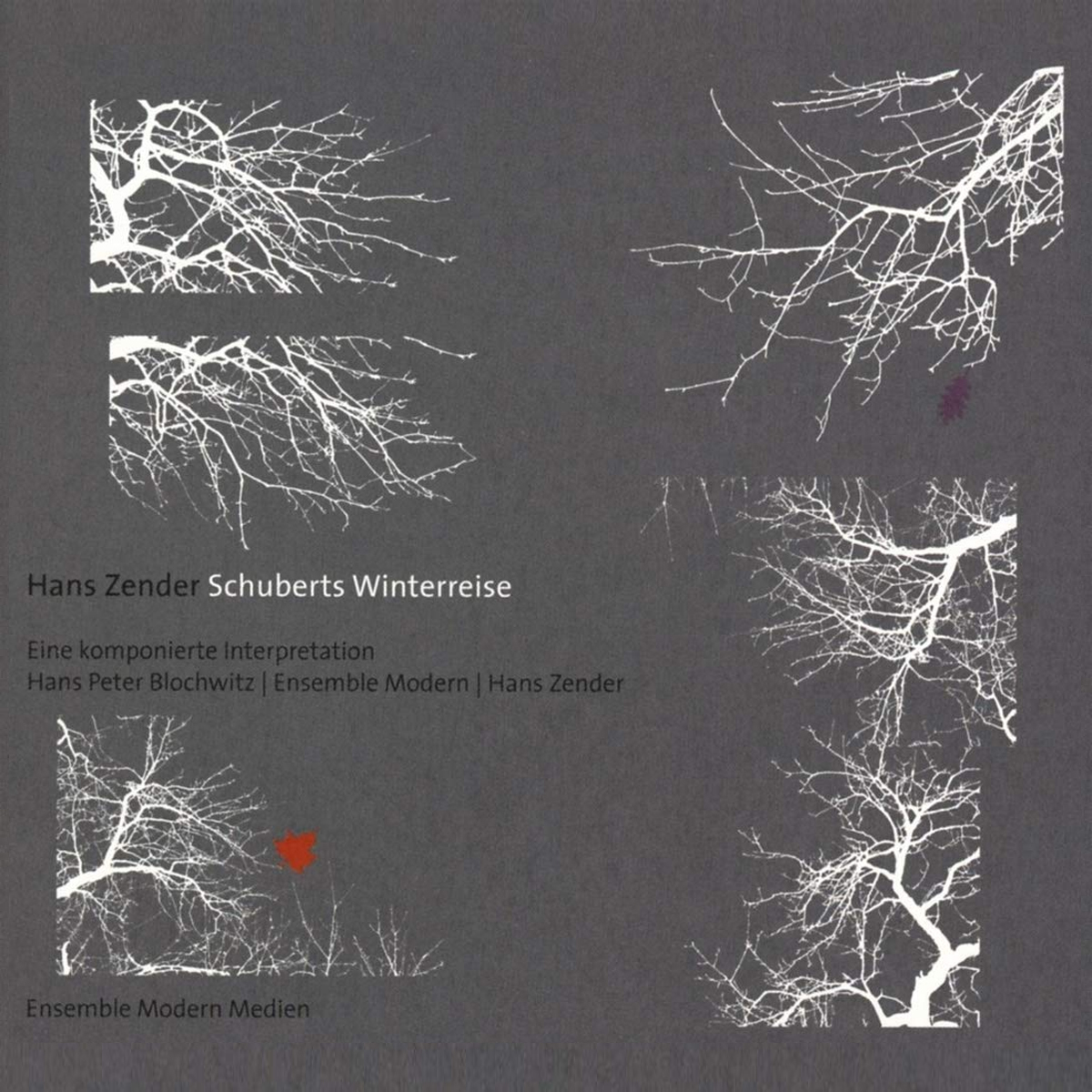
Hans Zender, Winterreise Re-Composed, Ensemble Modern, Blochwitz, Ensemble Modern 043/44


available at Amazon
H.Zender, Winterreise Re-Composed, Ensemble Modern, Blochwitz
Ensemble Modern

This year I am not splitting the list up into new and re-releases. But as a nod to the tradition, I must include this re-release of a classic recording which I am so glad to have back in the catalogue: The premiere (and still best) recording of Hans Zender’s Winterreise with Ensemble Modern. My review for ClassicsToday here: Best Remembrance Of Hans Zender

Pick # 6


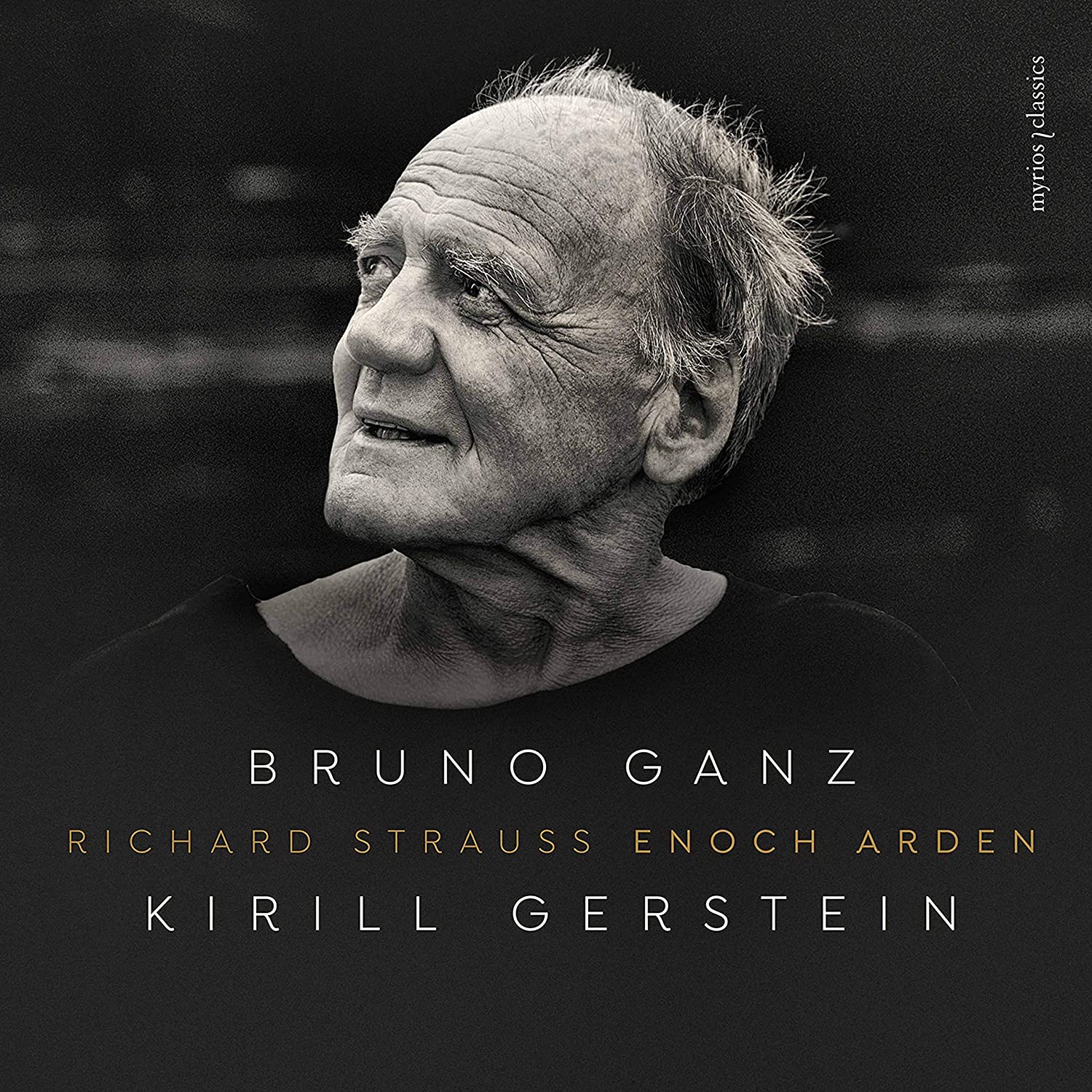
Richard Strauss, Enoch Arden, Bruno Ganz, Kirill Gerstein, Myrios MYR025


available at Amazon
Richard Strauss, Enoch Arden, Bruno Ganz, Kirill Gerstein
Myros

When Swiss actor Bruno Ganz and Kirill Gerstein performed Enoch Arden at Vienna’s Konzerthaus in late 2014, it was a quiet high-point of the season. The disc is about as good. Granted, the text of Strauss’ monodrama is quite important, so English-speakers not inclined to read along in the booklet will probably want to look to Glenn Gould and Claude Rains version for Sony. But for the rest: they’ve got a new reference version. The declamation of Ganz is worth hearing even just for how its musical and dramatic qualities, senza parole so to say. A fitting musical memorial for Ganz, who passed away in early 2019. My ClassicsToday review here: Granitic Enoch Arden From Bruno Ganz And Kirill Gerstein.

Pick # 5


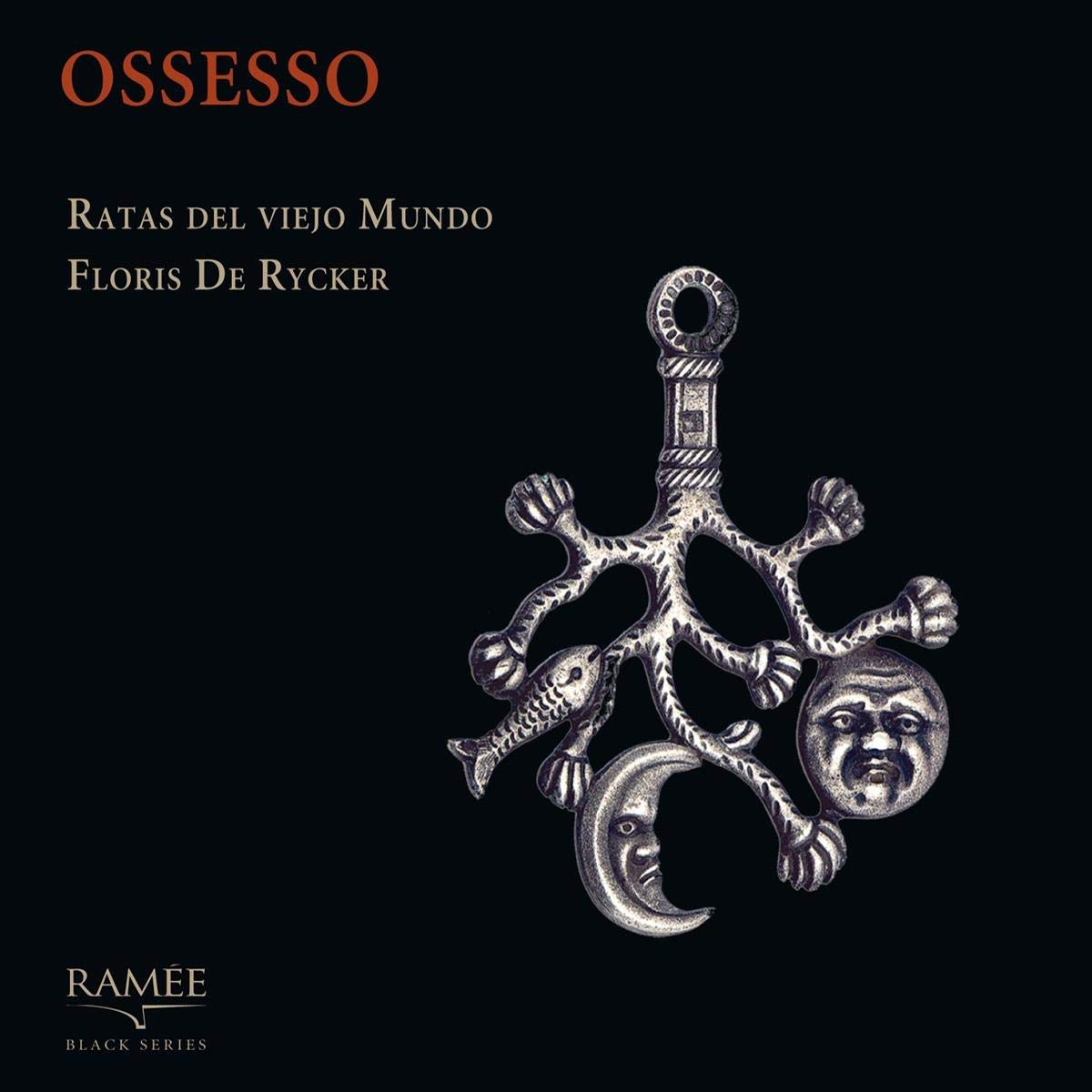
Ossesso, Ratas del Viejo Mundo, Floris De Rycker, Ramée RAM1808


available at Amazon
Ossesso, Ratas del Viejo Mundo, Floris De Rycker,
Ramée

Here’s another album that scores on memorability over perfection. It’s over the top, in some ways, and fabulous for it. Ancient music keeps it grounded; the wild acoustic makes it ring in your head like you’re in a grand gothic cathedral. Or a well. Depending on your mindset. What the Old-World Rats (what a name!) deliver here, singing a variety of Italian Madrigals belaboring the subjects of Love and Affliction, is glorious and just the right touch of weird. “The inflection of notes, the tuning, the character of old instruments like psaltery and kanklės… it all contributes to a sense of gentle alienation. Is this Orlando di Lasso, Vincenczo Galilei, Friulian traditional music (sung in the old language) or are we already on to Arab or even African shores? You could let yourself be distracted by any numbers of unorthodoxies on the album “Ossesso” but it’s much easier and more gratifying to sit back and indulge.” To quote my review at ClassicsToday: Obsessed Rats—Wondrous Voices from Olden Times.

Pick # 4


J.S.Bach, Keyboard Works and Transcriptions, Víkingur Ólafsson, DG 4835022


available at Amazon
J.S.Bach, A Recital, Víkingur Ólafsson,
DG

Like the Beethoven Symphonies , this is a release that would have been on last year’s list, also… and it’s too good and memorable to miss out on. It’s really just a supremely tasteful Bach recital by a wonderfully talented pianist who is just as satisfying in recital as he is on disc. But that’s enough. As I’ve said in my ClassicsToday review (Icelandic Bach With Heart and Panache): “It’s taken 13 years for a Bach-on-piano recital disc to have come along to match Alexandre Tharaud’s.” That is the hightest praise I can give. As a bonus, not that this need matter for your purely musical enjoyment: Víkingur Ólafsson won’t annoy you on Twitter, if you follow him, which you should at @VikingurMusic.

Pick # 3


L.v.Beethoven et al., Works for Mandolin, Julien Martinean, Vanessa Benelli Mosell et al., Naïve 7083


available at Amazon
L.v.Beethoven et al., Works for Mandolin, Julien Martinean, Vanessa Benelli Mosell et al.,
Naïve

This is a recording I don’t think I’ll ever forget – and if it’s for the mandolin variant of that 1970s Hot 100 smash hit of Walter Murphey’s: A Fifth of Beethoven (also known for its notable appearance in Saturday Night Fever). But no, actually, this is good and memorable all around, elevating some of Beethoven’s B-Music to A-levels. And a recording that memorable deserves a high entry on this list, even if it isn’t perfect. My review at ClassicsToday here: Beethoven for the Mandolin.

Pick # 2


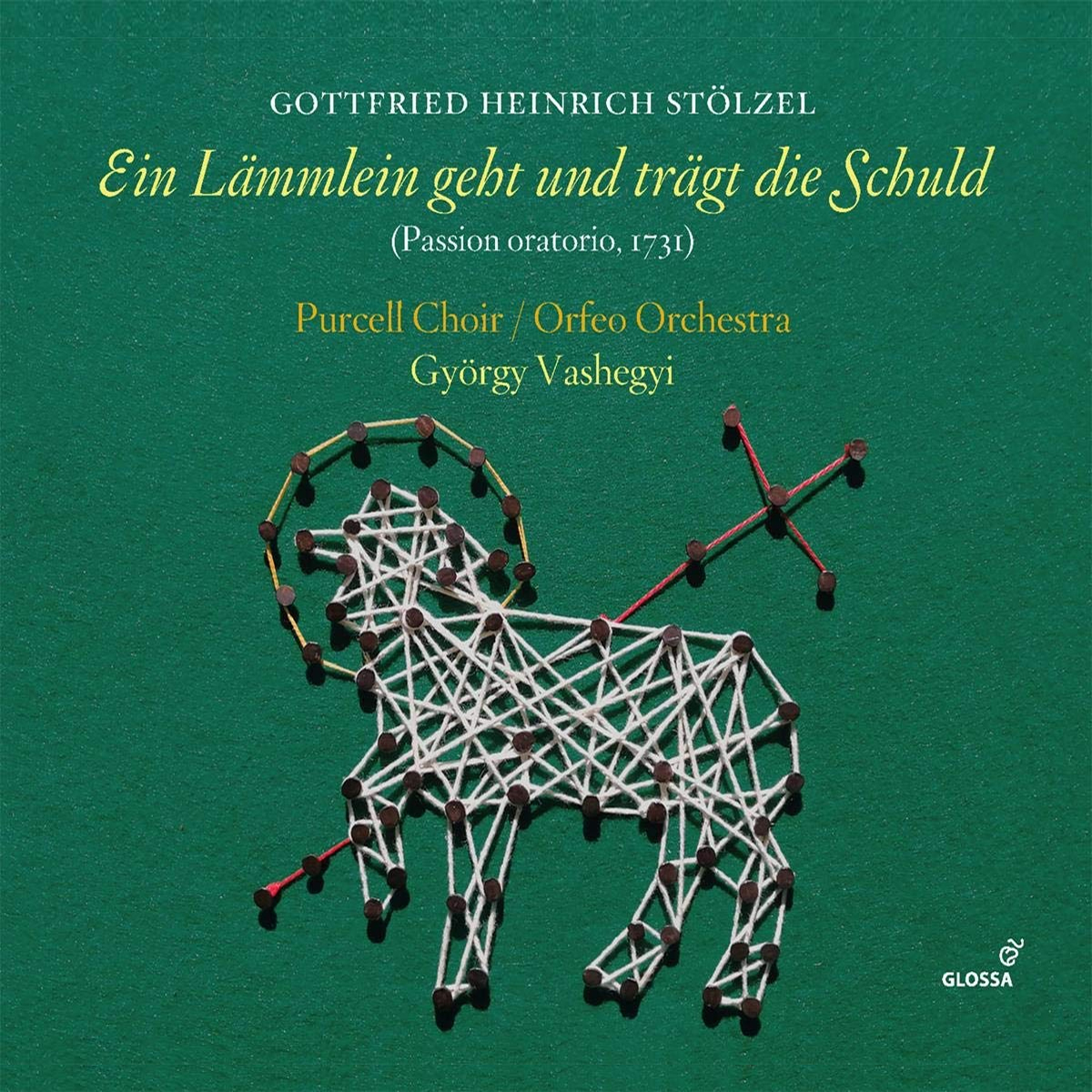
H.G.Stölzel, Ein Lämmlein geht und trägt die Schuld (Passion oratorio 1731), Purcell Choir, Orfeo Orchestra, Glossa 924006


available at Amazon
H.G.Stölzel, Passion oratorio, Purcell Choir, Orfeo Orchestra,
Glossa

This is such terrific music and so sympathetically performed and well recorded that it is bound to be the first of many Heinrich Gottfried Stölzel works you will want to hear. If, in fact, this is your first one. There is no (baroque) composer other than Bach that wrote no weak pieces. But at their best the Telemanns and Hasses and Zelenkas can be as good and, for being different, offer some extra enjoyment. And the same goes for Stölzel and this Passion oratorio in particular. Listen to “Ein Lämmlein geht und trägt die Schuld”. Treat yourself! My review at ClassicsToday here: Good Enough for Bach, Good Enough for Us.

Pick # 1


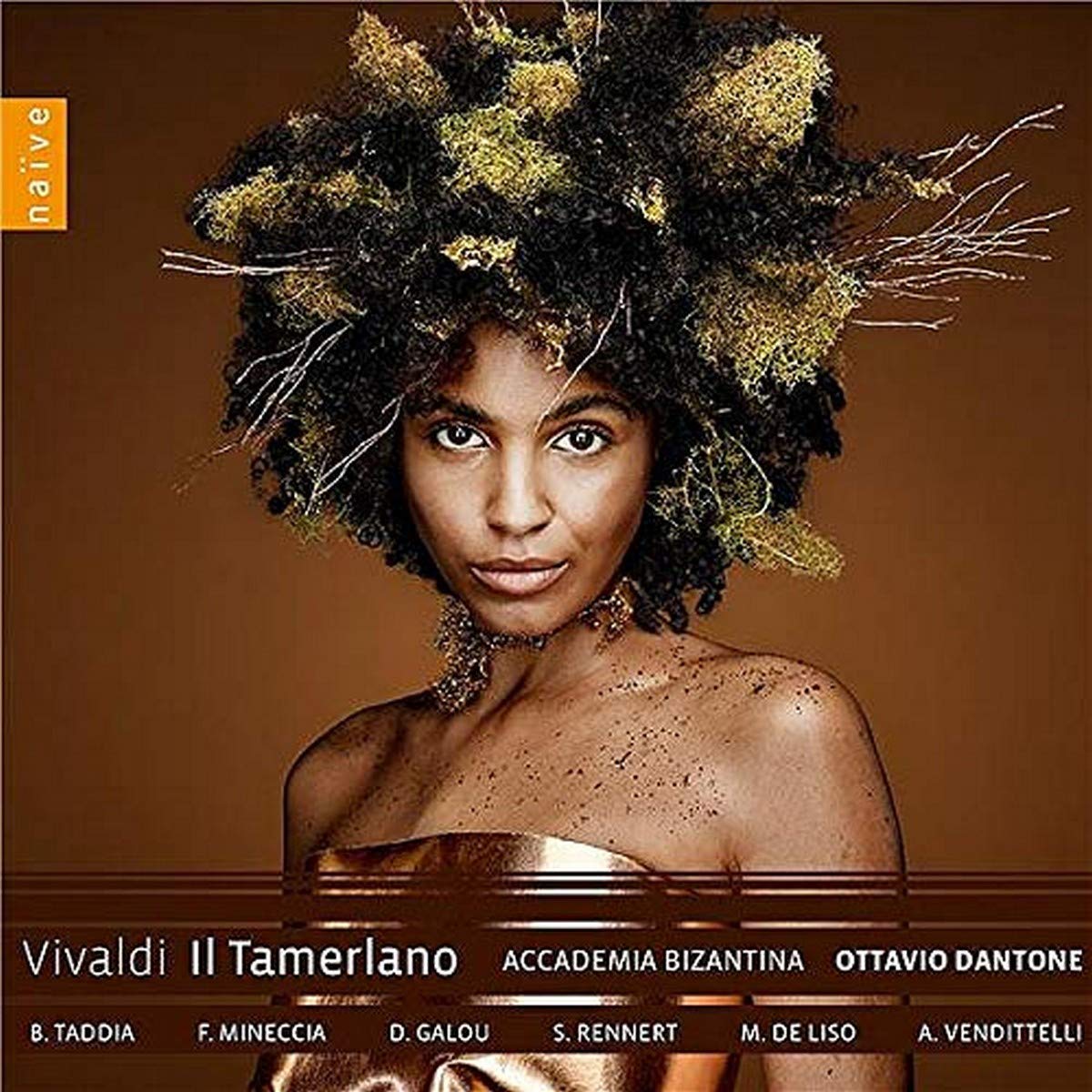
Antonio Vivaldi, Il Tamerlano, Accademia Bizantina, Ottavio Dantone, naïve 7080


available at Amazon
Antonio Vivaldi, Il Tamerlano, Accademia Bizantina, Ottavio Dantone,
naïve

Vivaldi operas have lagged behind those of Handel’s in appreciation and Il Tamerlano a.k.a. Bajazet (RV 703) perhaps even more, because its pasticcio composition style did not fit in with the Urtext and unity-of-the-artwork type of musicological purity that reigned in the last few decades. This perception might have begun to change, slowly, after Fabio Biondi’s fabulous 2005 recording came out. It turns out that it’s a masterpiece and the custom of stitching an opera together from previous hits of his own, newly written music, and arias from other composers – mainly Hasse and Giacomelli – doesn’t hold it back, it aids this work! Vivaldi giving his music, in the Venetian style, to the good guys but his colleagues’ more flashy Neapolitan-style music to the baddies adds welcome variety. Vivaldi’s intended point about the superiority of the former is, alas, undermined by the Red Priest having been too fair and using the finest that his rivals’ had on offer: two of the absolute show-stealing arias aren’t his. But we don’t care, the music is great and this new recording of the Accademia Bizantina under Ottavio Dantone is just what the opera deserves; rivalling (or complementing) Biondi’s, easily. A must-listen for 2021, if you haven’t yet. Review forthcoming.


OK, let’s cheat. Or make up for the lost year of 2019. I simply have to mention a few more recordings, now that I’ve started. Here they are:

27.12.07

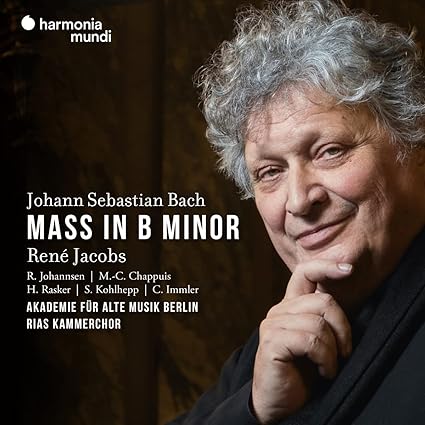
Bach's Mass in B-minor BWV 232


available at Amazon
J.S.Bach, Mass in B-minor,
Suzkuki / Bach Collegium Japan /
Sampson, Nicholls, Blaze, Türk, Kooij
BIS-SACD 1701/02
October 30, 2007

The enemy of excellence is greatness? True, generally – but not when it comes to Bach’s Mass in B-minor which would still be a masterpiece in the least of performances and is a gift to humanity when performed as well as I’ve now had the pleasure of experiencing trice in short succession. First courtesy of the Netherlands Bach Society and Jos van Veldhoven on Channel Classics, then as I received the newly released Masaaki Suzuki recording on BIS, and then just before Christmas when Ton Koopman directed the Bavarian Radio Symphony Orchestra at the Herkulessaal in Munich – which was also broadcast live on radio.

When the work was about to be published around 1820, Hans Georg Nägeli announced it as “the greatest musical work of art of all times and all peoples”. Publisher Nägeli may have aimed more at boosting subscriptions rather than trying to divine the true ramification of the rediscovery of the Mass in B-minor – but unwittingly or not, he was pretty close. I am hardly alone in thinking the B-minor Mass, along with the St. Matthew Passion, as one of the cultural pillars of Western Civilization. Whether it is a complete patch work or put together from pieces with a design in mind (most musicologists strongly suggest the latter), this music is – certainly metaphorically and possibly literally – divine.


available at Amazon
J.S.Bach, Mass in B-minor,
van Veldhoven / The Netherlands Bach Society /
Mields, Zomer, White, Daniels, Harvey
Channel Classics CCS SA 25007
April 10, 2007

Now I have two “HIP” versions on my desk, both of them on hybrid-SACDs, and both by renown Bach conductors. Jos van Veldhoven on Channel Classics in the most luxurious CD box imaginable. The accompanying book was produced in collaboration with the Museum Catharijneconvent and boasts near 100 pictures, reprints, and illustrations. The sturdy packaging with the golden imprint makes the space-saving slim box of the Masaaki Suzuki recording on BIS look downright humble.

Exteriors and superficialities should not be underestimated – but ultimately it is the content that matters. And here the two recordings are more alike than different. The total timing of van Veldhoven is 105 minutes, Suzuki clocks in at just over 107. That’s similar to Harnoncourt , Brüggen, Rifkin, Koopman, and Gardiner and just a tad speedier than Herreweghe’s wonderful (second) recording on Harmonia Mundi. (Junghänel is the fastest I am aware of, nearly staying below 100 minutes.) But it is a far cry from the 2-hour-plus performances of Karl Richter, Celibidache, Scherchen, Jochum, von Karajan, Shaw, or Klemperer – and for all those who insist on their B-minor masses big-boned and with might choruses, neither Suzuki or van Veldhoven with their two and three ripienists to a part will do. That said, anyone who is not ruling out the “HIP” approach but isn’t quite sold on it yet, will probably be converted by either recording and agree that the historically informed approach can offer some of the finest and most exciting music-making.

The sound and impact of both recordings is similarly excellent, their singers outstanding, and the choral parts that we love in the Kyrie, the Sanctus, or the Gloria come through with surprising opulence and splendor. Yet differences in detail abound between Suzuki and Veldhoven – often a matter of Suzuki taking a marginally more relaxed pace than his Dutch colleague or sounding more restrained even when he is technically a bit faster.

In the Quoniam tu solus Sanctus Suzuki uses the harpsichord as the continuo instrument of choice (with his son, Masato, playing) while van Veldhoven lets the strings free reign to support the bass solo. There is little to chose between the veterans Peter Kooij (BIS) and Peter Harvey (Channel Classics) – the latter perhaps with a more open, regal voice. The horn might be a tad more stable on the Dutch production (Teunis van der Zwart) but clearer and more in front of the bassoons with the Japanese band (Olivier Darbellay).

Dorothee Mields is a lovely soprano for van Veldhoven. But the recording of the Bach Collegium Japan has Carolyn Sampson and there simply isn’t anything better than her tasteful, lean, and full voice - whether it is live (as with Koopman) or on record. The Christe Eleison between Sampson and Rache Nicholls (both also sing in the soprano I and soprano II chorus parts, respectively) is one of those moments that feel like Bach himself is smiling.

Similarly, the countertenors Robin Blaze (BIS) and Matthew White (Channel Classics) turn the alto-oboe duet Qui sedes ad dextram Patris into something that might appease those who would rather hear a mezzo soprano in this role (which might actually be historically accurate, regardless of what the British-influenced Belgio-Flemish-Dutch historical performance tradition has come to accept as the HIP-gospel). Blaze has a slightly more nimble, more feminine voice – White’s a more dramatic ring to it. Masamitsu San’nomiya’s oboe-playing meanwhile, devoid of extraneous noises, air, or hiss and full of sweetness, is exemplary.

Ultimate splendor is achieved in the Sanctus. Suzuki and the BIS engineers make the 14 singers and 20 instrumentalists involved sound like a grand ensemble – and he gives his forces all the time to draw on the sumptuous qualities of the pinnacle of the Mass. Van Veldhoven and the audiophile crew of Channel Classics achieve an equivalent impression (he's given slightly more reverberation; both have ample space around all musicians), and he does it by pushing along at a brisk pace. Different means but with the result every bit as exciting.

The Osanna in Excelsis is a great moment of trumpet, timpani, and chorus imbued splendor – and a highlight among the string of thrilling moments of the Suzuki recording. It may also be one of the few miscalculations on van Veldhoven’s part because his extraordinarily swift take might well be exciting but also sounds a tad rushed.

As regards tempi in general, though, I could put it unkindly thus: Wherever Suzuki is slower than van Veldhoven, he seems to drag (in comparison, only!) – wherever Suzuki is faster, van Velhoven seems to have more momentum. It is this subtle impression that I take away from the two issues more than any of the more obvious little differences – and an impression I would never have gotten from Suzuki had it not been for direct comparison. Either are a match for the best of the HIP B-minor masses out there, whether Herreweghe (II) or Gardiner or whatever else your current preference may be. There’s an embarrassment of riches of great recordings of this work available now – but if pressed, I’d rank both among the handful of best recordings made, regardless of style and alongside Richter and Rilling.


Live Performance


Just how good these recordings are became clear when Ton Koopman's live performance, despite a stupendous performance of the Bavarian Radio Symphony Choir, Carolyn Sampson, and Charles Daniels (he is also the tenor on the van Veldhoven recording) seemed strangely foursquare. Victim of this rigidity was largely the Kyrie. Matters were starting to gel at around the Ladamus te, where – if my memory serves me right – Mlle. Sampson took the second soprano part (alto/countertenor Daniel Taylor had ably doubled as soprano II in the Christe).

Things were well on there way when – in the Domine Deus, and alongside Sampson and Daniels – Henrik Wiese proved that he is one of the foremost flutists (modern instruments for the reduced forces of the Bavarian Symphony Orchestra, of course) any orchestra can count among its ranks. There was not a noise to be heard in the Herkulessaal when the choir took to the Qui tollis peccata mundi, or when the masses of the choir rose to the Cum Sancto Spiritu after the ‘Bullfrog quartet’ of the Quoniam tu solus Sanctus. Klaus Mertens, also one of the usual suspects in HIP Bach performances, delivered the Et in Spiritum Sanctum with gentle, unexaggerated nobility.

During the Sanctus, the performance had come from perfunctory all the way to explosive and rousing. Henrik Wiese and Charles Daniels let go in the Benedictus, Daniel Taylor capped an impressive performance with the Agnus Dei, even if the lowest notes on “peccata mundi” were a toil. Although I reckon that many audience members were inspired to their thunderous ovations for the choir by being related to members therein, they would have deserved and gotten an equal amount of appreciation from a neutral crowd as well – not just for the superb closing Dona nobis pacem.


Suzuki - Bach, Mass in B-minor
Kyrie


Van Veldhoven - Bach, Mass in B-minor "The making of..."

22.1.15

Briefly Noted: Suzuki's Requiem

available at Amazon
Mozart, Requiem / Vesperae solennes de confessore, C. Sampson, M.B. Kielland, M. Sakurada, C. Immler, Bach Collegium Japan, M. Suzuki

(released on January 13, 2015)
BIS-2091 | 74'34"
We are admirers of the work of Masaaki Suzuki and the Bach Collegium Japan here at Ionarts. With the group's fine traversal of Bach's cantatas now complete, Suzuki has turned his attention to Mozart's setting of the Latin Requiem Mass. Not surprisingly, he has made a recording that is beautiful to listen to and forces the listener to confront the scholarly understanding of this often misunderstood work. Because the composer's death prevented him from completing it, Romantic imaginations have often run wild concerning the genesis and meaning of this Requiem. This recording's supremely informed program essay, by scholar Christoph Wolff, ends on the description of the composer's sister-in-law Sophie's memory of Mozart's final moments on earth: "The last thing he did was to try to mouth the sound of the timpani in his Requiem -- this I remember even now." Wolff also observes that in 1791, the year he died, Mozart was expecting to be appointed Domkapellmeister at St. Stephen's Cathedral, and that he sought to make his Requiem a piece that could be used in an actual liturgy.

Suzuki performs every note Mozart actually wrote down just as he wrote it, and he also tries to honor the intentions of both of the early completions of the work, by Franz Xaver Süßmayr and Joseph Eybler. The edition he uses, by Masato Suzuki (the conductor's son and the organist of the ensemble), makes a few corrections to the sometimes clumsy writing and instrumentation of the Süßmayr completion. This includes a second version of the Tuba mirum movement, one that follows Mozart's indication that the trombone play only the opening fanfare figure, with the rest of that part going to a bassoon (not how it is usually performed now). Most interestingly, Suzuki has added an Amen fugue to the end of the sequence, based on a fragment in Mozart's hand written around the same time (discovered in Berlin in 1960).

The tempo of the opening movement is paced so that the soprano's statement of the psalm, quite rightly, sounds more or less like a psalm tone. The luscious Carolyn Sampson sings both phrases each in a single breath and is matched in beauty by mezzo-soprano Marianne Beate Kielland. The male voices are less suited, with the tenor not always on the money pitch-wise (more when he is on his own), and the bass a little woolly. The only curious tempo choice was in the Recordare movement, so fast that the intertwining instrumental lines are a chaotic tangle. The focus in Mozart's life on sacred music makes the pairing here, with the Vesperae solennes de confessore (K. 339, composed in 1780 for the Cathedral of Salzburg), particularly appropriate, albeit in a middling performance, La Sampson's Laudate dominum aside. In fact, not noticed by me before, the "Qui habitare" fugue at the end of the Laudate pueri movement seems to be echoed in the "Sed signifer sanctus Michael" fugue in the Requiem Mass.

30.9.08

Psyché in Boston

available at Amazon
Lully, Psyché, C. Sampson, K. Gauvin, Boston Early Music Festival, P. O'Dette, S. Stubbs

(released July 29, 2008)
cpo 777 367-2

Online scores:
Psyché (full score, ed. Nicolas Sceaux)
The fine series of operas from the Boston Early Music Festival, recorded by Radio Bremen, continues with this 3-CD set made during last year's performance of Lully's Psyché. Lully had a life-long fascination with the story of Cupid and Psyche, setting it first as a court ballet with Isaac Benserade in the 1650s and then turning to it again for a 1670 ballet, whose divertissements were reworked as the framework for the full opera recorded here. Les Arts Florissants has recorded some excerpts, but this is the first complete recording. Last year's BEMF release, Lully's Thésée was very good, but this production strikes my ears as even better, largely because of a stronger cast.

The production drew a remarkable confluence of music critics, with reviews published by Jeremy Eichler (Boston Globe), Anne Midgette (New York Times), John Yohalem (Opera Today), Heidi Waleson (Wall Street Journal), and George Loomis (Financial Times). The photographs of the staging make one wish for a DVD instead of a CD. The thorough and excellent booklet includes essays about the opera by Gilbert Blin, Rebecca Harris-Warwick, John S. Powell (the musicologist who provided the performing edition of the music), and other specialists, which give the listener more information than most probably want or need. These essays explain the parallels intended to be drawn between the story and the court in which it was performed. The god L'Amour (Cupid -- Louis XIV) falls in love with the most beautiful mortal woman, Psyché (Athénaïs de Rochechouart, known as Madame de Montespan, the second of Louis's official mistresses, after Louise de la Vallière). He builds her a palace, as Louis built the Château de Clagny, to keep La Montespan near him at Versailles. (Clagny was later demolished, and its bricks used to build an Ursuline convent at the edge of the village of Versailles.)

available at Amazon
Lisa Hilton, Athénaïs: The Life of Louis XIV's Mistress, the Real Queen Of France
Psyché's story was associated with La Montespan in art and music, and the 1678 reworking of the opera was made to celebrate the return of the royal mistress to her former glory at court, after a period in disgrace. The score has a startling range of music, including one of the most extended lament scenes in Baroque opera, the so-called Plainte italienne, a scene sung in Italian and accompanied by extra recorder players on stage. There are also dance scenes for Cyclopes, chain-rattling demons in a celebrated underworld scene, and the Furies given voice by a trio of growling male voices). It is endlessly diverting music, presented in the best possible light by the BEMF Orchestra, led superlatively by theorbists Paul O'Dette and Stephen Stubbs from the continuo section. All of the players are leading players of historical instruments, with especially vigorous and sparkly playing from Kristian Bezuidenhout and Peter Sykes at the harpsichord. A number of bells and other tinkly percussion, as well as glissandi on harpsichord, help give fantastic color to the magical transformation scenes.

The singing is led by two truly excellent sopranos, the luminescent Carolyn Sampson as Psyché and the velvety, fuller Vénus of Karina Gauvin. The chorus is one of the strongest in this sort of recording, made up of the fine singers in the supporting cast, including countertenor José Lemos, tenors Jason McStoots and Aaron Sheehan, and sopranos Amanda Forsythe and Yulia Van Doren. It is not only the sole recording of this important opera, it is hard to imagine it being surpassed by a superior version.

173'42"

16.2.15

Briefly Noted: Brautigam-Willens Mozart Piano Concerto Cycle

available at Amazon
Mozart, Piano Concertos 14/21, Ch'io mi scordi di te, R. Brautigam, C. Sampson, Die Kölner Akademie, M. A. Willens

(released on January 13, 2015)
BIS-2054 | 56'
Michael Alexander Willens is leading an excellent historically informed performance (HIP) cycle of Mozart's piano concerti, of which we have already noted two volumes. At the center of its success is the soloist, Ronald Brautigam, a Dutch fortepiano specialist who has released top-notch complete sonata cycles for Mozart and Beethoven. In the concertos Brautigam is playing on a reconstruction of a historically appropriate fortepiano by the American-born instrument builder Paul McNulty. In the latest installment, he adds two more concertos, K. 449 and K. 467, composed within about a year of each other. Brautigam plays Mozart's cadenzas in the former and devises his own for the latter, the latest in a long line of candidates aiming to replace those by Mozart, now lost, including Alfred Schnittke and Philip Glass.

This disc includes a lovely lagniappe, the concert aria Ch'io mi scordi di te?, K. 505, composed for the Vienna farewell concert of Nancy Storace, the English soprano who created the role of Susanna in Le Nozze di Figaro, in 1787. The orchestration for two clarinets, two bassoons, two horns, and strings is augmented by a part for solo keyboard, apparently intended for and played by Mozart at the premiere, making it indeed like a mini-piano concerto of sorts. The text, possibly by Lorenzo da Ponte and originally made for another aria inserted into the opera Idomeneo, seems to refer playfully in its new context to the impending separation of composer and soprano. The performances are all excellent, especially the solo work of soprano Carolyn Sampson and Brautigam, but also the full-bodied horns and trumpets of Die Kölner Akademie. If my favorite Mozart concerti remain those recorded by Christopher Hogwood and the Academy of Ancient Music, with Robert Levin improvising his own cadenzas at the fortepiano (incomplete and now hard to find -- please, Decca, you need to re-release a box set), this cycle is shaping up as a close second.

9.2.19

Briefly Noted: Brahms as Early Music

available at Amazon
J. Brahms, Ein deutsches Requiem, C. Sampson, A. Morsch, Cappella Amsterdam, Orchestra of the 18th Century, D. Reuss

(released on January 4, 2019)
Glossa GCD921126 | 70'26"
The German Requiem is perhaps the greatest work in the oeuvre of Johannes Brahms, or at least my favorite. Completed in its final form in the wake of his mother's death, the piece reveals the normally reticent Brahms at his least guarded. In recent years, various conductors of historically informed performance ensembles have tried to get to the bottom of what the composer may have had in mind with the piece, by going back to the instruments of the period and following the metronome markings Brahms later attached to each movement. None of these versions has quite satisfied: John Eliot Gardiner, twice, with the Monteverdi Choir and the Orchestre Révolutionaire et Romantique (1991, 2012); Nikolaus Harnoncourt with the Vienna Philharmonic and Arnold Schoenberg Choir; or Philippe Herreweghe with La Chapelle Royale and Collegium Vocale.

Cappella Amsterdam and Daniel Reuss, a group growing in my admiration recently, have succeeded. The sound with the Orchestra of the 18th Century in this live recording is golden and balanced, with Reuss not slavishly following the metronome markings but taking the main lesson they seem to offer, that the slow movements not be too glacial and the fast not too frenetic. As stated in the liner notes, the markings as a whole indicate that this is music for meditation on its Biblical words, rather than for dramatic titillation. This seems like just the right approach for a composer who always plays his cards close to this chest, and the results agree. The incomparable Carolyn Sampson provides maternal consolation in the fifth movement, and German baritone André Morsch is both subtle and prophetic in the other solos.

The weight of the piece rests on the chorus, however, and the Cappella Amsterdam delivers the full range of dynamics with pure and balanced sound, nicely matched to the smaller punch of the orchestra. One moment in the first movement knocked me over the first time I listened to this disc. At Rehearsal E, Brahms suddenly leaves the alto section of the chorus alone at the return of the opening theme. Most conductors bring that line out by having the altos sing louder than Brahms indicate (piano). Reuss leaves his women's sound quiet, exposed almost like a single voice, a magical effect of emotional vulnerability.

6.10.14

Briefly Noted: Rameau's 'Fêtes de l'Hymen et de l'Amour'

available at Amazon
Rameau, Les Fêtes de l'Hymen et de l'Amour, C. Santon-Jeffery, C. Sampson, B. Staskiewicz, R. van Mechelen, Le Concert Spirituel, H. Niquet

(released on October 28, 2014)
Glossa GCD921629 | 113'36"

available at Amazon
S. Bouissou, Jean-Philippe Rameau
(Fayard, 2014)
This past September 12 was the 250th anniversary of the death of Jean-Philippe Rameau. The composer's works have had a rough ride, passing into near-total obscurity by the end of the 18th century, then revived in nationalist editions that exaggerated and misrepresented their achievements in orchestration. Sylvie Bouissou has shepherded the long-delayed complete Rameau scholarly edition to completion in time for the anniversary, and one of the last works yet to receive a modern performance, Les Fêtes de l'Hymen et de l'Amour, edited by Thomas Soury, came out last year. Rameau and his librettist, Louis de Cahusac, created this ballet héroïque for a public production but had to shelve it when the Dauphin's first wife died. When the Dauphin was remarried, in 1747, they had the work in hand for the celebration, after adding a prologue showing the reconciliation of Cupid and Hymen, thus recontextualizing the work for the wedding. It was premiered in the Manège of the Grande Écurie at Versailles, for this was still about twenty years before construction began on the opera house there.

Hervé Niquet did not use the Soury edition for this recording, made last February at the Opéra Royal du Château de Versailles, but a version created by Fannie Vernaz (Les Éditions des Abbesses) for the Centre de Musique Baroque de Versailles, which sponsored the performances. Niquet's ensemble, Le Concert Spirituel, makes beautiful sounds: sweet flutes, brilliant trumpets and timpani in the finale, and avian piccolos in the birdsong scene that concludes the first entrée, as well as two musettes, or bagpipes, in the dances of the Egyptian shepherds in the final entrée.

The cast is led by the piping, crystalline soprano of Chantal Santon-Jeffery, who takes the parts of both the Amazon princess Orthésie, who leads that birdsong scene, and the triumphant Orie in the final entrée. Soprano Carolyn Sampson has several excellent turns, as Cupid and Memphis, Canope's beloved nymph in the middle entrée. Two haute-contres, the very high French tenor, are required, and Reinoud Van Mechelen and Mathias Vidal are valiant if not quite ideal. The recording makes a case for the ear to go with the astute booklet essay by Benoît Dratwicki, artistic director of the CMBV, which claims that Cahusac and Rameau likely thought of this work as "the prototype for a complete theatrical spectacle, where verse, dance, music, and decoration together add up to a coherent and diverting entity for the audience."

Washingtonians can hear a rare live performance of this work this evening, presented by Opera Lafayette in the Kennedy Center Concert Hall (October 6, 7:30 pm).

20.3.05

"Weinen, Klagen..."—Herreweghe's New Bach


available at Amazon
J. S. Bach, Cantatas
BWV 12, 38, 75
,
P. Herreweghe / Collegium Vocale Ghent
C.Sampson, M.Padmore, D.Taylor, P.Kooy
Harmonia Mundi

Weinen, Klagen, Sorgen, Zagen (BWV 12) is one of Bach's 1723/24 cantatas that deal with sorrow and consolation, based on or relating to Psalms 22 and 130 (De Profundis and Luther's German popularization thereof, Aus tiefer Not). The other two cantatas on Philippe Herreweghe's new Harmonia Mundi disc are that very Aus tiefer Not (BWV 38) and Die Elenden sollen essen (The Miserable Shall Eat, BWV 75). Aus tiefer Not is set not only to the words of Luther but also on the melody of his hymn. Though sparse as few other of Bach's cantatas, it impresses with its fine and meticulous weaving of vocal lines, doubled by the accompanying instruments.

All three are masterly performed by Philippe Herreweghe (back in more familiar territory after his recent foray into Bruckner: see Ionarts review), his Collegium Vocale Gent and the outstanding Bach singers Carolyn Sampson, Daniel Taylor, Mark Padmore, and Peter Kooy. Especially the latter two are exquisite, not surprisingly, as Bach cantata veterans who may be familiar to the listener from their collaboration with Gardiner's and Ton Koopman's respective cantata projects.

Herreweghe must have "secretly" climbed a good part of the way to a complete cantata cycle by now. That he does it—if he has any such aspirations—without fanfare and announcement would make sense if one considers that neither Sir John Eliot Gardiner nor Ton Koopman were allowed to finish their traversals with their original labels Archiv and Erato. Koopman cofounded Challenge Classics in order to finish/reissue his cycle. And just this month the first Bach cantata CDs on Gardiner’s own new label (Soli Deo Gloria) came out to much acclaim, suggesting that he, too, may yet complete a project. Otherwise the field of complete cantatas would be left to the old and scarcely available Harnoncourt, Haenssler's Rilling, or the excellent Suzuki on his loyal and enterprising BIS label.

Of course choosing and sticking with a cantata cycle is one thing: grabbing this disc for the sheer enjoyment of lamenting is another. The no vibrato style delivers the cleanest held lines, and assuming one likes it that way, the contributions leave no musical wish unfulfilled.