CD Reviews | CTD (Briefly Noted) | JFL (Dip Your Ears) | DVD Reviews
Showing posts with label Domenico Scarlatti. Show all posts

16.4.22

Briefly Noted: Domenico Scarlatti

available at Amazon
D. Scarlatti, Stabat Mater (inter alia), Emmanuelle de Negri, Paul-Antoine Bénos-Djian, Le Caravansérail, Bertrand Cuiller

(released on April 8, 2022)
Harmonia Mundi HMM905340DI | 76'22"
The little surviving sacred music by Domenico Scarlatti should be sung more often than it is. In my limited experience with it as a choral singer, it is always worth knowing. Bertrand Cuiller puts a setting of the Stabat Mater at the center of this recent survey of the composer's music with Le Caravansérail, the early music ensemble he founded in 2015. Cuiller conducts the work from the organ, leading a small continuo ensemble consisting of cellist Bruno Cocset, plus double bass and archlute. This puts the emphasis appropriately on the voices, soprano Emmanuelle de Negri and countertenor Paul-Antoine Bénos-Djian, blossoming into a rarefied choral sound at climaxes with eight other singers.

Cuiller shifts gears with the remaining pieces on the disc, all of a secular nature, which he performs on or leads from a harpsichord. The selections highlight the melodic variety of Scarlatti the Younger, from the somber Keyboard Sonata in D Minor, K.213 (Cuiller on harpsichord), to an unusual arrangement of the Sonata in G Major, K. 144, for harpist Bérengère Sardin. The group's lead violinist plays the diverting Sonata in D Minor, K. 90, one of the multi-movement sonatas Scarlatti left open to the possibility of performing with added instruments. The disc also includes a movement from one of the Scarlatti sonatas enlarged as a concerto grosso by English composer Charles Avison.

Other vocal works include three arias from the opera Amor d’un’Ombra e Gelosia d’un’aura, composed in Rome and later adapted as Narciso for London, as well as the cantata Pur nel sonno almen tal'ora, composed during Scarlatti's later period in Madrid. Sardin gets another pleasing harp turn on the Minuetto that forms the latter's second movement. Of the two leading soloists, de Negri is the more consistenly pleasing, featured beautifully in the cantata's three vocal movements, as Bénos-Djian at times falls into the nasal shrillness associated with some countertenor voices at loud dynamics. The two singers are heard together to their best effect, as Narcissus and Echo, in the final selection from Amor d'un'Ombra.

17.12.20

Best Recordings of 2020


After a hiatus last year, it is time for a list of classical CDs that were outstanding this year. This is the ionarts list of the Best Classical Recordings of the Year:

Preamble


I’ve been doing some form of “Best of the Year” list since 2004. 2019 was the first time I slipped. Here’s my attempt at redemption. Granted, my overview of new releases is no longer quite what it was in the days I worked at Tower Records. But the idea of a “Best of the Year” list, if one clings too literally to the idea of “Best” is daft even under the most ideal of situations. It’s of course just short for: “These are a few of the things that I liked” and used, as I’ve been fond of writing in past iterations of this list, because “10 CDs that, all caveats duly noted, I consider to have been outstanding this year” just doesn’t roll off the tongue as easily. Because I skipped 2019, I will include some releases from that year on this list. If you are looking for past lists, here they are:

2004 | 2005 | 2006 | 2007 | 2008 | 2008—"Almost" | 2009 | 2009—"Almost" | 2010 | 2010—"Almost" | 2011 | 2011—"Almost" | 2012 | 2013 | 2014 | 2015 | 2016 | 2017 | 2018

Pick # 10


L.v.Beethoven, Symphonies 1-9, Adam Fischer, Danish Chamber Orchestra, Naxos 8.505251


available at Amazon
L.v.Beethoven, The Symphonies
Adam Fischer, Danish Chamber Orchestra,
Naxos

I wanted these to be on the aborted 2019 list and they definitively belong on it. Yes, we have way too much Beethoven – and 2020 was one of the worst offenders, with it being the 'Beethoven Year' and every artist with ten fingers or access to a baton bringing out a cycle of the sonatas or the symphonies. In the concert halls, at least, Corona saved us from a Beethoven overkill that would have ruined our appreciation of the composers for decades. But just before all that happened, Adam Fischer and his now privately funded Danish Chamber Orchestra come out with something that stands out from the 178+ other cycles we can choose from. These are unpretentious, lively, quick-witted yet totally sober readings that manage to be free of any exaggeration and superbly exciting at the same time. Fischer situates his Beethoven in the near-ideal middle between the stale routine of playing these damn things over and over again on one side and the interventionist re-inventors of the wheel on the other. This is roughly the space Jukka-Pekke Saraste and his West German Radio Symphony Orchestra occupy (review: Precious Vanilla), or the fairly recent and excellent second Blomstedt cycle with the Leipzig Gewandhaus Orchestra. Except that Fischer’s band is smaller, more nimble, and a touch more alert which – as might be expected – shifts the focus of strengths towards the earlier symphonies. Like Blomstedt and most other conductors these days, Fischer chooses swift tempi. More to the point: Fischer opts for mediating tempi: quicker slow movements and moderately paced fast movements. The result is Beethoven unassuming and disheveled, and very lovable. A more detailed review will follow on ClassicsToday eventually. But it’s definitely the Beethoven Cycle of the Beethoven year!

Pick # 9


R.Schumann, Rare Choral Works, Aapo Hakkinen, Helsinki Baroque Orchestra, Carolyn Sampson et al., Ondine 1312


available at Amazon
R.Schumann, Rare Choral Works, Aapo Hakkinen, Helsinki Baroque Orchestra, Carolyn Sampson et al.,
Ondine

Here’s an all ‘round terrific disc of off-the-beaten-path Schumann from Ondine, coupling his Ballade op.140 for soloists and chorus with the Adventlied and – an intriguing filler in the middle – Schumann’s reworking of the Bach Cantata BWV 105. The Adventlied is, inexplicably, a world premiere recording. Where has it been hiding? It is Schumann at his most Mendelssohnesque. Meanwhile it’s good to know that even Schumann agreed that Bach’s stupendous Cantata BWV 105 is a masterpiece among masterpieces. Creating this performing version he certainly suggested as much. And he didn’t super-juice it: he held back and limited himself to modernizing the instrumentation to suit his players. It’s not adding to Bach but as the imaginative buffer between the two marvelously Schumann pieces is very welcome. With Carolyn Sampson participating, deftly accompanied by the Helsinki Baroque Orchestra and the Estonian Philharmonic Chamber Choir under Aapo Hakkinen, this disc is a winner that I’ve been wanting to write about for over a year. Consider this the teaser.

Pick # 8


J.S.Bach, Christmas Oratorio , Rudolf Lutz, soloists, Bach Stiftung Orchestra & Chorus, Bach Stiftung B664


available at Amazon
J.S.Bach, Christmas Oratorio, Rudolf Lutz, soloists, Bach Stiftung Orchestra & Chorus,
Bach Stiftung

Befitting the season, a Christmas Oratorio makes this list. The new release from the St. Gallen Bach Stiftung is perfect in just about every way. Perfection – in a technical sense – isn’t everything, of course, especially when it’s closer to anodyne than riveting. But in this case, the live recording (you’d never know!) has all the spirit of most of this outfit’s releases and absolutely terrific singers starting with alto Elvira Bill (who has appeared on the last three Christmas Oratorios I have reviewed) and tenor Daniel Johannsen who has established himself to the point where neither “young” nor “up and coming” still apply. (I’ve just checked: He’s older now than Werner Güra was when he recorded “Schöne Wiege meiner Leiden”.) A review will follow on ClassicsToday soon and be linked then. By the way: if you haven’t sampled their Cantata-cycle het, but want to, you would do well to start here, with volume 30!

Pick # 7


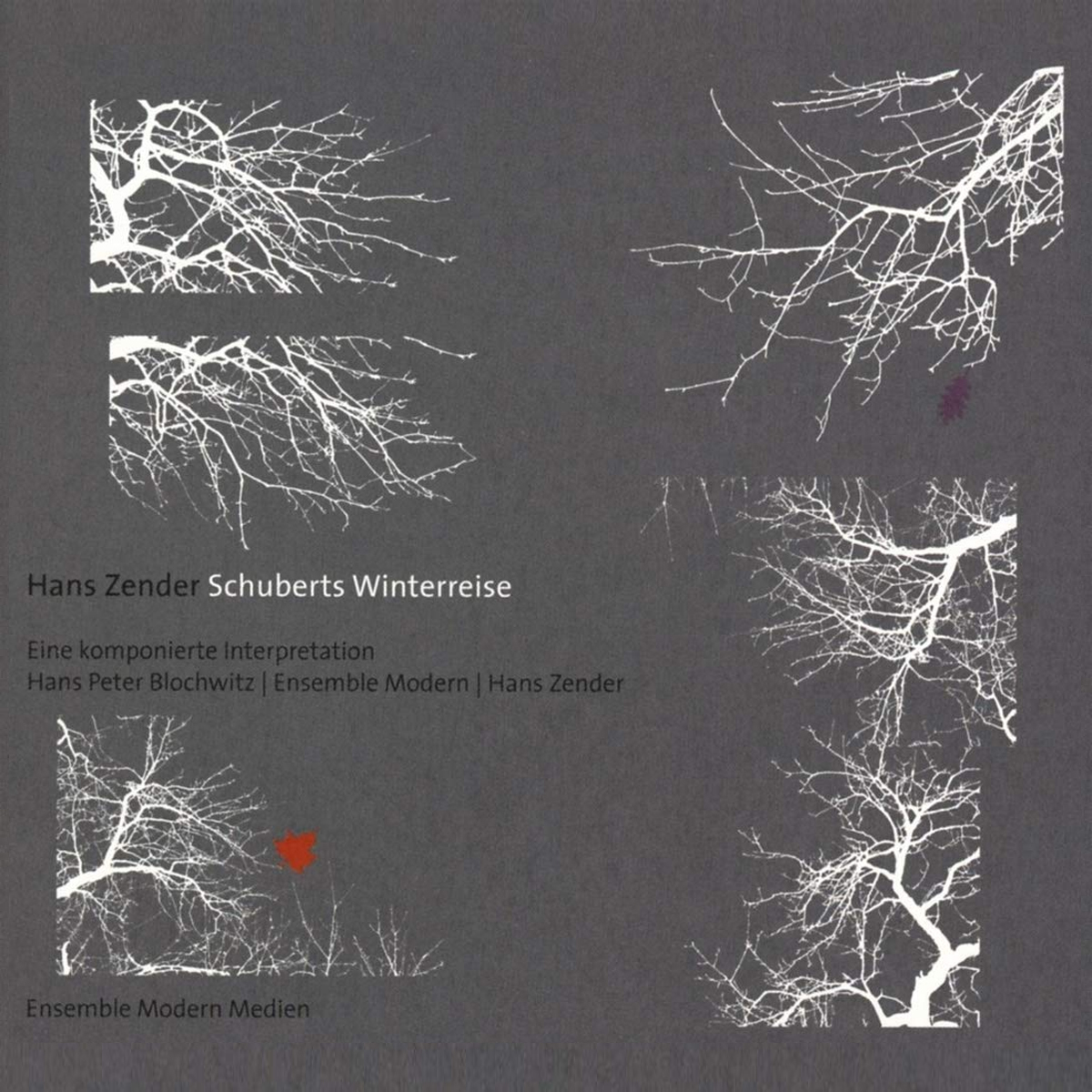
Hans Zender, Winterreise Re-Composed, Ensemble Modern, Blochwitz, Ensemble Modern 043/44


available at Amazon
H.Zender, Winterreise Re-Composed, Ensemble Modern, Blochwitz
Ensemble Modern

This year I am not splitting the list up into new and re-releases. But as a nod to the tradition, I must include this re-release of a classic recording which I am so glad to have back in the catalogue: The premiere (and still best) recording of Hans Zender’s Winterreise with Ensemble Modern. My review for ClassicsToday here: Best Remembrance Of Hans Zender

Pick # 6


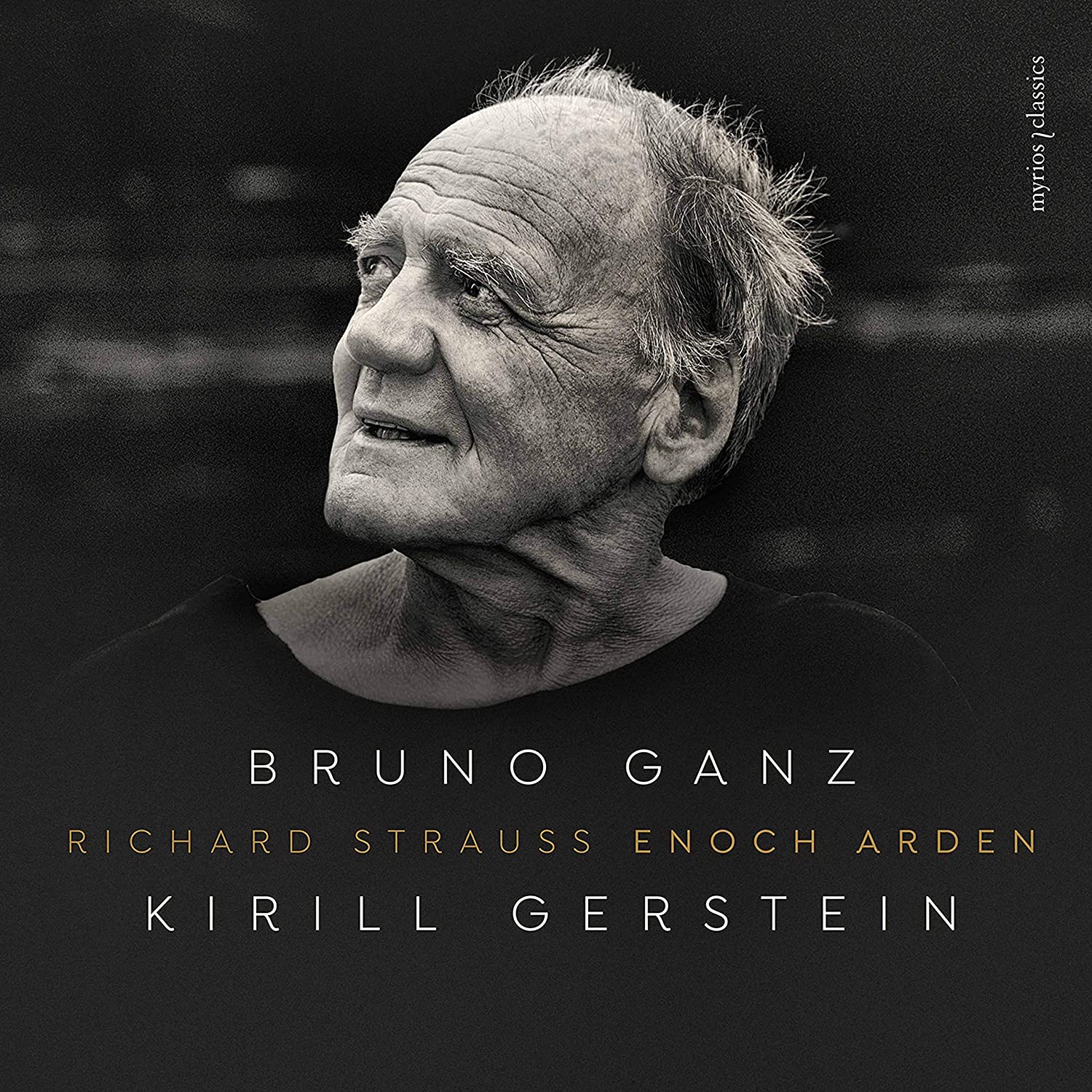
Richard Strauss, Enoch Arden, Bruno Ganz, Kirill Gerstein, Myrios MYR025


available at Amazon
Richard Strauss, Enoch Arden, Bruno Ganz, Kirill Gerstein
Myros

When Swiss actor Bruno Ganz and Kirill Gerstein performed Enoch Arden at Vienna’s Konzerthaus in late 2014, it was a quiet high-point of the season. The disc is about as good. Granted, the text of Strauss’ monodrama is quite important, so English-speakers not inclined to read along in the booklet will probably want to look to Glenn Gould and Claude Rains version for Sony. But for the rest: they’ve got a new reference version. The declamation of Ganz is worth hearing even just for how its musical and dramatic qualities, senza parole so to say. A fitting musical memorial for Ganz, who passed away in early 2019. My ClassicsToday review here: Granitic Enoch Arden From Bruno Ganz And Kirill Gerstein.

Pick # 5


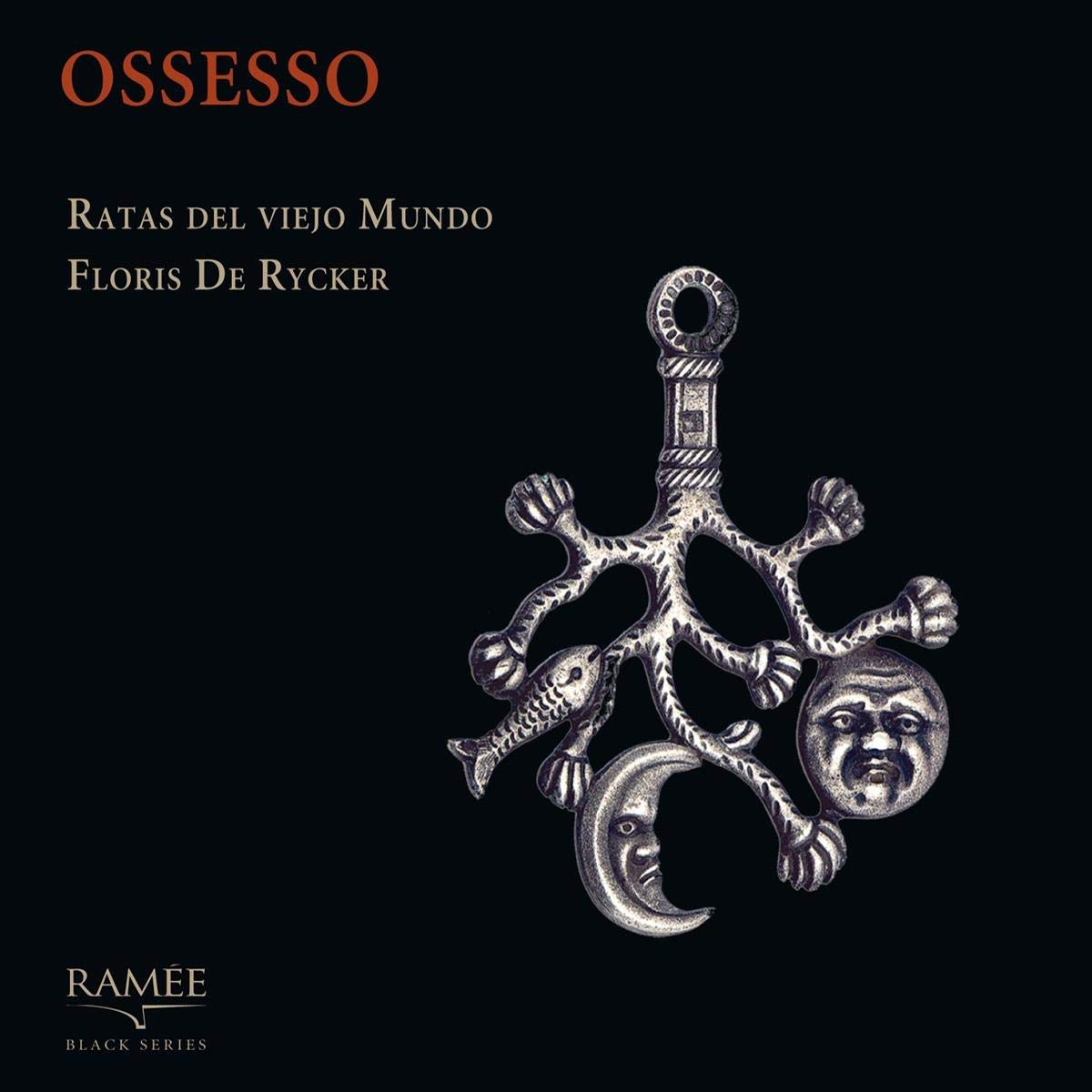
Ossesso, Ratas del Viejo Mundo, Floris De Rycker, Ramée RAM1808


available at Amazon
Ossesso, Ratas del Viejo Mundo, Floris De Rycker,
Ramée

Here’s another album that scores on memorability over perfection. It’s over the top, in some ways, and fabulous for it. Ancient music keeps it grounded; the wild acoustic makes it ring in your head like you’re in a grand gothic cathedral. Or a well. Depending on your mindset. What the Old-World Rats (what a name!) deliver here, singing a variety of Italian Madrigals belaboring the subjects of Love and Affliction, is glorious and just the right touch of weird. “The inflection of notes, the tuning, the character of old instruments like psaltery and kanklės… it all contributes to a sense of gentle alienation. Is this Orlando di Lasso, Vincenczo Galilei, Friulian traditional music (sung in the old language) or are we already on to Arab or even African shores? You could let yourself be distracted by any numbers of unorthodoxies on the album “Ossesso” but it’s much easier and more gratifying to sit back and indulge.” To quote my review at ClassicsToday: Obsessed Rats—Wondrous Voices from Olden Times.

Pick # 4


J.S.Bach, Keyboard Works and Transcriptions, Víkingur Ólafsson, DG 4835022


available at Amazon
J.S.Bach, A Recital, Víkingur Ólafsson,
DG

Like the Beethoven Symphonies , this is a release that would have been on last year’s list, also… and it’s too good and memorable to miss out on. It’s really just a supremely tasteful Bach recital by a wonderfully talented pianist who is just as satisfying in recital as he is on disc. But that’s enough. As I’ve said in my ClassicsToday review (Icelandic Bach With Heart and Panache): “It’s taken 13 years for a Bach-on-piano recital disc to have come along to match Alexandre Tharaud’s.” That is the hightest praise I can give. As a bonus, not that this need matter for your purely musical enjoyment: Víkingur Ólafsson won’t annoy you on Twitter, if you follow him, which you should at @VikingurMusic.

Pick # 3


L.v.Beethoven et al., Works for Mandolin, Julien Martinean, Vanessa Benelli Mosell et al., Naïve 7083


available at Amazon
L.v.Beethoven et al., Works for Mandolin, Julien Martinean, Vanessa Benelli Mosell et al.,
Naïve

This is a recording I don’t think I’ll ever forget – and if it’s for the mandolin variant of that 1970s Hot 100 smash hit of Walter Murphey’s: A Fifth of Beethoven (also known for its notable appearance in Saturday Night Fever). But no, actually, this is good and memorable all around, elevating some of Beethoven’s B-Music to A-levels. And a recording that memorable deserves a high entry on this list, even if it isn’t perfect. My review at ClassicsToday here: Beethoven for the Mandolin.

Pick # 2


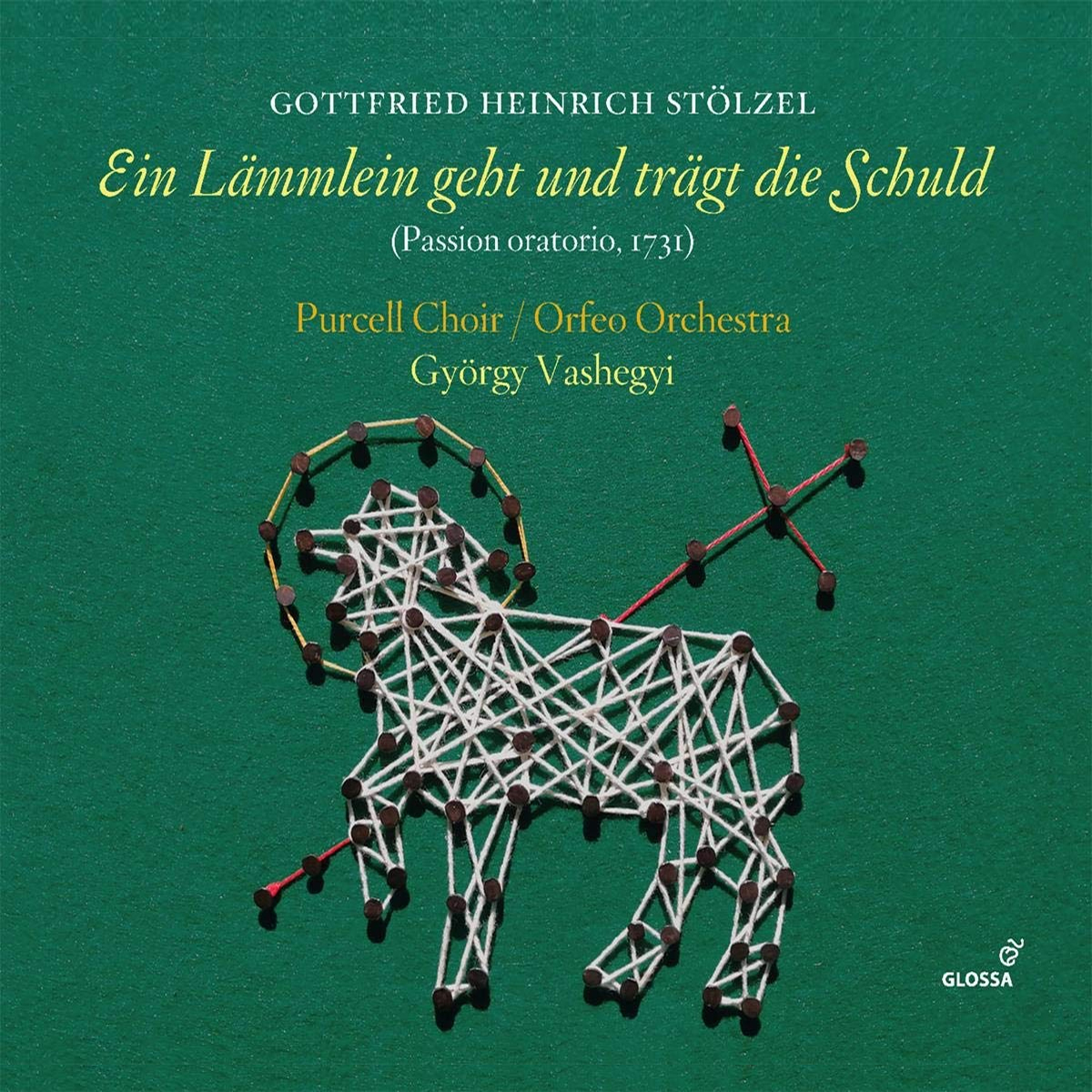
H.G.Stölzel, Ein Lämmlein geht und trägt die Schuld (Passion oratorio 1731), Purcell Choir, Orfeo Orchestra, Glossa 924006


available at Amazon
H.G.Stölzel, Passion oratorio, Purcell Choir, Orfeo Orchestra,
Glossa

This is such terrific music and so sympathetically performed and well recorded that it is bound to be the first of many Heinrich Gottfried Stölzel works you will want to hear. If, in fact, this is your first one. There is no (baroque) composer other than Bach that wrote no weak pieces. But at their best the Telemanns and Hasses and Zelenkas can be as good and, for being different, offer some extra enjoyment. And the same goes for Stölzel and this Passion oratorio in particular. Listen to “Ein Lämmlein geht und trägt die Schuld”. Treat yourself! My review at ClassicsToday here: Good Enough for Bach, Good Enough for Us.

Pick # 1


Antonio Vivaldi, Il Tamerlano, Accademia Bizantina, Ottavio Dantone, naïve 7080


available at Amazon
Antonio Vivaldi, Il Tamerlano, Accademia Bizantina, Ottavio Dantone,
naïve

Vivaldi operas have lagged behind those of Handel’s in appreciation and Il Tamerlano a.k.a. Bajazet (RV 703) perhaps even more, because its pasticcio composition style did not fit in with the Urtext and unity-of-the-artwork type of musicological purity that reigned in the last few decades. This perception might have begun to change, slowly, after Fabio Biondi’s fabulous 2005 recording came out. It turns out that it’s a masterpiece and the custom of stitching an opera together from previous hits of his own, newly written music, and arias from other composers – mainly Hasse and Giacomelli – doesn’t hold it back, it aids this work! Vivaldi giving his music, in the Venetian style, to the good guys but his colleagues’ more flashy Neapolitan-style music to the baddies adds welcome variety. Vivaldi’s intended point about the superiority of the former is, alas, undermined by the Red Priest having been too fair and using the finest that his rivals’ had on offer: two of the absolute show-stealing arias aren’t his. But we don’t care, the music is great and this new recording of the Accademia Bizantina under Ottavio Dantone is just what the opera deserves; rivalling (or complementing) Biondi’s, easily. A must-listen for 2021, if you haven’t yet. Review forthcoming.


OK, let’s cheat. Or make up for the lost year of 2019. I simply have to mention a few more recordings, now that I’ve started. Here they are:

7.7.20

On ClassicsToday: Margherita Torretta's Bang-On Scarlatti

Margherita Torretta: Bang-On Scarlatti From Out Of Nowhere

Review by: Jens F. Laurson
SCARLATTI_Sonatas_Margherita-TORRETTA_Academy_jens-f-laurson_classical-critic

Artistic Quality: ?

Sound Quality: ?

Scarlatti recitals on the piano are no longer a rarity, but really great ones still are. Since Horowitz’s groundbreaking disc, outstanding recordings have been made by Mikhail Pletnev, bursting-with-wilful fantasy, Ivo Pogorelich absorbed in his dynamic wonder-world, and Sergei Babayan, with refined insight. More recent additions to the top of the heap, many reviewed on Classicstoday.com, have come from Alexandre Tharaud, Konstantin Scherbakov, Zhu Xiao-Mei, and Yevgeny Sudbin. A very recently received new recording of 20 Scarlatti sonatas did not look particularly promising, much less like it might break into the phalanx of a dozen superior discs–rather it seemed more likely to be just another vanity recording by yet another young artist. [continue reading]

10.1.17

Dip Your Ears, No. 216 (A Scarlatti-Haydn Romance)


available at Amazon

J.Haydn, D.Scarlatti
Chiaro e scuro (Keyboard Sonatas)
Olivier Cavé
(æon)

I love this disc of Haydn and Scarlatti, partly because it spells out—literally (in Elaine Sisman’s perfect liner notes) and musically (through the pairing of the music)—what I have long, intuitively felt, namely that these two composers share a common genial, sunny disposition. Sisman sees a common rhythmic inventiveness and a sense of joy of creation. The booklet’s essay, almost itself worth the price of admission, explores the fascinating, actual proximity of these two composers through their interactions in Vienna. To the musicologically inclined, it reads like the latest Arthur Conan Doyle story: “The Mysterious Case of the Spanish Hoboken Numbers.”

Olivier Cavé’s playing coaxes immediately arresting joy out of already joyful works (this, at the risk of overlooking Scarlatti’s dark and somber side) and indeed, by the time Cavé hits the Haydn Partita’s Allegro, Haydn begins to sound like Scarlatti and Scarlatti begins to sound like Haydn as the music starts swimming before my ears. The inclusion of the Haydn Divertimento is most appreciated; the Allegro moderato of the F major sonata No38 is a thin slice of heaven. In terms of placing music into context and blurring the perceived borders, this is second only to Marino Formenti’s “Kurtag’s Ghosts” or “Liszt-Inspections” I am thoroughly enchanted… which is the reason, of course, this landed on my Best Classical Recordings of 2015 list. 


9.6.16

Briefly Noted: Sudbin Records More Scarlatti

available at Amazon
D. Scarlatti, Keyboard Sonatas, Vol. 2, Y. Sudbin

(released on March 11, 2016)
BIS-2138 | 74'30"

available at Amazon
[Vol. 1. 2005]
A decade ago, Russian pianist Yevgeny Sudbin came to our attention with a disc of Scarlatti sonatas. He has since released a startling number of excellent recordings and had his Washington debut recital, in 2009. His latest release is a second installment of Scarlatti sonatas, just as entertaining, varied, and gutsy as that first disc. He dives into this assortment, in the D minor sonata (K. 417), with the sort of verve that makes plain why these pieces, conceived for harpsichord, can be so effective on a modern Steinway. This "sonata" is a fugue, complete with stretto passages and numerous explorations of various segments of the subject in sequence-based episodes, which Sudbin takes at a fast tempo, never flinching and bringing to bear all of the volume and articulation-related force of today's instrument. He does so without losing any of the clarity in this piece, which in spite of having four distinct fugal voices, Scarlatti generally reduced to two or three parts.

The famous C major fanfare sonata (K. 157) is an absolute delight in Sudbin's hands, fast but more dance-inspired than merely fast and enlivened with all sorts of articulation and pedaling sleights of hand to create variations of texture. Inner voices can pop out of the score in surprising ways, as in the C minor sonata (K. 56), effects impossible to achieve on the harpsichord, often heightened by embellishments and other additions from Sudbin. The D minor sonata (K. 141), the showpiece with the repeated-note motif, is so fast that it is hard to distinguish the repeated notes, a sacrifice of the overall effect Scarlatti wanted for pure effect, a rare misstep. Like other critics, I was slightly underwhelmed when I finally heard Sudbin playing live for the first time. So it is interesting and perhaps not surprising to hear him admit, on the promotional video embedded below, that "I generally always love the process of recording. I find it actually in some ways more satisfying than the performance."

6.6.16

Forbes Classical CD of the Week


…As every clever Scarlatti disc or recital should, this one has had some thought put into the selection and arrangement of the sonatas, rather than just willy-nilly lumping together personal favorites. True, the pudding-proof is in the listening, not the admiration of the thought behind it. But it’s worth mentioning all the same in this case, especially since on Claire Huangci’s disc it works so particularly well: The pianist (whom I heard at the 2011 ARD International Music Competition, where she came second, then still performing as Tori Huang) arranged bundles of sonatas in the form of baroque suites (disc 1) and classical sonatas (disc 2), as laid out by her lucid, well-written, and refreshingly level-headed liner notes:…

-> Classical CD of the Week: Scarlatti Classical And En Suite

20.12.15

Best Recordings of 2015 (#1)


Time for a review of classical CDs that were outstanding in 2014 . My lists for the previous years: 2014, 2013, 2012, 2011, (2011 – “Almost”), 2010, (2010 – “Almost”), 2009, (2009 – “Almost”), 2008, (2008 - "Almost") 2007, 2006, 2005, 2004.


# 1 - New Release


Joseph Haydn & Domenico Scarlatti, Keyboard Sonatas - “Chiaro e scuro”, Olivier Cavé (piano), æon

available at Amazon
J.Haydn & D.Scarlatti, “Chiaro e scuro”
O.Cavé
(æon)

One of the most gratifying events in music-reviewing is a CD like this: Out of the wrapper. Into the CD player. And immediately it hops into the soul, pulling heartstrings along the way, and dancing and doing a few pirouettes. Not all music is like that, nor should every music experience be like that – there is and should be room for the difficult, for the dark, for the dense after all – but goshdarnit, it’s very nice when it happens that way. Well, this in so many words describes this CD by Olivier Cavé whose records hitherto I have enjoyed, but nothing like this. Putting together Joseph Haydn and Domenico Scarlatti (two of my favorites, which helps my positive bias along quite nicely) is an ingenious move. At the danger of ignoring the very considerable moody and gloomy side which Scarlatti possessed as well, this pairs the most upbeat, daringly jolly, musically glowing works of these composers… or at least they sound the way, given how Cavé treats them.

Charles Burney, the 18th-century musicologist, described the Scarlatti Sonatas (those he knew, at any rate) as “original and happy freaks.” He was on to something. And Haydn is, in any case, the quintessence of the musical smile. There are points where I ceased to notice where Scarlatti ended and Haydn began. If you want a disc that makes you grin from ear to ear like an idiot, this is as good a bet as any, this year, to accomplish the job. The exemplary liner notes deserve a prize, too, establishing the circumstantial but strong evidence for Haydn have been reared on a diet of Scarlatti.


# 1 – Reissue


Anton Bruckner, Symphonies 00-9, Stanislaw Skrowacewski (conductor), Saarbrücken Radio Symphony Orchestra, Oehms

18.10.15

CD Review: Isserlis Has Guts


available at Amazon
Bach, Viola da Gamba Sonatas (inter alia), S. Isserlis, R. Egarr

(released on September 11, 2015)
Hyperion CDA68045 | 59'50"
Charles T. Downey, CD reviews: Cellist Isserlis shows guts in Bach
Washington Post, October 18
Cellist Steven Isserlis plays on gut strings rather than the standard contemporary metal ones, a preference that limits his dynamic range at the loud end of the spectrum, but to which he remains devoted. The sound of gut strings has a “more human quality,” he said during a concert at Wolf Trap in 2013. Although he is not known principally for historically informed performance (HIP), he does collaborate with early music ensembles and specialists, like the fortepianist Robert Levin, with whom he will play Beethoven’s cello sonatas at the Kennedy Center on Oct. 29.

Another example is his new disc with harpsichordist Richard Egarr, the first recording Isserlis has made with that instrument... [Continue reading]
CONCERT NEXT WEEK:
Steven Isserlis (cello) and Robert Levin (fortepiano)
Washington Performing Arts
Kennedy Center Terrace Theater

18.6.15

Jean Rondeau, No Smoke or Mirrors

available at Amazon
Imagine (Bach), J. Rondeau

(released on January 27, 2015)
Erato 825646220045 | 79'56"
For many listeners, even those judging high-level music competitions, what they see is more important than what they hear. This phenomenon is likely made worse with an instrument like the harpsichord, which listeners may not have heard all that many times, meaning that image or superficial appeal can sometimes trump musical substance. One worries that something like that is at play in the packaging of young French harpsichordist Jean Rondeau, who made his Washington debut on Tuesday night at the French Embassy. The youngest first-prize winner at the Bruges competition, Rondeau's star is on the rise, as seen in his selection to play with Emmanuelle Haïm and Le Concert d'Astrée at the Victoires de la musique this year.

In this program, Rondeau excelled in several slow-tempo sonatas by Domenico Scarlatti, often slathering on a thick layer of rubato, teasing out curled phrases in the C major and F minor sonatas (KK. 132 and 481, both marked "cantabile"). He used the instrument, built by Thomas and Barbara Wolf and now owned by the University of Maryland, in a fairly straightforward way, combining the two 8' stops for occasional antiphonal effects and changes on repeats, as in the D minor sonata (K. 213) and the A major sonata (K. 208), and not using the instrument's other stops. Seeming to recognize his strength, Rondeau included only two sonatas in faster tempos, not to the most pleasing effect, with inelegant hand crossings in the D major (K. 119) but savoring the piled-up dissonant chords and guitar-like figuration in the A minor (K. 175).


Other Reviews:

Patrick Rucker, Young harpsichordist continues to amaze (Washington Post, June 18)
More interesting were the transcriptions of Bach pieces that filled out the program, featured on Rondeau's new disc for Erato. In his slightly odd program notes for the recording, Rondeau describes his interest in "slipping in" to Bach's works, so daunting, by a "smaller human-sized door" by way of such transcriptions, which are "an apprentice's exercise," a way "to learn how the music is made." (To read more of Rondeau's thoughts in his own words, see the interview he gave this month to La Tribune de Genève.) The prelude from the C minor suite (BWV 997, originally for the Lautenwerk) was in the same vein as the slow Scarlatti pieces, not requiring many changes to be played on the harpsichord. With the famous D minor chaconne (from the second sonata for solo violin), Rondeau began with the transcription by Brahms, for the piano, left hand, but filled it out for both hands, although not in any way as vast as the devilish transcription by Busoni. The recital ended with the Italian Concerto (BWV 971), offered as a sort of "negative image" of transcription, since this is an orchestral genre rendered by Bach on a single keyboard, and played with almost mechanical regularity of tempo. A single encore sounded like another Scarlatti sonata.

27.1.15

Alexandre Tharaud's Crushing Fortissimo Power

available at Amazon
Bach / Rameau / Couperin, A. Tharaud
(3-CD re-release, Harmonia Mundi)

available at Amazon
Scarlatti, A. Tharaud
(Erato, 2011)
Alexandre Tharaud continues to surprise me. At his latest recital here, at the Phillips Collection on Sunday afternoon, it was not surprising to hear him play jewel-like Couperin (his opening set) or a delightful Scarlatti sonata as an encore (the guitar-like K. 141). The bulk of the program, though, showed the French pianist going in new directions, with composers not previously associated with him, at least by these ears.

Even in the set of eight Couperin pieces, drawn from all over the place, Tharaud seemed to be questing after new sounds and approaches, adding many changes and embellishments on repeats, not afraid to use the pedals copiously, strongly differentiating polyphonic voices, even hammering out some accents for percussive effect. His Les calotines clicked and clacked, as if with mechanical sounds, and he stretched Les rozeaux and the gorgeous Les barricades mistérieuses with taffy-like rubato. The pairing of Les ombres errantes and La triomphante was played for maximal contrast, delicate and ultra-slow for the former, trumpeted motifs bustling with agitation for the latter. After the clanging, sonorous bells of Le Carillon de Cythère (an effect easier to produce on the modern piano than on the harpsichord), the rhythmic infusion of Le tic-toc-choc, now synonymous with Tharaud, was played with more force than in his recording (or his 2008 recital at the French Embassy).

Mozart's A major sonata (K. 331) followed, the variations on its gentle lullaby theme given accented wrong-note grace notes and expertly voiced hand crossings. The menuetto was organized around its big orchestral unison motif, which set off more fast and delicate music, the trio a little slower and warmer in tone. Tharaud took the piece's famous finale, Alla Turca, at a perfect Allegretto tempo, not too fast, which allowed him to make strongly marked dynamic contrasts and apply a hard-biting touch in the loud Janissary sections, enlivened by percussive attacks. Tharaud's last performance of Schubert, the Moments musicaux at his 2010 recital at the Library of Congress with Jean-Guihen Queyras, was somewhat disappointing. Here he dove into that composer's set of sixteen German dances, D. 783, with much more variety of interpretation, from big and gutsy to forlorn and enigmatic, technically solid in the many challenges (parallel thirds, filigree rising scales, and so on) but with that free, lovely sense of rubato applied in the slow pieces.


Other Reviews:

Robert Battey, A limited program and an inscrutable pianist at the Phillips (Washington Post, January 27)
The program was designed as a long crescendo toward the final piece, Beethoven's sonata in A-flat major, op. 110, or really toward that sonata's finale. Tharaud took the first movement at a slow, expressive tempo, emphasizing the music's delicate side and telling a compelling story with it through gradations of color in sound. The middle movement, marked Allegro molto, was taken at a rather slow speed, startling at first and perhaps not right for the joking quotations of folk songs (snatches of Unsa Kätz häd Katzln ghabt, or 'Our cat has had kittens', and Ich bin lüderlich, du bist lüderlich, or 'I'm a slob, you're a slob'), but again with the payoff of being able to make maximal dynamic contrasts and to exaggerate sforzando attacks, as well as giving the piece a more legato feel than it usually has. The Klagender Gesang section was steeped in tragic gloom, through which the fugue subject pierced like a ray of sunshine. The tempo of the fugue was perfect, floating weightlessly, allowing all the voices to be delineated cleanly, even in the stretto sections, and making possible a furious cranking up of tempo as the piece rocketed to its conclusion. One of the remarks I made about Tharaud's 2012 recital at the French Embassy was that "crushing fortissimo power is the only weapon missing from [his] arsenal." The exultant hammered chords at the conclusion of the Beethoven made clear that this reservation was no longer justified.

The next recital not to be missed at the Phillips Collection will feature violinist Isabelle Faust and pianist Alexander Melnikov (February 8).

31.10.14

Vox Luminis Debut @ LoC


available at Amazon
D. Scarlatti, Stabat mater (inter alia), Vox Luminis

(re-released on June 24, 2014)
Ricercar RIC258 | 61'42"
[REVIEW]
Charles T. Downey, In D.C. debut, vocal ensemble Vox Luminis offers moments of beauty despite hiccups (Washington Post, October 31, 2014)
The series of free concerts at the Library of Congress this week offered contrasting examples of rather old and rather new music.

On Wednesday night Vox Luminis, a recently formed vocal ensemble from Belgium in their Washington debut, performed a program of mostly baroque music from Italy. Though one could hardly complain about the unusual selection of rarely heard pieces, the execution, while generally fine, showed signs of vocal fatigue.

An unseen soprano opened the evening starkly with the unaccompanied “Lamentation de la Vierge au pied de la Croix”... [Continue reading]
Vox Luminis
Music by Monteverdi, D. Scarlatti, others
Library of Congress