CD Reviews | CTD (Briefly Noted) | JFL (Dip Your Ears) | DVD Reviews

3.3.19

On ClassicsToday: Vilde Frang & Friends Perform the Enescu Octet

Look Mom, No Conductor! Brilliant Enescu Octet With Vilde Frang & Friends

by Jens F. Laurson
BARTOK_VC2_ENESCU_Octet_Vilde-Frang_WARNER_jens-f-laurson_classical-critic
The octet of musical acquaintances on this disc, who were all lured to magnificent Schloss Elmau—a luxury spa-hotel right beneath the Bavarian Alps with its own renown music series—is a who’s who of the young generation’s finest musicians. Apart from front-woman Vilde Frang, there’s Gabriel... Continue Reading

2.3.19

On ClassicsToday: Drums and Dances - Gothenburg Symphony’s Viennese Outing

Drums and Dances: Gothenburg Symphony’s Viennese Outing

March 2, 2019 by Jens F. Laurson
The Gothenburg Symphony Orchestra (or Göteborgs Symfoniker; @GbgSymfoniker on Twitter and @goteborgssymfoniker on Instagram—our social media service; you’re welcome) has been on a two-week tour of Europe with two and a half programs and its newish, young chief conductor, Santtu-Matias Rouvali. The tour, which started in Stockholm and ends in Salzburg on March 1, is—along with their new Sibelius recording on Alpha—something of a débutante ball, a coming-out party. And where better to dance than in Vienna, their penultimate stop, where the orchestra showed up at the Konzerthaus, which is, in all manner except the fame, Europe’s Carnegie Hall....  Continue Reading


Briefly Noted: Bewitched by Opera

available at Amazon
L'opéra des opéras, Le Concert Spirituel, K. Deshayes, K. Watson, R. van Mechelen, H. Niquet

(released on January 11, 2019)
Alpha ALPHA442 | 74'10"
Do not let the silly cover art turn you away from this deserving new release led by French early music specialist Hervé Niquet. It is a selection of arias, choral numbers, and instrumental pieces from a range of operas by Rameau, Charpentier, Marais, Leclair, Campra, Francoeur, Mondonville, and names even more obscure. Not content with merely a random assortment of music, Benoît Dratwicki has chosen and arranged the pieces to create a new short opera, recorded in the Opéra Royal de Versailles in 2017. Dratwicki, the artistic director of the Centre de musique baroque de Versailles, took the idea from the gesture of Louis XIV when, in 1671, the Sun-King requested that Lully create a Ballet des ballets, bringing together excerpts from the 30-some ballets the composer had performed before his court.

The plot dreamed up for this makeshift opera suits, more or less, the excerpts from lots of different operas. A prince is in love with a princess, sung by tenor Reinoud van Mechelen and soprano Katherine Watson, respectively. The former has a sweet, sighing top well suited to the high-set haute-contre writing in French opera, while the latter sings with an edge sharpened by an active vibrato. The couple's love is thwarted by a wicked sorceress, sung with reedy, malevolent force by mezzo-soprano Karine Deshayes. (Hervé Niquet thought this triangle of characters similar to that found in the television show Bewitched, and thus the album cover was born.) If anything, the instrumental playing exceeds the singing in beauty, not least the magisterial Passacaille from Lully's Armide, which concludes the disc.

27.2.19

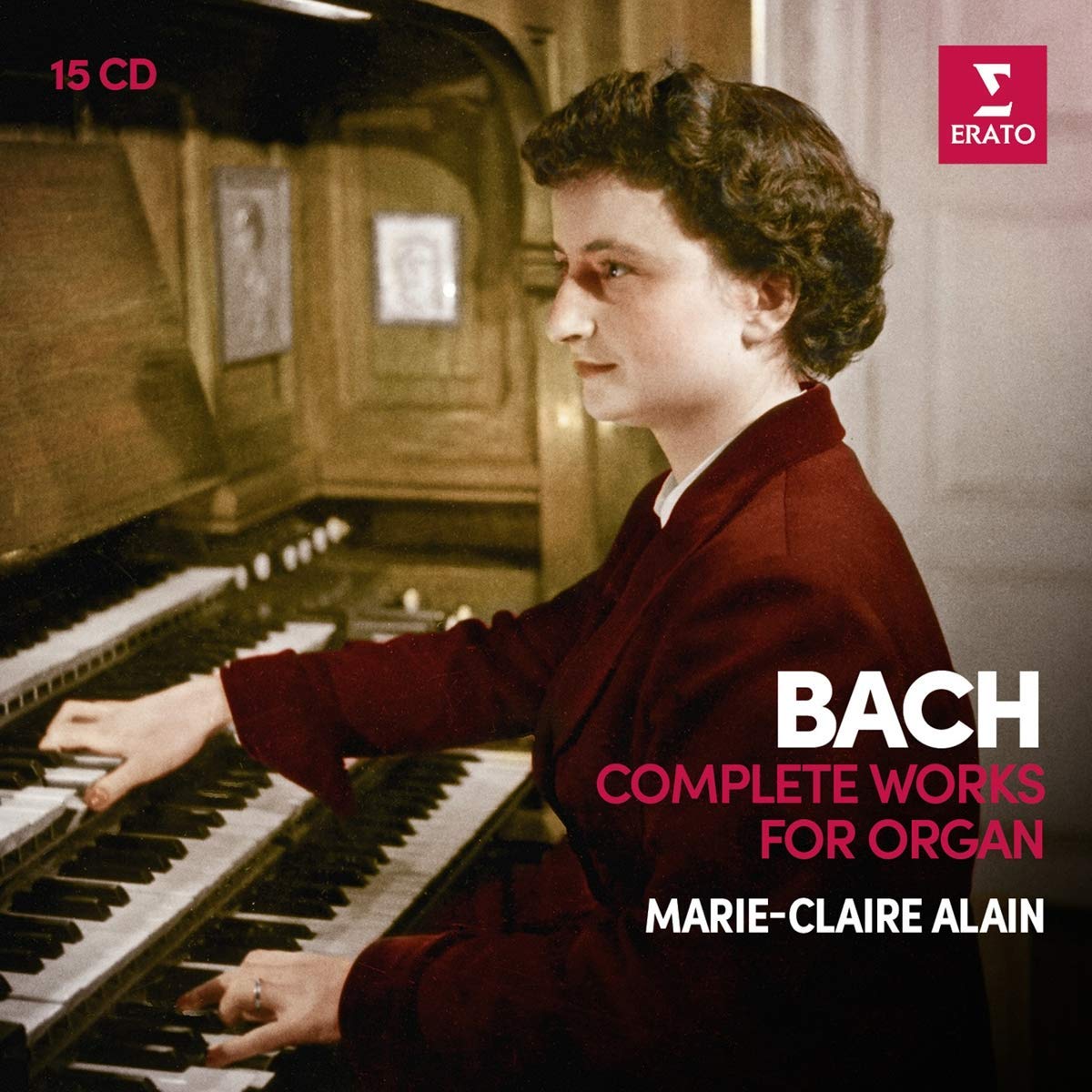
Dip Your Ears, No. 226 (Marie-Claire Alain's First Bach Cycle)

available at Amazon
J.S.Bach, Organ Works
M-C.Alain
Warner/Erato

Marie-Claire Alain (1926—2013) is the only organist to have recorded the complete* organ works of Bach’s thrice and have all those cycles appear on CD. She didn’t live to see it, whereas Lionel Rogg, who has recorded three cycles but had only one appear on CD as of yet, still has chance, seeing that he is still very much alive. On the ionarts Bach Organ Cycle Survey, her Second (on three favorite organs of hers) and Third cycles (on historical instruments) are given a rare ionarts’ choice recommendation: The first for being an excellent introductory / generalist cycle and the second for being performed with the same consummate skill but with a more interesting, individualistic organ landscape. There’s something about French organists when they get it right in Bach: Sensuality married to structure. Other favorites of mine include André Isoir and Alain-student Olivier Vernet. (Equally, when they get it wrong, they can turn out the absolute worst in Bach… and by “they” I actually only mean the very recently deceased Jean Guillou – a genius on the instrument in so many ways – but a real-time train-wreck in Bach.)

Marie-Claire Alain’s first traversal doesn’t quite make my top-recommendation list, but it is good to have around for the completist and inveterate Bach and organ-music lover. The cycle is centered on a series of modern Danish Marcussen & Sons organs that had all just been built around the time she recorded them. The result is a clear and fairly bright sound throughout with a lot of diversity within that (admittedly narrow) spectrum. It undusted an organ sound in Bach, that had, at the time, become thick and dark and crusted like a medieval painting where the grime and dirt of centuries had been taken for a characteristic of the real thing. Jed Distler, who reviewed this set for ClassicsToday (where the other two Alain cycles are also given reference status), is right in pointing out the still greater clarity (in recorded sound, instrument character, and playing) this set features over Alain’s subsequent takes. That’s perhaps most surprising when it comes to the recording quality, which is, with very minor exceptions (a few cases of extraneous noise; one off-kilter note that wasn’t re-recorded), exceptional – certainly a lot better than either of Helmut Walcha’s roughly contemporaneous cycles.

While Alain herself has apparently called these her “most instinctive” interpretations, they are actually rather straight-laced, linear readings without quirks or youthful liberties (Alain was 33 when she got started on them) and, if anything, understated. One neat aspect of this cycle is that it rigorously included all the works then assigned to Bach, even those that weren’t by Bach: A virtual survey of the Bachwerkeverzeichniss of the 60s. How nice to see that Warner/Erato’s re-issuing extends far beyond the most obvious classics in their (now huge) back catalogue. Nicer still: That a budget release such as this got excellent liner notes (the original ones from Marie-Claire Alain) in three languages.


26.2.19

On ClassicsToday: John Elliot Gardiner's LSO Mendelssohn

CD From Hell: Gardiner’s Bloodless Mendelssohn Symphonies

Review by: Jens F. Laurson
MENDELSSOHN_Gardiner_LSO_LSO-LIVE_jens-f-laurson_classical-critic

Artistic Quality: ?

Sound Quality: ?

Mendelssohn is sometimes given short shrift for being a “nice” composer: Harmless, untroubled, and glib. That’s partly because the well-adjusted, prosperous, level-headed, and successful Mendelssohn doesn’t conform to our still ruling romantic ideal of the troubled, struggling, excess-driven, or mad genius. Mozart would have made the better Romantic composer; Mendelssohn the better Classical. On the Beethoven-Schumann-Liszt scale of romanticism, about the only thing Mendelssohn got right was dying young.... continue reading [insider content]

Sound samples below:

25.2.19

On ClassicsToday: Ratas del Viejo Mundo & "Ossesso"

Obsessed Rats: Wondrous Voices From Olden Times

by Jens F. Laurson
OSSESSO__RAMEE_Ratas-del-viejo-Mundo_CLASSICS-TODAY_jens-f-laurson
In case you are sifting through your residual Spanish from college, your rough translation is correct: This early music group calls itself Rats of the Old World, a HIP rat pack founded in 2017 by Floris De Rycker, cruising the authentic-performance scene with the bent... Continue Reading

23.2.19

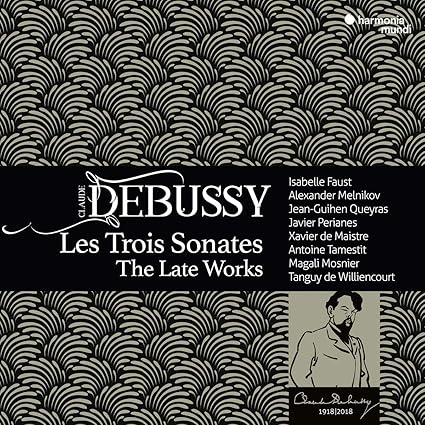
Briefly Noted: Debussy Feast

available at Amazon
C. Debussy, Late Works, I. Faust, X. de Maistre, A. Melnikov, M. Mosnier, J. Perianes, J.-G. Queyras, A. Tamestit, T. de Williencourt

(released on October 5, 2018)
Harmonia Mundi HMM902303 | 54'02"
During the First World War, Claude Debussy began a series of six instrumental sonatas. Although he managed to complete only three of them, he planned for the set to range into unusual combinations, including one for oboe, horn, and harpsichord, and another for trumpet, clarinet, bassoon, and piano. The project would conclude with a sonata for all of the instruments featured in the series up to that point. Each of these late sonatas is a marvel of economy, a startling variety of harmony, rhythm, and texture compressed into three-movement tours de force, each one lasting under twenty minutes. Within just a year of finishing only the third sonata planned in the series, the Sonata for Violin and Piano, Debussy died of colon cancer, in the midst of the German army’s bombardment of the city of Paris.

This disc brings together a dream team of musicians, some of them French, to record those three completed sonatas as part of a Harmonia Mundi project to mark the centenary of Debussy's death. Each of the three sonatas receives an ideal interpretation: the limpid and playful violin tone of Isabelle Faust accompanied by Alexander Melnikov in the Violin Sonata; the balanced, engaging narration of cellist Jean-Guihen Queyras accompanied by pianist Javier Perianes in the Cello Sonata; and the outstanding combination of flutist Magali Mosnier, harpist Xavier de Maistre, and violist Antoine Tamestit, all performing on historical instruments, in the triple sonata. Pianist Tanguy de Williencourt adds short character pieces for piano as amuse-gueules to clear the palate after each of these more substantial main courses.

21.2.19

On ClassicsToday: Sunday-Morning Mozart from Seong-Jin Cho and Yannick Nézet-Séguin

Sunday-Morning Mozart from Seong-Jin Cho and Yannick Nézet-Séguin

by Jens F. Laurson
chomozart
When I heard Seong-Jin Cho perform in the final of the 2015 Chopin competition, he and his E minor concerto stood out for a “velvet brawn and a big, smooth sound” and “a long, thick stream of unrelenting beauty”. But not having heard earlier rounds,... Continue Reading