CD Reviews | CTD (Briefly Noted) | JFL (Dip Your Ears) | DVD Reviews

10.5.16

CD Review: Mields in Bach


available at Amazon
Bach, Cantatas for Soprano Solo, D. Mields, L'Orfeo Barockorchester, M. Gaigg

(released on January 8, 2016)
Carus 83.309 | 67'46"
Charles T. Downey, J.S. Bach, Cantatas for Soprano Solo
Washington Post, May 8

L’Orfeo Baroque Orchestra had not recorded any music by Johann Sebastian Bach before this new release of cantatas for solo soprano.

Under violinist and leader Michi Gaigg, this historically informed performance ensemble has focused on accompanying opera, performing regularly in several theaters in Austria, Germany, and Switzerland.

The lightness and fluidity of these performances, technically impeccable without revealing any of the considerable effort behind that perfection, make one hope that more Bach sacred works will be on the group’s studio docket....
[Continue reading]

#morninglistening: Viennese Choral Discovery


Best Recordings of 2015 (#5)


8.5.16

Ionarts-at-Large: A Viennese HIP/un-HIP Beethoven Malaise


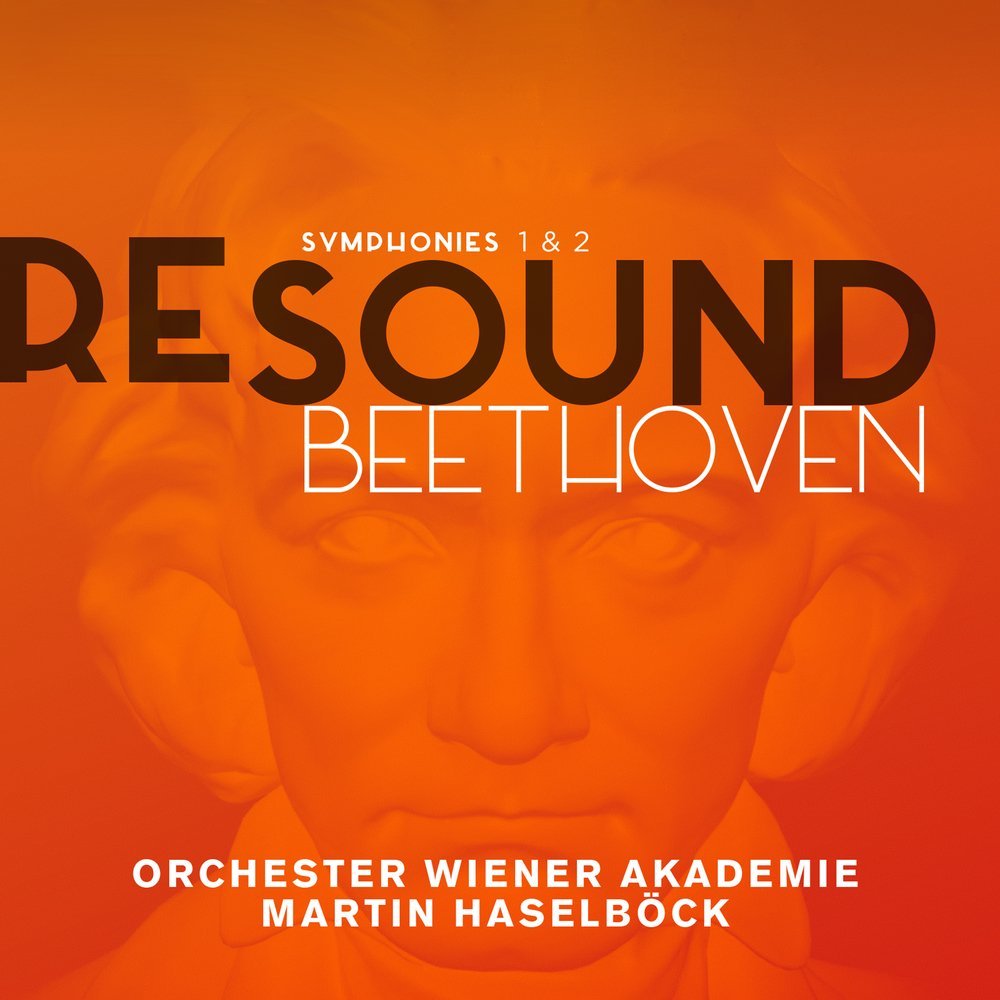
The Vienna Academy Orchestra’s “Resound” concerts is the series of performances that tries to perform the works of Ludwig van Beethoven (Symphonies and beyond) not just on original instruments and with historical performance practices but also in historical venues – namely, wherever available – in the venues in which the works were premiered. The performance of the Ninth in the “Redouten-Saal” (review on Forbes) was exciting and raw and permitted to a sense of what it might have been like at the first or second performance (however faint – that’s more than what any top notch ‘modern’ performance can do).

Now it was time for the Vienna Academy Orchestra to play the Fourth Symphony (first performed in the Eroica Hall of the Palais Lobkowitz and officially premiered at the Burgtheater) to re-sound and the Violin Concerto… which linked the concert to its venue, the Theater an der Wien. Many attendees thought it was marvelous; I thought it was a round disappointment. The Fourth was rough and raw, not a pretty sound, thought at least for a while in that exciting way that the orchestra is capable of. If that means that the performance – whatever deficits it accrues along the way – is never, never boring, I’m all for it.  But after a while, at the latest in the slow movement, it became clear to the ears that the lack of beauty here was not made up by any particular light sound or an interpretation of particular finesse or energy or interest. Amidst that, a bassoon like an owl with bronchitis. This wasn’t the “Apotheosis of Dance” (Wagner), and even a rough and driven finale – which can make up for a lot – didn’t.

Out came the soloist Benjamin Schmid… one of those curious cases of a violinist who has a major career on paper but with something – namely the breakthrough – missing. Perhaps it’s the lack of a major recording company breakthrough; in any case it’s not a lack of unwillingness to try worthy but off-the-beaten path repertoire (his Wolf-Ferrari was amazing; No.2 on the ionarts Best Recordings of 2012 list). It’s not for lack of skill, talent, or musicality either, although this night he was not making his best case. Well, at least he’s world famous in Vienna. Since he has the ability to cross over into genres like Jazz (successfully and surprisingly authentic) I was now perplexed but considered for a second that he was also dabbling in historical performance practice.


available at Amazon
L.v.Beethoven, Symphonies 1 & 2,
M.Haselböck/Vienna Academy Orchestra
Alpha


available at Amazon
L.v.Beethoven, Symphony 7 & Wellington's Victory,
M.Haselböck/Vienna Academy Orchestra/
Alpha

No such thing. This Hipper-than-HIP orchestra, with all its claims to re-sounding fame, performed the work with a violinist in the conventional contemporary setup and style with modern strings and neck and bow and playing style. Perhaps there was a smidgen of reduced vibrato to be heard, but the resultant vulnerability in the sound was probably not intentional and decidedly not rewarding. It reminded me of the time that Roger Norrington conducted the National Symphony Orchestra in Bruckner and told the players – and concert master Nurit Bar-Josef – to go no-vibrato; a fine good idea, but not a good result. But given that it was performed by the soloist in the traditional mold, it was surprisingly meagre, tone- and intonation-wise. It wasn’t all bad, of course: Great trills and superbly hit high pianissimo notes were very impressive and hinted at the possibility Schmid has at his fingers.

Then came cadenza time. Now, which cadenza would one play in a performance with a HIP orchestra? The standard, Kreisler, has become a bit boring and would be a-historical as would be everything else written down after Beethoven. Back then it would have been an improvisation (during which I seem to remember the premiering soloist played his instrument upside down) and that might be the most authentic option in such circumstances. Beethoven ended up transcribing the concerto into a piano concerto, known as “op.61b” – and for that he wrote the cadenza out… which has since been re-transcribed (by Wolfgang Schneiderhan) to fit the violin concerto. It’s an option that many HIP performance opt for, such as my favorites Zehetmair/Brüggen and the “Best of 2012” choice Faust/Abbado.

Schmid didn’t go that route but went with something as far from HIP as possible: Henryk Wieniawski’s cadenza – a tedious ‘double-stop Étude on a theme by Beethoven’. By the time he came out of the cadenza, he had come almost to a complete halt. The second movement was sloppy and not novel enough to overlook the lack of beauty. The third movement did not revitalize the performance, which limped on, ungainly. Considering what I have heard in concert (Julia Fischer or, surprisingly, Julian Rachlin) or on record (see above and add Steinbacher and Kopatchinskaja) just among violinists his or near his generation, this was small beer and, in short, not enjoyable. It also didn’t make sense, from a "Resound"-philosophical perspective, for the orchestra under Martin Haselböck to have performed it with Schmid, except they had probably counted on his local fame in order to to sell enough tickets. (Successfully, by the looks of it, so I suppose they scored on that count, at least.)


#morninglistening: Schumann on an Erard


Zebra is extra.


Perchance to Stream: Call Your Mother Edition

Here is your regular Sunday selection of links to online audio and online video from the week gone by. After clicking to an audio or video stream, you may need to press the "Play" button to start the broadcast. Some of these streams become unavailable after a few days.

  • Masaaki Suzuki conducts Bach Collegium Japan in a concert last month at the Théâtre des Champs-Elysées in Paris. [France Musique]

  • Watch the production of Bellini's I Capuleti e i Montecchi from the Zurich Opera. [ARTE]

  • From the Wiener Festwochen, Zubin Mehta leads a performance of Mahler's second symphony with the Vienna Philharmonic. [Ö1]

  • Lise Lindstrom and Yusif Eyvazov star in a performance of Puccini's Turandot from the Wiener Staatsoper, conducted by Gustavo Dudamel. [Ö1]

  • Stefan Gottfried conducts Concentus Musicus Wien, the Arnold Schoenberg Chor, and soloists in a performance of Mozart's Requiem Mass. [Ö1 | Part 2]

  • Violinist Janine Jansen joins the Royal Stockholm Philharmonic, with conductor Daniel Blendulf. [Ö1]

  • Tenor Piotr Beczala and pianist Helmut Deutsch perform Schumann's song cycle Dichterliebe. [Ö1]

7.5.16

WNO 'Ring' Cycle I: 'Götterdämmerung'


Marcy Stonikas, Lindsay Ammann, and Jamie Barton as the Norns in Götterdämmerung (photo by Scott Suchman for WNO)

Washington National Opera's first complete production of Richard Wagner's Der Ring des Nibelungen is in the books. While it was disappointing to see Francesca Zambello's American-themed staging be deferred and then premiered first in San Francisco, what finally reached the stage of the Kennedy Center Opera House this week is ultimately much stronger and more beautiful than its first incarnation. Most of the directorial missteps and occasional scenic ugliness have been ironed out, and the casting generally improved. Most of all, the promise of Philippe Auguin's tenure as music director, earned at least partly on the basis of the incendiary concert performance of Götterdämmerung that he led in 2009, came to full flower in a revelatory reading of some of the most beautifully orchestrated scores in music history. The largest ovation at the end of last night's opening of Götterdämmerung came at the appearance of Auguin and the orchestra on stage.

Since I was not able to see Götterdämmerung the first time around, the chronological progression of Zambello's American Ring cycle, described in my previous three reviews, had eluded me. The final opera opens with a prelude featuring the three Norns, who in Germanic legend wove together the three-stranded rope of time, one seeing the past, one the present, and one the future. Zambello seats them in front of a mass of piled-up fiberoptic cables, which they struggle to tease apart and connect. A scrim shows video projections that look like data flowing through a world-wide web of information woven by the Norns, indicating that the United States has arrived in the Internet Age. Lindsay Ammann, Jamie Barton, and Marcy Stonikas were a particularly beautiful trio vocally, costumed as green-uniformed technicians with aprons, gloves, and goggles. The scene ends when the cable suddenly breaks and the thread of information is broken, signaling the end times.


Other Reviews:

Anne Midgette, ‘Twilight of the Gods’ confirms the triumph of WNO’s ‘Ring’ (Washington Post, May 9)

SEE ALSO:
Das Rheingold | Die Walküre | Siegfried
The world that Siegfried bursts into looks modern, perhaps in a dystopian near-future of the United States. Eric Halfvarson was a stentorian menace as Hagen, the son of Alberich who is now the power behind Gunther and Gutrune, the siblings who preside over Gibichung Hall. Halfvarson chilled the blood as he glowered his way through the Hagen's Watch monologue in Act I, the lighting and video turning blood red behind him. The Gibichungs are costumed as a fascist secret police force, sung with admirable force by the men of the WNO Chorus. Daniel Brenna and Catherine Foster continued to excel as Siegfried and Brünnhilde, overshadowing the tentative Gunther of Ryan McKinny and the ditsy Gutrune of American soprano Melissa Citro, the latter in her company debut.

Although much improved, this staging of the Ring still falls short of greatness. Zambello's worst miscalculation was the opening of Act II, where Hagen, half-asleep, is supposed to talk with Alberich at the edge of the Rhine. Here Hagen watches television in his bed, making awkward passes at Gutrune, and there are cheap laughs as they use a remote to try to change the static-filled channel. The theme of environmental damage caused by the patriarchal society of the Gibichungs is extended in the pollution-charged video footage, culminating at the point when Siegfried has one last chance to return the Ring to the Rhinemaidens in the first scene of Act III. The shadow of a highway bridge looms over the scene, as the Rhinemaidens, now in filthy dresses soiled by pollution, try to collect discarded plastic bottles into bags, swimming around a pickup truck cap thrown into the river. When Siegfried becomes part of this male oppression, in the conclusion of Act I, he turns on Brünnhilde, the Tarnhelm sparkling on his head in the darkness, one of the more disturbing moments of the cycle.


Eric Halfvarson (Hagen, center) and Chorus in Götterdämmerung (photo by Scott Suchman for WNO)

This sets up the transcendent ending, after Hagen kills Siegfried in an attempt to steal the Ring. Wagner asks the impossible with the end of the Ring cycle, requiring a director to create visually some sense of not only the destruction of the world but its rebirth through the sacrifice of Brünnhilde. Wagner took this idea of the Ewig-Weibliche as saving principle from the work of Goethe and others, and while it is not exactly a philosophical concept admired by feminist writers, Zambello tries to make it work as a metaphor for the beginning of "herstory." The oppressed women from Gibichung Hall rise up, including Gutrune (who dies before the Immolation Scene according to the libretto), using the piles of garbage to light the fires. It is they who kill Hagen, suffocating him with a plastic bag, instead of the Rhinemaidens, who are supposed to drown Hagen in the Rhine. Zambello's final image shows a young girl crossing the light-filled stage to place a sapling in the earth. That idea might seem trite on the surface -- Plant a Tree and Save the Planet -- but maybe not, given the coincidence with the forest-consuming conflagration in Canada right now. Little matter because Wagner's music, especially the Liebeserlösung theme (first heard from Sieglinde back in Die Walküre) soaring in the violins, makes it work.

Two complete performances of the WNO Ring Cycle remain in the coming two weeks. Ionarts will have reports on both of them.