CD Reviews | CTD (Briefly Noted) | JFL (Dip Your Ears) | DVD Reviews

4.3.06

Office Space: Così Fan Tutte

Local opera companies serve an important role, bringing opera to their communities in smaller venues, closer to home (the suburbs), and at lower prices. Opera Theatre of Northern Virginia has been doing just that for 44 seasons now, with interesting, scaled-down productions of perennial favorites, as well as lesser-known works that major companies are unlikely to touch, like the company's planned May production of Haydn's La Canterina and Donizetti's Le convenienze teatrali -- and the Haydn is a Washington-area premiere. True, the difference in ticket price means a difference in the quality of music made, inevitably so when you have a chamber ensemble of 11 instruments instead of a full orchestra and singers hired from farther down the roster performing in a middle school auditorium. Those reservations aside, OTNV has done a good job with its latest production, Mozart's Così Fan Tutte, which we thought would appeal to more people looking for an affordable opera experience, at least more than showed up Friday night at the Thomas Jefferson Community Theatre in Arlington.

Mozart's last five years on this planet were time of which any opera composer would be proud: Le nozze di Figaro (1786), Don Giovanni (1787), Così fan tutte (1790), and La Clemenza di Tito (arguably the only one that might be described as less than a masterpiece, perhaps a failure) and Die Zauberflöte (both in 1791). Of the big four, Così Fan Tutte, ossia La scuola degli amanti (libretto in English) is probably the least known and loved, with an odd libretto that is a kooky sex farce on the surface and possibly something much more profound on a deeper level. On second thought, maybe it's just silly. This production trims down not only the orchestra, but in another cost-saving move it also eliminates the chorus. This is not that important in the first act, where there is only the chorus of soldiers who serenade the two men going off to war. However, in the second act, I for one missed those chorus numbers, although reducing the opera to a series of ensembles and a few arias did make it into a leaner dramatic exercise.

Così Fan Tutte, Opera Theatre of Northern Virginia, March 3, 2006The singing was a mixed bag, led on the plus side by the solid soprano of Lisa Archibeque as Fiordiligi, ostensibly the lead female role, for the sort of soprano voice Mozart liked, with equally strong low and high registers. Baritone John Dooley brought a smooth and supple voice and a confident, even swaggering, stage presence to the role of Guglielmo. Mezzo-soprano Elaine Dalbo was visually a winner as the second, decidedly sluttier sweetheart, Dorabella. Bass Lewis Freeman had a good resonant sound as Don Alfonso; however, a lack of attention to detail led to a dropped or botched line here and there, and he sometimes rushed ahead, seemingly oblivious of the conductor. Freeman sang with some of the worst Italian pronunciation -- all diphthongs and American r's -- I have heard in a while, to the point that I was unsure if it was an intentional parody, although I have no idea what possible purpose that could have served.

The production was directed by Joe Banno, who in addition to a long record of directing work in regional theater and opera is one of the classical music critics for the Washington Post. OTNV's artistic director, John Edward Niles -- coincidentally, the son of John Jacob Niles, American composer and folk song collector -- also claimed some of the credit for the staging, which transposes the action in a cute and entertaining way from Mozart and Da Ponte's Naples to "Anytown, USA" in the present day. We find the story told in the modern old boys' club of business hell, and so Fiordiligi and Dorabella become office workers in identical cubicles with identical computer screens. Despina, instead of being their chambermaid, is the trashy bartender at the upscale martini bar they spend time in after work. In their business suits, Ferrando and Guglielmo, with their older boss, Don Alfonso (no longer a meddling philosopher), are men in need of sensitivity training, drinking and looking at girlie magazines in the office. The tragic bet is, by extension if not literally, a bit of water cooler braggadocio.

Other Reviews:

Mark J. Estren, Fiddling With 'Cosi' for Better and Worse (Washington Post, March 8)
Adding to the current events topicality, the men go off to their military duty in U.S. Army fatigues, with standard issue sidearms, and come back disguised as wealthy Arab sheikhs, complete with cheesy sunglasses, gutrah headdresses, and robes over their suits. Despina disguises herself as a butch EMT when she comes in as the medico in Act I, with defibrillator paddles, and as a power-suited lawyer when she is Beccavivi the notary. On occasion, the pop culture references were too much for my taste, as when one of the Arab-disguised suitors begins his serenade by holding up a boom box outside his beloved's window, à la Lloyd Dobler. The chamber orchestra -- string quintet plus five winds and piano -- contributed to and detracted from the performance in approximately equal parts. Again, there are reasons to pay more for an opera with a major company.

One word to the wise: Così is a sex farce, and this production pulls no punches. If you are tempted to take a youngster to see this opera -- the final performance is tomorrow, Sunday, March 5, at 2 pm -- be aware that there is more dry humping and bare skin here than you might associate with opera. If you don't want to explain to Junior what Despina and Don Alfonso were doing off stage, and why he hands her back her own red underwear after that, wait for another opera. As for the conclusion, the two women do not go back to their respective original lovers, as Da Ponte clearly indicates in the libretto, but switch for the men who seduced them in disguise. I agree with the brief program notes that Mozart's vocal casting -- soprano ends up instead with tenor, mezzo with baritone -- could support this inversion of what Da Ponte wanted.

Jacques Demy, Lola

Available at Amazon:
available at Amazon
Jacques Demy, Lola (1961, DVD released on December 9, 2003)
It must be said that I am a nut for the movies of Jacques Demy, and I am slowly working my way through all of the films he made that I haven't seen yet. In the first Demy movie I ever saw, perhaps his greatest, Les Parapluies de Cherbourg (1964), there is a supporting character named Roland Cassard (Marc Michel), the older, wealthier man who marries Geneviève (Catherine Deneuve). This character actually predates the movie, as the central role of Demy's Lola (1961), played by the same actor, with Anouk Aimée as the flighty bombshell title character. Even the music that Demy's composer collaborator Michel Legrand used for Roland Cassard in Les Parapluies de Cherbourg comes from this earlier movie.

Also on Ionarts:

Peau d'âne (December 27, 2005)

Michel Legrand Interview (August 26, 2005)

La Deneuve in Cannes (May 13, 2005)

Le Jazz in Saint-Germain (May 8, 2005)

Agnès Varda, Jacquot de Nantes (February 19, 2005)
The movie is set in Nantes, where Demy grew up, including some famous scenes actually shot in the celebrated Passage Pommeraye, one of those indoor commercial walking streets popular in the 20th century in France. Cassard is bored with and loses his job, principally because of a line he read in a novel -- "Il n’ya pas de dignité possible, pas de vie réelle pour un homme qui travaille douze heures par jour sans savoir pourquoi il travaille" [There is no dignity possible, no real life for a man who works 12 hours a day without knowing why he is working] (André Malraux, La Condition humaine). This is something that could only be plausible in France. I was living near Paris when Malraux was panthéonisé in November 1996, that is, when his remains were transferred from their original place of burial to the Panthéon in Paris. I attended the ceremony, at which the President of France himself, Jacques Chirac, presided. There was music, there was a laser light show, and there was a huge crowd to witness it.

Anouk Aimée, Lola, 1961Cassard meets a single mother and her teenage daughter in a book store -- where the mother is returning a copy of Sade's Justine, angry that the salesman recommended such an immoral book and besides, "comment l'appelez-vous, Justine, elle est vraiment trop bête" (what's-her-name, Justine, is such a fool). If it seems improbable that a bookseller would recommend a Sade novel for a teenage girl, remember that this is France. Cassard offers to give the girl his copy of an English-French dictionary that the bookstore would have to special order. The girl and her mother are carbon copies of the pair that Cassard will fall upon in Cherbourg in Les Parapluies de Cherbourg, also offering to help them after a chance meeting in a shop. Geneviève is also like the character of Lola, left behind with a child by another man, which is actually the story that Cassard recounts to Geneviève -- in song, of course.

The movie is a charming story, stretched for believability only in the final few minutes as Demy hastily ties off the various plot strands. Along the way, in addition to the scenes described above, we encounter the full complement of whimsical Demy characters, especially in the local bar that Cassard frequents, which must have been part of the inspiration for the café in Jeunet's Le fabuleux destin d'Amélie Poulain, a movie that shares the nostalgic, slightly nutty Frenchness that I love in Demy's movies.

3.3.06

Is Khachatryan Great Violinist? -- In Principle, Yes.*


available at Amazon
J.Sibelius / S.Khatchaturian, Violin Concertos,
Khachatryan / Krivine / Sinfonia Varsovia
naïve

The Armenian Sergey Khachatryan, the current Queen Elizabeth competition winner (and consequently playing having access to the Huggins Stradivarius previously played by Baiba Skride and Nikolaj Znaider [At the concert he was playing a Guadagnini on loan from he Baden-Württemberg state collection as I've been told and can be read in his interview here.]) can be seen and heard several times in the Washington/Baltimore region this month: First with the Baltimore Symphony Orchestra (with which he played in this performance, Thursday night at Strathmore) today, Friday, and tomorrow, Saturday at 8PM and on Sunday at 3PM at the Meyerhoff Hall and then again on March 27th at the Kennedy Center as part of the London Philharmonic’s North American tour with Kurt Masur where he will share soloist duties with Arabella Steinbacher, a less famous but hardly lesser violinist. (Interestingly, both have recorded the Khatchaturian concerto on their first major CD release and both will record the Shostakovich concertos within the next year, allowing for direct comparison.)

Yuri Temirkanov was not able to conduct (and won’t be, for a while), because a friend’s recent passing keeps him in St. Petersburg (back problems were the reason he extended his vacation the last time…), and so associate conductor Andrew Constantine stepped in. In the seemingly well-rehearsed and faultlessly played Sibelius concerto, his good work was noticeable, if not particularly distinctive. But in the second half of the program – Prokofiev’s Ugly Duckling, op. 18, and the first of the three Cinderella Suites (op. 107) he led a marvelously playing BSO to such grandeur that Maestro Temirkanov wouldn’t be missed even if he didn’t return until his farewell performance of Mahler’s second symphony. “Fairy Grandmother and Winter” was particularly well structured and the concluding “Midnight” scene was rousing. He was visibly pleased with the orchestra and the orchestra with itself. In a way it was Constantine who was the concert’s real discovery.


Other Reviews:

Mark J. Estren, Constantine, Khachatryan Take BSO to Great Heights (Washington Post, March 4)

Tim Smith, An expressive debut with BSO (Baltimore Sun, March 4)
Before that there was also the well-sung Duckling by American mezzo Barbara Rearick. To sing a work like this in the vernacular instead of the original language certainly makes sense – as it does especially with all those story-driven works of a less serious nature where the cuteness of the text plays a significant role next to the music that supports it. The better of these works can stand on their own musically, but much more is gained by making understandable to the audience just when the duck stumbles, than might be lost by switching from the natural rhythm of one language to a foreign tongue. Ms. Rearick’s good diction supported this choice.

Sergey KhachatryanBefore Khachatryan’s appearance, the orchestra introduced itself with one of its fanfares rather than an orchestra member’s speech (much appreciated), but Adolphus Hailstork’s Intrada was slight and the applause mild. The Sibelius was a different story, altogether. Unfailing and soft in the beginning with a beautiful slow crescendo; an assertive piano slowly melting into a modest but commanding mf. Khachatryan’s sound had a few wooden moments after that, but soon returned to his pleasant tone that reminds a little of the leathery late Milstein’s – just less focused. That alone is highest possible praise and, despite Sergey Khachatryan’s nascent stardom, highly regarded recordings, and his standing as one of the young violinists ‘to watch’, overshooting a little. No doubts that his command of instrument and work are splendid and his performance notably more assured than the recent one of Ryo Goto who was supported paternally, lovingly, by Ashkenazy’s direction. But his vibrato – especially in the slow movement – was applied in liberal quantities, to a point where one hopes it doesn’t get much wider… and the beginning of the finale (Allegro ma non tanto, in this case a.k.a. “as fast as you can play it”) was less than coherent in a few moments, his Huggins revealing a bit of a boxy sound in the low register. But then the last passages of this fiendishly difficult concerto and movement were exemplary again and worth having gone to Strathmore for, alone. Khachatryan a great violinist? Yes: In the making.

Susanna Mälkki Conducts Ensemble Intercontemporain

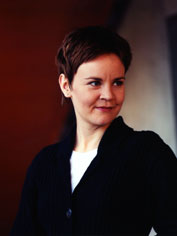
Susanna MälkkiThis summer I noted the appointment of Finnish conductor Susanna Mälkki as the new director of Pierre Boulez's Ensemble Intercontemporain. Pierre Gervasoni recently wrote an article (Débuts réussis pour Susanna Mälkki à la tête de l'Ensemble Intercontemporain, February 26) for Le Monde, describing her first concerts with the group (my translation and links added):

Pierre Boulez never goes unnoticed in a concert hall. Especially when it concerns the one in the Cité de la musique, in Paris, where the Ensemble Intercontemporain (Eic), which he founded in 1976, is in residence. For its 30-year anniversary, the Eic got itself a new musical director, Susanna Mälkki, a Finn only slightly older than the organization she will be in charge of beginning with the 2006-2007 season. She conducted the Eic on Friday, February 24, for the first time since her nomination, an event much anticipated by lovers of contemporary music and by ... Pierre Boulez. Apparently more motivated than intimidated by Boulez's presence, Susanna Mälkki got to work with a piece by Marc Monnet, for solo horn and 18 instruments. An introduction that put more attention on the work than on the interpreters, Mouvement autre mouvement (in the form of an étude), quickly elated the audience in an appeal to the senses, common in Marc Monnet.

It was not the solo horn who was leading the dialogue with the ensemble but his double, hidden beneath the stage. The illusion was carried off with the relay assured by the clarinet in a mysterious timbre that made it seem like an extension of the horn. Marc Monnet's ear training was successful. Although the practices of this soon-to-be sexagenarian composer, who does not seem his age either physically or musically, are familiar, one encounters the "other movements" with the sense of ingenuity found in all daring creations. One smiles while discovering the linguistic tricks (breathing and other noiselike sounds), more than language, required of the horn soloist, including Charleston cymbals!
The program also included György Ligeti's Concerto for Piano and Orchestra and, most interestingly, a version of Stravinsky's Pulcinella for three voices (mezzo-soprano Maïté Beaumont, tenor Johannes Chum, and bass Tigran Martirossian). Susanna Mälkki will conduct Ensemble Intercontemporain again on March 8 (all music by Magnus Lindberg) and March 25 (music by Jonathan Harvey and Emmanuel Nunes).

2.3.06

Dip Your Ears, No. 55 (Pletnev's Mozart)

available at Amazon
W.A.Mozart, Piano Sonatas K. 330, 331, 332, 457,
M.Pletnev
DG
(released February 14, 2006)

Mikhail Pletnev is one of the great pianists in circulation – and more so than most others, he is (one of the few) highly controversial ones left. Brilliance and technique are never in question with him, but his take on well-loved classics – often with a certain amount of irreverence to the score – rubs many critics and a few listeners the wrong way. He has often said that he doesn’t consider any music in front of him as sacrosanct, and every so often it shows. His Schumann recording, for one, elicited an immediate love-or-hate response upon issuing (“improvisatory spontaneity” to some, “awful and wilful egotism” to others), while his more recent Tchaikovsky was almost universally praised. Those who know my favorite recordings know that I think his Scarlatti set to be among the best piano recordings ever issued.

His most recent issue of Mozart sonatas never had me think of any similar controversies until I came across a review in the April issue of The Gramophone where the reviewer thought it might indeed be the most controversial Mozart issue this year. The recommendation comes with some reservations and qualifications. Controversial to a piano music critic it may be, but in light of what Glenn Gould has done to Mozart (to far lesser effect), this isn’t really that far out there. It is, however, undeniably charming. I try not to recommend discs only because they are ‘nice’ – there are too many of those out there. Usually I pick recordings that are unique, have proved some new insight into a work, or could rank as ‘definitive’. (Even if I admit the idea of a definitive recording is – for the most part – nonsense.)

Pletnev’s Mozart is none of these things. It’s just damn enjoyable. His light touch, his indulgence, and his ornamentation make for beautiful music – and if he injects his personality into it with “wayward tempi,” I never find it self-conscious or obstructive in the least. More obvious to me, and unfailingly putting a smile on my face, are the little flourishes he adds in the first movement of the C major sonata, K. 330. When Pletnev stretches a movement out to hitherto unheard-of length, it doesn’t sound lugubrious, it sounds decadent, indulgent, lovingly caressed. I can see how such emotional squeeze might offend the odd purist or could get a little tiresome if applied – and listened to – without discrimination to all sonatas. But the CD here is not that, it is a well-proportioned helping (just over 70 minutes) of a documentary on Pletnev enjoying Mozart. Which is, coincidentally, the only thing controversial for critics about this disc: that someone else (Pletnev) enjoys Mozart differently than they and asks them to listen in. They hear ‘waywardness’, I hear love!


DG B0005832-02 (0 28947 75788)

Schubertabend with Kissin and Levine

available at Amazon
F. Schubert, Music for Piano, Four Hands, Evgeny Kissin and James Levine, live concert at Carnegie Hall (released February 7, 2006)
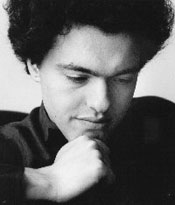
My undergraduate piano teacher was a member of a piano duo with her husband. I am grateful to her for having insisted that I give a recital with a partner every year I was her student, including at least one piece for piano, four hands, or for two pianos. The repertoire for these combinations is among the most rewarding I have ever played, and I am hardly surprised when major solo pianists, who certainly have no need to play this music, partake of its delights. This was the case when Evgeny Kissin partnered with James Levine -- as primo and secondo, respectively, I assume -- for a concert last year (May 1, 2005) in Carnegie Hall's Isaac Stern Auditorium (and in Boston’s Symphony Hall four days before that, reviewed by Stephen Wigler). Michael Steinberg's program notes for the Carnegie Hall concert are an excellent primer on these pieces that Schubert contributed to the genre, some of the best by him or anyone else.

Bernard Holland's review (Schubert's Intimacy Endures Four Hands and 6,000 Ears, May 3) for the New York Times clarifies how Kissin and Levine compensated for the size of the halls where they played:
How does one convey the F minor Fantasy, one of Schubert's deepest and most mysterious pieces, in such a setting? Four hands on one keyboard is, to begin with, not the most transparent of sounds, but for two players sharing a piano bench in some private parlor it is the act, not the passive listening, that matters. No privacy here, however. And with no way to make Carnegie Hall smaller, one could at least make the music bigger. Keep Schubert's text intact, but use two pianos. Double the resonance; separate the players; lose the intimacy. Not ideal, but mutant Schubert played by such fine players was about the best anyone could do.
It's true that Schubert wrote more than his share of memorable tunes, but the main theme of this fantasy is in a class by itself. How is it possible, with such economy (sol-sol-sol-do-sol repeats in how many permutations?), to make something so heart-breakingly beautiful? If Schubert had not brought back that gorgeous melody at the end of the third movement -- a device he used also in the D. 929 piano trio, which I heard played by the Vienna Trio on Sunday -- most players would insist on playing the whole first movement again anyway. (Schubert has you play that theme again twice.)

Evgeny Kissin, primoJames Levine, secondo
The two-piano solution is, it must be said, cheating. Part of the challenge of four-hands music -- and much of the appeal when a man and woman partnered -- was how to negotiate the middle ground of the keyboard, whose hand goes over whose and so on. It's hard to tell from the recorded sound, but it would be easy and therefore very tempting to add notes here and there because both players have the luxury of the whole keyboard. The sound is about what you would expect from a live recording, fuzzy at times but the immediacy of a performance happening in real time is always exciting to hear. Both are accomplished players, with Kissin being the real virtuoso and Levine bringing far greater experience as a musician. The pieces might be better off in the hands of a real piano duo, that is, two people who play together regularly, but one cannot make too many complaints on technical grounds here. The playing is solid and musical, even on the most challenging passages, both soft and loud. There is not only melancholy gloom, as in the fantasy, but crashing thunder in the D. 947 Allegro nicknamed "Lebensstürme" (Life's storms). It is overall a worthier performance than the 1965 recording by Benjamin Britten and Sviatoslav Richter, released on CD in 2000.

The substantial program, over 70 minutes with two big encores, runs long enough that the concert is divided into two compact discs, priced nicely as a two-for-one. The main dish of the second half, the C major sonata ("Grand Duo," D. 812), is by itself just over 40 minutes long, a work of substance and weight, if not the greatest melodic genius. The biggest challenge of playing secondo, usually, is not overwhelming your partner's melody and pedaling the right amount (the player on the left in a four-hands duo typically controls the sustaining pedal, which requires a lot of intuition when you have to pedal while someone else is actually playing the melody). Kissin has such melodic strength that his high octaves ring out over Levine, almost no matter how much sound the latter gives.

Some of the greatest technical challenges come in the first of two encores. The Marche caractéristique No. 1 in C, D. 968b, is a romp of pulsating repeated notes, rumbling in the secondo part and incorporated in a most challenging way in primo's melodic material, which is child's play for Kissin. (In fact, at some point he may have played Liszt's transcription of this piece for one piano.) The Marche Militaire No. 1 in D, D. 733, has a circus quality about it, but the intervals do-sol-fi-sol always make me think of clowns. It's probably not what Schubert had in mind. The best way to experience this music is to play it yourself with a friend. Barring that, you could do worse than to listen to this recording, where it will likely sound much better.

1.3.06

Jerusalem Symphony at Strathmore

Prof. Leon BotsteinThe Jerusalem Symphony Orchestra played a concert of 20th-century music at Strathmore on Monday night. I heard of their conductor, Leon Botstein, first as a musicologist, champion of American music (among other things, the successor of the legendary Oscar Sonneck as editor of The Musical Quarterly), and as one of the directors of the Bard Music Festival. In everything I have seen him do, I admired the combination of intelligence and wit, and the programming for this event was an important part of its appeal, in addition to the now-reviving reputation of this orchestral ensemble. As reported in the Jerusalem Post, the orchestra's arrival for their U.S. tour coincided -- almost disastrously -- with the record snowfall in New York City, but they eventually made it out of Manhattan and gave one concert in Florida, with a completely different program, before coming to Maryland.

The evening began with a respectful performance of the national anthems of the United States and Israel. The anthem of the latter -- Hatikvah (התקוה, The Hope), a minor mode tune in a Hollywood arrangement -- seemed to inspire more of the spectators to sing along. When Bohuslav Martinů composed Památník Lidicím (Memorial to Lidice) in the 1940s, he was living in the United States, a forced exile from his self-imposed Paris exile from his native Czechoslovakia. It commemorates the 1943 massacre in the town of Lidice, a brutal retaliation by the Nazis for the assassination, by bomb attack, of a Gestapo security chief in Czechoslovakia. The Germans immediately killed or deported to camps all of the adults and sent many of the children to be raised by German families as Germans. The town itself was razed to the ground, and no trace remains of the place to this day.

The piece opens with a vast boom of sound that is followed by lush chords, made fragile because they are buzzing with dissonance. The brass and woodwinds played well when they were exposed in this piece, especially the ethereal, distanced effects of the trumpets with mutes. If the Czech folk idiom summoned by Martinů here reminded me of the Israel national anthem, I should not be surprised. The tune's composer, Samuel Cohen, was Moldavian and based it on a theme in the Moldau section of Bedrich Smetana’s Má Vlast, which was in turn derived from a much older folk song. Threatening the peaceful mood are menacing dissonant sounds, often reminiscent of American film music. The piece could easily go quite well with Raiders of the Lost Ark, for example. It's a beautiful work, over before you know it, and the JSO gave a stirring rendition.

Jerusalem Symphony Orchestra, Strathmore, February 27, 2006
The first half concluded with an American symphonic work composed around the same time, Aaron Copland's music for the Martha Graham ballet Appalachian Spring (premiered in its original chamber orchestra version at the Library of Congress in 1944). Martinů's piece had the same combination of patriotic hope and nostalgia for a homeland dangerously threatened, but here the story is about the birth of a marriage in the American heartland. Oddly, since the music appears to incarnate that sense of a bucolic America, Copland did not even know what the ballet's scenario was when he began to compose it.

This struck my ears as a somewhat pedestrian reading, as if the piece were just too familiar to inspire, which it may be, having come to represent "The American Sound" as it does for many people. There was some strong solo work in the Copland, notably from the JSO's concertmaster, Jenny Hünigen, a rather tall, lithe, and strikingly beautiful woman besides being a fine player. The orchestra did not seem fully to own the sometimes crazy shifting meters of the work, which undermined the overall effect. The trumpets, who were otherwise quite good, seemed a little ragged on attacks and endings in the soft passages.

Other Reviews:

Mark J. Estren, The Jerusalem Symphony's WWII Refrain (Washington Post, March 1)

Steve Smith (on the New York performance), Testimony (Night after Night, March 13)
The concert concluded with Prokofiev's Symphony No. 5 in B-flat major, op. 100, which again showed off the rather sonorous and unified violin sound of the JSO. The one major problem in the new JSO sound is in the low instruments, a lack of unified intonation that crept up again and again somewhere in the bass section. The Prokofiev Fifth is a patriotic Russian work. Or is it? Thinking about the circumstances of its composition -- also finished in 1944, but in Russia -- and listening to it again, I was reminded this time of those patriotic Russian songs from this period that are now big hits with Russians of all ages, especially as sung so expressively by Dmitri Hvorostovsky. What struck me about those songs is not that they celebrate Russia's victory but that they were concerned with personal stories of Russians affected by the war and keeping their courage and hope alive. Prokofiev was certainly faced with a delicate situation in composing a patriotic Russian symphony at this point in history. Hitler or Stalin is a choice no one would want to have to make.

That being said, the extramusical issues are less interesting than the heft and tone of this great symphony, alternatingly suave and sarcastic, raucous and tender. Botstein brought forth sculpted masses of sound, big swells at the end of the first movement, a powerful sense of rhythmic propulsion in the second movement that spins and accelerates out of control, and an overwhelming racket of brass and percussion in the fourth movement. Some of the more delicate moments were less pleasing, particularly in the third movement, which did not come together rhythmically as it should in aligning the two against three patterns. Little matter to the audience, who applauded each movement and gave enough of an ovation at the end to earn two encores. Both Meyerbeer's Coronation March (from Le Prophète) and Shostakovich's Tahiti Foxtrot, a wry setting of "Tea for Two," brought a much needed moment of lightness.

Whitney Biennial 2006

I wondered whether or not to dress warmly, long underwear, for the last cold blast of winter in New York, as I ventured to see the 2006 Whitney Biennial, its 73rd. In hindsight I should have. The cold air will be gone soon enough as will this inception of the biennial called Day for Night, which takes it title from the 1973 François Truffaut film. According to the press release it denotes a technique of shooting night scenes artificially during the day, using a special filter. Curated by Chrissie Iles and Philippe Vergne, this is the first Whitney Biennial to have a title. You learn many tidbits of information at a press briefing, and I like trivia. Did you know that Miles Davis painted like Basquiat? or vice versa.

As you enter the museum, on your left, peeking up from the lower level court yard is the 50’ Peace Tower, a recreation of Mark di Suvero and Rirkrit’s tower that stood at Sunset and Cienega Boulevards in Los Angeles in 1966, to protest the Vietnam War. As with most protests of the current war, they’re sequestered off to the sidelines, in this case sunken. It’s worth a look though, over 200 artists have taken part in this version of the tower, each submitting 2’ x 2’ panels, with many of the original members as could be found. Famed artist/blogger Joy Garnett is included.

Once inside there’s so much to take in, it may take several visits to truly appreciate many of the subtleties of this show, as in Troy Brauntuch’s black and white paintings that only reveal themselves after careful observation. There are several video installations to settle in with, like Peter Huyghe’s A Journey That Wasn’t, based on the artist’s trip to Antarctica. I got to meet a very happy and proud Zoe Strauss (pictured) in her very own 10’ x 10’, or so, room of her projected images. Don’t ever lose sight of how important this exhibit is for an artist, to have a respectful environment to show your work; it doesn't happen very often. In this case thousands of visitors will line up around the block for the next few months to see the work. Can it get any better?

"Paintings?" you ask. There are some: Peter Doig has two Gauguinish works, and JP Munro’s image of a deer with a crucifixion as a center antler stayed in my mind. In addition to a video, a painting by Billy Sullivan. I enjoyed seeing Marilyn Minter’s two paintings, not only because she’s a good painter, but also because she’s 57 years old and just now getting into a biennial. I’m inspired.

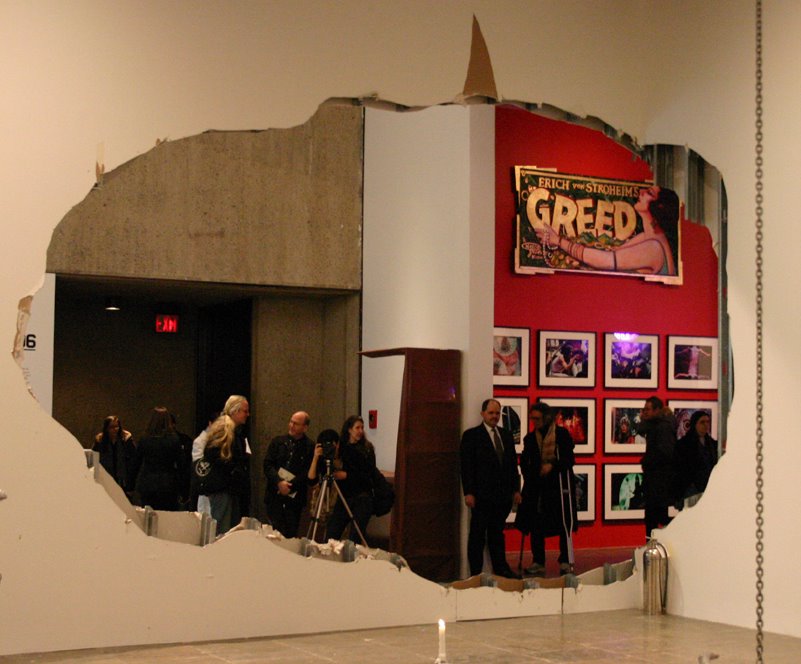
As for sculpture, Lisa Lapinski’s Night Stand, a rambling, Rube Goldbergian (Roberta’s thought) piece, constructed of walnut. Urs Fischer has a monstrous wall smashing piece, with rotating dripping candles, which takes up most of the third floor. A combination of drawings and sculpture, that I liked a lot, is the work of The Otabenga Jones and Associates collective and Robert Pruitt. The group was was founded in 2002 to “highlight the errors in the representation of African art.” The group’s namesake is Ota Benga, an African Pygmy brought to the U.S. in 1906 as an exhibit in the Bronx Zoo.

Also of note, Mark Bradford's large collages on canvas, here and here, and Monica Majoli's luscious, large watercolors, also Sturtevant's homage to Duchamp is beautifully done.

I’ll have more to say about the exhibit, as I mull it over, but I wanted to get my initial thoughts out while fresh. There was a lot to absorb in the context of one show. You may want to purchase the 800-page catalog ($50) complete with fold-out posters. Libby and Roberta, of art blog fame got one: they’re nice, they’ll share. They have a post up already!

More pictures of the day here.

UPDATE:
More images of the Whitney Biennial from James Wagner.