CD Reviews | CTD (Briefly Noted) | JFL (Dip Your Ears) | DVD Reviews

13.6.10

In Brief: Cameron Edition


For the Chopin Year: Cameron Carpenter's tasteful arrangement 
of the Revolutionary Etude
Here is your regular Sunday selection of links to good things in Blogville and Beyond.
  • How does Cameron Carpenter come off sounding like such a jerk in his 20 Questions interview? He seems like such a profound person in his performances. [Playbill Arts]

  • The Maison de Victor Hugo has opened an exhibit of artwork related to Hugo's collection of exotic poetry Les Orientales. One of the poems in that book inspired Franck's Les Djinns, reviewed recently in a new release by Bertrand Chamayou. [Le Monde]

  • Matthew Guerrieri has an appreciation of Robert Schumann in honor of the composer's 200th birthday. [The Faster Times]

  • With hat tip to ArtsJournal for the news, Spain is going to reopen the Altamira Cave, the first site where prehistoric paintings were discovered, for limited public viewing, after being closed for several years after the discovery of mold growing in the cave. As much as I would dearly love to view those paintings in person, this sounds like a bad idea in terms of the ultimate preservation of the artwork. [Associated Press]

  • Who doesn't love a puzzle? Great Britain's National Trust has restored a painting it acquired years ago: under all the layers of varnish and dirt was a precious work by Tintoretto. By tradition it was called Apollo and the Muses, but the authorities working on the restoration are not really sure who most of the figures in the painting are and are asking authorities of various disciplines to help identify them. Classicists, iconographers, historians, pick up your phone, but please no one tell Dan Brown. To see the actual thing, you have to go to Kingston Lacy, a 17th-century mansion in Dorset, but the digital image with the article is pretty good for now. [The Daily Mail]

12.6.10

From the World Cup to Pelléas

Le Monde has been running a series of articles about classical music, quasi-reviews by cultural figures who are not musicians. In honor of the start of World Cup play, Renaud Machart put one of these together with Frédéric Thiriez, the president of the French Professional Soccer League since 2002. A skydiver, scuba diver, and mountain climber, Thiriez also loves music: he plays the cello, sings operetta, and acts. While he went to the World Cup in Johannesburg, of course, he has plans when he returns to attend one of the performances of Debussy's Pelléas et Mélisande at the Opéra-Comique in Paris. Here is part of the article (Au concert avec... Frédéric Thiriez, June 13) from Le Monde (my translation):
Music is a family affair for me: my grandfather played the violin, my grandmother the piano; my mother, Christine Fontane, was a pianist and was known as a composer. With my wife, a very good pianist, I am working through the repertory for the piano and cello, an instrument I took up at 40 years old, after having taught myself the piano. But my passion is for singing, which I do as an amateur. I am proud to be a part of Les Tréteaux Lyriques, a troupe of 45 members which has performed several pieces by Offenbach, including certain rarities like La Princesse de Trébizonde. I love comic opera and operetta, where song, acting, and dance are mixed together, and I wonder why it is despised in high cultural quarters, while every night that Les Tréteaux perform, we turn people away! So I am thrilled that Jérôme Deschamps has sparked a renaissance of the Opéra-Comique and its rich repertoire.
As it turns out, Thiriez has never seen Pelléas before, but he should enjoy this production directed by Stéphane Braunschweig and conducted by John Eliot Gardiner, which runs through June 29.

11.6.10

NSO's Volcanic Tüür

Style masthead

Read my review published today in the Washington Post:

Charles T. Downey, The NSO erupts with an enjoyable showing of Estonian talent
Washington Post, June 11, 2010

available at Amazon
Tüür, Symphony No. 4 ("Magma"),
E. Glennie, Estonian NSO, P. Järvi
The National Symphony Orchestra has two more serious programs this month before surrendering completely to the pops concerts of summer. On one of those programs Thursday night, Estonian talent was on full display. Guest conductor Kristjan Järvi led a concert anchored on the complex fourth symphony of Erkki-Sven Tüür, who also hails from Järvi's native Estonia.

The work, completed in 2002, began as a concerto commission for Scottish percussion virtuosa Evelyn Glennie but evolved into a one-movement symphonic work with solo percussionist. Glennie, who has been profoundly deaf since age 12, performs in these concerts at the Kennedy Center as part of the 2010 International VSA Festival, sponsored by the International Organization on Arts and Disability.

The opening theme evoked the symphony's subtitle, "Magma," as glissandi spewed through the orchestra over an eructating pedal tone in the contrabassoon. Glowing clusters formed in smears, with embers floating in high woodwind short notes and metallic percussion sparks. Glennie moved from one set of instruments to the next spread out like an irresistible candy store of whiz-pops, doodads and noisemakers on the apron of the stage, marked off by three large musical sections. Her gyrations at a large drum kit in the second section recalled Tüür's youthful participation in the progressive "chamber rock" band In Spe, complete with a Buddy Rich-style apoplectic solo as a cadenza. [Continue reading]
National Symphony Orchestra
With Kristjan Järvi (conductor) and Evelyn Glennie (percussion)
Kennedy Center Concert Hall

Grieg, Lyric Suite
Erkki-Sven Tüür, Symphony No. 4 ("Magma")
Bernstein, Candide (Overture and Suite)
Ellington, Harlem (orch. by Luther Henderson)

PREVIOUSLY:


SEE ALSO:
Andrew Lindemann Malone, From the Core of the Earth (DMV Classical, June 12)

10.6.10

American Chamber Players at the Kreeger

Style masthead

Read my review published today on the Washington Post Web site:

Charles T. Downey, Kreeger festival offers seasonal pleasures
Washington Post, June 10, 2010

available at Amazon
Beethoven, Serenade for Flute, Violin,
and Viola
, Gaudier Ensemble
The June Chamber Festival at the Kreeger Museum is an annual sign of the imminent arrival of summer. For the second concert, on Tuesday night, Miles Hoffman and the American Chamber Players gave urbane performances of three relatively rare works for somewhat unusual combinations of instruments.

Flutist Sara Stern shone the brightest of the five musicians heard in this program, playing with a limpid, refined tone and consistently precise attack and intonation. A good thing, too, as the music on the first half featured the flute as the first among equals, beginning with Beethoven's early Serenade in D, Op. 25, for flute, violin and viola. This sunny work is not quite a suite, although it has dance movements, and not really a sonata, although it recalls some of the forms associated with that genre. The crisp, detached style of playing suited the "Entrata" first movement, which had a pleasing spring in its step. The final movement was a Haydnesque romp, with the last statement of the theme taken ingeniously at a much slower tempo, although Beethoven did not mark the score with any tempo change. [Continue reading]
June Chamber Festival, Second Concert
American Chamber Players
Kreeger Museum

9.6.10

Martin Stadtfeld Plays More Bach

available at Amazon
Bach, Keyboard Concertos, M. Stadtfeld,
Lucerne Festival Strings, A. Fiedler

(released on March 12, 2007)
Sony 88697036322 | 59'13"

Online scores:
BWV 1052 | BWV 1053 | BWV 1056
BWV 853 | BWV 867
German pianist Martin Stadtfeld first came to our attention on a frothy wave of media hype -- he spent his own money to rent a piano and studio space to make his maiden recording of Bach's Goldberg Variations -- while simultaneously making us suspicious of the facetious publicity focusing on everything but his musical attractions. Sony has released a few more discs since then, focused on Bach but not exclusively. Not many of them have been released widely in the United States, except this disc of three of Bach's keyboard concertos that only recently crossed my desk. After Stadtfeld's recording of the Goldberg Variations was picked up by Sony, Jens proclaimed the playing "self-conscious" and "idiosyncratic," and not much had changed by the time he made these recordings, in 2005, with the Lucerne Festival Strings.

If one is going to play these concertos on the modern piano, as Stadtfeld does, it would be hard to resist using the full complement of its power and variety of attack and tone. With only sixteen strings (or so -- the booklet does not list the personnel, although there are plenty of photos of Stadtfeld) arrayed against it, the Steinway dominates the ensemble. The group's director, Achim Fiedler, conducts and keeps the forces in line, with the strings mostly acting as a supportive cushion. Stadtfeld plays well, keeping up (mostly) with the fleet tempi chosen for most of the outer movements, often seeming to seek out dynamic extremes or incisive attacks. Some extra octaves sneak into the left hand here and there, there are some nice little embellishments, and a few segments of the first violin part are handed to a soloist (in the last movement of the fifth concerto, for example). Stadtfeld also includes a prelude and fugue, selected from the first book of the Well-Tempered Clavier, between concertos. These are well played but not of great interest, in spite of Stadtfeld's grand statement in the ill-advised liner essay that the theme of one of them "may seem to represent a constellation around which the dust of the universe revolves." This disc is not recommended except to those who want to follow a promising young performer's progress.

8.6.10

Dvořák's Requiem Mass

available at Amazon
Dvořák, Requiem, op. 89, L. Milne, K. Cargill, P. Auty, P. Rose, London Philharmonic Orchestra and Choir, N. Järvi

(released on February 23, 2010)
LPO 0042 | 84'45"
The first and last new recording of Antonín Dvořák's setting of the Missa pro Defunctis, op. 89, to cross my desk was a slight disappointment. Imagine my surprise at receiving another opportunity to evaluate this lesser-known Romantic dramatization of the Requiem Mass, premiered in Birmingham, England, in 1891, in a new recording by the London Philharmonic Orchestra. The tracks were captured in live performance at London's Royal Festival Hall, and while the rendition on offer here is better for being on modern instruments, there are some blemishes in the orchestral playing and some weaknesses in the chorus, particularly in the male voices' high registers. Similarly, the soloists are good while not perhaps being the dream cast for such a demanding work. Soprano Lisa Milne has a plangent tone, with plenty of strength if perhaps too much vibrato, while Karen Cargill has an appropriately earthy timbre. Tenor Peter Auty is a little too slobbering in the operatic quality of his voice, while the best of the quartet is bass Peter Rose, who has the same puissance heard in Santa Fe Opera's Billy Budd.

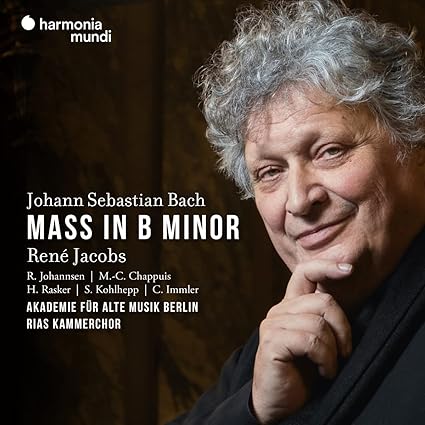
Recent recordings have the advantage of the availability of a critical score, published in 2001 in the complete works of Editio Bärenreiter Prague, approved by the Dvořák Society. This Requiem is a work that rewards multiple listenings, with its unusual use of percussion (especially in the Tuba mirum movement), its generally colorful scoring (for example, the bass clarinet croaking along with the bass soloist in the Hostias), and the elusive chromatic motif (sol-le-fi-sol) that runs through all the movements like a graveyard shudder. All local performing organizations should consider this an official Ionarts request: no more performances of Verdi's or Mozart's Requiem Mass or Bach's B Minor Mass until we have a performance of Dvořák's Requiem Mass in Washington. Apparently, I am too late for next season:
among the Washington Chorus, City Choir of Washington, Choral Arts Society, Cathedral Choral Society, there are already three performances of the Verdi (!), one of the Mozart, and two of the Bach scheduled for next season alone.

Another new release of Dvořák's Requiem, from Mariss Jansons and the Royal Concertgebouw Orchestra, is likely to be even better (it has yet to reach my mailbox). It is centered on a superior chorus, the Vienna Singverein (celebrating its 150th anniversary), and has excellent male soloists in tenor Klaus Florian Vogt and bass Thomas Quasthoff, if the female soloists, including mezzo Mihoko Fujimura, inspire less confidence. Jansons also pairs the work nicely with the same composer's eighth symphony, which is a good way to avoid wasting so much empty space on two discs when the Requiem is offered by itself.

7.6.10

Liam Bonner Shines and Broods as Melancholy Dane


Liam Bonner (Hamlet, center) and Cast in Hamlet,
Washington National Opera, 2010 (photo by Karin Cooper)
After teaching Shakespeare's Hamlet and the operatic adaptation of it by Ambroise Thomas (1811–1896) to my Humanities class, I led that group of 10th grade students on our annual field trip/pilgrimage to the Kennedy Center, to view the dress rehearsal of Washington National Opera's production. It was as usual a great success with the students, many of whom over the years have developed a long-term interest in opera -- or at least have come to realize that opera can be just entertaining theater rather than some remote, elitist intellectual exercise. (It is a particular victory that some of the most cynical students, seated behind me at the dress rehearsal, judged the staging of Ophélie's mad scene as "pretty tight.") After that exhilarating experience, two plans to review the production were scuttled by changes in my schedule, meaning that the following assessment is based on a viewing of the final performance of the run, last Friday evening.

The libretto by Michel Carré and Jules Barbier restructures the Shakespeare original so extensively that it should probably have been titled Ophélie, because it places the romance between Polonius's daughter and Hamlet at the center of the opera. Hamlet's betrayal of his vow to marry Ophélie becomes in some ways a tragedy more important than Hamlet's drive to avenge the murder of his father, and without a doubt the coloratura role of Ophélie receives the most important music, with the opera's dramatic arc peaking at her extended mad scene and suicide. Thomas's librettists based their work not on Shakespeare but on the French adaptation of the play by Alexandre Dumas and Paul Meurice, which was part of a long-term Ophelia craze in Paris, sparked by the celebrated performances of Irish actress Harriet Smithson in the role. (This was the same interpretation of Ophelia that caused Hector Berlioz to compose his Symphonie fantastique and eventually to marry Smithson.) When Thomas took Hamlet for performances in England, he made a second version of the opera that at least had Hamlet die at the end (the version performed at WNO is a mixture of the two, since the ghost does appear again to urge Hamlet on), instead of the original ending in which only Claudius dies.


Liam Bonner (Hamlet) and Elizabeth Futral (Ophélie) in Hamlet, Washington National Opera, 2010 (photo by Karin Cooper)
This was also the last of three performances with young baritone Liam Bonner replacing Michael Chioldi in the title role. Bonner cut a dashing and youthful figure as Hamlet, with more than enough vocal power to fill the Kennedy Center Opera House in those places where extreme force is needed, like the tense scenes with the ghost, the angry confrontation with Elizabeth Bishop's equally potent Gertrude at the end of Act III, and especially the dramatic conclusion to the play within a play in Act II, where the strains of the drinking song ("Le vin dissipe la tristesse") are woven manically into the powerful septet of astonished characters. At just a few moments, especially in the first half of the opera and in Être ou ne pas être at the start of Act III, Bonner produced in fact too much sound and could have benefited from more suave control of his instrument.

A Pittsburgh native who first studied at Carnegie-Mellon, Bonner has come a long way from when Anne Midgette reviewed him at the Manhattan School of Music. After his turns in some other young artist programs around the country, we had the chance to hear him last summer in a rare performance of Verdi's early comic opera Un Giorno di Regno, where he impressed with a natural stage presence and admirable comic timing. My feeling about his voice, in fact, was not that far from what Anne Midgette heard of him in 2004: a "big, impressive baritone that was slightly raw and unpolished." Earlier this spring, Bonner made his Metropolitan opera debut in Carmen and, for someone not not yet 30, he showed admirable self-awareness by admitting that his voice "is still settling." Bonner's potential in terms of the raw materials, however, seems most promising indeed.


Other Articles:

Anne Midgette, In 'Hamlet', only the theatrics are grand (Washington Post, May 21)

Tim Smith, Washington National Opera's "Hamlet" packs musical, theatrical power (Baltimore Sun, May 21)

Michael Lodico, Washington National Opera: Hamlet behind the Iron Curtain (Ionarts, May 21)

---, Opera version of 'Hamlet' gets rare D.C. staging (Baltimore Sun, May 15)

Kate Wingfield, Ophelia Outing (Metro Weekly, May 27)

Lucia Anderson, "Hamlet" Has Been Onstage a Lot Lately--but as an Opera, Exercise Caution (Fredericksburg Free Lance-Star, May 27)

Charles T. Downey, 'Hamlet' ohne Damrau (Ionarts, May 19)

Emily Cary, Washington National Opera presents unique take on 'Hamlet' (Washington Examiner, May 18)

Derek Kravitz, Washington National Opera surprises people on Mall with five-minute performances (Washington Post, May 16)
The rest of the cast was the same as opening night, when Michael Lodico reviewed the production for Ionarts. Elizabeth Futral seemed to have a stronger command of the role of Ophélie, giving a fine if not quite dazzling performance in the mad scene. Director Thaddeus Strassberger's ingenious solution to the extended mad scene -- staging the last part of it with Ophélie suspended on the water among icy shards broken by her plunge into it, as if we are viewing the lake from above -- was intensely beautiful, although the time to prepare the scene deters from the sense of dramatic continuity. Samuel Ramey had glimmers of his former power that came through the moments of uncontrolled vibrato and remained a powerful presence on stage, like an old lion, matched by the intensity of Elizabeth Bishop's Gertrude. John Tessier was silvery and slightly nasal as Laërte, and John Marcus Bindel gave another solid appearance as the Ghost, although Strassberger's weakness in this production was that the Ghost is not all that scary.

Even with about an hour of music excised, most notably all or most of Act IV (the unrelated ballet and divertissement scene of La Fête du printemps), Hamlet still has some unavoidable longueurs. An impatient hand, like that of Patrick Fournillier who conducted on opening night, will not allow the many beautiful moments in the score to unfold. Appearing on the podium in spite of recent health problems, General Director Plácido Domingo took a more relaxed approach, which was more effective. There were the inevitable ensemble schisms, as the beat became unclear, especially at transitions between tempi, but on the whole the orchestra played beautifully, including lovely solo turns for horn, trombone, clarinet, and of course saxophone. Strassberger decided to underscore the newness of that instrument at the time of the opera's premiere by staging the solo as if it were being played by a pink-satin Playboy bunny during the players' entertainment. It did not make much sense but did provide a much-needed moment of levity.

The 2010-2011 season at Washington National Opera includes only five staged operas, with Verdi's Un Ballo in Maschera, Strauss's Salome, and Gluck's Iphigénie en Tauride at the top of my list. Recitals by Juan Diego Flórez and Bryn Terfel round out the season.

6.6.10

In Brief: June Edition

available at Amazon
E. Whitacre, Choral Music

(released on June 15, 2010)
Naxos
Here is your regular Sunday selection of links to good things in Blogville and Beyond.
  • At the Hay Festival, famous authors ask themselves questions that interviewers have never asked them and sometimes answer them. [The Guardian]
  • Composer Eric Whitacre, the darling of volunteer choruses around the United States, has signed a major contract with Decca. His choral music, along with most of that by Pärt and Taverner, always sounds gimmicky and saccharine to my ears. I cringe to think of more inventive choral composers whose work is languishing while Whitacre's is celebrated. [Gramophone]
  • The Folger Consort added an exciting performance to the end of their season, a reading of scenes from Shakespeare's The Tempest with incidental music for the play by Matthew Locke and other composers. British actors Derek Jacobi and Richard Clifford will be joined by local actress Holly Twyford, standing in for Lynn Redgrave, whose tragic death from breast cancer we noted with sadness last month. Baritone Robert McDonald and countertenor David Daniels will sing. This is an event that you will not want to miss, and starting tonight at midnight through Tuesday, you can purchase tickets to the second performance, in the Music Center at Strathmore, at a discounted price of $35. Sign in to the Web site with the source code 1484 to access this special offer and then click on the performance (June 11, 8 pm). [Strathmore]
  • The Basilica of Saint-Denis is marking the anniversary of the death of King Henri IV (assassinated in Paris on May 14, 1610) with an exhibit and concerts in the building where he was buried. [Le Monde]
  • Kyle Gann has a tantalizing assessment of Richard Taruskin's Oxford History of Music, something that I really need to read this summer. [PostClassic]
  • Squeamishness about nude artwork in the name of public morality is probably no surprise in a place like Virginia. It is either comforting or disappointing, depending on your point of view, to learn that there are limits to propriety even in France. An exhibit called "For Adults Only," set to open on May 19 in Amiens, was canceled shortly before it opened because Christian Manable, the Socialist Party president of the Conseil général de la Somme, found two works in the exhibit to be too shocking. Of course, in France, that means that newspapers will publish the artwork for the entire country to see. [Le Monde]
  • How often do the worlds of car racing and art overlap? American artist Jeff Koons has created a new work, Art Car, that will be entered in the race at Le Mans while simultaneously giving some free advertising to one lucky car company. [Le Figaro]