A Survey of Dvořák Symphony Cycles

An Index of ionarts Discographies
Like the Beethoven Piano Sonata Cycle Survey, the Bach Organ Cycle Survey, the Sibelius Symphony Cycle Survey, and the Bruckner Cycle Survey, this is a mere inventory of what has been recorded and whether it is still available. Favorites are denoted with the “ionarts’ choice” graphic.
The complete Dvořák Symphonies have gone through various changes in their numbering (best known is the fact that the Ninth Symphony used to be considered the "Fifth" (and Five was Three, Six was One…), since Dvořák had suppressed the first four. Those four are incidentally the real reason to get a complete set. (This is assuming you already have a Fifth, Sixth [something better than this one], and definitely assuming you have a Seventh and Eighth; if you don't have a Ninth, you stumbled upon the wrong website.) Dvořák might have thought them lesser efforts, and certainly the Second Symphony lacks conciseness and the veteran punch that the composer can deliver in the darkly grand, consciously ambitious Seventh, or the even-keeled, mature, charming Fifth with its Bohemian touch. Dvořák’s Third is “Wagner without Words” and terrific, too... you get the picture.
There’s plenty of choice out there, albeit less than with Sibelius or Bruckner. The big names—Kubelik and Kertész in this repertoire—are good, but not necessarily beyond criticism. Not every recording that is Czech is therefore idiomatic; nor every non-Czech recording at a disadvantage… and sometimes little underdogs (like Anguélov and his provincial Slovak Radio band, which has also recorded for Naxos with Stephen Gunzenhauser) can take a bite out of the big boys. That said, I do have a strong favorite, and that is Rowicki on Philips/Decca, currently out of print but probably soon back in.
Because I’ve not heard even half of the recordings I am very conservative with the “ionarts’ choice” recommendation… a recommendation for which superb treatment of the early symphonies is a prerequisite.
Not included in this list are: an as-of-yet unfinished, perhaps abandoned second cycle by Zdeněk Mácal with the Czech Philharmonic Orchestra on Exton which could have been the first cycle on SACDs. (See update 12/12/18)

Edit May & June 2026:
 Wholesale stylistic overhaul of the survey to match the newest iterations (such as the Prokofiev Survey). This will be a work in progress, as I add information to the cycles in the style of those newer editions... If you scroll beyond the trusty ol' "Lorem ipsum" dummy-text, you will find commentary on most if not all cycles by now. I have added the Bělohlávek DVD-cycle, the Mácal-almost-cycle on Exton, and a few alternative iterations where they have become available.
Edit 01/25/23: I have added Brilliant "Quintessence" budget-reissue of the Suitner and fixed some broken links. Serebrier's cycle has been re-issued and added. Please let me know what I am missing, as the last thorough update has been a while. We've dodged the bullet of a Chichon-cycle (see below), but he got to Nos.1, 3, 4 & 5. Chichon is gone but the cycle is being continued, now with the much, much better and promising Pietari Inkinen, and on the SWR Classic Label. Perhaps on its way to an odd mixed-conductor cycle or, if these volumes (2 & 6 have been released so far) go down well, re-recording the earlier takes. In 2016 Kertesz had been re-issued, remastered, and on Blu-Ray Pure Audio, but that set is already gone again.
Edit 12/12/18: The Bamberg Symphony under their MD Jakub Hrůša have just started a cycle of Dvořák Symphonies - always coupled with a work of his mentor, colleague and friend Brahms. It will, when finished, be the
Edit 21/04/16: Istvan Kertész’s cycle has been re-released on Decca Collector’s Edition. The good news is: It now comes with the non-symphonic works restored to their rightful place. The bad news is: In order to squeeze as much music on as few CDs as possible, Decca has now not only continued to split the Fifth Symphony but also split the Second. Ugh! Will they never learn?
Edit 24/11/15: José Serebrier’s cycle on Warner with the Bournemouth SO has been boxed and published and included below.
Edit 24/11/15: The new (German?/Eloquence) re-issue of the classic Kubelik cycle has finally undone the damage of splitting the Fourth Symphony among two discs. It is a good-looking slim slipcase with individual discs and includes the non-symphonic Kubelik Dvořák recordings with the BRSO. In that edition just about an "ionarts Choice" candidate! Also Ottmar Suitner’s Symphonies have been re-issued on Brilliant, in a box that also includes most of the orchestral non-overture work of Dvořák’s (in recordings from Kuchar and Doráti).
Ivan Anguélov
(2001 – 2004)
Slovak Radio Symphony OrchestraOehms

Includes the Czech Suite, op.39. Hurwitz really loves this for consisten, fiery, good performances. "It's a shocker; one of the great 'sleeper cycles'." Gramophone's Andrew Aschenbach more or less agrees in his review.


Jiří Bělohlávek
(2012 – 2013)
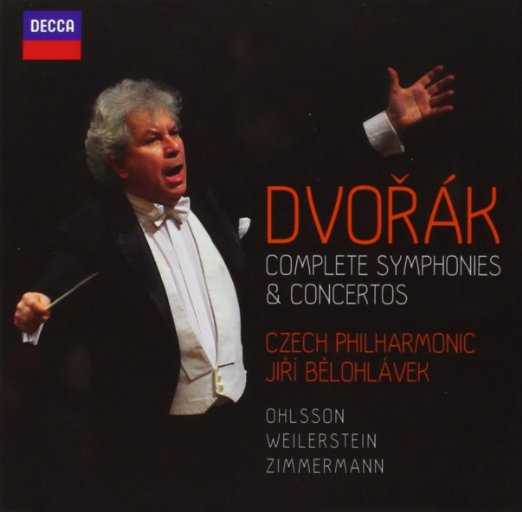
Czech Philharmonic OrchestraDecca
Includes the concertos with Alisa Weilerstein [CC], Frank Peter Zimmermann [VC], and Garrick Ohlsson [PC], the latter two of which were recorded explicity for this cycle (or in any case not released seperately). All, concertos and symphonies alike, are live performances, made between November of 2012 and December of 2013. "The dullest, most boring cycle ever made", as per Hurwitz' typically unhedged opionion. I have never made up my mind about it one way or the other, but it's equally true that when I grab a cycle, that's not the one I end up making a beeline for. If you want a different opinion: The cheerleaders at ClassicalNet hear "Jiří Bělohlávek [using] swift tempos and dynamic contrast to personalize this early work in a way that is wholly convincing... the whole set is beautiful performance after beautiful performance." In a way, this is Decca's symphonic twin-cycle to the Tchaikovsky cycle with Bychkov, also with the Czech Phil, which has equally lent itself to almost predictable praise from certain reviewing-types and (almost) equally predictable scathing from Hurwitz. (Bychkov, btw., has set down the last three symphonies with the same orchestra for Pentatone (which I haven't yet heard). Whatever the subjective response, the set is less taut, less fierce, more relaxed, more expansive - autumnal even? - throughout than some of the classic older recordings, at the head of which you would find Rowicki. (Qualitatively and stylistically.) So more like Pešek, who gets a bad rap for exactly that reason, rightly or wrongly.
Jiří Bělohlávek (DVD)
(2014)
Czech Philharmonic OrchestraEuroArts
In the year following the live recordings that make up the Decca-cycle above, these symphonies were given once again in concerts in 2014. The cycle also features the documentary "Sketches of Dvořák" by Baraba Willis Sweete and an introduction to each symphony by the conductor. Here's a MusicWeb review by Johnathan Woolf, which amounts to more or less unintentional damnation with faint praise: "If you want a visual record of the symphonies, these excellent performances, capably recorded, will prove very satisfying." Yikes. You will have guessed that this is the only such cycle available on "visual record". Here is a little introductory video to the thing.

Marcus Bosch
(2012 – 2018)
Nuremberg PhilharmonicCoviello
Never been boxed but very complete and on SACD. The individual releases are: Symphony No.1 (2017), Symphony No.2 + Golden Spinning Wheel (2018), Symphony No.3 & 7 (2012), Symphonies 4 & 8 (2014), Symphony No.5 + The Wild Dove (2015), Symphony No.6 + The Water Goblin (2013), Symphony No.9 + The Noon Witch (2016).

Sir Andrew Davis
(1979 – 1982)
Philharmonia OrchestraCBS Masterworks/RCA/Sony
This is one of the more 'over-complete' sets, including, as it does:The Serenade for Strings op. 22*, Serenade for Wind Instruments op. 44†, Slavonic Dances op. 46, Scherzo capriccioso op. 66, In Nature op. 91‡, Carnival Overture op. 92. (* Rudolf Kempe, Munich Phil. † Marcel Moyse, Marlboro FO. ‡ David Zinman, SWR SO.)


Stephen Gunzenhauser
(1989 – 1991)
Bratislava Radio Symphony Orchestra, Slovak State Philharmonic OrchestraNaxos
Includes Legends op.59, Symphonic Variations op.78. This had actually been boxed once before the "White Box" came along.

Neeme Järvi
(1986 – 1987)
Scottish National OrchestraChandos
These symphonies, except for the Ninth, which preceded the others by a year, were recorded over the summer (and a bit of Fall) of 1987 at Henry Wood Hall in Glasgow. The fillers from the individual discs are not inlcuded in the box. Here's a short review on ClassicsToday. Here is a Gramophone-review of the Sixth.

István Kertész
(1963 – 1966)
London Symphony OrchestraDecca

This is, of course, the classic set of the Dvořák-Symphonies, still ahead of Kubelik. That's perhaps thanks to the power of the British music press, that favored Decca and the LSO over DG and the Berlin Phil, but that's not to say that the cycle isn't a worthy primary contender. It's been widely reviewed in all kinds of formats; here are two such reviews: MusicWeb, ClassicalNet.
The Ninth in the set is not to be mistaken for his earlier one, which had been recorded with the Vienna Phil at the Sofiensaal, in March 1961, as Kertész's prestigious recording debut for Decca. The Editor's and the Blu-Ray editions (both oop) contain the Requiem as well as the symphonic poems: The Carnival Overture, Scherzo capriccioso, My Home, Symphonic Variations, Husitska Overture, The Water Goblin, The Golden Spinning Wheel, Othello, The Noonday Witch, and the Serenade in D minor.


Zdeněk Košler ++
(1973 – 1980 / 1994)
Slovak Philharmonic Orchestra / Royal Philharmonic OrchestraOpus / Brilliant
Zdeněk Košler recorded a Dvorak cycle with the Slovak Philharmonic Orchestra for the Czechezlovak (?) Opus label and was issued on LP, withe a boxex set appearing in 1983. These recordings were regularly licensed in the West (RCA, Musical Heritage Society). He had recorded some Dvorak earlier, for Surpaphon, with the Czech Philharmonic which has not, apparently, made it into the digital age. The Opus recorings did, though, on the original label and eventually as part of the Brilliant box set which adds the Serenade op.22. However, Brilliant didn't trust Košler to do the job in (or didn't get the rights for) Nos. 8 & 9; those are taken by Menuhin and Paavo Järvi with the Royal Phil, respectively, both in 1994. The set also includes the Serenade op.22 (Menuhin), Carnival Overture op.92, Scherzo Capriccioso op.66 (Järvi), and the Symphonic Variations op.78, The Water Goblin op.107, The Noon Witch op.108, The Wild Dove op.110 (Košler).

Rafael Kubelík
(1966 – 1973)
Berlin Philharmonic, Bavarian Radio Symphony OrchestraDeutsche Grammophon / Eloquence

The Kubelik-cycle is the second classic from the height of the LP days that has formed so much of the collective memory of record collectors. Fabulous ingredients, there's really no reason to think it inferior to any other cycle. It simply didn't have the same clout of the press behind it - and it came out a few years later, after Kertész had already had time to establish himself a little. The symphonies were made with the Berlin Phil. But the slim Eloquence-Box (no booklet, sadly) also includes the Symphonic Variations, Overtures (In Nature, Carnival, Othello, My Home, Hussites), the Scherzo capriccioso, symphonic poems (Water Goblin, Noon Witch, Spinning Wheel, Wood Dove), the Slavonic Dances opp.46 & 72, Serenade op.22*, Legends op.59* - all with the BRSO except for the latter two, with the *English Chamber Orchestra. Like Kertesz, Kubelik made earlier Dvořák-recordings with the Vienna Phil for Decca, but those are considered inferior to the Berlin re-makes. Certainly the Ninth was always very highly considered; the Hurwitzer considers it still the "Reference" recording. Very roughly, it oculd be said that Kubelik is better for the late symphonies and Kertesz for the earlier ones, which might make the latter set more interesting for those who already have performances of the late symphonies they love. (But then, why not go straight to Rowicki [see below]?!)


Zdeněk Mácal
(1988? – 1992?)
Milwaukee Symphony OrchestraKoss
The recordings include the Scherzo capriccioso (Sy.2), Hero's Song (Sy.3), Noon Witch (Sy.4), Golden Spinning Wheel (Sy.5), Hussite Ouverture, (Sy.6), Wood Dove (Sy.7), Czech Suite (Sy.8), and Water Goblin (Sy.9).

Zdeněk Mácal
(1997, 2005 – 2008)
Czech PhilharmonicExton
An Almost-Cycle from Mácal (No.1 is missing) recorded live at the Rudolfinum and issued on SACDs by the Japanese Exton label (that has done a lot of these kinds of recordings with the Czech Phil). They tend to be difficult and/or expensive to get your hands on, in physical form, but at lower resoultion, they are available to stream at the Naxos Music Library. The releases are a bit all over the place; Nos. 2 & 6, 3 & 7, 4 & 8, 5 & 9 appear coupled on three Twofers.

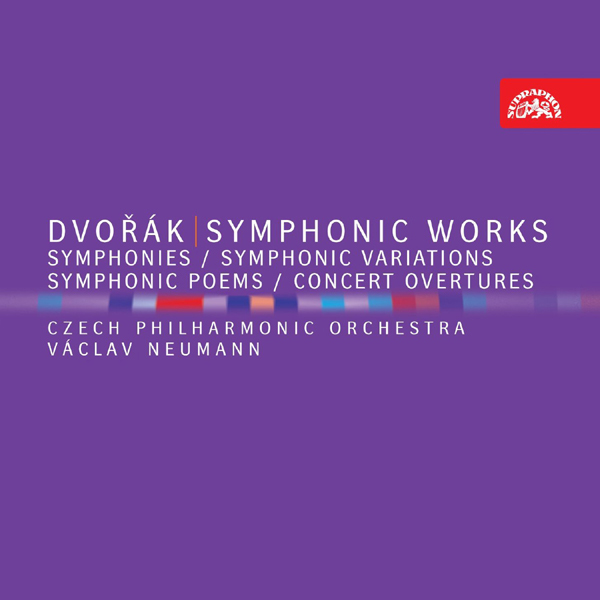
Václav Neumann (I)
(1971 – 1973)
Czech Philharmonic OrchestraSupraphon — Analog 1970s Cycle
The analogy Neumann cycle had long not been availabel on disc. Until, in fact, this set was released in 2012. Some argued that this was actually the better Neumann-cycle and the best one-conductor cycle with the Czech Phil. Others say, no, the digital remake is actually better. It was not well received in the West when it came out on LP, but the West was busy fawning over Kertesz, Rowicki, and Kubelik.
The set also includes the Symphonic Variations op.78, In Nature’s Realm op.91, Carnival op.92, Othello op.93, The Water Goblin op.107, The Noon Witch op.108, The Golden Spinning Wheel op.109, and The Wood Dove op.110. Here's a MusicWeb review. Like Howell, I think this is an excellent set; really as goood as any, with (as far as my idiosyncratic tastes are concerned) possibly one exception.
Václav Neumann (II)
(1981 – 1987)
Czech Philharmonic OrchestraSupraphon — Digital 1980s Cycle
You know that Hurwitz did a video of what he thinks is the best cycle, right? Well, here it is. He's not wrong, to the extent we've heard the same performances. He loves the Seventh in this set. The ClassicsToday reviews (here, here, here) make this one of the sets to have (10/10). But then in the above video, he takes it back a bit and says, no, the analog set is the one to have, after all. Well, I suppose there's only one thing to do about it and that's to get both!


Libor Pešek
(1987 – 1996)
Royal Liverpool Philharmonic Orchestra, Czech Philharmonic OrchestraVirgin / Erato
"Good, solid, exciting" - a strange trio of adjectives. It's how Hurwitz describes the set in his video. The written review on ClassicsToday is here and it's also very flattering. (8/9, "The recorded sound is warmer on the Czech than on the Liverpool recordings, which have a bit more clarity. While for me this won’t replace Kubelik’s masterful set (admittedly recorded in less ideally appealing sound), Pešek’s does provide a fine modern budget alternative to the three classic versions.") Interestingly, this set is split between the Czech Phil and the Royal Liverpool Phil. The couplings are generous: In Nature’s Realm op.91, Carnival op.92, Othello op.93, The Wood Dove op.110, My Home, the Scherzo capricioso, the Czech Suite, and the American Suite. Part of the set is reviewed (so-so) at Gramophone here. Generally, it's among the fine-but-not-great sets and not a first or even fourth choice.


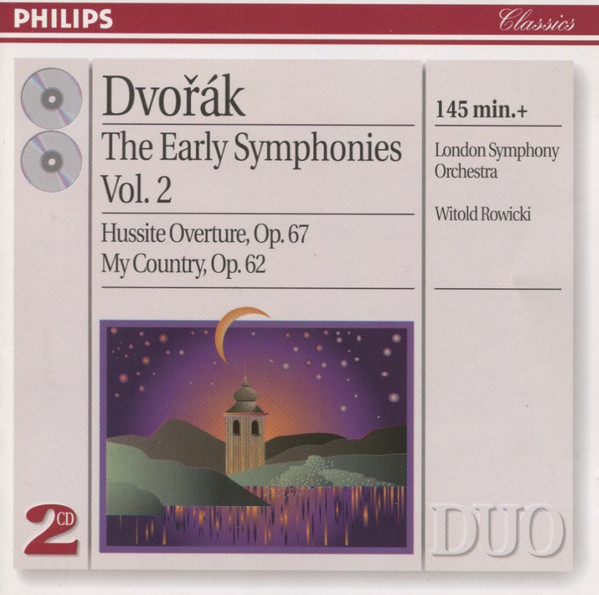
Witold Rowicki
(1965 – 1972)
London Symphony OrchestraPhilips / Decca
This came out right before the Kubelik but a few years after the Kertész sets, and although it was a set of one of the major labels at the time, it was on the smallest of these (certainly at the time), it featured a conductor who wasn't ever a big podium star (Witold Rowicki), and used the same orchestra as the cycle that had already established itself as the reference. It had something of a hard landing, never got much love, had been relegated to life on three Philips Duos, for most of the digital age.
The sets include the Othello, Hussite, Carnival, and My Country overtures. All three sets, annoyingly, split the 2nd symphony over two discs; the Twofer-set includes Leppards' Legends, which doesn't make a difference one way or the other.




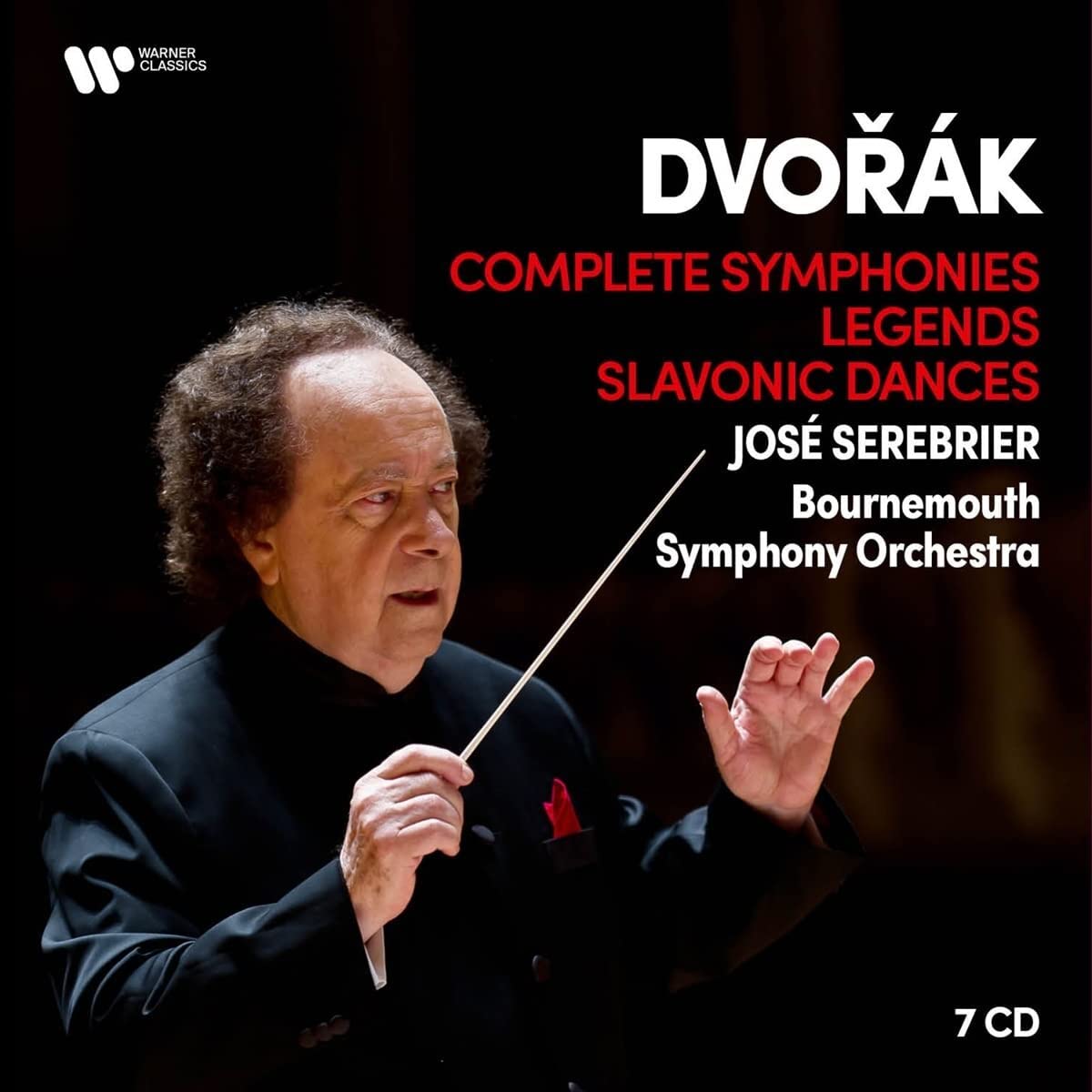
José Serebrier
(2011 – 2014)
Bournemouth Symphony OrchestraWarner
Meh.

Otmar Suitner
(1977 – 1981)
Staatskapelle BerlinBerlin Classics / Brilliant
Would you look at that: There's a fairly exhaustive review on MusicWeb - from my own pen! That's all the opinion you'll need then, isn't it?! (Actually, it might be, because I cite a lot of the other reviews in mine, makeing it something of a meta-review.) It's a very good cycle.


Vladimír Válek
(1988 – 1996)
Prague Radio Symphony OrchestraSupraphon
Vladimír Válek's Prague RSO cycle is perhaps the equivalent to the Prokofiev Cycle on Surpaphon with Zdeněk Košler; an under-the-radar digitally recorded cycle from the Czech Radio (Český rozhlas), except it hasn't got a 'dark-horse' status. ("Lousy, dismal" as per Hurwitz, actually.)

Compilation Cycles
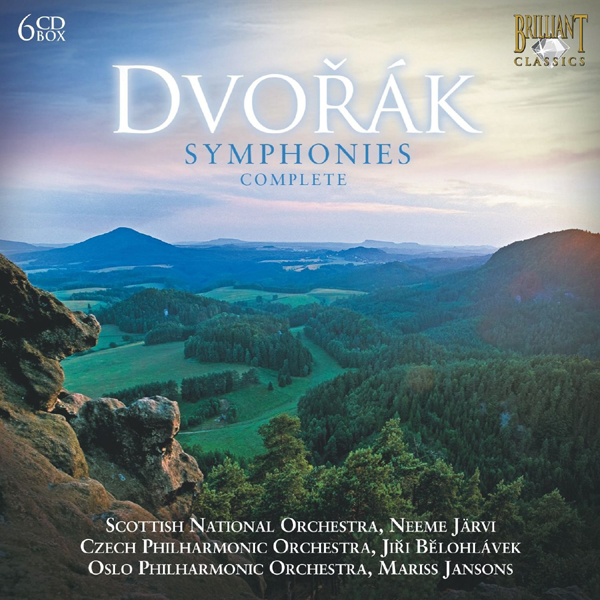
"The Mixer"
(1987 – 1992)
Royal Scottish National Orchestra, Czech Philharmonic Orchestra, Oslo Philharmonic OrchestraBrilliant
"The Mixer" (a turn of phrase I have taken from two brilliant Wodehosue short-stories, btw.) is a cycle that Brilliant put together as one of their cycles, presumably when they didn't have the Suitner-cycle around. It mixes and matches three condcutors and their Chandos-recordings of the respective works: Neeme Järvi (with the RSNO, Sys.1-4), Bělohlávek (with the Czech Phil, Sys.5-7) and Mariss Jansons (with the Oslo Phil, Sys.8 & 9). In times when just having this music on six discs in very good performances at a super price meant excellent value, that might have been a draw; in times like ours, it is a little more difficult to fathom why this cycle might be chosen over any of the ones above that, for better or worse, offer a coherent vision.
Legacy Table View


Follow @ClassicalCritic




6 comments:
I've heard bits and pieces of many of these but my favorite is the Jarvi SNO set. I love acoustic of the recording space. Makes everything sound so alive.
Jarvi is not known for his Dvorak, but I've enjoyed his cycle too. His second and eighth are especially fine--I never understood the second until I heard Jarvi.
I thought Ionarts readers might also be interested in the new cycle that Decca released this past week in the US--the Czech Phil conducted by Jiri Belohlavek. I've listened to the set and enjoyed it very much. Not hot-blooded like Szell, but full of lyricism and color. It includes the concertos and feature's Alisa Weilersteins recent cello concerto performance. Here's the link:
http://www.amazon.com/Dvorák-Complete-Symphonies-Concertos-digital/dp/B00M3GBXKK/ref=sr_1_1?s=dmusic&ie=UTF8&qid=1407681195&sr=1-1&keywords=belohlavek+dvorak
There's also an ongoing cycle to keep your "eye on", from Jose Serebrier and Bournemouth on the Warner Classics label. I've read some reviews which have been lukewarm, but I've really enjoyed the second, third, and sixth. A new installment will be released next month--I think they have three more to go to complete the cycle and qualify to be listed here. Here's the link:
http://www.amazon.com/Dvorak-Symphony-No-Complete-Legends/dp/B00KYMJ4N8/ref=sr_1_3?ie=UTF8&qid=1407681692&sr=8-3&keywords=serebrier+dvorak
Thanks for the hinter re: Jiri Belohlavek's new cycle. Somehow it flew under the radar for me. I noted it several times and then forgot again, despite being a major effort in major repertoire from a major label. Will add asap. And Jose Serebrier is finished by now; he'll have to be added, too.
All the best,
jfl
It looks like José Serebrier has finished his Dvorak cycle. I've seen some mediocre reviews for 7-9, but better reviews for 2, 3, and 6. I've enjoyed all three of these, but haven't listened to the whole cycle yet.
Here is the Amazon link:
http://www.amazon.com/Dvorak-Symphonies-1-9-José-Serebrier/dp/B00W2UYOLW/ref=sr_1_1?ie=UTF8&qid=1436749628&sr=8-1&keywords=serebrier+dvorak
Thanks for this, Matt! Will get to it. I quite like Serebrier... perennially underrated conductor, it strikes me.
I clicked on Suitner and it took me to Serebrier
Post a Comment