Concert Reviews | CD Reviews | DVD Reviews | Opera | Early Music | News | Film | Art | Books | Kids

31.1.11

Lowell Lieberman

Style masthead

Read my review published today in the Style section of the Washington Post:

Charles T. Downey, National Chamber Ensemble
Washington Post, January 31, 2011

available at Amazon
Lowell Liebermann,
Quintets / Songs
American composer Lowell Liebermann joined members of the National Chamber Ensemble for a concert in Rosslyn's Spectrum Theater on Saturday night. The program paired music by Liebermann with that of Beethoven, one of his primary influences.

Violinist Leo Sushansky, the group's artistic director, had a meaty sound in Beethoven's Romance in F, Op. 50, and Liebermann gave a booming rendition of the orchestral reduction on a restored 1865 Steinway piano, a loaned instrument more beautiful to the eyes than the ears. The other Beethoven work, the First Piano Trio, Op. 1, was similarly lessened by momentary technical slips, occasional sour intonation and some ensemble blockiness. The venue's dry acoustics didn't help, although the third movement had a delightful spring in its step and the fourth was abundant in jovial wit. [Continue reading]
National Chamber Ensemble
With Lowell Liebermann, piano
Beethoven, Piano Trio No. 1 (op. 1/1) and Romance for Violin and Orchestra (F major, op. 50)
Liebermann, Piano Trio No. 1, op. 32, and Piano Quintet, op. 34
Spectrum Theater (Rosslyn, Va.)

Lowell Liebermann, who will celebrate his fiftieth birthday next month, was educated at Juilliard, where his composition teachers were David Diamond and Vincent Persichetti. Many prominent musicians have embraced and championed Liebermann's works, including James Galway, who has played the composer's flute concerto, Stephen Hough (he played the piano concerto here under Rostropovich with the NSO), Jon Manasse (clarinet concerto), and Steven Isserlis (who premiered the cello sonata with Hough). The traditional qualities of Liebermann's music drew the admiration of none other than Terry Teachout, one of the conservative voices who would like to forget that the atonal phase of music history ever happened. Singling out Liebermann as "a composer unafraid of grand gestures and openhearted lyricism," Teachout lumped him with a group he dubbed the New Tonalists, a term that Liebermann himself does not approve. For more background on Liebermann, read his interview with Bruce Duffie and the feature on Sequenza21/. The news arrived the morning of the concert that Milton Babbitt, the dean of American post-tonal academic composers, had died, signaling the end of an age, the age of music that is most often contrasted with that of Liebermann. Asked about what Babbitt's passing might mean for the future of the complex music he favored, Liebermann tactfully declined to comment.

30.1.11

In Brief: Death of Complexity Edition

Here is your regular Sunday selection of links to good things in Blogville and Beyond.
  • Welsh soprano Margaret Price died this week, at age 69. Anne Midgette remembers the effect of hearing her sing Desdemona. [Washington Post]

  • One of the pillars of American modernism, composer Milton Babbitt, has also passed away, at the age of 94. What is going to become of the atonal and complex music that he and others like him favored? Alex Ross offers a whimsical remembrance, including a Milton Babbitt dance video, which has to be seen to be believed. [The Rest Is Noise]

  • You may recall that the staff of the Archives nationales de France occupied their institution's building, the Hôtel de Soubise, back in September. This was an attempt to put a stop to the government's plan to install a new museum, the Maison de l'histoire de France, in the building, putting at risk, they said, priceless archival collections. The staff has lifted the occupation this week, having received agreements that the government will take steps to save and preserve endangered and stalled conservation projects, but the establishment of the new museum will go ahead. [Le Monde]

  • My weekly column with concert picks for the Washington and Baltimore area: Hyperion Ensemble, Klavier Trio Amsterdam, and American Opera Theater's staging of Dido and Aeneas and the Gonzales Cantata make the top cut. [DCist]

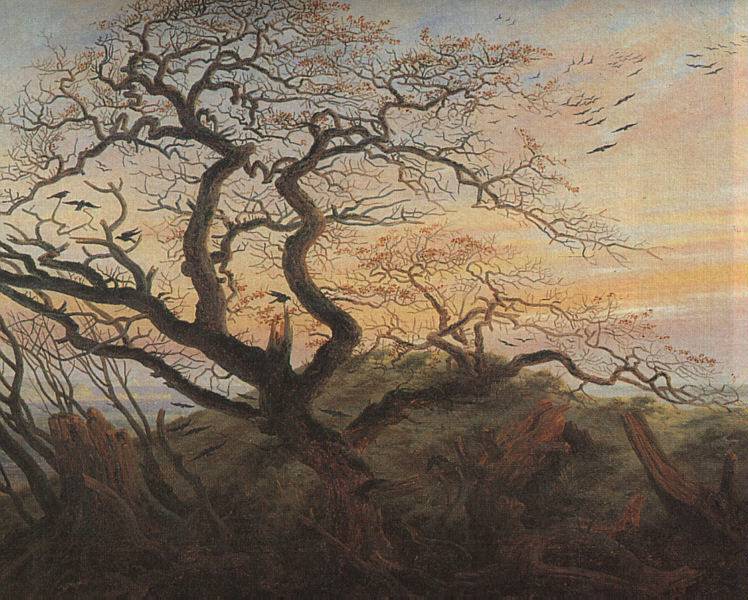
  • The Louvre has installed an unusual temporary exhibit of artwork, on the wall of a courtyard inside a prison in Poissy. The Maison Centrale de Poissy holds 230 convicts, 80% of whom are serving terms longer than twenty years. The paintings are reproductions, made for outdoor display but of high photographic quality and backed with aluminum. The ten paintings were chosen by ten inmates, selected from those with an interest in art, and they include Caravaggio's Fortune Teller, De La Tour's Magdalen with the Smoking Flame, Mantegna's Crucifixion, Friedrich's Tree of Crows, and Marie-Guillemine Benoist's Portrait of a Black Woman. The "curators" met with the director of the Louvre and wrote entries on the art for a catalogue of the exhibit, even painting copies of the works with their own additions (a jail cell at the foot of Friedrich's tree, an iron collar around the neck of Benoist's woman). [Le Monde]

29.1.11

Berg, Beethoven, and Eschenbach

The National Symphony Orchestra offered a satisfying evening of music making Friday under the fresh leadership of Music Director Christoph Eschenbach. Eschenbach’s resourceful programming, balanced conducting, and respectful rapport with the musicians will hopefully continue to improve future programs and the consistent overall musical quality of the NSO. Ranging from conducting that was mostly close to his core, to his walloping extended softball pitch, Eschenbach’s silky, black Nehru jacket revealed the slightest motion of the shoulder, which helped reinforce his musical demands in a program of Berg’s Three Pieces for Orchestra , and Beethoven’s Triple Concerto and Symphony No. 5.

The orchestra dug into Berg’s compelling Praeludium, a palindrome, yet lacked sufficient Romantic sweep and legato, while the brass were most expressive in the Reigen piece. The active and complex Marsch showed the colors of all sections with the timpani later pronouncing the motif of the opening of Beethoven’s Symphony No. 5, again tossed around in top form by the fiery brass. The large -- giant -- hammer (großer Hammer mit nichtmetallischen Klang, according to the score) failed to make a large enough crack with the bass drum at the end to evoke the atmosphere of anxiety that likely pervaded the time when this piece was composed, at the onset of World War I. It was satisfying to have the program open with a serious, extended work that had a connection to the second half of the program.

Generously showcasing the home team -- NSO concertmaster Nurit Bar-Josef, principal cellist David Hardy, and principal keyboardist Lambert Orkis -- gave a charming reading of Beethoven’s Triple Concerto. Hardy’s cello tone in the upper range resonated most beautifully, while Bar-Josef’s somewhat narrow tone sometimes got lost in the big room along with the muddy piano with which Orkis had to work. Chamber-like moments when the trio did not overplay were most convincing along with beautifully communicated transitions that frequently involved eye contact and a smile. The briskly spinning final Rondo alla Polacca movement showed outstanding technique and ensemble from all on stage.


Other Reviews:

Anne Midgette, Showcasing the NSO 'family' (Washington Post, January 28)

Terry Ponick, Triple Concerto, triple delight (Washington Times, January 28)

Mike Paarlberg, Berg & Beethoven at the Kennedy Center (Washington City Paper, January 28)
The NSO’s last performance of Beethoven’s Symphony No. 5, in 2007, was a flop. This uplifting 2011 performance brought conviction and fluent sweep without any self-consciousness. Eschenbach’s accented releases of the fourth note of the famous motif were quite memorable and foretold of excitement to come. The victorious sense of discovery in the final movements showed the orchestra both at their most nimble and most expansive. Eschenbach met what the orchestra could offer on their own and confidently shaped it into something coherent, while never becoming oppressive or controlling, even if the accelerando near the end was a bit frumpy. Overall, he lifted the orchestra to a new level for a proud full house.

Guest conductor Gianandrea Noseda will lead the next NSO program (February 10 to 12), combining music by Smetana and Tchaikovsky with pianist Radu Lupu playing Beethoven's third piano concerto.

Ariel Quartet Full of Noises in Berg

It occurred to me last night, as I approached the door of the Corcoran Gallery of Art's Hammer Auditorium, that Ionarts had not been there since the last time we reviewed the Klavier Trio Amsterdam, back in 2009. Furthermore, although we have reviewed violist Roger Tapping playing the Mozart quintets with string quartets (like the Auryn, Jupiter, Parker, and Daedalus) over the years, we had also not managed to review one of his concerts with the Ariel Quartet, although they have been playing at the Corcoran and other Washington venues on a fairly regular basis. The Corcoran has perhaps the finest auditorium for chamber music in the city, but its concert series has been cut back to just a few events each season. The Ariel Quartet was back on Friday night to put some energy back into chamber music at the Corcoran, playing quartets by Beethoven and Berg, plus one of the exquisite string quintets of Mozart, joined by ex-Takács violist Roger Tapping. After some trouble with the light settings for the stage, forcing the group to play the Beethoven in crepuscular darkness, the group gave a knockout performance of the Berg.

The Ariel Quartet, formed in Jerusalem in 1998, hit the American classical music world around 2006, coming out of the New England Conservatory of Music with a full head of steam. They managed a third prize at the Banff Competition in 2007 (the year that the TinAlley Quartet took first and the Zemlinsky Quartet took second) and ultimately graduated from NEC last year, moving on to further studies at the Musik Academie in Basel, but critics -- like Robert Battey for the Post in 2008 -- have not always been impressed by much beyond their obvious technical skill. The group literally sunk its teeth into Beethoven's third quartet (op. 18, no. 3), with a violence of attack and a tone that was more searing than glowing, a performance that was all frenetic energy and sharp edges. The tempo of the outer movements was pushed so fast that most rhythmic details had to be glossed over, most disturbingly in the closing Presto, and the third movement tripped over itself in much the same way. The second movement oozed a little more expansively but felt more precious than profound.

Since the Ariels did win the Székely Prize, for the best performance of a Bartók quartet at the Banff Competition, it was probably not a surprise that their performance of the Berg string quartet (op. 3) was the concert's high point. The range of tone color, shape of phrase, and clarity of form not only showed the group's predilection for more biting, dissonant harmony, not to mention the greater independence of the parts, but revealed their indifference -- contempt is probably too strong -- for the Beethoven quartet. Here the four musicians listened more to one another, not as in the Beethoven straining so much against their parts that they pushed first violinist Alexandra Kazovsky into a forced, acidic sound. The various effects of Berg's score, like harmonics and raspy sul ponticello playing, all served as part of a well-conceived drama that arched over the two movements.


Other Reviews:

Stephen Brookes, Ariel Quartet (Washington Post, January 31)
The presence of Tapping on the second viola part in Mozart's fifth string quintet (D major, K. 593) seemed to mollify the younger musicians, with the high strings in a purely blended ensemble answering each of the opening phrases of the cello in the first movement's introduction (a dreamy section that returns memorably in the movement's coda). Freed by the second viola part taking some of the accompanying motifs, Mozart gave the first viola greater independence, revealing the sinewy tone of violist Sergey Taraschchansky, especially in the many sections given to the two violas with cello in the slow movement. The suave trio of the Menuetto movement had a bubbly quality, driven by the arpeggiated flourishes introduced by the first violin, although Gershon Gerchikov, who sat first violin for the second half, was not quite clean enough in the many passages of detached notes of the somewhat lightweight final movement.

You have to wait only a week for the next concert at the Corcoran, featuring the return of Klavier Trio Amsterdam next Friday (February 4, 8 pm), including two Beethoven trios (op. 1/3, and the 'Kakadu Variations', op. 121a) and the second piano trio of Saint-Saëns.

28.1.11

Lasso's Tears

available at Amazon
Lasso, Le Lagrime di San Pietro, Studio de musique ancienne de Montréal, C. Jackson

(released on September 28, 2010)
ATMA ACD2 2509 | 52'48"

Online score:
Le Lagrime di San Pietro
There is something special about a composer’s last creations, as we have noted many times before. At the end of a celebrated career, Orlando di Lasso (1532-1594) appears to have suffered a stroke, its symptoms perhaps exacerbating the mood swings of his already unpredictable personality. He composed yet one more masterpiece, completed just weeks before his death, a setting of about half of the verses of Luigi Tansillo’s Le lagrime di San Pietro, a dramatization of the anguish experienced by Saint Peter following his betrayal of Christ. Using the exemplar of courtly love poetry, evoking the heat-then-ice contrasts of earthly passion, Tansillo created stanzas that were perfectly suited to the dramatic genre of the Italian madrigal, as emotion-filled glances are exchanged between condemned Lord and terrified apostle. Apparently in a gesture intended to seek pardon for his own sinful life – even his employer, the Duke of Bavaria, had censured him for inappropriate behavior – Lassus dedicated the work to Pope Clement VIII, the successor of Peter in Rome.

The 18th stanza may have had particular resonance with Lassus, evoking the regret of old age: “My faith would not have encountered so arduous an obstacle / […] If the years and too long a life / Had not borne away with them perception and memory.” Jesus, of course, responds in Latin: Lassus added the 21st stanza, not found in Tansillo’s collection, to the end of his setting. This text refers to the classic Gregorian text for Good Friday O vos omnes, addressed to the witnesses of the Passion, “see if any pain is like my pain.” It personalizes those words, speaking directly to the listener and not just to Peter: “Behold, man, what I suffer for you: I cry unto you, for whom I die.” The musical style is quite simple but not severe, basically homophonic, although with seven parts to work with Lassus creates some limited imitation that enlivens the texture and an approximation of polychoral dialogue between groups of voices. All movements are in the same basic meter, have roughly the same number of tactus groupings (the timing of each movement is surprisingly uniform, at just over two minutes), and are in a series of related keys. Unlike some of his earlier experiments with chromatic harmony, Lassus keeps his harmonic movement fairly limited, using few accidentals.

This fine performance by the Studio de musique ancienne de Montréal, with ten voices spread out over the seven parts, is beautifully captured but certainly not the only one available. The group's director, Christopher Jackson, does decide to stick to voices only, where other groups -- like Livio Picotti and La Capella Ducale Venetia (cpo) and Erik Paul Van Nevel and the Huelgas Ensemble (Sony), which are both quite good and for about the same price -- double some or all parts with instruments. The singing here is stronger and more balanced than what is heard in the recording by the Ars Nova Vocal Ensemble (Naxos, not worth the discount), and on par with the excellent recording by Philippe Herreweghe and his Ensemble Vocal Européen, hard to find now except as an MP3 download with less satisfying sound (again, probably not worth the discount). Some of the parts in the Montréal recording seem hazy or off in the distance, especially at the top of the texture, but it is a rounded and smooth ensemble sound that is easy on the ears.

27.1.11

DCist: Casals White House Tribute

Dcist logo

See my review of the concert by Yo-Yo Ma and Emanuel Ax, published at DCist today:

Remembering Casals at the White House (DCist, January 27):

Fifty years ago, John F. Kennedy's inauguration turned a generational tide in the United States, a watershed event being celebrated this month at the performing arts center named for him on the banks of the Potomac. Among those filled with hope for the future by the young president's election were artists, writers and, not least, classical musicians, who welcomed his words about the importance of the arts to the life of the country. "In free society," Kennedy claimed boldly in one speech, "art is not a weapon and it does not belong to the spheres of polemic and ideology." Encouraged, it is generally believed, by his classical music-loving wife, Kennedy led by example, inviting the best musicians to perform at the White House for gatherings of the greatest artists of the day. At one such important event, Kennedy drew on his correspondence with the octogenarian Pablo Casals, coaxing the outspoken Catalan cellist out of retirement -- a musical silence that began as part of his protest against the fascist government of Franco in his native Spain -- for a legendary recital at the White House. In a gesture meant to open the doors to the nation, a recording of the concert was later released.

On Tuesday night, the cellist's widow, Marta Casals Istomin, presided over a Pablo Casals Tribute Concert in the Kennedy Center Concert Hall, a recreation of the program of this recital led by perhaps the most recognized figure in classical music today, cellist Yo-Yo Ma (like his recitals in 2007 and 2006 practically guaranteed to sell out quickly, even when he barely plays anything).

"We are here to recapture," Casals Istomin said elegantly, "that brief moment when music was center stage in the nation's capital." [Continue reading]
Pablo Casals Tribute Concert
Yo-Yo Ma (cello), Emanuel Ax (piano), Kalichstein-Laredo-Robinson Trio
Kennedy Center Concert Hall

Other articles:

26.1.11

Lions, Tigers, and Flying Women! Dürer @ the Clark

There's something about the seventy-five Dürer engravings on view at the Clark Art Institute (in Williamsburg, Mass.) that seem familiar and not out of place. Albrecht Dürer (1471-1528), the German master, lived in a time of terror, marauding mercenaries, and the unknown of a new century. He had dragons, demons, and knights of the Reformation to deal with; we have cruise missiles, Internet worms, and humans strapped with explosives.

I wouldn't know where to begin to try to decode the symbolism in Dürer's work, but many scholars have. The Virgin and Child with a Monkey, Holy Family with a Grasshopper, or the seven-headed dragon in The Apocalypse. Was he a believer or was it merely the pleasure of his imagination? You want a Muslim-Christian conflict -- witness the par-boiling of St. John in The Martyrdom of St. John -- ouch.

Religion, sex, gender identity, and politics -- all enticing -- but it is Dürer's mastery of the medium alone that will astonish most visitors. The Clark graciously supplies magnifying glasses so one can explore his insanely detailed imagery.

The man was a visionary work horse, not unlike William Blake after him, and if Dürer had the technology of today he would no doubt be in production as William Kentridge is, expanding into digital media. I sense a few woodcuts in my future.

The Strange World of Albrecht Dürer runs through March 13th at the Clark Art Institute in Williamstown, Mass.

25.1.11

Ionarts-at-Large: Boulez' Mahler in Amsterdam

Amsterdam, with your crooked and badly isolated houses, legions of second hand and used-anything stores, restaurants that close at nine, grimy-wet winter days, awful hotels, dirty canals, expensive and rickety public transportation, pervading sense of dilapidation, your grossly exaggerated focus on secondary and tertiary pleasures and cheap ticky-tacky-selling tourist gift shops, be still my beating heart as long as you contain in your midst one of the world’s most lovely concert halls and in it “The World’s Best Orchestra”.

The opportunities to hear Pierre Boulez conduct are, let’s be honest, acutely limited. So the chance to witness him in Mahler’s Seventh Symphony was an obvious and welcome excuse to go to Amsterdam, even in the uninviting month of January. And what better cast—at least on paper—than Boulez and the Royal Concertgebouw Orchestra could one get for hearing that elusive Mahler Seventh for the first time in concert? After all, the RCO’s Mahler credentials are nonpareil and Boulez’ recording with Cleveland is one of the outstanding contributions to the discography.

In rehearsal, unaware of the program apart from Mahler and assuming—rather than paying attention—that Boulez was mixing things up with one of his compositions, I thought to myself: “Oh, Pierre, you just pretend to be so avant-garde but you’re really a bleeding heart romantic at heart.” Egg on my face, seeing how he was rehearsing Webern’s Six Pieces for Orchestra, op.6. Then again, an unabashed romantic is of course exactly what Webern is. And the reaction might go to show that this romantic mooring of the Second Viennese schoolboys would be so more obvious to the listener if he or she came expecting Boulez, rather than romantic standards set by Der Rosenkavalier or the ‘Rhenish’ Symphony.

In concert, Six Pieces (in the original 1909 version) flit by in no time at all—rousing and enchanting en route, riveting and challenging to the ears. Piercing woodwinds, heralding trumpets, and distilled genius (if you’ve got the taste for it) made this—despite rampant coughing—in the very literal sense uncommonly beautiful.

available at Amazon
G.Mahler, Symphony No.7,
Boulez / Cleveland - DG
available at Amazon
A.Webern, 6 Pieces et al.,
Boulez / BPh - DG
In a way, the works is the perfect introduction to the inner movements of Mahler’s Seventh Symphony, except that Pierre Boulez doesn’t go for shades of night or spookiness in this work. I struggle in vain to grasp that symphony as it is, but I get closest to having a grip when the Nachtmusik is actually nocturne-like, moonlit and mysterious, a nervously flittering intermezzo with Ligeti-String-Quartet-like crawling bugs and shadows amidst. Boulez chooses a route that strikes me more like a Haydn Andante, bright and chirpy, with gay dances and Schuhplattlering cows. That’s a difference in perception, but nothing that made any of these three movements less excellent. The timpanist’s clipped end of the Scherzo was full of wit, the first Nachtmusik soft-hued, not unlike a battalion of men marching from evening into night—determined rather than sentimental. Only the cowbells didn’t fit the picture, sounding more like some arthritic bovine stumbling through an ironmongery than ringing of musical cow paraphernalia wafting up down from alpine pastures. Boulez would have been justified to take a page from the Bruce Dickinson’s playbook and ask the percussionist(s) to “really explore the space”.

In the first movement Boulez didn’t linger—he got right into the gritty business and led the orchestra like a little metronome, steady, subtle, and with small clockwork movements. If and when he wants a triple fortissimo orchestral crash, he doesn’t fling his limbs about, he tells the players beforehand. Boulez doesn’t emote for the orchestra, he just provides the pulse. But that doesn’t make his interpretations any less emotional. Amid superb contributions from trombones, trumpets, and Wagner tuba, the first movement was a scorcher. The finale was a massive, a wonderful noise, jocular witch clenched teeth… Mahler’s ambiguously jubilant Meistersinger send-up (and the finale of Tristan & Isolde’s first act) ever obvious. In short: an evening befitting the great Mahler moments that must have taken place in the Grote Zaal of the Concertgebouw. And perhaps it’s no coincidence that the best seats in the hall—Balcony Front, Row 1, Seat Sixties-something—are the ones right above the plaque that bears Mahler’s name.

NSO Puts Kennedy Back in Kennedy Center

It is hard to imagine the American political landscape in which President John F. Kennedy could go to Amherst College, as he did on October 26, 1963, to make a major speech about the importance of the arts in the nation's life. The occasion was in honor of Robert Frost, who had spoken at the young president's inauguration, but among many interesting things about the role of the artist in society, Kennedy made the following revelatory statement:

I look forward to an America which will reward achievement in the arts as we reward achievement in business or statecraft. I look forward to an America which will steadily raise the standards of artistic accomplishment and which will steadily enlarge cultural opportunities for all of our citizens. And I look forward to an America which commands respect throughout the world not only for its strength but for its civilization as well.
These are words that are engraved, alongside other excerpts from Kennedy's speeches, on the terrace wall of the performing arts center that bears his name, at the edge of the Potomac River. Within a year or two of Kennedy's assassination, Lyndon Johnson created national endowments for the arts and humanities that were intended to give birth to the artistic blossoming Kennedy envisioned. In a month-long festival in commemoration of the 50th anniversary of Kennedy's inauguration, the Kennedy Center brings us back to JFK's admonishment that "In free society art is not a weapon and it does not belong to the spheres of polemic and ideology." Oh, if only that were true.

Last Thursday night, official Washington at least paid lip service to the ideal, with a massive tribute concert involving the National Symphony Orchestra, American Ballet Theater, and others. It was the sort of event I was only too glad to miss, but I was able to hear the first of the NSO's subsequent concerts, on Saturday night, that included the piece commissioned by the orchestra for the event. American composer Peter Lieberson had the misfortune to receive the commission, the musical equivalent of the sort of official doggerel ordered by monarchs from their poets laureate. Falling into the Copland Lincoln Portrait trap -- see Peter Schickele's hilarious send-up of the genre -- Lieberson provided a background score of nondescript solemnity to some excerpts of Kennedy's speeches, read dutifully by Richard Dreyfuss. Lots of plaintive cello solos, a momentum-gathering timpani beat, hints of Bernstein and Copland: it made even Kennedy's words seem prosaic. The piece was introduced by a lionizing film, featuring the remembrances of Kennedy adviser Ted Sorensen, and followed, after intermission, by an equally negligible trifle, Bernstein's Fanfare for the Inauguration of JFK, in its first performance by the NSO. Why start now? At only a minute or so longer, I would have much preferred to hear Stravinsky's Elegy for JFK (not that it is necessarily a piece for the ages, but at least there is some substance).

The point of including Bernstein's Symphonic Dances from West Side Story on the program, I suppose, was to offer a distillation of the hopeful feelings of the era -- the musical was premiered in 1957. Amid some rather discombobulated playing -- a shaky sense of rhythmic ensemble pervaded the work -- the most musical moments came in the introduction to the Somewhere tune, for harp and lustrous solo strings. Conductor Christoph Eschenbach, who might not be expected to have the most innate grasp on this sort of American music, gave the percussion section its head, and they obligingly drowned out most of the other sections at several points in the Mambo and Cool ("Boy, boy, crazy boy") arrangements. The latter tune was taken at an edgily fast tempo, which gave the work an exciting climax but at the loss of any chance at subtlety.

Other Reviews:

Joe Banno, National Symphony Orchestra (Washington Post, January 24)

Terry Ponick, National Symphony Orchestra shines in JFK tribute (Washington Times, January 24)

Tim Smith, National Symphony marks JFK anniversary with new Lieberson work (Baltimore Sun, January 23)

Anne Midgette, Kennedy Center opens JFK commemoration with distinguished crowd (Washington Post, January 21)
We and others have already said everything there is to say about American pianist Tzimon Barto. It goes without saying that a Barto performance will be independent, even willful, and his take on Gershwin's piano concerto was no different. If the thing you most enjoy in a performance is not having any idea exactly what the performer will do next -- and neither conductor nor accompanying orchestra seeming to know, either (in this regard, it did not even help Oscar Levant, in his famous Gershwin hallucination in An American in Paris, to be at once soloist, conductor, and every player in the orchestra) -- this rendition was for you. Unlike Fazil Say's equally erratic rendition of Rhapsody in Blue with the Baltimore Symphony Orchestra a few years ago, Barto's affected manipulations of tempo, strange twists and turns of phrase, and physical gyrations did not add up to anything compelling. It does not bode well for the NSO's debut on the Ondine label, the record deal that Eschenbach brought with him to Washington: this program, recorded live, will be the first recording by the NSO released since 2001.

24.1.11

In Brief: Kennedy Center Opera Edition

Here is your regular Sunday Monday (delayed by illness) selection of links to good things in Blogville and Beyond.
  • A Cooper's hawk has taken up temporary residence in the Main Reading Room of the Library of Congress. The U.S. Fish and Wildlife Service has been trying to capture the hawk, but the bookish raptor has eluded them so far, eating just enough of the baited quail not to trigger the traps intended to catch it. [DCist]

  • Kudos to Anne Midgette for getting an article about classical music placed on a newspaper's front page, an article confirming the rumors, circulating for months, that the Kennedy Center will absorb the Washington National Opera, after issues surrounding the payment of the company's outstanding debts were happily resolved. [Washington Post]

  • Photographer Patrick Chauvel imagines what it would look like if the Tour de Montparnasse in Paris were exploded by a bomb or plane attack like the World Trade Center. [Lunettes Rouges]

  • English pianist James Rhodes, a talented musician with a troubled personal history, aims to bring classical music to a broader audience, "like a Jamie Oliver of the grand piano," to make classical music "easy, accessible and fun." [The Observer]

  • Is Frank Gehry's new interactive concert hall for the New World Symphony in Miami Beach the wave of the future for classical music? It sounds like an awful lot of distractions from listening to music for my taste. [Washington Post]

  • My weekly picks for concerts this week in the Washington area. [Classical Music Agenda]

  • Once again, the Internet has justified its existence. [White People Rapping Poorly]

  • What to do with Louis-Ferdinand Céline (1894-1961)? The decision by the French government to include his name in a collection announcing artistic anniversaries for the year has drawn anger over his (admittedly disgusting) anti-Semitic writings. Leaders of Jewish groups in France compared the decision to honor Céline to a desire to honor Pétain. [Le Monde]

Sofya Gulyak

Style masthead

Read my review published today in the Style section of the Washington Post:

Charles T. Downey, Pianist Sofya Gulyak
Washington Post, January 24, 2011
The Washington Performing Arts Society brought Sofya Gulyak back to Washington for a recital on Saturday afternoon in the Kennedy Center Terrace Theater. After the Russian pianist's dramatic win at the William Kapell International Piano Competition in 2007, she went on to become the first woman to win the Leeds International Piano Competition in 2009. Strangely, for a competition regular to play a program centered on romantic music, this was a performance that seemed curiously restrained.

In Schubert's "Three Piano Pieces," D. 946, Gulyak went for poetry by narrowing the tone of her right hand to a sometimes spidery thinness, without making her left hand transparent enough to complement it. Even in the moody middle piece, this reticence seemed to chop up the melody, preventing a smooth legato from spinning out. The results were disappointingly similar in Chopin's Second Sonata, where a reserved quality made technically challenging passages exciting without the thrilling feel of being pushed to the edge of safety. [Continue reading]
Sofya Gulyak, piano
Washington Performing Arts Society
Kennedy Center Terrace Theater

Other reviews:
Kapell Competition (2007)

Ionarts-at-Large: Birmingham in Amsterdam


Neither the opportunity to hear Andris Nelsons—that very excellent and even more promising conductor of the 30+ generation, nor the chance to hear Nikolai Lugansky—among the most sensitive and least flashy of current Russian pianists should be missed. Nor would it be wise to pass on the City of Birmingham Orchestra—ever since the days of Simon Rattle one of England’s finest—stopping by the Concertgebouw. It was a welcome opportunity to spend an otherwise unoccupied night in the city I’ll never be friends with: icky, sticky Amsterdam.

available at Amazon
Rachmaninoff / Tchaik., PCs 3 & 1,
M.Argerich / Chailly, Kondrashin / Berlin RSO, BRSO - Philips
available at Amazon
G.Mahler, Symphony No.1,
S.Rattle / CoBSO - EMI
On the bill were Mahler’s First Symphony and Rachmaninoff’s Third Piano Concerto; a program that seems to announce: “Subtleties are kindly asked to wait outside the hall for the duration of this concert.” Lugansky, alas, did not quite play along: the unfazed mellifluousness of his opening bars, with casual elegance and introspection, suggested an alternative take to this hollering barnstormer of a concerto. The impression didn’t last long, though, as the orchestral colors became garish and the players ever louder. Not that there weren’t fine moments amid the wild and sloppy performance, just not enough to overcome a numbing sameness and an occasionally drowned out soloist. The immediate and unanimous standing ovations, I was told, are every bit as meaningless with a Concertgebouw crowd as they are in the Kennedy Center. Only that instead of people reaching for their car-keys, it’s audience members eyeing the (limited) free drinks at intermission.

The Mahler, rigorous, rough-hewn, and middle-of-the-road, went along similar lines. Enjoyable under different circumstances (especially the fact that the double bass solo on Frere Jacques was, for once, not pitch-perfect but suitably off-color), I found it baffling why this performance needed to be aired in Amsterdam of all places, a city possibly more saturated with high quality Mahler in this anniversary year than any other. With neither technical brilliance nor any discernable interpretive stance, it was devoid of statement and devoid of wonder. Not that bringing owls to Athens hasn’t some merit. But if so, they must be spectacular eagle owls. This one was a burrowing owl. Not a concert that could possibly dent Nelsons’ or Lugansky’s reputation, but a considerable disappointment given the top-notch ingredients.

23.1.11

Ionarts-at-Large: Maria João Pires and Markus Stenz in Beethoven

To speak of any Beethoven Piano Concerto as “the weakest” is quite outrageous, really, given how phenomenally excellent they all are. But if one had to find a relative weak spot in the lineup of the five mature works, the finger would have to be pointed at the earliest of them*, Concerto number two, opus 19†. It is fitting perhaps, that this concerto would be played by the most alluring of the pianists to perform in the Bavarian Radio Symphony Orchestra’s Beethoven concerto cycle: Maria João Pires. (An easier statement now, after Murray Perahia had to cancel and Paul Lewis was not on top of his game.) On this occasion, it was Markus Stenz, the chief conductor of Cologne’s Gürzenich Orchestra, who led the BRSO on the 13th and 14th of January.

22.1.11

Ionarts-at-Large: Eschenbach in Munich

In July of 2007 I heard the Munich Philharmonic for the first time in almost seven years. After having spent years of jumping to the defense of the orchestra’s shoddy or non-existent reputation in America, my excitement was considerable; on the program: Mahler’s Ninth Symphony. The concert was a blunt shock: with a performance so pallid, listless, and uninvolved, I feared that the orchestra’s worst detractors had been right and I—unwittingly rooting for the home team—completely off. It took a while to reckon that that Mahler Ninth under a non-conductor was not representative of the quality of the orchestra’s potential. Merely representative of their fickleness when it comes to working with conductors they deem beneath themselves. A pity they took it out on Mahler and the audience, but also a relief to find them capable of providing the orchestral highlights of the Munich orchestral scene pretty much whenever Christian Thielemann took the reins.

Three and a half years later they redeemed their earlier Mahler misdeeds. Christoph Eschenbach had long been absent from Munich after some less fortunate stints with the orchestras in town, but since he and MPhil executive director Paul Müller go back a long way, he’s a regular again with the Munich Philharmonic. Fortunately the orchestra plays along.

Polyphony of the Northern Renaissance

available at Amazon
Renaissance am Rhein, Singer Pur

(released on November 16, 2010)
Oehms OC 820 | 66'39"
The sounds of talented new (to me, at least) choral ensembles continue to reach my ears this year, from the talented English ensemble Stile Antico to the Boston-based Blue Heron to the German all-male ensemble Amarcord. Just as that last group was formed by former choristers from Leipzig, another group called Singer Pur was founded in 1991 by five former choirboys from Regensburg Cathedral. They made the right decision to augment the group with soprano Claudia Reinhard, which exposes the high male voices less (a good thing). The ensemble's latest CD is the fruit of a collaboration with the LVR-LandesMuseum Bonn, as part of Renaissance am Rhein, a large exhibition devoted to Renaissance art and music in the Rhineland. No one needs to convince me of the beauty of these things, but it is always good to have a demonstration of just how many worthy works are still out there to be discovered.

Limiting itself to the stretch of the Rhine from Aachen to the Netherlands, the group put together this program of little-known music from the 16th century (some possibly from the early 17th). Lassus is the only name you are likely to recognize, represented by a single piece, O mors, quam amara, in a version copied down in an Aachen choirbook. Far less familiar composers include Petit Jean de Latre, Nicolaus Zangius, Andreas Pevernage, Konrad Hagius, Johannes de Cleve, Jean de Castro, Johannes Mangon, and Martin Peudargent, that last one a wonderfully appropriate name for a musician. The music includes examples of complex Catholic polyphony (settings of the Salve regina and other traditional Gregorian texts, in alternatim and other types of arrangements -- Petit Jean de Latre's Qualis est dilecta mea is one of new favorite Marian motets), alongside more somber Protestant homophony (like Oh Herr dein Ohr mit gnaden) and decidedly non-sacred chansons and humorous songs (the German texts not so helpfully not translated into English in the booklet). Not a must-have disc, but worthy performances of repertory worth hearing.

Classical Month in Washington (April)

Last month | Next month

Classical Month in Washington is a monthly feature. If there are concerts you would like to see included on our schedule, send your suggestions by e-mail (ionarts at gmail dot com). Happy listening!

April 1, 2011 (Fri)
7:30 pm
Mendelssohn Piano Trio
Embassy of Austria

April 1, 2011 (Fri)
7:30 pm
Fauré, Requiem
Christ Church Cathedral Choir and Cathedra
Washington National Cathedral

April 1, 2011 (Fri)
7:30 pm
Rossini, L'Italiana in Algeri
Opera Bel Cantanti
JCCGW (Rockville, Md.)

April 1, 2011 (Fri)
8 pm
National Symphony Orchestra
With Iván Fischer (conductor) and Jozsef Lendvay, Jr. (violin)
Kennedy Center Concert Hall

April 1, 2011 (Fri)
8 pm
University of Maryland Wind Orchestra
Music by Torke, Messiaen
Clarice Smith Center

April 1, 2011 (Fri)
8:15 pm
Baltimore Symphony Orchestra
Prokofiev, Cinderella Suite
Music Center at Strathmore

April 2, 2011 (Sat)
3 pm
Rossini, L'Italiana in Algeri
Opera Bel Cantanti
JCCGW (Rockville, Md.)

April 2, 2011 (Sat)
7 pm
Baltimore Symphony Orchestra
Prokofiev, Cinderella Suite
Meyerhoff Symphony Hall (Baltimore, Md.)

April 2, 2011 (Sat)
8 pm
Stile Antico
Lutheran Church of the Reformation

April 2, 2011 (Sat)
8 pm
National Symphony Orchestra
With Iván Fischer (conductor) and Jozsef Lendvay, Jr. (violin)
Kennedy Center Concert Hall

April 2, 2011 (Sat)
8 pm
Trio Solisti
Music by Dvořák, Piazzolla, Musorgsky
Dumbarton Concerts

April 2, 2011 (Sat)
8 pm
National Philharmonic
Music by Beethoven
Music Center at Strathmore

April 3, 2011 (Sun)
2 pm
Puccini, Madama Butterfly
Virginia Opera
GMU Center for the Arts

April 3, 2011 (Sun)
3 pm
University of Maryland Wind Ensemble [FREE]
Clarice Smith Center

April 3, 2011 (Sun)
3 pm
National Philharmonic
Music by Beethoven
Music Center at Strathmore

April 3, 2011 (Sun)
4 pm
Steven Scheschareg, bass-baritone
Songs of travel by Foote, Mahler, Vaughan Williams
Phillips Collection

April 3, 2011 (Sun)
5 pm
Washington Chorus
Music by Elena Ruehr
National Presbyterian Church

April 3, 2011 (Sun)
6:30 pm
Inscape Chamber Orchestra [FREE]
Music by Messiaen
National Gallery of Art

April 3, 2011 (Sun)
8:30 pm
Spring Gala: Michael Kaiser at the Kennedy Center
NSO with Joshua Bell, Renée Fleming, et al.
Kennedy Center Opera House

April 5, 2011 (Tue)
12:10 pm
Noontime Cantata Series: Jesus nahm zu sich die Zwolfe, BWV 22 [FREE]
Washington Bach Consort
Church of the Epiphany

April 5, 2011 (Tue)
7:30 pm
Handel, Acis and Galatea
Opera Lafayette
Kennedy Center Terrace Theater

April 5, 2011 (Tue)
7:30 pm
New York City Ballet
Ballets by Balanchine
Kennedy Center Opera House

April 5, 2011 (Tue)
7:30 pm
Fessenden Ensemble
Music by Grieg, Schumann
St. Columba's Episcopal Church

April 6, 2011 (Wed)
12:10 pm
Prayers from the Ark [FREE]
Soloists from St. John's Choir
St. John's, Lafayette Square

April 6, 2011 (Wed)
7:30 pm
New York City Ballet
Ballets by Balanchine
Kennedy Center Opera House

April 6, 2011 (Wed)
7:30 pm
Midori (violin) and Jonathan Biss (piano)
With Nobuko Imai (viola) and Antoine Lederlin (cello)
Kennedy Center Terrace Theater

April 6, 2011 (Wed)
8 pm
Adam, Le Corsaire
Washington Ballet
Kennedy Center Eisenhower Theater

April 6, 2011 (Wed)
8 pm
Mobtown Modern
Music by Oscar Bettison
The Windup Space (Baltimore, Md.)

April 7, 2011 (Thu)
7 pm
National Symphony Orchestra
With Dawn Upshaw, soprano (music by Golijov, Webern, Mahler)
Kennedy Center Concert Hall

April 7, 2011 (Thu)
7:30 pm
New York City Ballet
Ballets by Balanchine
Kennedy Center Opera House

April 7, 2011 (Thu)
7:30 pm
Vertigo String Quartet
Music by Corigliano, Mendelssohn
Mansion at Strathmore

April 7, 2011 (Thu)
7:30 pm
ATOS Trio
Music by Dvořák, Haydn, Beethoven
Kennedy Center Terrace Theater

April 7, 2011 (Thu)
8 pm
Adam, Le Corsaire
Washington Ballet
Kennedy Center Eisenhower Theater

April 8, 2011 (Fri)
1:30 pm
National Symphony Orchestra
With Dawn Upshaw, soprano (music by Golijov, Webern, Mahler)
Kennedy Center Concert Hall

April 8, 2011 (Fri)
7:30 pm
Lorenzo Gatto (violin) and Roman Rabinovich (piano)
Residence of the Belgian Ambassador

April 8, 2011 (Fri)
7:30 pm
New York City Ballet
Ballets by Balanchine
Kennedy Center Opera House

April 8, 2011 (Fri)
7:30 pm
Tavener, Lament for Jerusalem
Cathedra
Washington National Cathedral

April 8, 2011 (Fri)
7:30 pm
Rossini, Barber of Seville
Maryland Opera Studio
Clarice Smith Center

April 8, 2011 (Fri)
7:30 pm
Madison Brass Quintet
Kennedy Center Terrace Theater

April 8, 2011 (Fri)
8 pm
Fête d’Eté: French Cantatas and Suites
Folger Consort
With Jolle Greenleaf, soprano
Folger Shakespeare Library

April 8, 2011 (Fri)
8 pm
Adam, Le Corsaire
Washington Ballet
Kennedy Center Eisenhower Theater

April 8, 2011 (Fri)
8 pm
Carnegie Mellon Philharmonic
Kennedy Center Concert Hall

April 8, 2011 (Fri)
8 pm
London Conchord Ensemble [FREE]
Music by Mozart, Poulenc, Bridge, Beethoven
Library of Congress

April 8, 2011 (Fri)
8 pm
Kate Lindsey, mezzo-soprano
Barns at Wolf Trap

April 8, 2011 (Fri)
8 pm
University of Maryland Men's and Women's Choruses [FREE]
Clarice Smith Center

April 8, 2011 (Fri)
8 pm
Post-Classical Ensemble
Music by Stravinsky
Music Center at Strathmore

April 9, 2011 (Sat)
11 am
Baltimore Symphony Orchestra
Young Person's Guide to the Orchestra
Meyerhoff Symphony Hall (Baltimore, Md.)

April 9, 2011 (Sat)
1:30 and 7:30 pm
New York City Ballet
Ballets by Balanchine
Kennedy Center Opera House

April 9, 2011 (Sat)
2 pm
U.S. Army Band "Pershing's Own" [FREE]
Music of Copland
Library of Congress

April 9, 2011 (Sat)
2:30 and 8 pm
Adam, Le Corsaire
Washington Ballet
Kennedy Center Eisenhower Theater

April 9, 2011 (Sat)
3 pm
Escher String Quartet [FREE]
Baltimore Museum of Art

April 9, 2011 (Sat)
5 and 8 pm
Fête d’Eté: French Cantatas and Suites
Folger Consort
With Jolle Greenleaf, soprano
Folger Shakespeare Library

April 9, 2011 (Sat)
7:30 pm
Mozart, Abduction from the Seraglio
Maryland Opera Studio
Clarice Smith Center

April 9, 2011 (Sat)
8 pm
National Symphony Orchestra
With Dawn Upshaw, soprano (music by Golijov, Webern, Mahler)
Kennedy Center Concert Hall

April 9, 2011 (Sat)
8 pm
Simone Dinnerstein, piano
WPAS
Sixth and I Historic Synagogue

April 9, 2011 (Sat)
8 pm
Borealis String Quartet
Music by Beethoven
Smith Theater, Howard Community College (Columbia, Md.)

April 9, 2011 (Sat)
8 pm
Prokofiev, Romeo and Juliet
Russian National Ballet Theater
GMU Center for the Arts

April 10, 2011 (Sun)
1 and 5:30 pm
Adam, Le Corsaire
Washington Ballet
Kennedy Center Eisenhower Theater

April 10, 2011 (Sun)
1:30 pm
New York City Ballet
Ballets by Balanchine
Kennedy Center Opera House

April 10, 2011 (Sun)
2 pm
Kennedy Center Chamber Players
Music by Brahms
Kennedy Center Terrace Theater

April 10, 2011 (Sun)
2 pm
Fête d’Eté: French Cantatas and Suites
Folger Consort
With Jolle Greenleaf, soprano
Folger Shakespeare Library

April 10, 2011 (Sun)
3 pm
Left Bank Concert Society [FREE]
Music by Poulenc, Schnittke, Prokofiev
Smithsonian American Art Museum

April 10, 2011 (Sun)
3 pm
Rossini, Barber of Seville
Maryland Opera Studio
Clarice Smith Center

April 10, 2011 (Sun)
3 pm
Choral Arts Society of Washington
Mozart, Requiem (with Rob Kapilow, lecturer)
WPAS
Kennedy Center Concert Hall

April 10, 2011 (Sun)
4 pm
Tchaikovsky, Romeo and Juliet
Russian National Ballet Theater
GMU Center for the Arts

April 10, 2011 (Sun)
4 pm
Post-Classical Ensemble: Stravinsky and the Piano
Music Center at Strathmore

April 10, 2011 (Sun)
4 pm
WarnerNuzova, cello and piano
Music by Beethoven
Phillips Collection

April 10, 2011 (Sun)
6:30 pm
Venice Baroque Orchestra [FREE]
Music by Vivaldi, others
National Gallery of Art

April 10, 2011 (Sun)
7 pm
Kronos Quartet
Music by Partch, Reich, others
Clarice Smith Center

April 10, 2011 (Sun)
7:30 pm
Orli Shaham (piano) and Gil Shaham (violin)
JCCGW (Rockville, Md.)

April 11, 2011 (Mon)
6 pm
Laura Strickling and Melissa Wimbish, sopranos [FREE]
With J. Timothy McReynolds, piano
Kennedy Center Millennium Stage

April 11, 2011 (Mon)
7:30 pm
Jennifer Johnson, mezzo-soprano
Young Concert Artists
Kennedy Center Terrace Theater

April 12, 2011 (Tue)
6 pm
National Gallery of Art String Quartet [FREE]
Kennedy Center Millennium Stage

April 12, 2011 (Tue)
8 pm
St. Petersburg Philharmonic
With Yuri Temirkanov (conductor) and Alisa Weilerstein (cello)
WPAS
Music Center at Strathmore

April 12, 2011 (Tue)
8 pm
Kronos Quartet [FREE]
Reading of student compositions
Clarice Smith Center

April 13, 2011 (Wed)
7:30 pm
Rossini, Barber of Seville
Maryland Opera Studio
Clarice Smith Center

April 14, 2011 (Thu)
1:30 pm
Bach Cantata Series [FREE]
Clarice Smith Center

April 14, 2011 (Thu)
7:30 pm
Fragments (directed by Peter Brook)
Kennedy Center Eisenhower Theater

April 14, 2011 (Thu)
7:30 pm
Rossini, Barber of Seville
Maryland Opera Studio
Clarice Smith Center

April 15, 2011 (Fri)
7:30 pm
Mozart, Abduction from the Seraglio
Maryland Opera Studio
Clarice Smith Center

April 15, 2011 (Fri)
7:30 pm
Fragments (directed by Peter Brook)
Kennedy Center Eisenhower Theater

April 15, 2011 (Fri)
7:30 pm
Carl Donakowski (cello) and Gabriel Dobner (piano)
Kennedy Center Terrace Theater

April 15, 2011 (Fri)
8 pm
Baltimore Symphony Orchestra
Chaplin, The Gold Rush (screening with live music)
Music Center at Strathmore

April 15, 2011 (Fri)
8 pm
Mason Symphony Orchestra
GMU Center for the Arts

April 16, 2011 (Sat)
1:30 and 7:30 pm
Fragments (directed by Peter Brook)
Kennedy Center Eisenhower Theater

April 16, 2011 (Sat)
3 pm
Hans Kristian Goldstein, cello [FREE]
Baltimore Museum of Art

April 16, 2011 (Sat)
5 pm
21st Century Consort
Smithsonian American Art Museum

April 16, 2011 (Sat)
6 pm
Winners of Joseph and Goldie Feder Memorial String Competition [FREE]
Kennedy Center Millennium Stage

April 16, 2011 (Sat)
7:30 pm
Rossini, Barber of Seville
Maryland Opera Studio
Clarice Smith Center

April 16, 2011 (Sat)
8 pm
Baltimore Symphony Orchestra
Chaplin, The Gold Rush (screening with live music)
Meyerhoff Symphony Hall (Baltimore, Md.)

April 16, 2011 (Sat)
8 pm
From the Top (taping)
With Christopher O'Riley, piano
Clarice Smith Center

April 17, 2011 (Sun)
1:30 pm
Fragments (directed by Peter Brook)
Kennedy Center Eisenhower Theater

April 17, 2011 (Sun)
2 pm
Afiara String Quartet
WPAS
Kennedy Center Terrace Theater

April 17, 2011 (Sun)
3 pm
Mozart, Abduction from the Seraglio
Maryland Opera Studio
Clarice Smith Center

April 17, 2011 (Sun)
3 pm
Baltimore Symphony Orchestra
Chaplin, The Gold Rush (screening with live music)
Meyerhoff Symphony Hall (Baltimore, Md.)

April 17, 2011 (Sun)
3 pm
Eclipse Chamber Orchestra
With Carole Bean (flute) and Cristina Nassif (soprano)
George Washington Masonic Memorial (Alexandria, Va.)

April 17, 2011 (Sun)
4 pm
Bach, St. John Passion
Washington National Cathedral

April 17, 2011 (Sun)
4 pm
WarnerNuzova, cello and piano
Music by Beethoven
Phillips Collection

April 17, 2011 (Sun)
6:30 pm
Georgia Chamber Singers [FREE]
Music by Frank Martin
National Gallery of Art

April 17, 2011 (Sun)
7 pm
Jon Manasse (clarinet) and Jon Nakamatsu (piano)
Dumbarton Oaks

April 17, 2011 (Sun)
7 pm
Michael Feinstein, piano
WPAS
Kennedy Center Concert Hall

April 17, 2011 (Sun)
7:30 pm
Smithsonian Chamber Music Society
National Museum of American History

April 18, 2011 (Mon)
8 pm
Jon Manasse (clarinet) and Jon Nakamatsu (piano)
Dumbarton Oaks

April 21, 2011 (Thu)
8 pm
Lucinda Childs, Dance
Music by Philip Glass
Clarice Smith Center

April 22, 2011 (Fri)
8 pm
Lucinda Childs, Dance
Music by Philip Glass
Clarice Smith Center

April 23, 2011 (Sat)
8 pm
Orpheus Chamber Orchestra
With Arabella Steinbacher, violin
GMU Center for the Arts

April 24, 2011 (Sun)
4 pm
Sara Daneshpour, piano
Phillips Collection

April 26, 2011 (Tue)
8 pm
New Music at Maryland [FREE]
Performance of student compositions
Clarice Smith Center

April 27, 2011 (Wed)
7:30 pm
Sofja Gülbadamova, piano
National Museum of Women in the Arts

April 28, 2011 (Thu)
12:10 pm
Christian Tetzlaff and Antje Weithaas, violinists [FREE]
Music by Bartók, others
National Gallery of Art

April 28, 2011 (Thu)
7 pm
National Symphony Orchestra
With Kurt Masur (conductor) and Sarah Chang (violin)
Kennedy Center Concert Hall

April 28, 2011 (Thu)
8 pm
Chamber Music Society of Lincoln Center [FREE]
With Thomas Hampson, baritone
Music by Crumb, Tan Dun
Library of Congress

April 28, 2011 (Thu)
8 pm
Baltimore Symphony Orchestra
Music by Smetana, Bruch, Brahms
Meyerhoff Symphony Hall (Baltimore, Md.)

April 29, 2011 (Fri)
8 pm
National Symphony Orchestra
With Kurt Masur (conductor) and Sarah Chang (violin)
Kennedy Center Concert Hall

April 29, 2011 (Fri)
8 pm
Baltimore Symphony Orchestra
Music by Smetana, Bruch, Brahms
Meyerhoff Symphony Hall (Baltimore, Md.)

April 29, 2011 (Fri)
8 pm
Marc-André Hamelin, piano
WPAS
Music Center at Strathmore

April 30, 2011 (Sat)
8 pm
National Symphony Orchestra
With Kurt Masur (conductor) and Sarah Chang (violin)
Kennedy Center Concert Hall

April 30, 2011 (Sat)
8 pm
Baltimore Symphony Orchestra
Music by Smetana, Bruch, Brahms
Music Center at Strathmore

21.1.11

For Your Consideration: 'Another Year'

English director Mike Leigh makes the sort of movies that are easily nominated for Academy Awards but never win any, that is, the sort of movies Hollywood knows it is supposed to appreciate but mostly does not. Leigh's latest film, Another Year, revisits some terrain similar to the earlier, highly decorated Secrets and Lies (five nominations, no Oscars), in a way that prompted our film contributor Todd Babcock to joke that the movie's title should be Another [Mike Leigh] Year. Leigh's working method is as well-known as it is unusual, a process by which the actors improvise the lines of the screenplay: as they rehearse and film scenes, they have usually received from Leigh some background on who their character is but often none of the specifics of what may happen. The goal is dialogue that sounds less like dialogue and more like conversation, but the result is a movie paced less like a well-planned drama and more like a slightly disordered life.

Another Year is centered on the warm home of the equally warm couple Tom (Leigh favorite Jim Broadbent, of Topsy-Turvy, among other Leigh films, which was thrown a bone with Oscars for costumes and makeup) and Gerri (Ruth Sheen). Over the course of four seasons, their contented, loving marriage is the only point of solace, helped along by an easy-going original score by Gary Yershon, among a number of less fortunate friends and hangers-on drawn to their generosity, their well-tended "allotment" (a garden plot that they happily visit throughout the film -- Il faut cultiver notre jardin is the obvious, Voltaire-inspired moral), and their well-appointed table. As in Secrets and Lies, much of the plot is driven by interactions in a government office, where Gerri works as a counselor. (I was totally fooled by Leigh favorite Imelda Staunton, the star of Vera Drake -- three nominations, no Oscars -- who had an intriguing couple of scenes with Gerri at the opening of the film but turns out to be a dead end character.) Like most Leigh films, there is a proximity between poor and middle class, who overlap through various connections, a situation that Leigh has said resembles his own upbringing.


Other Reviews:

Roger Ebert | Anthony Lane | A. O. Scott | Washington Post | Los Angeles Times
Village Voice | Movie Review Intelligence

The most important character drawn to Tom and Gerri is Mary, who works at the same office as Gerri, but who has a completely different life: a divorce and a series of failed relationships, a problem with drinking, a lack of responsibility or normality. As played magnificently by Lesley Manville, Mary is a wreck of a woman, who desperately craves companionship and comforts of home but has no idea how to find them, or at least no luck in doing so. It is a performance reminiscent in many ways -- pathos, desperation, plainness -- of Brenda Blethyn's role in Secrets and Lies, and one feels torn between moments of empathy and disdain for Mary. With increasingly nervous agitation, she attempts to insinuate herself into Gerri's family, throwing herself somewhat desperately at Tom and Gerri's adult son, Joe (Oliver Maltman), only to be visibly angered when introduced to his new girlfriend, Katie (Karina Fernandez).

Tom and Gerri also receive a visit from Ken, an old friend of Tom's from Hull, whose drinking and smoking and lack of exercise are on the verge of killing him. Seemingly suited perfectly to Mary, he throws himself at her rather desperately, when thoroughly drunk, as she is dropping him off at the train station. The outlook of this world is understandably bleak, a worldview seemingly formed by existentialist thought. Do the less fortunate characters wallow in their private hells because of the choices they have made in their lives? Although obviously the happiest, neither Tom nor Gerri is presented as being without fault, especially as they seem to enjoy their misfit friends to some degree, even to the point of being entertained by them. There is no easy answer, as there is not in most lives, and that is what makes Leigh's films so often rewarding to watch, and infuriating to some. It is why Leigh has won the Palme d'Or, the Leone d'oro, and the Best Director award at Cannes, and likely why an Academy Award will continue to elude him.