CD Reviews | CTD (Briefly Noted) | JFL (Dip Your Ears) | DVD Reviews

12.11.19

Caustic 'Amadeus' opens at Folger
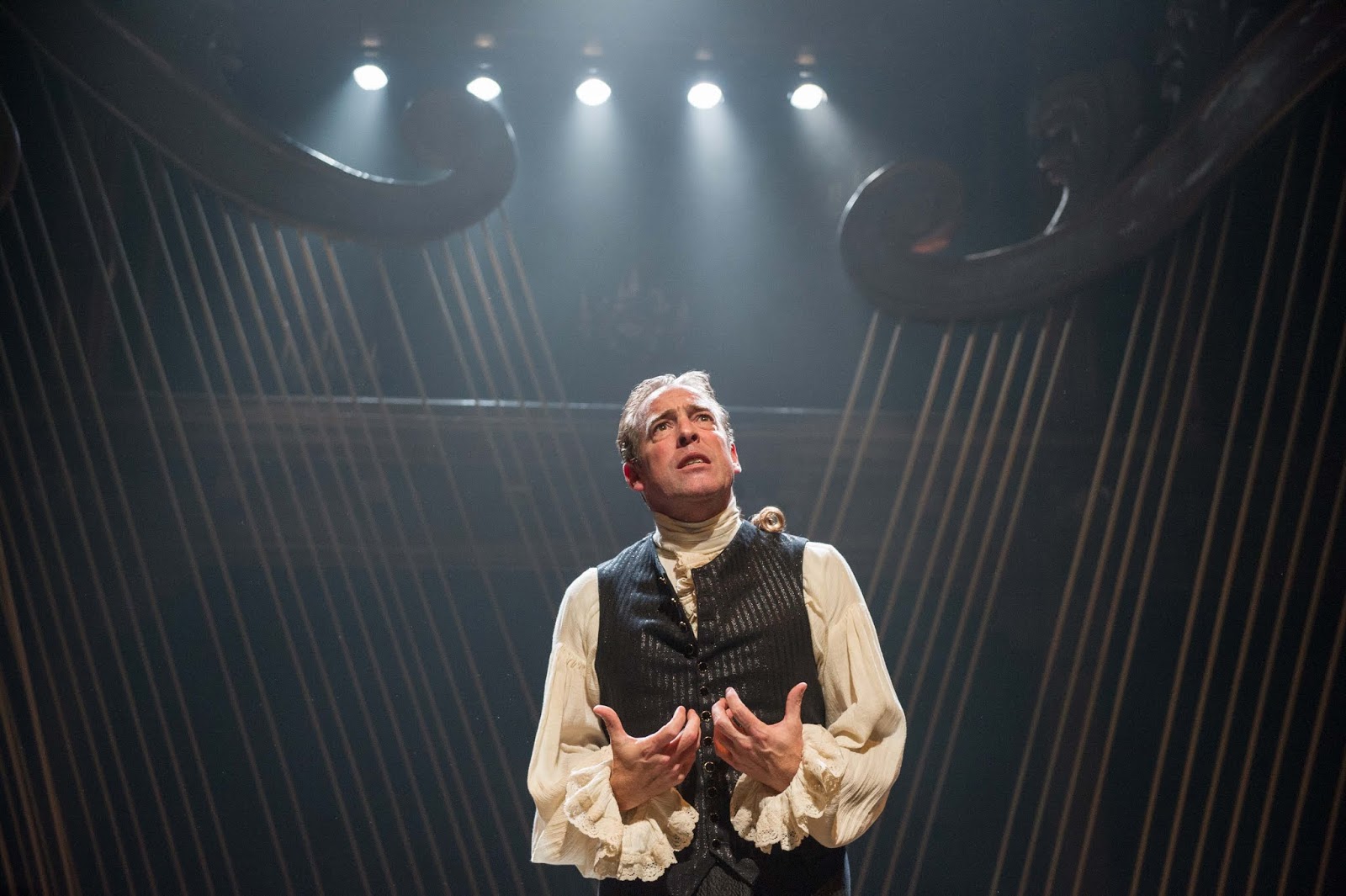

Antonio Salieri (Ian Merrill Peakes) pleads with God in Peter Shaffer’s Amadeus. Photo: Courtesy of Folger Theater

The lead ingredient in Peter Shaffer's Amadeus is vitriol, from the character of Antonio Salieri and directed not at Mozart, his supposed rival, but at the God who created him. In the brilliant film adaptation directed by Milos Forman, a few years after the play was premiered, Shaffer's screenplay version softened this element somewhat. The script's caustic hatred is again in the spotlight in the new production of the play, directed by Richard Clifford at Folger Theater, seen on Monday evening.

Wielding the words in a tour de force performance is Folger regular Ian Merrill Peakes, who commands attention at all times on stage as the obsessed Salieri. Peakes navigated the emotional shifts of the character masterfully, veering among Salieri's worshipful devotion to music (even Mozart's), his courtly polish, his wry humor, and above all his spiteful resentment toward the God who gave him the gift to recognize sublime music but never to compose it.


Other Reviews:

Peter Marks, ‘Amadeus’ at the Folger will be music to your ears (Washington Post, November 12)
It is worth noting that Schaffer drew the lines of his fictional Salieri before the remarkable resuscitation of the real composer's music. In particular, the recordings of the operas made by Christophe Rousset with Les Talens Lyriques reveal a creative force, someone whose musical expertise, especially in vocal writing and counterpoint, made him among the most sought-after teachers in his day.

The remaining performances in the cast do not feel quite in the same class. Samuel Adams grapples with the unpleasant qualities of Schaffer's characterization of Mozart, the outsized ego, the vulgar humor, and the inane laugh all based on the composer's biographical traits. He did not quite manage to find the sympathetic core of the part. Nor did Lilli Hokama's Constanze, Mozart's wife, get far beyond the angry outer shell: her anger at Salieri's sexual harassment when she seeks his help was an emotional high point. The two whispering, gossipy Venticelli are a somewhat irksome plot device, given a biting edge more by Louis Butelli than his partner Amanda Bailey.

Clifford's direction keeps the play moving forward, an asset in a work that covers a lot of terrain, and the lavish costumes designed by Mariah Anzaldo Hale provide most of the show's 18th-century opulence. The single set, designed by Tony Cisek, evokes the strings and scrolled necks of the violin family, a pleasing gesture to the aura of music that fills the play. The crucial musical parts are integrated seamlessly by sound designer Sharath Patel. What remains at the end, though, is the righteous outrage of the Enlightenment mind of Salieri, an accusing finger raised to God.

Amadeus runs through December 22.

On ClassicsToday: Claudio Abbado's Lucerne Bookend-Bruckner

Abbado’s Bruckner A & Z

by Jens F. Laurson
BRUCKNER_Symphony_1_9_Abbado_LUCERNE_ACCENTUS_ClassicalCritic_ClassicsToday
A new recording of Claudio Abbado conducting Bruckner symphonies at the Lucerne Festival? Of Symphonies 1 and 9, no less, bookending Bruckner’s output—a beginning and an end, entry and exit, and wonderfully symbolic? Not so fast. Both performances had their previous outings. The First on... Continue Reading

11.11.19

On ClassicsToday: Moo Is For Mozart / Notes From The Andermatt Music Festival, Part 1


Moo Is For Mozart: Notes From The Andermatt Music Festival, Part 1

Andermatt is not the prettiest Swiss village. Certainly not the most famous or even otherwise particularly notable in a country positively littered with gorgeous little alpine towns straight out of a kitschy re-make of Heidi. It had been an important trade post along the route connecting Milan and Zurich, Italy, and much of north-western Europe It had been a coveted holiday spot, especially for the English; Queen Victoria hung out incognito and Thomas Cook bundled groups of tourists there – the company’s first international destination package. The rail tunnel built in 1882 took care of most of that: trade went below-stairs and tourists all the way to Italy. Andermatt was then saved from obscurity (and poverty) by the Swiss military, which made it one of the centers of its Réduit defensive military concept of retreat to the mountains and denial of the strategic North-South passes and tunnels. The end of the cold war in 1990 took care of most of that. Andermatt was now left without trade, tourism, or the military, by then the largest local employer... [continue reading at ClassicsToday; more pictures below]

Vulkan und Frosch: Latest @ Wiener Zeitung


Wiener Zeitung

Marin Alsop dirigierte das Wien-modern-Eröffnungskonzert

Das Eröffnungskonzert von Wien Modern unter Marin Alsops bot erst die Pflicht, dann die Kür. Zu letzterer gehörte Berio’s Sinfonia (1968). Jón Leifs, Kultkomponist der hyperromantischen Moderne, versucht mit Hekla (1961) den Ausbruch des Isländischen Vulkans nachzustellen. Die Saaldienerinnen verteilten prophylaktisch Ohropax. Ein einziges Acht-Minuten-Crescendo lässt alles an Steigerung bei Bruckner oder Schostakowitsch wie Lausbubenstreiche aussehen. Zum Finale wird mit Revolvern in die Luft geschossen.
Danach Spaßverderber Peter Ablinger mit "4 WEISS" für großes Streichorchester und weißes Rauschen... [weiterlesen]

31.10.19

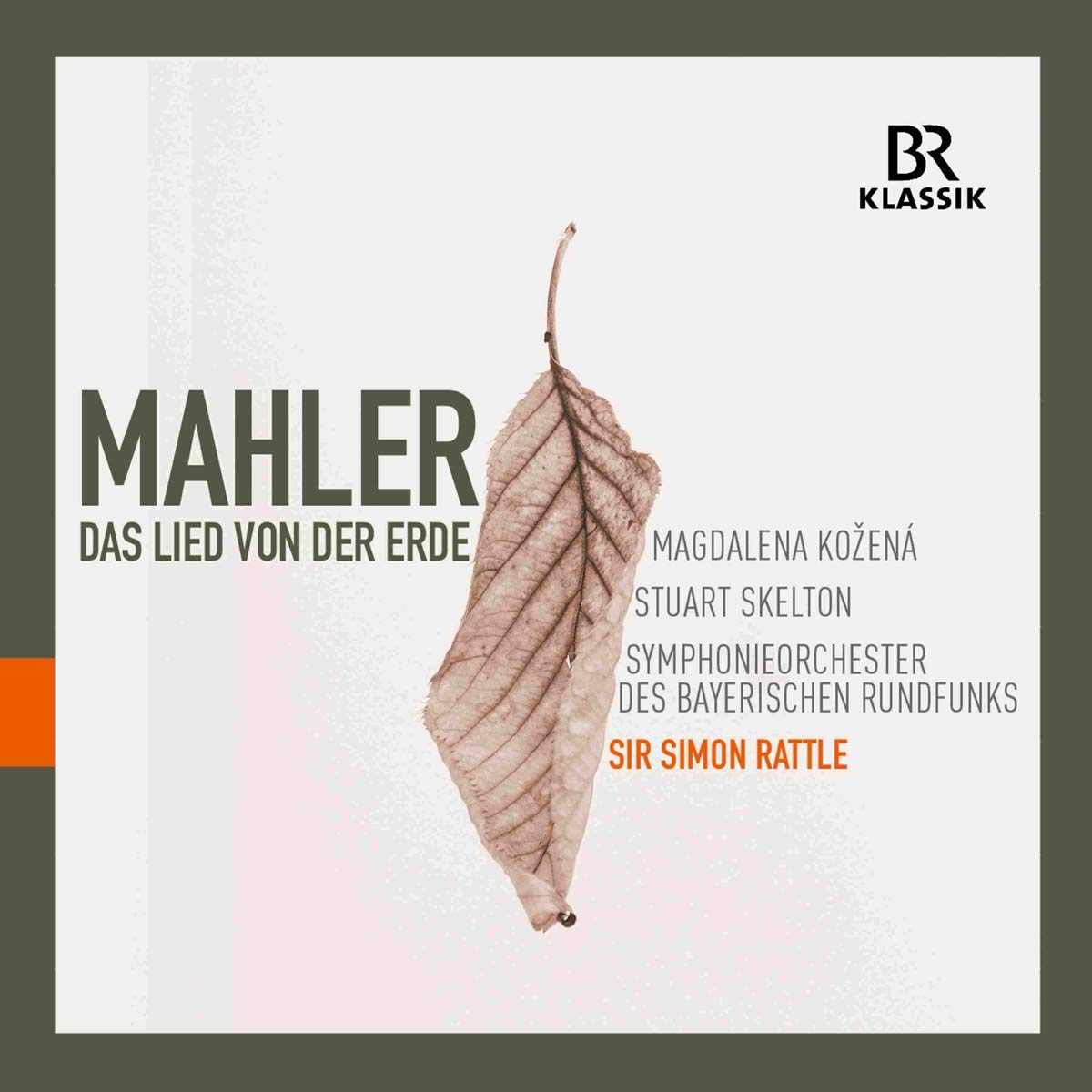
Dip Your Ears, No. 257 (Rattle's Bavarian Lied von der Erde)

available at Amazon
Gustav Mahler, Das Lied von der Erde
Simon Rattle/Bavarian Radio Symphony Orchestra/
Magdalena Kožená (mezzo), Stuart Skelton (tenor)
(BR Klassik)

There’s a reason to eye musical nepotism critically. Mediocrity rears its head when relatives – usually spouses – ride on the coattails of their more talented counterparts. Just think Garanča/Chichon, Netrebko/Eyvazov, or Zukerman/Forsyth. Even at the more exalted and mutual levels of talent, a critical stance is merited: Much is great, but hardly all. Even the best of them – Britten /Pears, Fischer-Dieskau/Varady, Vishnevskaya/Rostropovich – had their off-moments. And with conductors generally aging better than singers, the same caution is warranted when Simon Rattle and Magdalena Kožená are sold to us as a package.

Happily, this BR Klassik release of the couple’s Das Lied von der Erde stands up to scrutiny – and then some! The river-like clarity of the BR Symphony Orchestra is not of a cold, but elegant, perfection. Every instrument can be heard and every one of them is a joy to listen to. Any number of examples might underscore this, but just try the woodwinds in the opening of “Von der Jugend” for size. Rattle leads with zaftig grace and leaves no ostentatious fingerprints on the score. Kožená is not the first mezzo to sing these songs beautifully, but she really throws herself into it, in all her autumnal glory, dramatic, generous and clear, with warmth and intensity, never swooping and with splendid handling of the text. No hints of an aging voice here, as I’ve encountered on some live occasions.

But of course every Lied von der Erde stands or falls with the contribution of the ‘high’ voice’s part, the tenor. It’s the downfall of many otherwise splendid accounts when those admittedly difficult and much less grateful parts are croaked or wailed or underpowered. Meet Australian heldentenor Stuart Skelton, who actually approximates Kožená in the sonorous warmth of his portrayal, even if he does not match her handling of the text. Without following the libretto it’s occasionally a bit of a guessing game what he is singing about, but in fairness, most native speakers aren’t much better. It’s a minor caveat, given the quality of the whole package here, which amounts to nothing less than one of the finest and best-sounding modern recordings of Mahler’s de-fact Ninth Symphony.

Or is it? Over at ClassicsToday, you’ll find a very, very different, almost diametrically opposed #CDFromHell review of this release, which doesn’t agree with any of the above. Obviously, it sent me scurrying back to this recording, wondering if I had been deceived by headphone-listening or drunkenness. Not from what I can tell. The singers are prominently recorded, yes, which was more notable via speakers, but nothing worrisome. That said, we certainly agree on the reference versions… which you can read more about in the Lied-chapter of the ionarts-Mahler Survey.

9/9


21.10.19

On ClassicsToday: Víkingur Ólafsson's Bach With Heart and Panache

Icelandic Bach With Heart and Panache

by Jens F. Laurson
olafssonbach
It has been 13 years since the Alexandre Tharaud Bach recital “concertos italiens” came out. It’s taken that long for any Bach-on-piano recital disc to come even close to that recording-for-the-ages. By way of clever selection of works—staples of transcribed Bach with original Bach and... Continue Reading [Insider content]


P.S. Víkingur Ólafsson on ionarts & Forbes.com:

• Viking(s) and Beethoven (2005)
• Víkingur Ólafsson, Easy Listening (2013)
• Classical CD Of The Week: Víkingur Heiðar Ólafsson; Through The Piano Glass

19.10.19

On ClassicsToday: Jóhann Jóhannsson - 12 Conversations With Thilo Heinzmann

CD From the Elevator to Hell: 12 Conversations With Thilo Heinzmann

by Jens F. Laurson
BACH_12-Conversations_Johannsson_DG_ClassicsToday_jens-f-laurson_classical-critic
12 Conversations with Thilo Heinzmann, a new release from Deutsche Grammophon, is best listened to on vinyl (it’s available in that format!) in a fashionable, faux-derelict loft apartment in Soho, London, or Berlin. Thick beard, suspenders, horn rimmed glasses, woolen west and ironic T-shirt, and pork pie hat optional – but recommended... Continue Reading 


18.10.19

My Uncle, Harpsichordist: Session 006 (Jean Françaix)


I grew up with the records of my uncle’s (him performing, that is)—most memorably Scarlatti sonatas and some baroque sonatas for harpsichord and recorder. A few years ago I stumbled across a stack of copied CDs—taken from those out-of-print LPs and home-recordings—and grabbed them for memory’s sake. To my great intrigue, I found several discs devoted to works from the 20th century… which made me realize what a pity it is that I never talked about music with my uncle.

It might just be of interest to present the tracks of these recordings here, as a little personal musical (living) memorial. He was, after all, a formative person in my life, impressing on a kid of five, six, seven years the joys of collecting and tasting wine, eating and enjoying mushrooms and zucchini (garlic was the key to my palate then and it still is), and… Scarlatti.

Here’s track №.6:


Jean Françaix (1912-1997), L’insectarium pour Cembalo: Les Fourmis | Die Ameisen | Ants (2:20)
Performance by Detlef Goetz-Laurson, 1980


Score: Schott
Commercial Recording: N/A (Apart from an OOP 7-inch single by Marga Scheurich)
Premiered in 1957, by Wanda Landowska.