CD Reviews | CTD (Briefly Noted) | JFL (Dip Your Ears) | DVD Reviews

8.8.16

At Tanglewood: A Young Conductor's Marvelous Mahler


Moritz Gnann debuts with the Boston Symphony Orchestra, August 7, 2016 (photo by Hilary Scott)

One thing is certain when you hear a world-class orchestra in concerts back to back to back with different conductors on the podium: you can hear when the players and the conductor are especially motivated to make music, as opposed to getting through a work. That was the case this weekend at Tanglewood, the Boston Symphony Orchestra’s bucolic summer home. Performances earlier in the weekend were executed with precision, but were not memorable. That changed Sunday afternoon when Moritz Gnann, the orchestra’s assistant conductor, took the podium. Although not unknown to the orchestra, he had never led it in a public performance.

Gnann’s first BSO effort as a collaborator showed promise. An experienced opera conductor, the lanky German followed Nelson Freire nicely in Mozart’s ninth piano concerto number, K. 271. The 71-year-old Brazilian’s playing was stiff at times, although he cemented his reputation for avoiding overt showmanship. Pianist, orchestra, and conductor were at their best in the operatic middle movement. Freire took the role of singer, playing lightly, with the modest orchestra — strings joined by oboes and horns — never overpowering him. The third movement, marked Presto, begins with the solo piano. Freire’s tempo was brisk indeed, maybe a bit too fast as his technique was a touch muddy at times.

The concluding work, Mahler’s youthful first symphony, was where Gnann’s interpretative talents and energy shone. It was also apparent that he has been influenced by one of his mentors, Andris Nelsons, the orchestra’s music director, whom he has assisted since 2010, beginning with Lohengrin at the Bayreuth Festival. From the first bars, where Gnann had urged the orchestra in rehearsal the day before to play the opening dominant A pitch as softly as possible, there was promise that this performance might be special. It was that and more.

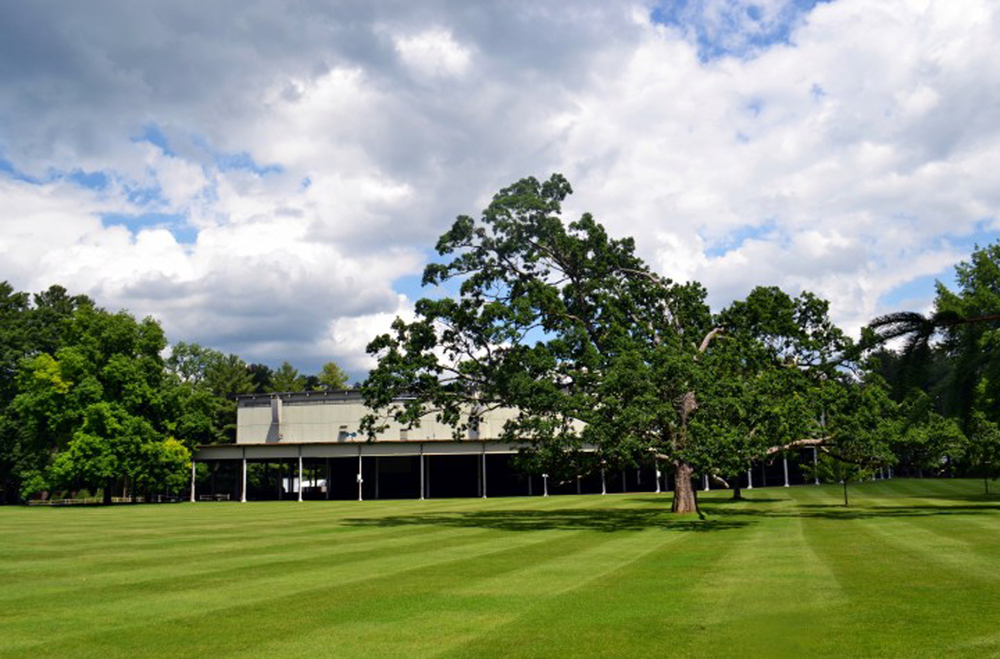
Gnann had complete control over the shape and color of the opening movement, the softness of the A helping to evoke the quiet of the forest, which Mahler augmented with bird calls, offstage trumpet fanfares, and horn melodies. That the concert venue, the Koussevitsky Music Shed, essentially is located in a semi-cleared forest made Mahler’s music seem that much more appropriate. As the work progressed, Gnann’s attention to detail became apparent. He masterfully weaved the threads of Mahler’s music, allowing parts rarely heard clearly, such as those from the harp and bass drum, albeit played softly, to contribute to the sonority.


Other Reviews:

Andrew Pincus, BSO: Into the harmony machine (Berkshire Eagle, August 8)
Gnann’s tempi were on the slow side, reminiscent of, but not quite as slow as those Otto Klemperer used when conducting Mahler. A slightly slower Mahler allowed Gnann to bring out the layered nature of the music. Indeed, Mahler urges the first movement to be “slow” and “dragging” (Langsam. Schleppend) and the second to have “powerful motion, but not too fast.” Movement two begins with a peasant-like Austrian Ländler. A trio in F follows it. In a lifetime of listening to Mahler performances, I’ve never heard it played more beautifully or sound more Austrian.

After the well-controlled third movement, featuring Frère Jacques in a minor key, Gnann led a final movement that was filled with tempestuous passion, and yet individual parts still were audible. The final climax called for the brass players to deplete their reserves, playing as loudly as they could. They did so in tune and, believe or not, with beauty. It was a moment of white heat. That the conductor and players had modulated their sound beautifully throughout the work made the final, boisterous climax much more effective. It was a fantastic ending to a rousing performance and the audience recalled the young conductor to the stage thrice. Gnann is an animated conductor and he was spent by the symphony's end, as were his players. It was a triumphant exhaustion that reminded one of Mahler's assessment that a symphony "must be like the world. It must embrace everything." For nearly one hour at Tanglewood, it did.

Why Do We Love 'La Bohème' So Much?


D'Ana Lombard (Mimi) and Yongzhao Yu (Rodolfo) in La Bohème, Act I, Wolf Trap Opera, August 2016
(photo by Scott Suchman for Wolf Trap Opera)

Henry Mürger was a working-class writer born in Paris, the son of a tailor and a shop-worker. In his youth Mürger was so poor that his group of friends, who included the photographer Nadar, called themselves the Buveurs d'Eau (Water Drinkers) because they could not afford to buy a drink when they went out. Most of us have been there.

Mürger wrote about the desperate poverty he and his friends endured while trying to pursue their artistic interests in a book called Scènes de la vie de bohème. It was first read as a self-published serial, a feuilleton included as a literary supplement in another publication. Mürger eventually gathered the stories into a book published in 1851, when he was not yet 30 years old. For Mürger it was the combination of poverty and artistic drive that made the life of a bohemian, as he defined it, "any man who enters into the arts without any other means of existence except the art itself." The book made Mürger's name, and he went on to have some success as a poet and playwright.

In the 1890s, Giacomo Puccini and his librettists, Giuseppe Giacosa and Luigi Illica, adapted the story into an opera, La Bohème. It premiered in 1896 in Turin, followed just one year later by an alternate version composed by Ruggero Leoncavallo. This opera has become intensely popular with audiences. As proof, we have reviewed a never-ending stream of productions over the years, including from Washington National Opera (in 2007 and 2014), the Castleton Festival in 2011, and Santa Fe Opera (2011 and 2007). Wolf Trap Opera turned to it again this summer, having taken this long to recuperate after Jens vivisected both the work and a performance there in 2004. It returned to the stage of the Filene Center on Friday night in a staging that was not so successful.

La Bohème may not be for everyone, but it was one of the first operas that made a major impression on me as a teenager, so I have a weak spot for it to this day. The opera keeps to a few scenes from the book, focusing on the characters of Rodolfo (who represents Mürger himself, the struggling poet), Schaunard (the musician Alexandre Schanne), Marcello (the painter François Tabar), and Colline (the philosopher Jean Wallon), whose coat of many pockets is always heavy with books. The Café Momus, where the second act is set, was a favorite haunt for writers on the Rue des Prêtres-Saint-Germain-l'Auxerrois, near the Louvre. Rodolfo's garret is on the Rue de la Tour-d'Auvergne, near Montmartre, the same street where Mürger lived. It is an intensely nostalgic work, and it makes just about everyone who hears it think fondly of their student days when they did not have two dimes to rub together after the rent was paid.


Other Reviews:

Grace Jean, Strong ‘La Bohème’ at Wolf Trap makes a good case for more opera there (Washington Post, August 8)
The awkward body-mike amplification at the outdoor Filene Center made it difficult to judge the quality of the voices in this production. Soprano D’Ana Lombard, who was Rosina in Ghosts of Versailles last summer, had the range for Mimi, if not the floating vocal quality that makes her seem most innocent. Reginald Smith, Jr., who was an exceptionally strong Count in last summer's Le Nozze di Figaro, was equally powerful here as Marcello, with the same kinds of comic gifts that lightened his presence on stage. The Rodolfo of tenor Yongzhao Yu, new to my ears, seemed strong, but it is impossible to know how the voice would fill a hall when not amplified. Summer Hassan had the sass for Musetta, if not necessarily the laser-focused vocal goods. Shea Owens, who stepped into the role of Junius in The Rape of Lucretia in June at only a week's notice, and Timothy Bruno had capable turns as Schaunard and Colline, respectively.

Paul Curran updated the setting to the end of World War I. This made one question why Mimi was bothering with lighting her candle in the hallway, as well as why young men were still in Paris writing plays and painting canvases. (Even worse, it's been done before.) Erhard Rom designed one large set piece, Rodolfo's garret, that was somewhat cumbersome to roll on and off. A few small backdrop objects suggested the other scenes, as well as several large video screens (designed by S. Katy Tucker) that set the tone of Paris in the winter. The National Symphony Orchestra was again placed at the rear of the stage, with the same problems in amplification noticed last month. In particular, Grant Gershon had almost no way to control the rushing of the singers from behind the set, judging by the number of bad misalignments between the cast and the orchestra, not to mention the balance problems. A truly great production of this opera has eluded Ionarts up to this point, but the best one so far indicates that you need a straightforward production, not too heavy on the sentimentality, and a first-rate conductor who can actually conduct the singers.

Ionarts in Santa Fe: Further Thoughts on 'La Fanciulla del West'

Ensemble in The Girl of the Golden West (Photo © Ken Howard for Santa Fe Opera, 2016)

Charles T. Downey, Santa Fe Opera, part 2: the 60th anniversary’s big-ticket items
Washington Post, August 4

available at Amazon
Puccini, La Fanciulla del West, R. Tebaldi, M. del Monaco, C. MacNeil, Orchestra of Accademia di Santa Cecilia, F. Capuana
(Decca)
FURTHER THOUGHTS:
Puccini's La Fanciulla del West may not be a rarity in some parts of the world, but Santa Fe Opera had not produced this work since 1995 when it revived it for this year's 60th anniversary season. The company bet on the draw of Puccini's name, even though this opera is perhaps the composer's most unwieldy, and its regular Mozart to fill the house for ten performances each. By comparison Roméo et Juliette was given seven performances, and Capriccio and Vanessa, the latter arguably the best production of the season, just five each.


Other Reviews:

John Stege, Pistol-Packin’ Minnie (Santa Fe Reporter, July 6)

Scott Cantrell, Santa Fe scene: A British stage director and a French conductor take on Puccini's Western opera (Dallas Morning News, August 3)

Heidi Waleson, The 2016 Festival Season at the Santa Fe Opera (Wall Street Journal, August 9)
Emmanuel Villaume and the Santa Fe Opera orchestra turned in a compelling reading of this most accomplished score. It was not in the same class as Lorin Maazel's poised conducting of the work, the only other time it has come under review on this side of the Atlantic, at the Castleton Festival in 2013. Still, Villaume and especially the male chorus gave the work the nostalgic warmth needed to soften some of the less believable twists of the story.

If we do not find credible the homesickness of the miners in the first act, in their need to believe, as in the psalm taught to them by Minnie, in the possibility that every one of them can be saved by God, then their decision not to hang Dick Johnson at the end of the third act will seem doubly ridiculous. Probably, the opera likely would work better, would seem less silly, if it ended tragically. If Johnson got hanged and the boys shot their beloved Minnie as she tried to save him, the dying heroine would have found, as suffering women always do, her perfect complement in the music of Puccini.

7.8.16

Ionarts at Large: BSO Tackles Difficult Work at Tanglewood


Conductor Giancarlo Guerrero leads the BSO and pianist Ingrid Fliter (photo by Hilary Scott)

It was reasonable to leave the Friday evening concert of the Boston Symphony Orchestra at Tanglewood in a relaxed mood. A cool breeze blanketed the Koussevitzky Music Shed as the orchestra finished a symphony-free program with soft, melodic works: Benjamin Britten’s arrangement of the Blumine movement from Mahler's third first symphony, and Brahms’ Second Serenade in A. Nashville Symphony Orchestra Music Director Giancarlo Guerrero led both works ably, with strong control over sound and phrasing. Skip ahead 24 hours to Saturday night and anyone still feeling the calming effects of those works was shaken out of their relaxed state by the pounding E minor chords for percussion and brass of John Adams’s massive Harmonielehre.

Guerrero again was leading the Boston players, providing relative consistency after five weekends of guest conductors as well as one weekend where Music Director Andris Nelsons was on the podium. With a schedule at Tanglewood that asks the orchestra to mount three different programs each weekend with minimal rehearsal, programming Harmonielehre was somewhat risky. Mixing elements of minimalism — pulsating rhythms, repetition and quicksilver ornamentation — with more traditional harmonies, the dense, three-part work is loaded with constant movement and is a heavy lift on few rehearsals. Perhaps this explains why it was the orchestra’s first performance of what has become one of the most successful post-WWII compositions.


Fortunately the BSO had several factors in its favor. A technically sound conductor with a clear beat, Guerrero is very comfortable with contemporary music. Second was the orchestra’s world-class skill and musicianship. The combination yielded an accurate first performance, although one that seemed to sacrifice speed and interpretation for safety, particularly in the first movement, whose lack of energy negated many of Adams’s musical effects.

The slower Part II, “The Anfortas Wound,” named for the legendary Fisher King, yielded a far better result. The somber movement’s second climax, quoting the screaming chords of the Adagio of Mahler’s tenth symphony, was appropriately vexing. Ditto an extended piccolo trumpet solo, performed with a gorgeous, otherworldly sound by Thomas Rolfs. The contrasting third part, “Meister Eckhardt and Quackie,” emanates from a dream Adams had of the German theologian (1260-1328) flying with Adams’ daughter, Emily, on his shoulders. Accordingly it’s a swirling, uplifting movement. Toward the end of it, Guerrero increased the tempo and energy level, leading to a triumphant conclusion on an E-flat major chord.


Other Reviews:

Ken Ross, Soloist-turned-conductor impresses with NSO’s Mahler (Mass Live, August 7)
The Argentine pianist Ingrid Fliter had the unenviable task of being a late replacement for Daniil Trifonov, one of classical music’s current “It” pianists, whose ear malady prevented him from traveling. A Chopin specialist, Fliter was more than up to the task of dispatching Chopin’s second piano concerto. Her light touch and fine technique were well suited to this composition, completed when Chopin was just 20. It made one wonder how a more demonstrative player, like Trifonov, would have handled the concerto. Again for Guerrero and the BSO, though, it was more a matter of keeping soloist and orchestra together throughout the piece than making bold interpretive statements. Fliter cooperated, keeping tempi steady and eschewing rubato, allowing the music, rather than her technical prowess, to take the lead. To his credit, Guerrero proved a sensitive collaborator, following Fliter expertly. As was the case in the Adams, Guerrero was most effective in the middle slow movement, said to be a paean to Chopin’s boyhood amours, as he correctly highlighted the interplay between Fliter and bassoonist Richard Svoboda.

Guerrero’s comfort with slow movements gave your reviewer concern about the final work, Till Eulenspiegel’s Merry Pranks of Richard Strauss. There was little need to worry. The orchestra bounded through the Strauss, a Boston Symphony staple, alternating between loud and soft passages, climaxing with a raucous gallows scene. Hornist James Sommerville handled the solo horn parts with style and William R. Hudgins was appropriately irreverent on clarinet. Indeed Guerrero proved adept in both quiet moments and boisterous ones.

Perchance to Stream: Dog Days Edition

Here is your regular Sunday selection of links to online audio and online video from the week gone by. After clicking to an audio or video stream, you may need to press the "Play" button to start the broadcast. Some of these streams become unavailable after a few days.

  • Finnish composer Einojuhani Rautavaara died last week. Watch a 2013 performance of his Vigilia, in the Ouspenski Orthodox Cathedral in Helsinki. [ARTE | Part 2]

  • From last year's Rossini Festival in Pesaro, listen to a performance of Rossini's La gazza ladra starring Simone Alberghini, Nino Machaidze, René Barbera and others. [Radio Clásica]

  • Have another listen to the July 25 performance of Wagner's Parsifal, from the Bayreuth Festival. [France Musique]

  • From the Chorégies d'Orange, Louis Désiré's staging of Verdi's La Traviata, starring Ermonela Jaho, Francesco Meli, and Plácido Domingo, under conductor Daniele Rustioni. [Medici.tv]

  • Watch more concerts (and rehearsals) from the Verbier Festival. [Medici.tv]

  • From earlier this year, Esa-Pekka Salonen conducts the Chicago Symphony Orchestra in his own composition Foreign Bodies and Lutosławski's third symphony. Also Yo-Yo Ma plays the first Shostakovich cello concerto. [CSO]

  • Manfred Honeck conducts the New York Philharmonic in music of Beethoven and Strauss. [NY Phil]

  • Conductor Lorenzo Viotti and pianist Khatia Buniatishvili join the ORF Radio-Symphonieorchester Wien at the Salzburg Festival, with music by Kabalevsky, Rachmaninoff, and Scriabin. [Ö1 | Part 2]

  • The Vienna Philharmonic and Hungarian Radio Chorus, under Daniel Harding, perform Peter Eötvös's oratorio Hallelujah at the Salzburg Festival with mezzo-soprano Iris Vermilion and tenor Topi Lehtipuu. [Ö1]

  • Have a listen to some of the concerts at this year's Proms in London. [BBC Proms]

  • A concert of chamber music by Beethoven and Zemlinsky, performed by Eric Le Sage, Emmanuel Pahud, and others at the Festival International de Musique de Chambre de Provence. [France Musique]

6.8.16

CD Reviews: Goerne and Eschenbach's Brahms / 'Dinorah'


Charles T. Downey, CD reviews: Eschenbach and Goerne take on somber Brahms
Washington Post, August 6

available at Amazon
Brahms, Lieder und Gesänge, M. Goerne, C. Eschenbach

(released on May 27, 2016)
HMC 902174 | 55'49"
When the baritone Matthias Goerne has been a guest with the National Symphony Orchestra in recent years, he has performed fine lieder recitals with Christoph Eschenbach at the piano, a collaboration preserved on a series of recordings for Harmonia Mundi. The latest release is devoted to Johannes Brahms, and Goerne’s intense, almost overbearing approach works beautifully in these often gloomy songs.

Goerne’s voice, growling and dark-hued, fits aptly with the depressing and bitter “Lieder und Gesänge,” Op. 32, nine songs with poetry alternately by August von Platen and Georg Friedrich Daumer. Eschenbach doesn’t stint on the equally somber accompaniments, in which Brahms lingers often in the bass territory of the keyboard, as in the first track, “Wie rafft’ich mich auf,” and the poem’s repeated statements of “in der Nacht.” In the third song, von Platen’s narrator asks, “Und könnt’ich je / Zu düster sein?” (“And could I ever be too gloomy?”); one can imagine Brahms posing the same question, with a wry smile.

Five of Brahms’s Heinrich Heine songs, selected from the Op. 85 and Op. 96 sets, are something of a breath of fresh air, which is surprising given the ironic bitterness of much of Heine’s poetry. Goerne unfurls with unaffected tenderness the undulating phrases of “Sommerabend” and “Mondenschein,” songs Brahms paired through key choice and harmonic pattern. Eschenbach keeps pace with him at the keyboard, willing to stretch and pull the music wherever Goerne wants to go.

With the “Serious Songs” of Op. 121, composed the year before Brahms died, this disc becomes somber again. Brahms composed these songs on Bible texts with the approaching death of Clara Schumann, whom he had long secretly loved, weighing on his mind. In an informative booklet essay, Roman Hinke quotes a letter written by Brahms around this time: “The thought of losing her can terrify us no longer, not even me, the lonely man for whom there is all too little alive in the world.” The ineffable sweetness of the harmonies in the second stanza of “O Tod, wie bitter bist du” (“O death, how bitter you are”) and the tender sound Goerne coaxes from his top range in these phrases are a glorious, longing embrace of death. Brahms must have thought his own end could not be far off.

*****

available at Amazon
Meyerbeer, Dinorah, ou le pardon de Ploërmel, P. Ciofi, E. Dupuis, P. Talbot, Deutsche Oper Berlin, E. Mazzola

(released on May 13, 2016)
cpo 555014-2 | 133'47"
If Giacomo Meyerbeer is remembered at all these days, it is for his grand operas, larger-than-life tragic works that profoundly influenced Richard Wagner. With this recent release on the CPO label, the orchestra of the Deutsche Oper Berlin has revived the most successful of Meyerbeer’s comic operas, “Dinorah, ou le pardon de Ploërmel,” premiered at the Opéra Comique in Paris in 1859.

The work’s three main roles are all cast well in this concert performance, recorded live at the Berlin Philharmonie in 2014. Italian soprano Patrizia Ciofi sounds a little faded and not exactly effortless on the many vocal acrobatics, but she brings a dramatic differentiation of vocal colors to the innocent girl Dinorah. When disaster strikes her father’s farm in the Breton village of Ploërmel, Dinorah goes mad, dancing with her own shadow in a famous scene in Act II. When she makes her entrance in the first act, it is to sing a lullaby to her goat, Bellah, whose appearances are heralded by the ringing of a small bell, always on F sharp.

Baritone Etienne Dupuis has a broad, refined tone as Hoël, the goatherd who was supposed to marry Dinorah but, worried that her father’s loss will leave her destitute, follows a magician who has promised to teach him the secret of obtaining a hidden treasure from the fairies that haunt the local gorge. The best of the trio is tenor Philippe Talbot, who brings a light, airy sound to the comic role of Corentin, a superstitious and cowardly bagpiper. The three are combined beautifully at the end of the first act in the delightful “Terzettino of the Bell,” which also features the goat’s bell and a wind machine.

Enrique Mazzola leads a compact, sharply drawn performance that, with about 20 minutes cut from spoken dialogue and faster tempos, fits on two discs instead of the three in the version recorded by James Judd and the Philharmonia Orchestra two decades ago. Particularly fine playing comes from the horns in the hunting music that introduces Act III, where there is a charming pastoral interlude, mostly unaccompanied and featuring a strong supporting cast. Ciofi, having guarded her vocal resources up to this point, cashes in on the pianissimo high-flying writing in the final scene, when Dinorah’s memory is restored and she joins the prayer of the villagers.
PREVIOUSLY:
Goerne's Die schöne Müllerin
Goerne's Winterreise

5.8.16

Forbes Classical CD of the Week


…These recordings from the 70s and 80s, released on Warner’s budget label Apex in 2002, are an excellent way to ready the appreciation for the wonderful music of Leevi Madetoja (1887-1947). He isn’t among the 66 composers included in Robert Reilly’s “Surprised by Beauty – A Listener’s Guide to the Rediscovery of Modern Music”*, but if there ever will be an all-new third edition, he’s bound to be among the first to be included!…

-> Classical CD of the Week: Madetoja -- Kullervo Without Sibelius

Ionarts in Santa Fe: Further Thoughts on 'Don Giovanni'


Leah Crocetto (Donna Anna) in Don Giovanni (Photo © Ken Howard for Santa Fe Opera, 2016)

Charles T. Downey, Santa Fe Opera, part 2: the 60th anniversary’s big-ticket items
Washington Post, August 4

available at Amazon
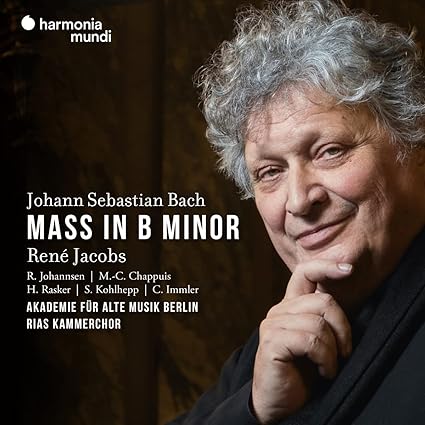
Mozart, Don Giovanni, J. Weisser, L. Regazzo, A. Pendatchanska, Freiburger Barockorchester, R. Jacobs
(Harmonia Mundi, 2007)
FURTHER THOUGHTS:
In Strauss's "Capriccio," heard last week at Santa Fe Opera, the Countess settles on Gluck as setting the highest standard for opera. If only Santa Fe Opera had heeded her advice and replaced its annual Mozart opera with one by Gluck, as I suggested to Charles MacKay a few years ago. Mozart may be a staple at Santa Fe Opera, but Mozart is rarely the highlight of any season here. For the last truly extraordinary Mozart production at Santa Fe Opera, you would have to go back to "Lucio Silla" in 2005. This year's "Don Giovanni," last heard here in 2009, had that same feeling of routine Santa Fe Opera Mozart, mostly pleasant but with some inevitable disappointment. A nice staging of Gluck's "Iphigénie en Aulide" would have been just the thing to lift the season into something extraordinary.

The piece came to life a bit more in the recitatives, when Glenn Lewis took over on the fortepiano, seated at the left corner of the pit so he could see and interact with the singers. The superlative recording led by René Jacobs showed how the fortepiano, played with improvisational fancy, can enliven the recitatives in this opera. Lewis was not quite on the level of that recording, but he worked in witty allusions to other arias, for example, when some characters were mentioned.