CD Reviews | CTD (Briefly Noted) | JFL (Dip Your Ears) | DVD Reviews

5.7.08

Ionarts-at-Large: Kreizberg & Julia Fischer

Julia Fischer, one of the great violinists of her generation, has long reached the level of fame and attraction where it doesn’t matter in the least what she plays, so long as she does play. And she will fill halls, even with a work that has neither a lobby nor a strong reputation. Like the Dvořák Violin Concerto which she performed with the Munich Philharmonic on June 22nd and 23rd.

available at AmazonDvořák, Violin Concerto, "Dumky" Trio, Isabelle Faust (Queyras, Melnikov) / Prague Philharmonic / Belohlavek
It is only right that a violinist like Julia Fischer play this work, a conductor like Yakov Kreizberg conduct it, and an orchestra like the Munich Philharmonic play it – because in these hands the work has every opportunity to shine. In lesser hands it would merely reinforce the modest opinions many listeners have of it.

That was, incidentally, exactly what happened. Explosive, with plenty enthusiasm and undeterred by individual mistakes, the orchestra followed Kreizberg (whose brother had been much in Munich, recently) into the score while Mlle. Fischer executed her part with the expected skill and grace. With subtle tension – especially in the lyrical parts of the Adagio – with elegance and filigree playing she turned the concerto, Cinderella-like, from musical pumpkin into vehicle worthy of a princess. At least for 35 minutes. The Finale especially, Brahmsian in its bohemian folkish rhythm and melody, is a firework of color and exuberance. Who could care about accusations of the work lacking depth when faced with something quite so enjoyable? Julia Fischer’s Paganini encores – Caprices no.10 and 2 – were not much more than glorified finger exercises, the latter, in b-minor, at least with musical merit.

available at AmazonTchaikovsky, Manfred Symphony, Symphonic Poems, Russian National Orchestra / Michail Pletnev

Bass clarinets and bassoons get their 15 minutes of fame in Tchaikovsky’s Manfred Symphony – Tchaikovsky’s fifth, had he included it in his canon of symphonies. While the Dvořák concerto may be well served by a good interpretation alone, the Manfred Symphony, though easy enough on the ears, is a more demanding work. It can baffle even as it delights – incomprehension does not bar enjoyment. It is good to know Byron’s dramatic poem that Tchaikovsky puts into music – and how. But the Manfred Symphony could also be taken as absolute music – a four movement symphonic work, strange and phantastical.

If so, the third movement Pastorale would surely raise the fewest question marks: It’s a beautiful and dainty affair, undermined only (and not much) by the Manfred theme that rears its head and the bells that till as if to remind that the carefree episode will come to a grim end, soon. The fourth movement was perfectly musical mayhem and positive chaos under Kreizberg. How better to depict a civilized hell than Tchaikovsky does here? And yet the question comes up: ‘Wouldn’t it be hell, indeed, if music could only sound like this?’

Winds and horns contributed faultlessly to an concentrated but not very aromatic performance that had greater individual moments than it offered a great whole.

4.7.08

Ionarts-at-Large: Ariadne in London

Our thanks to guest critic Robert R. Reilly for contributing another review from London.


The July 1st closing performance of the Royal Opera House’s Ariadne auf Naxos, by Richard Strauss, was completely full. Word must have spread. The singing was uniformly fine – no, better than fine, in fact, superb – as was most of the acting.

This opera thrives on the juxtaposition of the sublime and the ridiculous, the sacred and the profane, the high and the low, self-sacrificing Eros and banal erotica. The humor comes from the forced contrasts, as a group of vulgar entertainers are inflicted on the performance of an opera seria depicting the subject of Strauss’ title. It is a classic play within a play.

I will not recount the plot here, but simply say that the Prologue, depicting the set up of the opera seria and the conflict between the serious Composer and the entertainers was well-produced even in its time transposition to an art deco era. Everyone was good, especially mezzo Kristine Jepson as the Composer, Major Domo Christoph Quest and Music Master Thomas Allen.

The second part, the actual Ariadne opera, was a triumph for Gillian Keith as Zerbinetta, whose foxy acting was every bit as good as her spectacular coloratura singing. She was humorous and fun to hear and watch. The excellence of Naiad, Dryad, and Echo (respectively, Anita Watson, Sarah Castle, and Anna Leese), who accompany Ariadne throughout, was a measure of the high vocal standards of this production. Their “Schläft sie?” trio was sublime. Echo was particularly impressive, as was young Miss Watson, who obviously has a big future ahead of her.

available at AmazonR.Strauss, Ariadne auf Naxos, Voigt, von Otter, Dessay, Heppner / Staatskapelle Dresden / Sinopoli
Strauss ends up apotheosizing what he mocks in the transcendent love scene of self-surrender at the end. The sublime wins. Robert Dean Smith as Bacchus was extremely impressive, and Deborah Voigt as Ariadne soared. (One only wished that she had not been directed to keep a uniformly expressionless smile on her face no matter what the text was saying.) This Ariadne, of course, coming full circle for Voigt: It was this very production that she was famously sacked from, for not fitting into that now infamous little black dress. One gastric bypass surgery and four years later, the role suites her just as well, and the dress fits. [A short promotional film with Voigt makes light of the entire incident.] Conductor Mark Elder (correction: Sir Mark!) and the Orchestra ably supported the proceedings and conveyed the sense of transformation.

My only complaint involves the incoherence of some of the production values in the second part. What happened to the art deco time-setting that was so carefully put forth the Prologue? I am not sure what possessed director Christoph Loy to caparison Zerbinetta’s fellow actors in a kilt, military fatigues, and a black leather motorcycle outfit. The visual humor from this was confusing and cheapening. What was it supposed to call attention to? Itself? On the other hand, Loy created a special moment when Ariadne lowers the mirror at her dressing table to see Bacchus where once she looked only at herself. Thankfully he also removed all the visual rubbish from the closing scene and let the glorious music speak for itself.

The booklet for Ariadne was beautifully produced and substantively informative, meeting the Royal Opera’s usual high standards in this regard.

-
Update: I have added production photos on Flickr which you can view here.

In Congress, July 4, 1776


Read the full text here

Happy Independence Day to our American readers!

3.7.08

Ionarts-at-Large: Minkowski & Pernoo With an Offenbach Surprise


Marc Minkowski is not a conductor known for conventionalism, whether it be his interpretations or the repertoire itself. Guest-conducting the Bavarian State Orchestra (the opera’s orchestra) in its Fifth Akademiekonzert of the 2007/2008 season, he underlined that perception by opening with Stanislaw Moniuszko’s Halka Overture, a lovely little, bubbly curtain raiser that whets the appetite for more music of Poland’s largely forgotten ‘national composer’. Then followed the whacky, oversized cello concerto of Jacques Offenbach.

Yes – Jacques Offenbach wrote a cello concerto, and it’s not just the one-movement Concerto Militaire, seldom enough played in its own right and actually the first movement of the Grand Concerto. The concerto has been reconstructed from fragments that have floated about since the 1940s, but the completion could not take place until 2006 when Jean-Christophe Keck, the publisher of the critical, complete Offenbach edition found Offenbach’s handwritten score in the Library of Congress and an archive in Cologne. Now we know that the Concerto rondo is the finale of this Grand Concerto, and its nickname “militaire” makes more sense as it did when it was applied to the rather un-martial stand-alone first movement.

That first movement opens gently, softly with timpani touches. It quickly swells, hitting a sporting and gay stride until the cello enters – solo – with a double-stop studded opening statement and then giving away to something altogether more hysterical.


The sounds convey one thing before all: Someone who knew the cello, its abilities and possible abuses intimately wrote this to have all the fun imaginable with the instrument. Jérôme Pernoo, the young French cellist that Minkowski brought with him, succeeded in conveying this impression not only about the composer (said to have been the Franz Liszt of the cello), but also about himself.

Given the sometimes ridiculous challenges that this work presents – high register double stop-sequences especially – it wasn’t by means of technical perfection that Pernoo achieved this, but through buoyant joy, verve, and plenty spunk. Listening to him play this concerto, one could not help but expect it to take cellists’ repertoires and concert halls by storm… despite its considerable length (~45 minutes) and the downright silly technical demands it places on the soloist.

Generous and decidedly knowing applause after the first movement was the just reward and about as high a praise a soloist can get nowadays, when applauding between movements is usually scoffed upon as boorish and ignorant. Indeed, my seat neighbors glared into the program notes where three movements were indicated and muttered that this errant applause was “not at all in accord with concert etiquette”. Indeed it was not (nor was the concerto itself) – and thanks be to that.

Very little military attitude in the highly lyrical, flute-twittering and cheery second movement Andante – the only entirely new music in this work. The duo between cello and first violin (Markus Wolf) must surely be among the most immediately and widely pleasing moments in cello concerto history.


available at Amazon
J.Offenbach, Grand Concerto for Cello et al.,
M. Minkowski / Le Musiciens du Louvre / J.Pernoo
Archiv

Between the artillery and infantry shots from the third movement’s percussion ranks, the cello and the strings put down such an infectious romp that a sort of Beer-hall joviality threatened to erupt in the dignified surroundings of the Munich opera house. Admittedly that might be over-interpreting the smiles and rhythmic twitching of the audience – young and old in equal measure – but not overstate the character of the music. The back and forth between those percussion batteries and the soloist had – in the good sense – moments of absolute hilarity, concluding with a particularly harsh that leaves the cello – metaphorically – limping off stage. Chock full of lust for composing and playing the cello, unbridled fantasy, like an excited puppy blissfully running about the orchestral stage: this concerto cares not about convention, only entertainment. Had a composer of lesser stature than Offenbach attempted this, the result might have been an embarrassing disaster. As it is, there are more moments in this work that made me smile broadly than I can count. A feat not possible had it not been for the willing and sympathetic support from the Staatsorchester.

Pernoo clearly found his vehicle here – a thankful one for everyone, though I suspect that for all its entertainment value also one vulnerable to overexposure. Until then, though, there was and is no reason not to join in the trampling, hollering, and incessant applause the was the response at this performance. The Barcarolle was promptly encored, with Pernoo as soloist extraordinaire.

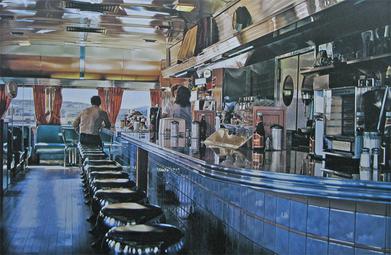
The second half was given to César Franck’s Symphony in d-minor, which made for interesting comparison with the performance of Riccardo Muti. Now conducting with a regular baton, not the thick, piano-lacquered black wand from his collection of historical ‘instruments’, Minkowski got a much more French sound than Muti from this utterly un-French symphony that is organ-like as Bruckner’s symphonies are, chromatically akin to Wagner-Liszt-Reger, and structurally more like Brahms than anything else. Minkowski – throughout the evening – also elicited an excellent, unusually deep and sonorous sound from the orchestra which played with musicality and humanity that it never reaches under Kent Nagano, whose cold musical photorealism is more akin to a Ron Kleeman or Ralph Goings painting rather than organically unfolding, musical joy.


Istrice Takes the July Palio


Palio di Luglio (July 2, 2008)

Yesterday being the feast day of La Madonna di Provenzano, it was time for the entire town of Siena to go absolutely crazy for three minutes of a singular horserace known as Il Palio. After considerable jockeying for position at the start, the powerful horse drawn by Istrice took the lead and held it for the three laps of the Piazza del Campo. At one point the announcer on this clip says of this beautiful horse, "Ma corre, corre come un fulmine!" (he is running, running like a lightning bolt!) Both the rider (Luigi Bruschelli, known as Trecciolino -- known as "King of the Campo" because he has won the race an incredible 11 times) and the horse (Già del Menhir, in his first Palio) were favorites to win. In the last lap the Torre jockey, Alberto Ricceri (known as Salasso), tried to jump onto the Istrice horse, misjudged the timing, and smashed badly into the fence pole at one of the turns.


Hystrix cristata, sculptural depiction

2.7.08

Ionarts-at-Large: London - Colin Davis & Znaider in Sibelius

Our thanks again to guest critic Robert R. Reilly for contributing this review from London. You can read his latest column on Classical Music at CRISIS / Inside Catholic.com


Has Colin Davis ever given a less than good performance of Sibelius? In fact, his recorded legacy has amply proven that he is a great Sibelian -- going back to his first and perhaps still best traversal of the 7 symphonies with Boston Symphony Orchestra on Philips.

Davis is every bit as good with his home-town London Symphony Orchestra – as was demonstrated the evening of Sunday, June 29th at the Barbican (where the cement underground parking lot ambiance of the lobby was relieved by the warmer wood-paneled interior of the concert hall) in an all-Sibelius program.

The LSO began with a crystalline if somewhat cool Oceanides that might have benefited from a greater sense of mystery. However, every strand of this impressionistic music stood out clearly in the bright acoustic of the hall.

The sensation of the evening was the Violin Concerto, played by Nikolaj Znaider, who opened with great delicacy and refinement. It was the red breast pocket handkerchief which signaled his passionate approach to the work. He showed himself flexible within the phrase, occasionally bordering on lingering, but never breaking the line. Znaider was fully in command without a single tentative moment.

He is a very expressive player -- perhaps too expressive, depending on one's interpretive take on this concerto. Znaider played it in the tradition of the great Romantic violin concertos, and the overall impression was of Italian fire on Nordic ice. Regardless, his interpretation was consistent and his bravura playing was gorgeous, with a breathtakingly delicate diminuendo at the close. Davis and the LSO gave stirring support.

The anti-Romantic antidote was administered in the second half of the program with the 4th Symphony, a deeply ruminative, mysterious lament. With superb string playing (and an excellent first-chair cellist), Davis and the LSO caught the melancholic heart of this brooding work. Each of the four movements -- even the at times rousing Finale;allegro -- ends enigmatically, softly -- indecision hanging in the air.

It was a magnificent Sibelian evening, encompassing the great composer's range from the climatic to the anti-climactic.


available at AmazonSibelius, Symphonies 3 & 7, LSO / Colin Davisavailable at AmazonSibelius, Symphonies 5 & 6, LSO / Colin Davisavailable at AmazonSibelius, Symphony 2 & Pohjola's Daughter, LSO / Colin Davis


available at AmazonSibelius, Violin Concerto, Haendel / Bournemouth S. / Berglundavailable at AmazonSibelius, Symphonies v.1, BSO / Colin Davisavailable at AmazonSibelius, Symphonies v.2, BSO / Colin Davis

1.7.08

Ionarts-at-Large: Thielemann & Kavakos in (More) Brahms

More Brahms from the Munich Philharmonic – after an atrocious Double Concerto (review here) – they returned with Brahms’ Second Symphony and his Violin Concerto just a week later, again under Christian Thielemann.

Thielemann's Brahms First on Deutsche Grammophon is bold, bordering bulky – but it has its undeniable moments. In concert, the Second Symphony didn’t sound as though Thielemann has yet found his way with the work. Duly observing the exposition repeat in the first movement, he gave the horn section two chances at excelling and the used neither. Entries were insecure, wobbles common, and diminuendos abrupt. The second movement (Adagio non troppo), another one of those gentlest of slow movements that make Brahms Symphonies so wonderful, was better, if not yet entirely satisfactory - dolce markings in the score didn’t always translate into particularly sweetness, for example.

As in the Violin Concerto, there are chamber music like sections for winds that can be – and were – delightful: A veritable wind sextet for six bars after “A” in this movement – another four bar octet after “B”.

The third movement (Allegretto grazioso), with the oboe dominating the opening (again just winds with cello pizzicato beneath them), went became more and more touching as it went along – before it all led into a zesty Allegro con spirito that outshone all that preceded, with its Thielemannesque relish, ample sound, and adequate execution.

Rather outstanding, though, was the Violin Concerto (composed just after the Second Symphony) – thanks to the ever resplendent Leonidas Kavakos. The concerto has gotten maligned by Tchaikovsky (“Hardly is a melodic line suggested, it’s already overgrown with modulations – as if afraid to communicate directly”), and Hugo Wolff (“The Melancholy of Impotence”). Hans von Bülow immortally quipped of the “Concerto against Violin” and Sarasate didn’t feel like standing around “while the oboe played the only melody in the piece.”

Beyond these clichés, truth as they may contain to some degree, the Brahms concerto would still confound our expectations of a romantic violin concerto, had it not done so much itself to define our expectations. But like most of Brahms’ Symphonies, it’s a very symphonic work – with room for the soloist to shine, but not necessarily to dazzle, woo, and entertain the audience à la Jenő Hubay or Camille Saint-Saëns or of course Tchaikovsky’s – written, as Brahms’, in 1878. Brahms concerto has bite, can be terse and tart, and the best melody really does go to the oboe. Indeed, the opening of the slow movement of the Brahms Violin concerto must be the most gratifying moment for an orchestra oboist.

Marie-Luise Obersohn, oboist for the Munich Philharmonic, indulged with audible pleasure, Thielemann giving her all the time in the world to phrase and enjoy it. Then unfolds a wind nonet over about 30 bars – as supremely lovely as an introduction to any slow movement of any concerto. Kavakos, whose only failing in the opening Allegro was that he didn’t live up to the highest of expectations that his appearance inevitably raises, managed his way through the it with clarity and even a pointed edge, but never succumbing to a harsh or brutal sound. The Finale, much reminding of Brahms’ Hungarian Dances, was as catchy as it should be. Interestingly Thielemann, not perchance known as a particularly humble or modest conductor, seemed to defer much to Kavakos in navigating through the music.

Yet More Hildegard von Bingen

available at Amazon
Celestial Harmonies (Hildegard von Bingen, responsories and antiphons from Symphonia armonie celestium revelationum), Oxford Camerata, J. Summerly

(released May 27, 2008)
Naxos 8.557983
Gregorian chant was largely an anonymously composed body of music, synthesized from Roman and Carolingian sources and notated in countless variants in a manuscript tradition ranging over several centuries. All throughout its history, the body of what we call Gregorian chant was being augmented, by the ornamentation of new texts and music, both monophonic and polyphonic. One noteworthy composer whose name we know, among many others whose names we do not know, was the German abbess called Hildegard of Bingen (1098-1179). She was the tenth daughter of a wealthy noble family, and like many in her position she was given to the religious life as a child. At that point in European history, a sort of "noble track" had developed in the monastic life, a stratification that Hildegard continued by founding her own monastery, Saint Rupertsberg in Bingen, where she presided over nuns all from privileged backgrounds.

So it is hardly surprising that she was a well-educated person, who wrote on a remarkable range of topics. What was unusual was that she claimed to be a visionary, recording her visions for future generations. (The neuropsychologist Oliver Sacks has described the character of Hildegard's visions as being typically sympomatic of migraine hallucinations.) Her music, however, is fairly typical of the new chant composed in the 12th and 13th centuries, exploiting expanding notions of the tessitura available to singers and a broadly melismatic style. She has been singled out for special attention, in textbooks and extensive recordings, as a poster child for the history of women composers. So much the better for those of us who love to listen to Gregorian chant.

Eight singers of the Oxford Camerata present a purely monophonic performance, as it should be. The four female voices sound more unified, flexible, and in tune, as well as somehow better suited to the soaring upper-range passages. This should come as no surprise, since like most chant composers, Hildegard was writing for herself and the voices of the sisters she knew well, although there is certainly nothing wrong with men singing her music. Conductor Jeremy Summerly (no other editor or performing edition is mentioned) has made some unusual choices in how to render the melodies rhythmically, differentiating long from short notes (2 vs. 1 beat) but also including some subdivided notes (½ beat). What sound like dotted notes may raise some eyebrows. Still, it is a good introduction to Hildegard's music, at a low Naxos price, if not a must-have, even for chant fanatics.

74'18"