CD Reviews | CTD (Briefly Noted) | JFL (Dip Your Ears) | DVD Reviews

30.12.06

Holiday at the Movies: The Queen

Helen Mirren in The Queen, directed by Stephen Frears, 2006
Some people in the world want to hold on to the idea of monarchy. Before viewing The Queen, there was little that could convince me of finding sympathy for a 20th-century monarch like Queen Elizabeth II. Nothing against the individuals born into that kind of wealth, but the thought of perpetuating such an exclusionary institution turns my stomach. In a way that was quite similar to the opening of the French movie Le fabuleux destin d'Amélie Poulain, Princess Diana's death registered on my consciousness (it happened shortly after I returned to the U.S. from a year in Paris) and was promptly forgotten. Apparently, when the car crash happened in Paris, it was a turning point for many people who were not her relatives and friends. For many of these people, the stoic reaction of the British royal family to her death, with no public show of grief, was somehow insulting. This movie attempts to understand what happened within the royal family.

Other Reviews:
Anthony Lane | Le Figaro | Manohla Dargis | Desson Thomson | Ty Burr | Others

Stephen Frears has directed several of my favorite movies, including Prick Up Your Ears (1987), Dangerous Liaisons (1988), and High Fidelity (2000). Those films are more different from one another than similar, but what Frears does wondrously in each of them is to make the viewer sympathize with a not so sympathetic character. He has done it again in The Queen, leading me to understand a little better some of the worshipful veneration of the late Princess Diana and even to feel pity for a monarchical relic of ages past, Elizabeth Windsor. This is largely due to the mind-bending work of Helen Mirren, who has had memorable outings in royal roles before, including Elizabeth I, Queen Charlotte in The Madness of King George, and in a way even as Morgana in Excalibur.

Alex Jennings and Michael Sheen in The Queen, directed by Stephen Frears, 2006
It is not, as some have said, that Mirren looks like Queen Elizabeth -- she does superficially, of course, the ultraconservative clothing and hats, the primly coiffed white hair. None of that would make Mirren look anything like Queen Elizabeth, however, without the almost frozen posture, the stiffness of facial expression, the careful gait. It is Oscar-worthy work. Mirren's personal portrait of the Queen cannot be separated from what Frears and his screenwriter, Peter Morgan, show of the royal world around her. Much of the story transpires while Elizabeth and the family are sequestered at Balmoral, the royal family's private estate in Scotland. The Queen and her consort, Prince Philip (a cantankerous James Cromwell), do their best to divert Diana's sons, Prince William and Prince Harry (Jake Taylor Shantos and Dash Barber, wisely shown mostly from the back), with that time-honored royal pasttime, hunting.

When the Queen drives her own Royal Range Rover out to find the hunting party on the windswept slopes, Mirren is at her strongest in an encounter with the quarry, a magnificent stag. At a private picnic, Prince Philip and the Queen Mother (a boozy Sylvia Syms) urge Elizabeth not to give into public demands to fly a flag at half-staff over Windsor Castle. The only flag that flies there is the royal standard, and only when the monarch is in residence. Do these protocols really matter anymore? Here the Queen Mother and her daughter are convinced that they do, and the new Prime Minister, Tony Blair (Michael Sheen, in a truly uncanny bit of mimicry), does his best to prevent the royals from making themselves completely irrelevant. Happily, The Queen is not really about the specific events around the death of Princess Diana. It is about how the British monarchy does or does not connect to the people it aims to serve. Apparently, the people still want them to.

29.12.06

Opera, Spring 2007

This list is not systematic and certainly not complete. It contains productions that interest me, especially premieres and recent operas, in the next several months. I will try to provide review round-ups for as many as possible. Please use the comments section to make suggestions.

Tan Dun, The First Emperor [WORLD PREMIERE]
December 21 to January 25
Simulcast in movie theaters on January 13
Metropolitan Opera

Prokofiev, The Fiery Angel
January 2 to 28
Théâtre de la Monnaie / De Munt (Brussels)

Janáček, The Diary of One Who Disappeared / Bartók, Duke Bluebeard's Castle
January 28 to February 16
Opéra national de Paris

Wolfgang Rihm, Das Gehege [WORLD PREMIERE]
Premiere on January 30
Bayerische Staatsoper (Munich)

Handel, Agrippina
February 5 to March 3
Directed by David McVicar
English National Opera

Luc Brewaeys, L'uomo dal fiore in bocca
Adaptation of play by Luigi Pirandello
February 9 to 14
Théâtre de la Monnaie / De Munt (Brussels)

Kurt Weill, Rise and Fall of the City of Mahagonny
February 10 to March 4
Los Angeles Opera

Arthur Honegger, La Mort de Sainte Alméenne
February 17
Théâtre de la Monnaie / De Munt (Brussels)

Mussorgsky, Khovanshchina
Opens on February 17
Directed by David Pountney
Welsh National Opera

Debussy, Pelléas et Mélisande
February 25 to March 31
With Anne Sofie von Otter
Royal Danish Opera

Continue reading this article.
Benoît Mernier, L’Éveil du printemps (first opera)
March 9 to 24
Théâtre de la Monnaie / De Munt (Brussels)

Scarlatti, La Vergine dei dolori
Conducted by Rinaldo Alessandrini
Directed by Ingrid von Wantoch Rekowski
March 3 to 31
Théâtre de la Monnaie / De Munt (Brussels)

Strauss, Die Ägyptische Helena
March 15 to April 7
Radio Broadcast on March 31
Metropolitan Opera

Ravel, L'heure espagnole
March 30 to April 21
With Bryn Terfel
Royal Opera House, Covent Garden

Stravinsky, The Rake's Progress
April 2 to 28
Théâtre de la Monnaie / De Munt (Brussels)

Handel, Flavio
April 4 to 21
New York City Opera

Glass, Satyagraha
April 5 to May 1
For the composer's 70th birthday
English National Opera

Britten, Owen Wingrave
April 23 to May 5
Royal Opera House, Covent Garden

Janáček, The Makropoulos Affair
April 27 to May 18
Opéra national de Paris

Philip Glass, Sound of a Voice (2003)
Mathew Rosenblum, RedDust

April 26 to 29
Andy Warhol Museum (Pittsburgh, Pa.)
Opera Theater of Pittsburgh, Fusion Festival

Debussy, Pelléas et Mélisande
Conducted by Simon Rattle, with Angelika Kirchschlager
May 11 to 19
Royal Opera House, Covent Garden

Monteverdi, Il Ritorno d'Ulisse
Abridged version with Handspring Puppet Company
May 12 to 15
Théâtre de la Monnaie / De Munt (Brussels)

Salvatore Sciarrino, Da gelo a gelo [WORLD PREMIERE]
May 23 to June 10
Opéra national de Paris

Britten, Death in Venice
May 24 to June 13
With Ian Bostridge, directed by Deborah Warner
English National Opera

David Carlson, Anna Karenina [WORLD PREMIERE]
June 3 to 21
Opera Theater of St. Louis

Massenet, Thaïs (concert performance)
June 27 and 29
Renée Fleming, conducted by Andrew Davis
Royal Opera at Covent Garden

Unsuk Chin/David Henry Whang, Alice in Wonderland [WORLD PREMIERE]
Premiere on June 30
Bayerische Staatsoper (Munich Summer Opera Festival)

Offenbach, Orpheus in the Underworld
July 7 to August 26
Glimmerglass Opera

Guo Wenjing, Poet Li Bai [WORLD PREMIERE]
July 7 to 28
Central City Opera

Gluck/Berlioz, Orphée et Eurydice
July 8 to August 28
Glimmerglass Opera

Strauss, Daphne
July 14 to August 17
Santa Fe Opera

Massenet, Cendrillon
July 14 to August 19
Central City Opera

Tan Dun, Tea: A Mirror of Soul (2002)
July 21 to August 23
Santa Fe Opera

Menotti, The Saint of Bleecker Street
July 21 to August 18
Central City Opera

Olli Kortekangas, Daddy's Girl [WORLD PREMIERE]
July 7 to 17
Savonlinna Opera Festival

Philip Glass, Orphée
July 21 to August 27
Glimmerglass Opera

Leonid Desyatnikov, The Children of Rosenthal (2005)
July 25 and 27
Savonlinna Opera Festival

Monteverdi, Orfeo
July 28 to August 25
Glimmerglass Opera

Rameau, Platée
July 28 to August 22
Santa Fe Opera

Jan Fabre, Requiem for a Metamorphosis
August 26 to 29
Salzburg Festival

Metropolitan Goes to the Movies

Go support the attempt by Peter Gelb, the new general director of the Metropolitan Opera, to popularize opera. On six Saturdays this winter and spring, the Met will be presenting a live video simulcast of some of its productions in select cinemas in the U.S. and around the world. These will take place at the same time as the regular radio broadcast, but you have to pay for a ticket to see the video. This Saturday kicks off with a shortened version of Julie Taymor's phantasmagoric Magic Flute, perfect for children (December 30), with the others as follows: I Puritani (January 6), Tan Dun's The First Emperor (January 13), Eugene Onegin (February 24), The Barber of Seville (March 24), and Il Trittico (April 28). All simulcasts begin at 1:30 pm [NB: time is Eastern time zone].

Check for a theater located near you. In the Washington area, there is only one option for viewing The Magic Flute: the Hoffman Center 22 (206 Swamp Fox Road, in Alexandria), and it is already sold out. Theaters change for every simulcast, so check the site carefully.

28.12.06

Concert Season, 2007

Here are some highlights of the upcoming winter and spring in the concert halls of Washington.

INSTRUMENTAL:

Giuliano Carmignola, violinist
Of major interest is the free concert planned by the Venice Baroque Orchestra (Andrea Marcon, Director) with guest violinist Giuliano Carmignola, in a mostly Vivaldi program (February 21) at the Library of Congress. Also in the early music realm, Marc and Jérôme Hantaï (flute and fortepiano) will join violinist Alessandro Moccia and cellist Alix Verzier for a concert of German and Austrian music of the 18th century at the Library of Congress (February 23). Finally, cellist Pieter Wispelwey, another Ionarts favorite, will play a concert with the Australian Chamber Orchestra at the Clarice Smith Performing Arts Center (April 27). The same weekend, the Academy of Ancient Music will give a free concert at the National Gallery of Art (April 29).

American cellist Alan Toda-Ambaras was only 14 years old when he qualified for the Rostropovich Cello Competition. In the final rounds in Paris, he received the Prix du meilleur espoir for best young cellist. He returns to Washington on January 13 to play a recital with violinist Daniel Austrich, at the Mansion at Strathmore. Superstar violinist Joshua Bell will play selections from his CD Voice of the Violin on January 28, with pianist Jeremy Denk, at Strathmore. The house sold out long ago, but WPAS has just started selling special seats on the stage. Act quickly.

Pianists giving solo recitals in the Washington area include Richard Goode (February 11, Strathmore), Jean-Yves Thibaudet (February 17, Kennedy Center), Alexandre Tharaud (postponed, La Maison Française), Alexander Kobrin (April 7 and 8, Jewish Community Center of Greater Washington), Evgeny Kissin (April 18, Kennedy Center), and Louis Lortie playing all of the Chopin etudes (April 29, Shriver Hall). Also, cellist Miklós Perenyi and pianist András Schiff will give an all-Beethoven recital at the Library of Congress (April 18).


Jupiter String Quartet
When violist Lawrence Dutton had to have shoulder surgery, the Emerson Quartet canceled their three-night program of Shostakovich quartets last October. The Emersons will finally play those concerts at the Kennedy Center (February 5, 6, and 7). The excellent young Jupiter String Quartet will play at the Terrace Theater (March 6), in a program that includes the Bartók third quartet. (We are informed that the group has recorded some Britten and Shostakovich, which we look forward to reviewing.) Another Ionarts favorite, the Jerusalem Quartet, will play at the Library of Congress (April 11). Other string quartets of note: Minetti Quartet (Embassy Series, February 2 and 3), Cuarteto Casals (Dumbarton Oaks, February 16 to 18).

For contemporary music, Yuri Bashmet and the Moscow Soloists will play a program of music by Japanese composers at the Library of Congress (January 24). The National Gallery of Art has scheduled three Sundays in its free concert series for its Sixty-second American Music Festival (February 18 and 25, March 4), with performances by Mark Kaplan, Yael Weiss, Alan Feinberg, and the Contemporary Music Forum. Best of all, Pierre-Laurent Aimard will give a concert of contemporary chamber music at La Maison Française (May 8).

Soloists of interest appearing with the National Symphony include Renaud and Gautier Capuçon (February 15 to 17), Leonidas Kavakos playing Sibelius with guest conductor Osmo Vänskä (March 8 to 10), Julia Fischer playing Khachaturian (March 15 to 17), and Christian Tetzlaff with guest conductor Jiří Bĕlohlávek on the Janáček violin concerto The Wandering of a Little Soul (April 19 to 21).

The duel of the Chinese piano virtuosi will take place between appearances with the NSO by Lang Lang premiering a Jennifer Higdon concerto (May 17 to 19) and Yundi Li playing Liszt's first piano concerto (April 5 to 7). Incredibly, Yundi Li will play the same concerto a month prior to that with the Gewandhaus Orchestra of Leipzig, conducted by Riccardo Chailly, at the George Mason University Center for the Arts (March 3). That should make for an interesting comparison.
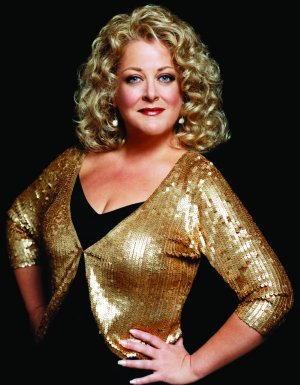
Deborah Voigt, soprano
VOICE:
She may not be stripping down to a body suit, but the considerably slimmer Deborah Voigt will be singing in a concert performance of Strauss's Salome with the National Symphony (January 18, 20, and 22). Mezzo-soprano Susan Graham will give a recital of French songs at the Kennedy Center (January 26). A month later, it will be another great mezzo, Joyce DiDonato, with Julius Drake (February 27), presented by Vocal Arts Society at the Terrace Theater. At the Austrian Embassy, a recital of songs from Hugo Wolf's Spanische Liederbuch, with Wolfgang Holzmair, Hermine Haselböck, Susanna Phillips, and Russell Ryan (April 11). More Lieder, this time by Schubert, when Matthias Goerne sings with the Philadelphia Orchestra, led by Christoph Eschenbach, at the Kennedy Center (June 3).

Excellent choral events include the Hilliard Ensemble in a free concert at the Freer Gallery of Art (January 24) and the Tallis Scholars at Shriver Hall (April 1).


Patricia Racette, soprano
OPERA:
We look forward to Washington National Opera's continuing Ring cycle, with Die Walküre (March 24 to April 17). Even more exciting than this, however, is the production of Leoš Janáček's Jenůfa, with Patricia Racette and Catherine Malfitano, and Jiří Bĕlohlávek at the podium (May 5 to 24). Around the same time, Baltimore Opera will be mounting a welcome production of Bedřich Smetana's Prodaná nevěsta, or The Bartered Bride (March 24 to April 1).

The Kirov Opera comes back to the Kennedy Center Opera House with Rossini's Il Viaggio a Reims (January 27 and 28) and Verdi's Falstaff (January 31, February 2 and 3). Finally, and most anticipated, they will give a concert performance of Shostakovich's Lady Macbeth of Mtsensk (February 4).

You can see what two composers did with the same libretto, with Opera Lafayette's concert performance of Lully's Armide (February 3) and Gluck's Armide from University of Maryland Opera Studio (April 19 to 22). Both will occur at the Clarice Smith Performing Arts Center. Finally, Baroque opera is making the leap to non-specialist companies in the area: Virginia Opera will bring its production of Handel's Agrippina to the George Mason University Center for the Arts (February 9 and 11).

University opera companies should all be doing what University of Maryland Opera Studio is doing, performing less familiar works because they can. Do not miss the chance to see the group's production of Conrad Susa's opera Transformations at Clarice Smith (April 12 to 15). Grimm fairy tales, through the lens of Anne Sexton's poems, set as a two-act chamber opera. By comparison, the nth and n+1th production of Tosca -- Bulgarian State Opera (January 26, George Mason) and Baltimore Opera (May 5 to 13) -- seem like a waste. Rossini's Otello from Washington Concert Opera at Lisner is of greater interest, especially with Elizabeth Futral as Desdemona (April 29). That woman is tireless when it comes to learning new roles.

27.12.06

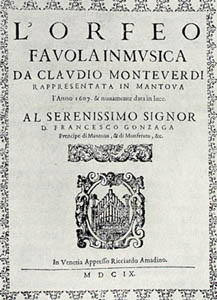
Monteverdi's Orfeo, 1607-2007

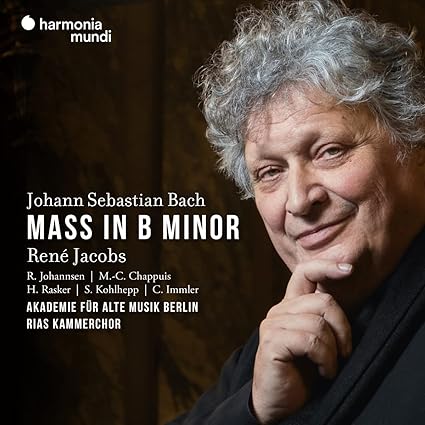
Claudio Monteverdi, Orfeo, premiered in 1607Claudio Monteverdi's genre-setting opera Orfeo first saw the light of day 400 years ago in 2007. The rush among international opera companies to stage this opera this season (and probably next, too), certainly not a natural favorite with mainstream audiences, indicates the growing awareness of Monteverdi's contribution to the history of opera. First -- chronologically and perhaps also in interest -- René Jacobs' Concerto Vocale will team up with Akademie für Alte Musik Berlin for a staged production at the Berliner Staatsoper (January 30 to February 5). Barrie Kosky will direct Sunhae Im (Euridice and La Musica) and Stéphane Degout (Orfeo). They will give the same production at the newly renovated Theater an der Wien in Vienna (on February 25 only). René Jacobs and Concerto Vocale, apparently without Akademie für Alte Musik Berlin, will perform the opera again this summer. The Aix-en-Provence Festival will produce Orfeo, directed by Trisha Brown, in the Théâtre de l’Archevêché (July 6 to 15).

On our side of the Atlantic, Glimmerglass Opera is staging only operas that set the Orpheus legend this summer, to honor the beginning of the genre. This includes a new production of Orfeo, conducted by Antony Walker and directed by Christopher Alden. Michael Slattery (who has the smaller role of Apollo in the Berlin production) will sing Orfeo, and Megan Monaghan will sing Euridice. Other productions this summer include one at the Drottningholms Slottsteater in Sweden (July 28 to August 11) and another at the Staatstheater Hannover (June 13 to July 12).

That is not all. The New London Consort will give a concert performance of Orfeo in London's Royal Festival Hall on March 14. Operabase lists several other performances.

Other than Orfeo, there are other Monteverdi performances, including the Vespers of 1610 and Combattimento di Tancredi e Clorinda with Concerto Vocale and René Jacobs at the Berliner Staatsoper (January 21 to February 3). Il Ritorno d'Ulisse is also popular, with a staged production at De Munt/Théâtre de la Monnaie in Brussels (May 12 to 15) and, even better, a concert performance conducted by Christophe Rousset at the Théâtre du Capitole in Toulouse (June 8). Also, in the Washington area, Opera Vivente will be producing this opera in Baltimore, March 9 to 17.

Holiday at the Movies: Volver

Penélope Cruz in Volver, directed by Pedro Almodóvar, 2006
Pedro Almodóvar's latest film, Volver, was screened in a couple suburban locations starting last month, but it has just opened on two screens at the E Street Cinema. Fans of the legendary Spanish director will not need to read any review, no matter the tone, to want to see this film. However, those who do not know Almodóvar's work, or who have had a bad experience with it, should give this excellent movie a chance. It has all of the positive qualities of his earlier films — the humor, sometimes off color; the idolization of the eternal feminine; the mixture of fantasy and reality; the flavor of Spain — just without the drag queens and transsexual prostitutes.

The heart of the movie is in a small village of credulous provincials in La Mancha, the natal region of both Don Quixote and Pedro Almodóvar. Two sisters, Raimunda (Penélope Cruz) and Soledad (Lola Dueñas), travel back and forth between their new homes in Madrid and that little town, later identified as Alcanfor de Las Infantas, the town in Spain with the highest rate of insanity among its inhabitants. The village is fictional (it was actually shot in a place called Almagro, near where Almodóvar himself was born), but the region is indeed arid and windswept, and as often happens where there are sinister winds, fires and madness do abound in La Mancha. The frequent shots of wind turbines, generating electricity, again recall the ingenioso hidalgo of Cervantes, who mistook the 16th-century predecessors of these modern windmills for giants.

Carmen Maura and Pedro Almodóvar, on the set of Volver
After the death of their parents in a fire, the sisters return to the village to tend the family grave and look in on their senile aunt, Tía Paula (Chus Lampreave). Never far from this superstitious world is the presence of their mother, Irene (Carmen Maura), whose spirit the villagers believe is watching over Tía Paula. It is a touching reunion for Almodóvar and Carmen Maura, who was the star of several of the director's earlier films, most notably Mujeres al borde de un ataque de nervios (1988) and ¿Qué he hecho yo para merecer esto! (1984). Along with Raimunda's daughter, Paula (Yohana Cobo), we have women admired by Almodóvar over the course of three generations, and they form an excellent ensemble cast, collectively awarded the "Best Actress" award when Volver was screened at Cannes. (Almodóvar also won the award for best screenplay. Both are deserved.) The few men in the film are small in stature, mostly obstacles to be overcome.

Penélope CruzIn recent movies, Almodóvar has become obsessed with the mechanics of death and grief (the disturbing, surreal Hable con ella) and the righting of past wrongs (La Mala educación and Todo sobre mi madre). Both themes figure prominently in Volver, but in a way that is both more gentle and more powerful than any of these previous films. The movie is beautifully and lovingly shot (cinematography by José Luis Alcaine), both the beauty of the village and the squalor of Madrid. The opening scene of women cleaning sepulchers in the cemetery, including women who are tending their own graves for when they die, and a spectacular close-up of paper towels soaking up blood are memorable.

Other Reviews:

Desson Thomson, Pleasure Cruz (Washington Post, December 22)

A. O. Scott, The Darkest of Troubles in the Brightest of Colors (New York Times, November 3)

Rob Nelson, The Man Who Loved Women (The Village Voice, October 31)

Peter Bradshaw, Volver (The Guardian, August 25)

Thomas Sotinel, "Volver" : les meilleurs des mondes selon Pedro Almodovar (Le Monde, May 20)

Jean-Luc Wachthausen, Interview with Penélope Cruz: « J’ai l’ambition du bonheur » (Le Figaro, May 17)
Almodóvar is fond of allusions, and he becomes quite referential in this movie, with footage from Luchino Visconti's Bellissima (1951), starring Anna Magnani as a strong female role model for Raimunda. The title comes from the name of a tango, by Carlos Gardel, that Raimunda sings in one of the most emotional scenes in the movie (shown in still above), precisely at the point where the narrative knots of the story begin to pull apart. (The vocal part was actually sung, quite beautifully, by Estrella Morente, a flamenco star.) For some fascinating background on the shooting, see the diary about the making of Volver that Almodóvar published on the Internet.

Penélope Cruz has not impressed when acting in English, but her seductive and innocent beauty come across better when she has the added comfort of acting in her native language. After her early appearance as the sweet and guileless Luz in Belle époque (1992), the recent partnership with Almodóvar has yielded some of her best work, in Todo sobre mi madre and Carne trémula. In this lead, she shines beyond what we might have expected from previous roles. Here she is aged beyond her years especially by the use of a butt prosthesis, something she discussed in an interview with NPR. As you will surely agree, on the basis of the image shown here, this is a terrible crime against the female form. For a gay man, Almodóvar has always been obsessed with women's bodies, and this is again a prominent part of Volver. At one point, an overhead shot of Cruz, with her cleavage in full relief, provoked male sighs all around the theater. Cruz's performance is the main reason to see Volver.

26.12.06

Fun with YouTube

A young man named William Zauscher has created several entertaining videos available at YouTube. In the most memorable ones, he sings all the parts of the "B Minor Mass" (Dona nobis pacem, Sanctus, and Cum sancto spiritu) simultaneously, in split-screen, a rather impressive feat, especially the 6-part fugue in the Sanctus. The screechy soprano part in the Dona nobis pacem, eventually surpassed by a soaring violin track, can drive my cats from the room. Zauscher's facial grimaces (he sings on "noo" basically, without the syllables of the original text) and wild conducting are a stitch: the multiple versions of himself even interact with one another, which must have taken some planning. Besides Bach, he has strange takes on an excerpt from Puccini's Turandot (with a hilarious guest soloist), Death and Transfiguration, and the Chorus Mysticus from the Symphony of a Thousand. In the latter, the soundtrack is sequenced to corresponding snippets of the score and semi-orgasmic facial expressions (totally appropriate).


All videos by wzauscher at YouTube

Many thanks to Anne-Carolyn Bird for bringing this to my attention.

Monteverdi Madrigals, Book 8

Available at Amazon:
available at Amazon
Monteverdi, Madrigali Guerrieri et Amorosi, Libro VIII, Concerto Italiano, Rinaldo Alessandrini (released on October 31, 2006)
A few months ago, I reviewed two new releases of madrigals by Claudio Monteverdi, as well as two new recordings of the composer's Vespers of 1610 earlier this month. Monteverdi is becoming more popular in live performance, too. The Aix-en-Provence Festival has programmed a series of performances for this summer, stagings of Monteverdi madrigals by Willy Decker, with Kenneth Weiss conducting the Académie européenne de musique (July 1 to 18, 2007). Along with the numerous stagings of the composer's opera Orfeo next year, celebrating the 400th anniversary of its premiere in 1607, Monteverdi's star is on the ascent.

Very good news, then, that Rinaldo Alessandrini is indeed planning to make a complete set of recordings of Monteverdi's madrigals with Concerto Italiano, although not in a systematic way. This box set of the eighth book combines re-releases of the two Libro VIII discs that the group made in 1997 and 1998 with a third CD recorded in the Palazzo Farnese last December. Book 8 (of nine volumes of madrigals) is the largest collection Monteverdi published while he was alive. Much of its music is the most forward-thinking in the composer's corpus of works, although some pieces were republished from earlier collections or composed much earlier. By this point, after incorporating the basso continuo in the fifth book, Monteverdi's madrigals are mostly for solo voices, cast often as mini-operas.

Indeed, in his introduction to the madrigal cycle known as the Combattimento di Tancredi e Clorinda, which opens this recording, Monteverdi outlines recommended stage directions if a performance is staged dramatically (based on the work's court premiere). As if to heighten the operatic quality, Alessandrini introduces many of the dramatic works with an instrumental sinfonia, in this case a string sonata by Dario Castello. The story, taken from Canto XII of Tasso's Gerusalemme liberata, uses the mortal combat of the Christian soldier and Muslim battlemaiden as a metaphor for sexual union:
Domenico Tintoretto, Tancredi battezza Clorinda, Houston Museum of Fine Arts, 1586-1600
Domenico Tintoretto, Tancredi Baptizing Clorinda, Houston Museum of Fine Arts, 1586-1600
Three times the knight grips the woman in his strong arms and the same number of times does she break free of those strong bonds [...] weary and panting, both must draw apart at last and draw a breath after a long labor.
Baritone Roberto Abbondanza's Testo (narrator) matches the excitement of the battle sounds from the instruments, the rapid tremulo of the stile concitato. As she lies dying, Elisa Franzetti's Clorinda begs Tancredi, her voice almost a whisper, to baptize her, which perfectly captures what Tasso writes of what Tancredi hears ("a strange appeal, a plaintive gentleness, that to his ear descends and melts all anger").

Representing another side of the combat of love is Il ballo delle Ingrate, which is the other half of the first CD. Addressed to courtly women, Pluto summons up from Hades the souls of haughty women who have refused love (the Ingrate Women of the title). Venus makes this request of Pluto, at the request of her son Cupid, in order to show "the punishment cruel beauty can expect." Bass Daniele Carnovich is in puissant and profondo voice for the deep rumbling part of Pluto. The shades of the proud women appear, to the sounds of a magnificent duet by Cupid and Venus (Francesca Russo Ermolli and Rosa Dominguez, respectively), and are forced to dance a sorrowful Entrata e Ballo with Pluto. Sent back to their punishment, a group of the Ingrate Women make an impassioned plea to the women in the audience to learn pity and not "hoard their beauty."

Monteverdi by Concerto Italiano:

available at Amazon
Book 2


available at Amazon
Book 5


available at Amazon
Book 6
The second CD contains some of the more traditional madrigals, pieces for chamber vocal ensemble. The famous Lamento della Ninfa, text by Rinuccini, receives a fine performance, with a clear-voiced Rossana Bertini as the spurned nymph who laments over a tenderly played ground bass pattern, with the chorus of sympathetic male voices. The quasi-sadistic aesthetic incarnation of a woman's tragic sadness for a male audience is as old as the hills, going back at least to the Virgin's torment in Lamentation scenes and Ovid's Heroides. Of course, it is one of the major tropes of opera, as is the struggle of war and love for supremacy in a man's heart, the two drives of existence that Freud would later identify as thanatos and eros. The opening piece ("Let others sing of love") is balanced by a later madrigal ("Let others sing of Mars"), and the metaphors of love and battle are intentionally jumbled ("a glance defeated me, a tress made me captive" or "Make yourself a warrior, my heart, and do not fear the mortal wounds of love's arrows").

The madrigals on the third CD continue to push the envelope of the genre, including another Ballo and the pastoral strophic tune Su, su, su, pastorelli vezzosi. A favorite is Mentre vaga Angioletta, a poem by Guarini, which is essentially a madrigal about a woman singing a madrigal. Monteverdi uses the text as a sort of primer on how to set the textual contrasts with effective madrigalisms. All in all, there is rarely anything less than beautiful in this set, and some tracks stand out as exceptional. As we expect of him, Alessandrini captures the Baroque vitality of this music, with life rippling in all those jaunty rhythms. He has a truly fine group of singers at his disposal, although it would take me a long time to make sense of how the membership of Concerto Italiano has changed over the past ten years (lists of performers' initials follow each track). There are a few moments of minor tuning imprecision, notably in Dolcissimo uscignolo (CD 2, track 16), which is from the 1990s, and the tenor voices are sometimes uneven, as in Non partir, ritrosetta (CD 3, track 10), but nobody's perfect.

Naïve OP 30435