CD Reviews | CTD (Briefly Noted) | JFL (Dip Your Ears) | DVD Reviews

7.12.06

Announcement: Mozart Lecture

Available at Amazon:
available at Amazon
Daniel N. Leeson, The Mozart Forgeries (2004)
Daniel Leeson, author of The Mozart Forgeries and other books, is in Washington this week. He will give a pre-concert presentation at the Library of Congress today (December 7, 6:15 pm) on The "Gran Partitta": From Mozart to Jefferson. Later tonight (8 pm), the Orchestra of the Age of Enlightenment will play the piece, which Leeson helped to edit for the Neue Mozart-Ausgabe, in a free concert.

The following announcement comes from Bonnie Jo Dopp, a musicologist and librarian at the University of Maryland. Daniel Leeson will give another lecture earlier today (December 7, 11 am) on The Story of the Discovery of Hidden Mozart Memorabilia, in the Piano Room: First Floor, Michelle Smith Performing Arts Library, Clarice Smith Performing Arts Center. Here is the abstract:
Until he died in 1787, Leopold Mozart, Wolfgang’s father, kept many souvenirs of his son’s youthful exploits in a glass-front cabinet in his Salzburg apartment. Some of these, such as a snuffbox given his son by Louis XV of France, were valuable objets d’art. Leopold also is likely to have had paintings of family members, such as his wife, mother-in-law, and children. However, exactly what he owned is uncertain since, for more than two centuries, there has been considerable mystery about what happened to his estate following his death. This lecture describes a collection of objects, purchased from an Italian street vendor, that appear to have formed part of Leopold’s estate, and traces their remarkable journey into the 21st century. The collection adds considerably to our knowledge of the life of Mozart and his family.
Leeson purchased this collection three years ago. He is in the process of writing a book about the discovery, planned for 2009.

6.12.06

Mozart and the Voice

Available at Amazon:
available at Amazon
Mozart Arias, Magdalena Kožená, Orchestra of the Age of Enlightenment, Simon Rattle (released on November 14, 2006)
We have been generally quite impressed here at Ionarts with the voice of Czech mezzo-soprano Magdalena Kožená, in my review of her anthology CD, Enchantment (September 17, 2006), and Jens's review of her extraordinary Bach disc, Lamento (September 27, 2005). Not surprisingly, Kožená has gotten on the Mozart bandwagon this year, singing the role of Idamante in productions of Idomeneo, at the Salzburg Festival this summer and at the Met this month (where she has earned raves from the Wellsungs and slightly moderated praise from some of the other New York bloggers). Kožená was also part of the generally excellent Mozart anniversary concert at the Salzburg Festival, where she sang Sesto's "Parto, ma tu ben mio" from La Clemenza di Tito (with the Vienna Philharmonic and an extraordinary young British conductor, Daniel Harding, a protegé of Simon Rattle). I have enjoyed watching it several times through the wonders of Tivo. WETA, for all their (considerable) deficiencies, did manage to broadcast that one.

Kožená's superb new Mozart CD is a delicious way to conclude the Mozart year, with a historically informed performance (HIP) ensemble, the Orchestra of the Age of the Enlightenment (who will be performing at the Library of Congress in a free concert on Thursday), and Simon Rattle. Sometimes, listeners get stuck with one soundtrack of favorite operas or other music in their heads, and Mozart's music is so familiar in its many performances that he is susceptible to that attitude. Any deviation from that internal version of the music raises flags. The value of this recording is that it attempts to shake those assumptions loose, with excellent ornamentation, for example. The embellished Voi che sapete (Cherubino's aria from Marriage of Figaro), recorded as notated by Italian composer Domenico Corri (1746-1825), is my new favorite version of that aria. Just when you think you will never hear a piece as new again, it gets recast by Corri, who was the author of a manual on vocal ornamentation when he lived in Great Britain.

Magdalena Kožená, mezzo-soprano
The best parts of the Mozart centenary have been those concerts and recordings that have illumined the dark corners of the composer's catalogue, like the Salzburg Festival all-opera extravaganza and the Paris performance of a little-known ballet. On this disc, we get the aria Mozart wrote to replace Deh vieni non tardar for a revival Susanna (bookending this disc with Deh vieni), as well as two arias he wrote as replacements in operas by Martín y Soler and Cimarosa.

The sounds of the OAE, too, with breathy flutes, razor-sharp violins, and fresh tempi make this a graceful and entertaining listen. Alternate versions of some selections bring further vitality, like the revision of Ch'io mi scordi di te (from Idomeneo), made for Nancy Storace's farewell recital in Vienna. Jos van Immerseel plays the fortepiano part that Mozart wrote for himself to play with the English soprano, with whom he may have been in love (he was certainly in love with her voice). In my previous review, I suggested that Kožená's voice is not as earthy and dark as you might expect from a mezzo-soprano. For this disc, she has selected not only mezzo roles, many of which she has sung to acclaim, but soprano roles, even Vitellia in La Clemenza di Tito. All in all, this is a winner.

available at Amazon
Tutto Mozart!, Bryn Terfel, Scottish Chamber Orchestra, Charles Mackerras (released on September 7, 2006)
Welsh baritone Bryn Terfel bounded to fame in the 1990s, after appearances in operas like the Die Frau ohne Schatten I reviewed on DVD. In spite of extensive trouble with a herniated disc and back surgery, Terfel's star has only continued to rise: last year, Norman Lebrecht pegged him to succeed Pavarotti in international success, given Terfel's tendency toward the mainstream and popular. Also last year, there was published speculation that Terfel wanted to take a year-long sabbatical from performing on opera stages around the world, possibly in 2008.

Terfel's solo contribution to the Mozart Year (actually, he sings several tracks with soprano Miah Persson and/or mezzo-soprano Christine Rice, who comfortably play second fiddle) is more for the traditionalists. Those who want exactly what they expect from a singer like Bryn Terfel will get it, a gorgeous and largely proportioned voice admirable both for its extreme power and the singer's careful sense of characterization. Terfel's blockbuster appearance at the concert commemorating the reopening of the Vienna State Opera earlier this year (also saved in my Tivo) is a good example, in a magisterial performance of Hans Sach's monologue from Meistersinger, with the superb Christian Thielemann at the podium. Pronunciation, in Italian especially, is something else: no language coach is credited in the booklet, and it might have been a good idea.

The selection of arias is largely predictable, although there are a few interesting lesser-known concert and replacement arias. Particular treats are the silly duet Nun, liebes Weibchen, in which Terfel plays the male counterpart to a woman under a spell that allows her only to meow like a cat, and Diggi, daggi, schurry, murry, a nonsense-texted magic spell from Bastien und Bastienne (at 1:28 and exceedingly silly, this would be a fine encore piece). Charles Mackerras, who turned 81 last month, leads a fine performance by the Scottish Chamber Orchestra. Although the conductor has become known more for his work with Czech opera, he was a pioneer in the attempt to restore elements of 18th-century performance practice and instrumentation to Handel, Mozart, and others. In spite of the use of harpsichord, this disc, although pleasing, has few surprises.

Archiv 00289 477 6272 / Deutsche Grammophon B0007194-02

5.12.06

Master Ionarts at Atlas Arts Center

A few months ago, Alex Ross published a perceptive article ("Learning the Score," in The New Yorker, September 6) about the state of music education in the United States and what sorts of changes in the relationship of American society with music might prevent or reverse the much-discussed demise of classical music. In this article Alex especially praises groups that do "more than bring music to young people, [...] in which the distinction between performing and teaching disappears":

Many orchestra administrators cling to the idea that a smattering of Young People's Concerts will indoctrinate children into the wonders of classical music. Sarah Johnson, who runs education programs at the Philadelphia Orchestra, is skeptical of that approach. "Many people say, Wow, we can bring twenty-six hundred students into the hall,' and feel like it's a great thing," Johnson told me. "This may have worked in the age of Bernstein, when classical musicians were celebrities on radio and early television. Today, those kids need to meet the musicians, find out how they got into music, what else they do when they're not playing. It has to be more up close and one-on-one. People have this picture of musicians as not quite human. We need to humanize them. We want to get to the point where we are cultural partners at certain schools, practically giving them a new music-faculty member."
Master Ionarts meets the trombone, 3 December 2006, member of the Capitol City Symphony, Atlas Performing Arts CenterIn our neck of the woods, we are hoping for exactly this sort of role for one of the results of the sweep of gentrification along the H Street corridor at the northern edge of Capitol Hill, the Atlas Performing Arts Center. A bold group has transformed an old movie house in the 1300 block of H Street NE into a "community-based venue for training and education in the performing arts and stagecraft," with two lab theaters, two larger stages, and a dance center.

On Sunday afternoon, at a family concert offered by the resident Capitol City Symphony (born out of the ashes of the Georgetown Symphony Orchestra), Master Ionarts and I had a chance to take a look at this magnificent new venue. On the outside the Atlas may not look like much quite yet (driving by, I had not really noticed it), but once inside we were both truly impressed. We arrived early enough to take in the "Instrument Petting Zoo" that preceded the concert. This was not like the event hosted by the NSO Kinderkonzert series, which Master Ionarts has also attended. At the Atlas, the musicians of the CCS (all dedicated volunteers) stood at various points around the auditorium and entrance hall, with the instruments. Kids and adults could walk right up to them, and they would answer questions, give demonstrations, and let children (carefully) try to make musical sounds.

The concert itself was devoted to composers who had resided for at least some time in the Washington area, with a map in the kids' programs to trace where they lived. This was presented by music director Victoria Gau as a playful rebuttal to a character named Prof. Henry B. Wigglewhatum (played with appropriately haughty bluster by Scott Kenison), who insisted that all good music comes from Europe. It is never pleasant to see one's profession skewered on stage, but this is ultimately unfair to poor musicology, now almost 80 years after the death of Oscar Sonneck. Whether the concert proved the superiority of American music, and specifically of Washington composers, depended on the piece in question. The level of playing was what one would expect of a community orchestra made up of volunteers, mostly fine and generally enthusiastic. By comparison, the NSO Family Concerts cost more -- children are not free, as with the CCS -- but the quality of music played is higher. The rapport with the musicians, however, is much less relaxed than at the Atlas.

Master Ionarts particularly enjoyed the P. D. Q. Bach selection, Fanfare for the Common Cold (Peter Schickele spent part of his youth living here), with the brass sneezes and coughs. His favorite, however, was the final selection, an arrangement of famous songs by Duke Ellington, the greatest composer Washington has produced, edging out John Philip Sousa by a hair. Master Ionarts enjoyed the latter's Washington Post march, too, which was conducted by young Griffin Lerner, who had won the chance to conduct the orchestra. We both enjoyed an unusual movement, The Detour, from Charlie Barnett's Blue Chevrolet symphony, inspired by the composer's childhood memories of car trips. Maestra Gau did a good job of linking the pieces together with narration and explanations. The CCS may want to start specifying an age minimum for these family concerts, as we were distracted by two toddlers who were mysteriously allowed to run back and forth along the edge of the stage for the entire duration of the concert.

The next event with the Capitol City Symphony is the annual Community Carol Sing, a free concert for all ages at the Atlas Performing Arts Center, on December 17 at 5 pm. Master Ionarts has insisted that we attend.

4.12.06

Left Bank Octet

Left Bank at Ionarts:

February 28, 2006

May 9, 2005

November 7, 2005

October 20, 2004
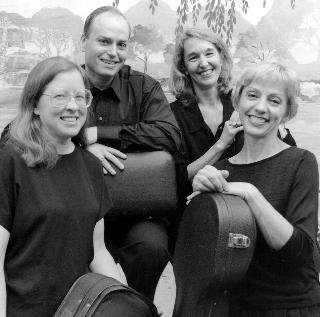
Ionarts has been following the Left Bank Concert Society since the group was formed in 2004 by members of the Theater Chamber Players, and their mission to bring chamber music, especially modern repertory, to new audiences is laudable. Most of the group's members (all but second violinist Sally McLain) are teacher-performers on the faculty of the University of Maryland, and they sometimes perform with their best students. On Saturday night in the Kennedy Center's Terrace Theater, the Left Bank String Quartet shared the stage with a young string quartet called the Dionysian Quartet, made up of students from the U. of Maryland. As another way to reach out to younger audiences, the group offers free admission to students under 18 and $7 tickets to students 18 and older, and I hope that more young people will take advantage of the opportunity at future concerts.

There was a good reason to attend this concert, the chance to hear a live performance of Mendelssohn's Octet in E-Flat Major, op. 20. It is a piece that you are more likely to hear in an academic setting or played informally at a party of string players. (In an anecdote related by Peter Schickele, at a performance of the Octet in Itzhak Perlman's home where there were only seven music stands, David Finckel placed his music in another player's suspenders and sat behind him.) Mendelssohn was only 16 years old when he composed the Octet, and the mind boggles at the young man's compositional maturity. The piece combines the fruits of a fecund melodic genius with an advanced understanding of the forms of the sonata, enlightened by a daring willingness to stretch them in new directions. The lead-up to the recapitulation in the first movement is so protracted that the tension Mendelssohn creates with repeated false starts is both humorous, as the players exchange knowing glances, and desperate, not unlike trying to find one's way out of a maze. The famous third movement, based on a passage from Goethe's Faust, is a brilliant evocation of a landscape buzzing hazily with insects.

The spirit of generational combination was embodied by the programming of the first half, a series of more recent pieces for various combinations of two string quartets. Jennifer Higdon's two attempts at writing for string octet, the slow, gentle Quiet Art (2006) and the tango-like To the Point (2004/06), were pretty but a little empty. The remaining three pieces were for the octet instruments grouped by type, each by a composer who played the instrument in question. Violinist turned composer Grażyna Bacewicz's Quartetto per 4 violini (1949) was a rare and often interesting exploration of that unusual grouping. Her style is more tonal than not, with dissonance sometimes employed for effect. The outer fast movements were more effective than the somewhat drab slow movement.

Least pleasing was a work for two cellos, commissioned by the Left Bank Concert Society from cellist-composer Paul Brantley. The work is probably of extremely recent vintage, since even the Kennedy Center Web site's page for the concert identified it only as "A New Commissioned Work for Two Cellos." Now given the title Mandorla, in tempore belli, the piece has some interesting ideas but sounded not quite fully digested. Certainly it was overshadowed by what came before it, an editorial realization of a movement for two violas by violist-composer Frank Bridge, the most important of Benjamin Britten's teachers. Written for himself and fellow violist Lionel Tertis to play in 1912, the score was lost, but musicologist Paul Hindmarsh has made a version from a detailed sketch of the work, which he calls (without any real justification) Lament for Two Violas. Just how many works in the Bridge corpus are at least part Hindmarsh, anyway? This somber work, structured mostly around an antiphonal dialogue between the two violas, received the finest performance of the first half, by Prof. Katherine Murdock and violin student Gray Dickerson, recently transplanted to viola.

One could imagine a more perfect performance in the details, not surprising considering the players involved, but this concert had all one could hope for in terms of inventive programming. Bravo to the Left Bank Concert Society for bringing this music to their students and giving us the chance to sit in and listen.

The Left Bank Concert Society's next concert, Divas, Tempestuous and Divine, will take place in the Terrace Theater on February 10, 2007, at 7:30 pm.

3.12.06

This Week in Blogville

LinksLately, I have gotten lazy about posting a few links now and then to the good things out there on other blogs. I'll try to make this a regular Sunday feature. Here are some of the goodies from Blogville:

  • A great review of the North American premiere of Gerald Barry's opera The Triumph of Beauty and Deceit, by the Los Angeles Philharmonic, by a new but excellent addition to Blogville [Out West Arts]
  • Always reliable for good content, Bob Shingleton prepares us for tomorrow's anniversary of Britten's death with a description of a performance of Britten's music at Snape Maltings [On an Overgrown Path]
  • The growth of blogging means that anyone could be writing a review of your concert, even the seemingly innocent George Mason University student brought in to turn your pages. In October, I did a review of DVD performances of Ivo Pogorelich in his heyday, just before his latest recital program was skewered by both Tim Page and Anthony Tommasini, who seemed to have written reviews from the same set of notes. Pogorelich seems to have lost it, which is probably related to the trauma of his wife's death, discussed by the pianist in shocking detail in a recent interview. What did Pogorelich's page turner in Fairfax, a piano student named J. Ho, think of his recital here? Read her blog [I Really Should Be Practicing]
  • Sydney's Pinchgut Opera first came to my attention because Antony Walker, of Washington Concert Opera, is one of their artistic directors. They do interesting productions, as it turns out, including Rameau. Now you can find out all about that, because they (apparently, one Ken Neilsen) are writing a blog about it [Pinchgut Opera Blog] Hat Tip to Lisa Hirsch
  • I am generally impressed by James Macmillan's music and have performed some of the choral works in my choir gig. Here is a review of a new recording of an interesting organ work, A Scotch Bestiary (probably influenced by books like the famous and fascinating Aberdeen Bestiary), commissioned to christen the new organ at Disney Hall in Los Angeles [Monotonous Forest]
  • The jockeying of orchestras looking for music directors keeps getting more interesting. Steve Smith had a good post about Lorin Maazel's apparent attempt to pass his place on the podium of the New York Philharmonic to Daniel Barenboim, as well as who might end up in Philadelphia. Does Leonard Slatkin have an opinion about who should succeed him at the National Symphony? [Night after Night]

2.12.06

Masur's London Philharmonic Modestly Exciting

Kurt MasurLes Préludes by Liszt opened the London Philharmonic’s WPAS organized performance at the Kennedy Center last Wednesday. If the work is less often heard than its catchy, rousing nature would suggest, it might have to do with the Nazi shadows that still linger over the work, courtesy of having been made a favorite musical tool in Goebbel’s propaganda machine arsenal. As a staunch defender of liberty and freedom – exemplified in his courageous role in the Leipzig ‘Monday-Demonstrations’ during the waning months of the GDR regime – conductor Kurt Masur certainly need not concern himself with such (irrational) attitudes.

The music is always irresistible, the performance was not quite: A harsh edge on the strings, the strings themselves lost against the brass assaults from behind, and the sound slightly muddled (not all of which can be blamed on the Kennedy Center Concert Hall’s acoustics, although they, to put it mildly, don’t exactly emphasize detail and transparency) contributed to a result that was brooding, dark, and densely woven. A presentation that fit rather well with the idea of hearing Les Préludes over the Volksempfänger on a grim war night.

“Too German, even for German repertoire” is a quip about Maestro Masur who is often seen – especially outside the Anglo-American realm – as a quintessential “Kapellmeister”. That doesn’t mean anything more or worse than “sturdy, solid, reliable, possibly punctilious”. Brahms’ Second Symphony, which very regrettably replaced the planned Bruckner Fourth performance, did not suffer from stodgy, over “German-ness”.

Fast, gentle, but not particularly soft, Masur launched his Orchestra into the Brahms in which the LPO finally achieved sonic distinction and distinctiveness. Separation of orchestral colors was improved over the Liszt or Sibelius Violin Concerto also on the program. With lots of kinetic energy, there was excitement in the boisterous moments. It had neither the natural pace and indelible musicality as a Günter Wand recording offers, nor the polished, creamy sound Karajan elicits – but it managed ample impact, all the same… achieved by the apparent excitement on the part of the (exhausted?) orchestra under the leadership of a chipper, if visibly suffering, much respected conductor. Especially in the fleet beginning of the fourth movement.

Maestro Masur has long had a most unusual conducting technique in which the limp left arm, seemingly unauthorized, wiggles like a fresh-caught fish. This can be deceiving, because whenever a message needs to be conveyed to the first violins, that arm is right there to tell them what to do: keep going, tune it down, don’t rush. Nowadays his right hand, too, seems to be slipping from the control of his will – and the way it jitters suggests the cruel onset of Parkinsons disease. One wishes to be wrong.

(On the point of Brahms’ Second being performed on Wednesday by a visiting orchestra the night before the NSO starts a series of concerts with the same work it is very surprising that WPAS had no compunctions to let the LPO switch to that particular symphony… fully aware of the resulting conflict. “The Kennedy Center/NSO and WPAS have a very positive working relationship” one is told. Cynics will assume malicious design or crafty negligence rather than innocent coincidence. Whichever it is, Ivan Fischer will have conducted to a couple dozen or hundred fewer listeners as a result.)

Sarah ChangOf the five major Romantic violin concertos (Beethoven, Brahms, Bruch, Mendelssohn, Sibelius), it might be the Beethoven that is most difficult to communicate and get ‘just right’ – but it is the Sibelius which stands any chance at all of getting all but the most prodigious violinists sweat before its technical challenges. It is also the least automatically ‘pleasant’ of the five (excellent playing assumed) for it its much more sparse and even stark nature. It is just about impossible not to evoke the idea of a Nordic, cool and even cold, clear sound and consequent reference to the Finish landscape. If that’s a cliché, well, it’s a true cliché.

Appropriately earthy and dark was the LPO’s support of Sarah Chang’s elegant, silver-threaded performance which explored the corners and abrasive sounds in the concerto more than the (inherently limited) ability to kindle a fire from within. The fierceness of Ms. Chang’s playing is not as impetuous as it was when she was younger (young violin playing ladies are usually among the most aggressive performers), it has – hardly surprising – won a more inward looking quality. But the change is subtle.

Technical prowess was in full display (and needed in this work) but neither coming at the risk of sterility or, for that matter, flawlessness. Ideally this concerto presents a steady cold, blue flame or perhaps of ethereal radiance… in the Masur/LPO/Chang combination there was a little less steadiness in the first movement than I should have liked to hear. Hints of a drive that bordered the hectic, a violin sound that was skinny and uneven. The second movement with its Rheingold-like opening allowed for little or none of the sentiment one might associate with the Adagio (molto, even!) marking. The Karelia Suite resemblance of the (backwards) march of the third movement rang in the most satisfying playing on everyone’s part: A wonderful balance between the relaxed (Orchestra) and the fiercely forward oriented (Chang) made for a study in contrast and an example of cohesion in one. Only to the very end did that harmony seem to come apart.

Much to take away from particular moments of this concert then, even if the whole was distinctively underwhelming.

Monteverdi's Magnum Opus

Available at Amazon:
available at Amazon
Monteverdi, 1610 Vespers, Gabrieli Consort and Players, Paul McCreesh (released on November 14, 2006)
As I have said before, Claudio Monteverdi (1567-1643) is one of the greatest composers in music history, who should be thought of as the Mozart or Beethoven of his age. Sadly, his music is far less known than it should be, although the early music movement has done much-appreciated work to end that ignorance. He had a long, superlative career and distinguished himself in all the musical genres of his time. This summer, I reviewed the latest releases of his madrigals (I will be reviewing the latest Concerto Italiano madrigal set this week), and he is really the father of opera. However, he is equally distinguished by his sacred compositions, and the recordings under review here offer different vantage points on his greatest religious work, the Vespro della Beate Vergine, known in English as the 1610 Vespers, after the date of publication of the main musical source. It is a work equal in majesty and scope to the B Minor Mass or the Missa Solemnis.

This month, the restless innovator Paul McCreesh (cited at Ionarts previously for his recovery of Gluck's Paride ed Elena and recordings of Saul and the St. Matthew Passion) released a recording of the 1610 Vespers with his Gabrieli Consort and Players. As Monteverdi probably intended choir directors who used his 1610 Vespers publication to do, McCreesh has selected from and reordered some of the pieces. McCreesh arrives at his solutions from extensive and intelligent analysis, partially explained in the interview with Prof. Tim Carter (author of Monteverdi's Musical Theater, recently reviewed by Barbara Russano Hanning in Journal for 17th-Century Music) in the liner notes. (However, the reference to an "introit" in a vespers service -- presumbably meaning the introductory versicle Deus in adiutorium -- is an error, albeit a minor one.) McCreesh admits that he does not make performance praxis decisions because he believes the result is "authentic," so the listener has only to be convinced by the sound or not.
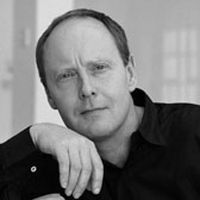
Paul McCreesh, conductor
This is an exciting performance, filled with visceral and descriptive sounds. For Monteverdi's incorporation of virtuosic madridgal-type singing, McCreesh has generally fine solo singers. The intonation of that opening versicle is disturbingly muscular, but the vocal adaptation of Monteverdi's own fanfare from Orfeo is thrilling. In some choral passages, the sections are uneven in their contributions, in terms of intonation and unity. McCreesh sometimes seems to push his singers one notch too far, either in tempo or volume, as in some of the less felicitous sections of Laetatus sum. He does a generally good job of bringing out the psalm tones incorporated into Monteverdi's complicated instrumental and choral textures, although some of them get lost. This is one of the most interesting accomplishments in the Vespers, akin to the lovely and complex things that J. S. Bach will do with chorale melodies in the following century.

McCreesh has inserted some pieces for organ, by other composers from the period, which adds some instrumental interest. The tuning of the organ will curl your hair until you get used to it. The musical complaints I have revolve especially around the performance of the Gregorian chants in this recording, which seem to have all vitality drained out of them, sung by a schola of little subtlety. In the same vein, I can see the intellectual points of McCreesh's preference for a different proportional relationship between the sections in duple and triple meter. However, the result, triple-meter sections at a much slower tempo, has the same effect of sucking the life out of the music.

available at Amazon
Monteverdi, 1610 Vespers (with both Magnificats and Missa In illo tempore), The King's Consort, Robert King (released on June 13, 2006)
In spite of losing a major lawsuit brought by Prof. Lionel Sawkins, Hyperion Records -- the Little Label That Could -- is, so far, still releasing interesting recordings (with the help of "the many hundreds of people who donated to Hyperion's Appeal for Recording Funds in 2005," acknowledged with thanks in the booklet). In Robert King's definitive recording of the Vespers, we have the entire 1610 publication, in its original order and with all the alternates (including the 6-part Magnificat setting) plus the Mass setting. (Hyperion has learned its lesson: I note that Robert King used his own performing edition for this recording.) Although it also fits onto two CDs, the King's Consort version clocks in at 137 minutes, almost 40 minutes longer than McCreesh. Missa In illo tempore, a major work of intense six-part polyphony building on themes borrowed from Nicolas Gombert's motet In illo tempore loquente Jesu, from the previous century, is 32 minutes by itself.

Essentially, the Mass provides the other panel of Monteverdi's compositional diptych, the mastery of the old polyphonic style to go with the more daring new techniques in the Vespers. So, it is nice to have them together in one recording. The singing here is also generally quite good, especially in the solo passages. In particular, the 6-part Magnificat, not as familiar as the preferred 7-part version, is a delight. Occasionally, the whole choir pleases less, especially the stridency of treble and alto lines, and there are some tuning problems. The instrumental playing is flexible and virtuosic, including remarkable performances from the cornetto players, praiseworthy because the instrument is so difficult and potentially so ugly.

available at Amazon
Monteverdi, 1610 Vespers, Kammerchor Stuttgart, Music Fiata, Choralschola Niederalteich, Frieder Bernius (released on September 14, 1989)
For years, I have been listening to a 1989 recording of the 1610 Vespers from Deutsche Harmonia Mundi, and it remains my favorite. It does not have the same soloist power as these new recordings, the sound and performance are far from perfect (but still very good), but it still strikes me as the most truly liturgical realization. That is, that everything about this recording strikes me as being appropriate to a Vespers service. By comparison, McCreesh's venue would be a flashy, modern concert hall, and King's perhaps an academic hall. These chanted sections, performed by the Choralschola Niederalteich, which specializes in chant, are fluid and lively, and the performance of the choral declamations (in some of the psalm pieces) is convincingly speech-like. Monteverdi switches from simple declamation into dance-like measured music so easily, and back again. Whereas McCreesh tends to emphasize the dramatic shift of such a gesture, Bernius leads his performers through the most natural transitions. The result is a text-centered and utterly sensitive, gentle performance. That is what the Divine Office is all about, the words, no matter the musical clothing.

available at Amazon
Monteverdi, 1610 Vespers, Apollo's Fire, Jeannette Sorrell (released on June 15, 1999)
You could not get a better reviewer of the 1610 Vespers than Prof. Jeffrey Kurtzman, at Washington University of St. Louis, who wrote The Monteverdi Vespers of 1610: Music, Context, Performance (Oxford University Press, 1999). Last year, Kurtzman reviewed the only recent American recording of the 1610 Vespers, by Cleveland-based Apollo's Fire, for the Journal of Seventeenth-Century Music. After dismantling the liner notes (written by the group's director, Jeannette Sorrell) for various errors, Kurtzman goes on to praise the recording ("If the program notes contain much nonsense, the performances rank with the very best available"). Although he is critical of some of Sorrell's performing decisions, Kurtzman describes this recordings as his favorite. Although I have never heard it, on the basis of this recommendation, I would like to check it out.

Archiv 00289 477 6147 / Hyperion CDA67531/2 / Deutsche Harmonia Mundi 7760-2-RC / Eclectra ECCD-2038

1.12.06

Iván Fischer Shines in Brahms and Everything Else

Iván FischerIván Fischer’s tenure as the National Symphony Orchestra’s Principal Guest Conductor started with style this Thursday when he conducted his first concert in his new position. With a first half of musical fun and games (much of it in ¾) and Brahms Second Symphony after intermission, it was a promising beginning of a hopefully fruitful relationship.

Robert Henderson’s “Einstein’s Violin” was first on the program – chosen by Iván Fischer as a nod to Leonard Slatkin’s long championing of American (Anglo-American, in this case) contemporary music. The seven year old work’s title came about when Henderson tinkered with ideas about “Brownian Motions, the random collisions of molecules impended in a liquid or gas, which is the subject of one of Einstein’s famous papers.” So far, so vague – but even more of a stretch is the following explanation:

I was ruminating on the developmental parallel between the atomic bomb and dissonance in 20th-century (musical) harmony. I see a similar destructive and resoluble development in the 20th-century music. […] The parallel is in the manipulation of dissonance. Dissonance had formerly been a device used in music to create tension followed by resolution, but many composers in the 20th century released it to form a harmonic language of its own—so much that by mid-century they had alienated most of their audiences. In Einstein’s Violin, I’ve attempted to […] diminish the destructive impact of 20th-century dissonance.
This is borderline offensive – and not just because I do not share Henderson’s aesthetic predisposition toward 20th-century music (Second Viennese School, Darmstadt School et al.). There is of course the silliness of the claim that even the most ‘antagonistic’ music of the 20th-century was “destructive” rather than an essential element that led to the variety of classical music styles of our day (the irony of a cul de sac that opened more new lanes of musical expression than any other musical development in over 300 years before it). That aside, nuclear weapons, in their very real destructiveness, have melted the flesh of scores of very real people… and even when mute have caused them very real dread and fear. Comparing that to the mere alienation a few listeners may have experienced due to accidental Boulez-, Stockhausen-, or Cage-exposure is off the mark.

If this sentiment of Henderson’s elicits disagreement on my part (there may well be those who agree with his sentiments more than I do), the music of Einstein’s Violin deserves nothing but praise: It opens like a wildly moving, strong shock of hair amid shimmering violins and percussion (prominent the Glockenspiel), then followed by a lament courtesy of the oboe. Colorful, rich sonorities, the musical winding along the gentle outer reaches of tonality (easy on the ears), and hectic violin section run-ups with releases of percussion thuds all made for an orchestral showpiece very worthy of being premiered by the NSO.

Other Reviews:

Daniel Ginsberg, Off to a Refreshing Start (Washington Post, December 1)


Related Content:

Interview with Iván Fischer (WGMS/ionarts October 2006)
The pp in Sibelius’ Valse triste, op.44, no.1 (sounds like Johann Strauss on snowshoes) was excellent and delicate; the work gently played and well shaped. In Dvořák’s seventh Slavonic Dance he was really in his element (he has one of the finest recordings of the Dances to his name): Love, feistiness, ebullience, joy, and tenderness were present in spades and he elicited a succulent sound from the NSO: alert, responsive, detailed. It was as enjoyable as it was short. Richard Strauss’ Rosenkavalier Waltz mélange had broad elegance to it – with the tubas trying to undermine that very elegance, Baron Ochs-like. The broad sweep and successfully (faux-) Viennese tone of this music reminded why the Rosenkavalier became Strauss’ most popular opera. Zoltán Kodály, with his 1933 Dances of Galánta, is a composer especially dear to Fischer’s heart (who met the composer through his parents, when he was a little boy) and the work in its five contrasting sections (increasing in rhythmic vitality and ending in a rollicking mood not unlike the Slavonic Dance) was a welcome dose of this neglected Hungarian composer who is usually – if at all – heard only through his Háry János Suite or the Peacock Variations. Although a contemporary, friend, and colleague of Bartók’s, Kodály’s music sounds very different and reminds me, if anything, more like that of (early) Blacher, Braunfels, or even Elgar… although no such comparison does Kodály’s uniqueness justice.

Brahms’ Second, for a second time in two nights – courtesy of a WPAS/NSO administrative SNAFU – is less than ideal a situation for the avid concertgoer (although still more appealing than just about any other Second Symphony played twice in a row), but it also offered an illuminating comparison between the London Philharmonic under Kurt Masur and Iván Fischer with the NSO. With a softer, clearer, and more caring rendition, the NSO scored more points in every detail of the work and emerged the clear winner. A much finer string sound, a better balance between brass and the other orchestral sections (set up in Fischer’s preferred style – antiphonal violins, basses centre-back, horns left, other brass right), and generally more loving treatment (rough brass moments not withstanding), this was well worth hearing even (or especially?) for those who had attended Wednesday’s Masur-led performance. The third movement tip-toed with its light gait, then became languid and relaxed. The fourth movement came out in all its splendor – a true Allegro and rock-steady in its beat.

The performance, repeated today, Friday, at 7PM, and tomorrow, Saturday, at 8PM, was a treat – and leaves us with our hopes high for future Fischer appearances.