CD Reviews | CTD (Briefly Noted) | JFL (Dip Your Ears) | DVD Reviews

1.12.04

Bach in B Minor

cover
B. Britten, Requiem, Shafer, The Washington Chorus, NSO
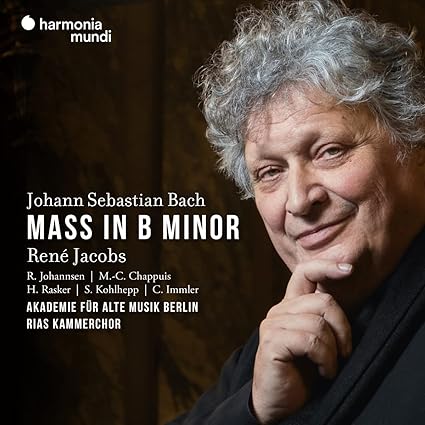
On Sunday, November the 21st, the Washington Chorus under Music Director Robert Shafer opened its 44th season with Bach's Mass in B Minor. In a well-filled (though not sold out—a reminder for friends of ad hoc plans) Kennedy Center Orchestra Hall, Laura Lewis (soprano), Marietta Simpson (mezzo), Robert Baker (tenor), and Eric Owens (bass) took stage. Behind them was the roughly 140-throat-strong Washington Chorus (Grammy Award winners in 2000 for their recording of Britten's War Requiem), indicating by sheer presence that this was going to be a fairly traditional performance. No "one-to-a-part" meddling à la Junghänel or McCreesh here. Nor is the Washington Orchestra a reedy little original instrument band... though their 8-6-4-4-2 (plus winds and brass) configuration is a far cry from the excesses of Thomas Beecham, Albert Coates, or Otto Klemperer. Accounting for the occasional oversized guilty pleasure one must say: mercifully so!

The Mass itself is a bit of a musical quilt. Composed over 24 years, it was at least not conceived from the beginning to be a cohesive whole. Nikolaus Harnoncourt (who also put the Mass on disc in a milestone recording with the Concentus Musicus Wien) discusses origin and performance practice at length in his book Der musikalische Dialog (available in English on Amazon.)

Robert Shafer mentions our (relatively) new understanding of the performance of the Mass (he refers to Mr. Harnoncourt's recording in his liner notes) and explains that the ultimate goal in presenting Bach's work (who himself never heard it performed) is getting the balance right. In order to do that with a modern orchestra, a bigger choir is needed. If that necessarily means eight times bigger than Bach would have had is a different matter, it seems. "Advanced choral art," meanwhile, helps keep the textures as clean as they would have been in Bach's day.

What exactly "advanced choral art" amounts to, I do not know, but I am happy to report that the choir did sound darn good. That the textures were as clean as in the old days (assuming that is even desirable) is not likely to be true... in fact could not have been true with the orchestra playing vibrato like it's Mahler.

cover
J. S. Bach, Mass in B Minor, Gardiner
The soloists were all very able and played and sang beautifully. Notable, among other fine instrumental soloists, was flutist Karen Johnson. Given the performance, Mme. Simpson's vibrato was not out of place in her—one wobble apart—outstanding rendition. Sculpting music with his arms in grand and flowing gestures, Maestro Shafer looked a bit like he was fighting off invisible fencers; the baton his cutlass.

The singing was faultless, with the small exception of the "Crucifixus etiam pro nobis" part of the Credo, where the pianissimo parts fell apart and became a cluster of soft hisses flying about, like the flashes going off in the bleachers at a sporting event. Minor quibbles, indeed, and hardly reason not to treat oneself to a live account of this wonderful work that will always carry a special appeal to experience in person.

cover
J. S. Bach, Mass in B Minor, van Veldhoven (nla)
Upcoming performances of the Washington Chorus include three Christmas concerts at the Kennedy Center December 18, 21, and 22. For more information, check out their schedule online.


My favorite available recording of the B Minor is van Veldhoven's (Gardiner, Rilling, , while Karajan with Kathleen Ferrier is an interesting (and in its way rather impressive, mostly because of her), obviously more old fashioned versions. A disc with excerpts of it (as well as the complete, also Ferrier-wonderful 1950 St. Matthew Passion, recently reissued and remastered by Andante) is readily available. Karl Richter, as great a Bach conductor as there ever was, has his performances see the light of day again in a 10-disc collection by Archiv of all the sacred works by Bach. (Gardiner, too, had his Bach Passions and Masses reissued a few weeks ago... and if you were thinking about getting even just one more of his Bach recordings of the Passions (or the Christmas Oratorio [my favorite being Richter]), it is worth getting the whole set.)

30.11.04

Trovatore Revisited

When you don't succeed at first...

Saturday, the 13th of November, the Washington National Opera had its last show of the problem-fraught Il Trovatore (see the first Ionarts review, from October 25). Utterly miscast with few exceptions, the "secondary" singers for the last two productions mercifully replaced Mikhail Davidoff's Manrico, Wolfgang Brendel's Count di Luna, and Denyce Graves's Azucena. There was nothing secondary about the respective replacements.

Picture by Karin CooperCarl Tanner (shown here) as Manrico had a slightly muffled quality to his singing, but what he lacked in clarity in comparison to his predecessor he made up in agility and roundness. Roberto Sevile's Count was a monumental improvement over Brendel's ill-pitched bear-voice. Nothing is as loud or booming as Brendel, but seeming to care about the role and singing in tune are worth something, too! Azucena, taken over by Elena Manistina, was a relief. While Denyce Graves has the dramatic part of the role down like few others, her singing was sadly inept. (And that's being kind.) Mme. Manistina, while not a great actress, sang the challenging role admirably with her well-sounding, stable mezzo and garnered much applause. Krassimira Stoyanova, who was still the same, had never been bad to begin with and only improved from performance to performance. Her acting, peppered with some well-applied wit, was as good as the production allowed for.

Of course you still had to deal with the staging of Stephen Lawless, and that's a matter of taste. After seeing it four times, I still retain it is a very elegant solution that works better than most attempts at staging Verdi's Troubadour. But the unbearably campy sword scene by the chorus (a woeful addition from four years ago: what were you thinking, Herr Lawless?) had still to be coped with. The idea itself is more befitting a Mel Brooks musical than an opera, but to make matters inexorably worse, the choreography was so badly executed that it became painfully comical where it was supposed to be impressive.

This may not have been the redemption of a miserable stint of Verdi's workhorse, but the improvement gave reason to hope that the casting will be done with more care in the future. Even though Washingtonians mainly go to see the opera to be there and be seen, big names that sing badly cannot over the long run sustain well-sold performances. Meanwhile we can look forward to Tchaikovsky's The Maid of Orleans and Mozart's Die Zauberflöte. (The WNO also—finally—published its next season's calendar, on which Charles or I will surely comment in the near future.)

Art-Shopping-Art-Eat-Zzzzz

Performance at the Museo Nacional de Antropología, Mexico City, 2004Friday is our third full day in Mexico City. A short walk from our hotel is the Museo de Arte Moderno and the Museo Nacional de Antropología. The Modern had an exhibit of Diego Rivera's Cubist paintings on the lower level and several installations by contempory Mexican artists. The Anthropology Museum has a vast collection of Mexican cultural artifacts. This is a daunting task, but the displays are well done and I got a thorough overview of the varied cultures and history of the country and a thrilling traditional performance outside by flying natives.

Studio of Diego Rivera and Frida Kahlo, Mexico City
Studio of Diego Rivera, Mexico City
Saturday is shopping day here in Mexico City. Well, when traveling with three women who love to shop it is. I get bored by the often row upon row of the same kitsch. On our way to the Diego Rivera Museum we stopped by the outdoor bazaar at San Angel, which is held only on Saturdays. Many painters set up in the plaza and further on there are row after row of crafts and knick-knacks, some very good. It's worth seeing.

The home and studio that Diego and Frida shared is not far from the bazaar; however, with traffic it's a least an hour. Did I say traffic sucks here? Unfortunately the studio was closed for an installation, but I got some pictures of the exterior. Very cool digs.

Then we braved more traffic, another hour, to see the Museos Diego Rivera. It's a dark forbidding place constructed of what seems to be black volcanic stone. It's loaded with ceramic artifacts and historical relics. I kept looking for the dungeon and torture racks: this is not a welcoming place to linger, unless if you're a real goth. The second floor does have the remnants of Diego's studio and the sketches and large layouts for the lost mural at Rockefeller Center. After a nice lunch the traffic slimmed out and we returned to base camp to pack and prepare for our last day and a tour of the downtown area.

29.11.04

No DVD Left Behind...

I have been lucky for the past few Christmases in having a brother who is a self-declared Tolkien-phile. Whenever I was in doubt of what gift I could provide the sibling who has a hefty DVD collection, I could always rely the last couple of years on Peter Jackson and New Line Cinema to provide the shopper with various states of commercialism attached to his Lord of the Rings Trilogy. If he had already purchased the DVD movie of the previous installment (and he had), there was always the soundtrack, the picture book, and if one was in complete desperation a pair of bookends shaped the like the diminuative and shriveled character Gollum (luckily it never came to that). While the Oscar mural I created in evocation of the last year's award sweep begins to peel from my wall, I sit in longing for an over-the-plate movie purchase that I can be sure hasn't already nestled itself quietly somewhere between All the President's Men down to Xanadu (an eclectic assortment to be sure).

It's always a risky venture nabbing an old release that grabs your eye while carting through the aisles of Target or Wal-Mart as you elbow your way through the crowds the night before (yes, guilty). While the oddly priced $8.88 may seem like a steal you don't want to be on the receiving end of quizzical looks from a loved one finally being reunited with old fave Turner and Hooch. ("Oh, yeah, I DO remember liking this movie.") Besides the fact that it reeks of gift desperation (you probably left the tag on... guilty) they were probably drifting those same aisles not but a week before and saw the very same price tag (also note; Target, Toys-R-Us, and Wal-Mart are all pushing DVDs from $3.99 and up in hopes of luring you for bigger purchases. Careful.)

So falling in somewhere between the category of old classic and new release comes the re-release. No, I'm not talking about the Extra-Platinum-Double-Special-Uncut Director's Edition of New York Minute (if only it ran that long...), but rather some lost treasures that have fallen in that all too common crack of fading VHS and not being printed on DVD.

Available at Amazon:
cover
Tim Burton, Ed Wood
One of my favorites of the past few years that had become a sort of phenomenon in its protracted purgatory of non-release is Ed Wood. This gem of a movie got caught in so many retracted release dates that rumors began to circulate on why. Some even posited that it would never be released, and a small printing had slipped out and it would be a collector's item for years to come. (This very scenario DID occur some years back with Silence of the Lambs, when the Criterion edition of the film was pulled from shelves and discontinued due to licensing fees and agreements. So instead of documentaries, interviews, and audio commentaries with the entire cast, one can now get a "special" edition with a Hannibal Lector answering machine greeting. Craptacular!) Not the case; Ed Wood has recently been released with a Tim Burton/Martin Landau audio commentary (alas no Johnny), great deleted scenes, and a few "making of" featurettes. This release is a real catch that seems to have slipped in under the wire and unnoticed.

Available at Amazon:
cover
Robert Redford, Quiz Show
Another new to DVD special that has long been a favorite and missing in my collection is Quiz Show. If you've forgotten how good this movie was, then take a moment to gaze at this flawless classic again. Robert Redford's photogenic documentation of the quiz show scandals, starring Ralph Fiennes and John Turturro, holds up to repeat viewings (you'll even forgive Rob Morrow's accent, I swear) almost more that any film in my collection, making it a DVD must-have. While this edition is a simple meat-n-potatoes transfer with only the theatrical trailer attached it will constantly regenerate its value with each viewing. This baby holds up and tends to be forgotten because it didn't nab its Best Picture trophy the year it was released.

Available at Amazon:
cover
Jean-Jacques Annaud, The Name of the Rose
The third, and perhaps favorite, of the new-olds is The Name of the Rose by Jean-Jacques Annaud. In this new Da Vinci Code climate we are in, this should surely be the video vault discovery of the year. The story centers on a medieval monastery that has experienced a sudden death while visiting monk William of Baskerville (Sean Connery) goes about (à la Sherlock Holmes) solving what appears to be a murder (or series of) in face of the Abbey's desire to find the Devil at work. Capsized on bad VHS tape (hard to find) and grainy 2-disc laser editions, this resurrection of a cult classic comes fully loaded (they should have titled it "The Monastery Edition" or "The version God doesn't want you to see," or maybe not) with a "making of" documentary that isn't simply some HBO press kit but rather a far more hands on view of the making of the film. I confess (pardon the pun) to spending the day with this baby while I was working on a building project. Listening to audio commentaries is often like having the radio playing while doing busy work you can't do in front of the television, and yet I found the stories and subjects so compelling and Annaud's words so connected to the images on the screen I got nothing done.

So often in film commentary tracks one is submitted to a by-rote narration of what we are viewing ("There's Jenny . . . as you can see she is eating something. This was a good scene . . . and here comes Paul . . .") that you find you wish you were simply watching the film again without this annoying guy interrupting you all the time. Instead, Annaud delights in anecdotes ranging from period details (from a simple cross being of the wrong period) to Christian Slater falling in love with his co-star (so much so after her screen test he sent his mother to tell the director he couldn't work with another girl) to what a jerk F. Murray Abraham was (after winning his Academy Award for Amadeus he confessed his new self-appointed mission was to make directors miserable.) Even down to the "photo journey" of the film, Annaud manages to make every detail sound so personal and current that one can't help but want to spend more time with the man.

Available at Amazon:
cover
Frank Darabont, The Shawshank Redemption
cover
Richard Linklater, Dazed and Confused
Following up these three catches are some more conventional fare in the form of new editions of previous releases. Two of note are Frank Darabont's Shawshank Redemption in its 10th Anniversary, with Charlie Rose segments, commentary, and featurettes, and a personal favorite, Dazed and Confused; Flashback Edition. I am sure the latter has been hung up due to the director, Richard Linklater, emerging into commercial viability with School of Rock of late. Previous versions of this DVD had only the film and no extras. Now refitted with deleted scenes, commentary tracks, and retro featurettes, this film has the release it's always deserved. If this one happened to slip by you in its day, then do yourself a favor and catch it now because it will give you a cache for years to come in movie quotability and "where are they now" celebrity spots. When cast members like Matthew McConaughy, Parker Posey, Ben Affleck (to name a few) drift by, it's like paging through a Hollywood High School yearbook.

Available at Amazon:
cover
Alfonso Cuarón, Harry Potter and the Prisoner of Azkaban
BUT, if you are insistent on getting the shiny, new-new release for your loved ones I'd recommend Harry Potter and the Prisoner of Azkaban, which is just out. If you have not been a fan of the J. K. Rowling series I would recommend this one as your way in. One of the most daring pairings of director and material, the studios, in a rare case of artistic insight, attached the director of Y Tu mama Tambien to one of the biggest financial juggernauts of all time, and the gamble paid off. Somehow the director, Alfonso Cuarón, even manages to make previously implausible CGI effects seem plausible simply from the emotional resonance he mines from this series's previously flat relationships.

Available at Amazon:
cover
Peter Jackson, The Lord of the Ring: The Return of the King
But, in the end, for me it's back to the basics as Mr. Jackson and his cohorts in fantasy have seen to adding, yes, another hour to the third film in the trilogy, Return of the King (making it a trim 4+ hours). Returning again to do their part, the entire cast has reassembled for commentary tracks, endless interviews, and featurettes that will be devoured with zealous zeal by my brother. I'll miss this trilogy come Oscar time, and it has been a steady source of activity during the holidays as I am subjected to repeated viewings during the inevitable idleness that comes between the Midwestern tradition of filling time between meals. But mostly, I'll miss "ol' reliable" come Christmas morning when my brother would announce what his gift was in advance but never with a trace of disappointment. The Lord of the Rings in its yearly extensions had found its way to becoming a tradition in itself at Christmastime as it wound to its inevitable conclusion.

But let's face it, folks. Some things never die. There'll always be "The Platinum Series Nine Hour Version," or "Peter Jackson's Personal Journey with...," or even "A Day with a Hobbit's Foot" and on and on from there and back again... and bless them for it.

28.11.04

Music Scrooge

This article by Robert R. Reilly appears in the December edition of Crisis Magazine and is reprinted with kind permission of the author.

It's Christmas season and I am supposed to be thinking of others. What would they like for Christmas? Of course, this is very hard for a narcissist. I continue the childish habit of giving people close to me things that I want. That way I will eventually get the things—with the added advantage of seeming to appear generous. However, this ploy has worn thin to those around me and the “mistakes” in my gift-giving of past years are known for what they were, pure acts of self-aggrandizement. I can no longer pull off the astonished and hurt look when I am told that another recording of Schoenberg's Gurrelieder is not what my five-year-old son really wished for. So I will forsake the pretense and openly wallow in what I want.

I want more. More of everything, really. But especially in the musical realm, I would like more classical CDs. In intense spiritual moments, I realize that I won't live long enough to listen more than a few times, if even that, to what I have already accumulated. Ironically, that realization drives my acquisitiveness. How can this be? I answer with an anecdote from the life of English composer Havergal Brian. In an extraordinary twilight career, Brian produced some twenty symphonies after he turned eighty. In his nineties, he was approached for an interview with the Gramophone magazine. When his interlocutor gently raised an intimation of mortality, Brian snapped back: "I can't die; I just bought a new pair of trousers."

And there you have it. That's why we have all those malls. You cannot die if you are shopping, or have recently shopped. On top of this, CDs never wear out, adding an intimation of immortality far beyond what trousers can provide. Also, DVD versions of concerts, operas, and movies never wear out either, which opens a new front in the battle.

In defense of my spiritual defect, I protest that my acquisitions are for purposes of review. It's my job, after all. Okay, it's not my job; it's my paid avocation. It brings in that little extra. This too has worn thin, as the needs for added shelf space have led to the possibility of putting my children in bunk beds. I plead that new DVDs are thinner than VHS tapes. However, those obsessed with the shelf-space-issue worry that now there will be CDs, VHS tapes, and DVDs. Well then, I will offer no more tawdry, transparent excuses; this is a column of naked desire. Just give me these things because I want them. I need them.

The first thing I want is for you to love music. This is my only eleemosynary impulse. However, it, too, translates into self-interest because I will recommend that you buy my book, Surprised by Beauty: A Listener's Guide to the Recovery of Modern Music. (You should also read our Ionarts review.) Buy it for yourself and for your family members, even for those who can't hum. I have already given this book in past Christmases to everyone I know. Now they expect real Christmas presents. The book is slipping from its hold on the 280,000th ranking at Amazon.com, so act fast.

Here is what else I want. (Since I already have almost everything, this list may appear a bit eclectic, but remember this is about me.) I will have to be quick because the list is long, though I will restrict it to 20th-century and contemporary composers. I want Chandos to continue its series of the symphonies of Mieczyslaw Weinberg (1919–1996). It appears the Olympia label series of Soviet-era recordings of these works are increasingly hard to find, so this new traversal is more than welcome. Volume two on Chandos (10237) offers Symphony No. 4, again with the National Polish Radio Symphony Orchestra, under Gabriel Chmura. It is not quite as exciting as the premiere under Kirill Kondrashin, who brought it in two minutes faster, but this is a very fine, beautifully recorded version. It is accompanied by the wonderful, haunting Sinfonietta No. 2 and the Rhapsody on Moldavian Themes. This is like Shostakovich without his satiric, acerbic side.

I want more recordings of Dominick Argento's music. Argento (b. 1927), squirreled away in Minnesota, is an American classic. His Casa Guidi is a glorious orchestral song setting of texts from Elizabeth Barrett Browning's letters to her sister from Florence, gorgeously sung by Frederica Von Stade on a Reference Recording (RR-100CD). It is about as drop-dead beautiful as vocal music gets, enveloped in luminous orchestration. If Richard Strauss had been an American, he might have written something like this, without at all sounding like himself. Two entrancing orchestral works accompany this, the playful Capriccio for Clarinet and Orchestra and In Praise of Music: Seven Songs for Orchestra. If you are not giving my book for Christmas, this CD would make a great gift for your favorite music lovers.

I want to understand more about the music of Ahmed Saygun (1907–1991), probably the premiere Turkish symphonist of the 20th century. After the collapse of the Ottoman Empire, Kemal Ataturk tried to jump-start Turkey into the modern world, which meant to westernize it. Saygun seems to have done the same thing in his music, apparently with Ataturk's blessing. Saygun accompanied B&eactue;la Bartók on his musical expeditions in Turkey, so it will come as no surprise to learn that Saygun was influenced by him, but also by Paul Hindemith, another European visitor invited by Ataturk. In any event, from the first two issues of the CPO label's traversal of Saygun's five symphonies, including Nos. 1 and 2 (CPO 999 819-2) and 3 and 5 (CPO 999 968-2), it is clear that Turkey was ready to join the EU years ago. To the extent this music sounds Turkish at all, it is clearly from a Western perspective. It is also highly sophisticated, brilliantly orchestrated, and harmonically complex. Not always an easy listen, these works fascinate and are clearly from the hand of a master. I want the rest of CPO's cycle.

As an archenemy of the Second Viennese School of music, I want to confess that I thought it just as well that I had never heard Egon Wellesz's symphonies because he was contaminated by it as a student of Schoenberg. Imagine my surprise when, having come across CPO's third release of Wellesz's complete symphonies, containing Nos. 1 and 8 (CPO 999 998-2), that I was bowled over by the First, written when Wellesz was already 60 years old. The first movement contains some absolutely magnificent fugato writing; the third is as beautiful as anything written in Mahler's lineage, without what Franz Schmidt called Mahler's "cheap novel" effects. What a wonderful surprise. I found the atonal Eighth fractured and fragmentary but, needless to say, I want to catch up with the first two volumes in this revelatory series.

Even after that backhanded remark about Mahler, I desire the new recording of his complete symphonies on the Hanssler Classic label, featuring conductor Michael Gielen and the SWR Symphony Orchestra, because critics I respect (e.g., David Hurwitz) say it is one of the best. I know Leonard Bernstein's highly charged versions of these works that remind you why Mahler went to Sigmund Freud for help. I have never written about Mahler because I still don't understand him, but I am willing to try with Gielen's help.

I want to hear British composer John McCabe's other symphonies because I have been enchanted by his Fourth, Of Time and the River, written in 1994. I have just caught up with it, though it was issued on Hyperion (CDA 67089), with his delightful Flute Concerto, at the turn of the millennium, superbly played by the BBC Symphony Orchestra, under Vernon Handley. This highly atmospheric, magical work starts with a repeated running start at something. It burbles along, returns to its starting place, and tries again—not out of frustration, but enthusiasm. McCabe (b. 1939) describes it as "a symphony where the tempo gradually decreases to a central point of stasis and then gradually increases in place to a close . . . with the actual changes in pulse imperceptible point-by-point to the listener." There is a wonderful sense of play and fancy in this work that finds its grounding not in Britten or Tippett, to whom McCabe is wrongly compared, but to the mysterious Celtic twilight world of Welsh composer William Mathias. Take the time to go down river with him.

Of course, I want much more than this. For instance, I want more space . . . Maybe next Christmas? Now I must go shop for those special presents for my children. I can almost hear them now.

27.11.04

In Search Of Frida and Diego

Museo Dolores Olmedo Patiño, Mexico CityOne of the nice things about having someone drive you around Mexico City is the chance to see all the sites as you travel from one destination to another. Billboards are everywhere, and transparent fabrics completely wrap some high-rise buildings emblazoned with super-large models selling all kinds of stuff. It's a vibrant city, to say the least.

Today we went to the south of the city to the Museo Dolores Olmedo Patiño (see the Ionarts post on the Frida Kahlo Bicentenary, from June 15). Dolores was a wealthy, very well-connected patron, some say lover, of Diego Rivera. Her rambling estate was turned into a museum after her death and has a large collection of Rivera's paintings, prints, drawings and a few very nice large charcoal drawings. I can see Rivera at his best in these large fluid drawings, but I'm very excited about seeing some of his murals. The museum also has several of Frida Kahlo's paintings and drawings. It's a little unsettling to see her work here because of the relationship Dolores had with Diego. But who wasn't he supposed to be associated with? It's an art soap opera.

We also had time this day to see the Frida Kahlo Museum in the Casa azul, her former family home, which is also in the south of the city. The brightly painted house exudes a creative spirit. I like her work, but the story of her life, the accident and crippling pain, and the wild relationship with Diego are what set her apart. She's a great story and this is a must-stop on any tour.

More tomorrow.

Galerie d'Apollon Renovated

Newspaper Articles

Anne Muratori-Philip, Les mésaventures d'un passage royal

Armelle Héliot, Apollon ou l'apothéose des arts (Le Figaro, November 26)

Anne-Marie Romero, Le sacre du Soleil (Le Figaro, November 26)

Vincent Noce, Le Louvre épate la galerie (Libération, November 24)

Antoine de Baecque, La «fabrique des images» de Louis XIV (Libération, November 24)

Emmanuel de Roux, La galerie d'Apollon, au Louvre, a été réaménagée (Le Monde, November 21)

Véronique Prat, L'extraordinaire décor de la galerie d'Apollon (Le Figaro Magazine, November 21)

Le Louvre réouvre la galerie d'Apollon (streaming video clip from TF1)
Well, after all the MoMA kerfuffle, I've been following the conclusion of the renovation of the Galerie d'Apollon in the Louvre, which opens again to the public today. This magnificent Rococo hall, a room for walking court dogs redesigned by Louis XIV but not completed until the 19th century, is one of the most famous chambers in the museum, perhaps second to the Salon Carré (as painted by Giuseppe Castiglione in 1865, and where Henry James's The American famously opens). After Louis XIV moved the court to Versailles, the Galerie d'Apollon was probably the model for the Galerie des Glaces there.

The decoration has all of the drama and extravagance of the French Baroque, combining 118 sculptures and 28 tapestries with forty-one large canvases, grouped around, of all things, Eugène Delacroix's Apollon vainqueur du serpent Python [Apollo slaying the python], completed in 1851 (see a detail of the restored painting here). Unlike Braque's Les Oiseaux (1953) on the ceiling of the antechamber in the old Louvre (now the Etruscan room: Braque recycled the sketches for the ceiling as lithographs), Delacroix's painting is a masterpiece of Rococo mimicry, harmonizing perfectly with its outlandishly ornate surroundings from two centuries earlier.

The renovation was paid for by the oil company Total, which is getting lots of free advertising as a result, as described by Armelle Héliot in her article (Un mécène indispensable et vigilant, November 26) for Le Figaro:
There is one more decorative element in the Galerie d'Apollon. It makes some clench their teeth, but you would have to be ideologically opposed to think that there is any crime against the spirit in it. The name of Total, very generous benefactor to the Louvre, is in effect inscribed in golden letters to the right of the entrance. For a restoration campaign of 5.2 million € [US$6.92 million], Total gave 4.5 million [US$5.99 million], as we are reminded by Yves Le Goff, public relations director of the company headed by Thierry Desmarets. A remarkable effort right in line with the company's generous politics, expressed not only in the patrimonial domain but also in that of workers' rights, in France as in all the countries where Total employs workers. Health and training benefits, as well as education, are the major areas of an activity we will surely discuss another time.
Well, Le Figaro is surely showing its oft-criticized right-leaning editorial slant here, but at least Total has done something good for the world for once.

Filmmaker Jérôme Prieur's documentary on the restoration, Le réveil d’Apollon, was shown on the Arte network (you lucky Europeans) last night. (You can see four excerpts from it on their Web site.) Thanks to the Louvre's excellent Web site, you can also browse through the paintings and objects in the Galerie d'Apollon, including the stunning jeweled crowns of the French monarchy.

26.11.04

Greetings from Down Under

TeotihuacanHaving a great time! Wish you were here. Well, that probably wouldn't work this time, but if you haven't been to Mexico City yet, there's a lot of art to see. My first work of art was dinner and a beautiful plate of stuffed chilis it was. That was a first-night splurge with friends, but most of the food we'll eat will be simple and as authentic as possible and that usually means inexpensive. Today the paso is 10.18 to the dollar, so this is a much better deal than Europe for sure. The major obstacle to seeing what Mexico City has to offer is TRAFFIC! There are options, but if you are traveling with children, hire a driver, if the budget allows. We did and have seen a lot in a short time.

Our first venture out was to the spectacular Pyramids of the Sun and Moon at Teotihuacan (c. 150-450 A.D.), where the new pyramid to Wal-Mart (see Ionarts post from October 22) is close by. It's no small feat with the change in altitude from Baltimore, but we climbed to the top of both pyramids. What a view. You can feel the mystery that surrounds this site and the many secrets that disappeared with its inhabitants.

Milagros, GuadalupeAnother stop was to the Basilica of the Virgin of Guadalupe, Mexico's holiest shrine (official Web site). This is where the Virgin of Guadalupe appeared before an Indian named Juan Diego, mystically imprinting her image onto his clothing, creating a sacred shroud. Pilgrims come from all over Latin America to view this icon and to leave Milagros (charms) asking for their wishes to be granted. Three basilicas have now been errected over the years to handle the larger and larger crowds coming to worship, the last being a modern specimen that I don't care for. The original small chapel high on the hill over looking the main plaza is beautiful. I find this to be a common occurance: as the demands on a religious site grow, the true essence or simplicity tends to get lost. It is quite wonderful to see how much faith and the need to believe is so important to the human race.

I'll write more as time permits. I'm in search of Diego and Frida.