CD Reviews | CTD (Briefly Noted) | JFL (Dip Your Ears) | DVD Reviews

21.1.04

If You Dig, You Will Find It

A short item on the news from France 2 last night tipped me off to another archeological find in southern France. The online notice (Marseille: une basilique du Ve s. [Marseilles: a basilica from the 5th century], January 19) has a picture of the excavation under way for a new parking lot, during which a necropolis was found. The location of this necropolis was known to scholars, but the excavation also uncovered the foundations of an as yet unidentified basilica on the site. On France 2, the archeologists at the site identified a central tomb as set off from the rest of the necropolis. By its decoration and separating wall, it is thought to be the final resting place of a saint or other special person. According to them, this tomb appears to be undisturbed. They will open it when they have completed measuring and recording the ruins as they found them. Here is my translation of what you can read on the Web site:

Remains of an early Christian funerary basilica dating back to the 5th century have been brought to light in Marseilles. The discovery, described by the Minister of Culture, Jean-Jacques Aillagon, as "exceptional," was made as part of planned excavations for the construction of a parking lot. The edifice was located in the present-day neighborhood of La Joliette, near the commercial port, and was 18 meters [59 feet] wide and more than 35 meters [115 feet] long. It was supposedly abandoned in the 7th century. About 50 sarcophagi, as well as tiled tombs or urns for young children, have been found.

"The exceptional nature of this discovery is underscored by the exceptional state of conservation of liturgical components associated with the 'memoria' (special sepulcher) and the altar, as well as the quality of interior decoration that apparently adorned the edifice, which suffered a large removal of stone after it was abandoned," specified the Minister of Culture in an announcement. The excavations should be concluded during the month of February.

This is the second time in a few months that early Christian ruins have been discovered in the Bouches-du-Rhône: in November, a cathedral constructed around 350 was discovered in the garden of a former convent in Arles, during construction. It is supposedly the first constructed in France, according to researchers from the CNRS.
Readers may remember my reports on the basilica at Arles (see posts on November 17 and November 20), a building that was well known to scholars of the early Christian period but whose precise location had been unknown. Early this month, an official of the city government of Arles kindly sent me some materials from the conference on the excavation that took place on December 2, days before the devastating floods that hit Arles (see my post on December 6). You can see some of the images that were sent to me on a page from the city of Arles about the conference (La basilique paléochrétienne d’Arles, January 9), including a computer reconstruction of what the apse may have looked like, based on the mosaic pieces that were found. Here are some of the remarks made by those who attended the conference in Arles (my translation):
Jean-Paul Demoule for INRAP (National Institute for Preventive Archeological Research): "I am not sure that the same discovery would have brought together such an audience in another town." INRAP, with its 1,500 archeologists, deals with 2,000 operations each year throughout France to avoid massive damage, such as that inflicted on the remains of the Greek port in Marseilles during the 1960s, for example.

Jean-Maurice Rouquette [Honorary Curator of the Museums of Arles] remembers the discovery of Fernand Benoît, his history teacher, in 1943. "While digging defensive trenches—it was World War II—he came upon a great wall and an ancient column in the garden of the Saint-Césaire convent. He thought he had found the remains of a temple to Diana. I am convinced today that it was the basilica's wall, which reaches from the transept crossing to the Rue du Grand Couvent!"
I will continue to follow both of these archeological stories as they develop.

20.1.04

Novelty in the Arts

Edouard Manet, Olympia, 1863, Musée d'OrsayOne theme that reappears constantly in Marcel Proust's À la recherche du temps perdu is that of art criticism. It is interesting to see how Proust writes about the reactions of his characters to challenging art of their time (writing about the past as he is). The acceptance of Manet's Olympia (from 1863, shown here), a painting which had caused considerable controversy when it was first shown, is one such case, as described near the end of the third volume, The Guermantes Way (in French, Le Côté de Guermantes), in a conversation between the Duchesse de Guermantes and the Princesse de Parme:

"Basin was talking to you just now about Beethoven. We heard a thing of his played the other day which was really quite good, though a little stiff, with a Russian theme in it. It's pathetic to think that he believed it to be Russian. In the same way as the Chinese painters believed they were copying Bellini. Besides, even in the same country, whenever anybody begins to look at things in a way that is slightly novel, nine hundred and ninety-nine people out of a thousand are totally incapable of seeing what he puts before them. It takes at least forty years before they can manage to make it out." "Forty years!" the Princess cried in alarm. "Why, yes," went on the Duchess, adding more and more to her words (which were practically my own, for I had just been expressing a similar idea to her), thanks to her way of pronouncing them, the equivalent of what on the printed page is called italics: "it's like a sort of first isolated individual of a species which does not yet exist but is going to multiply in the future, an individual endowed with a kind of sense which the human race of his generation does not possess. I can hardly give myself as an instance because I, on the contrary, have always loved any interesting production from the very start, however novel it might be. But really, the other day I was with the Grand Duchess in the Louvre and we happened to pass before Manet's Olympia. Nowadays nobody is in the least surprised by it. It looks just like an Ingres! And yet, heaven only knows how many spears I've had to break for that picture, which I don't altogether like but which is unquestionably the work of somebody."
Around the time of the novel's action, in 1891, Paul Gauguin was making a copy of Manet's Olympia, which is now in a private collection. Manet's painting is now on display in the Musée d'Orsay. Art is used by Proust's characters in all sorts of interesting ways. The refined tastes of Charlus come into play in the advances he makes to Marcel, culminating in the infamous interview at the end of The Guermantes Way. Having given Marcel a carefully chosen book by his favorite author, Charlus is outraged that the young man did not understand what he was trying to communicate by it.
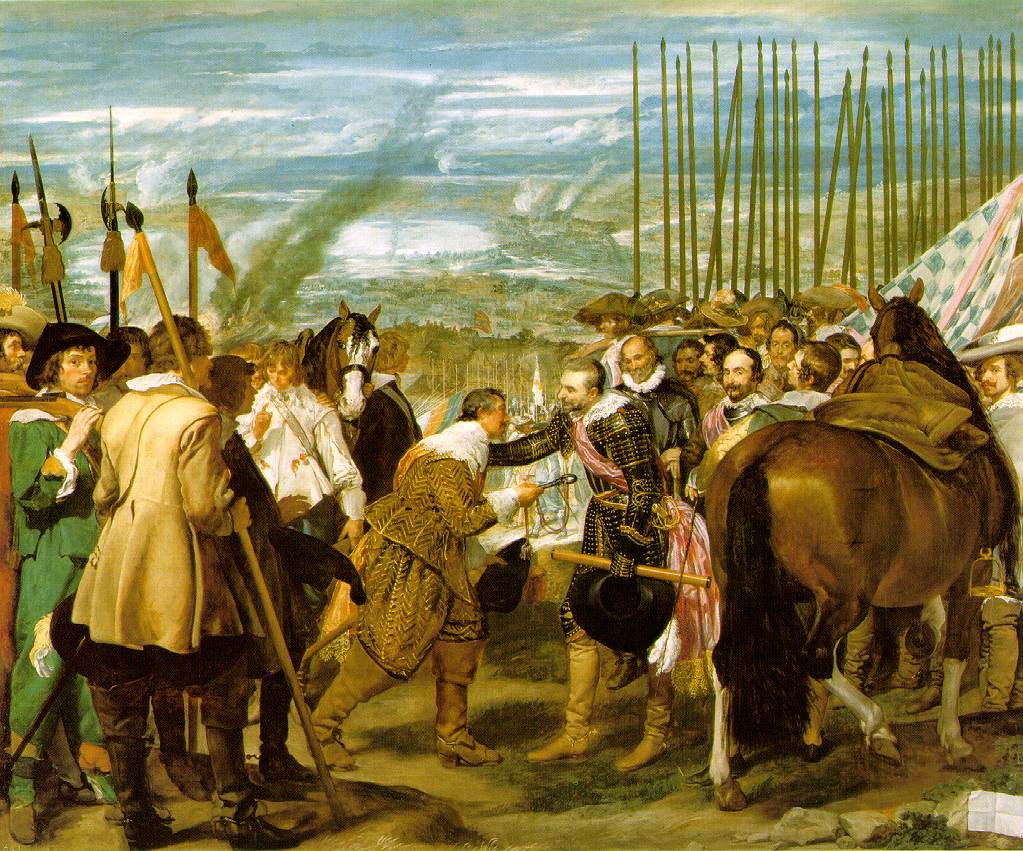
"What!" he cried with fury, and indeed his face, convulsed and white, differed as much from his ordinary face as does the sea when on a morning of storm one finds instead of its customary smiling surface a thousand serpents writhing in spray and foam, "do you mean to pretend that you did not receive my message—almost a declaration—that you were to remember me? What was there in the way of decoration round the cover of the book that I sent you?" "Some very pretty twined garlands with tooled ornaments," I told him. "Ah!" he replied, with an air of scorn, "these young Frenchmen know little of the treasures of our land. What would be said of a young Berliner who had never heard of the Walküre? Besides, you must have eyes to see and see not, since you yourself told me that you had stood for two hours in front of that particular treasure. I can see that you know no more about flowers than you do about styles; don't protest that you know about styles," he cried in a shrill scream of rage, "you can't even tell me what you are sitting on. You offer your hindquarters a Directory chauffeuse as a Louis XIV bergère. One of these days you'll be mistaking Mme. de Villeparisis's knees for the seat of the rear, and a fine mess you'll make of things then. It's precisely the same; you didn't even recognise on the binding of Bergotte's book the lintel of myosotis over the door of Balbec church. Could there be any clearer way of saying to you: 'Forget me not!'?" I looked at M. de Charlus. Undoubtedly his magnificent head, though repellent, yet far surpassed that of any of his relatives; you would have called him an Apollo grown old; but an olive-hued, bilious juice seemed ready to start from the corners of his evil mouth; as for intellect, one could not deny that his, over a vast compass, had taken in many things which must always remain unknown to his brother Guermantes. But whatever the fine words with which he coloured all his hatreds, one felt that, even if there was now an offended pride, now a disappointment in love, or a rancour, or sadism, a love of teasing, a fixed obsession, this man was capable of doing murder, and of proving by force of logic that he had been right in doing it and was still superior by a hundred cubits in moral stature to his brother, his sister-in-law, or any of the rest. "Just as, in Velazquez’s Lances," he went on, "the victor advances towards him who is the humbler in rank, as is the duty of every noble nature, since I was everything and you were nothing, it was I who took the first steps towards you. You have made an idiotic reply to what it is not for me to describe as an act of greatness. But I have not allowed myself to be discouraged. Our religion inculcates patience. The patience I have shewn towards you will be counted, I hope, to my credit, and also my having only smiled at what might be denounced as impertinence, were it within your power to offer any impertinence to me who surpass you in stature by so many cubits; but after all, Sir, all this is now neither here nor there. I have subjected you to the test which the one eminent man of our world has ingeniously named the test of excessive friendliness, and which he rightly declares to be the most terrible of all, the only one that can separate the good grain from the tares. I could scarcely reproach you for having undergone it without success, for those who emerge from it triumphant are very few. But at least, and this is the conclusion which I am entitled to draw from the last words that we shall exchange on this earth, at least I intend to hear nothing more of your calumnious fabrications."
The Velázquez reference is to the Surrender of Breda, sometimes known as Las Lanzas (see this extensive analysis of the painting).

19.1.04

Miscellany

I've come across some interesting stuff the past couple days, none of which really merits a long post, so I'm just throwing it all out there together. First, from the Department of Cultural Whimsy, in an article (Les rues d'Annecy résonnent de textes poétiques ou politiques, January 16) in Le Monde, Catherine Bédarida reported on a quirky sort of festival in the town of Annecy:

To get to know Comment aimer [How to love], you have to let yourself wander the streets of old Annecy. At the Café du Cygne, through the little shopping streets, inside an apartment, actors are making heard the poetry of American Stacy Doris. For five days, the [theater troupe] Scène nationale d'Annecy is offering about ten readings as part of its "Inédits" [Undiscovered] series. The readings—a sort of entertainment that is growing in popularity in France—most often serve as a way to present new texts, freshly issued from the author's printer or by foreign authors little known in France.
The "happenings" described in the article are strange and fun, most of them attended by an audience of young people, happy to take advantage of the free admission, dancing, drinking, and thinking about art and words into the wee hours.

In the world of art auctions, there has been interesting news. Souren Melikian (In Paris, the Battle of the Auctions: Christie's Rising, in the International Herald Tribune on January 17) reports on the increasing dominance of Christie's new Paris house over French houses like Tajan and Drouot. There was some coverage of the report that the J. H. Whitney private collection of paintings would be auctioned at Sotheby's in New York on May 5 (Carol Vogel, Famed Whitney Collection of Art Is on the Block, in the New York Times on January 15). The prize of this collection, Picasso's stunningly beautiful Rose period painting Boy with a Pipe (1905), is expected to sell for at least $70 million. Although I wanted to see a list of all 44 paintings to be auctioned (to benefit the Greentree Foundation, I could only find this gallery of highlights.

There are some cool Web resources (in French) from Le Monde: one on George Sand and one on Prosper Mérimée (see post on August 6). I cannot give you a direct link: go here and follow the links under "Revues de Web." Le Figaro also has a feature on George Sand (it's the 200th anniversary of her birth this year). Also, the 2001 special issue of Le Point devoted to Victor Hugo is available online.

Finally, if you want a good laugh, read Dave Barry's article (A Chance for Amateurs to Mumble 'Huh?', January 17), published by the Miami Herald and carried by the International Herald Tribune. (We also love Dave's blog.) This is ostensibly a review of one part of the Art Basel show in Miami Beach (the main show was reviewed by Tyler Green at Modern Art Notes last month: you have to scroll through the page), but it is really a chance to poke fun at modern art:
A lot of Serious Art consists of bizarre or startlingly unattractive objects, or "performances" wherein artists do something Conceptual, such as squirt Cheez Whiz into an orifice that has not been approved by the Food and Drug Administration for snack toppings. But no matter what the art is, a Serious Art Person will view it with the somber expression of a radiologist examining X-rays of a tumor. Whereas an amateur will eventually give himself away by laughing, or saying "Huh?" or (this is the most embarrassing) asking an art-gallery person: "Is this wastebasket a piece of art? Or can I put my gum wrapper in it?"
We at Ionarts hope we are not Serious Art People, and if we are, we promise to lighten up.

18.1.04

Blame Canada! — The Invasion of Pianists Continues — by Jens Laurson

This is a review of a concert at the National Gallery of Art on December 28, 2003.

In the 2,478th "William Nelson Cromwell and F. Lammot Belin" Concert at the National Gallery of Art, the fare was another bright star of the keyboard, Canadian Marc-André Hamelin. Known worldwide among music lovers for his superb recordings on the Hyperion label, he has proven himself comfortable with the often fiendishly difficult works of composers such as Godowsky, Alkan, Bolcom, Henselt, et al. The technical skill of this Philadelphia resident is considered by many enthusiasts to be unequaled among active pianists.

As he was playing just a fortnight after his compatriot Angela Hewitt appeared at the National Gallery (see review on December 18), the expectations were accordingly high. The turnout on this mild winter night supports this. Despite post-holiday sluggishness, the West Garden Court filled steadily, and by 6:45 people could no longer find seats. I myself was sandwiched in with three opinionated amateur pianists and classical music lovers who put my feeble knowledge of the subject matter to shame.

Finally, after I had waited some 90 minutes for the concert to start at 7:00, Hamelin appeared from behind the curtain, bowed to much applause, and then, after a short moment in which he gathered his concentration, started to peal off the familiar and delightful notes from W. A. Mozart's Piano Sonata in C major K.330. In his hands, with his manner of playing, the Allegro moderato (played on the fast side) seemed like a delicate little toy that Mr. Hamelin carefully and gently treated to an audible outing. Perhaps this impression stemmed from the absolute ease with which Mr. Hamelin played this piece. Even with the little runs and trill figures at full speed, this isn’t a very difficult piece to play, but for Hamelin, with his unique technical ability and prowess, it must be an apt way to warm up and relax at the same time.

He evoked similar sweet feelings in the Andante cantabile. Hamelin caressed the melody out of the Steinway. The honey he imparted to the notes (to a point where they lacked some of their clarity) was somewhat sedating. The somber character of the music, too, may reflect the influence of Mozart’s mother having died three years prior to the composition of this sonata in 1781. I am told that the style of Hamelin’s playing that I was trying to pin down is called the "Dresden china" approach to Mozart. The name seems fitting enough to remember for future reference.

The much needed Allegretto followed as the last movement, and eyelids in the audience, heavy until a few seconds ago, rose instantly at Marc-André Hamelin’s surprising and unusually energetic beginning. As the piece quaintly bubbled toward its end, concertgoers had plenty of opportunities to observe the borderline-disastrous acoustics of the concrete and stone (plus trees) West Garden Court. Since the sound reflects from the plethora of different surfaces (pillars, side walls, fountain, etc.), notes have little chance of developing without being blurred by others played before or after, and the result is a lush, churchlike sound, only without much of the grace a good church acoustic can offer.

When the last note of the final three hammered chords had barely struck, one audience member felt that his incomparable knowledge of the music was in dire need of showing off and started clapping vigorously. Truly, only the courageous and those free of doubt, with the score of the piece firmly imprinted in their head, dare such erudite behavior. Unfortunately, to those who merely wish to enjoy a nice piece of music (regardless of how and when it ends), it is utterly annoying.

Following the Mozart came another listener-friendly piece, if of an entirely different character. Robert Schumann’s Fantasiestücke op.12 (eight relatively short pieces with descriptive names) started dreamily, meandering with "Des Abends" (in its subtlety almost untranslatable, but for all practical purposes, "In the Evening" or "Evening-time"). That evening ended on a low chord with a little whimsical note plucked in the upper register. The tone barely gone, Hamelin broke into "Aufschwung" like a berserker . . . the contrast to the preceding mellowness could not be greater. "Soaring," the English title for it in the program notes, is probably not the best translation, and the music and the interpretation were not very soaring, either. "Impetus," "impulse," and even "inspiration" (all literal translations of the noun "Aufschwung") are all more apt at describing this movement than "soaring," which probably comes from "to soar," the literal translation of the verb of the same form, "aufschwingen"). After all, this was no eagle majestically flying about somewhere in the Alps: it was a musical "Eureka moment."

But why not move on: "Warum?" ("Why?") was not badly played at all. Hamelin's pinpoint accuracy and sure-handed excellence continued in this contemplative, sprawling piece. "Grillen" ("Whims") was muscular again and began with some ferocity, bouncing back between the strange and whimsical and (the other translation of "Grillen") melancholic. To descend into darker tones, one needs only to wait for "In der Nacht" with its brooding bubbles, containing much of the type of music that evokes perpetual motion and stands (usually in mediocre films) for pianistic virtuosity. While every note was played correctly, the acoustics and liberal pedaling threw them back together in our ears.

"Fabel" takes a mild approach, until it, too, displays a need for speed after a few bars. It ebbs and flows, acquires significant speed, and finally dribbles out with a thrice-repeated chord. "Traumeswirren" are indeed confused ("troubled") dreams and the end of the song ("Ende vom Lied") comes literally and with some quixotic power. Apparently, the pieces are divided between Schumann’s alter egos Florestan (loquacious and impetuous) and Eusebius (reflective and otherworldly), as Elmer Booze (known to Library of Congress concertgoers as the gentleman who turns the pages in piano-involved concerts) tells us in the program notes.

The intermission brought immediate and wildly varying arguments and perceptions. The only agreement to be found was that Hamelin sounded very different from his recordings, which offer (like most Hyperion-recorded pianists) a rather dry and detailed tone. This difference, however, had some finding the Schumann quite astounding and very enjoyable, while other opinions went all the way to "travesty" and "atrocious." Unhelpful pedaling, muddled thrills, inept phrasing, and swallowed arpeggios seem to have raised the ire with at least one fuming audience member/pianist. My suggestion to blame it partly on the acoustics was better accepted after the concert than at this point.

Fortunately for him, the acquaintance who had been rather outraged at the Mozart and Schumann performance did not make good on his threat to leave and found himself rather enjoying the second half of the concert, in which we got to hear one of the great virtuoso works for piano: Issac Albéniz's Iberia, Book Three: El Albaicín, El polo, and Lavapiés. Iberia, Albéniz's major work (re-orchestrated by some of his students) is an absolute piano masterpiece in scope and varieties of style. From four books of four pieces altogether, the pieces chosen by Mr. Hamelin reflect different regions in Spain (Granada, the Andalusian south, a corner of Madrid), as well as their songs and dances.

"El Albaicín" starts with a fairly reduced theme that grows into more complex structures, only to recede again. As it is far richer in color and shadings than the previous pieces, I constantly found new themes spun out of the core of the playing. There are many notes in this music (I am reminded of the Emperor's hilarious, if fictitious, criticism of Mozart's music in Amadeus: "too many notes"), and not all of those notes have time to develop. Pedal, speed, and acoustics are the main culprits. Speaking of culprit, one attendee had an unfortunate attack of bronchitis and, more unfortunate still, did not have the decency to leave. After some ten minutes of periodic, strenuously suppressed coughing it either got better or I grew used to it.

"El polo," not a diminutive chicken but a dance from Andalusia, is in parts more moderately paced, but like all three pieces it is a heterogeneous sound-carpet. Whimsy comes out to play towards the end, before brute force squashes it. "Lavapiés" opens with a storm, full pedal; one slightly dissonant note sticking out in a repeated chord becomes the calling card of the opening. Rhythmically hopping, somewhere between horses and fat, black flies in boiling summer heat (difficult to conjure in a cold West Garden Court, with late December outside) and more taxing repertoire than anything tonight, this work got more engagement from Mr. Hamelin. Difficult to describe as it is, I opted to sit back and enjoy. In the enjoyment I found myself seconded by all around me, even the dissenting voices earlier. Description, however, varied. While I heard something about an (emotionally?) dry approach, I thought it to have been everything but dry . . . involved, a little slurring (I blame the hall mostly), heavy pedal (intended by the composer, as can be read in the score, not with pedal markings but legato bows in the bass line) made for what I thought was a particularly lush drive down to El Albaicín.

Such nitpicking notwithstanding, it was another night well spent at the National Gallery of Arts, as the evening ended on such a positive, uhm, note.

17.1.04

BIG FISH Is Worth Being Lured — by Todd Babcock

There seems to be a bit of disparity among critics and moviegoers over the verdict on Tim Burton's recent film Big Fish. While the film is making respectful money, the trades seem to report that it is underachieving according to expectations. Critics seem split on whether it's a saccharine, structureless circus of images (à la Planet of the Apes) or a truly inspired character piece like his brilliant Ed Wood. The answer is neither, and let me go on record saying that I bought it (with all apologies here) hook, line, and sinker.

"Big Fish" doesn't shy away from its sentiment or its style. The movie begins in metaphor and only balloons from there as scene after scene builds on its own ridiculousness. The structure couldn't fit Burton's creative style more in the form of one long series of stitched-together tall tales grounded back to reality with the fabric of a father-son story. Yet, while the director is swelling his canvas with mythic creativity, it is grounded firmly with a stellar cast.

The story centers around Edward Bloom (the flawless Albert Finney) in the waning years of a long and colorful life. Bloom, it seems, has been less a father than an orator of great and long-winded tales. (When his daughter-in-law asks him if "This is another tall tale?" he retorts quickly, "It certainly isn't a short one!") Playing Bloom's estranged son is Billy Crudup, who one can argue, never plays an off note. While the movie may parade its imagination on display, it is these two actors, along with Jessica Lange, who constantly place its feet back on firm ground.

The movie certainly asks something of its audience in terms of its style pill to swallow. Like its box office competitor Return of the King, one must look past the odd-looking characters and circumstances in order for the sentiment to get through. Ewan McGregor (who plays the young Bloom) embodies this notion, as in every scene he has a toothy smile pasted on like one of Burton's still drawings. While one would expect the effect to be of a flat-lining disinterest it eventually overcomes you with endearment, which could well describe the entire film.

Burton himself has gone so far as to profess that he "can't tell a story," and there are few who would disagree. Truly, even his most successful ventures (such as Pee-wee's Big Adventure, Batman, and Beetlejuice) have had the slightly veiled form of a collage of beautifully demented scenes woven together. It was with "Ed Wood" that he took a step forward with a stylized but character-driven narrative. Perhaps Tim, it was posited, was maturing as a filmmaker and we could soon expect Good Will Hunting out of him. As it turns out, he has absolutely no interest in such ventures. As he explains, "When I started in the business, they treated me like I was different; when I had success, then they wanted me because I was different. That kind of prepackaged 'difference' makes me very uncomfortable. And I have always tried to protect myself so I wouldn't know what it was they thought of as being like me. I get very uncomfortable with labeling" (New York Times Magazine). It turns out that to defy definition we were treated to the costume-driven debacle of Planet of the Apes.

I had the opportunity to work briefly with the director on "the Ape film" (don’t rent it, and if you do, don't blink), and what was so shocking and immensely captivating is that he never seemed like he was making a big action movie. Truly, he showed up on the set in jeans and his crazy hair and pretty much said, "whatever you guys wanna do." He would watch, laugh, scratch his head a bit, adjust, and then keep shooting. As I'm sure the suits and accountants at FOX wouldn't like to hear such a report, it does infuse one with a sense of empathy for the bad matching of director and project. Yet, if that's the turn it took to get us to "Big Fish," so be it.

While all this praise for "Big Fish" seems unabashed, it's not to say the film doesn't have its faults. Certainly one can see the seams of this film and how dangerously it strains under its own conventions and bloated vision. I was warned going in to this film that I would be gushing with tears by the end and was curious as to how it would pull off such a feat. Certainly these episodic scenes played out with amusement, colorful characters, and epic scope: nothing seemed to be preparing me for any maudlin, cloying, "give us an Oscar" ending. Which is why all fissures and cracks are made smooth, for I was duped in plain sight. It seems that from the start of this film it asks its audience for a brief contract of investment in its fantasy and on-its-sleeve sentimentality. A contract it cashes in on repeatedly and demands more and more, scene after scene, and just when you think its about to end, it . . . it shatters the bank. The division between fans and detractors of "Big Fish" comes down to a simple decision, made early, of whether you bite the lure or not. If you do, trust me, you'll be set free.

16.1.04

French Music at the Kennedy Center

The performance by Les Arts Florissants (see post on January 14) is just one part of a celebration of French music at the Kennedy Center this winter: the Festival of France will present concerts of French music from local and travelling groups through April 2004. (See Tim Page's lackluster preview, A Classical January, from the Washington Post on December 30.) Sadly, the performance of Les Arts Florissants will be in the Eisenhower Theater at the same time that Renée Fleming, Susan Graham, and Steven Blier (see post on January 11) will present a program on The Art of the French Song. In an ideal world, I could bilocate (as Pythagoras of Samos was reported to have done): my soul would listen to Renée Fleming and Susan Graham, while my body listened to Charpentier with Les Arts Florissants.

In an even more ideal world, the budget required to attend more than the occasional concert at the Kennedy Center wouldn't bankrupt me (see post on October 20). Terry Teachout's excellent comments (see his post from January 7) about forcing art critics to experience a crowded exhibit the way that regular museumgoers do could also be applied to music critics and concertgoing. The minimum ticket price for Les Arts Florissants at the Kennedy Center is $60, and for Renee Fleming et al. between $30 and $75. With parking, which is outrageous at the Kennedy Center, that works out to a minimum cost of $75 to $135 for two people to attend a single concert. At a rate of one concert per week, which would be a reasonable ideal, that would total up to a substantial portion of what the normal person pays for his rent or mortgage per month. I am lucky to have a number of subsidized and therefore free concerts that I can attend to sustain me.

Now, that being said, I am a musician, and musicians deserve to make a living wage in the practice of their art. However, we need more government and corporate sponsorship of concert series (on the excellent model of the Library of Congress and the National Gallery of Art, for example). As a society, we need opportunities to hear beautiful music and see beautiful things without breaking the bank. The high price of admission in the commercialized system reinforces an elitist stereotype that is doing more damage than we know to the future of the arts.

Whatever. I will be shelling out the big bucks for the opportunity to see Les Arts Florissants on February 3. Oh, yeah, I somehow forgot to mention that the costumes for the two operas of Marc-Antoine Charpentier have been designed by Christian Lacroix, the fashion god of Edina Monsoon (Jennifer Saunders) in the British sitcom Absolutely Fabulous, among other qualifications. You can see some of Lacroix's costumes for past theater productions at his Web site (in English or in French). If you want a teaser of how Les Arts Florissants sounds, you can listen to a clip here.

15.1.04

That's All, Folks!


This is a review of a concert on December 18, 2003.

The culmination of the Beethoven String Quartet Cycle at the Library of Congress with the Juilliard String Quartet took place on December 18 in the Coolidge Auditorium with the Stradivari Anniversary Concert. As we read in the program notes, "Gertrude Clarke Whittall's 1935 donation to the Library of five Stradivari instruments was followed shortly thereafter by an endowment to provide for their care and use. The foundation, which built the Whittall Pavilion in 1938 to house the instruments, also enables the resident quartet to perform on them and provides for the acquisition of large collections of music and individual rare manuscripts."

Antonio Stradivari (1644–1737) made his superb string instruments around the turn of the 17th century, and his instruments bear individual names. Among the instruments given by Mrs. Whittall are the "Betts" violin from 1704 (~1700–1725 being the best period of his violin making), the "Castelbarco" violin (1699) and cello (1697), the "Cassavetti" viola (1727), and the "Ward" violin from 1700. "Five Tourte bows accompanied the instruments. Every year, the foundation [...] presents a concert—featuring the Strads and played by the Library's quartet-in-residence—to commemorate the death anniversary of Antonio Stradivari, who died on December 18, 1737." (The Juilliard String Quartet, by the way, always fiddle around with these instruments—not only during this concert.)

Scientists have recently proposed the hypothesis that the elusive reason for the unique quality of these instruments was a series of extremely cold winters and unusually cool summers (a "mini-Ice Age") over two decades in the late 17th century. This resulted in a slower growth of trees and a higher density of the wood, culminating in the unique and extraordinary tone that a Stradivari violin produces. [See John Pickrell, Did "Little Ice Age" Create Stradivarius Violins' Famous Tone?, January 7, from National Geographic News. If you read science, you can also consult the article that originally presented the research: Lloyd Burckle and Henri D. Grissino-Mayer, Stradivari, Violins, Tree Rings, and the Maunder Minimum: A Hypothesis, in Dendrochronologia 21/1 (2003): 41–45.—CTD]

The concert featured just two works, the Beethoven String Quartet, op.130, in B-flat Major and the grand String Quintet in C Major, D.956, by Franz Schubert. As much as I was delighted to find the rewarding Schubert on the program, I have to admit that I missed the modern "sandwich-filler." Indeed, I was disappointed that the Juilliard were not trying to edify and enrich us (against our will?) with some piece that was modern and off the beaten path. Even when thorny and of dubiously gratifying nature, they have become quite dear to me and to my ears.

The Beethoven quartet, already presented at the concert on October 22nd (see the Ionarts review from October 22), was given in its more conventional form with the Rondo as the last movement—instead of the original form with Die Grosse Fuge as the final piece. The latter was cut by Beethoven after he was persuaded to do so by his friends and publisher, reconstituting the quartet with the shorter finale, just months before his death.

The playing in the filled hall commenced, full of feeling, as the Adagio ma non troppo flowed seamlessly into the first movement's Allegro. A little uncleanness did not detract, especially as the first of two rondos arrived after much tuning of the quartet's instruments had spoiled our ears. Now—as at its first performance on March 21, 1826 (where it had to be encored)—it delighted the audience. Lively and joyous, the opening figure of the music proceeds swiftly, with a few sprightly bars of pizzicato to loosen things up. The Andante con moto ma non troppo passes, as does the dance-like fourth movement (Alla danza tedesca: Allegro assai). It seems more difficult now to understand the immediate enthusiasm that this movement received at its premiere, and it also fails to leave me with an appreciation for German dancing of the time.

However, the Cavatina (Adagio molto espresivo) is stunning! First received lukewarmly, as the program tells us, it is nothing now but charming and moving. Were slow movements not as popular almost two centuries ago? (One thinks of the divine second movement, Adagio non troppo), in Brahms's 2nd Symphony, which no one much cared for at its first offering on December 30th, 1877.) Joel Smirnoff produced a rather whimsical tone in this movement, very cleanly played (perhaps the tempo helped) and altogether a delight. The entire quartet rose to the occasion of this lovely movement and most of the audience was spellbound.

The finale is a cute (little) thing compared to the overpowering, awkward, and dryish Grosse Fuge. Instead of op.133, we have something lighthearted and nice. "Harmless" would be unduly negative, although it comes to mind compared to its predecessor as the closing of this quartet. Ludwig van Beethoven announces the end of this piece from a mile away (it really is still a mile away) . . . and its energy rewards us for what is otherwise well described as "long!"

I suppose the quartet could have been executed with more care, but altogether this part of the concert was a welcome and uplifting capstone, not only to op.130, but to the entire Beethoven String Quartet Cycle coming to its conclusion in celebration of the Juilliard's 40th anniversary as the String Quartet in residence at the Library of Congress.

After the intermission, in which most people were more excited about the Beethoven than I, came what turned out to be the spellbinding event not only of the evening, but really of the series of concerts that I have been to since October. The Juilliard with the help of cellist Marcy Rosen gave us the "Schubert Quartet for Five Instruments," the String Quintet, D.956.

The first movement (Allegro ma non troppo) starts out slowly until it picks up a little speed after the first common crescendo. Two cellos, of course, are better than one—because now Joel Krosnick had competition and immediately responded to it. He slouched a bit less and even curiously peeked from behind his cello over to Mme. Rosen. The latter had the part that carried the melody in a sweet tenor line, while the former provided for the bass. Viola player Samuel Rhodes performed lonely pizzicati, sitting all the way to the right edge—his body turned away a bit from the other four, as if perturbed that he didn't get a viola-buddy.

The interpretations that shot through my mind while listening might have resulted from the lighthearted character of the music (without ever being shallow)—a truly enjoyable affair—especially considering that it was written just weeks before rigor mortis beset Schubert's body. For instance, as my eye wandered, it latched onto the wardrobe presented by Marcy Rosen. She appeared in a curious turquoise-purple sweater of sorts, to which seemed to be attached a cape that, lifelessly draped over the chair, resembles a rather hungover bat that has accidentally flown into an 80s makeup cabinet. The rest of the dress was kindly hidden by the bipartite forces of her cello and Mr. Rhodes's body.

However, the playing was wonderful and faultless; viola and first cello were making wonderful music, the violins answering duly until this game commenced in the reverse, the violins making conversation while cello and viola respond. The ensuing Adagio with its long notes and plucked bass line made for welcome progress after a long first movement. The playing continued to be immaculate. Suddenly, within the Adagio the music gets rather wild, offering hard work for the first cello (Mme. Rosen and her bat mastered it effectually) before the seas calm again. A very gentle passage brings out lyrical (I overheard "boring" from less sensitively attuned listeners) elements with long pizzicato-dominated passages.

Appropriately, the third movement (Scherzo: Presto ~ Trio: Andante Sostenuto) jolted the audience, some of whom seemed to think the Quintet (barely half of it played) evening-filling already. The trio in this movement takes over and re-sedates the recently awoken with its mellow character. The repeated four-note figure that dominates the trio ends it in a muscular fashion worthy of any finale and makes way for the actual last movement, the Allegretto. I gently woke my neighbor and listened myself with a concentration not usual for me when attending chamber concerts with late Classical or early Romantic repertoire. Thus at least two listeners fully appreciated the joyous and entertaining nature of this movement. Closing rapture gathered speed and upped the decibel level.

Mr. Smirnoff, in his unique fashion, dangled on his chair like an electrocuted bass, feet off the ground, playing excitedly, barely balancing himself at the middle of both body and chair. The playing continued to be blemish-free and only made it easier to enjoy every note in this masterpiece that is perhaps less often heard than it deserves. The last note barely evaporated into the Coolidge Auditorium's air when the audience burst into instant and truly enthusiastic applause. Standing ovations—for the Schubert, surely, but also for all the preceding concerts from two years in which the Juilliard has delighted Washingtonians (not usually known for extensive ovations) with great music.

Leaving that night, it was difficult to think of a more worthy and moving end to this series, and I doubt anyone went home untouched. Now we have only to ask ourselves what more there might be to come. My New Year's resolution shall be to find out.

14.1.04

Happy Anniversary to Les Arts Florissants

William ChristieIn an article (Un double anniversaire pour les Arts florissants, January 14) in Le Monde, Renaud Machart writes about the celebrations for the 25th anniversary of Les Arts Florissants, perhaps the best Baroque performance ensemble in the world, founded by William Christie (shown at right) in 1979. Since it also happens to be the 300th anniversary of the death of Marc-Antoine Charpentier, the group is giving semistaged performances of two of his operas, La Descente d'Orphée aux enfers [The descent of Orpheus into the underworld] (1686-87) and Les Arts Florissants [The flourishing arts] (1685-86).

Twenty-five years have passed since the creation of Les Arts Florissants by William Christie, then a young American and francophile keyboard player—before becoming orchestra conductor and a French citizen—who was watering the tender blossoms of what would become a vibrant musical garden. Those younger than 20 don't know about the period we are talking about, when the first early music groups were created, at the end of the 1970s [...] a time when one risked expulsion from conservatories if one dared to make sounds other than those approved by the official teaching.

The public followed the hoodlums, who quickly gained entrance to the Opéra-Comique, in Paris, for an opera by Lully, Atys, produced by William Christie and the director Jean-Marie Villégier, in 1976, which became at once a legend and a point of no return: this music, formerly enjoyed by the "happy few" and faithful listeners of Jacques Merlet's program on France Musiques, was going to win a lasting place in the hearts of the crowds.

While he could work with big stars (which opera theaters sometimes require him to do, for better or worse), William Christie obstinately continues to trust in some very young performers for his concerts. Since 1979, the personnel of Les Arts Florissants has changed a lot, even if the "overlapping" of the generations has assured a continuity of sound and style, nurtured by the strong personality of its leader, a formidable musician who is never better than in the intimacy of small works like the two mini-operas he is directing now.
The group was at the Cité de la musique in Paris yesterday and today (January 13 and 14) before taking the show on the road around Europe (Utrecht, Brussels, London, Caen, Vienna, and Zurich) and then here in the United States. They will be at Symphony Hall in Chicago on February 1, at the Kennedy Center here in Washington on February 3, at Alice Tully Hall in New York on February 5 and 7, and at Emory University's Schwarz Center in Atlanta on February 9. You should go help them celebrate.