CD Reviews | CTD (Briefly Noted) | JFL (Dip Your Ears) | DVD Reviews
Showing posts with label Víkingur Ólafsson. Show all posts

11.12.25

Critic’s Notebook: Víkingur Ólafsson Looks at Opus 109 through his Kaleidoscope


Also published in Die Presse: Beethoven durch den Ólafsson-Filter

available at Amazon
W.A.Mozart
Mozart & Contemporaries Vikingur Olafsson
(DG, 2021)


US | UK | DE

available at Amazon
L.v.Beethoven
Opus 109 et al
Vikingur Olafsson
(DG, 2025)


US | UK | DE

available at Amazon
Bach / Glass / Rameau
Triad (1736) Vikingur Olafsson
(3CDs, DG, 2020)


US | UK | DE

Beethoven Through the Ólafsson Filter


Víkingur Ólafsson offers an evening in unwavering E major – and minor – at the Konzerthaus.


Víkingur Ólafsson (whom we predicted to have a great career at ionarts as early as 2005!) has built up an enthusiastic following in the cities he visits. Quite rightly so: with his distinctive mix of playfulness amid great seriousness, he is that rare phenomenon whose impact stems from the sheer quality of his playing rather than from interpretive gimmicks, exaggeration, or provocation. On Tuesday night at the Konzerthaus, he showed a different side.

The Bach Prelude from the Well-Tempered Clavier was still a conventional opening – leisurely, relaxed. Why he chose No. 9 in E major in particular became obvious during the seamless slip into Beethoven’s op.90. When the program noted that “the performance will take place without intermission”, they sure meant it literally: Ólafsson played straight through, leaving no space for applause (or regulated coughing) until after the last movement of the last work. Admirable for its efficiency but slightly taxing after an hour.

Beethoven’s two-movement sonata – a major little gem perhaps underestimated because of its brevity – took on an unusually dreamlike cast under the Icelander’s hands. “mit Empfindung”, indeed. And then, as the tempo tightened in the second movement (“mit Lebhaftigkeit”), he launched into it with such headlong abandon that the notes nearly tripped over their own feet. He let the whole piece unfold with unexpected emphases, freshly minted agogics, artful pauses, and a whispering close. From anyone with a lesser reputation, one would say: wildly distorted.

It was a sign of what was to come. After a progressively introverted reading of Bach’s Partita No. 6 – taken, like everything else, attacca in and out – came early Schubert and his likewise two-movement Sonata D.566, which Ólafsson quite plausibly places in the wake of Beethoven’s op.90. Individual, playful, a touch sugary – and with a stormy dash into the finale: an April-weather Schubert. Onto this, without so much as a breath, the supposed crowning moment was to follow: Beethoven’s antepenultimate sonata, op.109. His hand went to the keys... recoiled several times, visibly annoyed by coughers. But what does the young man expect when, in December no less, he gives no proper coughing-outlet to two thousand throats for nearly ninety minutes?)

There was, to be sure, much to marvel at in this Beethoven: vlafsson's outstanding sensitivity, naturally, and his finely cultivated touch. But there were also exclamation marks underlined twice, while subordinate clauses were stuffed into double parentheses. There were ritardandi that might have left Josef Hofmann blush and would perhaps not even occur to a Lang Lang. Also lots of pedalling, then breathless passages that pushed the Beethoven to the point of sounding like it consisted of clusters. A harried fugato was followed by a sixth variation in super slow-mo. At times it sounded like a departure from the pianist’s usual image – the one built on naturalness and exquisitely differentiated touch. A step from Wilhelm Backhaus toward Khatia Buniatishvili, if you will.

But one man's disappointment is another man's delight - and the four generous encores – Bach, Rameau, and Bartók, who in his Three Hungarian Folk Songs suddenly sounds like Erik Satie – brought the house down.


4.5.21

On ClassicsToday: A Vikingur Retrospective, Musicianship over Hype

 Triad: Víkingur Ólafsson’s Greatest Hits

Review by: Jens F. Laurson

BACH_GLASS_RAMEAU_Triad_Vikingur_DG_ClassicsToday_jens-f-laurson_classical-critic

Artistic Quality: ?

Sound Quality: ?

Triad, the latest release by Icelandic pianist Vikingur (Heiðar) Ólafsson, isn’t a new album. It’s simply a fancy repackaging of his last three main releases for Deutsche Grammophon. This wouldn’t be particularly noteworthy if all three of those releases weren’t absolute corkers. There’s a disc of Bach–transcriptions both original, third-party, and by Bach himself–that was an easy 10/10 choice when we reviewed it here (see reviews archive). Both of the other two albums are similarly lofty achievements... (read the entire review at ClassicsToday

17.12.20

Best Recordings of 2020


After a hiatus last year, it is time for a list of classical CDs that were outstanding this year. This is the ionarts list of the Best Classical Recordings of the Year:

Preamble


I’ve been doing some form of “Best of the Year” list since 2004. 2019 was the first time I slipped. Here’s my attempt at redemption. Granted, my overview of new releases is no longer quite what it was in the days I worked at Tower Records. But the idea of a “Best of the Year” list, if one clings too literally to the idea of “Best” is daft even under the most ideal of situations. It’s of course just short for: “These are a few of the things that I liked” and used, as I’ve been fond of writing in past iterations of this list, because “10 CDs that, all caveats duly noted, I consider to have been outstanding this year” just doesn’t roll off the tongue as easily. Because I skipped 2019, I will include some releases from that year on this list. If you are looking for past lists, here they are:

2004 | 2005 | 2006 | 2007 | 2008 | 2008—"Almost" | 2009 | 2009—"Almost" | 2010 | 2010—"Almost" | 2011 | 2011—"Almost" | 2012 | 2013 | 2014 | 2015 | 2016 | 2017 | 2018

Pick # 10


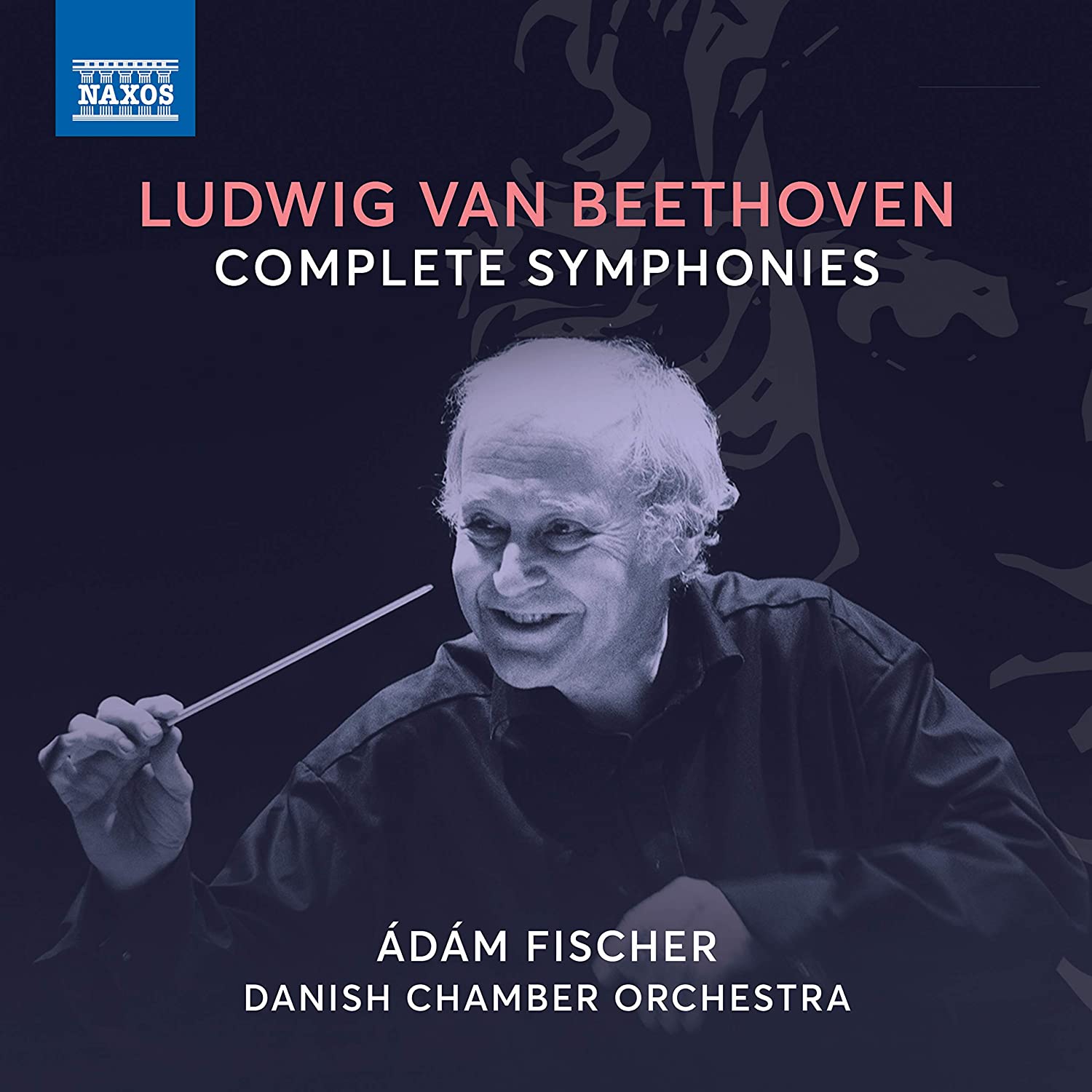
L.v.Beethoven, Symphonies 1-9, Adam Fischer, Danish Chamber Orchestra, Naxos 8.505251


available at Amazon
L.v.Beethoven, The Symphonies
Adam Fischer, Danish Chamber Orchestra,
Naxos

I wanted these to be on the aborted 2019 list and they definitively belong on it. Yes, we have way too much Beethoven – and 2020 was one of the worst offenders, with it being the 'Beethoven Year' and every artist with ten fingers or access to a baton bringing out a cycle of the sonatas or the symphonies. In the concert halls, at least, Corona saved us from a Beethoven overkill that would have ruined our appreciation of the composers for decades. But just before all that happened, Adam Fischer and his now privately funded Danish Chamber Orchestra come out with something that stands out from the 178+ other cycles we can choose from. These are unpretentious, lively, quick-witted yet totally sober readings that manage to be free of any exaggeration and superbly exciting at the same time. Fischer situates his Beethoven in the near-ideal middle between the stale routine of playing these damn things over and over again on one side and the interventionist re-inventors of the wheel on the other. This is roughly the space Jukka-Pekke Saraste and his West German Radio Symphony Orchestra occupy (review: Precious Vanilla), or the fairly recent and excellent second Blomstedt cycle with the Leipzig Gewandhaus Orchestra. Except that Fischer’s band is smaller, more nimble, and a touch more alert which – as might be expected – shifts the focus of strengths towards the earlier symphonies. Like Blomstedt and most other conductors these days, Fischer chooses swift tempi. More to the point: Fischer opts for mediating tempi: quicker slow movements and moderately paced fast movements. The result is Beethoven unassuming and disheveled, and very lovable. A more detailed review will follow on ClassicsToday eventually. But it’s definitely the Beethoven Cycle of the Beethoven year!

Pick # 9


R.Schumann, Rare Choral Works, Aapo Hakkinen, Helsinki Baroque Orchestra, Carolyn Sampson et al., Ondine 1312


available at Amazon
R.Schumann, Rare Choral Works, Aapo Hakkinen, Helsinki Baroque Orchestra, Carolyn Sampson et al.,
Ondine

Here’s an all ‘round terrific disc of off-the-beaten-path Schumann from Ondine, coupling his Ballade op.140 for soloists and chorus with the Adventlied and – an intriguing filler in the middle – Schumann’s reworking of the Bach Cantata BWV 105. The Adventlied is, inexplicably, a world premiere recording. Where has it been hiding? It is Schumann at his most Mendelssohnesque. Meanwhile it’s good to know that even Schumann agreed that Bach’s stupendous Cantata BWV 105 is a masterpiece among masterpieces. Creating this performing version he certainly suggested as much. And he didn’t super-juice it: he held back and limited himself to modernizing the instrumentation to suit his players. It’s not adding to Bach but as the imaginative buffer between the two marvelously Schumann pieces is very welcome. With Carolyn Sampson participating, deftly accompanied by the Helsinki Baroque Orchestra and the Estonian Philharmonic Chamber Choir under Aapo Hakkinen, this disc is a winner that I’ve been wanting to write about for over a year. Consider this the teaser.

Pick # 8


J.S.Bach, Christmas Oratorio , Rudolf Lutz, soloists, Bach Stiftung Orchestra & Chorus, Bach Stiftung B664


available at Amazon
J.S.Bach, Christmas Oratorio, Rudolf Lutz, soloists, Bach Stiftung Orchestra & Chorus,
Bach Stiftung

Befitting the season, a Christmas Oratorio makes this list. The new release from the St. Gallen Bach Stiftung is perfect in just about every way. Perfection – in a technical sense – isn’t everything, of course, especially when it’s closer to anodyne than riveting. But in this case, the live recording (you’d never know!) has all the spirit of most of this outfit’s releases and absolutely terrific singers starting with alto Elvira Bill (who has appeared on the last three Christmas Oratorios I have reviewed) and tenor Daniel Johannsen who has established himself to the point where neither “young” nor “up and coming” still apply. (I’ve just checked: He’s older now than Werner Güra was when he recorded “Schöne Wiege meiner Leiden”.) A review will follow on ClassicsToday soon and be linked then. By the way: if you haven’t sampled their Cantata-cycle het, but want to, you would do well to start here, with volume 30!

Pick # 7


Hans Zender, Winterreise Re-Composed, Ensemble Modern, Blochwitz, Ensemble Modern 043/44


available at Amazon
H.Zender, Winterreise Re-Composed, Ensemble Modern, Blochwitz
Ensemble Modern

This year I am not splitting the list up into new and re-releases. But as a nod to the tradition, I must include this re-release of a classic recording which I am so glad to have back in the catalogue: The premiere (and still best) recording of Hans Zender’s Winterreise with Ensemble Modern. My review for ClassicsToday here: Best Remembrance Of Hans Zender

Pick # 6


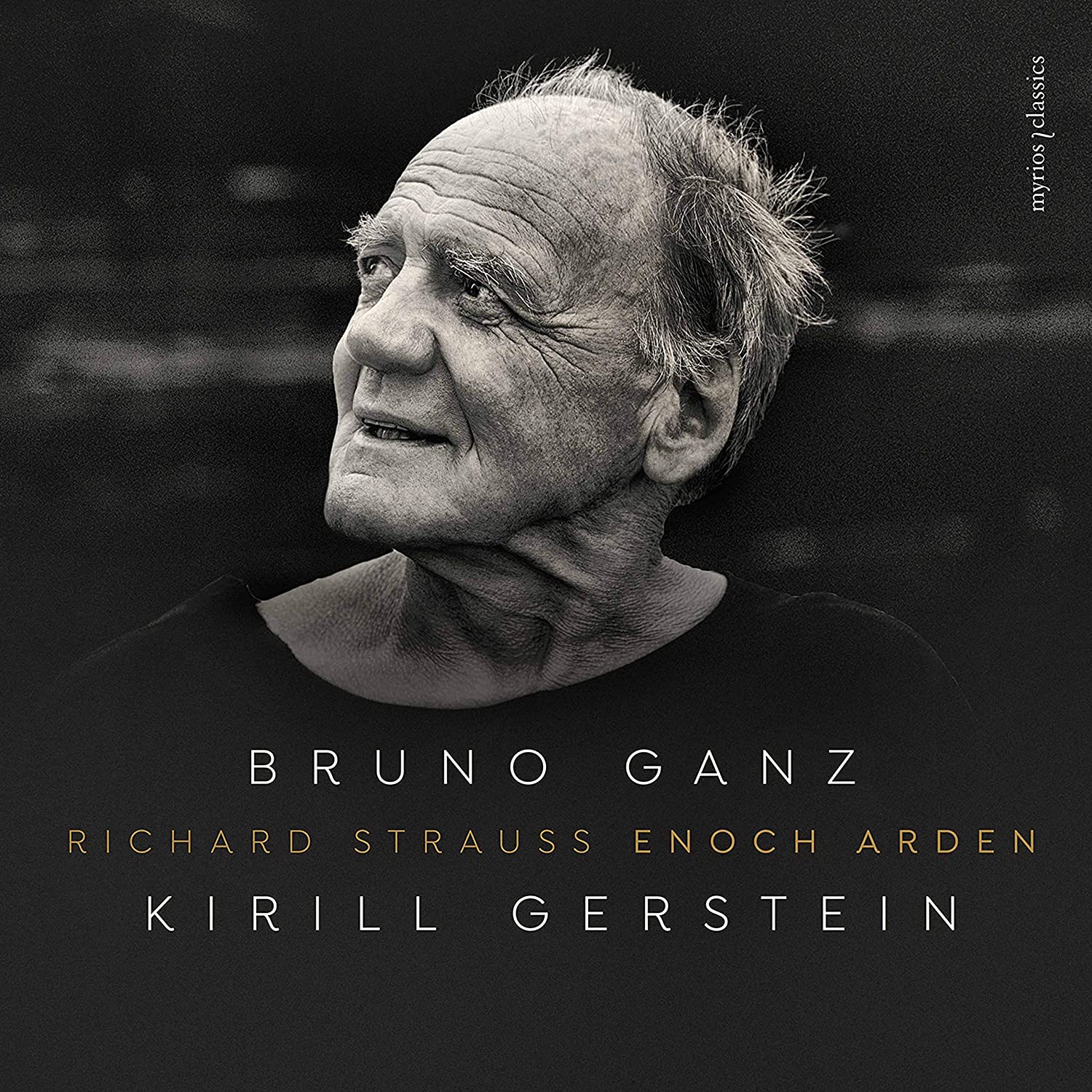
Richard Strauss, Enoch Arden, Bruno Ganz, Kirill Gerstein, Myrios MYR025


available at Amazon
Richard Strauss, Enoch Arden, Bruno Ganz, Kirill Gerstein
Myros

When Swiss actor Bruno Ganz and Kirill Gerstein performed Enoch Arden at Vienna’s Konzerthaus in late 2014, it was a quiet high-point of the season. The disc is about as good. Granted, the text of Strauss’ monodrama is quite important, so English-speakers not inclined to read along in the booklet will probably want to look to Glenn Gould and Claude Rains version for Sony. But for the rest: they’ve got a new reference version. The declamation of Ganz is worth hearing even just for how its musical and dramatic qualities, senza parole so to say. A fitting musical memorial for Ganz, who passed away in early 2019. My ClassicsToday review here: Granitic Enoch Arden From Bruno Ganz And Kirill Gerstein.

Pick # 5


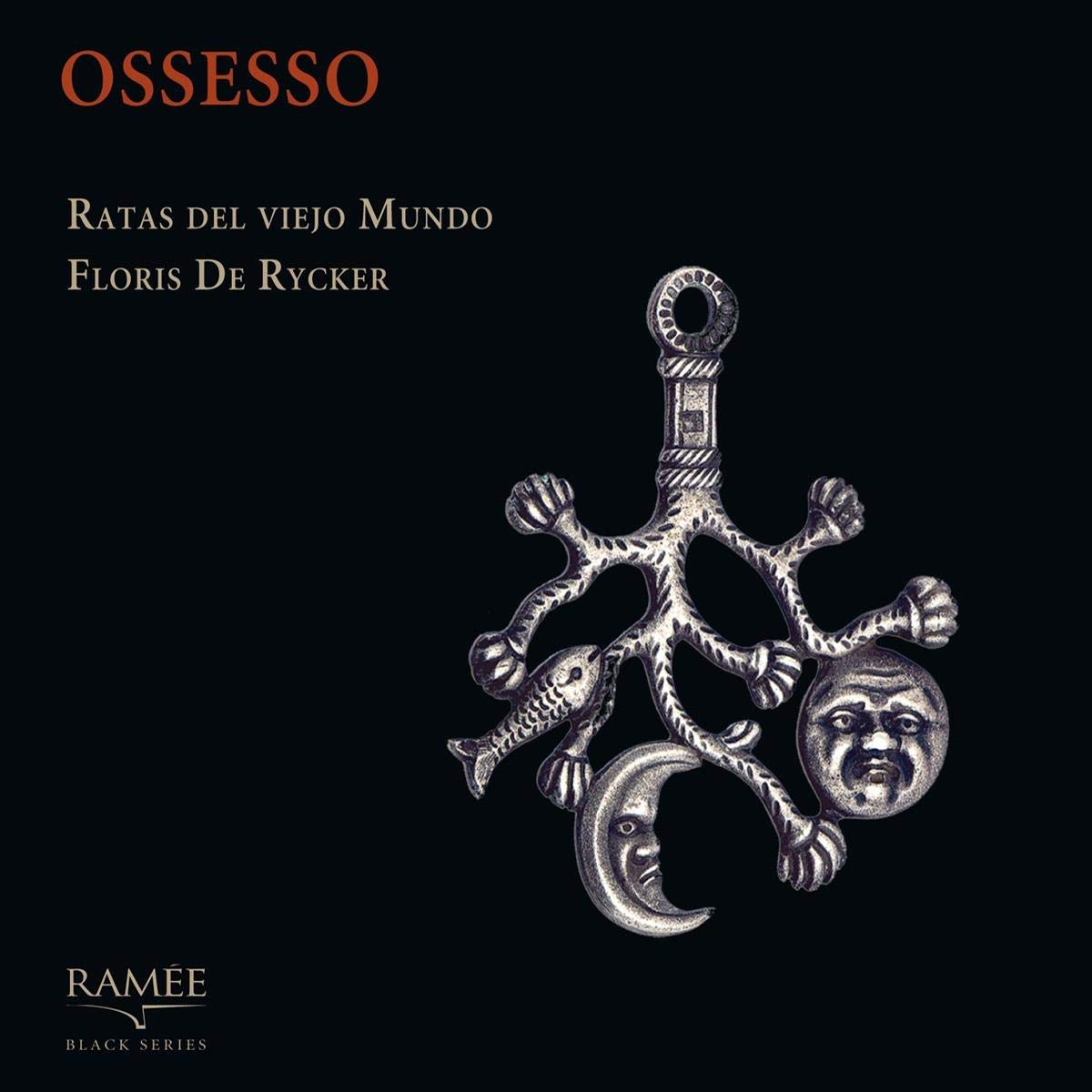
Ossesso, Ratas del Viejo Mundo, Floris De Rycker, Ramée RAM1808


available at Amazon
Ossesso, Ratas del Viejo Mundo, Floris De Rycker,
Ramée

Here’s another album that scores on memorability over perfection. It’s over the top, in some ways, and fabulous for it. Ancient music keeps it grounded; the wild acoustic makes it ring in your head like you’re in a grand gothic cathedral. Or a well. Depending on your mindset. What the Old-World Rats (what a name!) deliver here, singing a variety of Italian Madrigals belaboring the subjects of Love and Affliction, is glorious and just the right touch of weird. “The inflection of notes, the tuning, the character of old instruments like psaltery and kanklės… it all contributes to a sense of gentle alienation. Is this Orlando di Lasso, Vincenczo Galilei, Friulian traditional music (sung in the old language) or are we already on to Arab or even African shores? You could let yourself be distracted by any numbers of unorthodoxies on the album “Ossesso” but it’s much easier and more gratifying to sit back and indulge.” To quote my review at ClassicsToday: Obsessed Rats—Wondrous Voices from Olden Times.

Pick # 4


J.S.Bach, Keyboard Works and Transcriptions, Víkingur Ólafsson, DG 4835022


available at Amazon
J.S.Bach, A Recital, Víkingur Ólafsson,
DG

Like the Beethoven Symphonies , this is a release that would have been on last year’s list, also… and it’s too good and memorable to miss out on. It’s really just a supremely tasteful Bach recital by a wonderfully talented pianist who is just as satisfying in recital as he is on disc. But that’s enough. As I’ve said in my ClassicsToday review (Icelandic Bach With Heart and Panache): “It’s taken 13 years for a Bach-on-piano recital disc to have come along to match Alexandre Tharaud’s.” That is the hightest praise I can give. As a bonus, not that this need matter for your purely musical enjoyment: Víkingur Ólafsson won’t annoy you on Twitter, if you follow him, which you should at @VikingurMusic.

Pick # 3


L.v.Beethoven et al., Works for Mandolin, Julien Martinean, Vanessa Benelli Mosell et al., Naïve 7083


available at Amazon
L.v.Beethoven et al., Works for Mandolin, Julien Martinean, Vanessa Benelli Mosell et al.,
Naïve

This is a recording I don’t think I’ll ever forget – and if it’s for the mandolin variant of that 1970s Hot 100 smash hit of Walter Murphey’s: A Fifth of Beethoven (also known for its notable appearance in Saturday Night Fever). But no, actually, this is good and memorable all around, elevating some of Beethoven’s B-Music to A-levels. And a recording that memorable deserves a high entry on this list, even if it isn’t perfect. My review at ClassicsToday here: Beethoven for the Mandolin.

Pick # 2


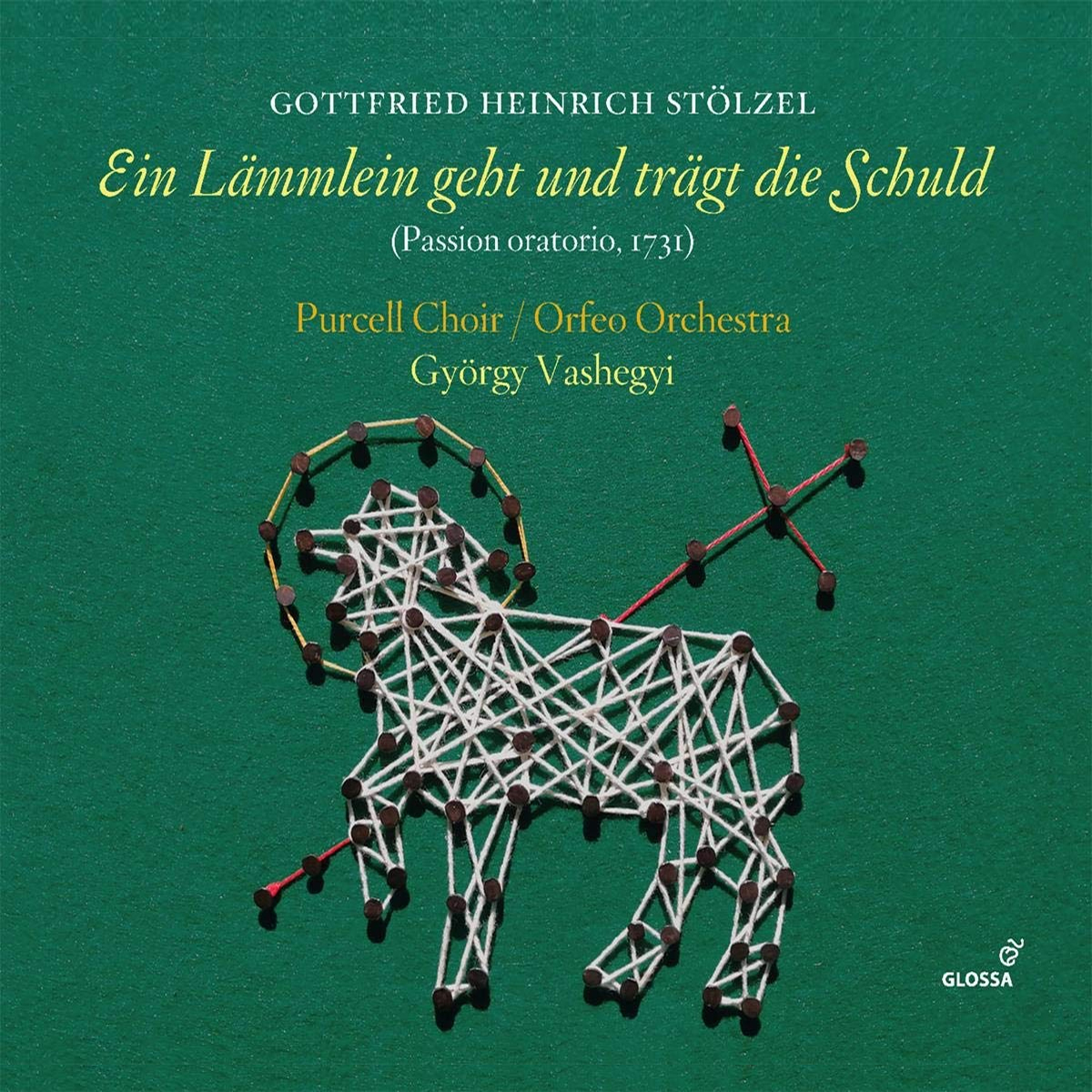
H.G.Stölzel, Ein Lämmlein geht und trägt die Schuld (Passion oratorio 1731), Purcell Choir, Orfeo Orchestra, Glossa 924006


available at Amazon
H.G.Stölzel, Passion oratorio, Purcell Choir, Orfeo Orchestra,
Glossa

This is such terrific music and so sympathetically performed and well recorded that it is bound to be the first of many Heinrich Gottfried Stölzel works you will want to hear. If, in fact, this is your first one. There is no (baroque) composer other than Bach that wrote no weak pieces. But at their best the Telemanns and Hasses and Zelenkas can be as good and, for being different, offer some extra enjoyment. And the same goes for Stölzel and this Passion oratorio in particular. Listen to “Ein Lämmlein geht und trägt die Schuld”. Treat yourself! My review at ClassicsToday here: Good Enough for Bach, Good Enough for Us.

Pick # 1


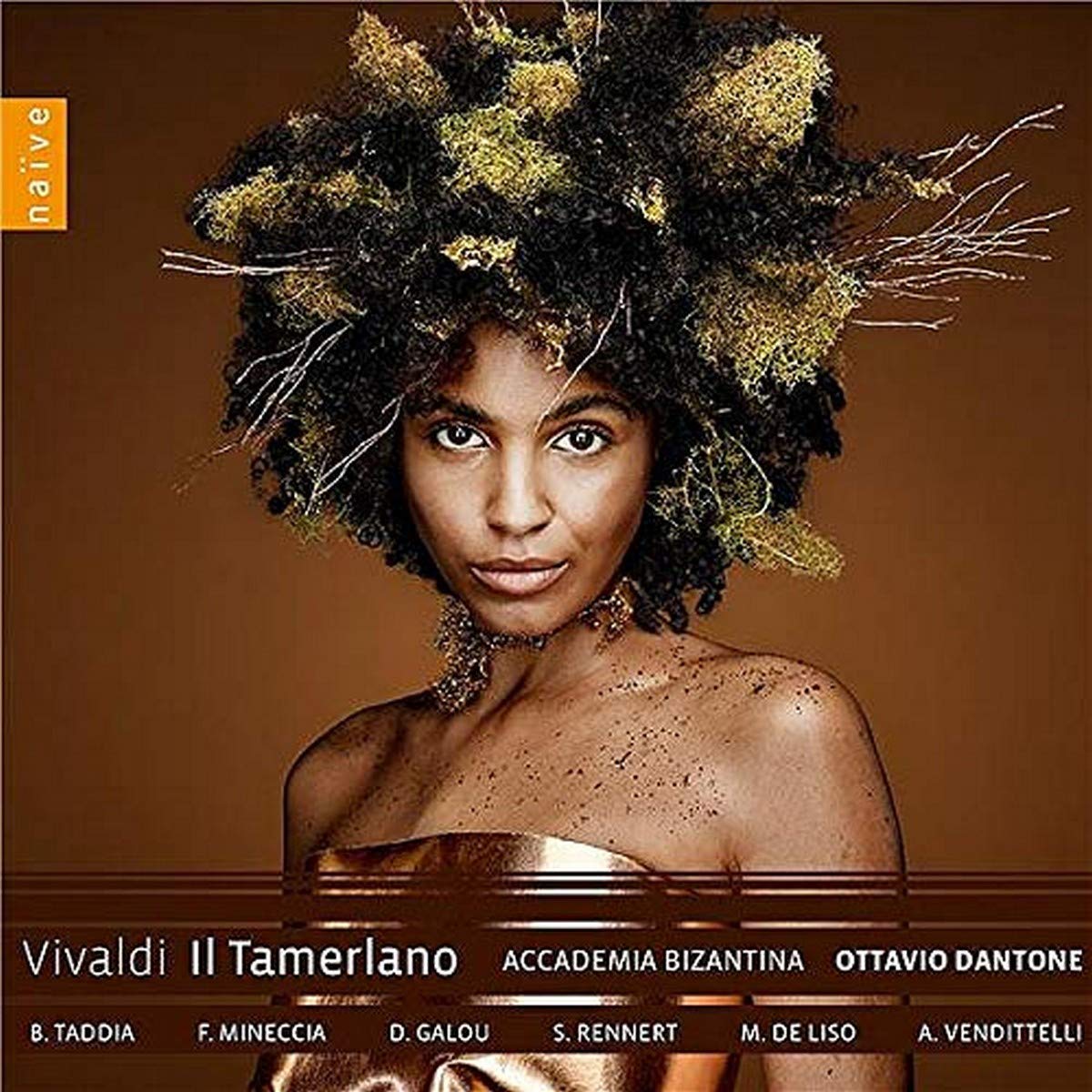
Antonio Vivaldi, Il Tamerlano, Accademia Bizantina, Ottavio Dantone, naïve 7080


available at Amazon
Antonio Vivaldi, Il Tamerlano, Accademia Bizantina, Ottavio Dantone,
naïve

Vivaldi operas have lagged behind those of Handel’s in appreciation and Il Tamerlano a.k.a. Bajazet (RV 703) perhaps even more, because its pasticcio composition style did not fit in with the Urtext and unity-of-the-artwork type of musicological purity that reigned in the last few decades. This perception might have begun to change, slowly, after Fabio Biondi’s fabulous 2005 recording came out. It turns out that it’s a masterpiece and the custom of stitching an opera together from previous hits of his own, newly written music, and arias from other composers – mainly Hasse and Giacomelli – doesn’t hold it back, it aids this work! Vivaldi giving his music, in the Venetian style, to the good guys but his colleagues’ more flashy Neapolitan-style music to the baddies adds welcome variety. Vivaldi’s intended point about the superiority of the former is, alas, undermined by the Red Priest having been too fair and using the finest that his rivals’ had on offer: two of the absolute show-stealing arias aren’t his. But we don’t care, the music is great and this new recording of the Accademia Bizantina under Ottavio Dantone is just what the opera deserves; rivalling (or complementing) Biondi’s, easily. A must-listen for 2021, if you haven’t yet. Review forthcoming.


OK, let’s cheat. Or make up for the lost year of 2019. I simply have to mention a few more recordings, now that I’ve started. Here they are:

21.10.19

On ClassicsToday: Víkingur Ólafsson's Bach With Heart and Panache

Icelandic Bach With Heart and Panache

by Jens F. Laurson
olafssonbach
It has been 13 years since the Alexandre Tharaud Bach recital “concertos italiens” came out. It’s taken that long for any Bach-on-piano recital disc to come even close to that recording-for-the-ages. By way of clever selection of works—staples of transcribed Bach with original Bach and... Continue Reading [Insider content]


P.S. Víkingur Ólafsson on ionarts & Forbes.com:

Viking(s) and Beethoven (2005)
Víkingur Ólafsson, Easy Listening (2013)
Classical CD Of The Week: Víkingur Heiðar Ólafsson; Through The Piano Glass

24.6.18

Forbes Classical CD Of The Week: Víkingur Heiðar Ólafsson; Through The Piano Glass


...It’s easier to quip about Philip Glass’ music than to write intelligently about it. But Víkingur (Heiðar) Ólafsson, the young and trendy Icelandic pianist, shows how it’s done in the liner notes to his first release on Deutsche Grammophon. I first heard the Juilliard-taught student of Ann Schein and Seymour Lipkin when he was a stiff tween at the Icelandic Ambassador’s residence. His image has changed, since...

-> Classical CD Of The Week: Víkingur Heiðar Ólafsson; Through The Piano Glass


13.12.05

Viking(s) and Beethoven

The young man who bowed stiffly to the audience at the Icelandic Ambassador’s residence may have come across as shy in that moment. Yet, all of a sudden, the 21-year-old Víkingur Heiðar Ólafsson was omnipresent in the small (and overflowing) room when he merged with Bach by playing the fifth French Suite in a manner that simply forbade mundane comparisons. It was, not the least due to the help of Bach’s ingenious composition, an experience of musical perfection. Charles Bukowski once said, in one of his more profound and rare PG-rated moments, that Bach was the most difficult to play badly, because he had made so few spiritual mistakes. It can hardly be said better, but it also needs to be pointed out that here it wasn’t a matter of ‘not playing badly’ but in at least some of the Suite’s movements a matter of the finest Bach playing I have heard in quite a while. Even if eschatological reasons don’t make room for a deity, at least the Platonic idea of an ideal music should have been evoked in every listener during the Allemande, Sarabande, and the latter half of the Bourrée.

available at Amazon
Philip Glass, Piano Works,
Víkingur Ólafsson
DG

The Juilliard graduate and student of Ann Schein and Seymour Lipkin went on to show that he not only had good Bach to offer but that he had much more than the notes in petto when it came to the very different fifth sonata of Beethoven’s (op. 10, no. 3). The perpendicular notes that stalk along through the first Presto movement were bolted to the floor with so much energy and confidence as to elevate this none-too-grand sonata near the more exclusive realm of sonatas nos. 22, 24, and 27. The Largo e maestoso labored a little harder to find its natural expression. Despite being in search of lost meaning, it was better Beethoven than my latently prejudiced mind would have expected from such a young and completely unknown (not for long – so much is certain!) pianist. Even beyond that, it was better than you could have heard from many a Beethoven veteran, too. Speaking of Beethoven veterans, a touch of Lipkin may have been audible very briefly: the accentuated dead-in-his-tracks stop after the first movement’s first theme reminded of something Lipkin does in his own reading of that work. The Menuetto: Allegro was beautifully tight, which made a variety of speeds harmonize and the relay-play of the notes all the more delightful. When things really got under way in the contrasting theme of that movement, he milked the baby grand (very appropriate in size and tone for the venue) for every bit it was worth. The finale was taken a tad faster than did the interpretation good – but if it did not exactly match the true high points of preceding moments, it was due to the excellence of the former, not the deficiency of the latter.

A world premiere – even the most humble one – is always an event. Music that is alive and kicking as in the case of the 5 Piano Pieces that Ólafur Axelsson (*1951) wrote when he had ‘composer’s block’. We should hope that he overcame that debility with the miniatures Cappuccinio, Logical Conclusion, Intermezzo, Almost Still, and Everyday Waltz, because they are exquisitely distilled beauties, all!

Washington is, of course, the “City of Satan” (as John McCain recently reminded his audience at AEI with a wink) and nepotism and corruption the in-house standard-issue evils. So nowhere could these piano works have been premiered more appropriately than in Washington, D.C. – as Ólafur Axelsson is the father of Víkingur Ólafsson. But if nepotism can be so beautiful as in this case, it must be enthusiastically embraced. 5 Pieces reminded of Keith Jarrett’s The Melody at Night, with You in more than just musical ways. In both cases the artists composed/recorded short sessions late at night while suffering creative lows (Jarrett suffered from Chronic Fatigue Syndrome at the time), and both are full of soft hues and filled with familial tenderness.

At this point during the concert it would have been foolishness to expect anything less than excellence from the two Debussy preludes (Bruyères and Ondine from the second book) and they did not disappoint, indeed. (Ondine, even if ‘the French’ refuse to admit it, is of course all about Rheinmaidens and only Debussy’s editor rejected the original title Pour toi Flosshilde.)

Impetuous youth helped “VHÓ” in Schumann’s Carnaval, op. 9. There were impressive moments of great beauty, current, volatility… and if the last ounce of depth or polish was not found in every note or episode I will hold against that the fact that I don’t remember the last time I so enjoyed Schumann’s piano work (with which I have an admittedly uneasy relationship). All one was left to do was enjoy the music, marvel at a night’s worth of performances that far exceeded even my most optimistic expectations and – last but never least when it comes to Embassy Series events – the gustatory pleasures that the following reception offered. From wine to Icelandic beer with fried haddock, fresh salmon and tuna, and whatnot, it positively rivaled the Norwegians’ excellent work in that department. No wonder it was past midnight when I, far from being the last to leave, tumbled out of the residence, an Icelandic meatball in my mouth and Gerswhin tunes – courtesy of a reinvigorated Víkingur back at the piano – in the air.