CD Reviews | CTD (Briefly Noted) | JFL (Dip Your Ears) | DVD Reviews
Showing posts with label Francis Poulenc. Show all posts

9.2.16

La Piau Goes to Washington


available at Amazon
Après un rêve, S. Piau, S. Manoff
(Naïve, 2011)
Charles T. Downey, French soprano Sandrine Piau makes stunning D.C. debut
Washington Post, February 9
Sandrine Piau made her long overdue Washington debut on Sunday afternoon, and the Phillips Collection, celebrating its 75th anniversary season, got the glory. The French soprano’s excellent program of 19th-century songs, superbly accompanied by pianist Susan Manoff, was the latest sign of the ascendancy of the Phillips concert series, which has become one of the strongest in the city.

Manoff and Piau recorded many of these songs on their 2011 CD, “Après un rêve.” The qualities that set Piau’s voice apart on disc were, if anything, more pronounced live... [Continue reading]
Sandrine Piau (soprano) and Susan Manoff (piano)
Phillips Collection

PREVIOUSLY:
Charles T. Downey, Briefly Noted: Sandrine Piau (Ionarts, November 1, 2011)

1.4.15

Raphaël Sévère


available at Amazon
Brahms, Clarinet Sonatas / Clarinet Trio, V. Julien-Laferrière, R. Sévère, A. Laloum
(Mirare, 2014)
Charles T. Downey, Young French clarinetist in fine form in D.C. debut
Washington Post, April 1
“The clarinet is quite possibly the easiest of all orchestral instruments to master,” composer (and clarinetist) John Adams wrote in his autobiography, “Hallelujah Junction.” Young French clarinetist Raphaël Sévère, winner of last year’s Korean Concert Society Prize, proved masterful in his Washington debut Monday night in the Kennedy Center Terrace Theater.

Adams meant that the full range of chromatic notes is relatively easy to produce on the modern clarinet and that what distinguishes an excellent clarinetist is the beauty of tone produced... [Continue reading]
Raphaël Sévère, clarinet
With Paul Montag (piano) and Paul Huang (violin)
Washington Performing Arts and Young Concert Artists
Kennedy Center Terrace Theater

26.2.15

Second Opinion: 'Dialogues of the Carmelites'

Many thanks to Robert R. Reilly for this review from the Kennedy Center.


Dialogues of the Carmelites, Washington National Opera, 2015 (photo by Scott Suchman)

On the evening of Monday, February 23, I attended the second performance of Washington National Opera's production of Francis Poulenc’s Dialogues of the Carmelites at the Kennedy Center. This is an opera I have long loved, but never seen on stage. My expectations were high, and they were largely met. (See Charles's review of the production's opening night.)

First of all, one must explain the challenge of this somewhat difficult work. Most of the action is interior in a spiritual sense. It is very difficult to dramatize an inner struggle of the soul, but this is what Poulenc attempted and succeeded at portraying.

It’s not as if the context of the story lacks drama. It is all the more gripping because it is based upon the true history of the French Revolution. In 1794, the revolutionary prayer police caught a group of Carmelite nuns from Compiègne still secretly practicing their vows. They had been expelled from their convent two years earlier. Declared enemies of the state, the sisters were marched to the scaffold and guillotined on July 17, 1794. Upon this episode, George Bernanos, the famous French novelist, based his only screenplay. After his death, Bernanos’s literary executor fashioned it into a successful play. Poulenc took a version of the text as the libretto for his opera.

Bernanos and Poulenc avoid the melodrama and typical verismo hysterics that normally would be associated with an opera on a subject such as this. This translates into a relatively conservative, though rich operatic style that is part recitative and part lyrical. The opera is set without arias or “big numbers.” Poulenc does not deploy his full orchestral resources, familiar to those who know the Stabat Mater or the Gloria, until the very end, at the scaffold scene, when he does so to glorious effect. At whatever volume, the music is charged with the same level of energy as its spiritual subject.

Bernanos and Poulenc seek neither to sensationalize nor sentimentalize the events of the Revolution. Those events are depicted only insofar as they impinge on the lives of the nuns and serve only as background to their interior spiritual drama, which is the real subject of the opera. One must praise the direction of Francesca Zambello for staying true to their intentions. The stage direction remained focused and never distracted from the inner action. In fact, it enhanced it. I was particularly impressed at how restrained Zambello kept the crowd scenes, when a more indulgent director would have succumbed to the opportunity for raucous spectacle.

The opera aims at a high level of spiritual realism and achieves it with profound psychological and spiritual complexity. Fear, faith, death, and providence are the subjects of this opera. The story revolves around Blanche de la Force, who, out of her fears of both life and death, enters the convent with an idealized notion of the joys of detachment. The prioress warns her: “What does it avail a nun to be detached from everything if she is not also set free from herself — that is to say, from her own detachment?” Sister Blanche soon witnesses the agonizing death of the prioress, who exclaims: “God has become a shadow.... I have been thinking of death each day of my life, and now it does not help me at all.” Moments before death, she foresees the desecration of the chapel and cries out, “God has abandoned us!” The shocked Sister Marie, who attends her, keeps the other sisters out of range so they will not be scandalized.

The prioress’s difficult death disturbs the community, except for young Sister Constance, who suggests, somewhat blithely, “At 59, is it not high time to die?” Yet it is also Sister Constance who grasps how providential the difficult death may be. She proposes to the puzzled Blanche that the troubled death of the prioress belonged to someone else: “One would say that in giving her this kind of death, our good Lord had made an error; as in a cloakroom they give you one coat for another.” She suggests that, because of this, someone who least expects it will be surprised by how easy death is. Constance further upsets Blanche by telling her that they will die young together. Blanche spends the rest of the opera resisting this notion. When her own death approaches in the last act, after the nuns have taken the vow of martyrdom, Blanche flees in terror. Only at the last moment, when the guillotine has begun to fall, does Blanche reappear “incredibly calm” to take her place by her sisters. They die singing the Salve Regina. Blanche joyfully sings the four last verses from the Veni Creator Spiritus as she submits to the blade.

One could easily argue that Blanche’s last-minute arrival at the scaffold, composed and ready to die, is, dramaturgically speaking, a deus ex machina. How is it that she suddenly receives the grace for her peaceful, though violent, death? It is not a development we observe. It simply happens. Yet, in this case, the deus ex machina adds to, rather than detracts from, the drama of the work because it operates on the same plane of grace that is the premise of the whole work. The prioress’s deathbed cry that God had abandoned her echoed Christ’s cry from the cross. Yet, mysteriously, Christ’s cry was salvific. What of the prioress’s ugly death? Did it share in that salvific work? How? The working out of this mystery and the spiritual tensions within it drive the opera. Providentially, the prioress’s agonizing death in a peaceful setting makes possible Blanche’s peaceful death in an agonized setting.

From this brief summary, one can easily see that the key roles are those of Madame de Croissy, the Old Prioress, and Blanche de la Force. American mezzo-soprano Dolora Zajick, who actually sings the Divine Office with the Carmelite Sisters of Reno when she is at home, did an excellent job vocally and dramatically as the prioress. Her agonizing death scene was every bit as disturbing and repugnant as it needed to be to give force to the rest of the opera. As Blanche, Canadian soprano Layla Claire had exactly the right kind of fragility and vulnerability to make Blanche’s struggle real, with a warm and tender voice suited to the part. American soprano Ashley Emerson was suitably impish and impulsive as Sister Constance, and played the perfect foil to Blanche. Leah Crocetto as Madame Lidoine and Elizabeth Bishop as Mother Marie were both convincing. The two main male roles were sung with distinction by American bass-baritone Alan Held as the Marquis de la Force, Blanche’s father, and tenor Shawn Mathey as the Chevalier de la Force, Blanche’s brother.

Mr. Mathey was also the only singer who sang with sufficient diction that his words could be understood without looking at the supertitles. I am not sure that the other singers are entirely at fault in this matter. Poulenc wrote the opera to a French libretto, and the English translation does not scan musically as well as the French. My bet would be that there is at least a slight expansion factor – that the English libretto has more words in it than the French – thus requiring the singers to get through the words faster. In any case, Mr. Mathey was crystal-clear. Overall, I would have preferred to hear the opera in French, though that would have been against the wishes of Poulenc, who thought audiences should be able to hear it in their own language.

The large curved-wall sets were economical and I thought, at first, crude. But as things proceeded, I saw how much set designer Hildegard Bechtler was able to get out of a little. For instance, in the nuns’ chapel against a somewhat bland curved wall, what looks like a wooden bas-relief of Virgin and Child, with two pairs of candles below it, is lowered. That was just enough to break the austerity of the setting and communicate the purpose of the space. The only other visual reference I have for this opera is from a DVD of the Netherlands Opera Amsterdam production at La Scala, under Riccardo Muti. In it, the huge dark space of the stage was certainly menacing, but it was allowed to swallow the intimate drama. The WNO production, sets, and staging avoided this potential pitfall, and attention remained where it needed to be. I was also very grateful for the traditional costumes, so capably rendered by Claudie Gastine. One’s attention was never diverted by trying to figure out what the anachronisms were supposed to mean, because there weren’t any.

The Washington National Opera Orchestra, under Canadian conductor Antony Walker, gave a spirited performance, but was too often out of balance with the singers, who were more than occasionally swamped. This will, no doubt, be ironed out in future performances.

The otherwise excellent notes in the Playbill program failed to mention that the 16 good sisters of Compiègne were beatified by Pope Pius X in 1907.

This production continues through March 10. One ought not to miss this opportunity to see a production so close to the intentions of its composer and librettist.

24.2.15

Finally, 'Dialogues of the Carmelites' at WNO


Dolora Zajick (Madame de Croissy), Layla Claire (Blanche de la Force), and cast in Dialogues of the Carmelites,
Washington National Opera, 2015 (photo by Scott Suchman)

Almost ten years ago, I made a wish that Washington National Opera would get around to staging Poulenc's Dialogues des Carmélites. This powerful opera is based on the true story of the Sixteen Blessed Martyrs of Compiègne, a convent of Carmelite nuns who died at the guillotine after the French revolutionaries disbanded their community. The work has been performed in Washington before, by Opera International in 2004 and by Catholic University's Summer Opera before that, but not with the sort of cast marshaled by Washington National Opera, heard on Saturday night in the Kennedy Center Opera House.

Mezzo-soprano Dolora Zajick was a powerhouse Madame de Croissy, the ailing prioress of the community who takes in the naive, somewhat disturbed Blanche de la Force as a novice. Likewise, mezzo-soprano Elizabeth Bishop and soprano Leah Crocetto, the latter in a striking company debut, were equally powerful as Mother Marie of the Incarnation and Madame Lidoine, respectively, the nuns who lead the community after the death of Madame de Croissy. Soprano Ashley Emerson, heard last season as a spirited Papagena, was a tiny dynamo of energy, both physical and vocal, as the flighty Sister Constance. In such company, Canadian soprano Layla Claire, though slender and pretty as the nobleman's daughter turned nun, seemed vocally outclassed as Blanche de la Force. Her voice sort of dissipated at times, and sometimes intonation suffered, possibly related to a slight fragility of tone and fluttering vibrato.


Other Articles:

Anne Midgette, “Carmelites” is too cool, in every sense, in WNO debut (Washington Post, February 23)

Susan Dornady Eisenberg, Dolora Zajick Chats About Her Debut This Week in Dialogues of the Carmelites at Washington National Opera (Huffington Post, February 20)
The supporting cast was generally fine, too, especially the ardent Chevalier de la Force of tenor Shawn Mathey, admired previously in San Francisco and here in Washington, and the curmudgeonly Marquis de la Force of Alan Held. Antony Walker, the talented director of Washington Concert Opera, was a sure presence at the podium, lining up all the musicians of the large orchestra (the performance uses the full version of the score), some splats in the horns aside, and the unusually large cast. Another snow storm kept about one-fourth of the chorus members marooned at home, but the sound of the choral and ensemble numbers, some of the most musically satisfying in the opera, did not suffer too badly. WNO Artistic Director Francesca Zambello generously asked those in the limited audience to come down and fill in the seats toward the front if they wanted to do so, and many did.

Zambello's staging of the opera, originally mounted by the Opéra National de Paris, was austere but effective. After the absurd treatment of the Franciscans in Zambello's production of La forza del destino, I was prepared for the worst in her handling of this story about Carmelite nuns, worry that was entirely misplaced. The costumes were traditional, down to the brown, black, and white habits (designed by Claudie Gastine), and the sets designed by Hildegard Bechtler were looming cast iron curved walls, as menacing and bare as a Richard Serra sculpture. It is true that the stylized approach of the production -- the scaffold makes it look like the nuns are going into a sort of tanning booth -- weakens the opera's power in places, which is hard to justify. While the English translation by Joseph Machlis, approved by the composer, is generally effective, one wished that the supertitles included more than just the first few words of the Latin texts sung, words that were central to the lives of these nuns and, indeed, with resonance for the opera's action.

This production runs through March 10, in the Kennedy Center Opera House.

4.10.14

NSO's Foray into Religious Music

available at Amazon
Bach, Selected Organ Works, P. Jacob
(JAV, 2004)
Johann Sebastian Bach, in Nicolas Slonimsky's memorable turn of phrase, is "the supreme arbiter and lawgiver of music." This week's program from the National Symphony Orchestra, heard at the second performance on Thursday night, a special schedule arranged out of respect for Yom Kippur on Friday, had Bach at its heart. The concert's excellent soloist in Poulenc's organ concerto, Paul Jacobs, played Bach's A minor prelude and fugue (BWV 543) as a sort of encore. Of course Jacobs offered technical polish, even in the fugue taken at a rolling pace, but more impressively he used registration changes to create a sense of structure, through tension and release, that brought out the fugue's climactic qualities. This is one of the best fugues by history's greatest composer of fugues, often used as the textbook example of the process, but one forgot the technical achievements and just heard it as music.

Bach's organ music inspired Francis Poulenc when, during the composition of his organ concerto in G minor, he made a life-changing pilgrimage to the shrine of the Black Virgin at Rocamadour. A commission that had begun in a decidedly secular vein, commissioned by the Princesse de Polignac, the notorious heiress to the Singer sewing machine fortune, took on a quasi-religious character. The work rewards live listening, its unusual instrumentation of strings, organ, and timpani, made for the Polignac salon, offering many unusual sounds, like the stark timpani accompanying the organ in the introduction or the organ's accompaniment of a gentle viola solo towards the end. (Maurice Duruflé, who premiered the solo part, advised Poulenc on the organ registrations.) Although Poulenc eschews the sounds of boulevard chansons, except perhaps in the final Allegro, the harmony is lush and some of the organ parts quite devilish. The only drawback of the performance was in the overall alignment between organ and orchestra, not helped by the often whirling, imprecise beat of guest conductor Matthew Halls.


Other Reviews:

Anne Midgette, NSO offers “Lobgesang,” but highlight is organist Paul Jacobs playing Bach (Washington Post, October 3)
Halls had more success with Mendelssohn's second symphony (B-flat major, op. 52), performed here for the first time by the NSO. Although not without its weaknesses, it is can be extremely dramatic -- our favorite recordings are conducted by Jan Willem de Vriend and Frieder Bernius -- and this performance was effective on some fronts and not on others. Halls seemed to rush through the three opening orchestral movements, with the ensemble not always together in the first movement, the second movement lilting but with the appearance of the Magnificat theme (stated in the symphony's first bar by the trombones) sometimes covered up, and the third movement too fast to take note of much at all. The Washington Chorus, seated in sections with the male parts in the middle, was present if not overpowering, with the soprano sound sometimes lacking in fortitude.

Most importantly, the soloists had the required power where it was needed, even placed as they were at the front of the chorus in the stands behind the orchestra. Twyla Robinson was off in terms of intonation and the tone strangely placed, but as the second soprano she was minimally exposed. Paul Appleby, taking the often thankless tenor part, brought a powerful instrument deployed with well-tuned accuracy and ardent tone, creating dramatic moments in the "Watchman" scene ("Hüter, ist die Nacht bald hin?"). This set up the dramatic climax of the piece, as soprano Tamara Wilson dispelled the night and turned the piece toward the major mode with blazing strength ("Die Nacht is vergangen!"). One of the new principal musicians -- William Gerlach on trumpet, with the former principal as associate principal -- acquitted himself well, although the sound in the oboes was not as assured. Both the form of the finale, somewhat like a Bach cantata, and the contrapuntal complexity of many of the choral movements are a tribute by Mendelssohn to his famous forebear in Leipzig, in a piece performed there for the anniversary of the Gutenberg printing press in 1840.

This concert repeats tonight (October 4, 8 pm), in the Kennedy Center Concert Hall.

11.8.14

Wolf Trap Closes Season with Surreal Double-Bill


Mireille Asselin (Thérèse) in Les mamelles de Tirésias, Wolf Trap Opera (photo by Teddy Wolff)

The gods of ancient Greece punished presumption. This was the theme, in a way, that united the double-bill of early 20th-century French opera that closed the season at Wolf Trap Opera, heard on Sunday afternoon. The eponymous sailor of Milhaud's Le pauvre matelot (1927), on a libretto by Jean Cocteau, is punished for returning home to his waiting wife but deceiving her -- not by the gods, but by his wife herself, unknowingly. Hera punished the prophet Tiresias by turning him into a woman, during which time he even gave birth to children before Hera turned him back. The story was reversed and updated by Guillaume Apollinaire in his play Les mamelles de Tirésias, set as an opera by Poulenc in 1947, in which a wife named Thérèse proclaims her feminist independence and is turned into a man.

Apollinaire used a neologism to describe the tone of his play, "surréaliste," which he explained by adding that "if it is not newer than everything found under the sun, it has at least served to formulate no credo, no artistic and literary affirmation." The two operas form an odd pairing, but the musical styles of the two composers have something in common and one is left scratching one's head by both of them. Each opera also featured a soprano who is one of the company's major discoveries of the last couple years. Dramatic soprano Tracy Cox had a compelling turn as the sailor's wife, demonstrating a serious side that complemented her turn as Alice Ford in last year's Falstaff, both with a powerful instrument that is deployed with compelling pliancy and force. Lyric soprano Mireille Asselin, who was a fairy-light Nannetta in the same production last season, was equally fine in the role of Thérèse, created for Poulenc's soprano muse Denise Duval, taming the role's high-flying excesses with a comic edge that lightened the more incomprehensible parts of the story.


Other Reviews:

Anne Midgette, Wolf Trap Opera presents engaging French duo: Sailors and breasts (Washington Post, August 11)

---, Wolf Trap Opera, Castleton Festival launch unevenly but laudably on same weekend (Washington Post, June 29)

Charles T. Downey, 'Carmen' at Wolf Trap (Ionarts, July 29)
In the same category was the hilarious performance of baritone Tobias Greenhalgh as the husband in Les mamelles, who had both the extended high range for the role and the confidence and comic range to pull off singing much of the evening in drag. Tenor Robert Watson had the power side of the role of the sailor in Le pauvre matelot, if not quite the head voice needed at a few points. Norman Garrett and Ryan Speedo Green were effective as the sailor's father-in-law and friend, although further French pronunciation coaching is needed. Baritone Joo Won Kang was fun as both the theater director and the gendarme, and many of the company's studio artists filled out the rest of the cast.

Conductor Timothy Myers, whom we have reviewed at the Castleton Festival and at Wolf Trap before, had a good handle on both scores, although allowing the orchestra too much free rein in that some of the singers sometimes struggled to be heard. This was surprising in Les mamelles, since the performance did not use the complete orchestration, with only one of each woodwind, brass, and harp (a substantial and disappointing reduction, but necessary because of the constraints of the pit at the Barns -- hear the full effect in this performance from the Opéra de Lyon). The staging by Matthew Ozawa was minimal but caught something of the essence of each work, through simple means, like a white steel frame box that surrounded the sailor's wife in Le pauvre matelot, setting her off in her loneliness, and the two little pink balloons that floated out of Asselin's dress when Thérèse began her transformation in Les mamelles.

This performance will be repeated on August 16, in the Barns at Wolf Trap.

16.5.14

Jeanine de Bique @ NMWA


available at Amazon
A. Previn, Honey and Rue, K. Battle, Orchestra of St. Luke's, A. Previn
(DG, 1996)
Charles T. Downey, Soprano Jeanine De Bique shows range, refinement in song program (Washington Post, May 16, 2014)
Jeanine De Bique’s voice has grown in refinement and range since her local debut in 2009, judging by the mixed review she received then in these pages. The young soprano from Trinidad shone Wednesday night, in spite of reportedly being under the weather, in a program of American songs and lieder by Richard Strauss and Hugo Wolf in the intimate auditorium of the National Museum of Women in the Arts.

Strauss’s “Ophelia-Lieder” highlighted De Bique’s dramatic stage presence... [Continue reading]
Jeanine de Bique, soprano
Shenson Chamber Music Concerts
National Museum of Women in the Arts

15.5.14

Lawrence Brownlee @ Vocal Arts

available at Amazon
Virtuoso Rossini Arias, L. Brownlee, Kaunas City Symphony Orchestra, C. Orbelian
(Delos, 2014)

available at Amazon
Spiritual Sketches, L. Brownlee, D. Sneed
(2013)
It is always good when Lawrence Brownlee is back in town. The American tenor has been featured in these pages many times before, at Wolf Trap, where he got his start, Washington National Opera, Vocal Arts Society, Washington Concert Opera (and in 2006), and as winner of the Marian Anderson Award. Since we first started writing about him, he has become an international star, most deservedly, just closing out the Metropolitan Opera season, for example, in I Puritani. In accordance with that prominence, perhaps, Vocal Arts D.C. presented Brownlee at Lisner Auditorium on Tuesday night, without seeming to sell many more tickets than would have filled their usual venue, the Kennedy Center Terrace Theater. In terms of acoustic and average vantage point, the latter is a superior place to hear this kind of recital, although Brownlee had no trouble filling the larger hall with his consistently lovely voice.

As noted before, in terms of being a song recitalist, Brownlee is not to the manner born. In his first half, problems with pronunciation in sets of songs by Verdi, Poulenc, and Joseph Marx impeded the impact of Brownlee's otherwise fine performance. He was most comfortable when the song gave him a character to play with, like the chimney sweep yelling in the street in Verdi's Lo spazzacamino. Where the music required more of a focus on recitation of poetry and melodic line, he was hampered, but the sweet legato of his sound came across in the slower songs, if without the pyrotechnics of bel canto opera, his specialty, his voice did not have as much occasion to shine. The high point of the first half was a set of delectable songs by Joseph Marx, a composer who deserves a full-fledged resurrection from obscurity. Here and in the Poulenc songs, pianist Kevin Murphy tamed the daring keyboard accompaniments, like the mischievous prancing of Marx's charming Die Elfe, with panache and sensitivity, support that allowed Brownlee to open up vocally, as in the gorgeous Hat dich die Liebe berührt.


Other Reviews:

Anne Midgette, Lawrence Brownlee offers arc of self-revelation in Vocal Arts DC recital (Washington Post, May 15)
Alberto Ginastera's Cinco canciones popolares argentias provided a more experimental flavor, with crunchy dissonance in a spare, even barren setting of simple folk poems. Spanish seemed like a language that Brownlee has studied more carefully, so the easier sense of diction helped the performance. The same was true in the concluding American sets, beginning with Ben Moore's Broadway-style songs on poetry by Yeats and Joyce. The concert reached its high point with a set of five spirituals, in arrangements made for Brownlee by Damien Sneed, drawn from their recent recording together. Most classical singers who attempt to sing spirituals have not grown up in that tradition, with predictably stilted results.

Brownlee, like the luscious soprano Krysty Swann, heard a couple years ago, cut his musical teeth on this music. Sneed, who hails from Georgia and has a similar dual background in Gospel and classical music, has made attractive, moving adaptations of lesser-known tunes, which set in the sweet spot of Brownlee's voice were devastatingly effective. Certainly, not a dry eye was left in the house when Brownlee dedicated All night, all day, with its angelic falsetto vocalises, to his son, Caleb, who is on the autistic spectrum. (Hear it for yourself as recorded for an NPR Tiny Desk Concert.) The ovations earned three encores, Schubert’s Der Jüngling an der Quelle, the sentimental Be My Love, and -- finally -- an opera aria, Il mio tesoro from Mozart's Don Giovanni.

The 2014-15 season from Vocal Arts D.C. will feature recitals by Matthew Rose, Pretty Yende, John Brancy, Matthew Polenzani, Karine Deshayes, Karen Cargill, and the New York Festival of Song (featuring soprano Corinne Winters and tenor Theo Lebow).

9.1.14

Best Recordings of 2013 (#3)


High time for a review of classical CDs that were outstanding in 2013. My lists for the previous years: 2012, 2011, (2011 – “Almost”), 2010, (2010 – “Almost”), 2009, (2009 – “Almost”), 2008, (2008 - "Almost") 2007, 2006, 2005, 2004.

# 3 - New Release


Francis Poulenc, Mélodies on poems by Paul Éluard & Louise de Vilmorin, Holger Falk (baritone), Alesandro Zuppardo (piano), m|DG 3071815


available at Amazon
F.Poulenc,
Mélodies v.2
H.Falk / A.Zuppardo
m|DG


Dramatic and nuanced, impeccably articulated, honey-toned, sweeping and musically partnered. The Lied recital disc of the year. See review here: Dip Your Ears, No. 158 (Le Travail du Peintre)


Made possible by Listen Music Magazine.


# 3 – Reissue


Joseph Haydn, Select String Quartets, Quatuor Mosaïques, naïve 5357

14.11.13

More from Pieter Wispelwey


Charles T. Downey, Cellist Pieter Wispelwey delivers gem of a program at Clarice Smith Center (Washington Post, November 15, 2013)

available at Amazon
Bach, Cello Suites, P. Wispelwey
Pieter Wispelwey’s visits to the Washington area are always worth hearing, and his recital Wednesday night at the Clarice Smith Performing Arts Center was no exception. The Dutch cellist, who switches easily between historically informed performance practice and the modern instrument, offered one of his gold-standard programs, this time focused on four major works from the years of the two world wars.

There was none of the barbed, bellicose pummeling you might expect from that era, though, as Wispelwey brought together serene and light-filled works that belied the time of their creation. [Continue reading]
Pieter Wispelwey, cello
Pei-Shan Lee, piano
Clarice Smith Center

PREVIOUSLY:
Robert Battey, At the Library of Congress, cellist Pieter Wispelwey shows unique, determined style (Washington Post, October 28, 2012)

Charles T. Downey, Australian Chamber Orchestra, Pieter Wispelwey (Ionarts, April 29, 2007)

19.10.13

Dip Your Ears, No. 158 (Le Travail du Peintre)


available at Amazon
F.Poulenc,
Mélodies on poems by Paul Éluard & Louise de Vilmorin,
H.Falk, A.Zuppardo
MD|G


Poulenc to Fall in Love With

The less you listen to a repertoire, the taller classic performances stand. With me that’s true for French art-songs generally and Poulenc’s especially, where the indomitable Gérard Souzay reigns in my ears. But here comes a German baritone whom I hadn’t even heard of, and sings an hour’s worth of a Poulenc recital so well, I fall a bit more in love with it every time I hear it. Dramatic and nuanced, impeccably articulated, honey-toned, sweeping and musically partnered by Alessandro Zuppardo and his 1901 Steinway, Holger Falk achieves something quite special that impresses and touches me. Highlight among highlights might be the mini-cycle “Le travail du peintre”. Every time I just want to listen to one or two bits to check up on something, I get stuck in this sumptuous, fantabulous performance for the whole, wonderful ride! Ticket to Best of 2013 already booked!


Made possible by Listen Music Magazine.

23.7.13

'La Voix Humaine' at Castleton


Dietlinde Turban-Maazel, La voix humaine, Castleton Festival, 2013
(photo by E. Raymond Boc)
The Castleton Festival was inaugurated with the chamber operas of Britten, an auspicious choice to make a new summer opera destination stand out from the crowd. Lorin Maazel, a Puccini specialist, soon was turning instead to more standard fare for his summer vacation, chestnut operas that may have more mass appeal but that one can hear lots of places. This summer has Verdi -- Otello, a difficult choice when you are relying mostly on young singers -- and Puccini, but the third offering goes back to the festival's roots in chamber opera, with Francis Poulenc's one-woman, one-act La voix humaine, heard on Saturday afternoon in the festival's original venue, the small theater in the Maazels' old house. Rather than a double-bill with another 20th-century one-act opera, as is often done, the Poulenc was introduced by the performance of an English translation of Jean Cocteau's original play version, from which Poulenc's libretto was derived.

The spoken monologue was delivered by Dietlinde Turban-Maazel, the festival director's wife, in charming German-accented English. In a silken red dress on a set evoking a well-appointed Parisian apartment (scene and costume design by François-Pierre Couture -- a suspiciously appropriate name for a costume designer), she brought the character of the femme délaissée to pathetic life. Gripping the receiver of an old-fashioned black telephone like a lifeline, she wheedled and lied her way through a final phone conversation with the man who has abandoned her, on the eve of his marriage to another woman. Cocteau identifies the character simply as Elle (She), but the coincidence of Cocteau's writing of this play, in 1930, with the publication of Le livre blanc, in 1928, makes one wonder if the monologue is based on something more autobiographical. Le livre blanc, the confession of a man's homosexual attractions, was published anonymously, but it is now generally accepted as Cocteau's work, not least because he later provided a set of illustrations for it. Many of the lines in the play receive interesting twists if the speaker were instead a man, speaking to a lover about to marry a woman.


Other Articles:

Karren L. Alenier, The Human Voice: Poulenc via Cocteau (The Dressing, July 21)

Joan Reinthaler, Castleton Festival’s ‘La Voix Humaine’ and ‘Otello’ (Washington Post, June 21)

Tim Smith, Castleton Festival delivers strong lineup of opera, theater (Baltimore Sun, July 17)

Eve Barnett, Castleton Festival: A Musical Meeting of the Minds (The Georgetowner, July 17)

Roger Piantadosi, The Castleton Festival: right turn, no red (Rappahannock News, July 11)
When Francis Poulenc adapted the play into a short opera, premiered in 1959 at the Opéra-Comique by Denise Duval (watch the film version on YouTube), Cocteau reportedly said that he now knew exactly how the lines of his play were to be delivered (written in a letter to Poulenc -- "Mon cher Francis, tu as fixé, une fois pour toutes, la façon de dire mon texte"). Cocteau's reaction is understandable because seeing the two versions side by side revealed Poulenc's melodramatic opera as the more powerful of the two. Jennifer Black, who was a memorable Micaëla in the 2006 Carmen in Santa Fe and has impressed us many times, was a knockout vocally in the role, with a velvety tone from bottom up to a ringing, fully assured top. Antonio Mendez led the musicians crammed into the small pit, with the harpist relegated to one side of the house, and did some nice things with many details in this beautiful score. Poulenc alternates among many types of sounds -- the jangling xylophone for the phone's ring, jarring dissonances when Elle is upset, suave Romantic sweep when she recalls happier days of the relationship, even a bit of swing for the music she hears in the background of the phone call at one point.

This production will be repeated once more, this coming Saturday (July 27, 3 pm) at the Castleton Festival.

29.3.12

Superlørdag with the Kringkastingsorkestret

Yay, it’s Superlørdag with the Kringkastingsorkestret! Say what? Why, “Super-Saturday” with Oslo’s Norwegian Broadcasting Cooperation Symphony Orchestra (KORK), of course.

Super Saturdays are the surprisingly casual afternoon-outings of the orchestra that take place in the University’s aula, famous for and dominated by the vast, rugged Edvard Munch paintings that hang—mural-like—on its walls. If some of them look like hasty figural studies—they’re not, as an exhibition at the Munch museum showed: for each final product there exist dozens of preliminary versions from pencil sketch to drafts in oil. The three main canvases have a more polished look to them and depict, to the left: “History”. To the right: “Alma Mater”. Up front, as the centre piece of this virtual triptych, hangs the eventually fascinating picture “The Sun”, radiating over orchestra and audience.


The KORK can’t have it easy as the third orchestra in a town that hasn’t struck me as particularly proud of the classical music element of its cultural offerings. It has journeyed from light music starting in 1946 under Øivind Bergh to a modern Radio Symphony Orchestra covering a vast repertoire that holds the flag of contemporary music up in Oslo. Along the way, which included shuddersome Eurovision Song Contest muzak-duty, they seem to have attained a smallish but loyal following. Certainly the crowd, shy of 300, that came out on this prematurely sunny Lørdag, March 24th, was distinct and much more heterogeneous than that seen at the Philharmonic or Opera.

It was rewarded, too. Principal conductor Thomas Søndergård led the orchestra in a light and breezy program that suited the weather and started with Prokofiev’s First Symphony. Aided by the surprisingly fine, resonant acoustic with just the right amount of reverb, the KORK’s performance had a definite spring in its step, yet was full and burnished and might be said to have—successfully—punched well above its weight.

Francis Poulenc’s Piano Concerto is a natural charmer and Christian Ihle Hadland, who had put a smile on my face with Mozart when he substituted for Lars Vogt at the Oslo Philharmonic last year, married the music’s light wit and ease seamlessly with its romantic sound. Poulenc himself will have known whether his Sinfonietta was meant as cute or serious, exotic or conventional, but I often can’t—until the finale when it puts all the chips down on joie de vivre. The orchestra hadn’t, by then, lost much of the engaged enthusiasm from the Prokofiev, and only little more of the initial accuracy… helping a good deal to making Superlørdag live up to its name.

21.1.12

The 18th Street Singers

Friday evening at Washington's First Trinity Lutheran Church, the 18th Street Singers offered a program called “In These, Our Darkest Hours” to a full house. Founded in 2004 by choral guru and Sen. Al Franken’s Legislative Director Benjamin Olinsky, the 44-voice choral ensemble brings many fresh faces to the Washington choral scene. Before plunging into the desolate wintry themes promised by the program’s title, the group sang Poulenc’s mysterious and challenging Quatre Motets Pour Le Temps de Noel. The choir held their pitch perfectly through the harmonically adventurous textures that ended merrily with “Gloria in excelsis Deo, alleluia.”

Overall the choir, singing unaccompanied, had a remarkably warm, resonant, and supported sound. The tenor and bass sections particularly had a rich, wide tone with neither edgy tension nor wobble. Their support in Mendelssohn’s Richte mich, Gott was most generous. The sound of the lower voices was so good that anything less than beautiful from the soprano and altos sections was most unfortunate, specifically scratched entrances here and there, and a general timidity in expressiveness. It was as if the soprano and alto sections' focus was weighted more toward sound production and technical considerations than musical goals beyond blending perfectly. This hindered the outcome of Samuel Barber’s Agnus Dei, a choral version of his Adagio for Strings, which plodded shapelessly from note to note. One must have sympathy for the physical requirements of singers in a work such as this, when most listeners are used to hearing this piece performed by the orchestral forces of the Philadelphia Orchestra string section or eternal wind of a pipe organ.

Poulenc’s Un Soir de Neige was musically fluent, with treacherous intervals depicting “frozen feet” and “dead branches.” The alto section reinforced the chill with dark tonal hues that were most fitting, although it might have been more persuasive had the text been handled in a more meaningful way. It did not help the flow of the concert that the music was interrupted by absolutely incessant verbal program notes by no fewer than four people.

The rest of the program consisted of English language spirituals, folk songs, and most interestingly, the U2 song MLK ("Sleep, sleep tonight / And may your dreams be realized / If the thundercloud passes rain / So let it rain / Rain down on him / So let it be"). The clean-cut look of the musicians, all seemingly in their 20s and 30s, makes one assume that their membership cut their teeth singing a cappella in their Ivy days. MLK, with poetic soloists, inspired a tenderness from the chorus that was most moving. Keep your eye out for the 18th Street Singers as they continue to make a name for themselves.

This concert will be repeated tonight (January 21, 7:30 pm), at First Trinity Lutheran Church (501 4th St. NW).

9.12.11

Augustin Hadelich

available at Amazon
Echoes of Paris (Poulenc, Stravinsky, Debussy, Prokofiev),
A. Hadelich, R. Kulek
It is an unfortunate result of the music recording industry's obsession with photogenic marketability that second-rate violinists receive major contracts, while a far superior player like Augustin Hadelich does not. As shown again in a Wednesday night recital in the Kennedy Center Terrace Theater, with pianist Rohan de Silva, the Italian-born violinist, now in his late 20s, is an extraordinary musician, as heard in recent solo and chamber recitals in the area and his debut with the Baltimore Symphony Orchestra. Hadelich's program, for the Fortas Chamber Music series, showcased two contrasting personalities, both drawn forth with a broad sound from his 1723 "Ex-Kiesewetter" Stradivarius, all meat and tannins: a persuasive, classical restraint in Beethoven and Brahms; and a fiery brashness in Poulenc and Sarasate. The laser-accurate intonation, the impeccable rhythmic sense in clear attacks, the attention to detail in how each note concluded, the eloquent arc of phrasing -- all of these things lined up technically, only to be overshadowed by the beauty and freshness of the music making in the moment.

Hadelich showed he had a great way with a phrase in Beethoven's sixth violin sonata (op. 30/1), with crisp sixteenth notes and gentle phrasing in the first movemen; a plush cantilena in the slow movement, with an immaculate sense of the arc of each line; and a folksy, rustic quality to the impishly mischievous third movement. What a contrast of tone, then, in the Romantic fuoco applied to the first movement of Poulenc's sonata for violin and piano, which leads off Hadelich's latest disc on the Avie label, the Strad's throaty G string given a diabolical theatricality. The second movement had a smoky lassitude, a sultry tango studded with flawless double stops, spoiled scandalously by the ring of a cell phone. The third movement's circus antics were brought to a standstill by a tragic crash, a dramatic shift that leads the piece into an elegiac lament. Here as throughout the program Rohan de Silva played ably, impressing not so much by technical achievement or musical independence but by his careful support of his partner.


Other Reviews:

Robert Battey, Violinist Augustin Hadelich deserves a higher profile (Washington Post, December 9)
The highlight of the program was a turbulent, noble interpretation of the Brahms first violin sonata, op. 78, which drew me in from the heart-breaking simplicity of the first movement's first theme, especially when it returned at the recapitulation -- fraught with urgency and yet simultaneously with a sense of covered emotion. The overwhelmingly bass-oriented second movement, all low violin strings and left side of the keyboard, was rich and passionate, with Hadelich handling the rhythmic complexity -- the hemiolas that misplace the sense of downbeat so frequently in Brahms -- with unmannered poise. The third movement, set at the right sort of moderato tempo, was moody, slightly irritable, but always played close to the vest. With the planned Zimmermann sonata sadly removed from the program, all that was left was encore territory with Pablo de Sarasate's Zigeunerweisen, op. 20. Hadelich played this daunting technical exercise with an astounding control of intonation and beauty of tone, taking in the instrument's full compass of dynamic and technical range. Even more impressive, the piece had soul and did not sound like the glitzy trash it really could be. The actual encore was a tuneful performance of Nathan Milstein's transcription of Chopin's Nocturne in C# minor.

The Fortas Chamber Music series returns next month, with the Weiss-Kaplan-Newman Trio (January 18), in the Kennedy Center Terrace Theater.

9.12.10

Vocal Arts: Futral and Costello

Style masthead

Read my review published today in the Style section of the Washington Post:

Charles T. Downey, Stephen Costello, Elizabeth Futral a pleasing duo at Vocal Arts D.C. recital
Washington Post, December 9, 2010

available at Amazon
Bach, Cantatas 51/209/210, E. Futral, Washington Bach Consort
Stephen Costello and Elizabeth Futral performed a duo recital Tuesday night in the Kennedy Center Terrace Theater. The American tenor and soprano, presented by Vocal Arts D.C., drew a large audience for a program centered on ear-pleasing romantic opera duets, in alternation with sets of songs, largely in the same stylistic and harmonic idiom.

Costello, in his 20s and making his Vocal Arts debut, sang with rough power, a sound that had enough heroic ping to carry the high notes of Des Grieux in Massenet's "Manon" and Edgardo in "Lucia." A sobbing quality, which gives many tenor voices an affective edge, led him to glide over the pitches imprecisely at times, causing intonation problems, as in the cadenza with Futral at the end of the Act I duet between Alfredo and Violetta from Verdi's "La Traviata." By contrast, Futral was ultra-refined, although a tendency to compress her voice led to a swallowed tone that was little more than a flutter in some soft, low passages. She excelled in the dazzling pyrotechnics of Victor Herbert's saucy song "Romany Life" and was at her open-throated best in a duet from Donizetti's "L'Elisir d'Amore." [Continue reading]
Stephen Costello (tenor) and Elizabeth Futral (soprano)
Vocal Arts D.C.
Kennedy Center Terrace Theater

11.4.10

Patricia Racette Excels in Poulenc and Menotti

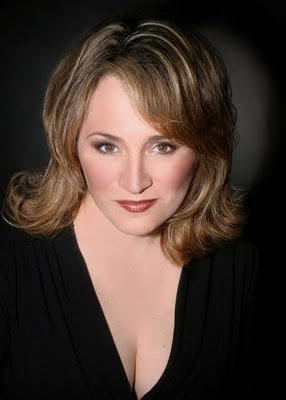
Patricia Racette, sopranoThe Vocal Arts Society presented soprano Patricia Racette on Friday night at the Austrian Embassy, in a recital combining art songs and cabaret songs. Few who experienced Racette in the roles of Ellen Orford and especially Jenůfa at Washington National Opera, or as Leslie Crosbie at Santa Fe Opera, were left with any doubts about her startling ability to incarnate a character’s anguish with her voice. She can deploy her complex tone, thick with vibrato and other colors like the tannins in a potent red wine, to pack an emotional punch that can knock out the listener with its urgency. It was clear from her stage presence that she understood and has considered the words of the songs she sang, but she always stopped short of grossly emoting, making for a deeply satisfying performance. This was all the more remarkable in that Racette coughed and drank water throughout the performance: one suspects that the record pollen counts in the local air this week have played havoc with her voice.

The high point of the program was a set of Poulenc mélodies, refined songs to exquisite poetry by Jean Anouilh, Max Jacob, Colette, and Guillaume Apollinaire, to name a few. Poulenc’s music remains one of the best examples of how successfully to integrate popular idioms into classical music: by fusing them into his personal harmonic and melodic language to make a hybrid greater than the popular source, rather than merely a pale shadow of it. Racette used a broad palette of vocal colors and gestures to incarnate the various characters of the poetry -- semi-bitter recollection (Les chemins de l'amour), a skittish maidservant prattling in an anxious prayer (La petite servante) followed by a serene entreaty to the Virgin Mary (Priez pour paix), and so on. Here especially her associate artist, Craig Terry, showed an always sensitive hand at the keyboard -- capable of taming Poulenc's large-handed piano parts with ease but also finding the right color and dynamic with a finely tuned touch to put his singer at her ease.

Racette called a set of songs by Italian opera composers her "spaghetti and meatballs section," and indeed by comparison to the refined flavors of the Poulenc set this was bistrot fare, solid, tasty, and above all cheap. These songs showed off the pointed, affecting top of Racette's voice, a sound that can pull at the heartstrings very effectively. As songs, they were at best harmless if not profound, and at worst dangerously near-banal: for example, rather than trying to make something significant out of the meager introduction to Puccini's Menti' a l'avviso, Terry could just as well have omitted it. The performance of a scena ("To this we've come... Papers, papers") from Menotti's The Consul, an opera Racette admitted to having "fallen in love with," made one hope that a savvy company somewhere -- hello, Washington National Opera? -- is planning a production of this opera for Racette to sing the role of Magda Sorel. Racette was filled with such angst and frustration, after having pointed out in her introduction to the piece the irony of performing a scene set in a consulate in the Austrian Embassy.


Other Reviews:

Joe Banno, Patricia Racette at the Austrian Embassy (Washington Post, April 12)
The program opened with an odd duck, the famous aria "Lascia ch'io pianga" from Handel's Rinaldo, which stuck out from a program of much more recent songs like a sore thumb. What the performance lacked in historically informed performance touches, but with a few nice embellishments on the later part of the A section repeat, it made up for in dramatic strength, a wrenching sadness that was communicated by both the loud and soft extremes of Racette's dynamic range. As if to prove the point Anne Midgette made in a recent article about the mixture of high and low culture in American song, Racette also performed a second half of cabaret songs, by Kurt Weill, Vernon Duke, Edith Piaf, and 80th birthday boy Stephen Sondheim, among others.

The next recital in the Vocal Arts Society's season will feature baritone Christopher Maltman (April 27, 7:30 pm), at the Austrian Embassy (note the new VAS Web site), while the American Music Festival continues through May 30. As for Patricia Racette, she is headed to New York, to replace Karita Mattila in the title role of Puccini's Tosca at the Met.

16.3.10

City Choir of Washington à la Française

Style masthead

Read my review published today in the Washington Post:

Charles T. Downey, Robert Shafer and City Choir at Cathedral of St. Thomas More
Washington Post, March 16, 2010

available at Amazon
Poulenc, Litanies à la vierge noire
Robert Shafer offered a tribute to French music with the City Choir of Washington at Arlington's Cathedral of St. Thomas More on Sunday night. More specifically it was a personal homage to his own education with Nadia Boulanger, the legendary muse of so many American musicians. The spartan harmonies of the austere opening work, the "Hymne au Soleil" by Nadia's sister Lili Boulanger, set a serious tone for the evening.

Maurice Duruflé's Requiem Mass was the centerpiece of this concert, rescheduled after being canceled by the record-breaking snows last month. More than any other composer, Duruflé was able to preserve the unmetered flow of Gregorian chant melodies within a modern harmonic and rhythmic context, and the result can be either meditative or soporific, depending on your inclination. The devotion and intensity of the choir's volunteer singers impressed more than the musical quality; the singing was sometimes rough and unfinished in terms of intonation and beauty of phrasing, making for a concert that was mostly enjoyable, if not distinguished. [Continue reading]
City Choir of Washington
Music of Duruflé, Boulanger, Poulenc
Cathedral of St. Thomas More (Arlington, Va.)

15.3.10

Queyras and Tharaud at the LoC

available at Amazon
Debussy / Poulenc


available at Amazon
Schubert


Online scores:
Debussy, Cello sonata | Schubert, Sonata for Arpeggione, Moments musicaux | Webern, Drei kleine Stücke
When you hear and evaluate many concerts, the excellent ones stand out from the fair, good, and even very good ones in an almost self-evident way. Not much more needs to be said about Friday night's recital by cellist Jean-Guihen Queyras and pianist Alexandre Tharaud at the Library of Congress, other than that it rises to the top of concerts heard by these ears so far this year. As Queyras mentioned in his recent interview with our own Jens Laurson, he and Tharaud were thrown together more or less haphazardly, because they were represented by the same agency. This is extraordinarily good luck because their natural and collaborative rapport makes it seem at times like they were born to play together. The French first half opened with two of the shorter Poulenc pieces from their Debussy and Poulenc disc. The Sérénade from Chansons gaillardes warmed the room, the luscious legato of Queyras's singing cello supported by the often self-effacing Tharaud.

More jagged edges followed in the Suite française, in which Poulenc transformed 16th-century music by Claude Gervaise into elegant dances, alternatively square-footed and graceful, and a strange, half-muted Complainte. Tharaud's savvy way with early music, attributed by him to an appreciation of historically informed performance ensembles, showed through here. The half concluded with Debussy's cello sonata, one of the composer's late, masterful instrumental works -- paired on the CD with Poulenc's cello sonata, alas not heard on this program. The Debussy sonata is a beautiful, autumnal piece, solemn and wistful but also wild and playful, with hints of earlier works: the repeated low Cs and other parts of La cathédrale engloutie (first movement), Minstrels and Golliwog's Cakewalk (second movement). The temptation is to let the loud, rollicking parts roll, but Queyras and Tharaud wisely never overplayed the room, aware of the superb acoustic of Mrs. Coolidge's auditorium.

An Austrian second half did not fall quite as perfectly into place. Schubert's "Arpeggione" sonata, D. 821, profited most from the freer flowing melodic sense of Queyras's playing, even though in the last movement his left hand, perhaps tiring, had some intonation misses. It was an ingenious idea to introduce the work with the pointillistic miniatures of Anton Webern's Drei kleine Stücke, op. 11, played without warning in continuity with the Schubert, so that the capacity audience applauded after the first movement of the "Arpeggione" (one could not possibly mistake Schubert for Webern, or could one?). Half-formed thoughts were tangled in a quiet mass in the first movement, followed by a clot of more violent phrases in the second and an expressionistic wash of colors in the third. Listening to this music, played with disarming beauty, one was reminded of Queyras's comments in his interview with Jens that he plays modern music not out of a sense of duty but because it appeals like any other music.


Other Reviews:

Tom Huizenga, French spirit prevails in cello-piano recital (Washington Post, March 15)

Allan Kozinn, Muscular Renditions of Bach, Schubert and Debussy (New York Times, March 8)
A set of three Moments musicaux, D. 780, should have been in the same mold as Tharaud's recording of the Chopin waltzes, but for some reason Tharaud did not find the same kind of guileless simplicity or coloristic variety. Only no. 6 (A♭ major) achieved that fleeting, pastel transparency, while nos. 1 and 2 seemed glossed over, as if the music did not much engage Tharaud's interest. Queyras's solo turn on the first half, Henri Dutilleux's Trois strophes sur le nom de Sacher, was much more absorbing, ranging from a guitar-like serenade in the first movement ("Un poco indecision" [sic] it read in the program -- a rare spellcheck-induced error for the Library of Congress, to go along with the misspelling of the cellist's name, "Jean-Guien Queyras," on the cover) to the frenetic third movement with its precariously high writing on the A string. A single encore, Gregor Piatigorsky's arrangement of a Haydn Allegro di molto movement, concluded the evening on an impressive technical flourish.

The next concert in the series at the Library of Congress will feature Voces Intimae, a fortepiano trio that will perform music by Hummel, Mozart, and Schubert (March 26, 8 pm).