CD Reviews | CTD (Briefly Noted) | JFL (Dip Your Ears) | DVD Reviews
Showing posts with label Erik Satie. Show all posts

16.1.24

Critic’s Notebook: Alexandre Tharaud's Debut in Vienna


Also reviewed for DiePresse: Ein Oktopus hätte das nicht besser spielen können

A naughty-but-fitting local bon-mot in Austria's capital goes like this: “World famous in Vienna”. But because the arts scene in Vienna can tend to be complacent and enough unto itself, an inversion of it can be true, too, which is more frustrating still: "World famous outside Vienna". This recital might just have changed that for at least one artist, hitherto ignored at the local music-lovers’ peril.

It’s been entirely too long since I last heard Alexandre Tharaud in recital. 13 years, apparently. Alas, the long time ionarts-favorite, while enjoying a major career in most of the rest of the world, is still a neglected, little-known entity in German-speaking countries. It was telling that his recital at the Wiener Konzerthaus last Sunday was his solo-recital premiere in Vienna.

On the upside, that way it was still possible to hear the undisputed grandmaster of the small form in the Konzerthaus’ gorgeous, ideally suited mid-size Mozart Hall (when they get too popular, economics eventually dictate a move to the Great Hall), where he performed a program ideally suited to show off his skills. A selection of all-French miniatures, from Couperin to Ravel by way of Debussy and Satie. It is especially in the baroque works, be it Bach, Rameau, Couperin, or Scarlatti, where Tharaud has always been an incomparable interpreter, combining incredible playfulness with wonderful pianism, spark and wit with an air of liberation – but without expressing the extreme wilfulness of, say, a Tzimon Barto or Anton Batagov. (Not that there’s anything wrong with that.) If “Les Barricades mysérieuses” was a study in fluidity and clever, almost disorienting agogics, yet as crystal clear as a mountain brook, his attack elsewhere was like that of a starved hen picking at a particularly fat worm. “Carillon de Cythère” rang brightly from the Steinway, with the left hand steady as the clapper of a bell while a carillon accompanied its big sister in the right hand. All that drollery and cheek was enough to cause involuntary smiles.
available at Amazon
tic toc choc
F.Couperin
Alexandre Tharaud
Harmonia Mundi

available at Amazon
M.Ravel
Piano Concertos
Alexandre Tharaud
ONF, Louis Langrée Erato


His Debussy, six preludes from Book 1, was at least as varied, from nervous frippery to thunderous exclamations, hectic here, pensive there. Everything – except the pastel-colored impressionist cliché. When the first notes of the second half rang out, a lady behind exclaimed excitedly to her friend: “I know that one!”. The friend replied: “Me, too!”. It was established: They knew that one – the popular and memorable first of Erik Satie’s Gymnopédies. They probably also had heard some of the Gnossiennes before, those semi-precious jewels that so charmingly straddle the realm of Muzak and genius, minimalism and all-out romanticism, lowbrow and highbrow. That’s exactly how Tharaud makes them sound, too, with his supreme care, phrasing, and ever-present dash of irreverence.

Ravel to bring the curtain down: First À la manière de Chabrier, a little throw-away curtain raiser for the Pavane, which is – at least as per the later, self-disapproving Ravel, also, but involuntarily, “à la manière de Chabrier”... though really just a sweetly charming treat. Twenty years later, Ravel was more in the mood for sweet poison than honey – and accordingly laced his Viennese-esque La Valse just so. Tharaud performed his own transcription (as had Ravel himself, Glenn Gould, and probably several others) and it was a hoot. A few bitter, dark notes early on showed that this wasn’t going to end well, waltz-wise, but as far as the recital was concerned, it brought the house down. Hands were flying about, lusty glissandosi slid up and down, crashing exclamation marks exploded, deliciously hesitant grace notes rang out. All that was missing at the end, for a flourish, was for Tharaud to smash the piano shut. Bach & Piaf as encores rewarded an excited, sizeable crowd, which will all turn out again when Tharaud comes back to town.


Photo © Manuel Chemineau

11.8.20

Dip Your Ears, No. 261 (Satie Vexation)

available at Amazon
Erik Satie, Vexations
Noriko Ogawa (piano)
(BIS)

Erik Satie’s Vexations is an aptly named work that you have to have heard in order to know that you’ll never need to have heard it. Simple, repetitive, and demanding endurance from the performer, not skill. 18 notes, harmonized, inverted. Just one page of brutalist-simplistic music, but rinsed and repeated – by disingenuous fiat of the composer’s pen – 840 times. The Vexations deserve to be recorded for the archive’s sake, because everyone ought to have the chance to reject this misinterpreted gag of a composition on their own; the only other reason to perform them is to achieve a cheap if exhausting publicity stunt.

It delivers all the stupefying effect without any of the ‘transportive’ qualities of a Philip Glass film score and is bound to inflict pain on anyone of musical sensibility. You’d be just as well off drinking a bottle of cheap booze for such a dulling of your senses. It is, in short, an exercise in masochism and no spin of its alleged “Zeb Buddhist” qualities (as the work’s first champion, John Cage, suggested) or of it being a “study in immobility” (so would be staring at paint dry) can salvage the thing. It’s ironic and telling that Satie, derided for his best music as a mere ‘salon composer’, should be celebrated by some for his worst. Sort of goes to show that if you pump up the crazy just enough, someone will be there to declare you a genius. The truth is that we don’t know what Satie’s intent was when he scribbled the page of music and the absurd instructions down; sarcasm is as good as any; a mocking musical jest of sorts. If you listen to the whole thing, though, the joke’s on you.

That said, what about the performance? For starters, Noriko Ogawa plays on a beautiful sounding Érard, beautifully recorded. For some 70 minutes she is merciless in her rigor and – though I dare not say “refreshingly” – brisk. At the tempo she takes for 142 variations, she’d be done with the whole thing in six (SA)CDs. A far cry from the alleged aimed-at goal of 24 hours, that Satie may have had in mind. (For that, you’d have to go to Jeroen van Veen’s download of the whole thing on Brilliant Classics.) In any case, carping about this would be akin to the joke of two ladies in a restaurant complaining: “The food’s terrible here.” “Yes, and the portions are so small!” But no have fears: Happily, the artist and record label have the good sense to consider this nod towards Satie’s Vexations exhaustive and final, which it more than is. Late in the game, Noriko Ogawa adds some more obvious dynamic variation and shifts in voicing and eventually also the tempo, speeding things up as if to come to a quicker end. If you’ve made it through those 75 minutes, the last five might induce chuckles of relief and acquiescent glee. But three quarters of an hour seem a high price for that.

At the heart of taking this seriously at all is the John Cage dictum that “if something is boring after two minutes, try it for four. If still boring, then eight. Then sixteen. Then thirty-two. Eventually one discovers that it is not boring at all.” Well, if something is boring after 80 minutes, you could double down until you lose your mind or have invested so much time that you cannot allow yourself to consider it having been time wasted. Eventually, I suppose, Cage will be right. But will it have been worth it? I suggest sticking to Virgil Thompson’s take on the matter, instead: “Try a thing you haven't done three times. Once, to get over the fear of doing it. Twice, to learn how to do it. And a third time to figure out whether you like it or not.”

1/10


24.7.19

Dip Your Ears, No. 246 (Accordion-Journey: Teodoro Anzellotti in Satie)

available at Amazon
Erik Satie, Keyboard Works arr. for Accordion
Teodoro Anzellotti
(Winter & Winter)

Transcriptions and adaptations of music for accordion are not that hard to find; it’s an instrument that lends itself to grabbing music written for other – especially keyboard – instruments and it hasn’t that much original classical music in the repertoire to fall back on. But there are few accordion players who so consistently pick interesting material and reshape it with such skill and genius as does Teodoro Anzellotti, as his recordings on the boutique label Winter & Winter over the last 20 years testify.

This one, of works by Erik Satie recorded in 1998, was the first to come out. The interpretations depict just the playful whimsy, the witty and coy sides of Satie we know – certainly in the opening cycle of piano-vignettes titled Sports et divertissements. But Anzellotti can also be somber and grave, as in the Jules Massenet-based Rêverie Du Pauvre. The barcarole-like swing of Petite ouverture à danser is sweetly lulling and the famous Gnossiennes are of contemplative beauty, with their long lines enhanced on the accordion, compared to the percussive piano. There’s a meditative quality to the accordion that Anzellotti can tap into, that would make a pianist’s version sound mellow to the point of sedate, while his interpretation still seems alert. The resulting alienation-effect is one of the many aspects that makes this recording a niche-classic.

8/10


15.1.15

Matthew Polenzani Brightens My Day


available at Amazon
Liszt, Songs, Vol. 1, M. Polenzani, J. Drake
(Hyperion, 2010)
Charles T. Downey, Polenzani’s singing and Drake’s piano playing create engaging performance (Washington Post, January 16, 2015)
At the end of a bad day, the combination of music and poetry in a well-executed song recital can lift one’s spirits like few other experiences.

The performance by Matthew Polenzani, presented on Wednesday night in the Kennedy Center Terrace Theater by Vocal Arts DC, was one such event. The American tenor, most familiar from his many appearances with the Metropolitan Opera, may not have the most innately beautiful voice, but his striking program with English pianist Julius Drake tickled both mind and ear... [Continue reading]
Matthew Polenzani (tenor) and Julius Drake (piano)
Vocal Arts D.C.
Music by Beethoven, Liszt, Ravel, Satie, and Barber
Kennedy Center Terrace Theater

19.11.13

Briefly Noted: Tharaud's Encores

available at Amazon
Autograph (Encores), A. Tharaud

(released on November 19, 2013)
Last week, I mentioned Alexandre Tharaud's special concert residency at the Cité de la Musique this week. The French pianist's new CD, Autograph, arrived in the mail recently, and the official release date is today. In most cases, such a recording of favorite encores is nothing more than the self-indulgence of a star musician. As usual, even under those circumstances, Tharaud delivers something that is instead thoughtful and mostly devoid of overly familiar chestnuts (a Rachmaninoff prelude, op. 3/2, and Chopin's Minute Waltz aside). There are a couple favorites from Tharaud's past, like Rameau's Les Sauvages, Couperin's Le Tic-Toc-Choc, and a Scarlatti sonata (K. 141): Tharaud has described the disc as a sort of self-portrait through the lens of his own discography. Many pieces, perhaps too many, are of the dreamy, sugary melodic variety -- Tchaikovsky's op. 19/4 nocturne, Fauré's Romance sans paroles, Sibelius's Valse triste, Satie's third Gymnopédie, Poulenc's Mélancolie, Mompou's El Lago -- but this sort of piece is so squarely in Tharaud's wheelhouse that it is hard to complain about their inclusion. The surprises are the best part -- the frantic celebration of Grieg's Wedding Day at Troldhaugen, the homesickness of Adios a Cuba by Ignacio Cervantes, the prancing dissonance of Oscar Strasnoy's Tourbillon -- and, of course, there is Tharaud's crisp and joyous Bach, which bookends the disc. The only thing one misses is hinted at in this radio interview (en français): Tharaud loves to improvise, which is another reason he thinks that having a piano in his apartment would put him at risk of doing nothing but playing for his own own amusement. A Tharaud improvisation would have been just the thing to give the final punch to this pleasing little disc.

12.2.13

Mark Morris's Neoclassicism


Socrates, Mark Morris Dance Company (photo by Gene Schiavone, courtesy of GMU Center for the Arts)

The success of a Mark Morris choreography often seems linked to his choice of music: irresistible with Handel, the Schumann piano quintet, Mozart, Purcell, but less so in other cases. The mixed program brought by Mark Morris Dance Group to George Mason University Center for the Arts on Saturday night fell out along similar lines. In The Office, from 1994, three men and three women clad in semi-casual business attire (costumes by June Omura) wait for a severe, clipboard-wielding woman to call them into an office offstage -- are they being interviewed for a job, or being downsized one by one? Beginning with all six, and decreasing in number after each section of music, their movements incarnated the flight of fancy in response to the torment of waiting. The whimsical character of Dvořák's Bagatelles for two violins, cello, and harmonium (op. 47) captured the sense of minds wandering.

Morris's insistence on having live music to accompany his dancers extended in this case to having a harmonium in the pit (played by the versatile and talented Colin Fowler, with unexpected and pleasing results), even though Dvořák specifies that the part could be played on a piano instead. Flavors of square dance and tap crept into the choreography, and the canon of violin and cello in the fourth movement was reflected in the echo of a single dancer who mirrored two preceding dancers in the same way. By comparison, the newest choreography, Festival Dance, premiered in 2011, was set to music that seemed far less inspired, Johann Nepomuk Hummel's Piano Trio No. 5 in E major (op. 83). Some motifs in the dance came directly from the music: a tiptoe run that went with a skittering upward scale in the piano (the demanding part quite a workout for Fowler), and a staccato theme that gave rise to a funny up-and-down bobbing motion. The most beautiful part of this dance was a more ballet-oriented look, beginning with the opening pas de deux, full of graceful lifts, while other popular hints of the waltz or music theater seemed slightly hackneyed.


Other Reviews:

Sarah Kaufman, Mark Morris Dance Group, mixing pleasure and pain (Washington Post, February 11)

---, Mark Morris designs a dance after he picks his music (Washington Post, February 2)
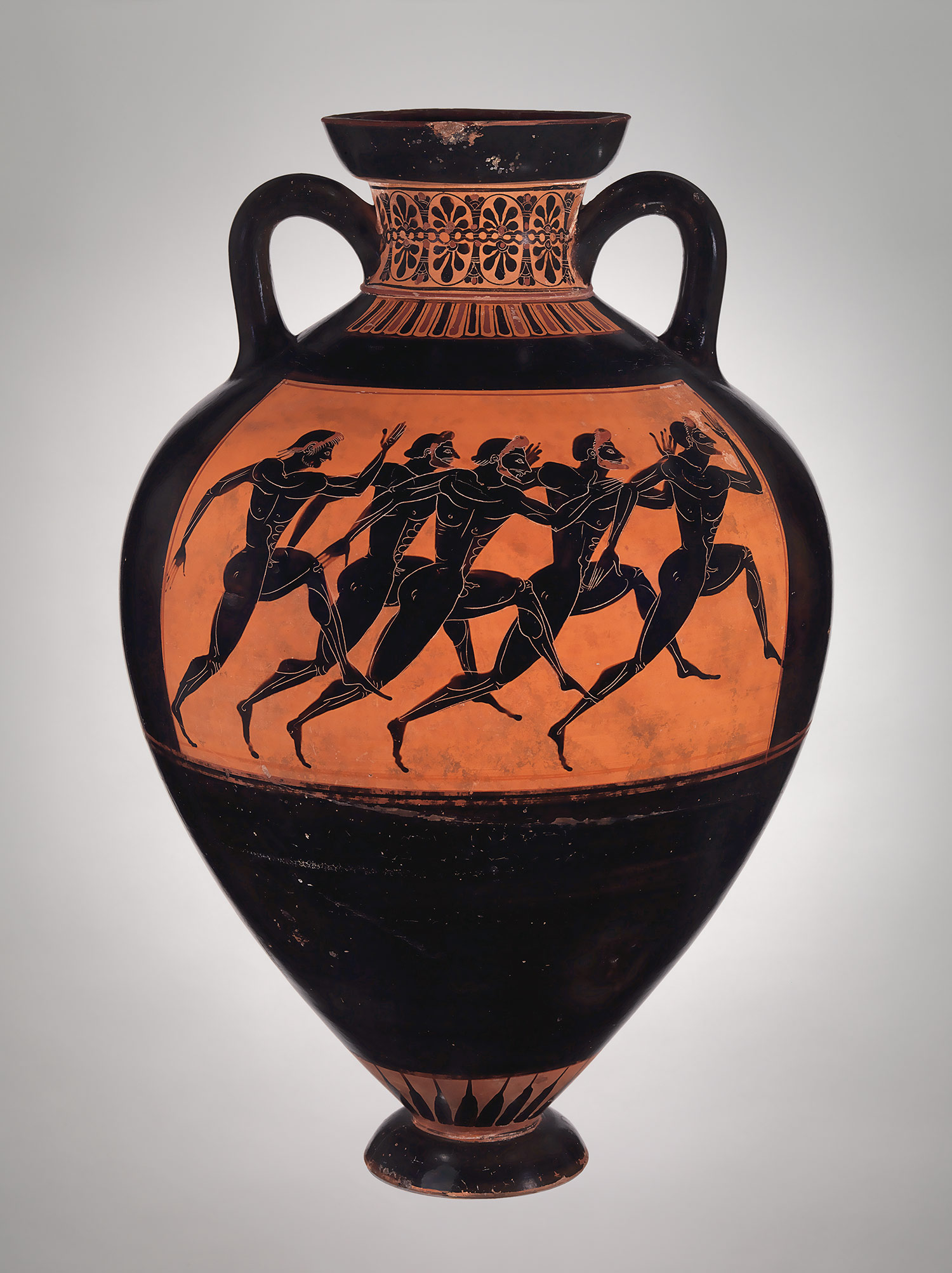
Still, nothing prepared me for the austere beauty of Socrates, Morris's classical response to Erik Satie's Socrate, a setting of excerpts from three of Plato's dialogues, especially focusing on a portrait of the life and death of his teacher, Socrates. The score was an extremely influential one, arranged for two pianos by John Cage (also for a choreography, by Merce Cunningham, later reworked into Cheap Imitation) and having elements of simplicity and repetition that foreshadow minimalism later in the century. Although Satie intended the work to feature four singers, preserving the sense of dialogue, the parts are all intentionally uniform in range, making a performance by a single voice (here the sweet high tenor of Zach Finkelstein) not only possible but satisfying. In the same way, Satie's original version for piano only seems stronger than the orchestration he made later, especially as performed here, with steady tempi and an intentionally rather plain, almost affect-less approach. The choreography, featuring a large cast of dancers in pseudo-Greek short chitons (Martin Pakledinaz), often seemed like group athlete portraits on Greek vases springing to life. The movements did not necessarily narrate Satie's French text, until the end where various parts of the final day of Socrates, drinking the poison hemlock and dying, are played out by individual dancers and the entire group. The overall effect was somber, hypnotic, and unforgettable.

16.4.09

Tharaud Champions Satie

available at Amazon
Erik Satie: Avant-dernières pensées, A. Tharaud and Friends

(released on February 10, 2009)
Harmonia Mundi HMC 902017.18

Online scores:
Erik Satie
When it comes to a list of recorded achievements made by the age of 40, few pianists have succeeded like Alexandre Tharaud. Since his first recording for the Harmonia Mundi label in 2001, and before that on Naxos, Tharaud has released a series of discs, many of which are essential listening for any collector. He has shown a special affinity for two areas of repertory, the Baroque (Rameau, Couperin, and extraordinary Bach) and French music of the early 20th century (Poulenc and Debussy cello sonatas with Jean-Guihen Queyras, Ravel, Poulenc, and Milhaud), although he has made a very pleasing detour into the 19th century, with discs of the preludes and waltzes of Chopin and some Schubert. When I spoke with Tharaud, informally, after his Washington recital at La Maison Française last October (which I reviewed for the Washington Post), he told me about this new Satie disc, which he had just recorded earlier that spring. The recording has many delights, a few dogs, and much that reinforces my impression of Satie the composer -- witty, quirky, and sometimes off-putting. Certainly, as Tharaud and friends play him, Satie is worth hearing.

The first disc is devoted to the solo piano music, arranged in a program around the famous Gnossiennes, played just as they should be, languorous but simple, with few adjustments of the gentle, undulating -- but not oily -- pace. The best definition of what a Gnossienne is, to my knowledge, is an imagined dance named for a woman of Knossos in Crete (a Gnossien is a resident of Knossos). Like the Gymnopédies (one of them is included here), an equally mysterious word that may or may not mean a naked dance, their unusual scalar vocabulary and free, vaguely metered rhythmic sense may be an evocation of or tribute to imagined Greek music. To represent a much more extensive oeuvre, Tharaud's selections feature the many sides of Satie's style, including the satirical (Véritables Préludes flasques), jazz-influenced (the rag Le Piccadilly), surreal (Descriptions automatiques, including the Habanera-like Sur un vaisseau), winkingly postmodern (the ridiculous Beethoven parody in endless hammered cadences in Embryons desséchés), and experimental (the prepared piano jangling like percussion and banjo, in the seven pieces from Le piège de Méduse).

A second disc features pieces requiring two musicians, to mixed success. The four-hands piano works (Trois morceaux en forme de poire, La Belle Excentrique, and Cinéma), with pianist Éric Le Sage, are a delight to have in my collection, as are lesser-known works for tenor (the clear-voiced Jean Delescluse) and violin (the luscious Stradivarius of Isabelle Faust). Poor trumpeter David Guerrier is heard for only about 15 seconds at the end of La statue retrouvée. It was an ingenious idea to use the rougher voice of cabaret singer Juliette, and her distinctive works so well in the comic songs like Chez le docteur, but less so in the ballads like Je te veux, where a more refined sound is missed. At the end of the final track (5:30, after long silence), some uncredited words are spoken (by Tharaud?): "J'ai plus de plaisir à mesurer un son que je n'en ai à l'entendre. [...] Que n'ai-je pesé ou mesuré ? Tout de Beethoven, tout de Verdi, etc. C'est très curieux. [...] Passons. Je reviendrai sur ce sujet." (I take greater pleasure in measuring a sound than I do in hearing it. [...] What have I not weighed or measured? All of Beethoven, all of Verdi, etc. It's very strange. [...] Let's move on. I will come back to this subject). It turns out that these are a few lines spliced together from Satie's Mémoires d'un amnésique (Memoirs of an amnesiac). Let us hope it is a sign of another Satie album to come from Tharaud and Co.

120'07"