CD Reviews | CTD (Briefly Noted) | JFL (Dip Your Ears) | DVD Reviews
Showing posts sorted by relevance for query grimaud. Sort by date Show all posts

2.11.06

Hélène Grimaud and the Schumanns

Available at Amazon:
available at Amazon
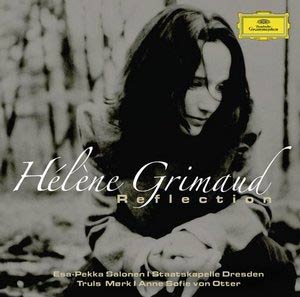
Hélène Grimaud, Reflection, Truls Mørk, Anne Sofie von Otter (released on September 12, 2006)
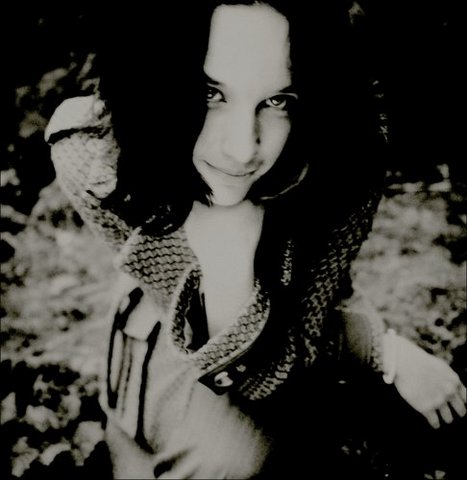
French pianist Hélène Grimaud thinks big, in her personal life by using her celebrity to embrace various causes and in her music, which she selects and plays in terms of weighty and often philosophical ideas. Her 2005 CD, which I reviewed last year, was centered around the theme of death, somewhat inexplicably as I saw it. Now Grimaud has taken love as her subject (what else could measure up to death?), but fortunately she limits herself to a one-page Preface in the liner notes, about this emotion that united Robert and Clara Schumann and Johannes Brahms, the three composers featured on this new recording. (The European version of this release had three letters from the composers to one another, gathered by Grimaud in her extensive research of the program. They are not included in the U.S. release.) Happily, Grimaud turns over the rest of the notes to Nancy B. Reich, although there is plenty of room for gorgeous photographs of Grimaud, who has become a brunette.

available at Amazon
Hélène Grimaud Box Set
Grimaud has apparently recorded the Robert Schumann concerto (A minor, op. 54) in the 1990s, before she signed with Deutsche Grammophon. (I have not heard that performance, although you can buy it again as part of the Grimaud box set released this month by Warner Classics.) Here she plays with the Staatskapelle Dresden, the modern orchestra descended from the group that premiered Schumann's concerto, the Dresden Hofkapelle, with Clara Schumann playing the solo, in 1845. Esa-Pekka Salonen leads a fine performance from the orchestra, although at a few climactic moments in the first movement, Grimaud and the orchestra are not in agreement. In general, it is not a particularly impressive or memorable reading of this concerto, certainly not enough to warrant buying yet another recording of it.

Technically, Grimaud is a gifted player certainly, although not to mind-blowing proportions. What seems to please many listeners, myself included, is the individuality of her interpretation. All those strong ideas, which also come out in her politics and writing, lead her toward a sometimes unpredictable way of playing. That can be an exciting thing to hear from a purely solo player, but this CD is an anthology dominated by collaborative performances. In a sense when Grimaud is the soloist in a concerto, it is up to the orchestra to stay with her, but the role is reversed in the next two selections.

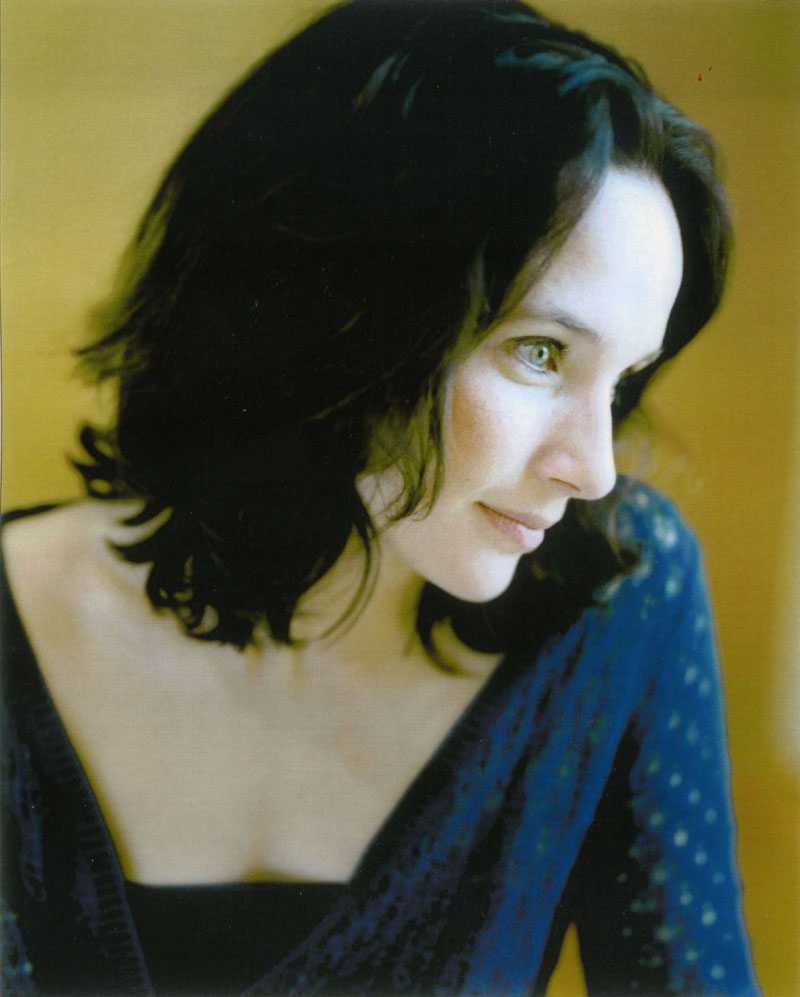
Hélène Grimaud, photo courtesy of Kasskara/Deutsche GrammophonAccompanying is not a skill that comes naturally to all pianists, and the three brief tracks here, songs by Clara Schumann with mezzo-soprano Anne Sofie von Otter, do not reveal Grimaud as a natural accompanist. She has a passionate sense of rubato, which leads her to make the introduction and brief interludes of Er ist gekommen (op. 12, no. 2) very turbulent. It's appropriately Romantic (Friedrich Rückert's poem is about a man who arrives "in storm and rain" to take the narrator's heart), but I cannot help but think that a singer would get kind of nervous listening to that sound while negotiating an entrance. Indeed, von Otter's voice has a jittery edge to it in this song. The third song, Am Strande (Wilhelm Gerhard's adaptation of a Robert Burns poem), is much the same. Happily, Grimaud's other strength, direct simplicity, is just what is needed for the second Rückert song, Warum willst du and're fragen, in which we seem to hear the calm, steadying voice of Clara Schumann in her husband's ears ("Do not believe strangers, / do not believe your own delusions; / nor should you interpret my actions, / but rather look at my eyes").

The best collaborative performance on this CD is with Truls Mørk, on the first Brahms cello concerto sonata (E minor, op. 38). At times, it sounds like Grimaud pushes Mørk with her driving sense of line, but the piece is written with the cello part in control enough that the partnership seems on more even footing. The only drawback is that Grimaud's tendency toward loud and full sound occasionally overwhelms the cello or obliges Mørk to play with a shrill or forced tone. It's a substantial piece formally, only six minutes shorter than the Schumann concerto, and their rendition is what best recommends this recording, along with the only two solo piano pieces, the Brahms op. 79 rhapsodies.

Grimaud can and does cut loose in these pieces, giving collar-poppingly uninhibited performances that one might not associate with Brahms but which are likely to quicken your pulse. (These pieces are marked "Agitato" and "Molto passionato," after all.) The second op. 79 rhapsody (G minor) is one of the most entertaining Brahms pieces to play at the piano, with its sweeping melodies and booming bass octaves. Grimaud stretches the tempo until it nearly breaks, both fast and slow, the former perhaps a tad in violation of Brahms's tempo modification ("ma non troppo allegro"). She does so not without a few smudged notes due to the precipitous pacing. Still, minor quibbles aside, this is satisfying playing.

Deutsche Grammophon 477 5719

For those in the area, Hélène Grimaud will play a recital this Sunday (November 5, 5:30 pm) at Shriver Hall in Baltimore. Her program will include the two Brahms rhapsodies recorded on this disc, as well as selections from her 2005 disc, the Chopin berceuse and barcarolle and Rachmaninov's second sonata. Her program opens with Busoni's arrangement of the Bach D minor chaconne.

7.11.06

Hélène Grimaud at Shriver Hall

The effect of star power was on display Sunday night when pianist Hélène Grimaud gave a recital at Shriver Hall. The crowd was the largest and youngest in my experience of the venue, with all tickets sold out in advance and an overflow crowd, largely students, filling in the unused seats and some even allowed to sit on the stage. The last time that Grimaud came to Shriver Hall was eight years ago, and the number of people in or near Baltimore who craved hearing her again had apparently reached critical mass. The fact that her program, with the exception of the opening piece, came entirely from her two most recent recordings, all of it crowd-pleasing, created the perfect storm.

The two pieces from her 2006 CD (reviewed earlier this week), the two Brahms rhapsodies (op. 79), sounded very close to the recording: Grimaud's conception of these pieces has apparently changed little in the year since laying them down last June. In the piano music of Brahms, the large stretches covered by the hands, the thick textures, and the need for considerable arm strength make matters difficult for many female pianists. I am convinced by Grimaud's readings of these rhapsodies, which are idiosyncratic, heavily pedaled, and emotionally forthright. Grimaud does arrive sometimes at her maximum dynamic too early, after which she is unable to rise above that plateau of sound.

Grimaud has said in interviews that she practices Bach first thing in the morning, as a sort of spiritual exercise, but she has not been drawn to his music much in performance or recordings. The Busoni arrangement of Bach's D minor chaconne (from the second partita for unaccompanied violin) that opened the program seemed the least familiar to Grimaud, not quite always fitting under her fingers. The tempo varied, in some cases wildly, from variation to variation, but the fullness of sound matched what Busoni said he was attempting to capture in this arrangement, a piece for solo violin fleshed out for the majesty of the organ (something Bach did himself for other movements from his solo string pieces).

The best performances on the first half were the two near-impossible Chopin bon-bons recorded on her 2005 CD (reviewed last March). The Berceuse in D-Flat Major, op. 57, sounded even more delicate than on the recording, a fine mixture of rock-solid technique and gentle sound. Babies could have been lulled to sleep, but none were in the hall, thank God. The Barcarolle in F-Sharp Major, op. 60, is a twilight piece, completed in 1845-46, just a couple years before Chopin's death. Its evocation of Venice and the barcarola songs of the gondoliers is bittersweet. The ability to resolve the work's technical demands with its air of simplicity has eluded many players, but it seems to play right to Grimaud's strengths. Her affinity for Chopin, she told James Oestreich in a recent interview for the New York Times, comes partly from being left-handed, and Chopin calls equally on both hands.

Other Reviews:

Tim Smith, Powerful recital (Baltimore Sun, November 7)
The entire second half of the recital was devoted to Rachmaninov, a composer I have admitted before is not a favorite. Grimaud also recorded his second piano sonata (op. 36) on her 2005 CD, and this performance was much like those recorded tracks. Grimaud opts mostly for the 1931 revision, with some of the more challenging passages from the original 1913 version restored. It's a fiendishly difficult piece, and it is inevitable that a player will miss a few notes. On the recording, there is, to my ears, aural evidence of a few edits, but in live performance that is not possible. What is clear from Grimaud's rendition is that she has a formidable technique and an appreciation of the composer's volatility. I have to say that I don't care for this piece any more after hearing Grimaud, but that is hardly her fault. For the encores, she stayed with Rachmaninov, in impressive performances of three of his miniatures, one prelude and two études-tableaux.

Hélène Grimaud plays the same program in a recital at Carnegie Hall tomorrow evening. We will add some links to the New York reviews later this week.

UPDATE:
Grimaud apparently played the program once between Baltimore and Carnegie Hall, at a concert in Troy, N.Y. Monday night (review in the Albany Times Union). She reportedly took a wrong turn on the road somewhere in New Jersey and was an hour late in starting the recital.

Carnegie Hall reviews:
Anthony Tommasini, Iron Fists Within Those Velvet French Gloves (New York Times, November 10)

Jay Nordlinger, Grimaud's Romantic Storm (New York Sun, November 10)

27.3.05

Chopin and Rachmaninov's Sonatas of Death

Available from Amazon:
Available at Amazon
Chopin, Sonata, op. 35; Berceuse, op. 57; Barcarolle, op. 60; and Rachmaninov, Sonata, op. 36, Hélène Grimaud, piano
I posted last month about the new CD from French pianist Hélène Grimaud, when it was reviewed in Le Monde. (At that point, M. S. Smith, blogging at CultureSpace, had already posted a review of Hélène Grimaud's concert with the Los Angeles Philharmonic and some thoughts on her new album. We await the return of that blog from its currently suspended state.)

For a performer in her 30s, Ms. Grimaud has had a fairly illustrious career, having already made recordings with Pierre Boulez, playing one of the three Bartók piano concerti, and with Esa-Pekka Salonen and the Swedish Radio Symphony (Credo, featuring John Corigliano's Fantasia on an Ostinato; Beethoven's Tempest Sonata and Fantasia for Piano, Chorus and Orchestra in C minor, op. 80; and Arvo Pärt's Credo for Piano solo, Mixed Choir and Orchestra) for her first album as a Deutsche Grammophon artist. Her list of older recordings includes Ravel and Gershwin with David Zinman and the Baltimore Symphony, the Brahms first piano concerto with Staatskapelle Berlin, and the Brahms op. 116 to 119 pieces (all for Erato), the Rachmaninov second concerto with the London Philharmonia Orchestra and Vladimir Ashkenazy and the Beethoven fourth concerto with the New York Philharmonic and Kurt Masur (both for Teldec).

She has been packaged by all these companies as a beautiful woman playing the piano, since her face, often in closeup, graces all of her album covers. M. S. Smith wrote that his first impression of Grimaud was that she was "far too pretty for her profession; you'd mistake her for an actress before you took her for a classical pianist." The sex appeal of virtuoso musicians is as old as the very concept of the daring solo performer, so why shouldn't Ms. Grimaud's physical appeal be a marketing bonus? It goes without saying that you will buy Ms. Grimaud's recordings because of how she plays, but five or six publicity photos in the CD booklet cannot hurt, as far as I can tell. I might be more sympathetic to the argument that what we could really do without are Ms. Grimaud's rather indulgent liner notes. In a short essay ("Death, Where Is Thy Victory?"), she lays out her feelings about the two sonatas (both no. 2, both in B minor, by Chopin and Rachmaninov):
There is nothing more final than death; and yet, by a striking paradox, it is only death that enables the spirit to find its way back to the central point where life regains its urgency. That urgency was tested by Chopin and Rachmaninov in the extreme with their Second Sonatas, works that open out to infinity: they are masses for the dead, recited by love itself for all who love.
Ms. Grimaud's rather personal thoughts about the pieces she has recorded are followed by an interview, with Michael Church, featuring . . . more of Ms. Grimaud's rather personal thoughts about the pieces she has recorded. I have no problem with this, because performers should have a personal relationship with the music they play, but I doubt I will ever need to consult this particular booklet ever again.

Because of the third movement (Marche funèbre) I can understand associating the Chopin sonata with the theme of death (although the Funeral March was actually composed by itself in 1837, during Chopin's depression after his affair with Maria Wodzinska had ended, and only later inserted into what became the sonata, which was composed during the happy early years of his relationship with George Sand), but not the Rachmaninov. One of the most appealing qualities of instrumental music is that it can mean so many different things to different listeners: a reviewer of Freddy Kampf's performance of the Rachmaninov second sonata noted that "the Romanticism of this movement is red-blooded, with a potent, almost sexually charged dynamism." I understand even less how the theme of death could fit with the two short bon-bons appended to Grimaud's program, the Berceuse (op. 57) and the Barcarolle (op. 60), both from the mid-1840s, before Chopin and Sand really began to hate one another (and both of which, coincidentally, he played for his final concert in Paris, in 1848). Whatever. If it helps Grimaud to think about the music this way, that's great.

It strikes me, after several listenings of this album, that Ms. Grimaud plays the way she thinks about music: personally, directly, radically. There is some roughness around the edges (as opposed to the masterful polish of a Pollini), and Ms. Grimaud's tendency to sigh and even sing does come through occasionally. Her voicing of main lines is admirable, and there are moments of great tenderness contrasted with crashing, almost raucous force (this is at least partly due to the free approach to choice and flexibility of tempo). For the Chopin sonata, however, I will forever be spoiled by the live account from Maurizio Pollini last fall, where there were far more colors in the funeral march and the most daring final movement.

I have to say—and here I feel the same trepidation that Helen Radice felt before she admitted never liking Brahms—that Rachmaninov is one of those composers I could probably do without. I will listen to his music, fine, but I don't have any recordings (except a few cases where there is a piece here and there) and I just don't seek it out. He was a great pianist, and his music can be as difficult as hell, so I admire people who can play it well, but I just don't care for most of it. (This is not to say that I don't like flashy, Romantic music, since I love Liszt's hellish piano pieces.) I admit that it bothers me that one critic could describe Rachmaninov's second sonata (1913/1931) as a continuation of or coda to Chopin's (1837-40). Although I suppose that's true, there is something retrogressive about Rachmaninov that bugs me. His music is just so damned pretty. Ugh. (Give me Prokofiev anyday: his second sonata sounds like it was composed in 1912, and his seventh in the 1940s.) My dislike aside, Grimaud does a great job working her way through the treacle. Her muted, drowsy rendition of Chopin's Berceuse could rock any crabby child to sleep, and her affinity for Rachmaninov comes across well. All in all, this is good work and enjoyable listening, and it will probably not leave you as depressed as you might fear from two "sonatas of death."

15.12.05

New Disc from Hélène Grimaud

Hélène Grimaud, Reflection, to be released in January 2006Pianist Hélène Grimaud has just recorded a new CD of music by the Schumanns and Brahms. It is called Réflexions in French, and the English version, Reflection, DG 477 5719, will be released next month. Martine D. Mergeay met Grimaud in Brussels for an interview (Hélène Grimaud: perdre ses repères, December 9) published in La Libre Belgique, as the pianist was about to embark on a concert tour (after Belgium, she goes on to concerts in Rome, the Netherlands, Germany, Switzerland, several of them with Yuri Temirkanov on the podium with different orchestras). The disc includes Robert Schumann's piano concerto (with Salonen and the Staatskapelle Dresden), Rückert songs by Clara Schumann (with Anne Sofie von Otter), the Brahms op. 38 sonata for cello and piano (with Truls Mørk), and the two Brahms rhapsodies for piano. The CD booklet contains excerpts from the letters of the three composers, collected by Grimaud during her preparation for the recording. Here is a bit of the interview (my translation):

We met the pianist at the Sheraton of Brussels National, the least Romantic place one can imagine, where Hélène -- now with brown hair and even more real -- greeted us in jeans and a sweater, hair askew, no makeup. Her voice is sweet but the conversation was rapid and continuous ("after 8 hours of interviewing, if I stop now, I'll collapse," she admits, smiling), her attitude is open, measured, welcoming. [...]

The interview focuses on Schumann: Robert, the pianist, composer, and writer, was he not, like her, at the crossroads between music and words? "I was not thinking about that parallel, but yes, even if he is not the only one, Schumann is the musician of words par excellence. He felt the need to transcribe verbal rhythms in music, to communicate the poetry of both music and words. While he expressed himself so intensely in music, he also wanted to articulate his thoughts. And thus to betray them." [...]

Also on Ionarts:

Chopin and Rachmaninov's Sonatas of Death (March 27, 2005)
Hélène Grimaud is often presented as the champion of sensibility, of direct expression, of passion, etc. That is surely how she appears in concert, but listening to her latest disc, one is above all struck by the analytical and structured side of her interpretation. "Well, yes, I don't quite know what to say about all that (!), but it corresponds to my idea of reconciling opposites. In Schumann, if all the identities are not brought together, you miss what is essential. That must be why I work mentally so much on Schumann's music, to keep his exuberance, his freshness." Mentally? "With a score more than at the piano, while searching for a very precise sonic image, formed in parallel with a physical sensation -- universal -- of the result. This is a way to be able to enter the «labyrinthe schumannien», that poetic essence that guides the research of my interpretation."
Grimaud's latest cause is Amnesty International and groups working against violence towards women, for which she was playing her concert in Brussels. Mergeay notes that Grimaud gave her the brochures at the end of the interview. The concert was supposed to be Tuesday night, December 13, in the Palais des Beaux-Arts in Brussels, with Chopin, Brahms, and Rachmaninov on the program. It has been rescheduled for February 27, 2006, because of Grimaud's illness. We wish her well.

6.11.11

In Brief: Hélène Grimaud Edition

Here is your regular Sunday selection of links to good things in Blogville and Beyond.

  • Watch Hélène Grimaud and Sandrine Piau with the Kammerorchester des Bayerischen Rundfunks in a concert of music by Mozart. [Cité de la Musique Live]

  • Listen to a Lieder recital by soprano Christine Schäfer and pianist Eric Schneider, with music by Schubert, Strauss, and Berg. [France Musique]

  • Also watch Hélène Grimaud, again with the Kammerorchester des Bayerischen Rundfunk. [Cité de la Musique Live]

  • Les Éléments and Les Passions perform music by Jean Gilles (1668-1705), settings of the Lamentations and Requiem Mass, in the Cathedral of St-Maclou de Pontoise as part of the Festival Baroque de Pontoise. [France Musique]

  • Completing the Hélène Grimaud trifecta, a concert with Jan Vogler. [Cité de la Musique Live]

  • Listen to violinist Sergey Khachatryan playing solo Bach at the Cité de la Musique. [France Musique]

  • If you haven't read it yet, go read D. T. Max's profile of Hélène Grimaud. [The New Yorker]

  • Pianist Frédéric Lagarde and Friends perform music by Martinů, Brahms, Schubert, and Michael Jarrell, in the Couvent des Cordeliers as part of the Festival de Forcalquier. [France Musique]

  • Watch the finals of the Concours de chant lyrique Long-Thibaud-Crespin. [ARTE Live Web]

  • From 2008, a performance of Mahler's Das Lied von der Erde with soprano Violeta Urmana and tenor Jon Villars and the Orchestre National de Lille, under Jean-Claude Casadesus, from the Festival de Saint-Denis. [France Musique]

  • Also don't miss Daniel Wakin's write-up of the dispute between Hélène Grimaud and conductor Claudio Abbado, over which cadenza to include in her recording of a Mozart concerto. I have to say that I think Abbado is right, in that Mozart's cadenza would be preferable to the one by Busoni. However, the choice of a cadenza really is the soloist's prerogative: if Abbado could not convince Grimaud of his point of view, he should have let her play Busoni. [New York Times]
  • Listen to Yo-Yo Ma and Kathryn Stott in recital from Salzburg. [France Musique]

  • Watch Janine Jansen and Jean-Christophe Spinosi in a concert of Rameau, Handel, Mozart, and others. [ARTE Live Web]

  • Les Arts Florissants perform the first book of Monteverdi's madrigals at the Cité de la Musique. [France Musique]

  • Hélène Grimaud also gave an interview with Thierry Hilleriteau this week. He claims that she speaks French with an American accent, and she maintains that she has no plans to start conducting. [Le Figaro]

  • In case you missed it at the Proms this year, you can listen to his recital by organist Thierry Escaich at Royal Albert Hall. [France Musique]

  • Hear the Takács Quartet at the Théâtre de la Ville, playing Ravel, Bartók, Dvořák, and Haydn. [France Musique]

4.10.08

NSO and Grimaud

Shostakovich, Sy. 5:
available at Amazon
Bernard Haitink


available at Amazon
Valery Gergiev


available at Amazon
Yuri Temirkanov
After a mixed gala season opening concert and last week's welcome news that Christoph Eschenbach had been appointed Music Director, the National Symphony Orchestra officially got its fall season under way this weekend with a program under the baton of guest conductor Miguel Harth-Bedoya. The Peruvian-born music director of the Fort Worth Symphony shows up in these parts once a year or so, and when last reviewed with the NSO he did a fine job standing in for the indisposed Mstislav Rostropovich. He led the NSO in a quest to find the suave, polished side of Shostakovich's fifth symphony (D minor, op. 47). Shostakovich composed the work in the spring and summer of 1937, shortly after the condemnation of his acerbic and masterful opera Lady Macbeth of Mtsensk by the Soviet authorities. The composer's patron and protector, Marshal Tukhachevsky, was executed by Stalin as an "enemy of the people" in the midst of the work, meaning that Shostakovich's fear for his own life must have been extreme. It is perhaps the least sardonic and dissonant of the Shostakovich symphonies, as if the composer were consciously toning down his modernist style to please party officials. Later, Solomon Volkov claimed, in his book of recollections of conversations with Shostakovich (now generally disputed), that the composer thought of the fifth symphony not as a concession to Soviet demands but as a secret condemnation of it.

Whatever the truth may be, the symphony sounded good with some velvet to prepare the hammered, militaristic conclusion, what Shostakovich described (supposedly, according to Volkov) as like someone hitting you over the head with a stick and saying, "Your business is rejoicing!" On Friday night, the first violins had a warm, luminous sound in the first movement, and the crucial flute and oboe solos (especially in the second and third movements, respectively) were spot on. Harth-Bedoya's agitated beat was often difficult to follow, at least for me, and by the sound of some misaligned sections, for the orchestra at times, as in the exciting but wayward accelerando in the first movement, where the trumpet fanfares spun out of control. The second movement came off as an understated parody of a Viennese waltz, with a hilarious contrabassoon solo. Harth-Bedoya's silken approach paid off in gold in the warm, tragic third movement, scored for strings and winds only. The fourth movement, with its shock-and-awe fusillades of drums and brass and over-the-top iterations of D major, blew the roof off the Kennedy Center Concert Hall.

Beethoven, Piano Concerto No. 4:
available at Amazon
Maurizio Pollini / Claudio Abbado


available at Amazon
Evgeny Kissin


available at Amazon
Mikhail Pletnev


available at Amazon
Claudio Arrau


available at Amazon
Hélène Grimaud
What likely drew such a large crowd was pianist Hélène Grimaud, back again with Beethoven's Piano Concerto No. 4 (G major, op. 58), after playing the fifth concerto with the Philadelphia Orchestra here last season. Grimaud's 2006 recital at Shriver Hall drew the largest crowd I have ever observed in that venue, although the cynic would argue that the French pianist's star power comes more from her physical beauty than her musical talent. That would be unfair to Grimaud, who has impressive technique and a style that accentuates idiosyncratic individualism and particular strength in lacy, hazy textures.


The fourth piano concerto is my favorite of Beethoven's handful because the composer sidestepss most conventions of the classical concerto. I am not the only one to regard it as special: it is the work that sparked Martha Argerich's musical awakening, when it was played by Claudio Arrau (Argerich refuses to play it to this day). It was disappointing to hear Grimaud not take advantage of her mysterious, evasive side right from the start, rushing through the concerto's dolce solo piano opening, such an unusual way to start a concerto. (At least no one in the audience had to be taken to the hospital, as happened, twice, during her performance of the work in London Leeds recently.) Grimaud's trills were iridescent, and she spun some gauzy spider webs of sound in the recapitulation's second theme (which returns unexpectedly in the parallel minor). As most do, Grimaud played Beethoven's cadenzas, which although extended, are carefully crafted to fit into the orchestral returns. It was here that she took the most rhythmic freedom, as she often does in her solo playing.

Other Reviews:

Anne Midgette, NSO's Effort: Lovely, Long (Washington Post, October 3)
The orchestra played well in the concerto, but slightly more sloppily in the first Beethoven offering, the overture to The Consecration of the House, op. 124. The principal flute and oboe players were sorely missed in the first half, but most of the playing was competent, if a little generic. Harth-Bedoya's odd, anticipated beat caused the most trouble in the overture, where the NSO responded in a slightly sluggish way, causing more than a few misalignments of ensemble. The Beethoven paid the price for the more solidly rehearsed Shostakovich, in what was a good if not exceptional opening to the season.

This concert will be repeated this evening (October 4, 8 pm), in the Kennedy Center Concert Hall.

13.3.11

Ionarts-at-Large: Beethoven Between Agony and Delight

In the past I’ve come to use “Speech!” as a shortcut for condemning ill advised, variously inane pre-concert rambling. The Munich Philharmonic’s concert last Saturday provided an unfortunate opportunity to dig that out again, when the orchestra’s intendant came on stage with a lachrymose face, waved away the budding, Hélène Grimaud-cancellation-fearing applause with a meek gesture, and then nattered about the earthquake-tsunami tragedy in Japan in an awfully roundabout way, went on how the Munich Philharmonic had a special relationship with Japan (since two—2!—players hailed from the land of the rising sun and because the orchestra had toured Japan in the past and—perfect plug!—will tour it again in the future), and finally proclaimed that he now would like to ask people to stand up and join him in a minute of silence.

You see nothing wrong with this? How about if I opened this review thus: “I would like to dedicate this review to all the victims of the recent Tsunami; to the Japanese People in this hour of darkness…” You'd rightly call me out as ludicrously pompous; the mental indigestion of a self-absorbed twat… made even worse if I tried to rationalize it by citing my own special [purely hypothetical, of course] relationship with at least two Japanese musicians.

This kind of public condoling would speak to my self importance and perhaps a narcissistic personality disorder, but it would change nothing—absolutely nothing—about the tragedy on the ground. A private act of thoughtfulness turned into self-serving shallow and public emoting demeans any strand of good intention that may have been at its root. Donate, if there’s a cause or need. Pray, if you believe. But do it privately. Public condolences are the prerogative of leaders of state or those who contribute something meaningful. (If this particular clumsy speech had led up to the announcement of the evenings’ proceeds or the soloists’ fee being donated, it would have been acceptable, for example.) In any case don’t jump the disaster-bandwagon with an empty gesture that serves only to pat ourselves on the back afterwards for our touching sensitivity.

Brahms, at last: The Haydn Variations started with a vivid whimper before turning sluggish—woken only for the oddly charming pronounced rhythms of the Sixth Variation (Vivace) that had elements of an Elephant tripping over his outsized sneakers.

Hélène Grimaud’s best quality is perhaps the absence of pretentiousness. Last heard in London, she’s never really excited me in her painfully limited concerto repertoire, but she’s certainly never disappointed me. I find her playing a bit too clunky and too one-dimensional to compare her with the understated no-nonsense greats à la Wilhelm Backhaus or Clifford Curzon—but I’d rather hear a Beethoven “Emperor” Concerto played straight than with too much perfume and bells and whistles and ego super-glued to every second bar. [Not that I don’t make exceptions…] And in Mme. Grimaud there is something—although I can’t quite put my finger on what it is—that stands between her monochromatic renditions and the tediousness that a lesser, if similar straight-forward, bland pianist would evoke.

Or so I thought.


available at Amazon
L.v.Beethoven, Piano Concerto No.5,
Grimaud / Jurowski / Dresden StKp.
DG
available at Amazon
L.v.Beethoven, Symphonies 7 - 9,
Thielemann / Vienna Philharmonic
C Major 3 DVDs
For most of the first movement I thought that “tediousness” would be too unkind a description for the performance… but that “boring” would serve nicely as the adjective of choice. Nothing at all happened—except for one and the same continuous, predictable sound mass to emerge from the mechanical soloist and the dull orchestra. Sometimes it was loud, sometimes louder. I would like to say that the slow tempi of the Adagio un poco molto were justified by a particular intense lyricism… alas: No. Not really. Not at all, actually. At this point I toyed with the idea of damning with faint praise, call the affair “nice”, and blot it out of memory as soon as I left my seat for intermission. But no, in the transition between the second and third movement Grimaud threw even the last strand of unpretentiousness over board with a mannerism of epic proportions as she went for a horrifyingly gratuitous ritardando-that-was-none, ground everything to a halt, and then jumped into and through the finale as if she had forgotten an appointment and could not even be bothered to play all the notes until she got there. The reception was thunderous all the same—after all we’re dealing with the combination of three big ticket items (Beethoven, Thielemann, and especially Grimaud)—but it’s impossible to think that Mme. Grimaud herself wasn’t aware that this was not her finest hour.

Would Beethoven’s Seventh spell redemption? Whoooom. Thielemann attacks the first chord with such vigor that I imagined him saying: “Sorry about that just now… Tablua Rasa, OK?! Let’s enjoy ourselves!” And sure enough: this heavy working, variously light and delicate, then rambunctious and hard edged Seventh was the epitome of an interpretation with personality and musical sensibility stamped all over it. It could of course still be perfectly possible to dislike CT’s Beethoven. But it is impossible not to find it intriguing and interesting. He has a point, he makes it well, and most of the players go all out in giving him what he asks for. Thielemann’s interpretations are, by and large, not narcissistic or sloppy or both, but deeply considered and carefully executed. And here was Beethoven operatic in its drama, extraordinarily flexible in its tempos, rich in color, brawny and nimble, and with dynamics that went well beyond “louder here /less loud there”. It was the quickening restorative—and more—that Mme. Grimaud had made so necessary. Even Thielemann was happy—the third time he came on stage, called back by the ‘bravos’ that instantly drowned a few errant, possibly political ‘boos’, he hopped onto the rostrum with all the delight of a gleeful, candy shop-bound young boy.

24.2.05

New Disc from Hélène Grimaud

Available from Amazon:
Available at Amazon
Chopin, Sonata, op. 35; Berceuse, op. 57; Barcarolle, op. 60; and Rachmaninov, Sonata, op. 36, Hélène Grimaud, piano
Maurizio Pollini is an inspiration at the piano (see how we reacted at Ionarts to his recital this past fall), and nowhere is that inspiration more productive than with fellow pianists. According to an article (Hélène Grimaud rejoue Chopin, February 22) by Marie-Aude Roux for Le Monde, French pianist Hélène Grimaud decided it was time to return to recording Chopin, after more than 15 years, when she heard Pollini playing a recital in Japan: "The urgency with which he performed Chopin's second sonata," she said, "his poignant and singing playing has revived the flame in me." (He played that sonata at his recital here in Washington, too.) Here's an excerpt of what else Mme. Roux had to say (my translation):
That flame is certainly one of ardent rigor, which animates Grimaud's playing throughout the entire first movement, with an equality of touch and an admirable polyphonic clarity, no less than the veiled sunlight way she develops a drama secretly inhabited by shadow and light. We love this intensity without hardness, the elastic and profound playing of the Scherzo with strong bass notes à la Schumann. The famous Marche funèbre advances in half-colors to the ringing of inexorable bells, before the central melody of pure creaminess, before the Finale somewhere between being veiled and a rhapsody exploding like a final panic. Hélène Grimaud says that Rachmaninov's second sonata goes "marvelously well" with Chopin's. In fact, it strikes the listener like a prolongation of the Chopin finale and its development in time.
The CD will be released in the United States on March 8, but it is already available in Europe.

UPDATE:
M. S. Smith, blogging at CultureSpace, has a review of Hélène Grimaud's concert with the Los Angeles Philharmonic and some thoughts on her new album.

29.6.16

Briefly Noted: Grimaud's 'Water'

available at Amazon
Water, H. Grimaud

(released on January 29, 2016)
DG 0289 4793426-4 | 57'03"
Hélène Grimaud was last in Washington in 2008, to play Beethoven's fourth piano concerto with the National Symphony Orchestra. This recent release is partially a live recital program on the theme of water in music, which she played in several places, captured here at the Park Avenue Armory in New York in 2014. In between these tracks -- by Berio, Takemitsu, Fauré, Albéniz, Ravel, Liszt, Janáček, and Debussy -- are ethereal "transition" pieces, recorded last summer by Nitin Sawhney. In these brief, mostly electronic pieces, Sawhney creates soundscapes on keyboard, guitar, and computer, including some pre-recorded sounds of water.

The live version of this recital, reviewed in the New York Times, sounds much more interesting than the result on disc. A collaboration with artist Douglas Gordon and lighting designer Brian Scott, the concert was staged in a pool that slowly filled with water over the course of 20 minutes: "Then, the lights darkened until the hall was almost completely dark. You heard the subdued sloshing of someone walking on the flooded space: Ms. Grimaud, of course." Some of the repertoire choices are perhaps too obvious (Ravel's Jeux d'eau, Liszt's Les jeux d'eau a la Villa d'Este, Debussy's La Cathédrale Engloutie), making Grimaud's renditions of Takemitsu's Rain Tree Sketch II and Berio's Wasserklavier stand out from the crowd. A Fauré barcarolle and Janáček's In the Mists seem like stretches thematically, especially when there are choices like Ravel's Ondine, Scriabin's second sonata, and Debussy's Poissons d'Or. That last one was reportedly Grimaud's encore at some performances.


9.12.07

Conlon, Grimaud, and Philadelphia Orchestra

Thursday evening the Washington Performing Arts Society presented the Philadelphia Orchestra to a packed Kennedy Center Concert Hall. James Conlon, who conducts the Philadelphia Orchestra on this tour instead of Christoph Eschenbach, did not bother with the filler piece employed for seating latecomers, and taking Hélène Grimaud’s lead, the orchestra immediately lunged into Beethoven's "Emperor" Piano Concerto No. 5.

With self-assured poise and great depth of sound, Grimaud was an equal partner to the venerable string section of the Philadelphia Orchestra. Tempos relaxed and tightened as soloist and orchestra shifted colors. And when Grimaud proved that she had ample force at her disposal, she made sure to avoid all harshness. The orchestra appeared to be listening as much as playing in the second movement (Adagio un poco mosso), supporting Grimaud's lyrical roaming while the brisk scales in the final movement were – thoroughly pedaled – a bit blurry. The work puttered to a halt with superb timpanist Don Liuzzi and Grimaud in close coordination; the flourishing codetta contained a sense of contrast and discovery.

Other Reviews:

Philip Kennicott, Philadelphia Orchestra's Own Musical Language (Washington Post, December 8)
The second half of the program consisted of Edgard Varèse's Amériques and Ravel's La valse. In extended verbal remarks to the audience, Conlon mentioned that Ravel's tumultuous waltz looks back in mockery to the destruction of WWI, whereas the freshly minted U.S. citizen and Manhattan resident Varèse's work is a forward-looking New York City tone poem. The original version of Varèse's work, scored for 140 instruments, was premiered by the Philadelphia Orchestra in 1926 under the direction of Leopold Stokowski and had not been played again by the Philadelphia Orchestra since – until Thursday evening at the Kennedy Center. (To be particular, Thursday's performance was the 1927 revision of Amériques, scored for ‘only’ 120 and thus a Philadelphia Orchestra “re-premiere” of its new guise.)

Amériques, written around the same time as the disquieting La valse, features the first fire siren in orchestral music. Layers upon layers are built up until everything is in a chaotic, massive cluster ending at a deafening fffffff. As Conlon quoted Varèse: “I don’t write music; I organize sound.” La valse also featured enticing solos by the bar-setting principals Richard Woodhams (oboe) and Jeffrey Khaner (flute). Hearing the Philadelphia Orchestra with Conlon at the podium reminded one of the stability of the Sawallisch era before the musicians' heavy resistance through Eschenbach's appointment. Here's to a new and hopefully positive chapter of the Philadelphia Orchestra's story in the beginning of an extended search for a new Music Director.

The next WPAS classical concert is a recital by pianist Gabriela Montero, in the new downtown venue, Sidney Harman Hall (December 15, 2 pm).

9.11.06

Martha, Martha, tu sparisti / e il mio cor col tuo n'ando!

Available at Amazon:
available at Amazon
Beethoven, Piano Concertos 2/3, Martha Argerich, Mahler Chamber Orchestra, Claudio Abbado (released on November 9, 2004)
The performance of Argentinian pianist Martha Argerich with the National Symphony Orchestra was, in my mind, one of the season's most exciting prospects. It was not Argerich at fault this time (so we don't have to blame the possibility that our anti-cancellation prayers were not sincere enough), but the fragile health of the conductor of the NSO's Shostakovich festival, Mstislav Rostropovich. So, instead of finally hearing Argerich play live for the first time this evening (it's rare enough, like the 2005 Roque d'Anthéron festival, now available on YouTube), I am consoling myself with some rare performances by Argerich captured on CD and DVD (besides the 2006 CD with Dora Schwarzberg I reviewed recently).

I sincerely hope that one of you Washington concert planners is trying to figure out how to get the Mahler Chamber Orchestra to play here in Washington. Judging by concert reviews I have read and recordings we have been hearing, Claudio Abbado is in the midst of a twilight miracle with that group. This recording of the second and third Beethoven piano concerti, with Martha Argerich, recently came across my desk and it is a marvel. To say anything more would be beside the point. You may recall that Argerich won a 2006 Grammy -- Best Instrumental Soloist Performance (with Orchestra) -- for this disc and highly deserved it was indeed. Both concerti have that unique sound, of a legendary soloist, a legendary conductor, and each musician of the closely knit Mahler Chamber Orchestra on the same page and giving an extraordinary and singular reading of works we have all heard many, many times. Highly recommended.

available at Amazon
Schumann, Piano Concerto in A minor / Liszt, Funérailles / Ravel, Jeux d'eau (released on October 9, 2001)


Argerich on YouTube:

Schumann Concerto 1

Schumann Concerto 2

Schumann Concerto 3

Schumann Concerto 4

Liszt, Funérailles

Ravel's Jeux d'eau
For a 1976 appearance on Radio-Canada, Martha Argerich left a relatively rare video recording of herself playing a concerto, in this case the Schumann A minor, op. 54. The sound is not very good, and on the copy I watched there were a few video glitches, but the director keeps the camera mostly on Argerich's hands, as if we were standing over her right shoulder. This makes for an interesting comparison with Hélène Grimaud's recent recording of the same concerto. Argerich, at about the same age in 1977 as Grimaud is now, has a similar volatility, judging by the sometimes confused gestures of the conductor in this DVD, Franz-Paul Decker. Her technique, however, is much more ferocious than Grimaud's. Argerich plays the famous dotted rhythms of the opening bars like percussive jabs at the keyboard, with martial, clipped articulation and flawless accuracy. Her attack could be ultrasharp, either with reinforced thumb stabs or needle-like détaché of her large fingers. The cadenza at the end of the first movement veers between tender rapture and heart-pounding virtuosity. The tempi of the fast movements are superhuman. Grimaud's orchestra (the Staatskapelle Dresden with Esa-Pekka Salonen) is better, but here the CBC Symphony Orchestra does just fine.

The rest of this recital is devoted to two big solo pieces, both of them in remarkable performances. Liszt's Funérailles is an odd piece, with a rather enigmatic and dissonant opening section. You can see that percussive touch at the death knell (at 1:30 in the video on view at YouTube). Argerich's hands are strong and fairly large: at one point she plays an octave tremolo with thumb and third/fourth finger together instead of her pinkie, and it's not much of a stretch. In the return to the fast section (at about 6:25), the bass starts to rumble in a repeated pattern. When it speeds up, that turns into repeated octaves (at 6:59), and Argerich's left hand moves so quickly that it's only a blur. You have to see it to believe it. This wonderful DVD ends with an evocative performance of Ravel's Jeux d'eau (also on YouTube, seen below). The sounds are all impeccably aquatic, like fountains of crashing and silvery water, showing Argerich's finesse. The voicing in that crossed-hands coda (at 4:29) blows my mind every time I watch it, and the expression that passes over Argerich's sphinxian face for about one second at the end -- is it relief? satisfaction? pride? bliss? -- is a rare, unguarded moment.


Maurice Ravel, Jeux d'eau, Martha Argerich


available at Amazon
Martha Argerich and Friends (1982, released on September 26, 2006)
Of less interest, because some of the performances are not as extraordinary, but still worthwhile is a DVD called Martha Argerich and Friends, recordings made at the Munich Piano Summer Festival, in 1982. This collaborative recital opens with Mozart's Piano Sonata for Four Hands in D Major (K. 381), with Argerich on secondo and Cypriot pianist Nicolas Economou (1953-1993) on the primo part. Economou does his best to keep up with Argerich in a pleasing performance, with a few missed notes here and there. It is then cellist Mischa Maisky's turn, with Argerich at the piano for Schumann's Phanatasiestücke, op. 73. Maisky, looking 80s enough to be a member of Air Supply, gives an impassioned but not very precise performance.

What really makes this DVD worthwhile are the last two selections, works for two pianos, with Martha Argerich seated across back-to-back Steinways from Brazilian pianist Nelson Freire. This was the first time I had ever heard Rachmaninov's Suite for Two Pianos (op. 17, no. 2), and the wave of post-Romantic revulsion his music normally inspires did not overwhelm me. Plus, if you think Rachmaninov wrote for large and challenging sounds with just one piano, with two pianos he is like a kid in a candy shop. Freire and Argerich get almost all those notes and turn in a beautifully shaped and textured performance. In the stunning last movement, Argerich tosses off the repeated-note motifs, at breakneck speed, with awe-inspiring facility. Freire has his own confrontation with those patterns and does equally well. It just may be enough for me to say it: Rachmaninov wrote some good music. Fine, I admit it. Someone has to put that on YouTube -- oh, wait, someone already did.


Rachmaninov, Suite for Two Pianos (op. 17, no. 2)
Nelson Freire and Martha Argerich

Switching positions, Argerich and Freire conclude with Ravel's La Valse, equal parts suavity and mania, in the truly orchestral two-piano version. When you hear this piece, you understand why reactionaries thought the waltz would destroy the very fabric of society: it is music that could drive an otherwise innocent person wild. It is hard to imagine what my reaction would be to experience this kind of incendiary playing in person, but I am pretty sure that I would whoop and holler just as we hear the audience doing. No one has put this track on YouTube -- yet! -- but here are all the other videos that have something to do with Martha Argerich on YouTube. Click with caution. You'll be there for hours.

Deutsche Grammophon B0003398-02 / Video Artists International DVD 4210 / Pioneer Classics PC-10356

23.4.11

Ionarts-at-Large: Bergen's String Magnificence

Hvoslev, Mozart, Shostakovich: Hélène Grimaud (piano) Bergen Philharmonic Orchestra, Eivind Gullberg Jensen (conductor) Grieg Hall, Oslo, 14.04.2010

Kjetil Hvoslev: Ein Traumspiel
W.A. Mozart: Piano Concerto Nos. 23
D. Shostakovich: Symphony No.6


A nightmare of cost overruns, stalled construction (a decade from the foundation until the opening in 1978, and 80 years of variously serious planning that preceded it), depressing architecture, and shoddy workmanship: You might think that Bergen’s Grieg Hall is a culture-architecture debacle in every way.


(Neat photo of Grieghallen lifted from Alberto Abouganem Stephens' very impressive Flickr stream.)


But even if raindrops pitter-patter into your white wine during intermission (with an average of 235 [!] days of rain in Bergen, that’s likely enough): once you make your way back along the raw concrete pillars to the amphitheater-style auditorium at the bottom of which, circus-arena style, sits the Bergen Philharmonic on a rough wooden floor, all is forgotten. Even close up front to the far left, in seats that would be modest if not outright horrible in many other halls, the amount of detail from all sections, but at the same time the level of homogeneity in the sound, was astonishing. And, more importantly, the sound of the Bergen Philharmonic adds significantly to this experience.

available at Amazon
W.A.Mozart, Piano Concerto 23...
R.Goode / Orpheus
Nonesuch
available at Amazon
D.Shostakovich, Sys.1 & 6,
K.Sanderling / Berlin SO
Berlin Classics

Conductor Eivind Gullberg Jensen programmed “Ein Traumspiel” (based on August Strindberg’s “A Dream Play”) atop the bill, a 16 minute overture by Kjetil Hvoslef. Gullberg Jensen commissioned it as a Norwegian calling card for his first performance with the North German Radio Philharmonic Hannover in 2009. In a way Gullberg Jensen now brought the work back home because Kjetil Hvoslef is from Bergen, where he was born to Harald Sæverud, as per Robert R. Reilly’s Surprised by Beauty, “one of Norway’s finest composers and perhaps its most original”. The Traumspiel, played in the presence of the composer, was an enchanting warm-up, full of tonal dissonance, fleeting references to other works (well enough hidden to escape immediate detection), full of flittering, nervous energy with gawks and cackles from various wind leading into a faux-romantic waltz. Shrill thrills interrupt an ensuing harmony that marches, seemingly unfazed, all the way to its end.

The Mozart that followed with Hélène Grimaud was broad, without a particularly audible affinity for Mozart, but with leaden feet or wooden touch – but instead a deft way around the notes that let the appealing concert’s nature through without adding to it. Grimaud, neither as dashing as she was in Ravel in London (February) or as woefully out of touch as in her Beethoven in Munich (March), sounding slight muffled, fit right with the above. The standing ovations struck me in response to her reputation more than her delivery.

No matter, the best was yet to come: I’ve always found Shostakovich’s lopsided Sixth Symphony one of his harder nuts to crack, along with the 8th and 14th, for example. But in concert, under Gullberg Jensen’s hands and performed with real force and fervor, and in terrific sound from all sections (only the brass had a few experimental moments), this suddenly made sense: The Wagnerian lyricism of the long opening theme, the slowness, the many lacunae… the occasional searing bite… and all with the tremendous – indeed superlatively sonorous – string sound of the Bergen Philharmonic. Shostakovich does not bestow his usual drive (slow, but always ratcheting things up, unnoticeably) upon this movement, the ears are pulled along a much thinner, more tenuous string. Eventually the trills come out, like factory whistles calling to work… but the general temperament is still a lurch. The cor anglais, meanwhile, wails like in the finale of Tristan and Isolde. The Allegro is jocular but with sharp knifes and the concluding Presto explosive, loud, which got the woodwinds excited and brought the quality of the strings out again – by some measure the best I’ve heard in Norway, so far.


27.7.08

Classical Month in Washington (October)

Last month | Next month

Classical Month in Washington is a monthly feature. If there are concerts you would like to see included on our schedule, send your suggestions by e-mail (ionarts at gmail dot com). Happy listening!

October 1, 2008 (Wed)
7:30 pm
Bizet, The Pearl Fishers
Washington National Opera
Kennedy Center Opera House

October 2, 2008 (Thu)
7 pm
National Symphony Orchestra
With Hélène Grimaud (piano) and Miguel Harth-Bedoya (guest conductor)
Kennedy Center Concert Hall

October 2, 2008 (Thu)
7:30 pm
Verdi, La Traviata
Washington National Opera
Kennedy Center Opera House

October 2, 2008 (Thu)
7:30 pm
Le Cabaret de Carmen
American Opera Theater
Baltimore Theater Project

October 3, 2008 (Fri)
7:30 pm
Le Cabaret de Carmen
American Opera Theater
Baltimore Theater Project

October 3, 2008 (Fri)
8 pm
National Symphony Orchestra
With Hélène Grimaud (piano) and Miguel Harth-Bedoya (guest conductor)
Kennedy Center Concert Hall

October 3, 2008 (Fri)
8 pm
University of Maryland Symphony and Wind Orchestra
With Larissa Dedova, piano
Clarice Smith Center

October 4, 2008 (Sat)
4 pm
New York Philharmonic
WPAS
Kennedy Center Concert Hall

October 4, 2008 (Sat)
7 pm
Bizet, The Pearl Fishers
Washington National Opera
Kennedy Center Opera House

October 4, 2008 (Sat)
7:30 pm
Venice's Musical Circle
Countertop Ensemble and Washington Cornett and Sackbutt Ensemble
Universalist National Memorial Church (1810 16th St. NW)

October 4, 2008 (Sat)
7:30 pm
Le Cabaret de Carmen
American Opera Theater
Baltimore Theater Project

October 4, 2008 (Sat)
8 pm
National Symphony Orchestra
With Hélène Grimaud (piano) and Miguel Harth-Bedoya (guest conductor)
Kennedy Center Concert Hall

October 4, 2008 (Sat)
8 pm
National Philharmonic
Beethoven's 9th symphony
Music Center at Strathmore

October 5, 2008 (Sun)
2 pm
Kennedy Center Chamber Players
Music by Beethoven and Shostakovich
Kennedy Center Terrace Theater

October 5, 2008 (Sun)
2 pm
Verdi, La Traviata
Washington National Opera
Kennedy Center Opera House

October 5, 2008 (Sun)
2 pm
Le Cabaret de Carmen
American Opera Theater
Baltimore Theater Project

October 5, 2008 (Sun)
3 pm
National Philharmonic
Beethoven's 9th symphony
Music Center at Strathmore

October 5, 2008 (Sun)
4 pm
Trefor Smith, piano [FREE]
Phillips Collection

October 5, 2008 (Sun)
4 pm
Amadeus Orchestra: Haydn and His Circle
With Jeffrey Chappell, piano
Amadeus Concerts
St. Luke Catholic Church (McLean, Va.)

October 5, 2008 (Sun)
5:30 pm
Leon Fleisher's 80th Birthday Celebration
With Jonathan Biss, Yefim Bronfman, and Katherine Jacobson Fleisher
Shriver Hall (Baltimore, Md.)

October 5, 2008 (Sun)
6:30 pm
)musica(aperta [FREE]
Mysticism in Spanish Renaissance music
National Gallery of Art

October 6, 2008 (Mon)
7 pm
Verdi, La Traviata
Domingo-Cafritz Young Artists
Washington National Opera
Kennedy Center Opera House

October 7, 2008 (Tue)
12:10 pm
Noontime Cantata: Die Elenden sollen essen (BWV 75) [FREE]
Washington Bach Consort
Church of the Epiphany

October 7, 2008 (Tue)
7:30 pm
Bizet, The Pearl Fishers
Washington National Opera
Kennedy Center Opera House

October 8, 2008 (Wed)
7:30 pm
Concertante
Chamber music by Martinů, Dvořák, Tchaikovsky
Kennedy Center Terrace Theater

October 9, 2008 (Thu)
7:30 pm
Patrick Bismuth (Baroque violin) and La Tempesta
La Maison Française

October 9, 2008 (Thu)
7:30 pm
Jennifer Ellis Kampani (soprano) and J. Reilly Lewis (harpsichord)
Mansion at Strathmore

October 10, 2008 (Fri)
8 pm
András Schiff, piano
All-Beethoven program
WPAS
Music Center at Strathmore

October 11, 2008 (Sat)
11 am
Baltimore Symphony Orchestra (Mozart, Schubert)
Ignat Solzhenitsyn, conductor
Meyerhoff Symphony Hall (Baltimore, Md.)

October 11, 2008 (Sat)
7 pm
Britten, Albert Herring
Castleton Young Artist Residency
Châteauville Foundation (Castleton Farms, Va.)

October 11, 2008 (Sat)
8 pm
Camerata Salzburg
With Anne-Sophie Mutter, violin
WPAS (Season Opening Celebration)
Kennedy Center Concert Hall

October 11, 2008 (Sat)
8 pm
Baltimore Symphony Orchestra
Music by Rossini, Mendelssohn, Mozart
Music Center at Strathmore

October 12, 2008 (Sun)
1 and 3 pm
National Symphony Orchestra
Family Concert: Orchestra from Planet X
Kennedy Center Concert Hall

October 12, 2008 (Sun)
4 pm
Britten, Albert Herring
Castleton Young Artist Residency
Châteauville Foundation (Castleton Farms, Va.)

October 12, 2008 (Sun)
4 pm
Minju Choi, piano [FREE]
Phillips Collection

October 12, 2008 (Sun)
6:30 pm
Gilles Vonsattel, piano [FREE]
Music by Bach, Liszt, Muhly, Rorem, Schubert
National Gallery of Art

October 14, 2008 (Tue)
12:10 pm
Vasily Popov (cello) and Ralitza Patcheva (piano) [FREE]
Church of the Epiphany

October 15, 2008 (Wed)
12:10 pm
Michele Campanella, piano
Music by Domenico Scarlatti
National Gallery of Art (East Building Auditorium)

October 15, 2008 (Wed)
7:30 pm
Tribute to Rostropovich
With Rostropovich Foundation Scholarship winners
Kennedy Center Terrace Theater

October 16, 2008 (Thu)
7 pm
Soldiers of Music: Rostropovich Returns to Russia (1991)
Documentary film screening [FREE]
Library of Congress

October 16, 2008 (Thu)
7 pm
National Symphony Orchestra
Mahler, Third Symphony (Iván Fischer, conductor)
Kennedy Center Concert Hall

October 16, 2008 (Thu)
7:30 pm
Edwin Good, piano
Mansion at Strathmore

October 16, 2008 (Thu)
8 pm
Baltimore Symphony Orchestra
Bernstein, Mass
Meyerhoff Symphony Hall (Baltimore, Md.)

October 17, 2008 (Fri)
7:30 pm
IBIS at the Movies [FREE]
IBIS Chamber Music Society
Lyon Park Community Center (Arlington, Va.)

October 17, 2008 (Fri)
8 pm
Collegium Vocale Gent [FREE]
With Kristian Bezuidenhout, fortepiano
Library of Congress

October 17, 2008 (Fri)
8 pm
National Symphony Orchestra
Mahler, Third Symphony (Iván Fischer, conductor)
Kennedy Center Concert Hall

October 17, 2008 (Fri)
8 pm
Baltimore Symphony Orchestra
Bernstein, Mass
Meyerhoff Symphony Hall (Baltimore, Md.)
October 17, 2008 (Fri)
8 pm
Eroica Trio
Barns at Wolf Trap

October 17, 2008 (Fri)
8 pm
Verdi, Il Trovatore
Virginia Opera
George Mason University Center for Fine Arts

October 18, 2008 (Sat)
7 pm
Domingo-Cafritz Young Artists, The Unknown Bizet
Washington National Opera
La Maison Française

October 18, 2008 (Sat)
8 pm
National Symphony Orchestra
Mahler, Third Symphony (Iván Fischer, conductor)
Kennedy Center Concert Hall

October 18, 2008 (Sat)
8 pm
Baltimore Symphony Orchestra
Bernstein, Mass
Meyerhoff Symphony Hall (Baltimore, Md.)

October 18, 2008 (Sat)
8 pm
Axelrod Quartet
Music by Cherubini
Renwick Gallery

October 18, 2008 (Sat)
8 pm
National Philharmonic
With Brian Ganz, piano
Music Center at Strathmore

October 18, 2008 (Sat)
8 pm
Turtle Island String Quartet with Sérgio and Odair Assad: String Theory
George Mason University Center for Fine Arts

October 19, 2008 (Sun)
2 pm
Verdi, Il Trovatore
Virginia Opera
George Mason University Center for Fine Arts

October 19, 2008 (Sun)
3 pm
Morris Robinson, bass [FREE]
National Academy of Sciences

October 19, 2008 (Sun)
4 pm
Alexander Romanovsky, piano
Châteauville Foundation (Castleton Farms, Va.)

October 19, 2008 (Sun)
4 pm
Mirjana Rajić, piano [FREE]
Phillips Collection

October 19, 2008 (Sun)
4 pm
IBIS at the Movies [FREE]
IBIS Chamber Music Society
Church of Clarendon (Arlington, Va.)

October 19, 2008 (Sun)
5:30 pm
Ewa Podleś (contralto) and Garrick Ohlsson (piano)
Shriver Hall (Baltimore, Md.)

October 19, 2008 (Sun)
6:30 pm
Festival Strings Lucerne [FREE]
Music by Brahms, Mendelssohn, Sarasate
National Gallery of Art

October 19, 2008 (Sun)
7:30 pm
Axelrod Quartet
Music by Cherubini
Renwick Gallery

October 21, 2008 (Tue)
12:10 pm
Covington String Quartet [FREE]
Church of the Epiphany

October 21, 2008 (Tue)
8 pm
Fessenden Ensemble
Music by Persichetti and Nielsen
St. Columba's Episcopal Church

October 23, 2008 (Thu)
7 pm
National Symphony Orchestra
With Steven Isserlis (cello) and Iván Fischer
Kennedy Center Concert Hall

October 24, 2008 (Fri)
1:15 pm
Carsten Schmidt (piano) and James Wilson (cello) [FREE]
Georgetown University, McNeir Hall

October 24, 2008 (Fri)
7:30 pm
Alexandre Tharaud, piano
La Maison Française

October 24, 2008 (Fri)
8 pm
National Symphony Orchestra
With Steven Isserlis (cello) and Iván Fischer
Kennedy Center Concert Hall

October 25, 2008 (Sat)
4 pm
21st Century Consort: October Surprise
Smithsonian Resident Associates
Reynolds Center for American Art and Portraiture

October 25, 2008 (Sat)
8 pm
Christopher Taylor, piano [FREE]
Messiaen Centennial Concert
Library of Congress

October 25, 2008 (Sat)
8 pm
National Symphony Orchestra
With Steven Isserlis (cello) and Iván Fischer
Kennedy Center Concert Hall

October 26, 2008 (Sun)
1 pm
Post-Classical Ensemble
Carnival of Creatures: A Scary Family Concert
Music Center at Strathmore

October 26, 2008 (Sun)
3 pm
Andrew Willis, fortepiano
Mansion at Strathmore

October 26, 2008 (Sun)
3 pm
Channeling Glenn Gould
U. Maryland faculty members
Clarice Smith Center

October 26, 2008 (Sun)
4 pm
Baltimore Symphony Orchestra
Bernstein, Mass
Kennedy Center Concert Hall

October 26, 2008 (Sun)
4 pm
Peabody Trio
Corcoran Gallery of Art

October 26, 2008 (Sun)
4 pm
Mirjana Rajić, piano [FREE]
Phillips Collection

October 26, 2008 (Sun)
4 pm
IBIS at the Movies [FREE]
IBIS Chamber Music Society
Katzen Arts Center, American University

October 26, 2008 (Sun)
6:30 pm
Vienna Piano Trio [FREE]
Music by Haydn, Schubert, Smetana
National Gallery of Art

October 26, 2008 (Sun)
7 pm
Musica Pacifica
Friends of Music
Dumbarton Oaks

October 27, 2008 (Mon)
7:30 pm
Narek Hakhnazaryan, cello
Young Concert Artists Series
Kennedy Center Terrace Theater

October 27, 2008 (Mon)
8 pm
Musica Pacifica
Friends of Music
Dumbarton Oaks

October 28, 2008 (Tue)
12:10 pm
Christoph Keller, organ [FREE]
Church of the Epiphany

October 28, 2008 (Tue)
7:30 pm
Janaki String Trio
WPAS
Kennedy Center Terrace Theater

October 28, 2008 (Tue)
7:30 pm
Chamber Orchestra of Philadelphia
With Jean-Guihen Queyras, cello
La Maison Française

October 29, 2008 (Wed)
12:10 pm
Musica ad Rhenum [FREE]
Seventeenth-century music for recorder, cello, and harpsichord
National Gallery of Art (West Building Lecture Hall)

October 29, 2008 (Wed)
7:30 pm
Jupiter String Quartet [FREE]
Music by Haydn, Shostakovich, Gubaidulina
Freer Gallery of Art

October 29, 2008 (Wed)
8 pm
Maurizio Pollini, piano
WPAS
Music Center at Strathmore

October 30, 2008 (Thu)
7 pm
National Symphony Orchestra
All-Wagner program (Iván Fischer, conductor)
Kennedy Center Concert Hall

October 30, 2008 (Thu)
7:30 pm
Claremont Trio
Music by Muhly, Smetana, Schubert
Kennedy Center Terrace Theater

October 30, 2008 (Thu)
7:30 pm
Arianna Zukerman (soprano) and Joy Puckett Schreier (piano) [FREE]
Austrian Cultural Forum
Embassy of Austria

October 30, 2008 (Thu)
8 pm
Fireworks Ensemble [FREE]
Founder’s Day Concert
With preconcert lecture (6:15 pm), by Jessica Krash and Norman Middleton
Library of Congress

October 30, 2008 (Thu)
8 pm
Baltimore Symphony Orchestra
With Nikolaj Znaider, violin
Meyerhoff Symphony Hall (Baltimore, Md.)

October 30, 2008 (Thu)
8 pm
Kronos Quartet
Crumb, Black Angels
Clarice Smith Center

October 31, 2008 (Fri)
1:15 pm
Screening of Der Golem
With live music by Hesperus [FREE]
Georgetown University, McNeir Hall

October 31, 2008 (Fri)
7 pm
Apparition of the Eternal Church (2006)
Screening of Paul Festa documentary film [FREE]
Library of Congress

October 31, 2008 (Fri)
7:30 pm
Stanford Olsen (tenor) and Kenneth Griffiths (piano)
Vocal Arts Society
Kennedy Center Terrace Theater

October 31, 2008 (Fri)
7:30 pm
Katarina Michaelli (soprano) and Monika Mockocakova (piano)
Embassy Series
Embassy of Slovakia (3523 International Court NW)

October 31, 2008 (Fri)
8 pm
National Symphony Orchestra
All-Wagner program (Iván Fischer, conductor)
Kennedy Center Concert Hall

October 31, 2008 (Fri)
8 pm
Baltimore Symphony Orchestra
With Nikolaj Znaider (violin) and Ludovic Morlot (guest conductor)
Meyerhoff Symphony Hall (Baltimore, Md.)