CD Reviews | CTD (Briefly Noted) | JFL (Dip Your Ears) | DVD Reviews

27.2.19

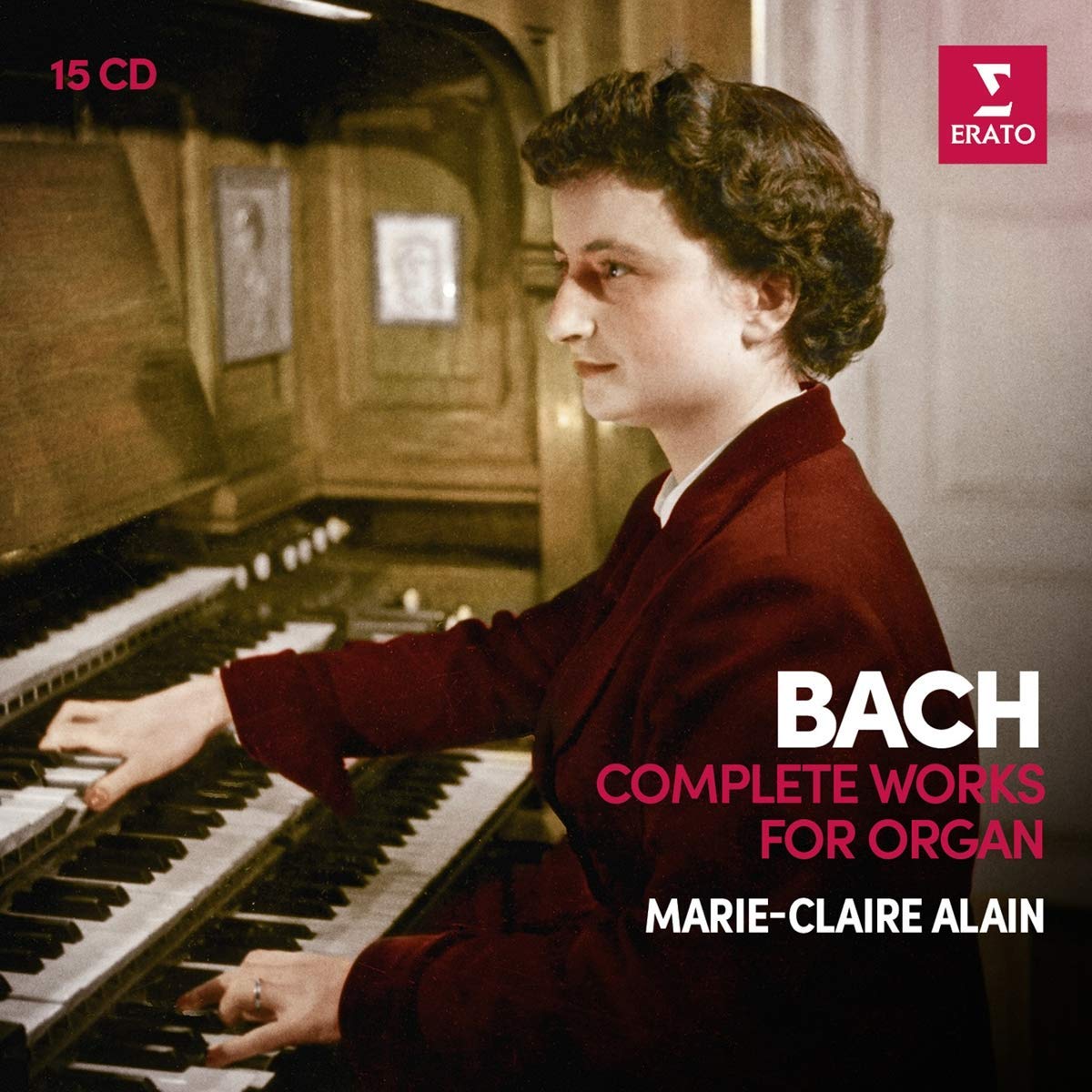
Dip Your Ears, No. 226 (Marie-Claire Alain's First Bach Cycle)

available at Amazon
J.S.Bach, Organ Works
M-C.Alain
Warner/Erato

Marie-Claire Alain (1926—2013) is the only organist to have recorded the complete* organ works of Bach’s thrice and have all those cycles appear on CD. She didn’t live to see it, whereas Lionel Rogg, who has recorded three cycles but had only one appear on CD as of yet, still has chance, seeing that he is still very much alive. On the ionarts Bach Organ Cycle Survey, her Second (on three favorite organs of hers) and Third cycles (on historical instruments) are given a rare ionarts’ choice recommendation: The first for being an excellent introductory / generalist cycle and the second for being performed with the same consummate skill but with a more interesting, individualistic organ landscape. There’s something about French organists when they get it right in Bach: Sensuality married to structure. Other favorites of mine include André Isoir and Alain-student Olivier Vernet. (Equally, when they get it wrong, they can turn out the absolute worst in Bach… and by “they” I actually only mean the very recently deceased Jean Guillou – a genius on the instrument in so many ways – but a real-time train-wreck in Bach.)

Marie-Claire Alain’s first traversal doesn’t quite make my top-recommendation list, but it is good to have around for the completist and inveterate Bach and organ-music lover. The cycle is centered on a series of modern Danish Marcussen & Sons organs that had all just been built around the time she recorded them. The result is a clear and fairly bright sound throughout with a lot of diversity within that (admittedly narrow) spectrum. It undusted an organ sound in Bach, that had, at the time, become thick and dark and crusted like a medieval painting where the grime and dirt of centuries had been taken for a characteristic of the real thing. Jed Distler, who reviewed this set for ClassicsToday (where the other two Alain cycles are also given reference status), is right in pointing out the still greater clarity (in recorded sound, instrument character, and playing) this set features over Alain’s subsequent takes. That’s perhaps most surprising when it comes to the recording quality, which is, with very minor exceptions (a few cases of extraneous noise; one off-kilter note that wasn’t re-recorded), exceptional – certainly a lot better than either of Helmut Walcha’s roughly contemporaneous cycles.

While Alain herself has apparently called these her “most instinctive” interpretations, they are actually rather straight-laced, linear readings without quirks or youthful liberties (Alain was 33 when she got started on them) and, if anything, understated. One neat aspect of this cycle is that it rigorously included all the works then assigned to Bach, even those that weren’t by Bach: A virtual survey of the Bachwerkeverzeichniss of the 60s. How nice to see that Warner/Erato’s re-issuing extends far beyond the most obvious classics in their (now huge) back catalogue. Nicer still: That a budget release such as this got excellent liner notes (the original ones from Marie-Claire Alain) in three languages.


26.2.19

On ClassicsToday: John Elliot Gardiner's LSO Mendelssohn

CD From Hell: Gardiner’s Bloodless Mendelssohn Symphonies

Review by: Jens F. Laurson
MENDELSSOHN_Gardiner_LSO_LSO-LIVE_jens-f-laurson_classical-critic

Artistic Quality: ?

Sound Quality: ?

Mendelssohn is sometimes given short shrift for being a “nice” composer: Harmless, untroubled, and glib. That’s partly because the well-adjusted, prosperous, level-headed, and successful Mendelssohn doesn’t conform to our still ruling romantic ideal of the troubled, struggling, excess-driven, or mad genius. Mozart would have made the better Romantic composer; Mendelssohn the better Classical. On the Beethoven-Schumann-Liszt scale of romanticism, about the only thing Mendelssohn got right was dying young.... continue reading [insider content]

Sound samples below:

25.2.19

On ClassicsToday: Ratas del Viejo Mundo & "Ossesso"

Obsessed Rats: Wondrous Voices From Olden Times

by Jens F. Laurson
OSSESSO__RAMEE_Ratas-del-viejo-Mundo_CLASSICS-TODAY_jens-f-laurson
In case you are sifting through your residual Spanish from college, your rough translation is correct: This early music group calls itself Rats of the Old World, a HIP rat pack founded in 2017 by Floris De Rycker, cruising the authentic-performance scene with the bent... Continue Reading

23.2.19

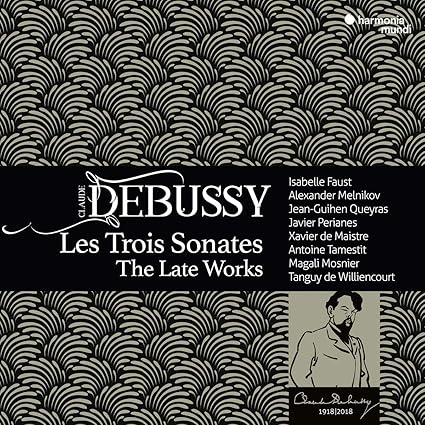
Briefly Noted: Debussy Feast

available at Amazon
C. Debussy, Late Works, I. Faust, X. de Maistre, A. Melnikov, M. Mosnier, J. Perianes, J.-G. Queyras, A. Tamestit, T. de Williencourt

(released on October 5, 2018)
Harmonia Mundi HMM902303 | 54'02"
During the First World War, Claude Debussy began a series of six instrumental sonatas. Although he managed to complete only three of them, he planned for the set to range into unusual combinations, including one for oboe, horn, and harpsichord, and another for trumpet, clarinet, bassoon, and piano. The project would conclude with a sonata for all of the instruments featured in the series up to that point. Each of these late sonatas is a marvel of economy, a startling variety of harmony, rhythm, and texture compressed into three-movement tours de force, each one lasting under twenty minutes. Within just a year of finishing only the third sonata planned in the series, the Sonata for Violin and Piano, Debussy died of colon cancer, in the midst of the German army’s bombardment of the city of Paris.

This disc brings together a dream team of musicians, some of them French, to record those three completed sonatas as part of a Harmonia Mundi project to mark the centenary of Debussy's death. Each of the three sonatas receives an ideal interpretation: the limpid and playful violin tone of Isabelle Faust accompanied by Alexander Melnikov in the Violin Sonata; the balanced, engaging narration of cellist Jean-Guihen Queyras accompanied by pianist Javier Perianes in the Cello Sonata; and the outstanding combination of flutist Magali Mosnier, harpist Xavier de Maistre, and violist Antoine Tamestit, all performing on historical instruments, in the triple sonata. Pianist Tanguy de Williencourt adds short character pieces for piano as amuse-gueules to clear the palate after each of these more substantial main courses.

21.2.19

On ClassicsToday: Sunday-Morning Mozart from Seong-Jin Cho and Yannick Nézet-Séguin

Sunday-Morning Mozart from Seong-Jin Cho and Yannick Nézet-Séguin

by Jens F. Laurson
chomozart
When I heard Seong-Jin Cho perform in the final of the 2015 Chopin competition, he and his E minor concerto stood out for a “velvet brawn and a big, smooth sound” and “a long, thick stream of unrelenting beauty”. But not having heard earlier rounds,... Continue Reading

20.2.19

On ClassicsToday: The Fisherman and His Wife; Othmar Schoeck’s Fine Dramatic Fairytale Cantata

The Fisherman and His Wife: Othmar Schoeck’s Fine Dramatic Fairytale Cantata

by Jens F. Laurson
SCHOECK_FISCHER-UND-FRU_Venzago_CLAVES_jens-f-laurson_classical-critic
Among neglected 20th-century composers, Othmar Schoeck (1886-1957) is one of the really great ones. Not only for his style of lyrical late romanticism—long-derided but en vogue again (i.e., his violin and cello concertos, his songs)—but also for his strand of romantic modernism where I rank... Continue Reading

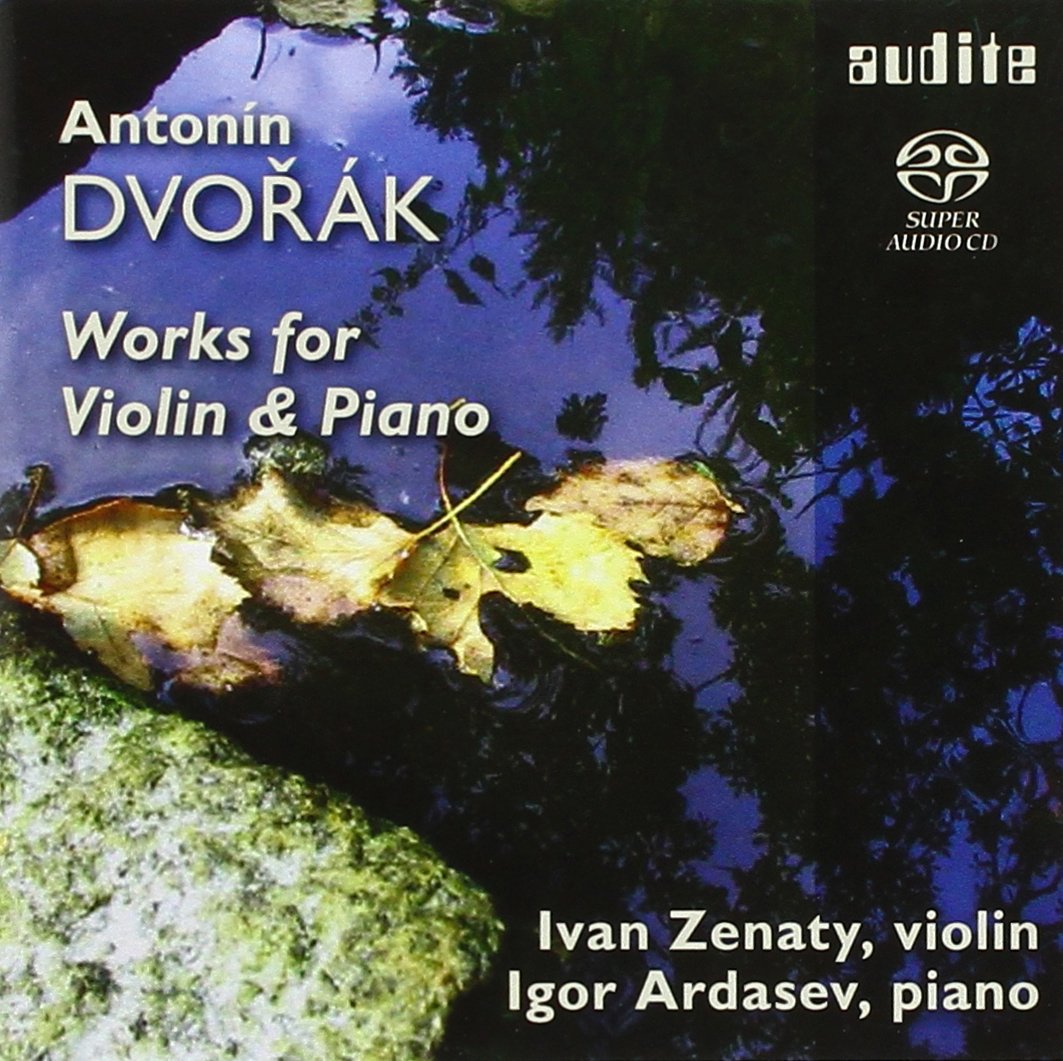
Dip Your Ears, No. 225 (Dvořák’s Works for Violin & Piano)

available at Amazon
Antonín Dvořák, Works for Piano and Violin
Ivan Zenaty (violin), Igor Ardasev (piano)
Audite SACD

Dvořák’s works for violin and piano are not as widely known or regularly performed as you might think, given the A-list popularity of the composer and the popular and mainstream instrumental combination. Presumably that’s due to the lack of a body of major works to drive the interest: A handful of strong sonatas, perhaps, might have done the trick. In fact, there is only one Violin Sonata proper of Dvořák’s, and that’s not the strongest work among the lot. Jaroslav Smolka’s superb liner notes don’t pretend otherwise: without particular architectural grandeur, a heightened sense of innovative contrasts, violinistic virtuosity or dramatic tension, this dreamy-lyrical work lacks in ambition what it offers in lovely music... but such lovely music!

Ivan Zenaty (violin) and Igor Ardasev (piano) perform these pieces charmingly without overdoing it on the sugar. The Sonatina op.100, written for his children, fits in with its aim at home music-making and lack of a ‘grand concertant’ ambition. But it’s a tuneful and memorable thing and fills a very entertaining 20 minutes with that popular American-Czech idiom of Dvořák’s that he also used in works like the “American” Quartet and “From the New Worl” Symphony. The catchy Romantic Pieces op.75/1 are given a bit of an edge and could benefit from a bit more bloom. The fairly popular Mazurek op.49, here in its piano-and-violin original, wouldn’t be harmed if the piano’s part were taken with greater brilliance and less accompanying decorum. The sound on this 2006 high-resolution recording is very good and neutral, perhaps favoring the violin a bit over the piano. Low-key splendor, all in all.


16.2.19

Briefly Noted: In a Strange Land

available at Amazon
In a Strange Land: Elizabethan Composers in Exile, Stile Antico

(released on January 11, 2019)
Harmonia Mundi HMM902266 | 71'10"
We have been following the British choir Stile Antico for over a decade at Ionarts. They are the inheritors of the work of the Tallis Scholars among the younger generation of early music singers, and each CD they release, especially of music from the English Renaissance, has been exquisite. Their latest disc is no exception, in pieces by William Byrd, Peter Phillips, and Robert White. The theme of this program is especially poignant: it brings together composers who found themselves alienated, either in foreign lands (John Dowland, Peter Phillips, Richard Dering) or as Catholics in Protestant England (William Byrd, Robert White).

The choir goes somewhat outside its comfort zone with the affecting part-song arrangements of lute songs by Dowland, Flow, My Tears and In this trembling shadow cast. The results are impeccably balanced homophony, with crunchy cross-relations underscoring emotional peaks. The same is true of a modern piece, The Phoenix and the Turtle by Huw Watkins, premiered by Stile Antico in 2014 and set to an eccentric text possibly revealing the Catholic sympathies of one William Shakespeare. In that context we must place the impassioned dissonances of Bird's ultra-personal motet Tristitia et anxietas or of Quomodo cantabimus, the same composer's musical response to Philippe de Monte's motet Super flumina Babylonis, both about people marooned among non-believers oppressing them.