CD Reviews | CTD (Briefly Noted) | JFL (Dip Your Ears) | DVD Reviews

10.4.15

For Your Consideration: 'Kill Me Three Times' and 'White God'


Kill Me Three Times
Australian director Kriv Stenders (Red Dog, Boxing Day) makes the heavy-handed tributes to Quentin Tarantino painfully obvious in his new feature, Kill Me Three Times. The plot is cut into sections and told in chronological overlap, out of order, so that we learn each part of a double-crossing double-cross crime caper one by one. The credits, score, and wise-cracking leading hit man of Simon Pegg all point to the sort of film Stenders is trying to make, or rather recycle. Novice screenwriter James McFarland does not give Pegg much to work with in the role of black-suited, Coronado-driving hit man Charlie Wolfe, which is a waste. None of the characters or their interweaving relationships provide much depth or interest either, but it is difficult in these cases to know whether to blame the script or a team of less experienced actors, including Alice Braga (niece of Sônia Braga) and Luke Hemsworth (older brother of Chris Hemsworth) -- I kept confusing the latter with Sullivan Stapleton, who plays a different character, for a good part of the film. Definitely a movie to skip.


White God
Fehér isten (White God), directed and co-written by Kornél Mundruczó of Hungary, won the Un Certain Regard prize at the Cannes Film Festival last year. Although it was entered by Hungary for the Best Foreign Film category at the Academy Awards, it was not nominated, but it deserves to be seen by a wider audience. The basic concept is familiar from any number of movies about kids and the unbreakable bond they have with their dogs. Strong-willed Lili (played with fierce independence by newcomer Zsófia Psotta) is dropped off by her mom for an extended stay with her estranged father. In tow is her adorable mutt, Hagen, who causes her and her dad no end of trouble. To avoid a tax assessed on "street dogs," that is, dogs not of a pure, recognized Hungarian breed, Lili's father tries to convince her to let him take the dog to the shelter. After an unsuccessful attempt to run away and keep the dog on her own, Lili is forced by her father to abandon Hagen on the street.


Other Reviews:

New York Times | Los Angeles Times | Washington Post | David Edelstein
The New Yorker | Variety | Chicago Sun-Times | Wall Street Journal
That turn of events is painful enough, but Hagen's journey back to Lili takes several turns for the worse, as he is chased by animal control authorities, lives on the streets, and eventually ends up being viciously "trained" as a fighting dog, sequences that are not recommended for the faint of heart. Finally captured by animal control and slated for euthanization, Hagen manages to escape with about 200 of his closest friends from the shelter, a pack of half-breed curs that runs through the city hellbent on revenge. (These amazing scenes were filmed with a real throng of canine extras.) At this point, the literal-minded viewer will be rather befuddled, as the dogs seem capable of an almost human level of self-awareness and decision-making. Quite suddenly, Hagen and his four-footed friends become allegory.

The fictitious law that discriminates against "half-breed" dogs like Hagen provides a clue to what is going on here, an allusion to the present Hungarian government, in which conservative prime minister Viktor Orbán has gotten into bed with the Jobbik party's "Movement for a Better Hungary." The latter group, Hungarian nationalists known for xenophobic and anti-Semitic rhetoric, is growing in popularity, currently holding the third most seats in the Hungarian parliament. Hungarian pianist András Schiff has refused to return to Hungary because of the government, allegedly because he has received threats to have his hands cut off if he does, in retribution for speaking out against it. Mundruczó represents this struggle for the soul of Hungary in music, namely in Liszt's second Hungarian Rhapsody, a piece that represents "Hungarianness" perhaps more than any other, not to mention its ubiquity in cartoons. Lili plays trumpet in a youth orchestra, portrayed in the film by the Tóth Aladár Ifjúsági Zenekar, an ensemble from a music school in Budapest, and she is rehearsing for a piano-and-orchestra version of the piece. The famous opening phrase, played by Lili on her trumpet, becomes a signature theme for both her and Hagen.

Both of these films open today, at the E Street Cinema.

9.4.15

Philadelphia Orchestra Breathes as One

We welcome this review from first-time contributor Michael De Sapio.

The Philadelphia Orchestra, under the baton of Yannick Nézet-Séguin (pictured), appeared at the Kennedy Center Tuesday night in a program of surefire romantic favorites -- Edvard Grieg's A minor piano concerto and Sergei Rachmaninoff's second symphony -- presented by Washington Performing Arts. The soloist in the Grieg was pianist Jan Lisiecki, who plays with a maturity and decisiveness that belie his mere twenty years. Lisiecki got the concerto off to an electrifying start with a thundering volley of octaves, yet his performance as a whole was notable for its intelligence and reflection. Grieg treats piano and orchestra as partners in this well-proportioned concerto, the piano more often than not emerging naturally out of the orchestral sound-picture; appropriately, Lisiecki played the role of a partner rather than a prima donna. He and the orchestra created moments of still, contemplative beauty in the second movement and the slow section of the finale. After a well-deserved standing ovation, Lisiecki offered an encore of a Chopin prelude (op. 28/15, the “Raindrop”).

Right from the opening bars of the Grieg, one had a palpable sense of ease and trust between the Philadelphians and their dynamic young conductor, who has been leading the orchestra since 2012 (including helping to lead it out of its financial troubles). Nézet-Séguin didn't so much conduct the music as coax it effortlessly out of the orchestra; the music-making had an organic flow. The expressive intention was so unanimous across the orchestra that regular eye contact with Nézet-Séguin was hardly necessary; conductor and orchestra simply breathed as one. Everything flowed naturally from the famed “Philadelphia sound,” a rich fullness of blend crowned by plush strings.


Other Articles:

Anne Midgette, Philly beguiles with symphonic power (Washington Post, April 9)

---, Yannick, unique: Philadelphia Orchestra hopes it’s found its savior (Washington Post, April 2)

Philadelphia Orchestra on Ionarts:
2013 | 2012 | 2011 | 2010 | 2009
December 2007 | June 2007 | 2005 | 2004
In fact the ensemble's performance was so impeccable that by the time the Rachmaninoff rolled around I realized there was no point picking it apart, so instead I focused on the work itself. A conductor once told me that Rachmaninoff thought of himself as a contrapuntal composer. Accustomed as we are to thinking of him as the composer of gushing tunes and luscious harmonies, this comes as a surprise. It made sense, though, when you listened to the introductory Largo of the symphony, with its winding string lines intertwining in an orchestral frieze of almost Bach-like intensity.

Was Rachmaninoff really a nostalgic Romantic who completely rejected modern sounds? That he was a lush Romantic there is no doubt; if you want gushing melodies, the third-movement Adagio offered a veritable waterfall. Yet the symphony also had moments with a starkness, brusqueness, and rhythmic energy which seemed modern in spirit. It seems only a small step from Rachmaninoff's sinister second-movement scherzo to the scherzos of Shostakovich. Washington audiences are very generous with their standing ovations, but the thunderous one that greeted the last note of the Rachmaninoff was well merited. No matter how well-worn these pieces, they are always welcome with playing of this caliber.

8.4.15

Karen Cargill Extraordinary


available at Amazon
Alma and Gustav Mahler, Lieder, K. Cargill, S. Lepper
(Linn, 2014)
Charles T. Downey, A noteworthy D.C. debut by Karen Cargill
Washington Post, April 9
If you’ve never heard the name Karen Cargill, let this review be your notification.

The Scottish mezzo-soprano had a grand and long-overdue Washington debut recital Tuesday evening, presented in the Kennedy Center Terrace Theater by Vocal Arts D.C. The program of brooding Romantic music by Gustav and Alma Mahler, Richard Wagner and Edvard Grieg hit her commanding and disciplined voice in its sweet spot.

Asked in an interview last year why she’s singing so much Mahler, Cargill responded, “Well, it’s where my voice is at.” This was true on her recording of Gustav’s five “Rückert Lieder” and Alma’s “Fünf Lieder”... [Continue reading]
Karen Cargill, mezzo-soprano
Simon Lepper, piano
Vocal Arts D.C.
Kennedy Center Terrace Theater

Ionarts-at-Large: A Korean-Zukerman Evening of Weirdness at the Musikverein


It was a strange, strange concert when the Korean Chamber Orchestra (formerly known as the Seoul Baroque Ensemble) took the stage at Vienna’s Musikverein on March 1st for their hyperbolically titled “50th Anniversary World Tour” – a world consisting of Vienna ("Is there anything else that matters?", a true Viennese might incredulously ask), London, Berlin, Moscow and Seoul.


available at Amazon
W.A.Mozart, Violin Concertos 3-5,
A.Manze / The English Concert
Harmonia Mundi


available at Amazon
F.Schubert, Symphony No.5,
T.Dausgaard / Swedish CO
BIS SACD

From the get-go of the Mendelssohn Symphony for Strings No.10, performed under the patronizing glares of Pinchas Zukerman (conductor and soloist of the World Tour, although participating only on two stops), there was a weird atmosphere about the place, even as the performance turned out fairly normal: light, detailed, reasonably accurate, bloodless and totally matter of fact. The event got a further push towards the Twilight Zone when Pinchas Zukerman’s wife, nominal cellist Amanda Forsyth, gallivanted onto the stage in a dress that took its cue from an exploded candy factory. Husband and wife (perish the thought of nepotism: Zukerman would never appear with her at his side if he didn’t think she was absolutely one of the world’s best cellists… he’s said so himself, in a pleasant chat we once had on the topic) then gave a rendition of the Vivaldi Concerto for Violin and Cello RV547 that was filled to the brim with passive aggressive energy.

Zukerman—whether you like his bygone-era-style or not—touches the violin and presto: a big, sumptuous tone emerges that forces or elicits or demands envy! All casual assuredness, he made a sound like a thick stream of chocolate, never actually flat but often sounding though he might almost be. Forsythe, despite her heavy rubato, sounded leaner and lighter and very well rehearsed. Together their cello vs. the violin act absorbed all the artistic oxygen  and somewhere behind them hints of Vivaldi and the Korean Chamber Orchestra could be heard.

Mozart’s Fifth Violin Concerto, doubly featuring Mr. Zukerman, was dashed off with the air of the experienced—not to say: jaded—veteran. It’s his kind of thing. Certainly his 2013 Salzburg Festival performance of K.216 was rather good, in its own pinkish way. He’s anachronistically marvelous when he’s on. And although Zukerman looked as though he could barely be bothered on this occasion, goodness he was on, once again: Anodyne and awesome, rich in tone, impoverished spiritually, lovely if loveless, and a few sloppy moments that only increased the air of nonchalant grandeur. Thoughts arose in me if, in a strange way, it might not be a burden to be able to play the violin as easily as well as Zukerman. A hypothetical question without an answer. For everyone who loves the cream of his tone, his indulgence in the caressing (others might say: interminable) slow movement will have brought particular joy. The KCO provided impeccable support, entirely with him and not overly distracted of Zukerman’s occasional attempts at conducting them with moody swings of his bow. A look of polite boredom all around the orchestra.

Tchaikovsky’s Andante Cantabile for Cello and Strings brought back the Zukerman-Forsythe double act of awkwardness; her playing, him conducting. Death-rays shot from her eyes as the aging concert-master and music director of the KCO Kim Min struggled just a little bit in his solo/duet passage. Pleased with the applause between the two movements (the empty Musikverein was especially packed with tourists that day; the Viennese would never applaud between movements nor allow others to get beyond two consecutive claps at the ‘wrong’ note), Forsythe rose and bowed. Then she bowed some more, with her perpetually petulant air… but admittedly in style, artful tone and with a nice flow throughout the Tchaikovsky.

Schubert’s Fifth Symphony, with European reinforcements for the brass and winds, briskly hurdled towards the end of the program. Well, at least the first movement hurdled, with a lightness that befit the sunny air of this marvelous symphony… the subsequent movement rather had overtones of barbiturates. After Zukerman had taken his last bows, the orchestra proceeded with encores, led by Kim Min. While they were not the most satisfying fare, musically, the spirit of the orchestra was as if wholesale rejuvenated. All smiles and spunk, they added late fun and further question-marks. 


À mon chevet: 'Never Mind'

À mon chevet is a series of posts featuring a quote from whatever book is on my nightstand at the moment.

book cover
After hanging Patrick from his ears and watching him escape from the library, David shrugged, sat down at the piano, and started to improvise a fugue. His rheumatic hands protested at every key he touched. A glass of pastis, like a trapped cloud, stood on top of the piano. His body ached all day long and the pain woke him at night every time he shifted position. Nightmares often woke him as well and made him whimper and scream so loudly that his insomnia overflowed into neighbouring bedrooms. His lungs, also, were shot away and when his asthma flared up he wheezed and rattled, his face swollen by the cortisone he used to appease his constricted chest. Gasping, he would pause at the top of the stairs, unable to speak, his eyes roaming over the ground, as if he were searching for the air he desperately needed.

At the age of fifteen his musical talent had attracted the interest of the great piano teacher Shapiro, who took on only one pupil at a time. Unfortunately, within a week, David had contracted rheumatic fever and spent the next six months in bed with hands too stiff and clumsy to practice on the piano. The illness wiped out his chance of becoming a serious pianist and, although pregnant with musical ideas, from then on he claimed to be bored by composition and those 'hordes of little tadpoles' one had to use to record music on paper. Instead, he had hordes of admirers who pleaded with him to play after dinner. They always clamored for the tune they had heard last time, which he could not remember, until they heard the one he played now, which he soon forgot. His compulsion to amuse others and the arrogance with which he displayed his talent combined to disperse the musical ideas he had once guarded so closely and secretly.

Even while he drank in the flattery he knew that underneath this flamboyant frittering away of his talent he had never overcome his reliance on pastiche, his fear of mediocrity, and the rankling suspicion that the first attack of fever was somehow self-induced. This insight was useless to him; to know the causes of his failure did not diminish the failure, but it did make his self-hatred a little more convoluted and a little more lucid than it would have been in a state of plain ignorance.

As the fugue developed, David attacked its main theme with frustrated repetitions, burying the initial melody under a mudslide of rumbling bass notes, and spoiling its progress with violent bursts of dissonance. At the piano he could sometimes abandon the ironic tactics which saturated his speech, and visitors whom he had bullied and teased to the point of exasperation found themselves moved by the piercing sadness of the music in the library. On the other hand, he could turn the piano on them like a machine gun and concentrate a hostility into his music that made them long for the more conventional unkindness of his conversation. Even then, his playing would haunt the people who most wanted to resist his influence.

David stopped playing abruptly and closed the lid over the keyboard. He took a gulp of pastis and started to massage his left palm with his right thumb. This massage made the pain a little worse, but gave him the same psychological pleasure as tearing at scabs, probing abscesses and mouth ulcers with his tongue, and fingering bruises.

-- Edward St. Aubyn, Never Mind, pp. 59-61
New Yorker critic James Wood put me on to the Patrick Melrose novels of Edward St. Aubyn. I am still reading, but they are every bit as caustic and horrifying as Wood described them, a portrait of the vicious underbelly of the moneyed and landed class idealized in Downton Abbey, for example. "Perhaps because [St. Aubyn] is much more of an aristocratic insider than Wilde or Waugh (the first St. Aubyn baronetcy was created in 1671), he retains no arriviste enamoredness of the upper classes he is supposedly satirizing," Wood puts it. "On the contrary, his fiction reads like a shriek of filial hatred; most of the posh English who people his novels are virulently repellent." Patrick Melrose's life, that is, is based at least in part on Edward St. Aubyn's, including the abusive and odious portrait of his father in David Melrose, who delights in tormenting his son and everyone else around him -- making his wife, who seems to relish the abuse, eat food off the ground like an animal. Naturally, as shown in the passage excerpted here, David is a failed classical musician.

7.4.15

On Forbes: The Vienna Symphony's Path Out Of The Shadow


The Vienna Symphony's Path Out Of The Shadow


The Vienna Symphony (VSO) has a proud tradition, but its fame reminds me of the ‘Seem-Giant’ Tur-Tur in Michael Ende’s “Jim Button” books: The further away you are, the bigger he seems; the closer you get, the less imposing he becomes; when you meet him – if you haven’t been scared away – he’s regular size. (He gets a job as a lighthouse in the end.) The Vienna Symphony is the inversion of that. Close up, it’s a great institution, a very fine orchestra with a 115 year history in which it premiered some of the (now) most famous works, including Bruckner’s Ninth Symphony, Schoenberg’s Gurrelieder, Ravel’s Concerto for Piano Left Hand, and Franz Schmidt’s Book of Seven Seals. (Yes, it’s only the No.2 Orchestra in town, but no harm in that, per se.) From a sufficient distance, meanwhile, the best it can hope for is to be mistaken for the Vienna Philharmonic. It hasn’t always been that way, and it looks like it could change again.
...

Continue reading here, at Forbes.com

Philippe Jordan. Picture courtesy of the Vienna Symphony Orchestra, © Johannes Ifkovits

6.4.15

Ionarts-at-Large: Countryside Chamber Music—The Pacifica Quartet in Polling


Munich is all atwitter about a new concert hall, yes or no and where and when. Or how or whether and when to re-do the Philharmonic hall. How couldn’t Munich have a proper hall, after all, it’s ‘the city of music’, is the underlying tenor of most stories on the subject. That’s fair enough; there probably isn’t another city that size with as many, as great orchestras, as fine conductors (pace Thielemann’s departure) and the opera is, depending on your predilections, the best there is, or thereabouts.

available at Amazon
D.Shostakovich, Quartets 9-12
(+ M.Weinberg No.6),
Pacifica Quartet
Cedille


available at Amazon
F.Mendelssohn-B., String Quartets,
Pacifica Quartet
Cedille

But chamber music, the true heart of a musical city (or so I should like to think), isn’t a strong suit at all. There happens more at Wigmore Hall in a quarter season than in all of Munich, any given year. Audiences are old, which is not a problem in itself, but they don’t seem to get replenished. There is no one strong presenter of chamber music, nor a central place of coordination allowing for an overview and purchase of tickets, and worst of all: there’s even less a suitable hall for chamber music in Munich than there is a good grand orchestral hall.

If only Munich had something like the Coolidge Auditorium of the Library of Congress or the lamentably un-utilized Frances and Armand Hammer Auditorium of the Corcoran Gallery or the just-about-perfect and beautiful Mozart-Saal of the Wiener Konzerthaus. It would be a sensationally missed opportunity if, assuming that Munich will get a new, proper concert hall, after all, the builders neglected to put one or two truly marvelous smaller spaces into the building as well.

That’s by way of pre(r)amble to another review of chamber music in the Munich countryside, after previous installments had taken me to the towns of Gauting (Quatuor Ébène, Boulanger Piano Trio), Seefeld (Weinberg Recital), and the Bavarian Easter Lakes at Iffeldorf (Kuss Quartet). This time the goal was the Pacifica Quartet, which brought me to Polling, an out-of-the-way little southern Bavarian town of 3000-some souls (looks smaller) between the southern tip of the Ammersee and the Staffelsee. What Polling has going for it is an elaborate former monastery: specifically the abbey’s library.

The library is an absolute jewel, tucked away in the abbey: Small-scale Bavarian baroque at its finest, with the fake marvel typical for the region: trompe-l'œil on wood—pillars and all. (You can see ASM & Lambert Orkis perform Brahms in it, here, and a grisly chat, here.) Beyond being gorgeous (albeit book-less after the collection, once Bavaria’s second-biggest, was transferred elsewhere after the dissolution of the monastery when secularization hit in 1802) it also has a fine acoustic. Hörtnagel, the concert presenter with a storied past but modest here-and-now, has been running a series in Polling for 4 decades. The audience is old but seems eager and knowledgeable. If some 400 people fit into the little hall, it will have been about half full, or a little over. They came to hear the Pacifica Quartet, an unknown quantity in most of central Europe, but certainly ionarts-favorites since our first encounter, ten years ago at the Freer Gallery. (Also reviewed at the Kreeger Museum and their recordings are greatly liked, on ionarts: Carter, for example, or Mendelssohn and Shostakovich.)

When I saw the program of Mendelssohn (op.80), Shostakovich (No.9, easier on the ears than some other DSCH quartets), and Beethoven (op.95/2) I thought it was an appeal to the expected conservative rural tastes of steady, unadventurous Bavarian types. The raucous applause after the Shostakovich, just shy of whistling and hollering, taught me otherwise. Incidentally (or not), the Shostakovich was also the best performance of the night, from the wonderful false, mild sweetness of the beginning via the ensuing spunkiness (as if made by wicked-minded mice, tip-toeing about the score) to the aggressive rattatataTA-rattatataTA rhythmic drive of the finale. Their opening performance of op.80, Mendelssohn’s last string quartet, gave us a Felix M.B. rich in contrasts, with plenty delicacy. Speedy and eventually profound, with a fourth movement that overtaxed my attention, it was ultimately not a particularly dark, but certainly a graceful reading. The Beethoven-conclusion, “Razumovsky 2”, was a homogenous performance that made up with vigor in the finale for the Adagio’s running out of steam. If flies had to be found in the fine ointment, it was the first violin’s oft-occurring pressing, which sounded as though she might be a little bit off or the tone pinched. At these times, the quartet sounded more like a trio centered around the cellist’s continuous expressive and steadfast touch, always dead on, always with an air of lightness… with the solo-violin contingent of Simin Ganatra just on temporary attachment. It was the penultimate concert of a longish European tour, perhaps that accounts for it. 


Further reading: Munich Bungles Concert Hall Plans and Munich Philharmonic Responds To Concert Hall Controversy on Forbes.com


5.4.15

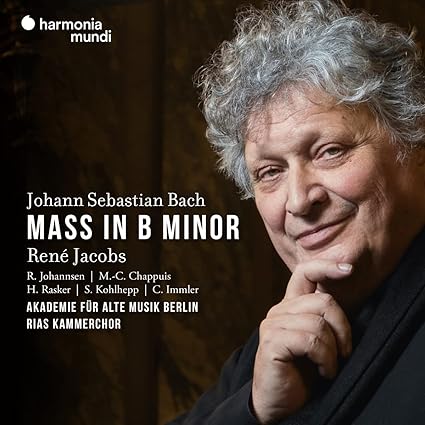
On Forbes: Bach & Beyond: Music For The Easter Weekend


Bach & Beyond: Music For The Easter Weekend


In an interview with then music director of the Washington National Opera Heinz Fricke back in 2007, I asked him as a seasonal aside, whether there was any particular music for Easter that he liked. He thought about it for a while, then added: “Anything by Bach really. Maybe not the Christmas-Oratorio, but the only reason to exclude that is its name.” My sentiments exactly.

Bach At Easter
Still, there’s so much by Bach that is topical, why not start there? Good Friday is served by the Passions Bach wrote, the St.Matthew Passion (BWV 244) and the St.John Passion (BWV 245). (The apocryphal St.Luke Passion listed as BWV 246 is most likely not by Bach but by a contemporary of his, which Bach, who copied out the score, had performed. Maybe, but probably not by Johann Melchior Molter. The St.Mark Passion hasn’t survived and was presumably a “passion-pasticcio,” cobbled together entirely or largely from cantatas pilfered for the purpose.) Everyone has favorite recordings among the available multiple dozens of the St.John and St.Matthew Passions – and even these change cyclically. Mine, for now, are these:
...

Continue reading here, at Forbes.com