CD Reviews | CTD (Briefly Noted) | JFL (Dip Your Ears) | DVD Reviews

14.2.13

Royal Concertgebouw Orchestra, Be My Valentine

available at Amazon
Mahler, Symphony No. 1, Royal Concertgebouw Orchestra, M. Jansons
(2007)

available at Amazon
Bartók, Violin Concertos, J. Ehnes, BBC Philharmonc, G. Noseda
(2011)
The much-anticipated visit by Amsterdam's Royal Concertgebouw Orchestra, presented by Washington Performing Arts Society on Tuesday night at the Kennedy Center Concert Hall, was one of the most important concerts of the month. Each of this beloved ensemble's appearances in Washington -- 2010, 2008, 2006, to name just the last few -- have been valuable listening. This orchestra has a warm, perfectly balanced and unified sound, and they make music subtly, that is, they will not play mp when p is what is called for and what will do. This meant that the two long pieces on offer this week -- Bartók's second violin concerto and Mahler's first symphony, but sadly not also the second program of Strauss's Death and Transfiguration and Bruckner's seventh symphony they will play tonight at Carnegie Hall -- sounded at times like completely different ensembles were playing them, both of them excellent but with vastly different sorts of colors at their disposal. They have been doing what they do for 125 years this November -- the institution has scores of the Mahler symphonies marked up by Willem Mengelberg and Mahler himself -- and long may they reign.

We last heard this Bartók concerto from the National Symphony Orchestra and Midori in 2007, but in the hands of Greek violinist Leonidas Kavakos and conductor Mariss Jansons it seemed like a different piece. (Bartók's dedicatee, Zoltán Székely, premiered the concerto with the Royal Concertgebouw in 1939, under the baton of Willem Mengelberg.) We last heard Kavakos in 2009, having missed his 2011 appearance with the NSO. Since then he has resigned as artistic director of Camerata Salzburg, perhaps putting his conducting career (happily) on the back burner, and he acquired the "Abergavenny" Stradivarius of 1724 (in 2010). Both the instrument and the player -- Kavakos had an abscess removed from his back in 2009, a situation that required him to drop out of the National Symphony Orchestra's tour of Asia -- sounded in top form, with a rich, biting tone right from the opening solo bars of this alternately modern-vicious, folk-innocent, and curiously Hollywood-sugar concerto. Jansons kept an elegantly flexible rubato free and yet clearly aligned between soloist and orchestra, and Kavakos added that mercurial element of the best soloists. Bartók exceeded himself in the endless variation of orchestration: insect-buzzing night music, braying glissandi, low brass and percussion rumbles, evanescent strings.


Other Reviews:

Anne Midgette, An orchestra’s practiced perfection (Washington Post, February 14)
Jansons has recorded Mahler 1 with a few different ensembles, including the RCO and the Oslo Philharmonic -- I listened most to his version with the Bavarian Radio Symphony Orchestra (BR-Klassik) this week. Jansons did not rush the piece too much, like other conductors (Gergiev, London SO), but he did not make a point of over-solemnizing it either, like others (Honeck, Pittsburgh SO). The opening of the first movement had an air of suspended mystery, but animated by spontaneous bird calls and bubbling brass fanfares, with consummate control of the dynamic spectrum from Jansons and his musicians, the suave and velvety softness making the big crescendi even more thrilling. He helped give the Ländler a slightly tipsy, pompous quality, with gutsy slides in the strings and raucous, cackling horns, and a Bruder Martin theme that did not plod (we have heard the third movement played much slower) but that joined perfectly with the contrasting sections (including a tender lullaby middle section), so that one almost did not notice the shifts between them. The Finale was appropriately dramatic and stormy, showing off the RCO as the well-oiled machine that it is, all intonation and attacks spot on. It is a rare and welcome experience, as a critic who has heard this piece so many times, to have this interpretation cause moments of honest horripilation. It was a grand way to remedy my total lack of Mahler in 2012.

The next concert in the WPAS series will feature violinist Hilary Hahn (February 16, 8 pm), a program in the Kennedy Center Concert Hall that includes pieces from her encores project.

13.2.13

NSO Tour Report


Jens F. Laurson, Eyewitness: NSO reigns in Germany
Washington Post, February 13, 2013

The National Symphony Orchestra’s South America tour last summer was fun, glamorous, and non-competitive; wherever the orchestra went, it was always better than the local band. Its tour to Europe, which ends today with a final performance at the Royal Opera House Muscat in Oman, was a different story. Although it brought the orchestra to sleepy towns like Murcia (Spain) and Nuremberg (Germany), it also exposed them to audiences who were spoiled with fine orchestras. Christoph Eschenbach has touted touring as a good team-building exercise for an orchestra, and playing in a new city often brings out the best in an ensemble; in Europe, the public’s expectations are higher, and the musicians know it.

The NSO last went to Europe in 2002 under Leonard Slatkin, who emphasized American composers: a choice that both played to the orchestra’s strengths (perceived or real) and avoided direct comparisons by offering music that audiences were unlikely to have heard. Eschenbach, by contrast, offered an all-European program of Bartók, Beethoven, Brahms, Mozart, and Richard Strauss, making a conscious decision to be compared to local standards in core classical repertoire that plays, purportedly, to his own strengths.
[Continue reading]


OTHER REVIEWS:
Düsseldorf
Wolfram Goertz, Jubel um Dirigent Eschenbach – den Bildhauer der Töne (Rheinische Post, February 6)

Hamburg
Hans-Jürgen Fink, Traumwandlerische Spannungsbögen (Die Welt, February 8)

Interview with Arabella Steinbacher
Hans-Jürgen Mende, Arabella Steinbacher zu Gast bei NDR Kultur (NDR Kultur, February 6)

12.2.13

Jeffrey Mumford Portrait at the National Gallery

This review is an Ionarts exclusive.

Jeffrey Mumford (b. 1955) is composer-in-residence this month at the National Gallery of Art, and in his second concert there, violinist Miranda Cuckson and cellist Julia Bruskin offered an intimate portrait of the D.C.-born composer. They played five works spanning nearly a quarter-century of Mumford’s output, providing a time-lapsed exposure that revealed a consistency of style. Since each of the pieces contained multiple parts, they seemed less like five independent works than an extended series of variations on a central idea.

The implications of this for a listener’s enjoyment or otherwise are obvious. They depend both on one’s taste for the style in question and on one’s attention span. (I started strong on the first but wound up somewhat hamstrung by the second.) Mumford’s music is freely atonal, occasionally dwelling on a few repeated notes but usually unmoored from any pitch center. Many of his phrases are short and bracketed by silence, exquisite aphorisms that carried well in the Gallery’s super-resonant acoustic. There are several elegiac lines that would sound simply sweet if played alone but which are unsettled by the addition of minor second intervals. The music explores a narrow range of moods, mostly alternating between pensive disquiet and fidgety restlessness, with occasional panic attacks, but it never stays in one mood for very long. Hysteria quickly loses steam and falls quiet, while a hushed meditation is rudely interrupted by an anxious outburst.

Receiving its world premiere, eight aspects of appreciation II for violin and cello was a finely crafted revision of an earlier piece. Starting in dialogue, the voices soon drifted apart. In one section they traded off the notes of a gentle lullaby, but agitation kept intruding. (One of Mumford’s favorite gestures is a blunt outburst followed by quiet ruminations, like the splash of a stone in water followed by its ripples.) Another movement evanesced with the violin floating and the cello sinking to the top and bottom of their respective registers, as if falling off opposite ends of the audible spectrum. The final section riffled through themes from the prior ones, as if hurriedly searching for something and not finding it before giving up with a brusque shiver.


Other Articles:

Stephen Brookes, Jeffrey Mumford rightly vaunted by National Gallery of Art as composer-in-residence (Washington Post, February 4)
For two rhapsodies for cello & strings, Bruskin was joined by six members of the National Gallery of Art Chamber Players. Compared to the duos and the violin solos, this instrumentation was not as well suited to the acoustic, producing a murky, bass-heavy sound. Though consistent with Mumford’s other pieces, here the material took on a more forbidding aspect, losing the fragile beauty present in the others; it might have fared better in a different space. The two soloists shined throughout the evening. Cuckson in particular had a fine sense for the room, which allowed her to play Mumford’s often-thorny music with great clarity despite a challenging acoustic.

Mark Morris's Neoclassicism


Socrates, Mark Morris Dance Company (photo by Gene Schiavone, courtesy of GMU Center for the Arts)

The success of a Mark Morris choreography often seems linked to his choice of music: irresistible with Handel, the Schumann piano quintet, Mozart, Purcell, but less so in other cases. The mixed program brought by Mark Morris Dance Group to George Mason University Center for the Arts on Saturday night fell out along similar lines. In The Office, from 1994, three men and three women clad in semi-casual business attire (costumes by June Omura) wait for a severe, clipboard-wielding woman to call them into an office offstage -- are they being interviewed for a job, or being downsized one by one? Beginning with all six, and decreasing in number after each section of music, their movements incarnated the flight of fancy in response to the torment of waiting. The whimsical character of Dvořák's Bagatelles for two violins, cello, and harmonium (op. 47) captured the sense of minds wandering.

Morris's insistence on having live music to accompany his dancers extended in this case to having a harmonium in the pit (played by the versatile and talented Colin Fowler, with unexpected and pleasing results), even though Dvořák specifies that the part could be played on a piano instead. Flavors of square dance and tap crept into the choreography, and the canon of violin and cello in the fourth movement was reflected in the echo of a single dancer who mirrored two preceding dancers in the same way. By comparison, the newest choreography, Festival Dance, premiered in 2011, was set to music that seemed far less inspired, Johann Nepomuk Hummel's Piano Trio No. 5 in E major (op. 83). Some motifs in the dance came directly from the music: a tiptoe run that went with a skittering upward scale in the piano (the demanding part quite a workout for Fowler), and a staccato theme that gave rise to a funny up-and-down bobbing motion. The most beautiful part of this dance was a more ballet-oriented look, beginning with the opening pas de deux, full of graceful lifts, while other popular hints of the waltz or music theater seemed slightly hackneyed.


Other Reviews:

Sarah Kaufman, Mark Morris Dance Group, mixing pleasure and pain (Washington Post, February 11)

---, Mark Morris designs a dance after he picks his music (Washington Post, February 2)
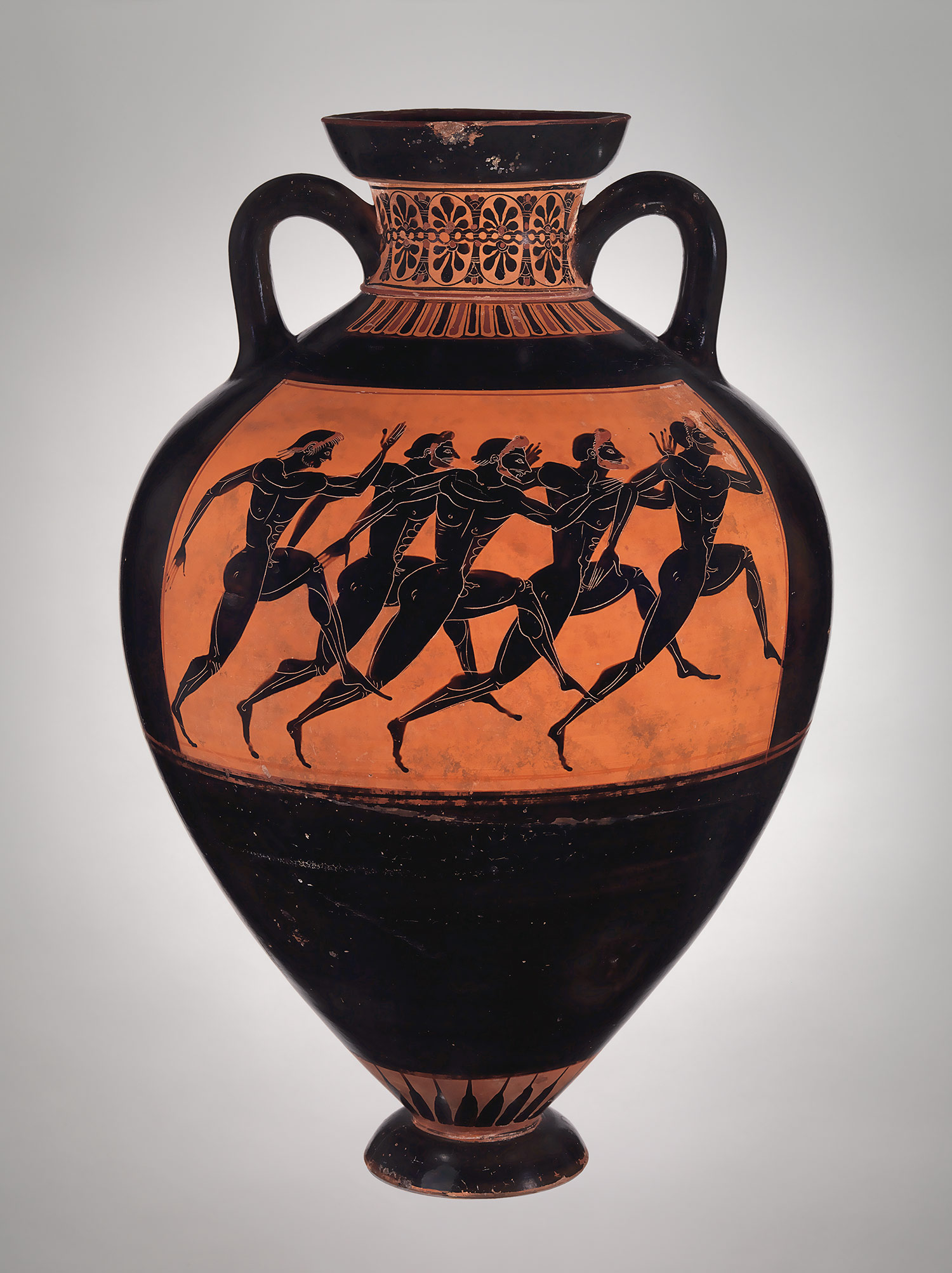
Still, nothing prepared me for the austere beauty of Socrates, Morris's classical response to Erik Satie's Socrate, a setting of excerpts from three of Plato's dialogues, especially focusing on a portrait of the life and death of his teacher, Socrates. The score was an extremely influential one, arranged for two pianos by John Cage (also for a choreography, by Merce Cunningham, later reworked into Cheap Imitation) and having elements of simplicity and repetition that foreshadow minimalism later in the century. Although Satie intended the work to feature four singers, preserving the sense of dialogue, the parts are all intentionally uniform in range, making a performance by a single voice (here the sweet high tenor of Zach Finkelstein) not only possible but satisfying. In the same way, Satie's original version for piano only seems stronger than the orchestration he made later, especially as performed here, with steady tempi and an intentionally rather plain, almost affect-less approach. The choreography, featuring a large cast of dancers in pseudo-Greek short chitons (Martin Pakledinaz), often seemed like group athlete portraits on Greek vases springing to life. The movements did not necessarily narrate Satie's French text, until the end where various parts of the final day of Socrates, drinking the poison hemlock and dying, are played out by individual dancers and the entire group. The overall effect was somber, hypnotic, and unforgettable.

11.2.13

NSO-at-Large: Frankfurt Hijinks


One free day and a three hour bus-ride through snowy Lower Franconia after the Nuremberg performance, the NSO arrived in Frankfurt for their last of four concerts in Germany on their European Tour. The musicians had a few hours of rest or homed in on nearby free Wi-Fi cafés with the dead-on accuracy that marks the veteran traveler. Then they bused and walked over the outwardly gorgeous Alte Oper, the old opera building gutted by the war and remodeled and reopened as a dedicated concert hall in 1981. There they had a quick run-through the Bartók Second Piano Concerto with Tzimon Barto, who stopped by in Frankfurt just for that occasion, only to be right off to Paris with the last plane out, where he would rejoin the band for the final European stop. (The orchestra would then go onto Muscat, Oman, for the final concert.)

Because scheduled violinist Julia Fischer is busy increasing the size of her family, Arabella Steinbacher stepped in to fill the tour’s Mozart vacancy. About the same age, both Ana Chumachenko students, compatriots, and both with a penchant for an emphasis on pretty playing, Steinbacher is a natural, seamless replacement for Fischer. At her best, she brings more gumption to the music, while Fischer drifts of into ethereal realms. That showed less in the Mozart, which was altogether decent and indeed very beautifully played by the soloist and—happily—not too controlled. But it sure came to the fore in the

Angela Hewitt, Mists and Fog

available at Amazon
Debussy, Solo Piano Music, A. Hewitt

(released on October 9, 2012)
Hyperion CDA67898 | 79'25"

available at Amazon
Bach, Keyboard Works, A. Hewitt


available at Amazon
Ravel, Complete Solo Piano Music, A. Hewitt
Angela Hewitt's recitals in the area are not to be missed, especially when she plays Bach, which is her specialty. Her last few appearances -- in 2012, 2009, 2006, and 2003 -- have been spaced apart by a few years, so her recital on Saturday night in the Kennedy Center Terrace Theater, sponsored by Washington Performing Arts Society, felt like a luxury. It was, once again, Hewitt's Bach that made the deepest impression. Two French Suites, not generally the most complicated of Bach's keyboard music, were each strikingly nuanced, with lovely embellishments, revoicings, and dynamic shifts added on each repeat. In both suites, the little dances in the optional slot -- especially the Gavotte and Polonaise in no. 6, the Gavotte and Louré in no. 5 -- were the most pleasing, animated by a dancing rhythmic pulse and kept crisp and bright, not obsessed with speed. That is, the dance types in which Bach seems most to have preserved the feel of the dances associated with them, had the feel of dances.

While no. 6 felt just slightly labored, its Gigue not quite tripping along, for example, some of its plainness may have been due to the instrument. Hewitt favors the Fazioli piano, which has a rather bright, even pinging sound that Hewitt spends considerable effort controlling and profiting from its soft, sweet side. This time her piano seemed not to be enjoying the wild shifts of temperature in recent days, going badly out of tune by the end of the first half. Even after a technician spent the entire intermission fine-tuning it, the Fazioli again had some questionable notes creep in during the second half, again especially at the top. No. 5, on the second half, was more brilliant, especially its Courante and Gigue taken at a bubbling clip, even with embellishments gilding the lines. In the last Bach piece, the D major toccata (BWV 912), Hewitt used a broader scope, a bigger touch at the keys and more sustaining pedal, to show off the range of fantasy at play: long strokes in the imitative section, fragments of evaporating thoughts in the improvisatory section, and an irrepressibly happy jig fugue at the end.

Hewitt's performances of Debussy and Ravel have not convinced me as completely. The control and variation of touch, the careful phrasing, the musical sense of line are all immaculate, but the big climaxes feel underpowered, with some vulnerability in Hewitt's technical grasp. Both of the pieces performed here look back to the Baroque suite, a pleasing programming conceit. Hewitt had all of the finesse needed for Debussy's suite Pour le piano, creating murky fogs and mists with sections of the Prélude, even making the most believable harp-like sound on those whole-tone swooshes. Unfortunately, the Sarabande turned a little soporific, lacking enough strength at the high points, and the Toccata seemed just a little insecure where it should knock your socks off (again, the piano's intonation problems probably did not help).


Other Reviews:

Tom Huizenga, Pianist Hewitt warms to her task (Washington Post, February 11)
On the second half was Ravel's Le Tombeau de Couperin, and it was much the same as when Hewitt played it in Baltimore last year: packed with interesting details, some surprising shimmering effects in the final bars of the Prélude, meticulous handling of each curl of the Fugue, a quirky Forlane. Missing again was the top edge of power, lots of crunchy punch in the Rigaudon and a sharp-touched Toccata at the end, just without a daring sense of bravura. The encore, Debussy's milky-lighted Clair de lune from the Suite Bergamasque, played to Hewitt's strengths.

The next concert on the WPAS season is the much-anticipated visit by the Royal Concertgebouw Orchestra (February 12, 8 pm) to the Kennedy Center Concert Hall.

10.2.13

In Brief: No Snow Edition

Here is your regular Sunday selection of links to online audio, online video, and other good things in Blogville and Beyond. (After clicking to an audio or video stream, press the "Play" button to start the broadcast.) If you are snowed in today, there is plenty to keep you listening.


  • From the Teatro Real de Madrid, watch the production of Philip Glass's new opera The Perfect American, "a fictionalized biography of Walt Disney's final months." [Medici.tv]

  • Ooh -- Ivor Bolton conducts the Mozarteumorchester Salzburg in Johann Christian Bach's opera Lucio Silla, from the Mozartwoche Salzburg. [Österreichischer Rundfunk]

  • Pianist Alexandre Tharaud joins the Frankfurt Radio Symphony Orchestra at the Festival d'Automne in Paris for the world premiere of Gérard Pesson's Future is a faded song, plus music by Ravel, Webern, and Stravinsky. [France Musique]

  • Pierre-Laurent Aimard joins the Vienna Philharmonic for music by Mozart, including the Linz Symphony, at the Mozartwoche Salzburg. [Österreichischer Rundfunk]

  • Herbert Blomstedt directs the Bavarian Radio Symphony Orchestra in Bruckner's third symphony and Carl Nielsen's flute concerto, with Henrik Wiese as soloist. [BR-Klassik]

  • The Maîtrise de Notre-Dame and Maîtrise de Radio France join forces in the Cathedral of Notre-Dame de Paris, performing music by Antoine Brumel, Frank Martin, and other contemporary composers. [France Musique]

  • Also from the Mozartwoche Salzburg, Jérémie Rhorer leads Le Cercle de l'Harmonie in arias from Pasquale Anfossi Lucio Silla, plus Mozart. [Österreichischer Rundfunk]

  • Violinist Alina Ibragimova and pianist Cédric Tiberghien perform music by Schubert, in a concert recorded on January 20 at the Théâtre des Champs-Elysées in Paris. [France Musique]

  • The Orchestre Philharmonique de Liège, with conductor Domingo Hindoyan and violinist Alina Pogostkina, perform music by Sibelius, Korngold, and Barber. [Österreichischer Rundfunk]

  • From last summer's Styriarte Festival, pianist Pierre-Laurent Aimard joins the Arnold Schoenberg Choir for music by Schubert, Brahms, Schumann, and others. [France Musique]

  • Another chance to hear the Metropolitan Opera's production of Donizetti's L'Elisir d'Amore, with Anna Netrebko and Co. [Österreichischer Rundfunk]

  • Last month's recital by pianist Daniil Trifonov at the Auditorium du Louvre, including his own composition, Rachmaniana. [France Musique]

  • A harpischord recital by Ton Koopman, a "Grand Tour" of music by Byrd, Louis Couperin, Alessandro Marcello, Carl Philipp Emanuel Bach, and others. [Österreichischer Rundfunk]

  • Watch violinist Lisa Batiashvili play the Brahms violin concerto with the Orchestre Philharmonique de Radio France, under conductor Markus Stenz, who also conducts Mahler's fifth symphony at the Salle Pleyel. [Cité de la Musique Live]

  • From the Hôtel national des Invalides in Paris, the Concert des Révélations 2013 des 20e Victoires de la Musique Classique. [France Musique]

  • The Conjunto de Música Antigua Ars Longa performs early music by Spanish composers. [Österreichischer Rundfunk]

  • The young Quatuor Hermés playing music by Dittersdorf, Boucourechliev, and Beethoven. [France Musique]

  • A performance of Alexander Dargomyschsky's opera Russalka, recorded in 1983 in Moscow, with Vladimir Fedosejev conducting the Moscow Radio Symphony Orchestra and Chorus, starring Konstantin Pluschnikow and Nina Terentjewa among others. [Österreichischer Rundfunk]

  • From the Théâtre de Poissy, Jordi Savall leads his Music from the New World program, Folias antiguas and criollas, introduced by critic Renaud Machart (for those curious to hear what his voice sounds like). [France Musique]

  • Christian Zacarias joins the Göteborg Symphony for Mozart's Piano Concert No. 27, plus music by Schubert. [GSO Play]

  • A concert of music by Armenian composers, performed by cellist Narek Hakhnazaryan and pianist Gayane Hakhnazarya. [France Musique]

  • Paavo Järvi conducts the Frankfurt Radio Symphony Orchestra in Brahms's first piano concerto, with Rudolf Buchbinder as soloist. [ARTE Live Web]

  • The Quatuor Absinthe is four clarinetists. Here they are playing arrangements of music by Hugo Reinhart, Lutoslawsky, Bartók, and Rota. [France Musique]

9.2.13

Hannu Lintu, More Sibelius

Hannu Lintu is back at the podium of the Baltimore Symphony Orchestra this week, and as expected it was one of the highlights of their season. The Finnish conductor has been leading an informal Sibelius cycle in his recent guest appearances in the area, with the fifth symphony with the National Symphony Orchestra in 2012 and Finlandia the last time he was in Baltimore, in 2010. With the second symphony on this program, last heard from the NSO in 2010 under Michael Stern, we look forward to completing the cycle with the next five of Lintu's visits. (We can hope.)

On Thursday night at Strathmore, Lintu led a beautifully balanced, often seething, crisply defined performance of this most popular of Sibelius's symphonies. The tempos were kept moving forward, with a percolating Allegretto first movement, a unified slow movement over an urgent walking bass line, a breathless third movement. The BSO sounded at its best, with luscious string sound, all moving as one, gently colored woodwinds, exalted brass crowning the climaxes. The only slight trouble was with the ensemble staying together at the start of the Vivacissimo, which Lintu took mercilessly fast, but once it came together, it really burned and the trio of pastoral woodwinds breathed and sighed. The piece's conflict, between contrasting themes and characters, comes to a head in the transition into the finale, with one of the most recognizable melodies Sibelius ever penned. Lintu and the BSO musicians came together to give this drama an exciting edge.


Other Reviews:

Joan Reinthaler, With BSO, Steven Hough and Hannu Lintu’s clashing styles provoke rare performance (Washington Post, February 9)

Tim Smith, BSO joined by conductor Hannu Lintu, pianist Stephen Hough in rich program (Baltimore Sun, February 8)
Lintu's demanding, even relentless tempi gave the opening work, Tchaikovsky's dramatic tone poem Francesca da Rimini (op. 32, last heard from the NSO in 2012), the sense of urgency behind Dante's journey into hell. Wailing voices clamored in fugal entrances, chromatically odd harmonies wavered ambiguously, the filthy whirlwind of the second circle billowed and buffeted its bird-like souls. The tragic monologue of Francesca, the murdered adulteress, was given poignant rubato but not allowed to wallow, beginning in the warm clarinet solo. The piece was ingeniously paired with Liszt's second piano concerto, which also plays with thematic transformation over the course of a long single movement. As soloist, pianist Stephen Hough (last heard with the NSO in 2012 and 2008, and with the BSO in 2009) embraced his inner trashy showman, applying a symphonic force to the big parts in the keyboard and relishing the torrents of chromatic scales and zinging glissandi, if perhaps never quite achieving a melting legato in the more rhapsodic parts. Lintu was with him every step of the way, lashing the march section forward and giving the orchestra its head in the big tutti moments. There are a few sketchily orchestrated pitfalls in this concerto, which cause havoc as high-placed woodwinds try to tune with the treble range of the piano, but the BSO's playing was top-notch, particularly the ardent cello solo from principal player Dariusz Skoraczewski.

This concerts repeats this evening (February 9, 8 pm), at Meyerhoff Symphony Hall in Baltimore.