CD Reviews | CTD (Briefly Noted) | JFL (Dip Your Ears) | DVD Reviews

21.5.25

Dip Your Ears: No. 281 (Top of the Shostakovich-15 Heap, Still!)


available at Amazon
D.Shostakovich
Symphony No.15 [42:38]
Boris Tchaikovsky
Theme & 8 Var. [18:12]
Dresden StaKap, K.Kondrashin
(Hänssler Profil, 2007)

Kondrashin in Dresden


“Profil – Edition Günter Hänssler” has been issuing more and more CDs from (old) German radio tapes that vie for a spot in the limelight of the mainstream. Especially some of the more recent performances of the Staatskapelle Dresden like Bernhard Haitink’s supreme Bruckner 6th and a Mahler 9th with Giuseppe Sinopoli are immensely impressive. This recording of Shostakovich’s 15th Symphony with Kyrill Kondrashin, too, makes this list.

On January 23rd, 1974 – just a little over a year before Shostakovich died – Kondrashin conducted his favorite German orchestra in a concert celebrating the 425th anniversary of the orchestra, the 50th anniversary of the renaming of St. Petersburg as Leningrad, and the 30th anniversary of the break of the German siege of Leningrad.

The latest and last symphony of the great composer from St. Petersburg was a logical choice for this, but it wouldn’t have escaped Kondrashin, or the Dresden audience, that it is uniquely unsuited to venerate the Soviet—or any communist—regime. After vocal symphonies 13 and 14, Shostakovich, fatally ill and well aware of it, returned to an almost classical form of the symphony.

In the essay that accompanied the recording of Maxim Shostakovich (said to be the best performance of Shostakovich’s son on record – but to my knowledge not available on CD) Shostakovich spoke of the first movement Adagietto as a “toy-shop with plenty of knick-knacks and trinkets – absolutely cheerful”. No listener will get away from the first movement without doubting the composer’s own words. If it is a toy-shop at all, it’s one that sells little tanks, toy-guns, and junior’s first water boarding-kit. It’s a romp with its share of plink and delicate chirping, but this collection of trivialities amid intensity, with crashing marching bands and ballerinas, sounds like a sugarplum fairy-cum-guerilla fighter. There are moments that remind of the 2nd and 9th Symphony, and it’s always interrupted by the seemingly random William Tell overture excerpt that all American audiences can identify as the “Lone Ranger” theme.

It’s not impossible that Shostakovich knew the Lone Ranger and his heroic deeds (or his appeal to children, which would go with the toy-shop story) – but it’s more likely the Rossini original that inspired him. And that’s telling enough: A story about a man who is coerced to use his skill (archery, in Tell’s case) according to the bidding of a despot – who then uses that skill to fight against tyranny. If anything it seems that Shostakovich, in the hospital while composing this movement, had dispensed with being subtle in his political statements.

On ionarts: Shostakovich Symphony Cycle Survey


The strange giddiness of the first movement is immediately subdued by the grave brass chorale that opens the dark second movement. Phases of rest-and-answer and the cello’s lamenting song lead into trombone and violin statements that are everything but “absolutely cheerful”. Trombone glissandi (the ones that enraged Stalin in Lady Macbeth) are employed and eventually the subdued movement wakens and rises slowly to a big orchestral thrashing-about. It’s much like the Shostakovich from Symphonies 4, 7, 8, and 11 – but with an incredible efficiency of means, almost chamber-like in proportion and scoring.

The little, friendly third movement (Allegretto) has moments that are nearly Haydnesque before the fourth movement takes over with another blatant musical quotation – this time Wagner’s ‘ensuing death’ (or “fate”) motif from the Ring, already foreshadowed in the Adagio of the second movement. The yearning opening of Tristan & Isolde also appears several times, completing the atmosphere of resignation and departure. More difficult to hear, if you don’t know about them, are references or quotations of a Glinka song, twelve-tone rows (“bourgeois decadence!”), Strauss’ Heldenleben (the “adversaries” phrase, third movement), and many others that I will have missed completely. In this fourth, as in the second movement and in so many of his other symphonies, there is the gathering of momentum, the orchestral outbreak, the swoop up… here leading to a Passacaglia – and then the symphony dithers away in a morose mood over ghastly tic-tocs of a clock and a last, faint glimmer of percussive hope.

Especially the Wagner quotations, himself once Hofkapellmeister in Dresden, would not have escaped the sophisticated Dresden audience at this performance, the last together with Kondrashin. And what an extraordinary performance it is. It is better in every regards than Kondrashin’s earlier recording (Melodiya / Aulos): The playing is finer, indeed flawless. The sound, with a little artificial reverb, is excellent from the GDR’s radio-broadcast recording crew. Lasting about 42 minutes, the tempi are marginally more relaxed than in the Moscow recording, but still very much on the fast side which means that no moments are allowed to sag or lumber along. I have not heard the mythical first Maxim Shostakovich performance (and I'm not sure how many of those who sing its praises have, either), but among the interpretations I know (Barshai, Caetani, Haitink, Järvi/DG, Kitajenko, Kondrashin/Moscow (oop), Ormandy, and especially the favorite Sanderling/Cleveland), this one goes to the very top.

The Theme & Eight Variations by Boris Tchaikovsky (not related) was written for this concert and are heard in their world premiere. The work has only reinforced my curiosity about—and appreciation of—a composer that really belongs in a next edition of Surprised by Beauty.


This review had been previously published on the long-nixed WETA 90.9 blog.

14.5.25

Critic’s Notebook: Bremen Chamber Philharmonic & Janine Jansen Wow in Vienna


Also reviewed for Die Presse: Bremer Stadtmusikanten erobern Wien

available at Amazon
F.Schubert,
Symphonies 8 & 9
T.Dausgaard / Swedish CO
BIS


available at Amazon
L.v.Beethoven (+ Britten),
Violin Concerto
J.Jansen, Paavo Järvi / DKPBremen
Decca


available at Amazon
F.Schubert,
Symphonies 3, 4, 5
T.Dausgaard / Swedish CO
BIS


Town Musicians of Bremen Delight the Musikverein-Crowd


Precise, colorful, committed, to the point, and darned dramatic — that’s how the Kammerphilharmonie Bremen under Paavo Järvi whipped up Schubert’s Eighth — the “Unfinished” — Symphony at the Musikverein. All hallmarks of this orchestra–conductor partnership, which, even in its 21st year, shows little sign of wear. The pinpoint cues, the evenly shaped crescendos, the clean, secure tone of the strings — especially in quiet passages — practically leapt out at the ear and set this apart from your average ‘pretty good’ concert fare. (It is gratifying, really, how easy the excellent concerts, when they occurr, distinguish themselves from the middle-of-the-road fare!)

The same picture in Schubert’s Fourth Symphony, played in the second half. The only thing that's “Tragic” about this work is really only how boring it tends to sound in the hands of so many, even the most famous, conductors. Not here! With the Paavo–Bremen combo, there's a snap and bang, almost even before the first chord has landed — so lightning-fast comes the entry. And from that moment on, everything is wildly exaggerated: dynamics, phrasing, rhythm, absurdly fast tempi. Wherever something can be ratcheted up, it is. Anything that can be sharpened, is. You'd think the result would be an overwraught, artificial mess — like a hyperrealist painting by Denis Peterson. Nothing of the kind. It all stays tasteful, and the symphony comes alive for a change, becomes electrifying — just as the first big symphonic statement of an 18-year-old should, goshdarnit.

If the orchestra had just a wee bit less focus in Beethoven’s Violin Concerto to offer, Janine Jansen more than made up for it. In a thin black pleated dress with wide sleeves, resembling a musical bat mid-flight, she played with a astonishingly intense piano (verging on pianissimo). To produce that much sound with such ease and airiness must surely also have impressed Marin Alsop and Philippe Jordan, who popped in, because they weren’t about to miss this. Less fitting, after the super-vital Schubert, though heartbreakingly beautiful and so very, very gorgeous, was the Sibelian Andante Festivo as encore.


12.5.25

From the House of the Mad: Klangforum puts on a "concertante-performative Meta-Opera"

AMOPERA - a dystopian ballad


In a dead-serious context, even the dumbest joke is funny. Klangforum Wien combined high-concept avant-garde with a staging that makes the Hangover-films look like Schiller tragedies.


On Sunday evening, Klangforum lured audiences into the Great Hall for an ambitious season finale. A “concertante-performative meta-opera” was on the program. Already the descriptor “Amoper” (opera for the evening) came with a warning: words like “meta” and “performative” are often codes—either promising an audience something detached from the subject and physically involving in its own peculiar way, or, to the less inclined, something pseudo-intellectual and embarrassing. One must decide for oneself which camp one belongs to when exposed to the Belgian Needcompany.

A musician enters. He stands at the front of the stage. Silence. He dies—loudly, like Hamlet in provincial theater. No, he lives; puts on a clown nose. The rest of the musicians and two “performers” join him. They start running around the stage in circles, all of them oozing significance and wearing colorful socks. It reeks of amateur improv class at the local community center. Still no music. This goes on for what feels like five minutes, until some musicians finally dare touch their instruments and begin to intone Salvatore Sciarrino: “I begin to breathe again” from Luci mie traditrici—delicate, breathy, skewed whistling. Sciarrino in purified avant-garde form. The rest of the group keeps jogging. Theatrical garnish: musicians occasionally stand up, pull faces, and sit down again. The “performers” gradually shed their upper garments. In the background, two musicians do jumping jacks. When the musicians just pretend to play their instruments for a while, or exchange instruments among each other (to predictably modest effect), much laughter ensues. Because this is funny.

Beat Furrer’s soundscapes from die helle nacht rise from the central group of ridiculously, admirably dedicated musicians. More facial contortions. Holger Falk sounds stunning—whether miked, half-naked, or wrapped in a purple cloak. No matter how difficult or abstract the music, he delivers. A velvet brushstroke amid all the sonic thorns. Then: loosening-up exercises. Barefoot. Heavy breathing. Screaming. Percussion outbursts. The music comes from the ash-heap of the avant-garde (Xenakis) and its modern epigones (Sara Glojnarić, Michael Wertmüller, Rebecca Saunders, Bernhard Lang). At least Berio is enjoyable—because he mocks himself (For Cathy). A bass flute comes running. But only breathes through the thing. Wait, it is turning into Saunders' "O Yes & I". One of the pieces sounds like Sepultura-goes-Bohemian-Rhapsodie.

Soprano Sarah Maria Sun is no less impressive than Falk and hurls herself admirably into every role. Around her: more group contortions. Buttocks rubbing against one another. Finally, a cut: Zemlinsky—glorious. Lulu fragments—brilliant. Sciarrino (via Gesualdo)—touching. Britten—tender. A telling contrast.


© Carlos Suarez/Wiener Konzerthaus

2.5.25

#ClassicalDiscoveries: The Podcast. Episode 013 - Dmitri Shostakovich: The Film Music Scores


Welcome to #ClassicalDiscoveries. Here is a little introduction to who we are and what we would like to achive at the first (or rather "double-zeroëth" episode). Your comments, criticism, and suggestions remain most welcome, of whatever nature they may be. Now here’s Episode 013, where we are talking about the cinematic side of Shostakovich.


DSCH Film Music

Shostakovich: Film Music Edition
Dmitri Shostakovich
Film Music Edition
DSO Berlin, RSO Berlin
M.Jurowski, J.Judd
Capriccio, 2025


#ClassicalDiscoveries: The Podcast. Episode 012 - Easter Classics Beyond Bach


Welcome to #ClassicalDiscoveries. Here is a little introduction to who we are and what we would like to achive at the first (or rather "double-zeroëth" episode). Your comments, criticism, and suggestions remain most welcome, of whatever nature they may be. Now here’s Episode 012, where we are talking about Music for Easter - beyond J.S. Bach!


Recommended Easter Listening

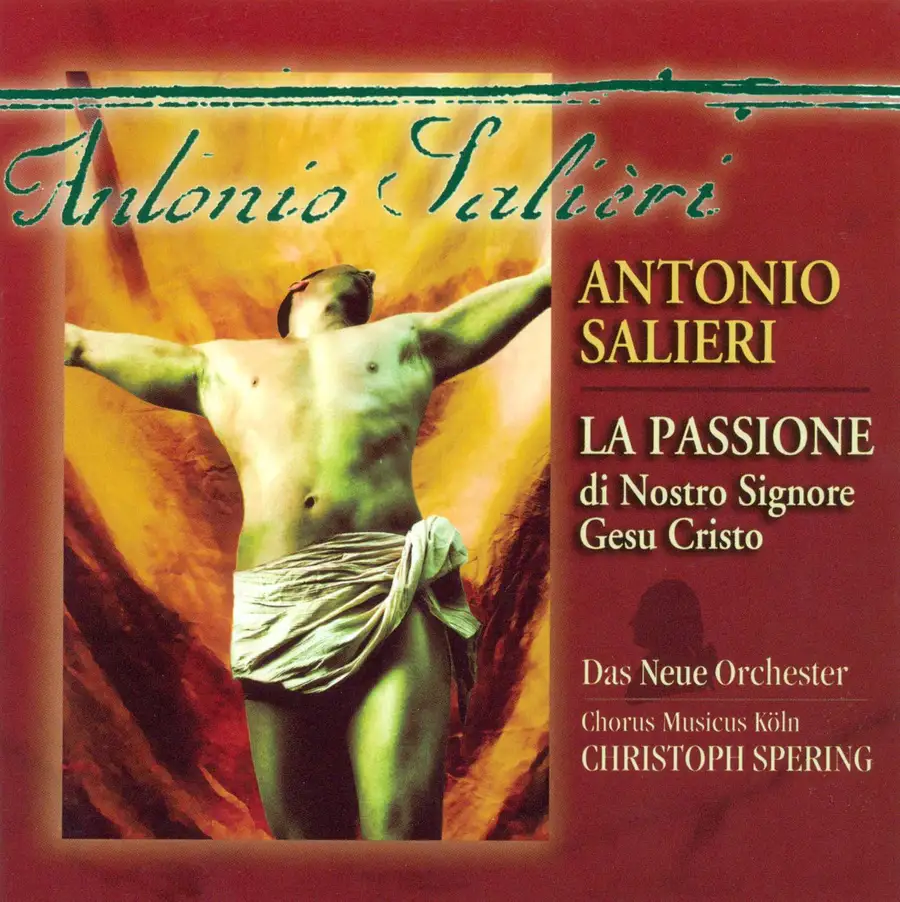
Antonio Salieri - La Passione
Antonio Salieri
La Passione di Gesù Cristo

Das Neue Orchester, Chorus Musicus Köln
Christoph Spering
Capriccio, 2004


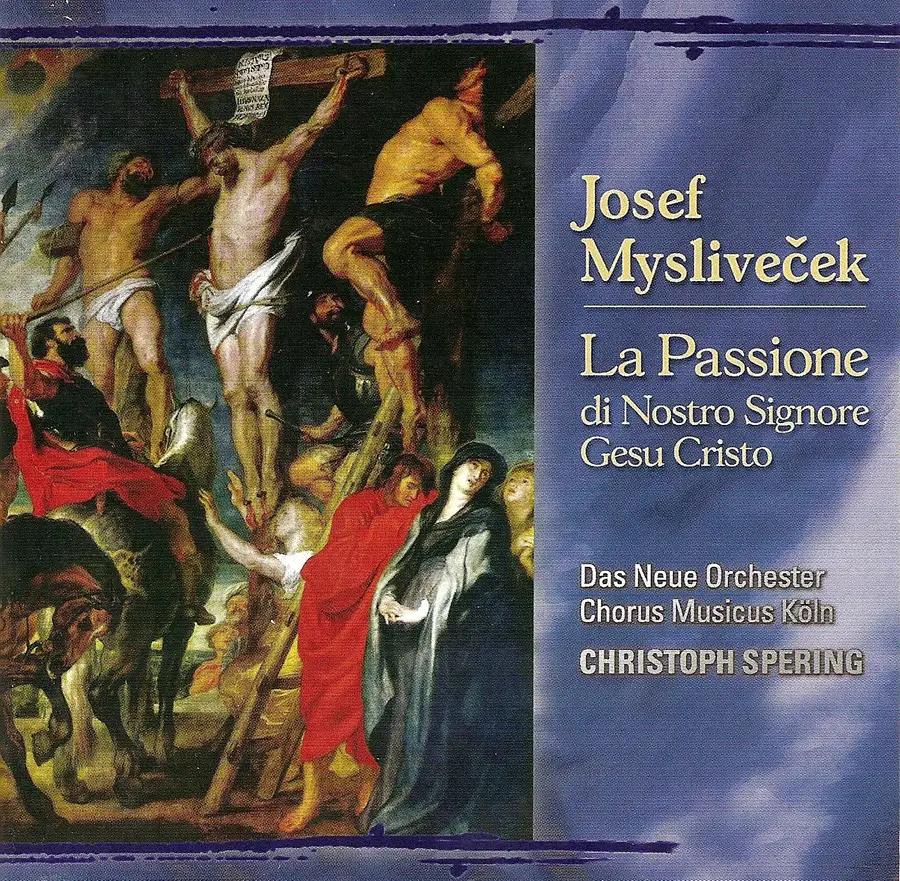
Josef Mysliveček - La Passione
Josef Mysliveček
La Passione di Nostro Signore Gesù Cristo

L’Orfeo Barockorchester
Michi Gaigg
Capriccio, 2004


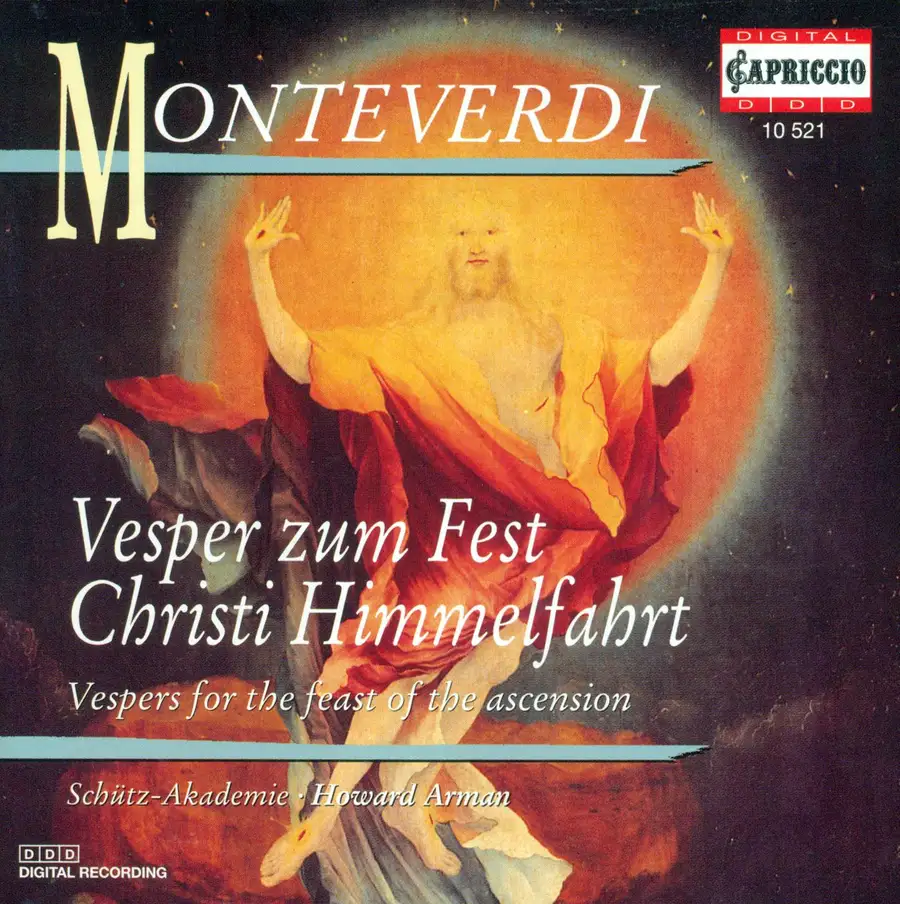
Claudio Monteverdi - Vespers for the Feast of the Ascension
Claudio Monteverdi
Vespers for the Feast of the Ascension

Schütz-Akademie
Howard Arman
Capriccio, 2009


Georg Philipp Telemann - Die Auferstehung und Himmelfahrt Jesu
Georg Philipp Telemann
Die Auferstehung und Himmelfahrt Jesu
Rheinische Kantorei, Das Kleine Konzert
Hermann Max
Capriccio, 2009


5.4.25

STC gives "Uncle Vanya" contemporary feel, swearing included

Hugh Bonneville in Uncle Vanya, Shakespeare Theatre Company.
Photo: DJ Corey Photography

Any of Anton Chekhov's plays can make for an engaging night in the theater, but Uncle Vanya is a perennial favorite. For his latest production at Shakespeare Theatre Company, where he is artistic director, Simon Godwin has reworked this classic play--equal parts tragedy, comedy, and melodrama--in a grittier, updated coproduction with Berkeley Repertory Theatre, where it played in February. The new translation by Irish playwright Conor McPherson stays close to the original in most ways, with a few unexpected twists and a lot more vulgarity.

English actor Hugh Bonneville, likely most familiar to American viewers for his starring role in Downton Abbey, works a sort of miracle with the title character, tempering Vanya's bitterness and cynicism, which can be overpowering, with drunken charm and plenty of humor. The comic timing of the whole evening, not just from Bonneville, moderated what can be a severe experience. Disheveled, unshaven, slovenly, Bonneville's Vanya is a mess, but he endears himself to his family and to the audience in other ways.

Vanya's world is thrown into chaos when Professor Serebryakov, played with wooden pomposity by Tom Nelis, moves into the country estate with his young second wife, Elena. Vanya and Serebryakov's daughter with his first wife, Sonya (a sincere and affecting Melanie Field), have faithfully run the estate for years since the death of Serebryakov's first wife, sending most of the profit to support Serebryakov's career. Now retired and seeking more money, the professor upsets the equilibrium of the place, setting all the family's accustomed routines off-kilter. Gone are Chekhov's sonic touches of the Russian countryside, like the rap of the watchman's rattle, the tinkle of sleigh bells, and the sung and strummed folk songs, but a subtle background soundtrack of crickets and other rural sounds gives the impression of a rundown house in a forest somewhere.

Ito Aghayere proved the element out of place in an otherwise well-suited cast: her Elena felt too rooted in the 21st century and seemed to have no connection to Serebryakov. John Benjamin Hickey, another television actor making his STC debut, made a self-deprecating, charismatic Astrov. Two veteran actresses, STC favorite Nancy Robinette and California-based Sharon Lockwood, delighted as Nana (Marina) and Mariya, respectively. Craig Wallis, himself an STC regular, entertained as a bumbling, forgetful Telegin ("Waffles"). An understudy for two of the roles, Kina Kantor, provided moving transitions playing solo pieces on the cello, adding an intense, atmospheric touch to the evening.

Uncle Vanya runs through April 20 at Harman Hall. shakespearetheatre.org

29.3.25

#ClassicalDiscoveries: The Podcast. Episode 011 - Franz Schmidt & Jonathan Berman


Welcome to #ClassicalDiscoveries. Here is a little introduction to who we are and what we would like to achive at the first (or rather "double-zeroëth" episode). Your comments, criticism, and suggestions remain most welcome, of whatever nature they may be. Now here’s Episode 011, where we are talking with our special guest, the conductor Jonathan Berman, about Franz Schmidt, another Surprised-by-Beauty-composer, going well beyond the symphonies of which Berman has recorded the most recent cycle for Accentus (with the BBC National Orchestra of Wales). We hope you will enjoy it!


available at Amazon
Franz Schmidt
Symphonies 1-4
BBC Ntl. Orch. Wales
J.Berman
Accentus, 2024

available at Amazon
Franz Schmidt
Symphonies 1-4
Frankfurt RSO
P.Järvi
DG, 2021

available at Amazon
Franz Schmidt
Symphonies 1-4
Detroit/Chicago SO
N.Järvi
Chandos, 1997

available at Amazon
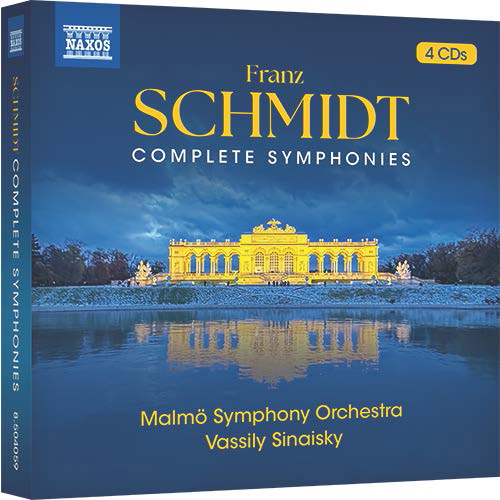
Franz Schmidt
Symphonies 1-4
Malmö SO
V.Sinaisky
Naxos, 2024

23.3.25

#ClassicalDiscoveries: The Podcast. Episode 010 - Christian Sinding: Rustles of German Romanticism


Welcome to #ClassicalDiscoveries. Here is a little introduction to who we are and what we would like to achive at the first (or rather "double-zeroëth" episode). It bears mentioning every time, that your comments, criticism, and suggestions are most welcome, of whatever nature they may be. Now here’s Episode 010, where we are talking about Christian Sinding, another Surprised-by-Beauty-composer, a Norwegian-in-German's-musical-clothing, and his symphonies of which a new (the third, by my count) cycle has been issued on Capriccio.:


available at Amazon
Christian Sinding
Symphonies 1-4
Norrköpping SO
K.H.Steffens
Capriccio, 2024

available at Amazon
Christian Sinding
Symphonies 1-4
Norwegian RO (KORK)
Ari Rasilainen
Finlandia/Warner, 2000

available at Amazon
Christian Sinding
Symphonies 1-2
NDR RP Hannover
Thomas Dausgaard
CPO, 2001

available at Amazon
Christian Sinding
Symphonies 3-4
NDR RP Hannover
David Porcelijn
CPO, 2004