CD Reviews | CTD (Briefly Noted) | JFL (Dip Your Ears) | DVD Reviews

6.7.09

'Tempest' on CD

available at Amazon
Adès, The Tempest, S. Keenlyside, C. Sieden, I. Bostridge, K. Royal, T. Spence, P. Langridge, Covent Garden, T. Adès

(released on June 30, 2009)
EMI 50999 6 95234 2 7
At the American premiere of The Tempest, the appealing new opera by Thomas Adès, I wrote at some length about its strengths and weaknesses as it was presented at Santa Fe Opera (follow the links in the right column of that review for the related posts). One performance of the world premiere production, at Covent Garden in 2004, was recorded for a BBC broadcast, but an indisposed Ian Bostridge had to be replaced for that performance. The official word from EMI is that a DVD of the opera is not planned, for now at least. What is finally available is this two-CD set, recorded over two evenings at the 2007 revival of the opera at Covent Garden. As well as providing me a chance to become more familiar with what is, to my ears, one of the most successful and worthy new operas of the last 20 years, the recording opens a different window on the work. Most of the original cast appeared again at this revival: of the six principals, only Kate Royal did not create her role (Miranda -- it was Christine Rice in 2004), although the supporting cast was completely different at the premiere. Unlike the Santa Fe performance, the composer himself is at the podium, which can only heighten one's interest.

The sounds of stage movement, occasional odd balances and vocal blemishes, and audience noise are an unfortunate fact of live recording. Toby Spence, who does beautiful, lyrical things with the role of Ferdinand, has admitted that, at first, many of the singers who created the opera were not sure that what Adès intended for them to do was even possible. This is especially true of the outrageous role for the air spirit Ariel, so memorably created in a frothy, even at times squeaky -- entirely otherworldly -- way by fearless soprano Cyndia Sieden. Hearing her live was a heart-stopping experience, something that is not possible to capture in recording. The monster Caliban had similar challenges, with some of the extremely high notes rendered in an almost hissing falsetto by Ian Bostridge. The one slightly weak link in the Santa Fe cast was Prospero, here sung with magisterial authority by the role's creator, Simon Keenlyside, who will reportedly also take the role in the production of The Tempest planned for the fall of 2012 at the Metropolitan Opera, with (one can only hope) a DVD to follow. As good as it would be to have a studio recording of better quality for this gorgeous opera, it is unlikely to happen anytime soon.

117'24"

5.7.09

In Brief: Independence Day Edition

Here is your regular Sunday selection of links to good things in Blogville and Beyond.
  • This blog is expressly not about politics, and we do our best to stay on the topic of classical music and the arts. This does not mean that we are not interested in current affairs, but our expertise is not in politics or foreign affairs. That being said, when it comes to the incredible news coming out of Iran in recent weeks, some great coverage has come from, of all places, a news parody show on Comedy Central, reporting on the post-election fallout and showing the human side of life in Iran, even interviewing people who have since been arrested by the government there. [The Daily Show]

  • American readers, take a chance to cherish your freedom by viewing the entries in this Photoshop contest, remaking the Statue of Liberty. [Worth1000]

  • Just when revisiting the recorded corpus of Michael Jackson's songs had you feeling good about being a child of the 80s, a 13-year-old kid writes a feature piece about having to give up his iPod for a vintage 80s Walkman. It took him three days to figure out that a cassette tape has two sides, and he noted that there was no shuffle feature. OMG: I'm so old. [BBC News Magazine]

  • With hat tip to Boing Boing, an aerial survey of the English countryside drew attention to some circular and oblong irregularities in a farm field near the village of Damerham, which turned out to be major archeological sites. Underneath the ground, only about 15 miles from Stonehenge, is an enormous complex that includes two long barrows, large tombs covered by mounds and thought to be 6,000 years old. Researchers have also found the ruins of wooden temples. [National Geographic]

  • Following in the footsteps of Paul McCartney and others, Michael Jackson apparently had plans to do a crossover classical album. According to David Michael Frank, the composer whom Jackson enlisted to help him with the orchestration, Jackson had an impressive knowledge of classical music and had some of the pieces he wanted to write semi-completed in his head. [The Guardian]

4.7.09

Summer Opera: Castleton Festival 1


(L to R) Harry Risoleo (Miles), Rachel Calloway (Mrs. Grose), Charlotte Dobbs (the Governess), and Kirby Anne Hall (Flora) in The Turn of the Screw, Châteauville Foundation (photo by Nicholas Vaughan)
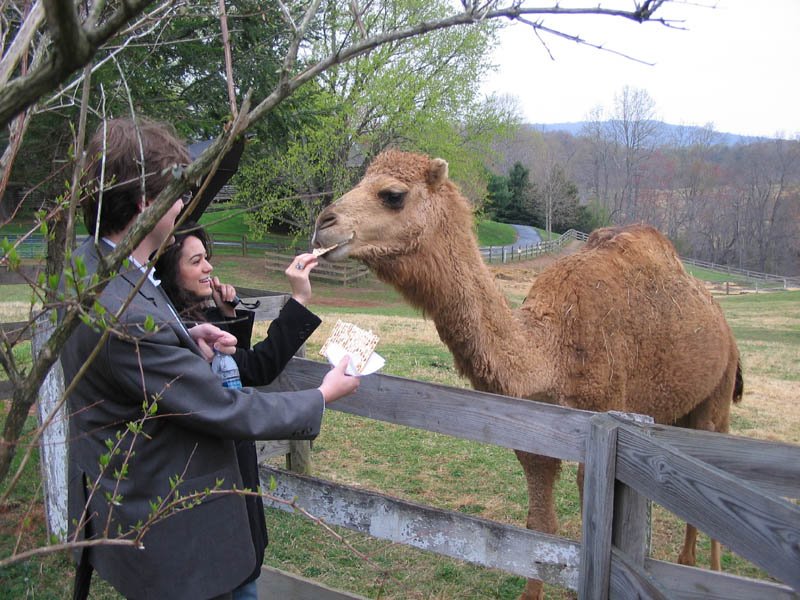
The area's newest summer opera festival, the Castleton Festival, opened on Friday night at Lorin Maazel's estate in Rappahannock County, Virginia. This festival's model, if indeed it has one, is likely Glyndebourne: an improbable location far into the countryside where city-dwelling opera lovers would come on pilgrimage to get away from it all. As the roads became narrower and narrower on the drive to Castleton Farms, the location of Maazel's Châteauville Foundation, the clean air and rural smells flowed through the car window. As I waited for the curtain of the festival's first production, Britten's Turn of the Screw (libretto by Myfanwy Piper, based on the novella by Henry James), the sound of cows lowing and frogs croaking wafted over the pond behind Festival House. Surrounded by a menagerie of animals -- a camel (named Omar and fond of matzo), a zebra, and the fabled zonkey (the zebra's offspring with a donkey) -- Maazel reigns here like Prospero on his island, directing young performers he invites to mount productions of chamber operas.

Maazel has been hosting concerts in his home for over a decade, but he first came onto the Ionarts radar when a chamber opera production sponsored by the Châteauville Foundation suddenly appeared on the schedule of the Kennedy Center Terrace Theater back in 2005. Not quite sure what to expect, both Jens and yours truly showed up and were very impressed by that bone-chilling performance of The Turn of the Screw. Maazel decided not to revive that sinister staging, by director Barbara Eckle and choreographer Abigail Levine, instead entrusting a new staging to William Kerley, recently appointed as the festival's Resident Stage Director. It took advantage of the unusual shapes and details of the smaller Festival House stage, with Miss Jessel and Peter Quint serenading the children from the rail of the balcony. The single set backdrop (sets and costumes by Nicholas Vaughan) established the predominant tone of black color, with a large window and columns that moved back and forth, adding to the possessed, claustrophobic feel of this incarnation of Bly Manor. A black arch framed the proscenium, echoed by a narrow walkway that extended the stage space around the pit, which also served as Bly Park's lake.


Charlotte Dobbs (the Governess) in The Turn of the Screw, Châteauville Foundation (photo by Nicholas Vaughan)
At the top of the young cast was the Flora of Kirby Anne Hall, singing with a convincing child-like tone (which did much to strengthen the sound of her Miles when they sang together) and acting with commitment and an intensely sinister face. She was matched well by the ghoulish Miss Jessel of Greta Ball, who with her sharp and present voice was much more insidious in this production than Quint, rising up like a viperous specter from a patch of reeds (the only time the hair on my arms stood on end) and again, her hair dripping, from the lake-pit in Act II. The Quint of Steven Ebel was rounded and suave more than particularly evil, although one might suspect that, given Britten's attachment to teenage boys, the role might have some ambiguities. The Miles of St. Alban's student Harry Risoleo, while admirably composed and glowingly sung (the Malo aria was boyishly sweet), seemed curiously detached, deflating some of the opera's most anxious moments.

Other Reviews:

Anne Midgette, Coming Up Big in a Tiny Space (Washington Post, July 6)

Tim Smith, Castleton Festival on Lorin Maazel's Virginia estate opens with compelling 'Turn of the Screw' (Clef Notes, July 6)

Philip Kennicott, The Debut of the Castelton Festival (Philip Kennicott, July 6)
The dryness of the theater, perhaps affected unfavorably by the addition of the proscenium and walkway, seemed to expose the voice of Charlotte Dobbs as the Governess, although that timorous quality also suited the character's neurotic hysteria, which she captured beautifully. Dobbs's knowledge of the role did not seem all that secure either, with at least one false entrance and numerous others prevented only by the firm gesture of Maazel's cue hand. She had a strong counterweight in the vocally stout Mrs. Grose of Rachel Calloway. Thirteen young musicians from the Royal College of Music in London gave a mostly smooth reading of this complex score, an extended set of variations growing from the theme presented in the prologue. For the first time in the history of Festival House, a real (spinet) piano was somehow hoisted down into the pit (the harp, timpani, and tubular bells must have been hard enough). All in all, it was not the stunning experience of that first Turn of the Screw in 2005, but it was a fine opening to three weeks of Britten's chamber operas.

This opera will be repeated this evening (July 4, 5 pm) and tomorrow afternoon (July 5, 2 pm). Today's performance is the crowning moment of an Independence Day Open House at the Castleton Festival, with chamber music performances, food and activities, and post-opera fireworks and dancing.

3.7.09

Alan Curtis Signs Almost Definitive 'Alcina'

available at Amazon
Handel, Alcina, J. DiDonato, M. Beaumont, K. Gauvin, Il Complesso Barocco, A. Curtis

(released on April 14, 2009)
Archiv 477 7374

Online full score:
HWV 34 (old complete works edition)

Libretto (.PDF file, adapted from libretto of L'isola di Alcina, by Riccardo Broschi, the brother of the castrato Farinelli)
Preceding their release of Handel's Ezio, reviewed last week, Alan Curtis and Il Complesso Barocco rang in the Handel anniversary year with a long-awaited recording of Alcina. Although this opera more or less died with Handel, not to be revived again until the 20th century, it has been one of the favorites of the Handel revival. We have reviewed two stagings of it in the last three years, by Opera Vivente in 2007 and by Wolf Trap Opera in 2008. (La Scala even mounted the opera earlier this year.) Likewise a new recording of the work does not automatically find itself in control of a field empty of competitors. The natural competition is William Christie's stunning (if not universally liked) recording of the opera from a decade ago, combining his historically informed performance ensemble, Les Arts Florissants, with mainstream opera stars Renée Fleming, Susan Graham, and Natalie Dessay. The embellishments and cadenzas were (quite appropriately for Baroque opera) out of control, and while Fleming especially is no great Handelian, it makes for an exciting listening experience.

We cannot recommend the Christie version as the reference recording to own, however, because he did not include the ballet music (conceived by Handel for the French dancer Marie Sallé) and made some cuts to the vocal music, although now that Warner Classics UK has re-released both Christie's Alcina and Orlando as a bargain-price 6-CD set ($31.98), the Handel enthusiast would be crazy not to buy it. Joan Sutherland's various recordings of the role, for which she was rightly acclaimed, are interesting to hear and quite beautiful in their own way, but all with many cuts to the complete score and not performed on historical instruments. Prior to the Curtis version, the recording to own was the one featuring the incomparable Arleen Auger in the title role, with the late Richard Hickox leading the City of London Baroque Sinfonia. A stellar conductor, Hickox recorded the entire score (and I mean everything, including the controversial ballet scene at the end of Act II), and while the rest of the cast, although good, is not up to Auger's level, it is a beautiful recording, now heavily discounted in its re-release from EMI Classics.


Alan Curtis's Handel:
available at Amazon
Ezio
(2009)

available at Amazon
Tolomeo
(2008)

available at Amazon
Floridante
(2007)

available at Amazon
Radamisto
(2006)

available at Amazon
Rodelinda
(2005)
The cast assembled by Curtis is outstanding, beginning with the unusual decision to have a mezzo-soprano, Joyce DiDonato, sing the soprano title role. DiDonato wrote about her anxiety in taking on the role at her blog Yankeediva (along with many interesting posts on the recording sessions), but the results are uniformly impressive. One might wonder why Curtis did not cast Karina Gauvin, whom we heard sing excerpts of the title role with Les Violons du Roy a few years ago. Quite brilliantly, Curtis gave Gauvin the role of Morgana, much more a true soprano role (created by the English soprano Cecilia Young), in which she gives a performance of breath-taking clarity and innocence (Winton Dean describes the role of the sorceress's sister as one of the most sincere in the opera). It was the Italian singer Anna Maria Strada del Pò who created the role of Alcina, an Italian distinguished by her hideous looks (Charles Burney records that one of her nicknames was The Pig) and a voice that at first was compared to Faustina Bordoni (a mezzo-soprano) and eventually burnished and extended by the efforts of Handel and others. DiDonato's voice has just that grain and tension in this more dramatic role.

The soprano Laura Cherici, although lovely in tone, could perhaps be a bit more boyish in the role of Oberto, the son of Astolfo looking for his father on the island, a role created by the boy soprano William Savage (Handel often refers to him only as "The Boy" in his score). Maïté Beaumont is consistently silken in the equally demanding role of Ruggiero, created by alto castrato Giovanni Carestini, giving some impression of the agility and clarity of that legendary voice type. As Bradamante, created as a trouser role by Maria Caterina Negri, Sonia Prina is the more intense of the two mezzos. The virtues of the male supporting cast, tenor Kobie van Rensburg (Oronte) and bass Vito Priante (Melisso), are familiar from other recordings. The members of Il Complesso Barocco play with all of their accustomed ensemble precision and stylistic panache, with fine obbligato turns by lead violinist Elizabeth Blumenstock, cellist Nils Wieboldt, and the recorders, as well as the flauto piccolo solo in the Tamburino dance from the end of the third act. The continuo is enlivened considerably by Pier Luigi Ciapparelli's theorbo.

Curtis has created his own performing score from the sources, available from Novello, something he would have likely done even if the score had been published in the new Hallische Händel-Ausgabe, which it has not yet. He includes all of the vocal music, even reinstating Ruggiero's Bramo di trionfar, a virtuosic aria that Handel cut from Act I before the premiere (eventually incorporating it into the revived version of Athalia). Curtis also keeps the second version of the Act I chorus Questo è il ciel (Handel also reused the first version in the Athalia revival). The only music that Curtis does not include, somewhat oddly, is the little ballet divertissement of the Songes agréables, funestes, et effrayés at the end of Act II. Here is what eminent Handel authority Winton Dean has to say about this music (Handel's Operas, 1726-1741, pp. 325-26):
At the end of Act II Handel imported the composite dance finale written for Act II of Ariodante but excluded from that opera. This has been doubted, but its presence in several copies authenticates its performance in Alcina. The entire section, including the end of Ginevra's previous aria and her concluding accompagnato, was transferred from the performing score of Ariodante to that of Alcina. The 'späterer Schluss' added by Handel in faint pencil is difficult to account for; it does not appear anywhere else. The sequence is a powerful example of ballet d'action, but more effective in its original context, where it represents the dreams of the sleeping Ginevra, than in Alcina.
The end of Act II certainly has more dramatic punch without the ballet scene (the omission seems to be at least tacitly approved by Dean), and it does seem like a clumsy graft onto its new branch in Alcina. I think Curtis made a mistake in this case, however, by not including these entrées, at least as an appendix at the end of the third disc, where there is plenty of room. Not only in the interest of making this superb recording as complete as possible (Hickox did record them, remember), but because, as remarked of a performance of them by Les Violons du Roy a few years ago (along with a few of Alcina's arias by Karina Gauvin), the music is gorgeous.

203'16"


Alan Curtis (0:40) -- "Today, many people still have the prejudice of thinking
that the oratorios are the great pieces -- [fake adoring tone] 'The Messiah!'"

2.7.09

Summer Opera: Wolf Trap's Coozey 'Così'


(L to R) Rena Harms (Fiordiligi) and Jamie Van Eyck (Dorabella) in Così fan tutte
Wolf Trap Opera, 2009 (photo by Carol Pratt)
Mozart's evergreen Così fan tutte is one of the most often produced operas on the modern stage, officially ranked as the 15th most often performed opera in North America. In the past three years alone, we have reviewed productions at Santa Fe Opera, the Munich Opera Festival, the Washington National Opera Young Artists, and Opera Theater of Northern Virginia. Add to that a fifth one this summer, the first production of the summer by Wolf Trap Opera, heard in its final performance on Tuesday. Some early critics found the mildly salacious libretto by Lorenzo da Ponte, which concerns two men seducing one another's fiancees, beneath the composer's noble genius, which is absurd. The opera asks more questions about the nature of love, attachment, and sexual desire than it answers. In fact, modern stage directors fail with it when they try to make explicit what Mozart and his librettist left, quite brilliantly, subtle and ambiguous. Do the lovers want to return to the relationships as they were at the opera's opening or not? It is a question that does not necessarily require an answer.

Director Eric Einhorn, who meddled just a bit too much with Handel's Alcina last year at Wolf Trap, seized on the theme of wife swapping and set the opera in a white-walled sex clinic (sets by Erhard Rom). A lab-coat-wearing Don Dr. Alfonso takes the role of a slightly kinky, voyeuristic Alfred Kinsey, conducting an experiment on the two couples as the chorus of lab assistants takes notes behind two-way mirrors. The prim, begloved women and straight-backed men in plain black and white gradually let go of their inhibitions and embrace the role-playing, complete with colorful costumes (designed by Mattie Ulrich). Nothing wrong with time or location transpositions in opera productions, of course, but while this concept had possibilities, it mostly just did not make sense. Why were the men going to a sex clinic and signing a contract to do this experiment, apparently without the consent of their fiancees? Why would the women show up at the clinic on their own, without knowing why they are there? Who was Despina, since she was not the womens' servant and clearly not their friend?


available at Amazon
Mozart, Così fan tutte, B. Fink, V. Gens, W. Güra, Concerto Köln, R. Jacobs
Musically, the evening was more satisfying, with a cast selected, or so it seemed, more as an ensemble than as individually striking voices -- which plays to the opera's strengths. The voices were all appropriately balanced with one another, although both Matthew Hanscom's Guglielmo and especially Carlos Monzón's Don Alfonso were overshadowed. Tenor David Portillo sang with a resonant ping as Ferrando, giving a tender performance of Un aura amorosa. Rena Harms showed a potent, if edging toward too nasal soprano as Fiordiligi, with smooth crossing of registers in Come scoglio immoto resta. Mezzo-soprano Jamie Van Eyck built on the promise showed in a smaller role in last year's Ariadne auf Naxos. Her voice had a warm, bountiful sound, especially when combined with other voices, as in the smooth, sotto voce rendition of the trio Soave sia il vento (which lost most of its meaning, without a ship to bear the men away). Alicia Gianni got in touch with the virago side of her soprano to bring off this ballsy, sexually frank Despina.

Other Reviews:

Anne Midgette, New 'Così,' Fresh Troubles (Washington Post, June 29)

T. L. Ponick, Musicians put fun into 'Cosi' (Washington Times, June 29)

Tim Smith, Wolf Trap Opera takes clinical look at 'Cosi fan tutte' (Clef Notes, July 1)
Timothy Myers led a generally fine performance from the pit orchestra, with especially agile playing from the paired woodwinds. Even though the two trumpets and timpani were located in a tiny room just off the already crowded pit, they kept themselves admirably together with the rest of the group. Cuts were made to the score (the usual ones, plus a couple more) to keep the overall performance time, with one short intermission, to just over three hours. Even so, the constant puzzlement about the director's reworking of the story made the opera seem longer than ever. In general, if a director feels the need to dress up an overture -- especially Così, perhaps Mozart's finest -- with invented supernumerary stage business, it is a sign of weakness, that the director does not trust the work on its own, and from the overture on, this Così struck the eye as over-manipulated. It was telling that the few moments where the busy silliness stopped and Mozart's music was allowed to stand on its own -- like the end of Un aura amorosa (where Ferrando sang to Dorabella on the other side of a door) and Fiordiligi's Per pietà -- were the most captivating ones in the production. With a great opera like Così, one is often better off just getting out of Mozart and Da Ponte's way.

Many of the cast members will return later this month in the company's second production, Monteverdi's Il Ritorno d'Ulisse, which we expect to be the highlight of the season (July 24, 26, and 28). Finally, we get to find out what all those Penelope references in Così were about.

Reviewed, Not Necessarily Recommended: Bach’s Missa


available at Amazon
Bach, Missa (1733),
N.Harnoncourt / Concentus musicus Wien et al.
Warner Classics 2564-69057
(Teldec, Das Alte Werk) [54:26]

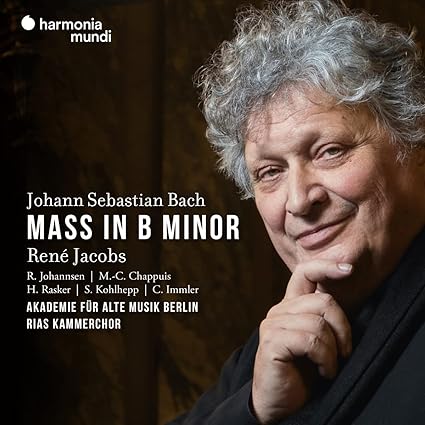
The Missa (BWV 232a) is that first part of what would later become the Mass in B minor. It consists of the Kyrie and the Gloria (half of which is a reworking of Cantata BWV 191) Bach composed in 1733 and dedicated to the Elector of Saxony as part of an (unsuccessful) application to the job of Saxon Court Capellmeister in Dresden. When Nikolaus Harnoncourt recorded the Missa as a stand-alone piece in 1972, that was far from common knowledge: not until the 1950s was did scholars propose that the Mass in B minor wasn’t a monolith. Public perception of the works as a musical quilt set in only much later. So as much as anything else, Harnoncourt’s recording was a statement to perceive Bach in new ways. Since there are no changes from the original to the first half of the latter gallimaufry-masterpiece (in fact, I believe this is simply the first disc of Harnoncourt's first B minor Mass), you might as well experience the Missa by simply not listening to CD 2 of your favorite recording of the B minor Mass.

Why, then, do we need a recording of Bach’s Missa? Completism, that’s why. Good enough a reason for me. If not for you, there is no reason to read on. Harnoncourt’s recording offers nothing (except the sweet aural scents of nostalgia for those early “Das Alte Werk” releases) that will transcend the limited initial appeal the Missa has in an age burgeoning with great ‘complete’ recordings. The vibrato of the female voices (Rotraud Hansmann, Emiko Iiyama, Helen Watts) isn’t at all conforming to our current understanding and expectations of historically informed performances. And the playing of the orchestra, especially the brass, conforms only to our stereotypical negative expectations of it. HIP orchestras—Harnoncourt’s Concentus musicus Wien not the least—have come a long, long way since those days. I have always liked Harnoncourt’s idea of using a boys’ choir (one of the best available, at that). Unfortunately the idea is nicer than the intonation-ambiguous result.

Those not reared on Harnoncourt (or not interested in the Missa-only) but curious about his seminal recordings for Teldec’s Das Alte Werk are better off with a recording of a favorite cantata from his cycle. The rest can safely stick to their Mass in B minor of choice—mine currently being Karl Richter, Jos van Veldhoven, and Marc Minkowski.

1.7.09

Thus Do All Women

available at Amazon
Mozart, Così fan tutte, J. Watson, D. Montague, T. Spence, C. Maltman, Orchestra of the Age of Enlightenment, C. Mackerras

(released on April 29, 2008)
Chandos 3152(3)
Every opera lover should own at least one recording of Mozart's Così fan tutte, an opera that may not rank all that high on the list of the composer's "important" operas but that remains one of the most enjoyable and beloved of audiences -- ranked as the 15th most often performed opera in North America. (My review of Wolf Trap Opera's new production will be published tomorrow). The best version to own remains the revelatory and authoritative recording made by René Jacobs in 2004. In the category of secondary performances of Così that are worth a listen, the great Mozart conductor Charles Mackerras returned to the opera for a second recording in 2007. It is unusual because he made it with the historically informed performance ensemble the Orchestra of the Age of Enlightenment. Also, the singers use not the Italian original but -- for Chandos's Opera in English series -- a clever, slightly twee English translation made by the Rev. Marmaduke E. Browne for an 1890 production by the students of the Royal College of Music under Charles Villiers Stanford.

Mackerras has a generally fine cast, especially on the male side, with the ardent tenor of Toby Spence's Ferrando and the robust baritone of Christopher Maltman's Guglielmo balanced by the veteran weight of Thomas Allen's Don Alfonso. The women are led by the vivacious Lesley Garrett as a witty and slightly zany Despina, against whom Janice Watson and Diana Montague seem a little nondescript as Fiordiligi and Dorabella, respectively. The OAE sounds gorgeous and full of colors, especially in the woodwinds (so important in this orchestration), led with a sprightly hand by Mackerras. Other HIP touches include the use of a fortepiano to accompany the recitatives (although the critical edition indicates "cembalo" -- or harpsichord), as well as ornaments for the singers transcribed from an 18th-century source (now in the Fürstenberg Library in Donaueschingen).

Another argument against recommending this as a reference recording is that it does not include the complete score, making the usual cuts in most staged performances (Don Alfonso's Vorrei dir, e cor non ho, the Ferrando-Guglielmo duet Al fato dan legge, Ferrando's aria Ah lo veggio -- although the OAE certainly has the basset clarinet called for in that piece -- and some parts of the recitatives). Guglielmo also sings Non siate ritrosi, as is customary, instead of the more difficult Rivolgete a lui lo sguardo Mozart originally composed as the opera's fifteenth number, deciding to cut it before the premiere.

160'34"

Summer at the Museums: Portland, Maine


This is a continuation of Summer at the Museums, the Working My Way North Edition. If you find yourself on a Maine adventure this summer, a good stop on your way is the port city of Portland. Portland has some very interesting history and a few great restaurants (Bresca and the new Salt Exchange are two recommendations). I think there is some sort of subsidy from the local government to open a coffee shop here: there must be fifty of them and they all look pretty good, too.

After you’ve eaten and got your caffeine fix the Portland Museum of Art has a pretty fair collection, including five or six N. C. Wyeths -- Lobstering off Black Spruce is enough reason to stop on its own. A Marsden Hartley, Camden Hills from Bunkers Island, is a close second. An exhibit, Call of the Coast: Art Colonies of New England, explores the influence of four communities (some images here): Cos Cob and Old Lyme in Connecticut and Ogunquit and Monhegan on the Maine coast. There are lots of Impressionist landscapes and seascapes in the Monet style, but the show gets more interesting for me with the Robert Henri-inspired group mixing it up on the Maine coast: Rockwell Kent, Yashiro Kuniyoshi, Edward Hopper, and (new to me) Gertrude Fisk. The exhibit will be up through October 12.

My goal is to follow the Maine Art Museum Trail of seven museums: now the pressure is on.

PREVIOUSLY IN SUMMER AT THE MUSEUMS:
Walters Art Museum | Museum of Modern Art | National Gallery of Art | Hirshhorn