CD Reviews | CTD (Briefly Noted) | JFL (Dip Your Ears) | DVD Reviews
Showing posts with label Saints. Show all posts

21.4.09

900th Anniversary, Feast of St. Anselm

Manuscript Vita of St. Anselm, detail
April 21 is the feast of Anselm of Canterbury, who died 900 years ago today. Anselm is a favorite saint, not least because he is the patron of the Benedictine abbey and school in Northeast, where I teach music and art history. He was an Italian, born in Aosta in 1033, and received a calling to the monastic life when he was still a young man. His father prevented him from joining a monastery, after which Anselm fell into a life of dissolution and wandering, abandoning the vocation of monastic learning for a time. Fleeing his father's severity, Anselm set out on foot across the Alps, wandering north all the way to Normandy. He was taken in as a student and later a monk at the Abbey of Bec, where he finally found a mentor in the scholar Lanfranc, who was the prior. Anselm was to succeed Lanfranc in many positions, first as prior (and eventually abbot) at Bec and later as Archbishop of Canterbury in England.

Anselm is often cited as the founder of the Scholastic movement of philosophy and was in later years given the rank of Doctor of the Church for his theological and philosophical writings. His most famous philosophical idea is the so-called ontological proof of the existence of God, quoted below. Anselm staunchly opposed the interference of the state in church affairs but just as staunchly opposed the crusades as wars sponsored wrongly by the church. He died in peace on April 21, 1109. He is buried at Canterbury Cathedral, the loss of which to a heretical sect (in fact, a result of the most egregious interference of the English government in church affairs) he would certainly condemn.
Excerpt from Chapter 2 of Anselm's Proslogium (translated from the Latin by Sidney Norton Deane, with some updating):

And so, Lord, who gives understanding to faith, give me, so far as you know it to be profitable, to understand that you are as we believe; and that you are that which we believe. And indeed, we believe that you are a being than which nothing greater can be conceived. Or is there no such nature, since the fool has said in his heart, there is no God? (Psalms xiv. 1). But, at any rate, this very fool, when he hears of this being of which I speak -- a being than which nothing greater can be conceived -- understands what he hears, and what he understands is in his understanding; although he does not understand it to exist.

For, it is one thing for an object to be in the understanding, and another to understand that the object exists. When a painter first conceives of what he will paint later, he has it in his understanding, but he does not yet understand it to be, because he has not yet performed it. But after he has made the painting, he both has it in his understanding, and he understands that it exists, because he has made it.

Hence, even the fool is convinced that something exists in the understanding, at least, than which nothing greater can be conceived. For, when he hears of this, he understands it. And whatever is understood, exists in the understanding. And assuredly that, than which nothing greater can be conceived, cannot exist in the understanding alone. For, suppose it exists in the understanding alone: then it can be conceived to exist in reality; which is greater.

Therefore, if that, than which nothing greater can be conceived, exists in the understanding alone, the very being, than which nothing greater can be conceived, is one, than which a greater can be conceived. But obviously this is impossible. Hence, there is no doubt that there exists a being, than which nothing greater can be conceived, and it exists both in the understanding and in reality.
See also these Other Works by St. Anselm of Canterbury. For a lighter version, a philosophy professor set a version of Anselm's ontological proof to the tune of Waltzing Matilda. A few years ago I had my student choir sing it, and it works quite well.

28.8.08

Feast of St. Augustine


Christophe Cochet (attrib.), Didon, Musée du Louvre (17th c.)
The Latin I loved; not what my first masters, but what the so-called grammarians taught me. For those first lessons, reading, writing and arithmetic, I thought as great a burden and penalty as any Greek. And yet whence was this too, but from the sin and vanity of this life, because I was flesh, and a breath that passes away and comes not again? For those first lessons were better certainly, because more certain; by them I obtained, and still retain, the power of reading what I find written, and myself writing what I will; whereas in the others, I was forced to learn the wanderings of one Aeneas, forgetful of my own, and to weep for dead Dido, because she killed herself for love; the while, with dry eyes, I endured my miserable self dying among these things, far from Thee, O God my life.

For what more miserable than a miserable being who commiserates not himself; weeping the death of Dido for love of Aeneas, but weeping not his own death for want of love of Thee, O God. Thou light of my heart, Thou bread of my inmost soul, Thou Power who gives vigor to my mind, who quickens my thoughts, I loved Thee not. I committed fornication against Thee, and all around me thus fornicating there echoed “Well done! well done!” for the friendship of this world is fornication against Thee; and “Well done! well done!” echoes on till one is ashamed not to he thus a man. And for all this I wept not, I who wept for Dido slain, and “seeking by the sword a stroke and wound extreme,” myself seeking the while a worse extreme, the extremest and lowest of Thy creatures, having forsaken Thee, earth passing into the earth. And if forbidden to read all this, I was grieved that I might not read what grieved me. Madness like this is thought a higher and a richer learning, than that by which I learned to read and write.

[...] Let not either buyers or sellers of grammar-learning cry out against me. For if I question them whether it be true that Aeneas came on a time to Carthage, as the poet tells, the less learned will reply that they know not, the more learned that he never did. But should I ask with what letters the name “Aeneas” is written, every one who has learnt this will answer me aright, as to the signs which men have conventionally settled. If, again, I should ask which might be forgotten with least detriment to the concerns of life, reading and writing or these poetic fictions? who does not foresee what all must answer who have not wholly forgotten themselves? I sinned, then, when as a boy I preferred those empty to those more profitable studies, or rather loved the one and hated the other. “One and one, two”; “two and two, four”; this was to me a hateful singsong: “the wooden horse lined with armed men,” and “the burning of Troy,” and “Creusa's shade and sad similitude,” were the choice spectacle of my vanity.

-- Augustine of Hippo, Confessions, Book 1 (A.D. 397-398), trans. Albert C. Outler
Today is the feast day of Saint Augustine, which is very appropriate for the opening of school. The above is the saint's account of how he loved literature as a youth, especially the story of Dido and Aeneas in the great epic of Vergil.

11.7.08

Feast of St. Benedict

July 11 is the feast of St. Benedict of Nursia (c. 480 to c. 543), whose Rule for the life of monks is the most influential document in the history of monasticism.

If there be skilled workmen in the monastery, let them work at their art in all humility, if the Abbot gives his permission. But if anyone of them should grow proud by reason of his art, in that he seems to confer a benefit on the monastery, let him be removed from that work and not return to it, unless after he has humbled himself, the Abbot again orders him to do so. But if any of the work of the artists is to be sold, let them, through whose hands the transaction must pass, see to it, that they do not presume to practice any fraud on the monastery. Let them always be mindful of Ananias and Saphira, lest, perhaps, the death which these suffered in the body (cf Acts 5:1-11), they and all who practice any fraud in things belonging to the monastery suffer in the soul. On the other hand, as regards the prices of these things, let not the vice of avarice creep in, but let it always be given a little cheaper than it can be given by seculars, That God May Be Glorified in All Things (1 Pt 4:11).

Regula | Rule of St. Benedict, Chapter 57 ("Of the Artists of the Monastery")
Although written a half-century after Benedict's death, St. Gregory the Great's Life of Benedict is the best way to get to know something about him. Chapter 8, for example, contains the account of the poisoned loaf, left for Benedict by a jealous priest who wanted to kill him. Benedict perceived that it was poisoned and instructed a crow, which came every day to beg crumbs, to carry the loaf away and dispose of it. The crow or raven is still one of the saint's iconographic symbols.

Image: Ambrogio Lorenzetti, panel of St. Benedict from the Maestà (1330-1340, Siena, Museo dell’Opera del Duomo)

See also this image of St. Benedict, Bohemian miniature on vellum, 1420 (Museum of Fine Arts, Budapest)

1.5.08

Happy May Day!

Muguet (Lily-of-the-valley)According to a Renaissance tradition in France, the muguet flower (lily-of-the-valley) grows on both sides of the Gates of Paradise, and its bell-like flowers ring as a soul enters Heaven. As it comes into bloom around this time of year, it is offered on May Day in France as a porte-bonheur, a sign of good luck for the coming year. Not to favor the pagan over the Christian, today is also the feast day of St. Joseph the Worker, but that tradition is barely a tradition.

To all our readers: Très bon 1er mai!

29.4.08

Feast of St. Catherine of Siena

Having spent a magical summer studying Dante in Siena, I could not let April 29 go by without observing the feast of St. Catherine of Siena (1347-1380). A Dominican tertiary, Caterina Benincasa lived most of her life as a lay person, organizing a network of people to help the poor and sick in Siena. She was both an intense mystic (like Dante she described visions of Hell, Purgatory, and Paradise, as well as many other ecstatic revelations) and one of the most influential women in medieval history, through her letters and private counsel given to the Pope and other church and secular leaders. She may be more responsible than any other single person for the eventual return of the papacy from Avignon to Rome.

On an embassy to Rome to support the claim of Urban VI during the Great Schism, she died on April 29, 1380. She was buried in the Roman church of Santa Maria sopra Minerva (she was staying with the Dominicans there when she had a fatal stroke), but her head was brought back to Siena by subterfuge, where it is kept in the church of San Domenico. For her theological writings, especially the Dialogue, she was given the rare honor of being named a Doctor of the Church.

Image: Giovanni di Paolo, Disputation of St Catherine before the Pope at Avignon, c. 1460 (Museo Thyssen-Bornemisza, Madrid) -- with thanks to the excellent Web Gallery of Art

21.4.08

Feast of St. Anselm


Manuscript of opening of Anselm's Monologion,
with illumination of St. Anselm in his pallium
April 21 is the feast of a favorite saint, Anselm of Canterbury, not least because he is the patron of a certain beloved Benedictine abbey in Northeast. He was an Italian, born in Aosta in 1033, and received a calling to the monastic life when he was still a young man. His father prevented him from joining a monastery, after which Anselm fell into a life of dissolution and wandering, abandoning the vocation of monastic learning for a time. Fleeing his father's severity, Anselm set out on foot across the Alps, wandering north all the way to Normandy. He was taken in as a student and later a monk at the Abbey of Bec, where he finally found a mentor in the scholar Lanfranc, who was the prior. Anselm was to succeed Lanfranc in many positions, first as prior (and eventually abbot) at Bec and later as Archbishop of Canterbury in England.

Anselm is often cited as the founder of the Scholastic movement of philosophy and was in later years given the rank of Doctor of the Church for his theological and philosophical writings, especially the treatise quoted below. He staunchly opposed the interference of the state in church affairs but just as staunchly opposed the crusades as wars sponsored wrongly by the church. He died in peace on April 21, 1109.
Excerpt from Cur Deus Homo (Why God Became Man, completed in 1098), Book II, ch. 13
But tell me whether, in this likeness to men which he ought to have, he will inherit also our ignorance, as he does our other infirmities? [...] For why will he not be like them in their ignorance, as he is in their mortality?

That union of humanity with the Divine person will not be effected except in accordance with the highest wisdom; and, therefore, God will not take anything belonging to man which is only useless, but even a hindrance to the work which that man must accomplish. For ignorance is in no respect useful, but very prejudicial. How can he perform works, so many and so great, without the highest wisdom? Or, how will men believe him if they find him ignorant? And if he be ignorant, what will it avail him? If nothing is loved except as it is known, and there be no good thing which he does not love, then there can be no good thing of which be is ignorant. But no one perfectly understands good, save he who can distinguish it from evil; and no one can make this distinction who does not know what evil is. Therefore, as he of whom we are speaking perfectly comprehends what is good, so there can be no evil with which he is unacquainted. Therefore must he have all knowledge, though he do not openly show it in his intercourse with men.

In his more mature Years, this should seem to he as you say; but, in infancy, as it will not be a fit time to discover wisdom, so there will be no need, and therefore no propriety, in his having it.

Did not I say that the incarnation will be made in wisdom? But God will in wisdom assume that mortality, which he makes use of so widely, because for so great an object. But he could not wisely assume ignorance, for this is never useful, but always injurious, except when an evil will is deterred from acting, on account of it. But, in him an evil desire never existed. For if ignorance did no harm in any other respect, yet does it in this, that it takes away the good of knowing. And to answer your question in a word: that man, from the essential nature of his being, will be always full of God; and, therefore, will never want the power, the firmness or the wisdom of God.
See also these Other Works by St. Anselm of Canterbury.

1.3.08

Feast of St. David

March 1 is the feast day of St. David, a sixth-century monk and bishop who became the patron saint of Wales. His diocese is traditionally believed to have been at Mynyw, where he had his monastery, now known as St. David's. He was a talented orator, renowned for his sermons, and he is usually shown being inspired by the Holy Spirit, in the shape of a dove on his shoulder, and standing on a hill, preaching.

March 1 is the unofficial day of Welsh independence, so in solidarity with all of our Welsh friends, we will wear a leek in our hat and a daffodil on our lapel in honor of Dewi Sant. You may remember that the trouble that Pistol encountered when he mocked Fluellen's leek in the last act of Shakespeare's Henry V. It is the symbol of Henry's Welsh heritage, noted with pride by Fluellen in Act IV:

FLUELLEN
Your majesty says very true: if your majesties is remembered of it, the Welshmen did good service in a garden where leeks did grow, wearing leeks in their Monmouth caps; which, your majesty know, to this hour is an honourable badge of the service; and I do believe your majesty takes no scorn to wear the leek upon Saint Tavy's day.

HENRY V
I wear it for a memorable honour;
For I am Welsh, you know, good countryman.

FLUELLEN
All the water in Wye cannot wash your majesty's Welsh plood out of your pody, I can tell you that: God pless it and preserve it, as long as it pleases his grace, and his majesty too!
Cymru am byth!

29.2.08

Feast of St. Oswald

After observing the anniversary of a famous Leap Day birthday, we should also note the anniversary of a Leap Day passing, that of St. Oswald. A nephew of the Archbishop of Canterbury, Oswald professed as a Benedictine monk during his studies in France, at the monastery of Fleury, where his uncle had also received the habit. Having gained a reputation as a founder and reformer of monasteries, he was raised to the episcopate, first as Bishop of Worcester and then Archbishop of York. St. Oswald did much to improve the state of monastic education, by bringing leading scholars from Fleury and other places to England.

Back in the cathedral of Worcester at the end of his life, he exemplified the Lenten practice of humility by washing the feet of twelve poor men, in imitation of Jesus at the Last Supper, on each day of Lent. In 992, on February 29, after kissing the feet of the twelfth man that day, St. Oswald died, with words of blessing on his lips. He is buried in the priory church of St. Mary in Worcester, which he had helped build.

In non-Leap years, St. Oswald's feast day can be observed on February 28.

Images:
(left) Page from the Ramsey Psalter (detail -- St. Oswald, center left)

(above) St. Oswald of Worcester, stained glass

14.2.08

Feast of Sts. Cyril and Methodius

Sts. Cyril and Methodius, mural painting by Zahari Zograf, Troyan Monastery, 1848Everyone knows that Valentine's Day is an invention, recently of Hallmark but long before that by Geoffrey Chaucer in The Parliament of Fowles. Not only are the associations of the day with lovers manufactured, the martyr who lends his name to the celebration has been shown by hagiographers to be impossibly obscure and possibly non-existent. As a result, Valentine, whoever he was or was not, has been expunged from the sanctoral calendar, in favor of other two important (and real) saints celebrated on February 14, Cyril and Methodius.

They were Greek brothers, who lived and worked for many years in the Slavic countries. As part of their missionary work, Cyril developed an alphabet for Old Slavonic, so that the language could be written down. The characters are still known as the Cyrillic alphabet, and the brothers made Slavonic translations of the books of the Bible and of the Catholic liturgy. St. Cyril also recovered the relics of St. Clement and brought them to Rome, where they were interred in the magnificent basilica now known as San Clemente. While in Rome, Cyril died, on February 14, 869, and is buried in San Clemente (which I visited again just last summer). Methodius outlived his brother by several years, serving as a bishop in Velehrad, Moravia, and is buried in his cathedral there.

Now welcom somer, with thy sonne softe,
That hast this wintres weders over-shake,
And driven awey the longe nightes blake!

Saynt Valentyn, that art ful hy on-lofte; --
Thus singen smale foules for thy sake --
Now welcom somer, with thy sonne softe,
That hast this wintres weders over-shake.

Wel han they cause for to gladen ofte,
Sith ech of hem recovered hath his make;
Ful blisful may they singen whan they wake;
Now welcom somer, with thy sonne softe,
That hast this wintres weders over-shake,
And driven away the longe nightes blake.
Welcome, summer, with sunshine soft,
The winter's tempest you will break,
And drive away the long nights black!

Saint Valentine, throned aloft,
Thus little birds sing for your sake:
Welcome, summer, with sunshine soft,
The winter's tempest you will shake!

Good cause have they to glad them oft,
His own true-love each bird will take;
Blithe may they sing when they awake,
Welcome, summer, with sunshine soft,
The winter's tempest you will break,
And drive away the long nights black!

-- Geoffrey Chaucer, The Parliament of Fowles (concluding poem sung by the birds, Middle English and modern translation)
Image: Sts. Cyril and Methodius, mural painting by Zahari Zograf (Bulgarian icon painter, 1810–1853), Troyan Monastery, 1848

8.2.08

Feast of St. Josephine Bakhita

St. Josephine BakhitaFebruary 8 is the feast day of a recently canonized saint with an inspiring story for Black History Month: St. Josephine Bakhita (c. 1869-1947). She was born in Sudan and sold into slavery as a child, after being kidnapped. After terrible suffering, including being tortured and permanently scarred by cruel men, she was purchased by the Italian consul in Khartoum, who took her back to Italy in 1885 and gave her to a friend. She began accompanying a girl in her charge to a school in Venice, run by the Canossian Sisters. Responding to a call to conversion, she was baptized and confirmed as a Catholic, taking the name of Giuseppina.

When her owners tried to take her back to Africa, Josephine Bakhita refused to go. The Canossian nuns and the Patriarch of Venice himself came to her help, and a judge declared that Josephine had been free since she set foot on Italian soil. Further discovering a religious vocation, Josephine made her profession as a Canossian sister, living first in the community in Venice and then moving to another house near Vicenza, where she was known as Mother Josephine or simply "la nostra madre moretta." After a long illness, Mother Josephine died at the convent of Schio on February 8, 1947.

Pope John Paul II beatified Josephine Bakhita in 1992 and canonized her in 2000. The pope said that Mother Josephine left us "a message of reconciliation and evangelic forgiveness in a world so much divided and hurt by hatred and violence. She, who was the victim of the worst injuries of all times, namely slavery, herself declared: 'If I was to meet those slave raiders who abducted me and those who tortured me, I'd kneel down to them to kiss their hands, because, if it had not been for them, I would not have become a Christian and religious woman'." She is the first Sudanese to be named a saint and the first saint from Africa since the early centuries of Christianity. She is invoked as the patroness of the enslaved and of the country of Sudan. Sadly, as far as I can tell, her memoir (Storia Meravigliosa, co-authored with Ida Zanolini, from 1931) has not yet been translated into English.

28.1.08

Feast of St. Thomas Aquinas

Detail of Andrea da Firenze's Triumph of Thomas Aquinas over Heresy, c. 1365, fresco in the Spanish Chapel, Santa Maria Novella, Florence

Today is the feast day of the Angelic Doctor, the great Dominican theologian Thomas Aquinas (c. 1225-1274). The son of a noble family, Thomas began his monastic career as a Benedictine, left by his parents as a child to be raised and educated by the monks at Monte Cassino. Impressed by the zeal of the new mendicant orders, Thomas professed as a Dominican, over his parents' objections. As a theological hero of Dante, Aquinas makes an important appearance, speaking in the Sphere of the Sun section of Paradiso:
"And let this always be as lead upon your feet
to make you slow, just like a weary man, in moving,
whether to yes or no, unless you see both clearly.

"For he ranks low among the fools
who, without making clear distinctions,
affirms or denies in one case or another,

"since it often happens that a hasty opinion
inclines one to the erring side, and then
fondness for it fetters the working of the mind.

"He who casts off from shore to fish for truth
without the necessary skill does not return the same
as he sets out, but worse, and all in vain.

"Clear proof of this was given to the world
by Parmenides, Melissus, Bryson, and others,
who went to sea without a port in mind.

"Such were Sabellius and Arius and the fools
who misread Scripture as a sword reflecting
the distorted image of a face upon its blade.

"Let the people, then, not be too certain
in their judgments, like those that harvest in their minds
corn still in the field before it ripens."

-- Dante Alighieri, Paradiso, Canto 13: 112-132,
translated by Robert Hollander (with thanks to Princeton Dante Project)
In the fresco by Andrea da Firenze shown above, Thomas is seated with a book, and the heretics Sabellius, Averroes, and Arius lie prone at his feet. The concern expressed by Dante's Aquinas, that one must understand all of the arguments both for and against a hypothesis, pervades Aquinas's most famous work, Summa Theologica, in which all possible objections to each point are raised, defended, and ultimately undone. It is a breathtaking tour de force of scholastic argument.

Image: Detail of Andrea da Firenze's Triumph of Thomas Aquinas over Heresy, c. 1365, fresco in the Spanish Chapel, Santa Maria Novella, Florence

Related: The Cranky Professor venerated the armbone of Thomas Aquinas today, in the church of Santa Maria sopra Minerva in Rome. He did not mention Filippino Lippi's fresco cycle on the life of Aquinas in the Carafa Chapel there, but it was a close second choice for the image to accompany this post.

17.1.08

Feast of St. Anthony of Egypt

One of the most influential figures in the history of Christian monasticism, St. Anthony was an Egyptian hermit, who lived in the late 3rd and early 4th centuries. His life was recorded by Saint Athanasius of Alexandria, and most later monks saw him as an important model. Like several saints who came after him (Augustine, Francis, and others), Anthony's call to holiness began with a radical and literal personal response to a line of scripture: "If you want to be perfect, go, sell what you have and give to the poor, and you will have treasures in heaven; and come, follow Me" (Matthew 19:21). Giving away all he owned and sealing himself inside an abandoned Roman fort in the desert, Anthony embraced an ascetic life, enduring what Athanasius described, in increasingly fanciful ways, the temptations and mockery of the devil. These episodes in Anthony's vita are the ones that have fascinated artists and writers, from the Middle Ages on: from the triptych by Hieronymous Bosch (detail shown) to Gustave Flaubert's La tentation de Saint Antoine to the surreal canvas by Salvador Dalí.

Partially for having endured the most horrible trials during those lonely years, Anthony is the patron invoked by those suffering from skin diseases and other painful health conditions. Anthony's relics were eventually transferred to Constantinople and, from there, to the French monastery of La-Motte-Saint-Didier. That house was later known as Saint-Antoine-en-Dauphiné, where the relics became associated with miraculous healing of ergotism ("St. Anthony's Fire"). The hospital order of Saint Anthony was born there and spread throughout Europe founding hospitals served by monks. One of them, at Isenheim, commissioned a rather striking altarpiece from Matthias Grünewald. Enjoy the feast day, and watch out for the flying fish!

Image: Hieronymous Bosch, Triptych of Temptation of St Anthony (right wing), 1505-06, Museu Nacional de Arte Antiga, Lisbon (thanks to Web Gallery of Art)

6.1.08

Blessed Epiphany/Real Christmas


Olivier Messiaen improvising at La Trinité
on "And the three kings had seen the Star of the Christ
in the East and headed towards Nazareth"

The tune cited in this video, between phantasmagoric improvisational versets, is the Christmas introit Puer natus est nobis, taken from the Liber Usualis perched on Messiaen's music stand. The Feast of the Epiphany on January 6, or Twelfth Night, marks the visit of the astrologers from Persia who greeted the baby born in Bethlehem as a king. Happy Epiphany! And Happy Real Christmas to Alex Ross!

31.12.07

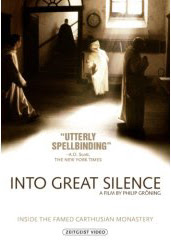
DVD: Die große Stille

available at Amazon
Die grosse Stille (Into Great Silence, 2005), directed by Philip Gröning
(released on October 23, 2007)
When the German film Die große Stille came to Washington for a brief engagement last March, I mentioned it but never got around to writing an actual review. This week, to my great joy, a copy of the DVD release has crossed my desk. Friends near Grenoble took me to visit La Grande Chartreuse, the mother house of the Carthusian order, some years ago, but visitors are normally not allowed to come near the cloister where the monks live. In 1984, director Philip Gröning made an official request to film a documentary about monastic life there. Since the pace of modern life does not mean much within a cloister, the monks considered the request and ultimately gave their approval -- 16 years later. The result is unlike anything one could have imagined.


René-Michel Slodtz, St. Bruno (recoiling from the episcopal miter and crozier), marble, 1744, Basilica di San Pietro, Rome
The founder of La Grande Chartreuse, St. Bruno (1030-1101, feast day on October 6), was one of the more remarkable holy men of the Middle Ages. Born in Cologne to a notable family, he rose to prominence in the church of Reims as a teacher and administrator. His reputation for learning and the eloquence of his oratory brought him prominence throughout Europe, and more than one diocese tried to press him into service as their bishop, positions he always refused. Bruno should have been one of Dante's heros, always championing monastic simplicity over the worldliness of prelates, even leading the people of Reims in a successful campaign to unseat their unpopular bishop. When he arrived with his followers at the site of La Grande Chartreuse, he thought he had found his last dwelling, but his former student Eudes of Châtillon was elected to the papacy as Urban II. Bruno answered the call to Rome to serve as papal counselor and remained in Italy, eventually founding another monastery and becoming one of the patron saints of Calabria.

In imitation of St. Bruno, the Carthusians live a semi-eremetical life, meaning that each choir monk lives in an enclosed and mostly self-sufficient hermitage, lined up in a row like little cottages. He lives in silence and isolation, for the most part celebrating the Divine Office and taking his meals alone in his cell. The community comes together for Mass daily and to sing the office, as well as eating a communal meal on Sundays and feast days. There are also lay brothers, whose daily routine is focused more on labor and who live in community. We see them in the movie, for example, walking down a long corridor and placing food or other necessities into each cell through a little door. An alluring feature of the DVD release is an hour-long excerpt from a Matins service at La Grande Chartreuse, the sound of chanting accompanied by visuals of the Latin texts being sung.

Die große Stille, directed by Philip Groening

"Fenced early in this cloistral round
Of reverie, of shade, of prayer,
How should we grow in other ground?
How can we flower in foreign air?
--Pass, banners, pass, and bugles, cease;
And leave our desert to its peace!"

-- Matthew Arnold, Stanzas from the Grande Chartreuse
In compliance with the demands of the monastic community, Gröning was essentially a one-man film crew while he shot the film over a six-month period. He introduces no artificial light, creating some stunning vistas of both interiors and exteriors, and he respects the rule of silence within the cloister. The monks do not speak directly to the camera, and we hear their voices only at the appointed times for speech -- when the prior is accepting two young men into the novitiate and during the regular walk of the monks outside the monastery. The result is an astounding immersion into the "cloistral round / Of reverie, of shade, of prayer" at La Grande Chartreuse, as Matthew Arnold put it. We see gardens being planted, water being gathered, meals being prepared, dishes being washed, habits being cut and sewn. Periodically, important monastic texts intersect the sequence of scenes.

One of my favorite verses returns several times: "You have seduced me, Lord, and I let myself be seduced." That is how Jeremiah (Chapter 20) describes the beginning of his vocation from God, a deception, a seduction, that leads him to shout prophecies that cause him to be ridiculed. When he tries to fight against the calling and keep silent, however, "there came in my heart as a burning fire shut up in my bones, and I was wearied, not being able to bear it." The only personalization of the monastic narrative, which is by definition anonymous, is that, to a degree, Gröning follows two novices as they are admitted to the community, installed in a cell, and navigate their new life. He also includes several shots of the faces of monks, which show the range of ages from the young and healthy to the emaciated body of an aged and eerily radiant monk. What is striking is the happiness and joy that pervade the community, so contrary to popular misconceptions about monastic life. This is not a place of gloom but of light-filled solitude: when you see it, one understands that these men are planted in the right place, to paraphrase Matthew Arnold.

29.12.07

Feast of St. Thomas Becket

Thomas Becket, stained glass, Canterbury CathedralOn December 29, Thomas Becket (1118-70), Archbishop of Canterbury, was murdered in his cathedral by soldiers, as described by an eyewitness, Edward Grim. He had been appointed to the position by his old friend, King Henry II, whom he had previously served as Lord Chancellor. A worldly clerk, educated at Merton Abbey and in Paris, who had traveled to Rome and many other places, he took his episcopal appointment to heart and gave up his old pleasure-loving life at court. The king, outraged that his archbishop did not simply approve of his plans for the English church, quickly became frustrated with Becket and may have directly or indirectly provoked the soldiers to murder him.

Becket's grave in Canterbury Cathedral quickly became an important pilgrimage site, drawing the 30 pilgrims of Chaucer's Canterbury Tales in the 14th century. Becket even got an entry in the Golden Legend of Jacobus de Voragine, popularity that inevitably led to the destruction of the saint's remains and famous tomb at Canterbury by the Protestants. Becket has fascinated modern minds, too, inspiring plays by Lord Tennyson (Becket, 1884), Jean Anouilh (Becket ou l'honneur de Dieu, 1959), and T. S. Eliot's modern masterpiece Murder in the Cathedral. The latter examines Becket's opposition to authority in the month before he was killed (the Burnt Norton part of Four Quartets was originally written as part of the play). Ildebrando Pizzetti (1880-1968) even wrote an opera based on Eliot's play, Assassinio nella cattedrale (La Scala, 1958).

Image: Detail of stained glass window, St. Thomas Becket, Canterbury Cathedral

22.12.07

Blessed Jacopone da Todi

Jacopone da Todi, fresco by Paolo Uccello, Cathedral of Prato, now in Museo di Pittura MuraleDecember 22 is the feast day of Blessed Jacopone da Todi (d. December 25, 1306), one of the Franciscan spirituals. In a post this summer I mentioned that an article in the Catholic Encyclopedia singled out Jacopone da Todi and Dante as "mouthpieces of an ultra-spiritual and impossible Catholicism." Pope Boniface VIII, Dante's bitter enemy, imprisoned Jacopone for his extreme views calling for the Franciscans to return to the poverty of life embraced by St. Francis. This point of view was supported by Celestine V, the disgraced predecessor of Boniface VIII.

Jacopone was born Jacopo Benedetti, son of a noble family in Todi whose life changed when his pious wife was killed. Like Dante, Jacopone's literary influence was heightened because he wrote in the vernacular, and his popular hymns (laude) helped spread his love of strict penance and absolute poverty. His most famous composition, if it can reliably be attributed to him, is the famous sequence Stabat mater dolorosa (selections below, with my translation).

Image: Jacopone da Todi, fresco by Paolo Uccello, Cathedral of Prato, now in the Museo di Pittura Murale

Stabat Mater dolorosa
iuxta crucem lacrimosa,
dum pendebat Filius.
The suffering mother stood
next to the cross, weeping,
while her son was hanging there.
Cuius animam gementem,
contristatam et dolentem
pertransivit gladius.
The one whose moaning spirit,
saddened and in pain,
was pierced by a sword.
O quam tristis et afflicta
fuit illa benedicta
Mater Unigeniti!
O how sad and afflicted
was that blessed woman,
mother of the only begotten one!
Quis est homo, qui non fleret,
Christi Matrem si videret
in tanto supplicio?
What man would not weep,
if he saw the Mother of Christ
in such agony?
Quis non posset contristari,
piam Matrem contemplari
dolentem cum Filio?
Who would not be saddened
to contemplate the loving mother
suffering with her son?
Sancta Mater, istud agas,
crucifixi fige plagas
cordi meo valide.
Holy Mother, do this thing for me:
imprint the wounds of the crucified one
deeply into my heart.

30.11.07

Feast of St. Andrew

November 30, the feast day of St. Andrew, marks the end of the sanctoral calendar, as it is usually the last major saint's day celebrated before the first Sunday of Advent. The apostle to the East, Andrew's travels according to legend took him to Greece, Romania, Byzantium, Turkey, along the Black Sea, and other locations. His relics have been displaced by historical calamities from Patras, where he was killed, to Constantinople and finally to Amalfi in Italy. His head, once preserved in the Vatican reliquary, was recently returned to Patras. He is the chief patron of Russia and of Scotland, and his symbol, the X-shaped cross on which he died this day during the reign of Nero, can be found on many flags, including the Union Jack. In Poland and other countries in eastern Europe, unmarried girls are often read their future on St. Andrew's Night, and in many locales it is said that an unmarried woman should ask Andrew for help in finding a husband and then sleep naked on the eve of his feast, to receive a vision of her future husband.

Photo image: Jusepe de Ribera (1591-1652), Saint Andrew (17th c.)

22.11.07

Feast of St. Cecilia

The vita of Santa Cecilia is difficult as far as concrete information goes, but her later veneration was widespread and devoted. Her relics are honored at the beautiful Roman church of Santa Cecilia in Trastevere (transferred there from their original location in the Catacomb of Callistus), where Stefano Maderno created a famous sculptural portrait, supposedly based on the position of the saint's body in its tomb when it was opened in the 16th century. The commemoration of her martyrdom, on November 22, is a cause of celebration not only for those named for her but for musicians, who claim Cecilia as their patron. Her connection to musicians is tenuous at best, however, since it comes from a misreading of a line in her vita. As the musicians played at her wedding to Valerianus (who was to become a Christian and live in chastity with his virgin bride), she ignored the worldly music and sang in her heart to the Lord alone (cantantibus organis illa in corde suo soli domino decantabat). She is often shown with musical instruments, especially the organ, as her symbol.

Available at Amazon:
available at Amazon
Henry Purcell, Ode for St. Cecilia's Day, Gabrieli Consort, Paul McCreesh
(2002)
In Raphael's altarpiece for a church in Bologna, instruments are strewn at her feet like a pile of junk, with the organ about to slip from Cecilia's hands, as she raises her ears to the celestial music coming from above. The saints gathered around her are Paul, John the Evangelist, Augustine, and Mary Magdalen: in particular, I love how Paul looks down at the pile of instruments with bemused scorn. On this day of Thanksgiving in the United States, musicians have much to be thankful for: although a day off from work would be a nice thing, most of us will perform in church or elsewhere one way or another today. The holiday season is a musician's bread and butter, after all. As much as we love music and the sounds we make and hear, St. Cecilia, our patron, is reminding us that music is not an end unto itself. The music and the instruments we love will pass away just like everything else. The thought is depressing only if we do not, like her, listen for the concert above.

Photo image: Raphael (Raffaello Sanzio), Altarpiece (Ecstasy of St. Cecilia), made for the Church of San Giovanni in Monte, Bologna, 1514-15 (Pinacoteca Nazionale, Bologna)

UPDATE:
Soho the Dog has an update on the Saint Cecilia trope, both Raphael and Purcell.

17.11.07

Feast of St. Elisabeth of Hungary


Shrine of St. Elisabeth of Hungary, 1235-49, Elisabethkirche, Marburg
November 17 is the commemoration of the death of St. Elisabeth of Hungary, a Hungarian noblewoman who was married at age 14 to the son of the Landgrave of Thuringia. After bearing her husband three children and learning that he had died on crusade with Emperor Frederick II, Elisabeth devoted herself to the teachings of St. Francis of Assisi. She eventually took the habit of a third-order Franciscan (Dante Alighieri was also reportedly a tertiary in the Franciscan order) and led a life of ascetic holiness for the rest of her days, dying at the age of 24. She corresponded with Pope Gregory IX (who would canonize her in 1235, only four years after her death) and took on the severe (some say even perversely sadistic) Master Konrad von Marburg as her spiritual adviser. She built a Franciscan hospital at Marburg and served the needs of the patients there, suffering with the most terrible diseases. Miracles were almost immediately reported at Elisabeth's grave in the Marburg hospital, and her body was soon transferred to a Gothic church built in her name.
Available at Amazon:
available at Amazon
Two Offices of St. Elisabeth of Hungary, Schola Hungarica
The Elisabethkirche (and its golden reliquary containing the saint's body) became one of the most visited pilgrimage sites in the German-speaking lands, until her body was disturbed by the Protestants in the 16th century. Her relics are now found in locations far away from Marburg.

On this day, the perfect soundtrack is this recording of the two sets of office chants composed for St. Elisabeth of Hungary in the Middle Ages (Gaudeat Hungaria and Letare Germania), one from central Europe and the other created in the Cathedral of Cambrai. The performers are the incomparable Schola Hungarica, a choir of adults and children directed by musicologists Janka Szendrei and László Dobszay in Budapest. This beautiful disc, made in the Franciscan Church at Esztergom in 1995, is a fine example of Schola Hungarica's rhythmically vivid performance style.

11.11.07

Feast of St. Martin of Tours


St. Martin Is Knighted, fresco by Simone Martini, 1312-17, Cappella di San Martino, Basilica di San Francesco (Lower Church), Assisi
Now famous principally because the Armistice was signed on this day, putting an end to World War I, November 11 is more importantly the feast day of St. Martin of Tours. He was born in a province of what is now Hungary, grew up in Italy, served as a soldier of the Roman empire, and then became a disciple of Hilary of Poitiers. Martin founded a monastery in the place where he lived as a hermit, later a Benedictine abbey called Ligugé. (That legendary abbey fell into disuse, until it was rebuilt as a Benedictine house in the 19th century by monks from Solesmes led by Dom Prosper Guéranger.) St. Martin was later ordained bishop of the city of Tours, where he died. The abbey named for St. Martin in Tours, destroyed in the French Revolution, was one of the most powerful monastic houses in the Middle Ages. Alcuin was appointed abbot there by Charlemagne, during which time the Carolingian minuscule was developed in his Carolingian scriptorium.

There are images of St. Martin all around Europe, including this recent one by a graffiti artist. The most beautiful artwork depicting the Life of St. Martin is the fresco cycle by Simone Martini, 1312-17, decorating the walls of the Cappella di San Martino in the lower church of the Basilica of San Francesco in Assisi (Scenes 1-5 and Scenes 6-10).