CD Reviews | CTD (Briefly Noted) | JFL (Dip Your Ears) | DVD Reviews
Showing posts with label Ralph Vaughan Williams. Show all posts

13.9.20

Briefly Noted: Christmas in the Pandemic Summer

available at Amazon
Christmas Carols, SWR Vokalensemble, M. Creed

(released on August 10, 2020)
SWR Classic SWR19094CD | 59'10"
How keenly music's absence is felt during the pandemic struck me recently listening to this little disc. It is nothing spectacular in terms of programming: an hour's worth of English Christmas carols. The singing is excellent, done in beautiful sound by the SWR Vokalensemble, about thirty voices in size, under the direction of Marcus Creed.

A German choir stealing the lunch of their British colleagues is fair payback for the perennial "Christmas Around the World" programs heard every year, and the English pronunciation here is impeccable. A tribute, this, to the teaching of their English-born director, an alumnus of both King's College, Cambridge, and Christ Church, Oxford, whose tenure with this distinguished radio choir ended this summer.

The group's women sound better on their own (in Emily Elizabeth Poston's rich Jesus Christ the Apple Tree, for example) than the men, who are featured less. The same applies in solo voices heard, although on this account the more demanding writing, as in The Fayrfax Carol of Thomas Adès, taxes both equally. The echo quartet in Britten's gorgeous A Hymn to the Virgin, happily, is top-notch. The effect of this simple but effective carol service is a sweet reminiscence of the days before coronavirus (the recording was captured in the fall of 2018). Sadly, it is also a bitter reminder that we may spend a bleak Christmas without "the playing of the merry organ" or "sweet singing in the choir," in the nostalgic words of the The Holly and the Ivy.
18.5.19

Briefly Noted: Coronation Music (CD of the Month)

available at Amazon
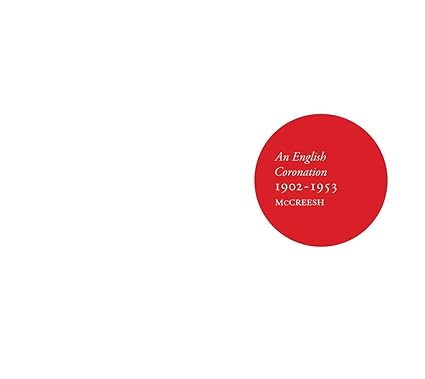
An English Coronation, 1902-1953, Gabrieli Consort, Roar, and Players, Chetham's Symphonic Brass Ensemble, S. R. Beale, R. Pierce, M. Martin, E. Slorach, P. McCreesh

(released on May 3, 2019)
Signum Classics SIGCD569 | 159'21"
From this American's perspective, the only thing to be regretted about the final demise of monarchy would be the ceremonial and music associated with it. Paul McCreesh has put together this 2-CD collection of the best music composed for the coronation of English rulers, following up on a similar compilation of music for the coronation of the Doge in Venice, recorded in two slightly different versions. With forces ranging from intimate to vast, he has recorded music from Gregorian chant to Tallis and Byrd to William Walton and David Matthews in the resonant acoustic of Ely Cathedral and two smaller churches. All of the music is drawn from the coronations of Edward VII (1902), George V (1911), George VI (1937), and Elizabeth II (1953).

The pieces range from expected favorites like Parry's I Was Glad, Handel's explosive Zadok the Priest, and Walton's Coronation Te Deum to less expected discoveries. McCreesh expands his main ensemble with the Gabrieli Roar, a partnership with a number of youth choirs, which adds voice to his projects and gives young singers training. The pieces with mass numbers of singers gain in vigor and excitement what they lose just slightly in refinement. The instrumental works include regal marches and heraldic brass fanfares. Much here to make Anglophiles and royal nostalgists rejoice.

13.5.16

James MacMillan Leads the NSO

available at Amazon
J. MacMillan, The Sacrifice, C. Purves, L. Milne, Welsh National Opera, A. Negus
(Chandos, 2010)

available at Amazon
Vaughan Williams, Complete Symphonies, London Philharmonic, New Philharmonia, A. Boult
(Warner, 2012)
This month is all about the Wagner in Washington, but the area's two top orchestras are both offering excellent programs, too. Last night Scottish composer James MacMillan made his debut at the helm of the National Symphony Orchestra. As he did when he conducted the Baltimore Symphony Orchestra in 2008, MacMillan brought some of his own music, which the NSO last played in 2013, when they presented the local premiere of his third piano concerto.

Welsh National Opera gave the 2007 world premiere of MacMillan's second opera, The Sacrifice. The libretto by Michael Symmons Roberts, derived from the Mabinogion, the Welsh national folk epic, tells the story of a woman torn away from her love to be given in a politically advantageous marriage. MacMillan extracted Three Interludes from the opera to make a rather pleasing symphonic work, played here for the first time by the NSO. The large orchestration creates the impression of a tribal world, with violent twists provided by blaring low brass and plenty of percussion. The first movement ("The Parting") opens with a wild clamor of sound, after which a menacing melody rises through the orchestra. The second movement ("Passacaglia") presents the eponymous bass pattern in the pizzicato double basses, where it stays, eventually doubled by low brass. Heavy use of high woodwinds often gives a screeching effect, perhaps to evoke fifes or other folk instruments. The third movement is faster and martial, the low brass and reeds thumping away on a march pattern, ending in a Shostakovich-like finale accompanying the murder of the couple's young son.

Along with Scotland and Wales, the British program included pieces by two English composers, beginning with Elgar's poignant cello concerto. Alisa Weilerstein has played this concerto, so associated with Jacqueline du Pré, in recent years with the Baltimore Symphony Orchestra and also the NSO, in 2013. Cellist Alban Gerhardt brought an intense, moody approach to the solo part, rising up forcefully on the A string to bring in the full orchestra in the first movement, and with a big pizzicato sound in the transition to the faster section. He played fast and furious in the Allegro molto conclusion to the second movement, with MacMillan carving out enough sonic space and subtlety of color for his soloist's sometimes small sound. Gerhardt's strengths lay in a tender and introspective interpretation, rather than broad strokes, to which this concerto is nicely suited, making the third movement's delicate softness the high point rather than the heady sweep of the finale.


Other Reviews:

Anne Midgette, The NSO goes to Britain (Washington Post, May 13)
More performances of the Vaughan Williams symphonies are generally welcome, and MacMillan led the NSO's first performance of the composer's fourth symphony since Leonard Slatkin conducted it in 1999. (The last Vaughan Williams symphony played by the NSO was the 'London' Symphony in 2013.) The fourth is founded on a dissonance, a minor 2nd that opens the first movement with a bracing clash, part of a chromatic motif (F, E, G-flat, F) reportedly drawn from Beethoven's ninth symphony and disturbingly similar to the BACH name motif. MacMillan relished the general loudness of the piece, allowing the gnarled mass of lines to clot upon itself in the first movement, but also coaxed lush string playing and cooing brass accompaniment in the second theme.

The harmonic palette of the second movement sounded not unlike that used by MacMillan in his interludes from The Sacrifice, with a beautiful concluding flute solo over the movement's dying embers. The chromatic theme (and a second quartal theme) runs throughout all four movements, showing the influence of Beethoven as Vaughan Williams transformed it into a dancing scherzo theme in the third movement and a triumphant call in the fugato finale. MacMillan again marshaled the NSO forces impressively in the slightly maniacal fourth movement, with a hint of Shostakovich-style banality, as the chromatic theme was obsessively repeated and altered through many diminutions and augmentations, seething with tension.

This concert repeats tonight and tomorrow, in the Kennedy Center Concert Hall.