CD Reviews | CTD (Briefly Noted) | JFL (Dip Your Ears) | DVD Reviews

7.2.14

Why Steven Isserlis Waggled His Wig

With your ailing moderator having taken to bed last night, we thank Friend of Ionarts Robert 'Mecki' Pohl for the following thoughts on the Thursday evening concert by the National Symphony Orchestra.

available at Amazon
S. Isserlis, Why Handel Waggled His Wig
(Faber, 2006)
With Mr. Ionarts himself under the weather and out of the picture, it falls to me to write about the latest National Symphony Orchestra concert. The first piece on the program, Haydn's Symphony No. 72 was entirely new to me. It was also new to the NSO, having never been played before in any of their previous 12,121 concerts. Which is a pity, as it is, as so much of Haydn, full of surprises. One reason why it is so rarely played is that the horn parts are (according to conductor Christoph Eschenbach) “tremendously difficult” - and there are four of them, to boot. The second movement featured a lovely duet between the first violin and the flute, and just to show that this was not some kind of fluke, the final movement, a theme and variations, had each variation played by a different instrument: first the flute, then cello, violin, and finally, and most impressively, bass. After another variation that featured, once again, the horns, the theme reappeared, and the piece was over.

The second piece, in contrast, featured old friends. Both Steven Isserlis, whom I have heard many times over the last fifteen years, and the Schumann cello concerto, which I have listened to countless times. Once again, both came through. Isserlis, who writes that Schumann invites you into his inner life as no other composer does, invited us to join him, with great sweeping gestures of his arms as he finished another of the phrases. Isserlis is also one of the all-time great musical salesmen: he could sell Khachaturian to the Azeris. And there was no doubt that the audience was buying. The NSO, for its part, ably supported the cellist. (I believe that's the term; frankly, I barely noticed them, as my attention went entirely to the cellist. It is thus that the amateur is differentiated from the professional.)


Other Articles:

Anne Midgette, NSO offers unusual Haydn and Brahms, plus cellist Steven Isserlis in Schumann concerto (Washington Post, February 7)

Steven Isserlis, What is it like to come from an intensely musical family? (New Statesman, February 6)

Peter Aspden, Cellist Steven Isserlis on his pianist grandfather and his compositions (Financial Times, January 10)
The final piece, Brahms's first Piano Quartet (op. 25) is one of my favorites. As orchestrated by Arnold Schoenberg, it was new to me. The first movement was pretty much as expected: Though interesting to hear the familiar notes played by unfamiliar instruments, it did not go much beyond that either. I also would have liked to hear more urgency in the first tutti statement of the theme, though Eschenbach brought out the languid and musical side of the movement quite beautifully.

In the second movement, the trumpets came in with the theme, and it was a revelation, as if this was what Brahms was really after. From there, the piece grew in leaps and bounds, and soon it was as if one was listening to a long-lost Brahms symphony.
It was the final Rondo all Zingarese where Schoenberg really went to town. The orchestra -- which had grown over the last two pieces -- now filled the whole stage, and the music became all-enveloping. Xylophones, glockenspiels, snare drums, and cymbals added textures and colors that Brahms wouldn't have dreamed of. One expected the Kennedy Center organ to burst in at any moment. Thus did Schoenberg drag Brahms out of the nineteenth century fully into the twentieth century.

This concert repeats tonight and Saturday evening (February 7 and 8, 8 pm), in the Kennedy Center Concert Hall.

Paul Jacobs @ Kennedy Center


Charles T. Downey, Organist Paul Jacobs offers refined performance at Kennedy Center (Washington Post, February 7, 2014)

available at Amazon
Messiaen, Le Livre du Saint-Sacrement, P. Jacobs
(Naxos, 2010)
Whatever happened to those good, old head-to-head competitions between composers or performers? Scarlatti once competed against Handel in Rome, ending in a draw on the harpsichord but Handel having the upper hand on the organ. Bach was scheduled to do musical battle with Louis Marchand, but the French organist fled before the meeting could take place. Mozart vied with Muzio Clementi before the emperor of Austria, who declared the match a tie.

A virtuoso contest of this sort would have been a great way to celebrate the installation of the new Rubenstein Family Organ in the Kennedy Center Concert Hall. In our less competitive age, a recital series will have to do, and the inaugural version continued on Wednesday night with a concert by American organist Paul Jacobs. If the first concert in the series, back in October and featuring Cameron Carpenter, was about flamboyance, Jacobs offered a program, on the theme of “Music in Paris,” that was about refinement. Seeing these two artists, who represent opposite temperaments in many ways, compete with one another, rather than in series, would be interesting to say the least. [Continue reading]
Paul Jacobs, organ
Kennedy Center Concert Hall

PREVIOUSLY:
Charles T. Downey, Cameron Carpenter (October 18, 2013)

6.2.14

Freiburger Brandenburgs


available at Amazon
Freiburger Barockorchester
(Harmonia Mundi, 2014)

available at Amazon
Bach, Brandenburg Concertos, Freiburger Barockorchester
(DVD, 2000)
Charles T. Downey, Freiburg Baroque Orchestra at the Library of Congress (Washington Post, February 6, 2014)
The Freiburg Baroque Orchestra is on a Bach World Tour, and the first stop in the United States was at the Library of Congress on Tuesday. The tour is promoting the group’s new recording of the Brandenburg Concertos, coming out next month. One might think that the last thing the world needs is another recording of these Bach masterworks, but the crowd packed into Coolidge Auditorium knew better, happy to hear a performance of all six of these delightful concertos.

This German ensemble’s first recording of the Brandenburgs was a DVD made in the room for which Bach possibly intended them, the recently restored Spiegelsaal (Hall of Mirrors) in the palace of Bach’s employer in Köthen, and one continues to hear an intimate knowledge of these scores in the playing of all the Freiburg musicians. The visual joy of watching these performances live was considerable, too, especially in the third concerto, a sort of wreath of triple strands, where one can watch motifs as they cross the three intertwined string sections, or move from one violinist or violist to the next and on down the line. [Continue reading]
Freiburger Barockorchester
Bach, Brandenburg Concertos
Library of Congress

PREVIOUSLY:
Richard Egarr's Brandenburg Concertos
Il Giardino Armonico / Academy of Ancient Music (I)
Complete performance, Academy of Ancient Music (II)

5.2.14

Ionarts-at-Large: A Special Place in Hell (Orfeo with Minkowski)

Picture (detail) courtesy Salzburg Mozart Woche, © Matthias Baus


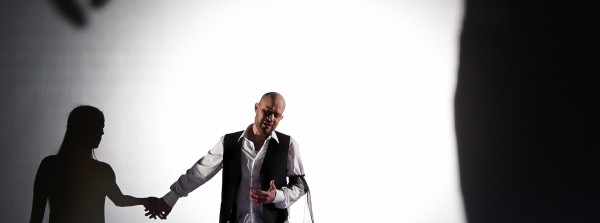
Bejun Mehta will never be my favorite countertenor, but singing Orfeo as he does here in Salzburg, in Ivan Alexandre’s lame demi-production of Orfeo ed Euridice, he makes it impossible not to admire him. Relaxed and more naturally confident than his supercilious stage demeanour usually suggests, he is in splendid, show-stealing form throughout the evening. He is partnered with Camilla Tilling’s Euridice, who has a voice so very plain, so clean, so secure, with such lack of sensuality, that I feel guilty...

4.2.14

For Your Consideration: 'Her'


available at Amazon
Her, directed by Spike Jonze
The Academy Award nomination for Best Picture that went to Her, written and directed by Spike Jonze (Adaptation, Being John Malkovich, and -- yes -- writing credits for various absurdities in the Jackass franchise, the approximate modern equivalent of the lazzi of commedia dell'arte, for which I have a weakness), came as a shock. Sure, the concept is timely, involving an asocial man (Joaquin Phoenix, an example of both typecasting and how mustaches can be fatally cheesy) who falls in love with an artificial intelligence, in this case a fancy new operating system (given voice by Scarlett Johansson). Yes, the movie has an intriguing look, a sort of alternate-universe Los Angeles (probably not enough to steal the Production Design award from Gravity), where our hero floats along between his job, writing copy for personalized, handwritten notes made to order, and his equally disconnected home life (video games, Internet sex -- online voices snuck in by SNL stars Bill Hader and the insane Kristen Wiig). After only a few minutes just watching him live it, one can easily see how he could be seduced by nothing more than a voice in his ear bud that sounds interested in him.

The story has a good hook and the screenplay says a lot in relatively few words, so although it would be an unusual choice to win Best Original Screenplay, for which Jonze is nominated, it does not seem impossible. There was talk of a Best Actress nomination for Johansson, something that thankfully was ruled out on the technicality that one could not be nominated in that category for a voice-over. Her voice, seductive as it is, was not part of the film until late in the game, because the character was first portrayed by Samantha Morton, whom you may recall as the "precog" kidnapped by Tom Cruise in Minority Report. The operating system's name, Samantha, remains as a sort of relic of her presence, but it is an apt symbol of the disconnection of Phoenix's character, Theodore Twombly, that he is actually reacting to a voice that is even less "real" -- because it was replaced in post-production -- than the voice of the operating system we hear. The last real person connected to Theodore, other than an equally lost friend (Amy Adams), is his ex-girlfriend, played by Rooney Mara (Girl with the Dragon Tattoo, The Social Network), and she has the right idea.


Other Reviews:

New York Times | Washington Post | The New Yorker | The Atlantic | L.A. Times
Wall Street Journal | David Edelstein | Christian Science Monitor | TIME

The overall theme of Her, if I may distill it down to one theme, is the dystopian future that may not really feel like a dystopia at all, at least on the surface. As many people feel today, the people of this unspecified future are more "connected" than ever and yet are completely disengaged from one another. They yearn for authentic human contact, but they have no way of distinguishing the authentic from the imitation -- like someone receiving one of Theodore's handwritten notes, ingeniously conceived and executed to appear real; or like Theodore himself, falling in love with that thing installing itself on his computer. In the same way, the original music, by William Butler and Owen Pallett (two members of the Canadian indie rock band Arcade Fire), is meant to feel authentic but, in the end because the operating system demonstrates how easily it can synthesize music, it too feels suspiciously fabricated by machine. The Academy Award for Best Original Score, for which Butler and Pallett were nominated, is not out of the question. Even more likely, the award for Best Original Song may go to The Moon Song, which the man and his operating system create together (the actual song is by Karen O, vocalist of the band Yeah Yeah Yeahs, and Spike Jonze). It is one of the film's more memorable sequences (embedded below) -- hey, even Rocky had a montage.

3.2.14

Audra McDonald @ LoC

This review is an Ionarts exclusive.

available at Amazon
Go Back Home, A. McDonald, A. Einhorn
(Nonesuch, 2013)
Broadway star Audra McDonald was scheduled to appear at the Library of Congress on October 10, when a government shutdown made that impossible. It took a while, but on Saturday night McDonald finally came to Washington to sing a score of her favorite songs, including some from her new album. Her appearance was originally intended to help launch the Library's new digital resource, Songs of America. As Susan Vita, the Chief of the Music Division, explained, one can use the Web site to browse and research digital versions of over 84,000 American songs, including sheet music, recordings, photos, videos, and performances.

I begin at the end of this concert, because it was there and only there that McDonald set aside the microphone she had used all evening, for her two encores -- Summertime from Gershwin's Porgy and Bess and Harold Arlen's Somewhere over the Rainbow. Both are American classics, both are probably too familiar from too many performances, and yet she sang both beautifully and with touches that were entirely hers. The Coolidge Auditorium, where this concert took place, is one of the most flattering acoustics in the city, and it always feels somewhat like sacrilege to use amplification in that space, but such are the conventions of McDonald's chosen genre.


Other Reviews:

Jason Victor Serinus, Audra McDonald Conquers Again (San Francisco Classical Voice, January 18)
Over the course of two hours, with no intermission, McDonald charmed, smiled, and coquetted her way through Broadway songs both familiar and not. Often her introductions and ad libs overshadowed the songs she sang, but any composer whose work she champions -- Jason Robert Brown, Adam Guettel, Zina Goldrich and Marcy Heisler, Adam Gwon, Gabriel Kahane, Steve Marzullo on this evening -- should thank his or her lucky stars. Likewise, the classics to which she turned her attention -- Irving Berlin, Walter Donaldson, Jerry Bock, Stephen Sondheim, Frederick Loewe, Richard Rodgers, John Kander -- shone just as brightly. Going without her usual backup orchestra, McDonald had an easy rapport with her pianist, Brian Hertz, who showed facility in any number of popular keyboard styles, even supporting McDonald with some not too shabby vocals. In a remarkable gesture Hertz gave up his bench for one number, during which McDonald accompanied herself at the piano, as a tribute to her late father.

Luca Pisaroni @ Vocal Arts


Charles T. Downey, Luca Pisaroni highlights an evening of dramatic songs
Washington Post, February 3, 2014

The narrators of songs can be such complainers. Luca Pisaroni’s recital Friday night, presented by Vocal Arts D.C. at the Kennedy Center Terrace Theater, brought together a program of songs, half in Italian and half in German and all dramatic. The nature of the music can make the words seem more or less sincere, but the emotional impact is always heightened.

Pisaroni, an Italian bass-baritone, has an easy onstage charm, which has served him well in operatic roles, recently at the Santa Fe and the Metropolitan operas, especially comic ones and snarling villains. His voice, which makes a fluid, uniform sound across a broad range, was not in optimal shape this evening, some coughing and nose-blowing offering an explanation for the occasional raspiness, especially at the bottom and top of the voice. [Continue reading]
Luca Pisaroni (bass-baritone) and Wolfram Rieger (piano)
Vocal Arts D.C.
Kennedy Center Terrace Theater

2.2.14

In Brief: Red Wings Edition

Here is your regular Sunday selection of links to online audio, online video, and other good things in Blogville and Beyond. (After clicking to an audio or video stream, press the "Play" button to start the broadcast.) Some of these streams become unavailable after a few days.


  • Watch a concert recorded last Wednesday at the Salle Pleyel, with Paavo Järvi leading the Orchestre de Paris in a Haydn symphony (no. 82, "The Bear"), two Sibelius symphonies (nos. 6 and 7), and a Mozart piano concerto (K. 488) with Menahem Pressler, celebrating his 90th birthday. [Cité de la Musique Live]

  • From the Opéra Bastille in Paris, Philippe Jordan leads a performance of Mahler's second symphony with the Orchestre National de France, the Choeur de l'Opéra de Paris, soprano Julia Kleiter and la mezzo-soprano Michaela Schuster. [France Musique]

  • Listen to Jiri Belohlavek conduct Dvorak's Rusalka, starring Michael Schade and Krassimira Stoyanova, from the Wiener Staatsoper. [ORF]

  • Ulf Schirmer leads a performance of Wagner's Feuersnot with the Munich Radio Orchestra. [BR-Klassik]

  • Watch the new production of Janáček's Jenůfa, directed by Alvis Hermanis at the Théâtre de La Monnaie in Brussels, with Ludovic Morlot and a cast starring Sally Matthews (Jenůfa), Charles Workman (Laca), Nicky Spence (Števa), and Jeanne-Michèle Charbonnet (Kostelnička). [Medici.tv]

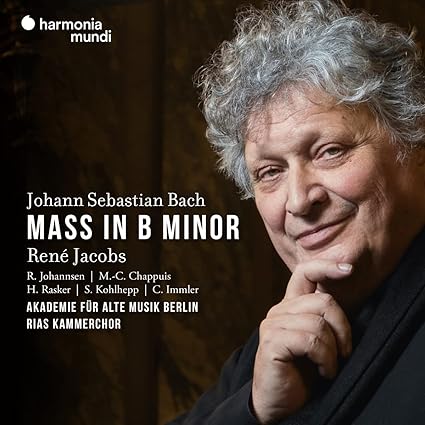
  • René Jacobs conducts the Freiburger Barockorchester and RIAS Kammerchor Berlin in C. P. E. Bach's Die Auferstehung und Himmelfahrt Jesu at the Mozartwoche Salzburg. [ORF]

  • Francesco Cera conducts the Ensemble Arte Musica in Gesualdo's fifth book of madrigals, recorded at the Wiener Konzerthaus last month. [ORF]

  • Donizetti's Maria di Rohan, with Mark Elder and the Orchestra of the Age of Enlightenment, starring José Bros (Riccardo di Chalais), Christopher Purves (Enrico di Chevreuse), Krassimira Stoyanova (Maria di Rohan), recorded in 2009 in London. [ORF]