CD Reviews | CTD (Briefly Noted) | JFL (Dip Your Ears) | DVD Reviews

22.10.07

András Schiff's Beethoven Cycle, Part 1

available at Amazon
Sonatas 1-4 (opp. 2 and 7)


available at Amazon
Sonatas 5-8 (opp. 10 and 13)
Since 2005, András Schiff has been recording a complete cycle of the Beethoven piano sonatas, on the ECM New Series label. It is meant to be truly complete, with repeats of the exposition as well as of the development and recapitulation in the sonata-allegro forms. The catch that makes this recording stand out is that all of the recordings have been made live, in the Zurich Tonhalle, each release in the course of a single one-evening concert. This gives anyone who buys the CDs the chance to experience what they may never have had the chance to hear, a live rendition of all 32 sonatas. As is always the case in live recordings, there are a few warts that cannot be re-engineered, but the achievement is staggering nonetheless. Schiff reportedly postponed this project until he had turned 50, and the sound represents a mature and fully conceived intellect and technique.
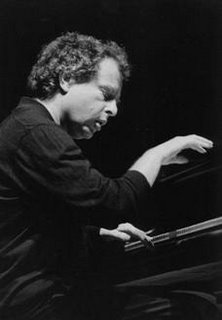
András SchiffJens has written a thorough review of the first CD, to which the following comments may be appended. No. 1 feels a little disjointed in the first movement, until Schiff hits upon an ingenious way to handle the sforzandi section in the development (at around 2:18), where the accented notes pop out of the texture all akimbo and make a delightful rhythmic chain. For many pianists, myself included, this is the first real Beethoven sonata to fall under the fingers. Through it I remember "getting" Beethoven's stormy style when I was about 17.

Schiff takes the dedication of No. 2 (indeed, all three pieces in op. 2) to Haydn into his playful rendition of the sonata's first movement. It whirls and twitters, but some of the choices seem odd: as Beethoven takes the A theme through a tour of harmonic areas in the development, why is the descending triadic motif not articulated staccato as in the exposition? Because the accompanying figure comes from the legato B theme? The sonata has a rather uninteresting slow movement and a throw-away mini-scherzo, but the rondo returns to the character of Haydn, with its graceful arpeggiated flourishes and absurdly large leaps that are the signature of the main theme.

András Schiff's Lectures on the Beethoven Sonatas:
Sonatas 1-4

Sonatas 5-8

These recordings made in London's Wigmore Hall are all, smartly, in MP3 format, ready to go on your MP3 player.

Other Articles:

Benjamin Ivry, The Candid Chameleon (New York Sun, October 22)

James R. Oestreich, Grown Up Enough for Beethoven (New York Times, October 21)

Garaud MacTaggart, Pianist Schiff takes his cue from the music (Buffalo News, October 21)

Mark Swed, When Schiff is playing, do not disturb (Los Angeles Times, October 19)

Joshua Kosman, Schiff starts his march through Beethoven piano sonatas (San Francisco Chronicle, October 9)

Mark Stryker, Schiff continues journey through Beethoven sonatas (Detroit Free Press, September 30)
No. 3 is a much more rewarding sonata, especially its first movement, which Schiff performs with the right amount of brio. It has the best of Beethoven's early rondos as its fourth movement, but Schiff's reading is a little unsettled and his lengthened treatment of the final staccato note of the main theme's conclusion is not my taste. No. 4 seems like the result of a compositional leap forward from the op. 2 set to op. 7. The tempo of the first movement is all over the place. It seems like Beethoven has arranged things exactly as he wanted when he switches from the eighth-note motif to dotted quarters at measure 58. Schiff exaggerates the difference by slowing the tempo down at that point, which perhaps sets up the easier pace for the difficult arpeggiation of the closing theme at measure 100. That being said, Schiff handles the scherzo very nicely, indeed, with the Minore trio a crazy swirl of notes and forte-pianos.

With the three sonatas of op. 10, Beethoven seems to have found his mature voice. Schiff makes the most he can of the contrasts on no. 5 (op. 10/1), like the ff to p gestures, the rinf. and sfz markings, and an extremely fast, choppy (not necessarily rhythmically unified) finale after a placid, legato second movement. He has a way he plays full but staccato chords, all attack and almost no pitch (all consonant and no vowel, one might say if the sound were produced by a singer), that is very effective in many of the sonatas. While there are suave sounds a-plenty, it is the driven, forceful movements he seems to be most attracted to, and the approach is at its best in the Prestissimo last movement of no. 5.

Sometimes, the regular pulse is manipulated to the point of distortion, much faster here and much slower there. This works in many cases -- indeed it can be a laudable way to play Beethoven -- but in others, like the opening movement of no. 6, it made me a little seasick. At the same time, the final movement of that sonata is an absolutely crisp fugal romp. Some of the more impressive virtuosity in the cycle so far comes in the first movement of no. 7, where Schiff mostly just lets the score ride itself out, with that Schiffian hard-edged tone, punching the punctuation indicated by Beethoven. When Schiff spoke to Jessica Duchen for a preview of his Beethoven cycle at Carnegie Hall in Playbill Arts, he singled out no. 8 as a particular favorite, describing it as "an absolute masterpiece, and very mysterious," as well as "totally elusive." It is a fun sonata to play, and Schiff clearly relishes every minute.

We will add reviews of the Ann Arbor, San Francisco, Buffalo, and Carnegie Hall cycle performances as we read them.

ECM New Series 1940-1942

Attention, Subscribers

Over the past year or so, several readers have suggested that Ionarts send out a weekly e-mail newsletter with a summary of each week's posts and corresponding links. Some of you check the site here and there and miss a few posts, and others of you rarely click through or let the posts pile up in your RSS reader. If you received an e-mail regularly, you could at least see what we were writing about and read the full posts that interested you when you had time.

Well, we aim to please. If you would like to receive the new Ionarts e-mail circular, subscribe by sending me an e-mail -- put the words "Ionarts Newsletter" in the subject field -- with your name and e-mail address. I won't answer any of those e-mails individually, but I will put your name on the distribution list for the regular digest, hopefully to be sent on Mondays. You may ask to have yourself removed at any time, of course.

While we are on the subject of clicking, some readers may not realize why we link to the Amazon page for a recording, DVD, or book under review or discussion, usually with an image of it. If a reader clicks through that link and buys the item, Ionarts gets a modest cut of the profits, at no extra cost to you. So if you would like to buy something we have reviewed, even if you decide to do so long after reading our review, come back to Ionarts and click through our link to buy it.

Many thanks for reading!

21.10.07

François Loup's Winterreise


Caspar David Friedrich, Winter Landscape (1811), Staatliches Museum, Schwerin (with thanks to Web Gallery of Art)
Franz Schubert's grim song cycle Winterreise, setting twenty-four poems by Wilhelm Müller, is a perpetual favorite here at Ionarts. So we leapt at the chance to hear a favorite singer in the region, bass-baritone François Loup, sing the cycle on Friday night at the Clarice Smith Center. Adding interest was the pairing of each song with a projected image drawn from the work of German Romantic painter Caspar David Friedrich. From a meteorological point of view, the St. Luke's summer -- the warming spell often observed around the feast day of St. Luke -- was not the ideal setting (although the drenching rain timed for the end of the concert was). Loup entered the sold-out Gildenhorn Recital Hall wearing a dark overcoat and scarf, ready for the snowy trip, in the darkness setting a dramatic tone. Fortunately, being bound to his score on a music stand kept him from trying to act too much, allowing our visual imagination to rest on the Friedrich images.

Loup's high notes sounded slightly strained and thin at rare moments, but his round, resonant lower range added an admirable solidity to this performance, as in the excited exclamations ("Mein Herz!") in Die Post (after which Loup chose to break for intermission). That large sound was mostly able to bear the full-throated piano, played by Santiago Rodriguez (like Loup, on the University of Maryland music faculty), not without technical chinks but for the most part pleasingly sensitive. Loup's German was not without a few idiosyncratic vowels, but this was by and large an expansive, clear-toned, thoughtful Winterreise. At only one point, in the eighth song ("Rückblick"), did Loup and the pianist get off by a beat from one another, a rare confusion that was not immediately corrected.

Other Reviews:

Tim Page, Francois Loup's 'Winterreise,' Exquisitely Chilled (Washington Post, October 23)
The second half began with Der greise Kopf, which was a humorous moment for the white-haired Loup. When we came to the grim Das Wirtshaus, Friedrich's Coffin on a Grave (1836) brought home the theme of the journey toward death. Not all of the paintings selected were as literal in how they matched the poems, which was the right choice, and the image changed only between songs, which minimized the possible distraction. Toward the end of the final song, Loup walked slowly to the far side of the projection screen, to the accompaniment of the Leiermann's hurdy-gurdy in the piano. When he turned back, an image of the young Schubert appeared. Fade to black.

This concert repeats today, at 3 pm, in the Clarice Smith Center. Ionarts will be back in College Park this Friday, for a concert by the University of Maryland Symphony Orchestra. Besides the Sibelius 7th symphony, the program features Yevgeny Yevtushenko reading his poetry, introducing Shostakovich's 13th symphony.

In Brief: St. Luke's Summer

LinksHere is your regular Sunday selection of links to good things in Blogville and Beyond.

  • Steve Smith has a fascinating commentary and photo journal of his trip to Vietnam. Wow. "Vietnam's legendary snake wine: bottles filled with a reportedly vile 100 proof concoction of alcohol, in which was suspended the intact carcasses of serpents, scorpions, birds and what not in positions of martial conflict." You must see the picture to believe it. [Night after Night]

  • I am spending a lot of time listening to András Schiff's live Beethoven sonata cycle on disc (review forthcoming). Marc Geelhoed interviewed Paul Lewis, who is also making a complete recording at the moment. I need to get my hands on those discs. [Time Out Chicago]

  • Just what the hell is going on at the Corcoran, anyway? I mean besides the excellent concert series. Kriston Capps looks into the current state of the museum's leadership. [Washington City Paper]

  • A college student calling himself Feldmahler had put together a remarkable and vastly useful Web site called the International Music Score Library Project (IMSLP). The idea, a brilliant and long overdue one, was to host scanned copies of music in older editions now in the public domain. You may have noticed that lately I had been including links to scores in that database in my reviews, for reader perusal. This week, when I went to the site, there was a message relating the sad news that the editor had received two Cease and Desist Letters from Universal Edition, demanding that some of the scanned scores be removed. As it stands right now, the editor has had to shut down the entire site. Please write Feldmahler (imslp@imslp.org) a note of support if you want the site to continue in another guise. [IMSLP and Boing Boing]

  • The man who critiqued bloggers for sloppy journalistic practices, Stormin' Norman Lebrecht, has had Penguin Books, the publisher of his latest book, agree in a legal settlement to "recall his latest book, destroy it, say 'Sorry' and promise not to do it again — all over a few pages discussing Naxos Records and its founder, Klaus Heymann." Ahem — perhaps Lebrecht should have checked his facts. [New York Times]

20.10.07

NSO Plays Vaughan Williams

The National Symphony Orchestra offered a persuasive concert, heard on Friday night, featuring two works written during World War II: William Schuman’s Prayer in Time of War (1942) and the Symphony No. 6 in E Minor (1944-47) by Ralph Vaughan Williams (shown at left, with his cat, in the 1940s). These pieces are grounded in an insecure realism as opposed to predictable patriotic froth. Both contain murky, persistent pulsations that instill a sensation of impatient waiting. A much more elaborate work, RVW’s sixth symphony also presents a stormy, three-note rising motif contrasted to a jolly second theme, charming pastoral-like strings, and a wandering, very soft fugal Epilogue (the final movement) that seemingly contains no intervals greater than a third. All four movements are cleverly linked by a single held note. The first half of the program offered the audience a chance to apply their own programmatic interpretations to what was skillfully played by the NSO. For example, did certain sonic constructions convey a battle, destruction, victory, death, or memories of simpler days? The vast amount of musical material conveyed by the NSO in these two works was remarkably impressive.

Other Reviews:

Tim Page, Slatkin and the NSO, Putting It All Together (Washington Post, October 19)
Emanuel Ax joined the orchestra for a reading of Brahms’s Piano Concerto No. 2 in B-flat. Lacking the superior instrument, stability of tempi, and control (read: Ax had many split chords) of Yefim Bronfman’s performance of Brahms’s first concerto the evening before, with the Orpheus Chamber Orchestra, this performance was disappointing. Ax played with abandon, though this approach was often on the verge of reckless and lacked beauty. The final Allegretto grazioso movement began with heaps of charm but did not continue to be grazioso nearer the end. The cello solos of David Hardy in the third movement were very lyrical.

This concert repeats tonight (October 20, 8 pm), in the Kennedy Center Concert Hall. After a week featuring NSO Pops concerts, Principal Guest Conductor Iván Fischer has a two-week stint on the podium, first with violinist Nikolaj Znaider (November 1 to 3) and second with flutist Emmanuel Pahud (November 8 to 10). Both of these concerts are likely to be worth your time.

Orpheus in Disarray


Orpheus Chamber Orchestra, photo courtesy of WPAS
The Orpheus Chamber Orchestra presented a conductor-less performance under the auspices of Washington Performing Arts Society in the Music Center at Strathmore. Possibly due to the rather low attendance at Thursday’s performance, a representative of WPAS took to the stage to promote upcoming concerts, which is a great distraction for an audience seeking a refreshing musical experience. Brahms’s Hungarian Dances, nos. 1, 3, and 10, were very stylish and fluent, yet reminded one of messy hair: the winds were constantly behind the strings and less than audible. Gradations of tempi were well planned in advance and came off impressively well in these brief works.

Schoenberg’s Chamber Symphony No. 1, op. 9, was performed by a smaller group of musicians, including a different concertmaster than before, as it is a rotating chair in this unique ensemble. Unfortunately, this Concertmaster was unable to get a warm, unforced sound from his instrument. Additionally, the excessive mannerisms of the two violinists – usually moving in opposite directions – and the orchestra in general resulted in their inability to play together and in an absence of espressivo sound. Jerky movements of the head limit one’s ability to hear oneself and those in different sections. A model performance of this high-Romantic, condensed, one-movement symphony was the Philadelphia Orchestra’s WPAS performance last season. Most tuning issues could likely have been resolved had the orchestra tuned on stage before each work. Good chamber groups make eye contact and breathe together; Orpheus did not, and the grand, final chord was not together (the winds arrived last).

Other Reviews:

Robert Battey, Orpheus Chamber Orchestra (Washington Post, October 20)
Yefim Bronfman’s interpretation of Brahms’s Piano Concerto No. 1 in D Minor was a treat. In full force of about thirty musicians, Orpheus offered a nice string sound and stately tempo in the first movement that allowed room for discovery. A couple days after his highly publicized concert in Manhattan's Grand Central Station, Bronfman was brilliant in letting the sound decay to near silence and then bringing it back up again, thus forcing the audience to listen closely. His tender voicing of middle and bass lines further reinforced the superb phrasing of top melodies, while octaves were strong, deep, and never typewriter-like à la Lang Lang. At the climax of the first movement, Bronfman’s entire body was off the bench for each chord, the weight of which was guided into the piano to match the orchestral chords. Such power was in contrast to gentler moments when Bronfman, with statue-like body, would gaze down at his hands as a master in full control. Frustratingly, when the soloist would turn to the concertmaster to establish coordination, he would find the concertmaster positioned in a direction away from him. Indeed, all Bronfman could see was the back of the Concertmaster’s jerking head. The fugue in the final movement was a mess, and the wind section missed an entrance. Please find a conductor to give them a cue.

The next visiting orchestra presented by WPAS is the St. Petersburg Philharmonic (with Julia Fischer, October 23).

19.10.07

Getting Ready for Winter Traveling

Schubert, Winterreise
available at Amazon
Gerhaher / Huber
available at Amazon
Bostridge / Andsnes
available at Amazon
Fischer-Dieskau / Demus
available at Amazon
Fischer-Dieskau / Moore
available at Amazon
Pears / Britten
available at Amazon
Quasthoff / Spencer
available at Amazon
Hotter / Moore
available at Amazon
Goerne / Brendel
available at Amazon
Bostridge / Drake (dir. David Alden)
available at Amazon
Brigitte Fassbaender (dir. Petr Weigl)
This weekend, bass-baritone François Loup and pianist Santiago Rodriguez, both on the University of Maryland music faculty, will present a multimedia version of Schubert's grim, gorgeous song cycle Winterreise (poetry by Wilhelm Müller). The music will be performed with, as a backdrop, a series of projected images of the paintings of German Romantic painter Caspar David Friedrich. The match is a good one, as Friedrich's visual vocabulary is the counterpart of the poetry so beloved by Schubert. In particular, Friedrich's Winter Landscapes could be depictions of the story of this song cycle. There are two performances scheduled, tonight (October 19, 8 pm) and Sunday afternoon (October 21, 3 pm), at the Clarice Smith Performing Arts Center in College Park. Before each concert, Peter Beicken, a professor of Germanic Studies, will give a pre-concert lecture (tonight, 6:45 pm; Sunday, 1:45 pm) on the cycle in the context of the Romantic period (Leah M. Smith Lecture Hall, Room 2200).

With this event on the horizon, it is as good a time as any to pull out your recordings of Winterreise and listen to your favorites. As a big fan of the strange, wondrous voice of Ian Bostridge, I have already recommended his Schubert discs with Leif Ove Andsnes for EMI. While Jens has been pretty adamant about not being swayed by their Winterreise (a little rushed at 69:27), it still charms me from time to time. However, in my opinion, this is a baritone's cycle, something about the sparing accompaniment and the darkness of the mood works best with a lower voice. (As Jens put it, the Pears and Britten version is worthy mostly for the piano playing.) I grew up on Dietrich Fischer-Dieskau and Gerald Moore, but I have come to admire the versions shown at right (some of them because of suggestions from Jens), most recently the Gerhaher disc, at a more expansive 77:59), which at less than $7 from Amazon is an absolute steal.

Last year, I saw Schubert's manuscript for Winterreise at the Pierpont Morgan Library, and it is a piece that continues to fascinate well beyond its concert life. Also shown are two intriguing film adaptations of the cycle: Petr Weigl and Brigitte Fassbaender (previously reviewed here at Ionarts) and a recent release with Ian Bostridge, directed by David Alden, still under consideration.

Mark Padmore's Handel

Available at Amazon:
available at Amazon
As Steals the Morn, Mark Padmore, English Concert, Andrew Manze
(released on June 12, 2007)


Other Handel Discs Reviewed at Ionarts:
Cecilia Bartoli | Sarah Connolly
Natalie Dessay | Renée Fleming
Lorraine Hunt Lieberson
Sandrine Piau | Andreas Scholl (1)
Angelika Kirchschlager | Vivica Genaux
Andreas Scholl (2)
Everyone and her sister have released Handel recital recordings in the last few years, but the ones we have reviewed have been by treble voices. This summer, English tenor Mark Padmore broke that pattern, with an exceptional disc of tenor arias and scenes, named for the only duet recorded here (quite beautifully, with soprano Lucy Crowe), As Steals the Morn from L'Allegro, Il Penseroso, ed il Moderato. Padmore has collaborated on several Ionarts favorite recordings, with William Christie, Philippe Herreweghe, John Eliot Gardiner, and René Jacobs. He has a voice distinguished by its sweetness and purity of tone, although sometimes lacking in resolution against strong orchestral textures. In this fine disc he is given an appropriately scaled instrumental envelope in the sensitive and warm playing from the English Concert, led by Andrew Manze. As a result, Padmore shines in the calm and placid moments but has convincing strength on the more virile pieces, like the Samson selections.

For a luscious example of the former, listen to Waft Her, Angels, available for free online. This is one of the most drop-dead gorgeous and affecting pieces Handel ever wrote (also the last aria for tenor composed by Handel before his death), sung by the distraught general, Jephtha, as he realizes he must sacrifice his beloved daughter. Padmore should be the model for all singers as far as English pronunciation and diction go: every word is clear, and how often do we actually say "Waft her" or "yon azure plain" anymore? His Italian is a little on the inglayzay side, although the coaching of Emanuele Moris has helped considerably.

Manze leads the English Concert in fresh performances, even in the most familiar pieces, for example, taking layers of varnish off Where'er You Walk, from Semele. The pizzicato strings and echoing oboe are delightful in Tune Your Harps, from Esther. Padmore adds tasteful embellishments, never particularly flashy, on the da capo repeats. Other happy discoveries include the opening track, Enjoy the Sweet Elysian Grove, from Handel's last musical work for the stage, incidental music intended for a play by Tobias Smollet, Alceste (begun and abandoned in 1750).

Harmonia Mundi HMU 907422