CD Reviews | CTD (Briefly Noted) | JFL (Dip Your Ears) | DVD Reviews

26.4.06

San Francisco Symphony: Slender Greek Maiden

Michael Tilson Thomas
The conductor walked on stage, a lean, dignified American gentleman with the buoyancy that also marked Bernstein, but an air of refinement substituting for ‘Lennie's’ New York grit. It was Michael Tilson Thomas – just as well known as “MTT” – who was about to lead the San Francisco Symphony in their 10th Washington performance for WPAS, opening the program at the Kennedy Center’s Concert Hall with the rarely heard Debussy work Jeux. He presides over an orchestra he has turned into what is now probably America’s most fine-tuned, polished band. The SFS runs like a well-oiled machine but its playing, even if not being the most emotional and rarely ‘down and dirty’ as some music demands on occasion, is never routine, always dedicated. That was also the impression they left in this all-European program. One can dislike MTT’s style of subtle understatement or smooth perfection (Chailly-like, at times), but one cannot say that the combination of conductor and orchestra could fail for lack of involvement. One wishes to be able to say that of more orchestras, visiting or not.

Debussy’s Jeux, elicited from the players with Tilson Thomas’ gentle and minimal, then gracefully energetic gestures, was a shimmering, extremely light, elfin-like work that, despite an initial Dukas flavor, possessed wings of silver, a shining halo around it. Perhaps the electric lighting of the tennis court which is this ballet's (to which we heard the score) setting contributed that element?


available at Amazon
M.Ravel, Piano Concertos,
J.Y.Thibaudet / C.Dutuoit / Montreal SO
Decca


available at Amazon
M.Ravel, Piano Concertos,
K.Zimerman / P.Boulez / Cleveland & LSO
DG

For greatest possible contrast between this and another work from the ranks of French music from about the same time, Ravel’s Left Hand concerto would have been the best choice. Hearing the ‘regular’, G major concerto, however, delighted just as much. More closely related to Gershwin’s Piano Concerto and the Rhapsody in Blue than even most other Ravel works, this is clearly among the finest pieces of music in Ravel’s catalogue. The solo piano opening of the second movement (Adagio assai) alone deserves him a spot in the Great Composers pantheon… but then again, without the syncopated, spiked first movement, the slow movement would be lost and awkward. Busy-busy the last movement, the various reeds yelling about like New York newspaper boys: Extra! Extra! Just as the first movement opens a window to the second, the third looks back to the first. The soloist, substituting for soprano Celena Shafer (who would have performed Berg’s Lulu Suite), was Jean-Yves Thibaudet, and this concerto is a hallmark of his. It does not demand depth or particular feeling or an intelligent, probing interpretation; it merely asks for fast fingers and a good touch of flamboyancy. Thibaudet has both in spades and knows how to work the concerto effectfully. The orchestra, a more than equal partner in this work, gave Thibaudet the possibility to shine in the first place: their refinement and spaciousness afforded him to tinkle away little notes with charming softness; the orchestra's soloists (flute, clarinet, et al.) matched the nominal soloist in their extensive, exposed passages.

After the French were finished, the German(ic)s took over (who says history doesn’t repeat itself…): Mahler’s Adagio from the unfinished Symphony No. 10 first (apparently part of the next SFS live Mahler recording, hinting at MTT not going for one of the completions of the 10th in that set). It’s a work that has often fascinated conductors, and it has driven a market for musical speculations that offers no less than four (probably more) performing versions of the whole thing. I confess that in none of these versions (Cooke generally accepted as the standard; I prefer Barshai) this piece has ever made itself understood to me, I never really saw the door to the 20th century or modernism (or anything else) kicked open. What may have been missing was the live performance experience. Just from hearing the Adagio, the only echt-Mahler movement of the 10th, played so well, so refined and poised as did the SFS under MTT (that pair being easily the best current American Mahler combination – their excellent recordings giving proof; Ionarts has reviewed Sys. 2, 7, and 9 so far) was eye-opening.


Other Reviews:

Tim Page, Michael Tilson Thomas, Still at the Leading Edge (Washington Post, April 24)

Tim Smith, Tilson Thomas inspires magical moments in D.C. (Baltimore Sun, April 25)

This music is made of angular plates with clear lines, sharp corners, plenty definition… glass… – like one of those modern, radar-undetectable stealth-fighters or gunships, but in white. There is none of the sometimes sumptuously Baroque folksy-ballooning that turns his previous symphonies into bombastic, if awesome, works. We don’t know how Mahler would have revised, improved, reworked this movement (only that he would have done it, eternal tinkerer that he was) – perhaps trimmed more fat, still; link the long lines into a tighter structure. Whatever the case may be, it is clear that the 10th, had Mahler finished it, would have stuck out of its musical time like a stiff tower piercing the surrounding landscape. No wonder at all that Schoenberg and his boys took many of their cues from Mahler. Another, more parallel influence on the latter was Debussy – and with Debussy, more precisely the earlier Jeux, Mahler’s Adagio had in common that it has an extremely (and surprisingly!) light, metallic sound. Only that the ‘game’ that Mahler would be playing had infinitely higher stakes. And where does the opening of the Adagio from the Bruckner 7th come from that is the Mahler-Adagio’s repeated motive? At another point – a little less than 20 minutes into the movement – Mahler sets a gate, dark, big, threatening, through which the future floods in, invariably. It’s a mark like the Eroica’s opening, infused with part Gate of Kiev, part hellfire. Just as soon Mahler goes on pretending that you had not just been looking straight into the abyss, the music is instantly innocent again – but now an innocence we no longer trust. The uncertain falling string figures just before the end hint at a mysterious but guessed-to-be-benign future into which Mahler drops us. If the successive movements would have supplied the answers to the allusions and questions of the Adagio remains in the realm of sweet speculation. Meanwhile we enjoy just the questions when asked so eloquently, so hauntingly.

Wagner parts Siegfried and Brünnhilde after just little over one act together – and the hero shippers down the Rhine to chez Gibichung. That trip is illustrated-orchestrated with – typically – most glorious music. The Wagner-uninitiated listener can take such orchestral splendor with ease: it is usually just the singing that initially turns them off. Although a few people left before Siegfried’s Rhine journey, new converts to Wagner’s music were probably won in the course of this impeccable performance. Once again the slender beauty and devotion to the music paid huge dividends. The crowd demanded more, still, and got it: “The Last Spring” by Grieg.

Josquin in Boston

Josquin Desprez

This weekend, one of Boston's choral gems -- the Schola Cantorum -- ends its 20th anniversary season with an all-Josquin program on Saturday in Providence and on Sunday in Boston at the Society of St. John the Evangelist. Led by founder Fred Jodry, this early music ensemble was reviewed by Ionarts earlier in the season and can also be heard tomorrow (Thursday) live on Boston classical station WGBH at 3pm (click "radio" then "listen live").

25.4.06

Ionarts Tells You to Watch Television

Ionarts' man on the ground in Hollywood, Todd Babcock, writes here on film and other things when he can, most recently last September with a review of Miranda July's Me and You and Everyone We Know. Lately, Todd has been exceptionally busy, with auditions and work, something about which all of us are very happy. So, although we miss reading his remarks on movies, we are doing our best to understand.

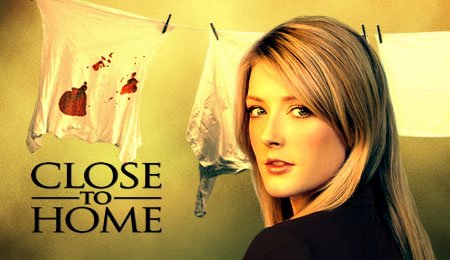
Close to Home, Jennifer Finnigan
Now, this may be a first for Ionarts: we want you to watch television. And not an opera or other cultural programming (rare as it is). We want you to tune in to CBS this Friday, for the April 28 episode ("Sex, Toys, and Videotape") of a television show called Close to Home (on Fridays at 9 pm EST). Lawyer Annabeth Chase (the very attractive Jennifer Finnigan) prosecutes a man for the murder of a woman strangled on her wedding night. Chase discovers that the woman was already secretly married, a fact that may have had something to do with her murder. Writing credits go to Erica Shelton and Lindsay Jewett Sturman, and Lewis H. Gould directs. Our very own Todd Babcock guest stars as Jeffrey Drake.

Todd also tells me that he recently shot an episode of Cold Case, which will air on Sunday, April 30, 8 pm, also on CBS. This episode, The Hen House (no. 67), is about "the 1945 case of a murdered newspaper reporter. [...] New evidence suggests that the woman was thrown in front of a passing train by someone she knew." David Von Ancken directs the story written by Craig Turk. In the wildest turn of events, Todd plays the character Noah Pool in the scenes set in 1945, and Peter Graves -- yes, that Peter Graves of Airplane and so on -- plays the character in the present. That is a stitch.

Set your Tivo!

Goldberg Variations


Alex Ross 'Critic's Notebook' - click to see in full
available at Amazon
J. S. Bach, Goldberg Variations, Richard Egarr

available at Amazon
J. S. Bach, Goldberg Variations, Pierre Hantaï II

available at Amazon
J. S. Bach, Goldberg Variations, Masaaki Suzuki

available at Amazon
J. S. Bach, Goldberg Variations, Keith Jarrett

available at Amazon
J. S. Bach, Goldberg Variations, Céline Frisch

available at Amazon
J. S. Bach, Goldberg Variations, Hantaï I

available at Amazon
J. S. Bach, Goldberg Variations, Wanda Landowska II

available at Amazon
J. S. Bach, Goldberg Variations, Wanda Landowska I

available at Amazon
J. S. Bach, Goldberg Variations, Gould ('55 & '81)

available at Amazon
J. S. Bach, Goldberg Variations, Murray Perahia

available at Amazon
J. S. Bach, Goldberg Variations, Konstantin Lifschitz

available at Amazon
J. S. Bach, Goldberg Variations, Charles Rosen

available at Amazon
J. S. Bach, Goldberg Variations, Rosalyn Tureck VI
Richard Egarr has long proven himself one of the finest harpsichordists in Bach, his recordings for Harmonia Mundi – especially his collaborations with Andrew Manze – being the proof. What he isn’t necessarily, is the most exciting harpsichordist (yes, at Ionarts we think this is not an oxymoron). That title may well go to Pierre Hantaï or Christophe Rousset. Or, as it turns out Masaaki Suzuki.

Egarr’s latest disc is a recording of the Clavierübung consisting of an Aria with Diverse Variations for the Harpsichord with Two Manuals Composed for Music Lovers, to Refresh their Spirits, a.k.a. “Goldberg Variations” and it enters the catalogue as the first that employs a harpsichord tuning system thought – by its ‘re-inventor’ Bradley Lehman - to be the one that Bach used and preferred… all based on a little scribble that can be found on the manuscript of The Well-Tempered Clavier. Agree or not, it sounds and looks convincing in argument and it sounds convincing on record. (To read all about it - and far more than you probably wanted to know read the description and analysis of Lehman's in his essay for Oxford Early Music publication from February/May 2005 which you can access via this link.)

The hues become occasionally softer, there are warmer harmonies. Not particularly noticeable in the Aria and generally not as noticeable as I had hoped (or feared), you can hear how some keys and note relationships live in greater tension to each other. There is some 'bending' (but never that ‘out-of-tune’ feeling of natural tuning employed in some early baroque recordings) going on, but a radical step away from what we are used to this tuning system is not, which is, I guess, its point. And as such this recording not only can, but must be compared to other, 'regular' versions, just on the account of playing and interpretation.

Here Egarr impresses with feeling and a soft touch. In my opinion he outplays the fairly similar Céline Frisch on the alpha label, who also includes the 14 Goldberg canons (although for chamber group, not harpsichord like Egarr does) and the two songs on which the 30th variation, the Quodlibet is based. The alpha disc, a CHOC de Le Monde de la Musique 2001 and Diapason d'or 2002 winner, is highly interesting for that reason, but the Goldberg Variations themselves cannot stand out in a crowded field. On the mellow side, they compete directly with the ultimately more expressive Egarr. (The latter's complete accompanying essay - the liner notes only have excerpts - in .pdf form can be read here.)

Either Landowska recording – I prefer the RCA recording by a small margin over the earlier EMI but profess to not particularly liking either, no matter their iconic status – can’t quite compare to Egarr’s (or anyone else’s) just on sonic grounds alone, the copy of the 1638 Ruckers harpsichord caught in excellent, full sound by the Harmonia Mundi engineers. Landowska remains, as usual, in a category of her own. (Here are a few pictures of [copies of] Ruckers double manual harpsichords: 1, 2, 3, 4, 5, 6, 7, 8, 9.)

For the same reasons that Gould (CBS/Sony, 1955) is more exciting than the honest, if pondering Tureck (DG, 1998) or the meticulous Rosen (Sony, 1992), Suzuki (BIS, 1997) is more exciting than his harpsichord rivals. He socks it to the Goldbergs; he is explosive at every note. (He also skips the repeats in the slow movements, adding to the overall 'fast' impression.) Is Suzuki full of tender detail and nuance like Egarr? No. Nor does it have the deeper reaching stalky rhythmic precision of sometimes maligned Keith Jarrett (ECM, 1994) that I’ve perversely grown to love (only) upon closer listening. Suzuki's beauty - or rather: fascination - is one of the surface and, call me shallow, that’s sometimes enough, even with a piece like the “GV.”

Pierre Hantaï sparkles in every note on his first recording on op.111 (1992), presents a woven carpet of bubbly sound. Most pleasing – also a surface-focused account (not to be mistaken for superficial). Hantaï’s more recent recording is on the Mirare label (2003), which has so far produced only winners. I don’t own it but have heard it once or twice. The superficial impression is a similar, slightly slower account, less straightforward as his on op.111 – with slightly better, deeper sound. What it did not strike me as, however, was the kind of revelation that Christophe Rousset’s Clavierbüchlein für Wilhelm Friedemann (Ambroise, 2005) presented in terms of sound of instrument and recording.

Among the lot, the choice would be difficult to make – although it is difficult not to be impressed by Suzuki and carried away by Hantaï. Jarrett is less obviously a top contender – but I found him to hold up against most of the competition because his rhythm, perhaps seemingly stiff at first, reveals itself to have spine and keeps the work fresh from the first note to the last, never allowing the tension or propulsion to sag. Egarr presses softer buttons altogether; those who look for sensitivity might find their match here.

Landowska famously responded to a piano playing critic of her Bach: “You play Bach your way, I play him his way.” [Almost, but not quite: See correction by A.C.Douglas in comment section. -jfl] That’s funny, still, if for different reasons. To think that Landowska’s Pleyel resembled a harpsichord from Bach’s time any more than a Steinway D is a stretch. Egarr, however, might just have a claim to this statement. Whether that is enough to merit the inclusion of this disc depends on the listener’s desire to hone in as closely as possible to what the original may have, ideally, sounded like... and his or her willingness to double and triple up on G-berg recordings. For me, this is not a first choice, but a most welcome, well and warmly played addition to the bulging shelf where I particularly cherish Suzuki (fast), Hantaï (sparkle), Jarrett ("The Stork") on harpischord - and Gould (required), Perahia (romantic - Sony) and, as of late, Lifschitz (as nimble as Gould with more interesting rhythm - in Denon's great sound) on piano.

Bach's 'Tuning Scribble' acc. Lehman
Go to the follow-up post on the Goldberg Variations.

Dip Your Ears, No. 56 (Zemlinsky Delights)

available at Amazon
Symphonies,
Conlon / Gürzenich
EMI


available at Amazon
Complete Choral Works & Orchestral Songs,
Conlon / Gürzenich / Isokoski, Urmana, Voigt, Albert, Schmidt, Volle
EMI


available at Amazon
The Mermaid et al.,
Conlon / Gürzenich
EMI


available at Amazon
The Mermaid et al.,
Dausgaard / Danish RSO
Chandos

Alexander Zemlinsky is one of the many semi-famous composers I adore; part of a group to which belong several early to late Romantic composers of distinctly second – sometimes third – rank, namely Messrs. Ries, Raff, Onslow, Jadin, Rott, Wellesz, Wilms, Saygun, Schreker, Pfitzner, von Schillings, Reznicek, Schoeck, Szymanowski. They span a stylistic period that ranges from post-Mozartian/early Beethoven to the onset of Modernism (the break is audible between Wellesz’s Fourth and Fifth Symphony). Among these, I have clear favorites. Pfitzner, Ries, the genius Szymanowski, and – Zemlinsky. So it is with particular pleasure that I see EMI regurgitate its Zemlinsky recordings at budget price. So far, three recordings that James Conlon made with the Cologne Orchestra have been reissued – the choral works and orchestral songs lumped together on one “GEMINI” twofer and the symphonies nos. 1 & 2 on the budget label EMI ‘Encore’.

Missing from the reissues is still Zemlinsky’s most famous and arguably best orchestral work, the tone poem Die Seejungfrau (The Mermaid) and the beautiful Lyric Symphony. That recording was my first exposure to Zemlinsky and the beginning of a lasting love – but truth be told, Conlon has very strong competition here, in particular from the excellent Thomas Dausgaard and, in SACD sound, Antony Beaumont (both on Chandos). Where Conlon, to the best of my knowledge, has no competition (Chailly, the other notable Zemlinsky proponent, has recorded a few psalms spread out on various discs... and even so, it is difficult to imagine these works done any better) are those works that combine orchestra and voice. And these works are stunningly beautiful, too. Running the gamut from Mahler (who conducted Zemlinsky's first opera and whose later wife, Alma, he almost snagged) to early Schoenberg (whose counterpoint teacher he was briefly and who married Zemlinsky's sister, Mathilde) and – in the orchestral songs – Richard Strauss, this is a high point of late Romantic, chromatic writing for big forces. Unlike Mahler, Zemlinsky is not so concerned with creating a bigger canvas in this post-Tristan-chord world; instead, he goes for squeezing the music a little harder, still, for its last drops of tonality. He does this without ever losing sight of a lush musical language, easily enjoyed and understood by anyone who can take Wagner or late Strauss. In the orchestral songs, one could be excused for thinking of Die Frau ohne Schatten.

The symphonies are a different kettle of fish. Here he can write a slow movement that has a melodic sweetness we find in Grieg, only to move on to pre-Mahlerian, perhaps Sinding-like (another more or less obscure composer I love) structures. Great works? Unlike the choral works, which probably are (singers like Isokoski, Urmana, Voigt help!), the symphonies won't make a lasting claim to greatness, per se. But eminently, thoroughly enjoyable they are - which is more than you can say about much else - and at such a bargain price, who could resist?

(Alex von Zemlinsky's consequent personal story was a less than happy affair, at least its end. His father converted to Judaism to marry Zemlinsky's Jewish mother, and Alex was raised in the Viennese Sephardic community. In 1899, he converted to Protestantism -- like Schoenberg, or Mahler [in Mahler's case it was Catholicism]. After the Anschluss Zemlinsky fled to Manhattan via Prague, where he arrived on December 23rd. Less than four years later he died in the U.S. in the company of his wife but generally isolated, jobless, unproductive, ill.)


See also: Dip Your Ears, No. 67 (More Zemlinksy)