CD Reviews | CTD (Briefly Noted) | JFL (Dip Your Ears) | DVD Reviews

24.11.05

Gunther Schuller: I Hear America (Part 3)

Part Three: Spectra

For the final installment (see Part 1 and Part 2) of the festival celebrating Gunther Schuller’s 80th birthday, the Boston Symphony Orchestra programmed the composer’s Klangfarbenmelodie fantasy, Spectra (1958). The piece is meticulously organized, eschewing the traditional orchestral seating chart and replacing it with five “chamber” ensembles reinforced with strings and percussion. The purpose of the reorganization, as the title suggests, was to make tone color the thread of the piece, as opposed to melody, or even the orchestra itself. The tonal idea in use here was Schoenberg’s, and altered orchestration was the subject of many similar experiments of mid-20th-century avant-garde composers. A recording exists of the work -- though it might be difficult to get one’s hands on it -- with James Levine conducting the Chicago Symphony.

Though the concept of Spectra is a difficult one to handle, especially for 22 minutes, the realization of it through the artistry of Levine and the Boston Symphony Orchestra’s magnificent players crystallized the experience. Schuller was a French horn prodigy (playing principal chair in the Cincinnati Symphony at age 17) and, as such, had insights on the difficulties of hearing across the sections of an orchestra. This piece took such concerns out of the equation, while providing an opportunity to hear the technical mastery of some of this orchestra’s players who normally get buried in the texture. Of particular note were the low reeds, anchored by bass clarinetist Craig Nordstrom and contrabassoonist Gregg Henegar.

The strings had their chance to shine at the concert’s opening - Mozart’s “Haffner” Symphony No. 35 in D. Upon hearing this piece performed by this ensemble, the mutual respect that exists between the BSO strings and Levine is absolutely clear. Later, the orchestra gave an expansive reading of Debussy’s La Mer – the American premiere of which was given by the Boston Symphony (see page 6 of this concert’s program notes for a history of this premiere, including interesting first reactions by Bostonian critics) – and addressed the lush scoring, which may have been just as good on piano, with sensitivity across all sections.

There is much to sort out after this week’s examination of the life and work of Gunther Schuller thus far. On one hand, there is the educator opening new boxes that deliberately shake the foundations of traditional musical thought, whether that necessitates utopianism, an examination of the role of the conservatory, or the appreciation of the American musical heritage. On the other hand is the largely self-taught, introspective, academic composer. Either way, Schuller is a living composer and educator who can still shed insight on the best and worst that American classical music wanted and tried to be. Examples of his writings on conducting, education and jazz history can be found here and here. As for his work as a publisher, visit Schuller’s own Web site. Amazon.com also has a nice array, including Of Reminiscences and Reflections, for which Schuller won the Pulitzer Prize.

23.11.05

Twenty Fingers for Bruckner


available at Amazon
A. Bruckner / G. Mahler, Symphony No. 3 transcr. Piano Duo,
Trenkner / Speidel
MDG 3300591

Bruckner’s 3rd symphony is one of the less often recorded and performed of the Austrian master’s works. It is guilty of establishing Bruckner as a Wagnerite (which he certainly was – but his music is not nearly as Wagnerian as friends and detractors alike wanted to make it out to be) as it was pathetically humbly dedicated to Wagner (who chose this one for a dedication to himself rather than the admittedly less glorious 2nd, but then never so much as moved a finger to help its performance or even Bruckner’s acceptance as a composer). It exists in an abstruse amount of versions due to several revisions and rewritings. In the original 1872-73 version, the Wagnerian elements are strongest – whether for better or worse depends mostly on one’s taste. It got ‘improvements’ in 1874, 1876 (when he also wrote a new adagio for it), 1877, and finally, in 1888-89. What we have here is the least performed, the 1877 version. Since that alone is not novel enough, in our age of blooming Bruckner recordings, this release adds another twist. A perverse one, you might think. It is the arrangement for piano duo of that symphony. And, to make things a little more interesting, that arrangement (three quarters of it, at any rate) is by none less than Gustav Mahler. In a piece of unbeatable music-geek trivia, this symphony adaptation constitutes Gustav Mahler’s first published work. Even if you have no idea how this thing might sound, you already have the ideal gift for both the obsessive Brucknerian and the obsessive Mahlerian. For those who are both (despite the differences between the composers’ styles, that is a common occurrence) you have secured your spot in that friend’s stocking-stuffer pantheon for all time.

How does it sound, though? Well… as long as you know and think of it to be a perversion, it’s actually quite good. Unlike Bruckner on the organ, the result is not the stunning resemblance that Lionel Rogg achieves with his transcription of Bruckner’s 8th but instead a homespun mimicry that starts out as slightly New Age Bruckner and then goes in its very own directions from there. To the non-purists, though, it might be downright exciting. Obviously it’s a disc for someone who already has too much of most things – but it is not nearly as desperate a novelty as many other CDs. If you have heard the piano duo transcriptions of Mahler’s symphonies you can go from there and imagine the result improved by a wide margin. Two pianos are not able to conjure Echt-Bruckner – but they come a lot closer to his symphony than they do to any of Mahler’s.

The performer, Evelinde Trenkner (here with Sontraud Speidel) has made it her specialty to perform such arrangements: apart from aforementioned Mahler (with Mrs. Zenker – MDG 330 0837) I’ve also gotten a kick out of her performance of the Reger transcription of the Bach Orchestral Suites and Passacaglia (with Mrs. Speidel again – MDG 330 1006). Ultimately these works are a lot more fun to play than listen to, but short of having the requisite skills and a similarly inclined and skilled accomplice, these might put a smile and more on your face. I, for one, have listened to it well over a dozen times in the last few weeks and show no sign of tiring of it yet.

Andreas Scholl: Senesino Live

Other Articles:

Peter Culshaw, Echoes of the superstar castrato (The Telegraph, November 2)

Serge Martin, Andreas Scholl nous conte Senesino (Le Soir, November 9)

Roderic Dunnett, Andreas Scholl, Symphony Hall, Birmingham (The Independent, November 9)

Nicolas Blanmont, Dans la peau de Senesino (La Libre Belgique, November 18)
Andreas Scholl
Andreas Scholl has been giving concerts featuring pieces from his new recording, reviewed at Ionarts this week, which apparently has crossover appeal and has been selling fairly well, across Europe but none on this side of the ocean. Anna Picard's review of Scholl's London concert (Andreas Scholl/Accademia Bizantina, Barbican Hall, London, November 13) for The Independent wins the prize for the strangest sexualized metaphors of the countertenor sound:
Scholl's gift is white cotton sensuality. Where David Daniels offers cut-away cups, stockings, high heels and suspenders, Scholl's Handel is pure Calvin Klein. He doesn't pounce and tear at a note, sweep it into his arms and tilt it back like a tango dancer; he merely inclines to it and expects his listeners to follow. In the languid undulations of "Cara sposa" and "Dove sei, amato bene", his tonal chastity was beguiling.
Stockings? Tango? Tonal chastity? Let us not forget that the castrati, too, were sex symbols in their day. More recently, Scholl took his Senesino thing to the Théâtre du Châtelet in Paris, on November 17, and Jean-Louis Validire previewed it (Andreas Scholl fait revivre Il Senesino, November 17) for Le Figaro (my translation):
His imposing size does not seem to match his voice. What would be a paradox in modern life is an advantage on stage. "In the 18th century, the real hero was not a macho caricature," he explains. "To the contrary, a high voice represented the universal hero, with which both women and men could identify." That was the essence of the imagined dialogue between Porporino and the young Mozart told by Dominique Fernandez. For Andreas Scholl, it is the key to this enigma, what drove Handel to have Caesar sung by a man with a soprano voice. "At that time," the singer continues, "Baroque opera was not about everyday politics but aimed to be an exemplary depiction of human behavior."
There may be a few more reviews of the concerts in Paris and Brussels last week, but I haven't found them.

22.11.05

A Sunday in Good Company

RebeccaThis past Sunday, I was a part of a tour of the latest exhibit at The American Visionary Art Museum, Race/Class/Gender≠Character, hosted by the museum’s director Rebecca Hoffberger. If you ever get a chance to tour an exhibit with Rebecca, take it. She’s brilliant and very funny and has more amazing, obscure information than anyone I’ve ever met. I'm always wondering, How does she know that? or most often, did she really say that?

A highlight of the evening was spending time over dinner with Pulitzer Prize-winning civil rights historian Taylor Branch and civil rights leader Julian Bond. Taylor is preparing for a tour promoting his latest book, At Canaan's Edge, to begin in January. I was preaching the benefits of having a blog for his road trip, to post about his experiences and podcasts of his interviews. It may happen, and it would be a great resource. Taylor's books are an amazing collection of the personal, social, and political associations that brought about the movement for civil rights; a lovely holiday gift.

Julian Bond is a very kind gentle man with, as you would expect, many stories to tell. One that was of particular interest concerned his father, Horace Bond, who was the eighth president of Lincoln University, the university that also oversees The Barnes Foundation. As the child of the university president, Julian got to meet Dr. Barnes many times. He mentioned one time when he and his sister accompanied their mother to the museum. His mother was speaking with Dr. Barnes, and Julian and his sister were playing in another gallery. Dr. Barnes heard them and asked what the noise was. Mrs. Bond told him it was her children playing, and he replied, “Well tell them to shut up.” Cranky.

We both bemoaned the move of the Barnes collection to Philadelphia. We both felt that Dr. Barnes would turn over in his grave and the spirit of the place will never be replicated. We’re sniffling over spilt milk now, but Julian believes the details could have been worked out. The money could have been raised, the collection stabilized, the neighbors could have been appeased; all in its original quirky home in Merion.

A Kékszakállú Herceg Vára

Ravel's Masterpiece?Relaxing, pleasant, comfortable: I hate it when classical music is said to be (just) these things, because it is of course so much more. Running the entire emotional gamut from heavenly delight to horror and despair. That is not to say that a piece of classical music cannot or should not be relaxing, pleasant, comfortable… and Ravel’s suite from Ma mère l’Oye (Mother Goose) was exactly that when the Baltimore Symphony Orchestra performed it this Saturday at Strathmore under Kwamé Ryan’s baton in his return to the BSO.

The natural simplicity and gentle beauty of the five episodes that Ravel orchestrated from his piano-for-four-children’s-hands original trumped all other moods presented in it – but that victory of form over content was actually very welcome. The BSO played well – very well in some passages – and even concertmaster Jonathan Carney seemed soothed by the music; his solo was executed with great skill.

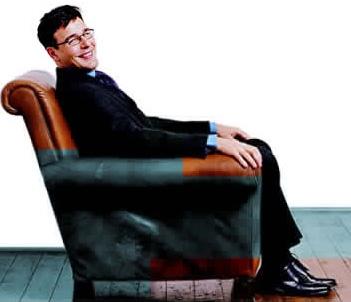
Peter FriedThe real thrill of the program was of a different emotional nature, giving me just the gloom and despondency that I so like to hold against those who think about classical music in the “Mozart for Meditation” and “Debussy for Daydreaming” vein. It was Béla Bartók’s Bluebeard’s Castle that was responsible for the shift to darker hues and the BSO’s presentation – not the least thanks to Mr. Ryan – did this gem a great service with a terrific performance. Glittering and gleaming, Romantic and modern, threatening and stabbing, this is great stuff that benefits much from the live experience. A one-act opera about Mr. Bluebeard, his new hematophobic wife, her need to see all the seven doors in his castle opened and their therefore thwarted love contains miraculously beautiful music. Touches of Wagner before the 7th door is opened, glorious and sweeping sounds with plenty of brass when the fifth door is opened; music so descriptive and gripping that it puts any film score to shame.

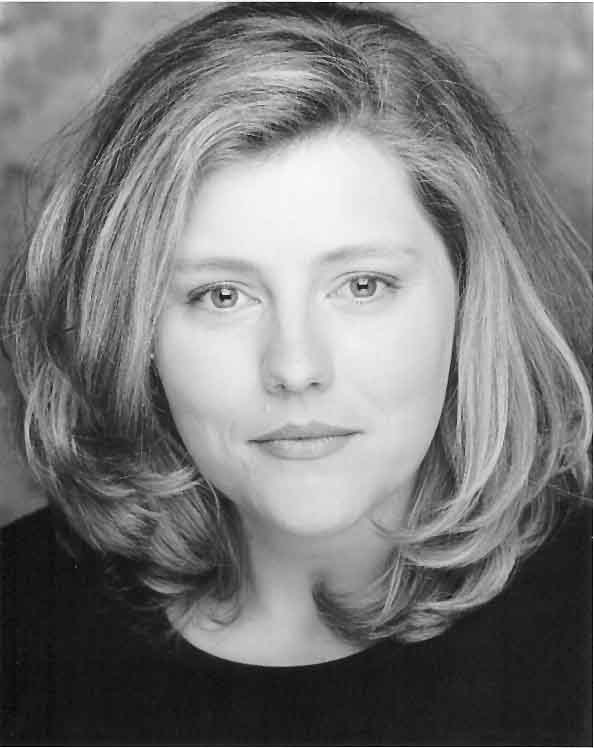
Anita Krause

Other Reviews:

Tim Smith, A suspenseful 'Bluebeard' (Baltimore Sun, November 20)

Daniel Ginsberg, Baltimore Symphony Orchestra (Washington Post, November 21)
Sung in Hungarian, the soloists Anita Krause and Peter Fried were outstanding – singing well and enlivening the story with their effective minimal and evocative acting through their faces and small gestures. Maestro Ryan, a Peter Eötvös student (and conductor of the premieres of Eötvös’s operas) should know how to do this score proud, and he did indeed bring the orchestra, the opera’s main character, to life in ways nothing short of magnificent. Because the tale is heavily laden with symbolism, some in the audience may have found it and its grisly end amusing in its projected English translation of the Balázs libretto (based, like Mother Goose, on a Charles Perrault tale). They were forgiven to mistake some dialogue (“‘tis my torture chamber, Judith” –- “Fearsome is thy torture chamber, Bluebeard…”) for a special council Fitzgerald extracted transcript of a conversation between a former New York Times journalist and a certain Vice President – but it was assuredly all part of Bartók’s work.

21.11.05

Audiences Walk out on Tippett in Chicago, Too

Michael Tippett, The Midsummer Marriage, Lyric Opera of Chicago, November 2005In my brief look at the Covent Garden production of Tippett's The Midsummer Marriage last week, I suspected that critical reaction would not be overwhelmingly positive for the new production of the opera at Lyric Opera of Chicago. Well, reviews are coming in, and here's what critics have to say. Wynne Delacoma, in her article (Lyric's 'Marriage' lovely but so confusing, November 21) for the Chicago Sun-Times, admired the music and the performance but lamented one thing in particular:

However, there is one compelling reason to think twice before heading off to "The Midsummer Marriage." Tippett's libretto, which he wrote himself, is one of the silliest, most bafflingly overloaded pieces of philosophical babbling in all of opera. And that is saying something for an art with a high tolerance for the ridiculous in its written texts. [...] Opera lovers are more than willing to [put aside all demands of logic], but too often in "The Midsummer Marriage," we simply had no idea what Tippett is talking about. We knew some kind of quest was going on, but for what and why, the composer gives us very few clues.
John von Rhein's review ('Midsummer' muddle, November 21) for the Chicago Tribune is no less critical, and the audience apparently abandoned the hall early, just as they did in London:
Peel away the layers of Jungian psychology, opaque symbolism and artful dodgery in Michael Tippett's "The Midsummer Marriage" and you find yourself wondering where the opera is hiding. Despite an excellent cast and splendid new production, the numbers of people who left early at Lyric Opera's opening performance Saturday at the Civic Opera House were not an encouraging omen. [...] Now, a superior composer like Benjamin Britten could breathe stage-life into so high-falutin' a conceit. But Tippett, for all his musical craft, was a miserable dramatist. The opera cloaks itself in florid self-importance, yet the storyline is nonsensical and the characters thin.
By my count, that is both critics of the major Chicago newspapers advising readers not to purchase tickets. A swing and a miss! This does not mean that I would pass up the chance to see and hear the mish-mash myself (especially in what certainly appears to be a visually diverting production), but it appears I had better do it right now in Chicago if I want to at all. The production will run through December 16.

Andreas Scholl Conjures Senesino

Available at Amazon:
available at Amazon
Andreas Scholl, Arias for Senesino, arias by Handel, Albinoni, Lotti, Scarlatti, Porpora, Accademia Bizantina, Ottavio Dantone, released October 11, 2005
The castrato was such a known quantity for centuries, and yet we know relatively little about this shockingly widespread practice. Even Charles Burney, the famous early music historian, tried to learn more about this nebulous singing tradition on his trips through Italy in the 18th century. Not surprisingly, he could find no one willing to admit that they knew anything about how castrati came to be who they were, and he was told in every city that it happened only in some other place. The theme of Andreas Scholl's latest CD is that all the arias on it were composed for one of the famous castrati of the 18th century, Francesco Bernardi, known as Il Senesino. The pieces are a mix of well-known and obscure. Surely not by coincidence, Scholl has laid down gorgeous renditions of two pieces from Handel's Rodelinda (1725), in which he will make his Metropolitan Opera debut this May. (The role of Bertarido, written for Senesino, was Scholl's operatic breakthrough, at Glyndebourne in 1998.)

Senesino was a celebrated alto castrato from Siena, and after singing for many years across Italy and Germany, Handel negotiated a contract for him to sing for the Royal Academy of Music in London, beginning with that company's second season in 1720. He performed with them for every season through June 1728, when the Royal Academy temporarily folded, during which period Handel composed or adapted 13 operatic roles for him. When the Roman-born cellist, composer, and poet Nicola Francesca Haym joined the Royal Academy as official librettist and Italian Secretary in 1722, he formed a very successful triumvirate with Handel and Senesino. Rodelinda (1725) -- for which Haym revised a libretto by Salvi -- was only one of their successes.

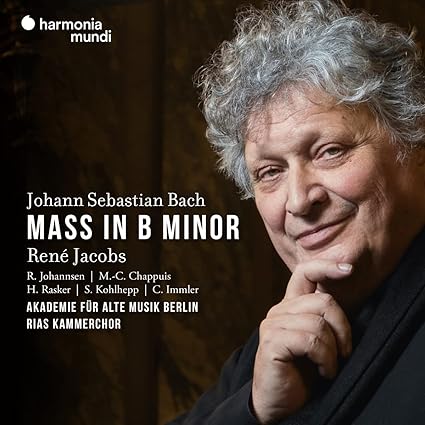
There are probably more famous countertenors making recordings and singing on opera stages around the world in this decade than in many previous to it. This is a voice that has finally come into its own, and Andreas Scholl is at the top of the game. As a boy chorister in a small but well-reputed church choir in his hometown, Scholl's speaking voice changed, but he continued to sing as a treble or alto. He went to study with René Jacobs in Basel, where he lives today, and a few memorable early performances catapulted him to fame. He even appeared as a singing monk in the film The Name of the Rose, with Sean Connery as Umberto Eco's famous monastic detective. His voice is well suited to the pieces composed for Senesino, whose range was rather narrow (up to D or E on the treble staff) and who, although capable of virtuosic melismatic passages, was reportedly strongest in long and sustained lines.
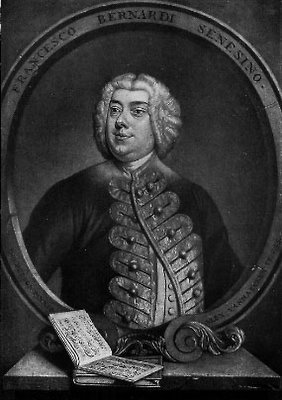
Francesco Bernardi, Il SenesinoBeginning with Senesino's early career, we join him for his 1708 stage appearances in Venice, with two virtually unknown arias by Tommaso Albinoni, a contemporary of Vivaldi, from Astarto and Engelberta. "Stelle Ingrate" is a concise and pleasing fast-paced aria, and "Selvagge Armenita" is in a gentle triple meter with a sweet melody. Neither is particularly memorable. We know that Senesino appeared in Bologna in 1709 in Caldara's L'inimico generoso, and given how much I enjoyed Cecilia Bartoli's Caldara arias, I was disappointed that Scholl did not choose any pieces by Caldara. In 1713 and 1714, Senesino was back in Venice, performing in works by Lotti and others, and then in Naples in 1715 to 1716. The only aria by Alessandro Scarlatti on this CD, "Del ciel su sui giri" from Carlo Re Allemagna (1716), is a boisterous and heroic one. Scholl's artistic collaborators, the Accademia Bizantina led by Ottavio Dantone, generally play quite well, with the only exception being the imprecise horn playing on this track's lengthy ritornello.

The Dresden theater lured Senesino to their city in 1717, with an outrageous star salary of 7,000 thaler. For three seasons, he sang in several operas, including three by Antonio Lotti. Scholl has wisely chosen two examples, both among the better tracks on this CD, the lilting "Fosti caro" from Ascanio (1718) and "Discordi pensier" from Teofane (1719). In the latter, in a plaintive minor key, the vocal part is echoed beautifully by solo violin. It was in this opera that Handel first heard Senesino's voice, when he was sent to Dresden to attempt to engage him for the Royal Academy in London. In 1720, Dresden dismissed Senesino for one of the many tirades associated with this difficult singer: he refused to sing an aria assigned to him and tore up a score. His temperamental behavior immediately caused him to clash with Handel, who was not patient with artistic whims and who reportedly called him a "damned fool."

Handel put up with Senesino, however, because he was from the start well reviewed by press critics and audiences. All six Handel pieces on this CD are exquisite compositions in very good performances. In particular, the choice of three excerpts from Giulio Cesare (1724) is laudable. One review of this opera in London lauded Senesino's singing as "beyond all criticism." Handel crafted music for the "damned fool" that showcased his strongest vocal points, and Scholl gives us many of the same qualities, especially in the long crescendi and pure intonation of "Aure, deh, per pietà" and the accelerating pace of "Al lampo dell'armi." The final Handel piece, the gloriously long and already famous "Cara sposa" from Rinaldo (1731), dates from the second incarnation of the Royal Academy, for which Senesino returned to London. This was only two years before Handel finally called it quits with Senesino, unable to tolerate his vanity and tantrums any longer. The CD concludes with an aria from Porpora's Il Trionfo di Camilla (1740), which was the castrato's final public performance. The castrato voice usually sank in vocal range with age, and this aria seems to reflect that descent, emphasizing the lower part of the countertenor voice, normally the weakest, and Scholl is no exception.

The criticism being leveled at this CD, that it is lightweight and piles on the trend of Handel aria CDs, is mitigated somewhat by the musicological value of the more obscure pieces, edited by Alessandro Borin for this CD. (I hope Decca made a legal arrangement for the payment of royalties to the editor.) In particular, the Lotti arias from the Dresden operas are good discoveries, although the work of Handel, at the height of his operatic powers in the 1720s and 30s, overshadows everything else. Andreas Scholl has a gorgeous line with pure and powerful notes, never shrill, at the top of Senesino's range and an absolutely clean melismatic mechanism, much less labored in sound than a voice like Cecilia Bartoli. However, Bartoli's selection of arias is of much greater interest, in terms of both music and scholarship. If you really want to accuse Scholl of being a lightweight, you should attack his previous CD, called Wayfaring Stranger, a set of folksongs with Orpheus Chamber Orchestra. The tag lines invented by the Decca PR machine? "Some new twists on a great tradition" and "not embarrassed by the magic." (An anonymous commenter, who corrected my misunderstanding of the packaging of this disc on the Decca Web site, says it's not bad.)

20.11.05

Who is Garth Newel? Turina Afoot at the Corcoran Gallery


To be honest, Arthur Foote and Joaquin Turina quartets were what drew me to the Corcoran Gallery – not the Garth Newel Piano Quartet which, consisting of Teresa Ling (1st violin), Evelyn Gran (2nd violin), Tobias Werner (cello), and Victor Santiago Asuncion (piano), did the performing. In addition to two works I had never heard live before, they offered Schumann’s E-flat major piano quintet, op. 47 – rounding off an exciting program with a beloved classic. If you wonder – like I did – where or who this “Garth Newel” was… he turns out to be neither a (former) quartet member or obscure composer but instead a Welsh phrase for “new hearth.” The Quartet takes the name from the Garth Newel Music Center, a chamber music venue and retreat in western Virginia.

The Foote, with an 1890 composition date, is a conservatively Romantic work from this Massachusetts composer, who was bound to the German tradition of Schumann and Beethoven. A buoyant first movement (Allegro comodo) and a forceful finale (Allegro ma non troppo) surround the charming third movement, an Adagio, ma con moto. (From the tempo indications one may guess that he might have been the Boston head of the Temperance Society. If he wasn’t that, at least we were told by Teresa Lang, Foote was the choir director and organist of a Unitarian congregation in Massachusetts.) Perhaps a little long-winded, the quartet was a worthy listen, by all means.


available at Amazon
A.Foote, PQ4t, SQ4t No.1, Nocturne & Scherzo,
Da Vinci Quartet et al.
Naxos

Shimmers of a Spain long gone come through even in the first notes of Joaquin Turina’s Piano Quartet, op. 67, composed 40 years after the Foote. Although a Romantic work as well, a very different Romanticism is at work here. The language is more chromatic, the phrases more stressed, the local flavor (it regularly screams ‘Alhambra’) more discernable. It has wild moments, some of them “Spanish” like a cartoon might be – others less blatantly so. It is closer to the French than German musical tradition and has plenty of novel and arresting music between the sometimes cheap effects especially prominent in the second movement Vivo. For complexity and depth the Turina gets high marks, but I would have much preferred a good deal more subtlety in dealing with the Spanish elements. The performance of the Garth Newel Piano Quartet was adequate and more. The sound of the instruments a little flat (not with regard to pitch) and a wonderful energy that communicated the joy of presenting these little played works was felt.

The short slow introduction of the Schumann quartet from 1842 (Sostenuto assai before it turns to Allegro ma non troppo) fell apart, but once speed was added, things got well under way. The Steinway B sounded a little muddy and dull and never quite meshed with the other three players, whose instruments didn’t particularly charm, either. It was not something I’d like to fault Mr. Asuncion or his colleagues for – but rather point out that it is a shame that the Corcoran no longer has its famed collection of instruments which, apart from the Paganini Quartet Strads (now with the Nippon Music Foundation), included a Steinway (D) that was considered to have been among the very finest of its kind in Washington.

The Schumann Scherzo, meanwhile, was molto vivace indeed – although as monochromatic as the rest of the quartet and indeed the entire concert. Novelty and special effects masked most of that in the Foote and Turina, but Schumann more brutally points to even the smallest flaws in performance. Tobias Werner elicited some very satisfactory moments out of his cello in the Andante cantabile; the movement as such started to sound a bit labored, anyway. It is likely that, given the extraordinary high quality of the Corcoran’s Musical Evening Series, the bar was higher for the four performers than it would have been at another venue. It also almost feels ungrateful to be presented with a stimulating program and then be finicky about the performance not being close to some platonic ideal. Alas, that is the reality of musical performances and a set of spoiled ears on my head. “Just enjoyable,” however, is not a damning verdict.