CD Reviews | CTD (Briefly Noted) | JFL (Dip Your Ears) | DVD Reviews
Showing posts with label Alexander Zemlinsky. Show all posts

4.1.26

#ClassicalDiscoveries: The Podcast. Episode 019 - Alexander Zemlinsky, the Opera Composer


Welcome to #ClassicalDiscoveries. Here is a little introduction to who we are and what we would like to achive at the first (or, in a nod to Bruckner, "double-zeroëth" episode). Your comments, criticism, and suggestions remain most welcome, of whatever nature they may be. Comments on YouTube directly are even more appreciated, as they will help the visibility and reach of the podcast - and because they make us feel like what we are doing is not completely in vain.

Now here’s Episode 019, which tackles the operatic side of Alexander Zemlinsky and his development throughout. Or as the blurb states: "Once upon a time, there was a tiny little man in Vienna, who composed the grandest operas..." Chronologically correct, we start with the alluded-to Once upon a Time, and work our way to the Ouverture to a Grand Opera.

A little note on the discography of the Florentine Tragedy, Zemlinsky's one-act opera that's the only one that has had a lot of love lavished upon it, by the record industry: Beyond the two accounts below, you can also choose from: Gerd Albrecht/RSO Berlin/1983/Schwann, James Conlon/Gürzenich/1997/EMI, Vladimir Jurowski/LPO/2012/LPO Live, Armin Jordan/ORTF/2003/Naïve, Marc Albrecht*/Nethelands PO/2021/Pentatone, and Patrick Hahn/Munich RSO/2024/BR Klassik (w/Christopher Maltman!)


Once upon a time, there was a tiny little man in Vienna, who composed the grandest operas. What started out with fairy-tale works of musical theater did, alas, take a tragic end for Alexander Zemlinsky in the New World. In their latest podcast, Joe and Jens track this wildly underrated composer’s operatic career from Vienna via Prague and Berlin to a premature death in New York.

12.10.25

Critic’s Notebook: Markus Poschner's Prayer for a Meermaid


Pictures © Amar Mehmedinovic


Also published in Die Presse: Poschners Gebet für die Seejungfrau: Das RSO im Musikverein

Gardiner Lili Boulanger

L.Boulanger
3 Psalms; Vieille Priere bouddhique
S.Bruce-Payne, J.Podger
Monteverdi C&O, Gardiner
DG (2002)


US | UK | DE

Alfred Brendel in 11 Haydn Sonatas

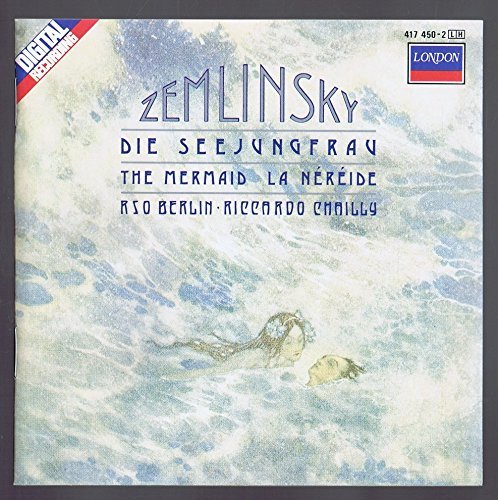
A.Zemlinsky
The Mermaid
pre-2013 Version
RSO Berlin, Chailly
Decca


US | UK | DE

Alfred Brendel in 11 Haydn Sonatas

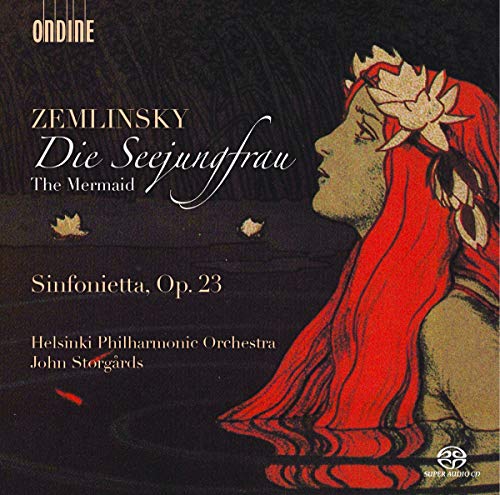
A.Zemlinsky
The Mermaid
New Critical Version Helsinki PO, Storgårds
Ondine


US | UK | DE

A thrilling concert of little-known late Romanticism — as only the RSO can deliver


Lili Boulanger, with just two dozen works and 24 years to her name, remains one of the most promising composers of the 20th century – a kind of Schubert-in-extremis of Post-Romanticism. Her talent was blindingly evident to colleagues and audiences alike by force of sheer quality. As a result, even though she only lingers at the outer margins of the repertoire, she has never truly been forgotten. And anyone who finds her name on a program and enjoys music somewhere between Debussy and Mahler – or indeed Zemlinsky – needn’t fear that here, some quota has put some mediocrity on stage to appease the zeitgeist. Instead, they can look forward to the very best that symbolist late Romanticism has to offer.

That was confirmed, impressively, by the RSO Vienna and Markus Poschner on Saturday night, when they chose for the first half of their Musikverein concert two of her works: Vieille prière bouddhique (“Old Buddhist Prayer”) and the 130th Psalm (Du fond de l’abîme / “Out of the Depths”). Both were written while the First World War was raging and are, fittingly, incandescent invocations of peace among men. One might, if not paying attention to the text, take the first for a hymn to the sea – so completely did one get swept away in great waves of sound by the orchestra, the chorus (a passionately committed Singverein), and tenor Paul Schweinester from the organ loft.

The way Boulanger handles the colors of these musical forces – in the Psalm further joined by organ and alto solo – the subtlety, the suggestion of power (suggesting it, rather than throwing it about) – is deeply impressive. Boulanger does not indulge, despite the wealth of means at her disposal; she deploys them discriminatingly, if lavishly. Anyone who hasn’t heard her music might imagine a blend of the orgiastic fervor of Mahler’s Eighth and the refinement of Debussy’s La Mer. Were religiosity always this sensual, the churches would be full. As it is, it was satisfying enough that the Golden Hall was nicely filled. A highlight within the highlight: Claudia Mahnke, whose darkly glinting voice and controlled, wide vibrato suited this kind of Romanticism superbly.

It speaks for Zemlinsky’s rightly popular Seejungfrau that she did not sink after such a first half. It’s equally noteworthy, that Zemlinsky got to the nominal main draw of the concert. Despite being a perfectly conventional romantic concert by content, there is on other major orchestra in Vienna that should have dared to program two relatively unknowns like this, no matter how glorious the music. That’s something, however, the RSO can do, and which is why it is so important for the musical landscape in Vienna. If it goes at the expense of playing ungainly contemporary music for the sake of playing it, all the better.

Poschner – who loves the Mermaid and recorded it with the RSO in the course of these performances (for Capriccio) – let the mermaid bubble merrily, the waves crash high, and the orchestra surge passionately forward. That it got very loud in the front rows was, in the Musikverein (where the work premiered in 1905), hardly avoidable. At times, one could imagine how a dolphin might feel swimming past an offshore wind farm. One wished, in those moments, for the Konzerthaus, where the work’s wonderful details would have stood a better chance of survival – and where the work was re-premiered in 1985, upon rediscovery. Still, it capped an overwhelming evening.


19.6.25

Critic’s Notebook: Spring Funeral – from Zemlinsky, for Alfred Brendel


Also published in Die Presse: Brendel-Gedenken im Musikverein: Bruckner-Messe unter Lorenzo Viotti


available at Amazon
A.Zemlinsky,
Spring Funeral et al.
Edith Mathis, Roland Hermann
Antony Beaumont, NDRSO
Capriccio


available at Amazon
J.Haydn,
Symphonies No.103/104
Sally Mattews, K.Cargill, I.Arcayürek, S.Trofimov
M.Jansons / BRSO & Chor
BR Klassik


With Zemlinsky’s funeral ode and Bruckner’s F minor Mass, his concert by the Wiener Singverein — aided and abetted by the Vienna Symphony under Lorenzo Viotti — became something of a a secular requiem for the late pianist.


Outside, summer had already announced itself in Vienna. Inside the Musikverein, Tuesday night’s audience was greeted with “The Funeral of Spring.” That would have been apt on seasonal grounds alone. As it happened, the programming of this rarely performed work by Alexander Zemlinsky — written by the 26-year-old Bruckner student in memory of the recently deceased Brahms — turned out to be sadly more appropriate still: just before the concert began, news trickled in of Alfred Brendel’s death.

The Musikverein's intendant Stephan Pauly said a few words of remembrance and the concert was dedicated to the iconic pianist. Imagine if Julius Fučík’s Entry of the Gladiators had been scheduled to open the evening. (Although, with Brendel’s dry, mischievous wit, that might have suited him perfectly. One can vividly picture the twinkle in his eye.)

The fact alone that the "Frühlingsbegräbnis" was performed at all deserves praise — before a single note sounded. This work, initially reminiscent of both Mendelssohn and Brahms, painted in bold strokes on a giant canvas, with oversized chorus, full orchestra, and soloists, is quite the experience: romantic, skirting the edge of kitsch, deeply moving — Dante Gabriel Rossetti manifest in music. Baritone Derek Welton delivered his part with relaxed, sonorous authority; soprano Christina Gansch’s voice carried beautifully, too. But the star of the work is the chorus — in this case, the Singverein — who seemed to have declared general mobilization and showed up, visibly and audibly, with every throat on deck.

The second half continued in this grand manner and the same line-up — joined now by mezzo Rachael Wilson and tenor Andrew Staples — for Bruckner’s Mass in F minor. Secular, spectacular, borderline overheated: Bruckner’s Mass has rarely sounded so much like Verdi’s Requiem. Glorious: the hushed, dark opening of the Kyrie, all restrained power. In general, it was the openings and isolated moments — usuually the soft, gentle ones — that stood out: Delicate entries, almost ostentatiously held-back (not always clean, but goosebump-worthy nonetheless), as on the “Crucifixus” in the Credo or in the luxuriant Benedictus.

And then, just as quickly, came the deluge — chorus and orchestra locked in battle for decibel-dominance, akin to King-Kong v. Godzilla, in the reverently trembling Golden Hall. In the first ten rows, ears fluttered in the Brucknerian blast wave. Lorenzo Viotti, striking his 'Cristo Redentor'-pose — arms spread, theatrical, relishing the sound — was clearly in his element. The orchestra supported him in this with vivid, committed playing.

Wilson’s voice was a rich, dark-toned exclamation mark — one could easily imagine her as Erda a few blocks away. Staples sang with an uncommonly natural and clear tone — especially for this role — a welcome contrast to the underlying tension of much of the rest of the performance.

For the curious: the concert airs again on July 29 at 7:30 PM on Ö1. And a little fashion advice: If you like the waistcoat of your three piece suit to go all the way to your neck, so it looks like you are wearing a V-neck sweater (partially necessitated by the narrow cut of the jacket which would otherwise cover the waistcoat altogether: Fine. Personal choice. But the straight/pointed collar with the black bow tie is never going to be a good look, no matter how instagrammable a hunk you might be.


18.7.15

Dip Your Ears, No. 200 (Schulhoff Symphonies for Voice)

available at Amazon
E.Schulhoff + A.Zemlinsky, Two Symphonies for Voice & Orchestra: Menschheit, Landschaften + Six Maeterlinck Songs,
M.Tang / R.Stene / Trondheim SO
Simax

Voluptuous Melancholy

Landschaften – Symphony for Mezzo and Orchestra, op.26, is a 16-minute orchestral song cycle from 1912 that Schulhoff dismissed later when he changed his style after World War I… but what a glorious work to dismiss! Mahler or Zemlinsky might have been jealous, so expansive in concentrated form, so soaring is this work on five poems of Johannes Theodor Kuhlemann that Schulhoff called a. Schulhoff revisited the idea of a “Symphony for Voice and Orchestra” after the war, when he wrote Menschheit, op.28, with a completely different idea about composing and yet achieved similarly pleasingly late-romantic results.


Made possible by Listen Music Magazine.

16.4.14

Second Opinion: Playing with Mermaids: Conlon and the NSO

Many thanks to Robert R. Reilly for this review from the Kennedy Center..


The only disappointing thing about the evening of Thursday, April 10, 2014 at the Kennedy Center Concert Hall was that it was not full. When the National Symphony Orchestra chooses such interesting repertory as it did for this concert under conductor James Conlon, the musical idealist imagines the place full to the rafters.

15.4.14

Conlon and 'The Mermaid'

available at Amazon
A. Zemlinsky, Die Seejungfrau, Gürzenich Orchester Köln, J. Conlon
(EMI, 1997)
James Conlon's stint with the National Symphony Orchestra last week was one of my Top Ten concert picks for the month. There were other assignments in the way for the first two performances, but as noted on Saturday, there was no way I was going to miss the chance to hear Conlon conduct Alexander Zemlinsky's tone poem Die Seejungfrau, at the last performance on Saturday night in the Kennedy Center Concert Hall. The program was inverted from the usual order of a symphony concert, with the major Zemlinsky work performed first, followed by the concerto and the short piece that would usually be a concert-opener. At the outset, Conlon took microphone in hand and gave a savant and convincing introduction to Die Seejungfrau, speculating that Zemlinsky saw himself in the mermaid and the beautiful and inaccessible Alma Schindler, with whom he was in love, as the unapproachable prince. Alma Schindler -- later Mahler, Gropius, finally Werfel -- provided the common thread of the program, too, as she was the dedicatee of Korngold's violin concerto on the second half, composed when both Korngold and Alma lived in Los Angeles in the 1940s.

Die Seejungfrau is in three movements, which are not identified with elements of the story but correspond roughly as follows: the little mermaid's life in the sea and first encounter with the prince; the spell that transforms her into a human and her attempt to get the prince to marry her; and her ultimate embrace of death, because she will not accept the Mer-Witch's offer to kill the prince and be returned herself to the sea. The first movement evokes the deep rolling of the sea, with static motifs, including deep harp notes, layered on top of groaning bass instruments, leading to huge tidal swells of sound. Concertmaster Nurit Bar-Josef was mercurial and passionate in the violin solos of the little mermaid, numerous enough to make the work almost a sort of violin concerto. Conlon gave the work a decisive pacing, which added gritty excitement to the faster passages. A rollicking horn theme signifies the prince and his men, and a passage of music in the second movement, excised from the score after the work's premiere, has been put back into the score, recovered from the holograph score in the Library of Congress, heard for the first time in the United States in these performances.

As Conlon noted, the second movement has a number of waltzes in it, and the solo violin gets swept up in one of them. If you only know this story from the sanitized Disney movie version, Andersen's mermaid suffers terrible searing pain every time she walks on her magical legs. The Mer-Witch tells her that she will move more gracefully than any human but with this terrible pain, which she endures quite happily for the chance to please the prince. The stakes in the Andersen story are deadly: if a human does not marry her, thereby sharing his immortal soul with her, the soulless mermaid will dissolve into the sea foam. The mermaid's family strikes another pact with the Mer-Witch, trading their hair for an enchanted blade: if the mermaid kills the prince with it, her fish's tail will return and she can go back to the sea. Selflessly, the mermaid throws the knife into the sea, giving up her life, but she joins spirits in the air, who can earn a soul by performing acts to help the living. Zemlinsky's has its eeriest effects in the third movement, including the return of the menacing deep sea music from the opening of the piece, with radiant string strings lifting up the violin solo, with harp twinkles and muted brass, quite ethereal. It is a score that should be on every conductor's To Do list.


Other Reviews:

Anne Midgette, NSO concert stuffed with Romantic music by Zemlinsky, Korngold and Brahms (Washington Post, April 11)

Terry Ponick, NSO, James Conlon highlight 20th century’s missing masterpieces (Communities Digital News, April 11)

Jesse Hamlin, James Conlon leads musical revival of Nazi-banned composers (San Francisco Chronicle, April 9)
Gil Shaham has been specializing in 20th-century violin concertos, and here he was the soloist for the sugary Korngold concerto. Shaham's tone is often beautiful and his phrasing sensitive, when the sound of the orchestra does not push him too far and the writing is not too high on the E string or otherwise demanding, so the delicate parts of this concerto were lovely, often colored by the celesta, seated right in front of Conlon's podium in this performance. In recent years, though, elements of Shaham's playing have unraveled a bit, and there were some hairy flautando notes here, iffy intonation, and slightly sketchy double-stops -- not enough to make the performance disastrous by any means, but dulling some of its shine. After these two large works, the Brahms "Variations on a Theme by Haydn" were probably unnecessary, especially since it was last heard from the NSO only in 2009, but it offered another chance for the NSO musicians to shine, especially the contraforte player Lewis Lipnick, whose line was given special prominence in the theme and several variations. Conlon kept most of the piece moving along, with a minimum of oozy sentiment to the rubato, making the minore variation (no. 4) legato and smoldering.

The NSO season continues next week, with guest conductor Cornelius Meister leading performances of overly familiar Mendelssohn and Mozart, plus Prokofiev's third piano concerto, with Nikolai Lugansky as soloist (April 17 to 19).

12.4.14

Briefly Noted: 'The Mermaid'

available at Amazon
A. Zemlinsky, Die Seejungfrau, Gürzenich Orchester Köln, J. Conlon
(EMI, 1997)
James Conlon has devoted much of his career to the revival of forgotten works and composers from the early 20th century. One of those composers is Alexander Zemlinsky, one-time teacher of Arnold Schoenberg and eventually his relative, when Schoenberg married Zemlinsky's sister Mathilde. A little-known tone poem by Zemlinsky, Die Seejungfrau, was given its premiere in 1905, on a concert sponsored by the Society of Creative Musicians that also featured Schoenberg’s Pelleas und Melisande. Zemlinsky's 45-minute work, for a massive orchestra [4 3 4 3 - 6 3 4 1 - timp, perc(2), hp(2), str], is based on the same Hans Christian Andersen story (Den lille Havfrue) that was (loosely) the basis for Disney's film The Little Mermaid, except that in the Danish story the mermaid decides not to stab the prince, who has betrayed her by marrying another woman, opting instead to throw her knife into the sea and dissolve into the air as a sort of benevolent spirit. Conlon was not the first to record this work, but it has become associated with him since this recording with the Gürzenich Orchester Köln. In his concerts with the National Symphony Orchestra this week -- the last performance is this evening -- Conlon is leading the first U.S. performances of a new critical edition of the work, which restores a section of 83 measures cut by the composer after the work's premiere, from the mermaid's visit to the Mer-witch.

According to Antony Beaumont's biography of Zemlinsky, it was Die Seejungfrau "that stole the show" at that 1905 concert: "His diaphanous orchestration teased the ear; the rich harmonies and passionate climaxes gave pleasure, and with his experience as a conductor of operetta, he knew how to articulate the finest nuance, to negotiate the subtlest of rubatos." During the Schoenberg piece, on the other hand, the audience grew restless, and many listeners left. Conlon's recording is well worth revisiting, or hearing for the first time, revealing a work that is in keeping with other fairy-tale music works of the same era, including the Pelléas adaptations by Fauré and Debussy. Listening to it now (see embedded video below), as with many of Zemlinsky's works, it is hard to believe that this composer could have passed into obscurity.

17.8.13

Dip Your Ears, No. 151 (A Trio of Austrian Trios)

available at Amazon
K.Goldmark, H.Gál, A.Zemlinsky, Piano Trios,
T.A.Irnberger, E.Sinaiski, A.K.Cernitori
Gramola SACD


Tempting Trios

We’re at the beginning of a greatly desirable Hans Gál renaissance, and so it was that composer’s piano trio that drew me to this recording from Vienna’s enterprising Gramola label. Bending and twisting with summery delight, the Trio makes no bones about Schubert and Bahms as its musical idols: radical in 1949! Zemlinksy’s Opus Three (with Violin instead of Clarinet) is of darkly Brahmsian beauty, but the real bonbon is Karl Goldmark’s contribution, an ear-worm in-waiting. It’s a Trio that sounds upon third time hearing as if you’ve known it all your life—or should have. The performances are searing.


Made possible by Listen Music Magazine.

18.5.11

Paul Appleby, Sweet and Loud

Style masthead

Read my review published today in the Style section of the Washington Post:

Charles T. Downey, Tenor Paul Appleby hits rough territory in Vocal Arts D.C.’s season finale
Washington Post, May 18, 2011

What a song recitalist sings can be just as important as how it is sung. A case in point was the final recital of the Vocal Arts D.C. season Monday night, which reunited tenor Paul Appleby with pianist and song programming guru Steven Blier. Appleby, familiar to local audiences from his apprenticeship at the Wolf Trap Opera Company, performed a program in the Kennedy Center Terrace Theater that showcased his sweet, ringing voice and his showmanship, for better or worse.

Appleby attacked a set of mostly forgettable Italian serenades by Verdi, Mascagni and Pedrotti, with a well-studied sound that became almost a parody of its own stereotypes, all ardent, sobbing tone and scooped attacks. For most of this varied program, he applied the heroic side of his voice, which could command considerable power, with judicious care.

In the second set, though, four intriguing songs by Alexander Zemlinsky sent Appleby’s voice into unpleasant territory; he misjudged the musical style, simply hurling as much sound at them as he could in a way that was more hollering than lyrical. [Continue reading]
Paul Appleby (tenor) and Steven Blier (piano)
Vocal Arts D.C.
Kennedy Center Terrace Theater

PREVIOUS REVIEW:
July 2010

The 2011-2012 season from Vocal Arts D.C. will include recitals by Eric Owen (September 10), Mathias Hausmann (October 12), the New York Festival of Song with tenor Paul Appleby and others (October 22), Lydia Teuscher (January 26), Florian Boesch (February 15), Anna Caterina Antonacci (April 11), and Gidon Saks (May 30). Performances will be held at the Kennedy Center Terrace Theater or at George Washington University's Marvin Center Theater.

22.3.11

Ionarts-at-Large: A Midget, Frogs, and Broken Tea Cups

A wonderful—because rare and original—double bill at the Bavarian State Opera: Ravel’s L’Enfant et les sortileges and Alexander Zemlinsky’s Der Zwerg. Ravel’s 45-minute tale about the unruly child, its nightmarish-fantastical visions, and eventual repentance is an adorable and lyrical feast for the ears… at least throughout part II, the dream scene in which the animals and pets come to life. Perhaps the most enjoyable aspect of the whole night are the animal costumes Anna Nykowska Duzsynska created for Grzegorz Jarzyna’s production. When Kevin Conners’ Frog gets to give his Squirrel-love Angela Brower a peck, it’s cute enough to make hardened hearts melt—amid very solid singing and a willing, enthusiastic orchestra under Kent Nagano.


Grzegorz Jarzyna opens the opera as a film set where a Walter Felsenstein-esque opera movie of “L’Enfant et les sortileges” is being shot—shown on a wide screen above the set. That would make sense if it had a child movie star gone wild at its center… an obnoxious little brat (as they invariably are) with his tantrums thrown at the stage-trailer, abusing the film crew and director around him. But that’s not the case; the child merely acts its role within the film-within-the-opera. Is it a way to present a realistic version of something unrealistic? Or is the ‘acting’ perhaps the excuse for its behavior and the explanation for its ‘repentance’? If the latter, it would rob the opera of its entire, sole point… so perhaps this first part—also the musically less gratifying—is better not pondered. The costumes are inventive but the characterization of the Wedgewood teapot, for example, is insufferably clownish; some of the voices—the Fire (slightly better, later on, as the Nightingale) and the Kid (Tara Erraught)—were not impressive. All that is forgotten by the time film director and sound technician enter within the dream, metamorphosed as ridiculously adorable fattened prairie dogs or some such creatures.


I love the music of Alexander Zemlinsky (1871 – 1942). How superb to get to hear (!) his third-last opera, “The Dwarf”, (incompetently) adapted from Oscar Wilde’s short story The Birthday of the Infanta. It’s really, really too bad it’s not a particularly good opera. Or at least not a good enough opera to make a lasting impression on stage with a direction that had spent its main ideas on Ravel and gave Zemlinsky a very accomplished, professional treatment but not much imaginativeness. As a stage work, Der Zwerg—lacking that bit of added sophistication that the operas of his contemporary Franz Schreker (1878 – 1934) contain—can’t get by on craftsmanship alone. Fortunately the music can.


Written between 1919 and 1921, there are musically analogous moments to Richard Strauss (melodies for the voices and solo instruments), Gustav Mahler (orchestral color, including the use of mandolin) and Richard Wagner (harmonies). After a few bars of smug marching music, the lyrical, sweet, wallowing, romantic gene of Zemlinsky inevitably breaks through and doesn't leave until that dwarf is stone cold dead.


Zemlinsky adapts the story to whine—for 90 minutes—about how he, Zemlinsky, is ugly and how Alma Schindler (Mahler / Gropius / Werfel) couldn’t possibly love him. It is uninspired stuff that drones on forever as the drawn-out finale is chewed back and forth like cud. As far as autobiographical whining is concerned it’s not as bad as Bernstein’s insufferable Kaddish Symphony, but it’s not exactly dramatically compelling. The text doesn’t seem very naturally set to the music either, and the music is awfully tough for the voices. That John Daszak navigated the uncomfortable part of the Dwarf as well as he did was one of the marvels of the evening; Camilla Tilling’s naïve-yet-calculating infanta Donna Clara—Salome’s childish, dim-witted older stepsister—was a wholly pleasing performance, too. Paul Gay’s Major Domo (Don Estoban) was undermined by his character’s getup; an obnoxiously cliché-drenched freak with a ‘Garry-Oldman-is-Bram-Stoker’s-Dracula’ hairdo. That’s part of the production’s aim, of course: the whole birthday party of the infanta is the actual freak-show; the dwarf is not only regular size but reasonably handsome. His ‘ugly’ is in fact just a being ‘different’. But the grotesque element of the party-folk is so mild that the contrast never really works. Kriegenburg’s Wozzeck (also from the Bavarian State Opera) should have served as an example of how it’s done.


All pictures © Wilfried Hösl, courtesy Bavarian State Opera

20.3.11

Hail, Eschenbach, All Hail

available at Amazon
Mozart, Piano Concertos (nos. 9, 19, 21, 23, 27), London Philharmonic Orchestra, C. Eschenbach


available at Amazon
Zemlinsky, Lyrische Symphonie, M. Goerne, C. Schäfer, Orchestre de Paris, C. Eschenbach
(MP3)
In the first year of two new music directors in Washington -- Philippe Auguin at the Washington National Opera and Christoph Eschenbach at the National Symphony Orchestra, both now associated ensembles of the Kennedy Center -- lovers of classical music are stepping into what seems to be a golden age of listening in the nation's capital. Christoph Eschenbach's inaugural season with the NSO has not been without any drawbacks, but a new streak of daring programming reached its apex this month with rarely heard pieces like Roussel's Padmâvatî and Messiaen's Turangalîla-Symphonie. The NSO's part in the Kennedy Center's maximum INDIA festival came to a grand conclusion this week with Alexander Zemlinsky's Lyrische Symphonie, heard at the second performance last night. Sadly, all three of these programs have been largely neglected by the NSO's regular fan base, with a fairly sparse crowd last night and hundreds of tickets unsold for today's matinee.

My suggestion last week for the NSO's programming of Turangalîla, to pair a work less palatable for Washington's conservatively minded audience with something easier to swallow, was actually implemented this week. Unfortunately, the chance to hear Eschenbach both conduct and play the solo part in a Mozart piano concerto -- no. 23 in A major, K. 488 -- was still not enough to draw a large audience. Eschenbach has an alluring way with Mozart, heard in his recordings with the London Philharmonic, and he led a performance that was not without technical shortcomings but was musically captivating. The NSO announced earlier this month that the originally planned concerto, Beethoven's first, had to be changed because Eschenbach was undergoing treatment for severe tendonitis, and even in the Mozart many of the fast passages in Eschenbach's right hand were glossed over just a bit.

No. 23 is a favorite of many pianists: Ingrid Fliter played it with the NSO just last season, and Mitsuko Uchida has just released a new recording of it. Eschenbach gave the score an ultra-emotional, even mannerist performance, twisting and elongating many phrases by stretching the pacing, especially in the slow movement, almost what one imagines a Romantic pianist like Chopin might have done with the work. He selected a rather small number of string players, which created an optimal balance with the woodwinds and horns, which were more present in this arrangement than with a larger orchestra. The first movement had a genial tempo, not too fast, while the second was stretched out almost to the breaking point, and all through Eschenbach emphasized soft, even sotto voce dynamics. Offering a tribute to the people of Japan, Eschenbach and this large chamber group went back for more Mozart, the slow movement of piano concerto no.  12, K. 414.


Other Reviews:

Anne Midgette, Eschenbach leads NSO’s first ‘Lyric’ ode to India (Washington Post, March 18)

Alex Baker, Goerne, Eschenbach, NSO in Zemlinsky (Wellsung, March 18)

Marie Gullard, Songs of sensuality at the Kennedy Center (Washington Examiner, March 19)
As for the main event, this was the first time that the NSO has ever performed Zemlinsky's orchestral song cycle, a setting of seven poems by Bengali poet Rabindranath Tagore (a German translation based on the poet's own English translation) inspired at least in part by Mahler's Das Lied von der Erde.
the balance problems that reportedly plagued the first performance on Thursday night had been resolved, and with few exceptions both singers could be heard clearly over Zemlinsky's enormous orchestra. Eschenbach brought baritone Matthias Goerne, an Ionarts favorite, from his excellent recording of this work, with the Orchestre de Paris, and he was a suave, virile presence in the male songs of the cycle. One wished for the other half of the recording, Christine Schäfer, especially after our disappointment with Eschenbach's last engagement of Twyla Robinson. The American soprano, however, was in much better form this time, not exactly overpowering the hall but singing with an admirable sense of strength and varied color.

The orchestra seethed and boomed with exotic and, at times, earth-shattering sound, perfectly in sync with their conductor, who led the score with an experienced and clear hand. The poetry is the sort of heavily symbolic, chest-heaving verse perfectly suited to Zemlinsky's harmonically corrupt late Romanticism, a sort of rapturous love encounter with cosmic infinity. He set it with boozy portamenti and tidal swells of orgasmic sighing, culminating in the Wagnerian Liebesnacht of the fourth song. Parts of the soprano solo are cast in a style almost like Sprechstimme, and the conclusion of the final song, sung masterfully by Goerne, was a tender apotheosis.

This concert will be repeated this afternoon (March 20, 1:30 pm), in the Kennedy Center Concert Hall.