CD Reviews | CTD (Briefly Noted) | JFL (Dip Your Ears) | DVD Reviews

18.11.25

Notes from the 2025 Salzburg Festival ( 5 )
Cuarteto Casals in Shostakovich

Salzburg Festival • Chamber Music • Cuarteto Casals


Also published in Die Presse: Serenade zum Todestag von Schostakowitsch: Cuarteto Casals in Salzburg


available at Amazon
D.Shostakovich,
The String Quartets (v.1),
Cuarteto Casals
Harmonia Mundi


available at Amazon
D.Shostakovich,
The String Quartets (v.2),
Cuarteto Casals
Harmonia Mundi


available at Amazon
D.Shostakovich,
The String Quartets (v.3),
Cuarteto Casals
Harmonia Mundi


Death Becomes them: Shostakovich Quartets in Salzburg

The Cuarteto Casals scored with dark sonority rather than hard edges in their DSCH-dedicated chamber music recital


Monday evening at the Salzburg Festival brought another birthday serenade for Shostakovich’s 50th death anniversary at the Mozarteum Hall – from the Cuarteto Casals. They promised three string quartets. Only three? After all, the Mandelring Quartet (CD reviews here, here, and here) still played all 15 quartets at the Festival back in 2011! (Reviewed on ionarts here.) But one doesn't want to be immoderate, and with Quartets 1, 8, and 15 – i.e. the first, last, and most famous – the selection was promising enough.

All the more so since there are no “early” string quartets with DSCH: When the 32-year-old Shostakovich took his first crack at the genre, with op.49, he was already an experienced composer with one suppressed and four performed symphonies plus two operas under his belt. The Lady Macbeth scandal that had brought him to the edge of the Gulag, and the ‘resurrection’ thanks to the Fifth Symphony, lay behind him. It should not surprise, then, that this first quartet is immediately a masterwork – as if it had sprung, Pallas-Athena-like, from Zeus’s head.

Right away, the Cuarteto Casals’ gloriously solid, perpetually beautiful, expressive sound – from top to bottom, first violin to cello – makes quite an impression. Cellist Arnau Tomàs (check out his Bach!!!) handled his part with resonant, bearish authority. Wonderful, the woody, round-cheeked timbre of Cristina Cordero’s viola. Fascinating the mediating work of second violinist Abel Tomàs. And fitting excellently into the picture: the dark-timbred first violin of Vera Martínez Mehner. One doesn’t miss the rougher approach that has a long tradition in these works at all, because the Spanish quartet’s lyricism, while luxurious, never seems superficial. Nor did it ever feel like the quartet was rounding the edges too much – a criticism that might be (though it doesn’t have to be) made of the Mandelrings. Small and infrequent intonation wobbles couldn’t distract amidst the astonishment over the sound.

That the Eighth Quartet is so much better known than the others does, in a way, surprise, since they all seem equally good. Or more evenly superb than the symphonies, anyway. On the other hand, it doesn’t take much to make the difference between hit and rarity, icon and footnote. (Are, for example, Mozart’s symphonies really as much better than those of Vanhal and Mysliveček as the fame gradient would have us believe?) But perhaps it’s also the dark vein of op.110 – so fitting the clichéd image of DSCH – that fascinates us, seeing that it appears to reflect the composer’s suffering and disguised resistance in Soviet terror…

And it was melancholy-gripping, what the Cuarteto Casals – currently recording all the quartets for Harmonia Mundi (see the Shostakovich String Quartet Survey) – delivered. “If his 15 symphonies are, according to the composer, ‘gravestones’”, writes Robert Reilly in Surprised by Beauty, “then the quartets are the flowers he lays on the graves.” The Cuarteto Casals’ tone – sadly beautiful and mellow – suits this poetry of suffering well.

One could title the six slow, relentless, embittered movements of op.144 with: “The Six Last Words of the Survivor”. Even more so than with Haydn, this deceleration on Shostakovich’s part is a gutsy, deliberate, and pointed imposition on the listener. The interpreters’ long lines made concentration easy, though, thanks to the unremitting inner tension amid this sustained slowness, and the pinch of Haydnesque mischief. The encore from the Third String Quartet, meanwhile, was merciless and had a symphonic earthiness about it. Fabulous, all, and very promising as far as their recordings are concerned.

Vera Martínez Mehner (Violine), Abel Tomàs (Violine), Arnau Tomàs (Violoncello), Cristina Cordero (Viola). SF / Marco Borrelli


11.11.25

Critic’s Notebook: Keenlyside Rejuvenated - A Relative Winterreise Success


Also published in Die Presse: Keenlyside im Konzerthaus: Auf Winterreise nach vokaler Verjüngungskur

available at Amazon
F.Schubert/H.Zender, Die Winterreise: A Composed Interpretation,
H.P.Blochwitz/Ensemble Modern
RCA (oop)


available at Amazon
F.Schubert, Die Winterreise D.911,
W.Güra/C.Berner
Harmonia Mundi


available at Amazon
F.Schubert, Die Winterreise D.911,
D.Fischer-Dieskau/J.Demus
DG


available at Amazon
F.Schubert, Die Winterreise D.911,
C.Schäfer/E.Schneider
Onyx

Simon Keenlyside: A Winter Journey, Raw but Renewed


A sound Schubert-evening from the british baritone Simon Keenlyside, showing him in much-improved form from a previous Vienna outing.


Six years ago, the then-sixty-year-old Simon Keenlyside sang Schubert’s Winterreise at the Vienna State Opera (reviewed on ClassicsToday) — arguably the least suitable venue imaginable for that work. It was, alas, a memorable evening: moving, yes, but also pitiable, given the state of Sir Simon’s voice. There was hardly a symptom of decline that didn’t make itself heard that evening. So why, one wondered, would the Konzerthaus — usually blessed with an unerring instinct for singers — take the risk of presenting him again?

Presumably because they know something we don’t: namely, that Keenlyside seems to have undergone a kind of vocal rejuvenation. There was little trace here of age, brittleness, or rasp. And he didn't even make much use of the Mozart-Saal’s intimacy, singing with rather more force than the (near-ideal) space would have required.

“Die kalten Winde bliesen / [Ihm] grad‘ ins Angesicht“, to paraphrase Schubert’s opening lines, or: “The cold winds blew straight into his face,” and Keenlyside fought back — successfully — with volume and determination, pacing the stage like Rilke’s tiger. “The post brings no letter for you…” was, by contrast, almost spoken, gently shaped. A single croak did intrude, though fittingly in “Die Krähe.”

In “Der Wegweiser” — the song in which the last hope (if there ever was any) fades away — he kept his tone steady at first, then shaded the final stanza in darkness. Here, as throughout, he was accompanied in wonderfully monochrome monotony by the seasoned song-partner Malcolm Martineau, whose playing ranged from laconic to nervously energized, always robust, dramatic, never falsely restrained, and unfailingly elegant in touch.

Keenlyside is hardly going to be able to claim textual-interpretive authority in this work — the words were too often blurred or not endowed with any particular dramatic emphasis — but there are hundreds of ways to make this cycle work. And this strong, vocally rough-hewn, almost brusque one was one such, largely convincing, way.


10.11.25

Critic’s Notebook: Superstar Trio on Chamber-Music Tour


Lisa Batiashvili,© Chris Singer


Also published in Die Presse: Kammermusik: Diese Kombo hat es in sich

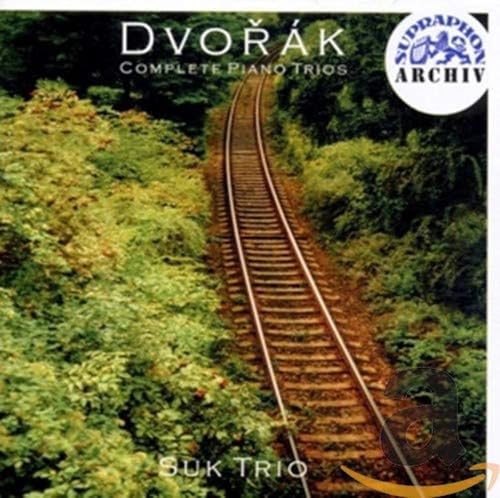
My favorite recording of these works. Still golden.

Antonín Dvořákr
Complete Piano Trios
Panenka/Suk/Chuchro
Supraphon


US | UK | DE

Classic Recording!

Antonín Dvořákr
Complete Piano Trios
Beaux Arts Trio
Philips/Decca


US | UK | DE

Modern standard for these gems.

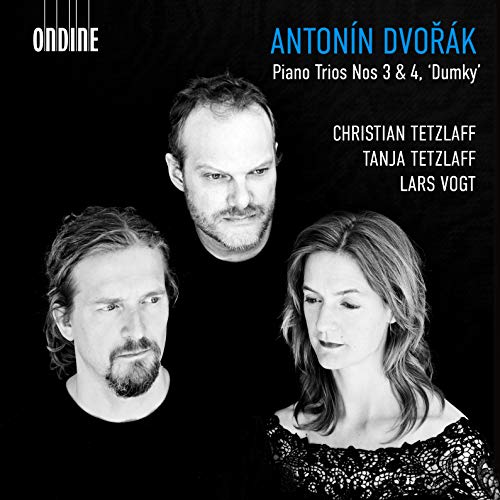
Antonín Dvořákr
Piano Trios Op.65 & 90
Tetzlaff2/Vogt
Ondine


US | UK | DE

Lisa Batiashvili, Gautier Capuçon, and Jean-Yves Thibaudet make a better-than expected Trio


It doesn’t always work: superstars doing chamber music in the grand halls of classical music. This combo, though, had something going for itself.


Chamber music in large halls is, on the one hand, a wonderful thing — a sign that this genre, hard to sell but the beating heart of classical music, can still draw a crowd. On the other hand, such music is usually less at home in places like the Great Hall of the Konzerthaus than, in it would be in its smaller, perfectly suited Mozart Hall, for example. But when soloists with the star power of Lisa Batiashvili, Gautier Capuçon and Jean-Yves Thibaudet appear together, compromises must be made.

That this one turned out not to be much of a compromise at all was remarkable — and owed to the trio’s balanced playing. No one held back, no one dominated, there were no hiearchic shenanigans, and no one got lost in precious detail. Whether in the youthful works of the first half — Debussy and Shostakovich’s early trios — or in the second, devoted entirely to Dvořák’s mature F-minor Trio Op. 65 (who was, after all, a venerable 42 when he wrote it).

The Dvořák, cleanly and spiritedly played, served as another reminder that his chamber music never really disappoints — at least not when, as here (no small feat for a team of soloists), the playing is genuinely ensemble-minded: relaxed in the Poco adagio, varied in the finale, and fleet in the Mendelssohn-like scherzo of the encore, which was played entirely in keeping with Dvořák’s spirit.

Even more intriguing were the first two pieces, however, where Batiashvili and Capuçon could truly shine: she full-bodied and rhytmically steady-as-a-rock, he slightly sentimental, bittersweet, elegant — both superbly attuned to each other. That Thibaudet sometimes drifted toward the role of accompanist rather than full creative collaborator, or that his clarity occasionally suffered from the brisk tempos, mattered little at this level of overall excellence.


3.11.25

Critic’s Notebook: Out to Sea. Tonkünstler beguile with Armiliato and Akhmetshina


Also published in Die Presse: Meer bitte! Grandiose ozeanische Klangfluten im Musikverein

Gardiner Lili Boulanger

E.Elgar
Sea Pictures
Dam Janet Baker
Barbirolli/LSO
EMI/Warner (1965 ff)


US | UK | DE

Also consider Jessye Norman in this, on Erato

E.Chausson
Poème de l’amour et de la mer
Véronique Gens
A.Bloch/ON de Lille
Alpha (2019)


US | UK | DE

Much to Sea, More to Hear; Oceanic Soundscapes from the Tonkünstler


The kind of program – and the quality – that the Tonkünstler Orchestra delivered on All Saints’ Eve in Vienna’s Musikverein was something to behold.


It was a concert that would have been worth attending for the program alone. That it turned out to be an intoxicating affair in every respect was an invigorating bonus. Under the baton of operatic superstar Marco Armiliato, whom no one thinks of as an orchestral conductor, the Tonkünstler Orchestra plunged headlong into the surging flood of Wagner’s Flying Dutchman overture: high-drama from the first bar, with the players perhaps eased by the comforting knowledge that the full opera would not follow. The sound was impressively homogeneous and rich across all sections, the tiptoeing pizzicati were delectable – everything fit, everything clicked, promising much for what was to come.

Rightly so. Not only thanks to the music, the orchestra, and the conductor, but also to the soloist. Mezzo-soprano Aigul Akhmetshina, who has conquered the world’s major opera houses in no time at all, sang Edward Elgar’s Sea Pictures before the intermission – five magnificent orchestral songs long beloved by listeners, if only because, sung by Dame Janet Baker, they have shared an LP for six decades with the most famous recording of Elgar’s Cello Concerto (Du Pré/Barbirolli). Since you listen with your eyes first: Akhmetshina made her entrance in a dress of shimmering duchesse satin, textured like rippling waves, shading from deep blue to sea-green, adorned with a shoulder flower that might reasonably double as a sea anemone. Very much in keeping with the maritime theme.

No less impressive was what followed sonically. Penetrating throughout the middle register, beguiling in her healthy low range, always intense, always poised. So it was in the Elgar, which explored her vocal depths and was beautifully supported by the orchestra. And so it was after the interval in Ernest Chausson’s Poème de l’amour et de la mer – now finding Akhmetshina in an ultramarine gown with a texture suggesting that a painter had liberally wiped his acrylic brushes across it. Even rarer than the Elgar in concert, this work is a prime specimen of French Romanticism: illustrative, luxuriant, effusive, perfectly in line with the likes of Duparc, Debussy, and Dukas. Akhmetshina brought to it moments of high drama but also a deeply sympathetic warmth. The orchestral sound clouds – nearly on the same level of execution as in the preceding works – were a joy; a delicate cello solo at the heart of La mort de l’amour was the proverbial cherry on the top.

One might have feared that after such a highpoint, such glorious excess, the classically restrained Romanticism of Mendelssohn – namely Calm Sea and Prosperous Voyage – could only feel anticlimactic. Instead, it became a serene, intimate coda of quiet grandeur and eventual exultation. What Armiliato and the orchestra conjured up here, as throughout the evening, was already one of this Musikverein season’s unforgettable experiences.


Aigul Akhmetshina. Photo © Lera Nurgalieva